
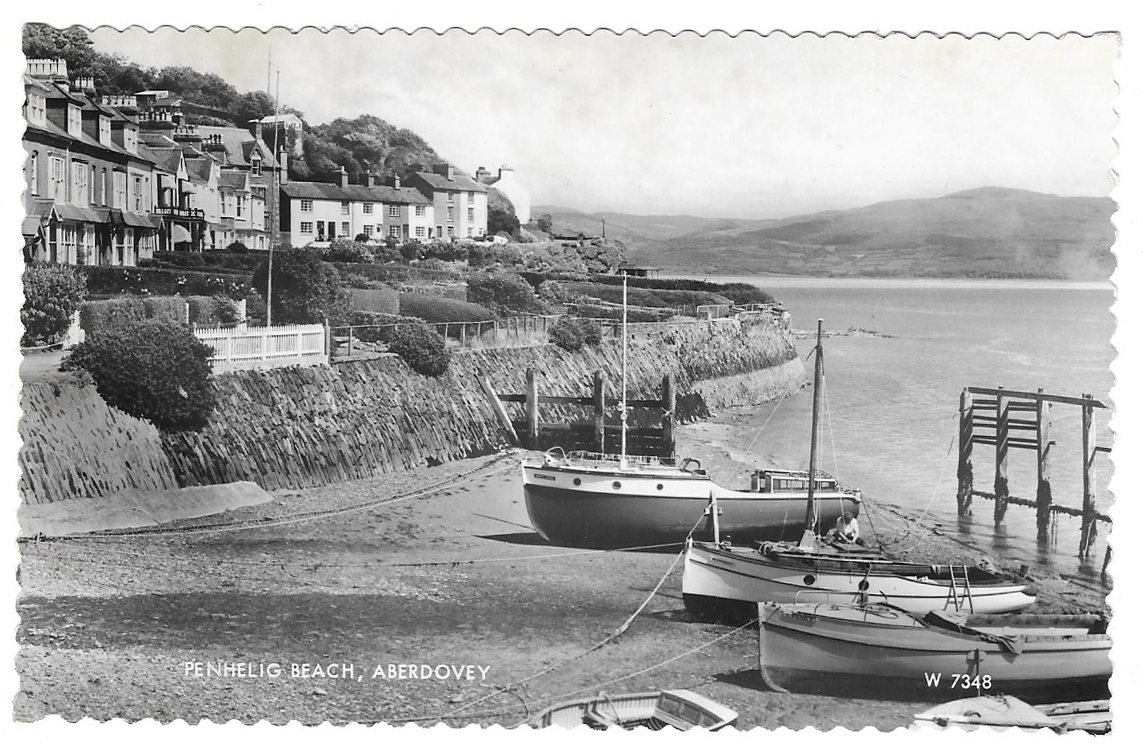
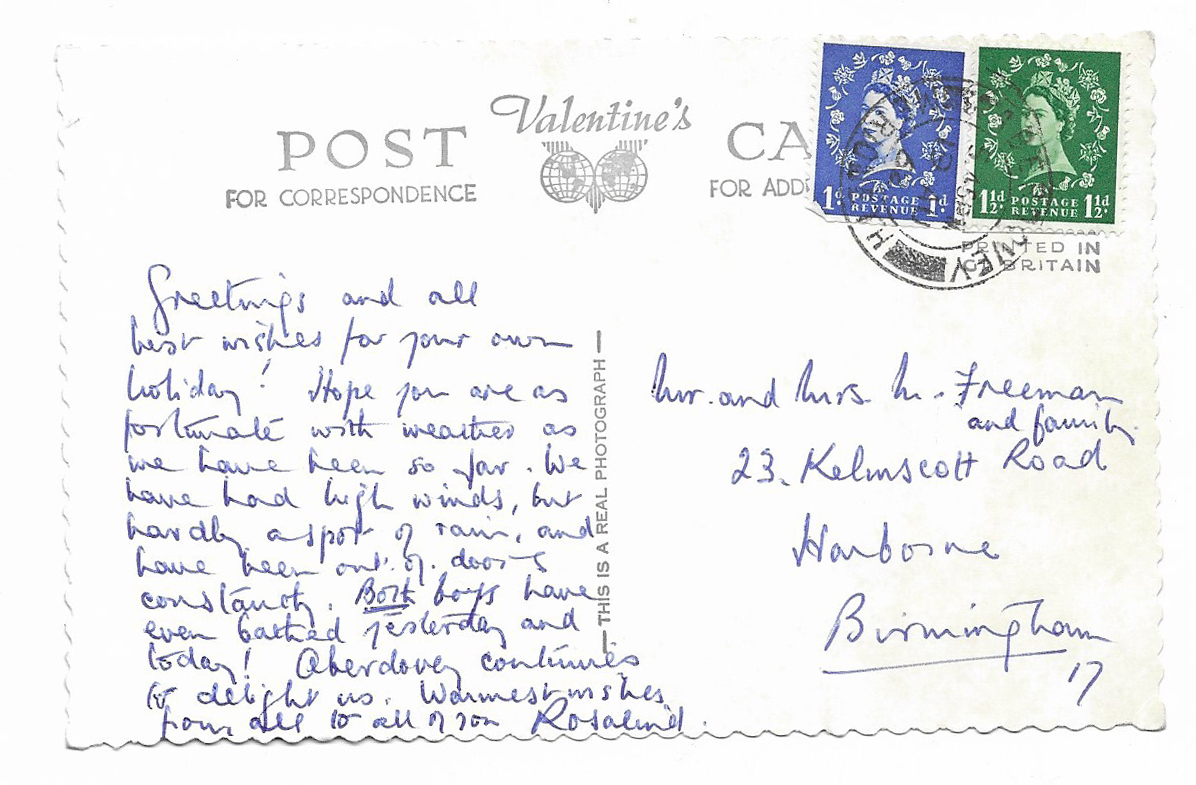
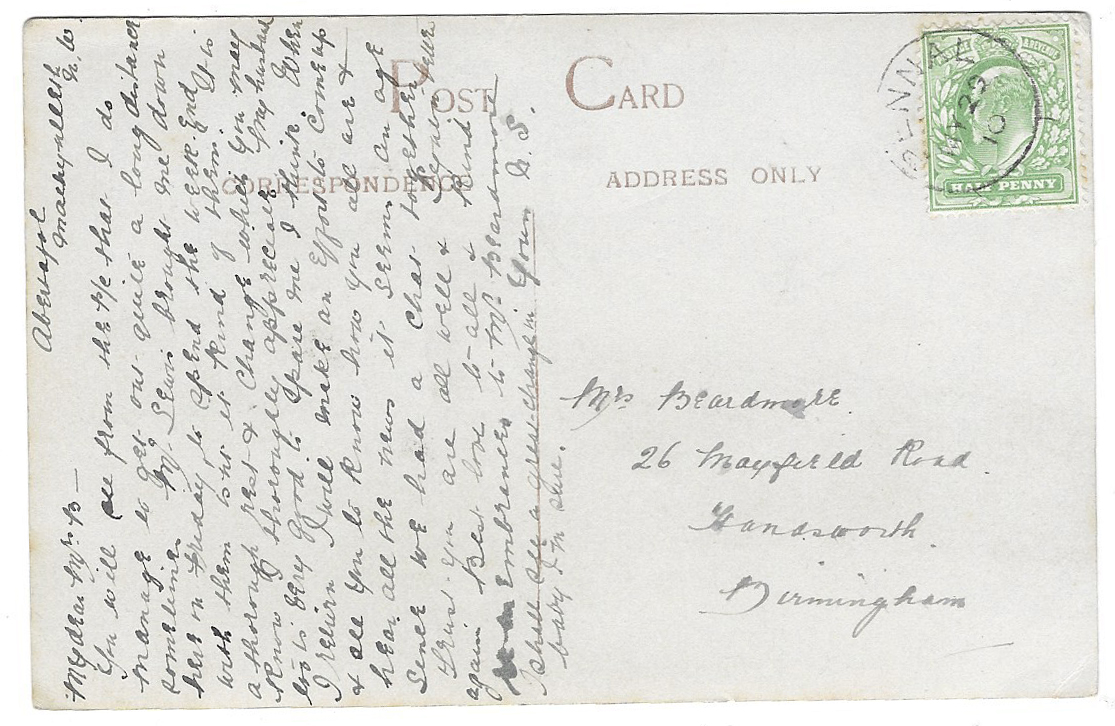
 Not quite as vintage as postcard #1 and postcard #2, which were dated to 1910 and 1903 respectively, this view of Penhelig Beach has an Aberdovey Merioneth postmark dated 19th August 1962 and features two Queen Elizabeth II stamps (a blue 1 penny and a green 1 1/2 penny). Elizabeth had been on the throne for 10 years when this postcard was sent to Harborne in southwest Birmingham. The big carpark on the sea front and the modern developments at the top of Copper Hill Street, along Mynydd Isaf and Maes Newydd and related roads had not yet been built and the village must have had a very different character.
A view of Penhelig today taken from a very similar viewpoint:
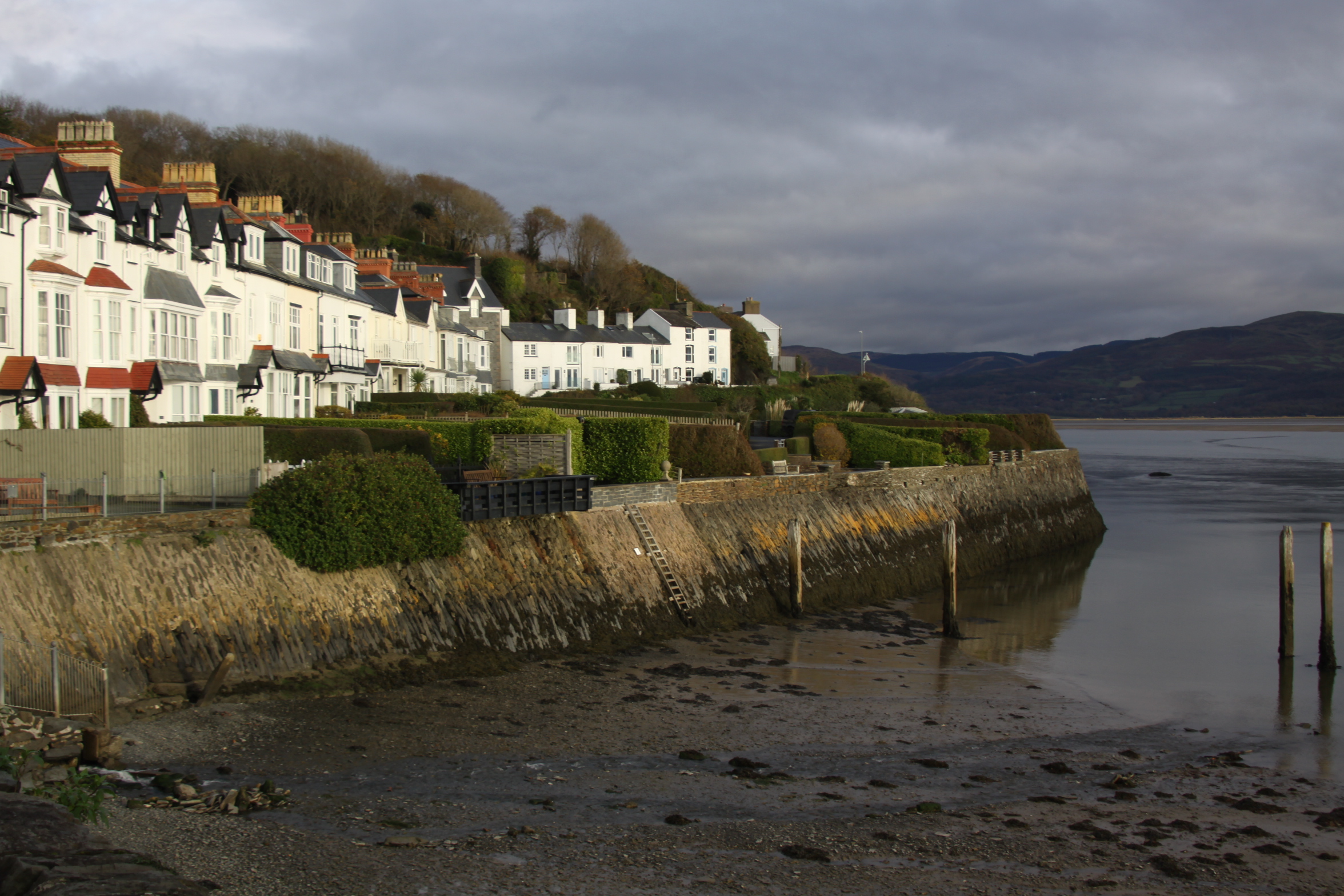
 Unlike the 1903 and 1910 postcards, this is immediately recognizable and familiar, and apart from the boats, which immediately indicate that this is not a modern photograph (I particularly like the one furthest from the camera), it looks much the same as it does today. Penhelig Terrace, immediately behind the beach, was built on the spoil-heap from the tunneling works for the railway in 1864, which was routed round the back of the village to prevent it impinging on tourism and ship-building activities.
A picture hanging in Aberdovey’s Literary Institute shows the same scene in 1837 before either the railway or Penhelig Terrace were built, with the Penhelig Arms visible at the far left. In this view the low and long Penhelig Lodge (about which I have posted) dominates the scene and looks out over the beach. It was probably still fishermen’s cottages at this time, although it had various roles afterwards, including a stint as an exlusive school for young ladies. Penhelig Lodge is now a row of three cottages on a busy bend where the railway crosses the road, hidden behind Penhelig Terrace and the railway, on the edge of Nantiesin car park and overlooked by Penhelig Station, but as a building it has lost none of its charm.
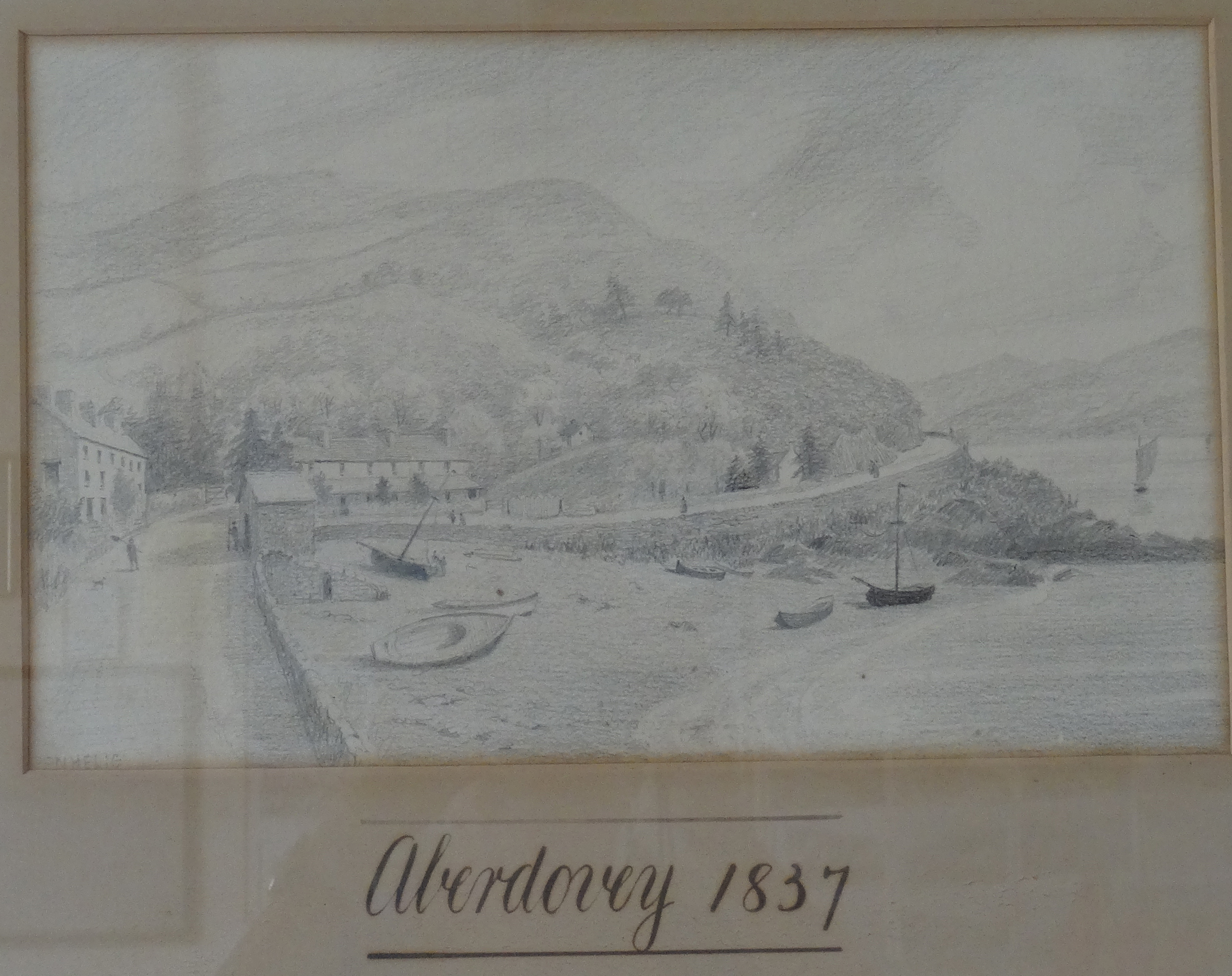
Aberdovey 1837. Source: Photograph of picture hanging in the Literary Institute.
A photograph from Hugh M. Lewis’s book Aberdyfi, A Glimpse of the Past, below, shows Penhelig as it was just after the railway was established and just before the terrace was built in the mid-1860s, with a large vessel moored on a high tide in the days when the beach was a shipyard, with Penhelig Arms just behind it. In the above postcard Penhelig Arms is out of sight, a few houses to the left and across the road.
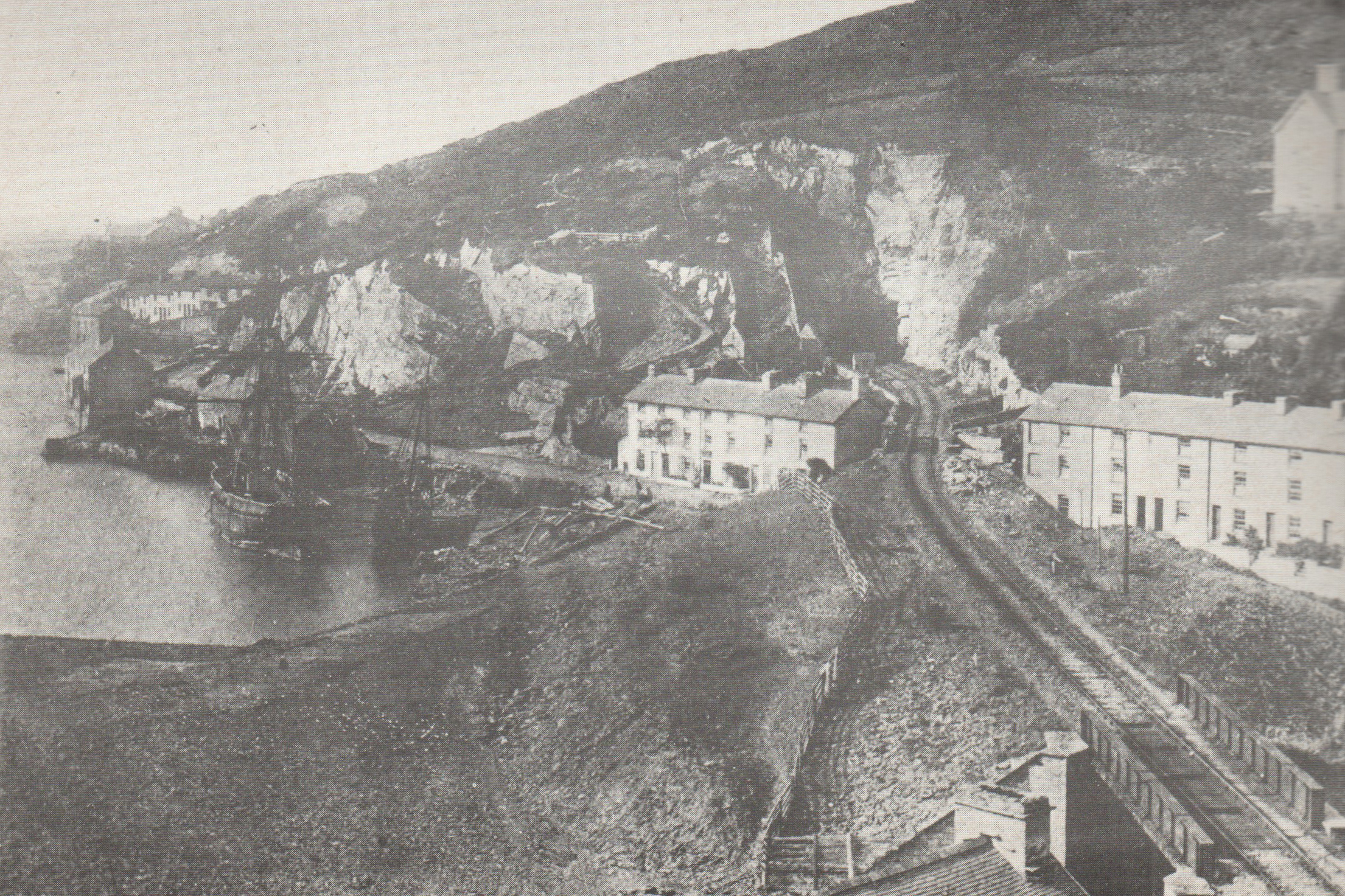
Penhelig shortly after the railway was laid, and before Penhelig Terrace was built, showing the railway tunnel and the shipyard just in front of the Penhelig Arms. It is clear that at least two houses were taken down to route the railway round the back of Aberdovey. Penhelig Station was added in 1833 Penhelig Station was added in 1933, by which time the railway was operated by the Great Western Railway, which absorbed Cambrian Railways in 1922, and was equipped with a single platform and an attractive little wooden shelter that remain today. Source: Hugh M. Lewis’s book Aberdyfi, A Glimpse of the Past
The row of houses behind the memorial park to the right of Penhelig Terrace on the main road through Aberdovey has changed dramatically since the 1860s photo in Hugh M. Lewis’s book, but not much since the 1962 postcard.
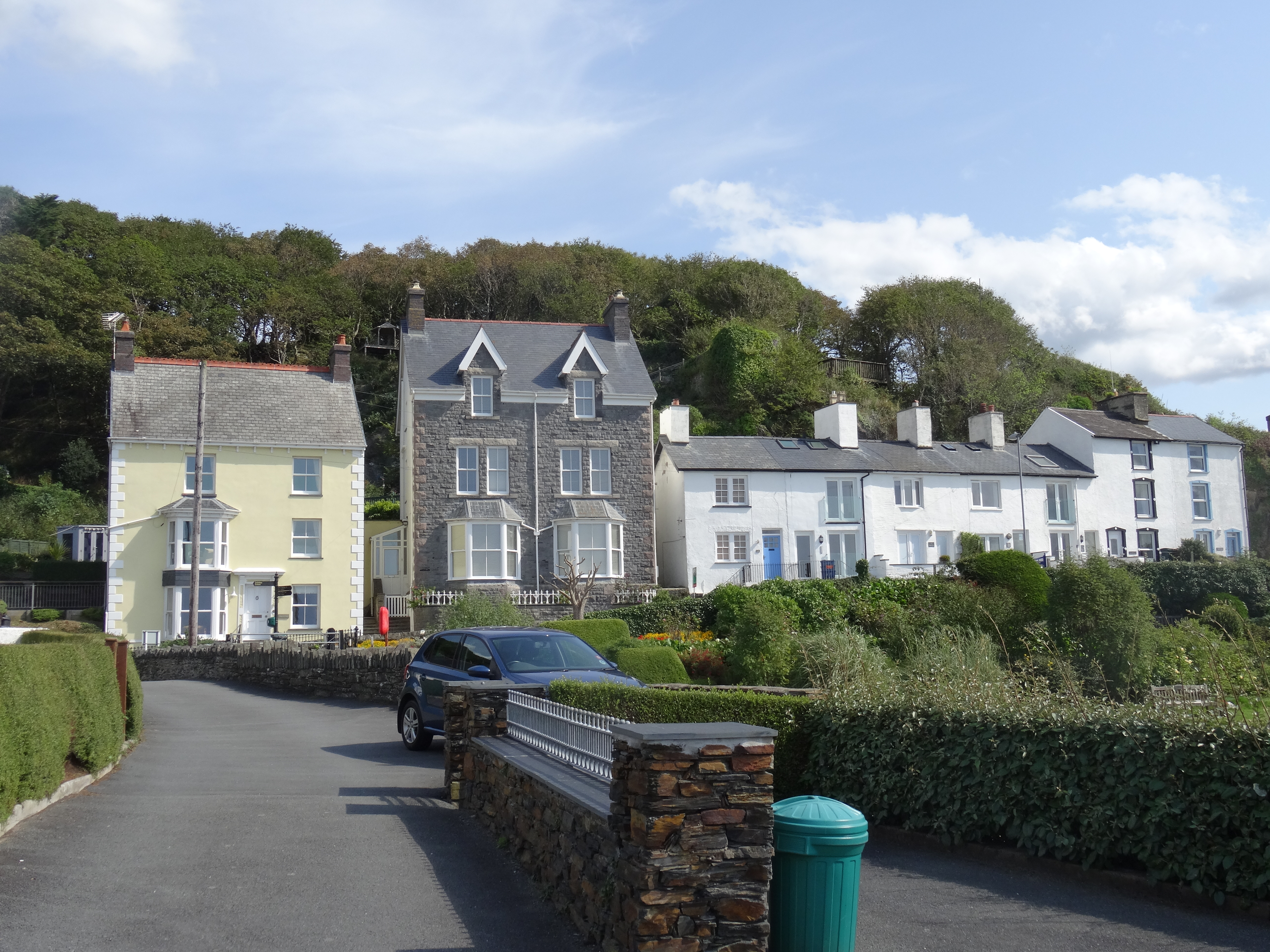
The row of houses behind the memorial park to the right of Penhelig Terrace on the A493.
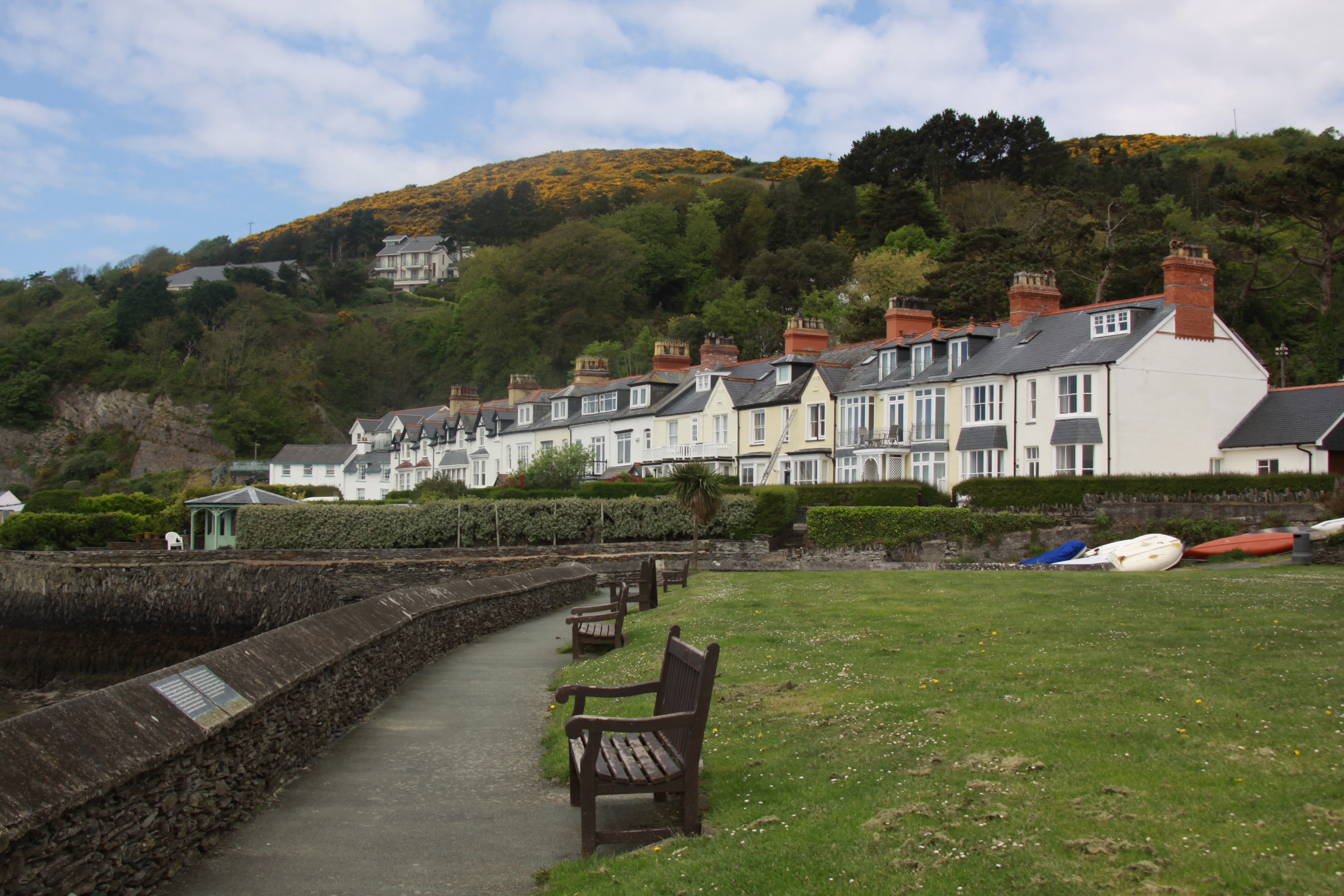
Penhelig Terrace today, seen from the memorial park
The postcard producer, Valentine’s (J. Valentine and Co.), opened in 1866 in Dundee, at first specializing in photographs of Scotland, and continued to make postcards for a century. According to the Jisc Archives Hub, “much of the collection contains views associated with the leisure market, subjects such as fishing were regarded as attractive, agriculture less so, and industry was rarely portrayed. The main features are stately homes, historic ruins, great open spaces, beaches, the grandeur and curiosity of nature and great engineering feats.” The company stopped producing postcards in 1967 because they failed to make the switch to colour printing for postcards soon enough to be competitive, and they had found that greeting cards were more lucrative anyway.
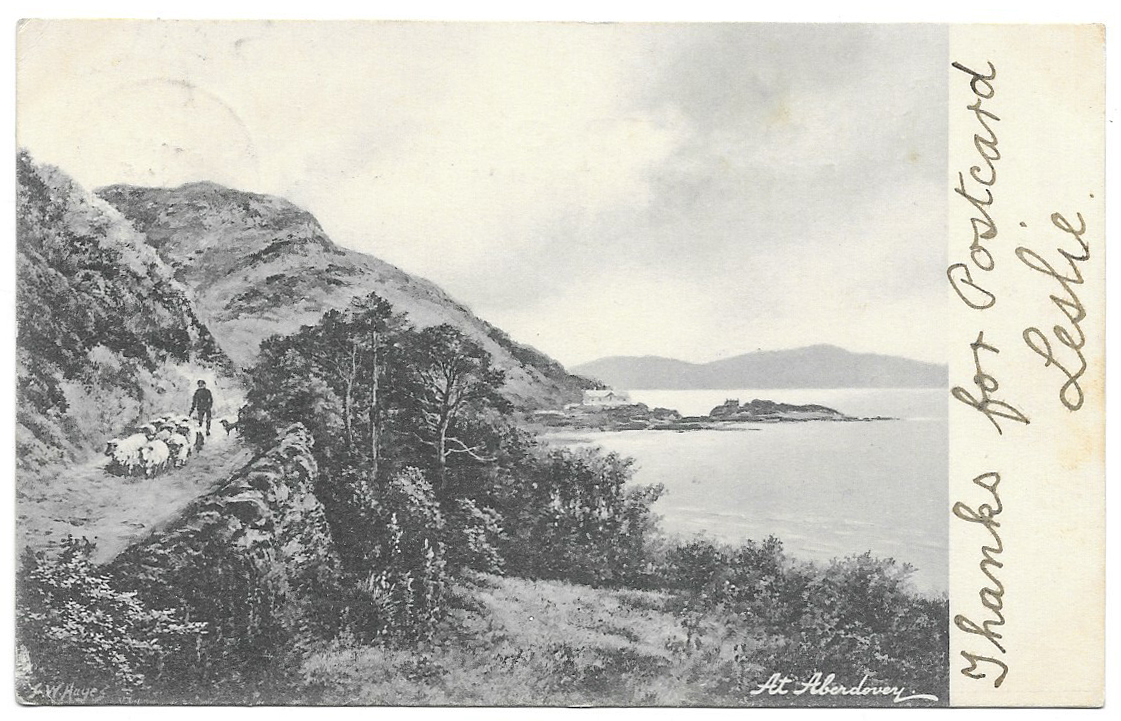
 Aberdovey Londoner