No particular reason for posting these, it’s just that they were such a colourful pleasure after a long bout of heavy rainfall.

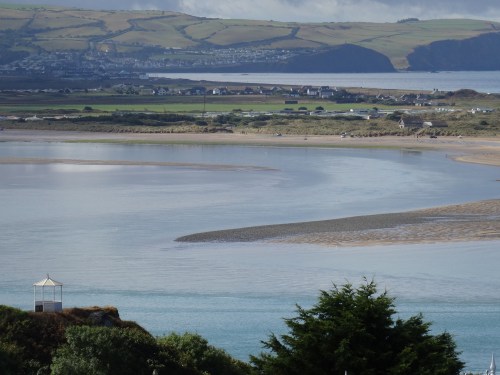
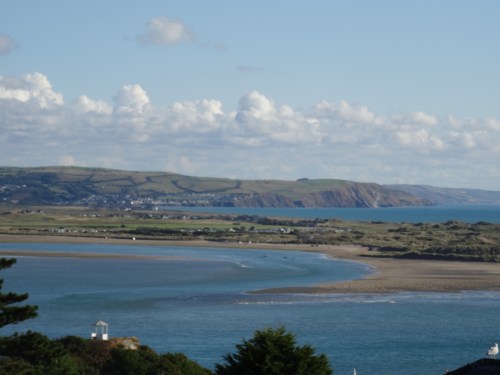

No particular reason for posting these, it’s just that they were such a colourful pleasure after a long bout of heavy rainfall.
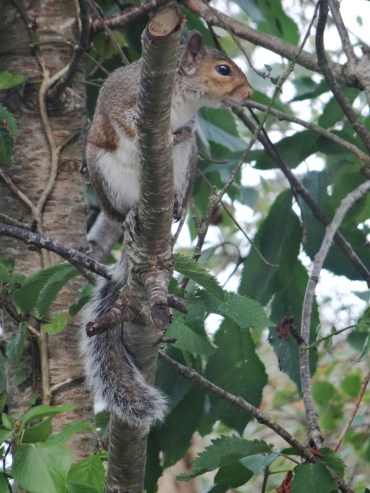 I had a visitor today, trying to find a way into my squirrel-proof bird feeder. A friend of mine refers to squirrels as rats with tails, but they have supporters because of their endearing features, the bushy tail and their gymnastic abilities. They are often audacious, quite tame and can be very entertaining to watch. Their detractors consider them to be vermin, with good reason. They steal bird eggs and eat baby birds, dig up and eat spring and summer bulbs and new shoots, and they chew through tree bark, leaving the tree vulnerable to disease. They also carry squirrelpox (to which they are themselves immune, but to which red squirrels are vulnerable), and they replaced the far less destructive red squirrel, which is now confined to more marginal areas.
The American grey squirrel was brought to England deliberately in 1876 by a Cheshire landowner. It was hunted and eaten in the U.S. and was probably introduced into England for that purpose (they are still eaten in the US). There were so many in Woburn Abbey’s grounds that between 1905 and 1907 they were released into Regent’s Park, from where they spread to London’s green areas. Their apparent impact on the red squirrel and the damage to trees, bulbs and new shoots was very unwelcome and between 1917 and 1937 four thousand grey squirrels were shot in Kew Gardens alone. By the 1930s it was already considered to be a pest and had spread over a big distance. Between 1945 and 1955 a reward of a shilling a tail was paid in some rural areas and squirrel shooting clubs began to grow in number.
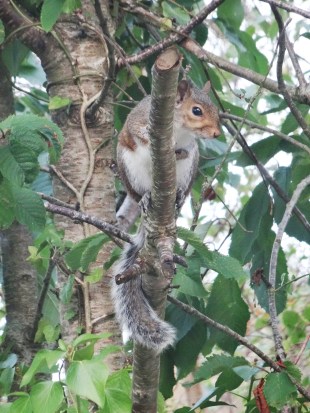 By the 1940s the grey squirrel had completely replaced the red in most areas. The Guardian quotes a 1995 report which says that red squirrel populations in the UK (1995) revealed that there were 161,000 in the UK, with 121,000 in Scotland; 30,000 in England and 10,000 in Wales. Things have changed since then, the grey squirrel is more efficient on British soil, better at finding food supplies and carries a deadly disease (called squirrelpox virus) that it is immune to, but kills red squirrels. It is estimated that grey squirrels outnumber reds by more than 60 to one in England. But there are still red squirrel strongholds on islands (Isle of Wight, Brownsea in Poole Harbour, Anglesey) and in the north of England and Scotland. Although there are a number of well-aired urban myths on how this replacement took place (which typically takes between 15 and 20 years), academic research projects have actually failed to identify the process by which the red squirrel is ousted in favour of the grey. There is one theory that they abandoned the struggle mainly because the areas in which grey squirrels survive is not their favoured habitat anyway. Whilst grey squirrels prefer deciduous parkland, the red squirrels are far better adapted to coniferous woodland. It is thought that the above-mentioned virus may have contributed significantly the demise of the red squirrel. It could be that it was it was not one circumstance but a number of different ones that saw the retreat of the red squirrel and the diminishment of their numbers in favour of the American interloper.
The Forestry Commission have advice on how to control grey squirrel damage to woodland on their website (in PDF format).
If you want to know more about the red squirrels then the Friends of the Anglesey Red Squirrels website is a good place to start.
Finally, there are grey squirrel support sites too, including squirrels.info.
 Today was the calm after last night’s storm. The estuary was like a mirror. I have never seen it so still. I was sitting outside with a book (The Box by Marc Levinson – a brilliant read), with the robin throwing mealworms and seed around in a reckless manner a few feet away from me, when a red admiral butterfly, its markings quite simply unmistakeable, settled on the balustrade and returned time and time again for the next hour, basking in the sun and warming through. Every time I moved it took off, so the photograph was not the best I’ve ever done. Eventually it took off to engage in a spectacularly intricate aerobatic dance with another Red Admiral. Truly lovely.
Red Admirals appear twice a year – once between May and October and then again between March and April after hibernation. They lay their eggs on nettles, and even though many are born locally others are, quite remarkably, immigrants from Europe. The dance that I was watching is a mating ritual, a dynamic, kinetic language of colour, shape and pheromones.

The calm after the storm. Fluffy white clouds remain overhead, lovely against the blue sky, and the water is a shining mirror of light.
 Most of my books are in storage, including everything I have on insects and arachnids, so I wasn’t able to look up this tiny little chap that visited my garden today. It landed on the handle of my chimenea, which was fortunately not lit at the time. He/she was beautiful but even though I’m not scared of spiders, I wasn’t getting too close. Even though it can’t have been much more than a centimetre or two long, it had attitude! I don’t have a macro lens, and this was taken with a 28-300mm that happened to be on the camera, so the photo is a bit smudged. Looking at the “Guide to Garden Spiders” (Field Studies Council) I think that it is almost certainly a comb-footed spider (Paidiscura pallens).


 The weather yesterday was uncompromising. It started off drizzling. In the afternoon it poured, and then at about 6 it stopped raining but the hills over the estuary began to vanish, the water faded to grey, the folly disappeared and then, when I checked, the hill to the right of the house, as well as the council houses along its foot, had all vanished too. We were literally sitting in a cloud. I walked down the slope to my garage to take a couple of things down, in shorts and a jumper, and it was weird – the cloud was damp but everything was warm, and I could feel it on my legs and face without experiencing any real sense of it actually touching. It was like being tickled by a friendly ghost. A couple walking up the hill slowly emerged from the silver-grey and seemed startled to see me with box of weed killers under one arm and paint tray in the other hand, and they paused and watched me vanish into the garage. They seemed to find it all as surreal as I did.


The frog under my bay tree.
Not much sun today but warm and dry. Got quite a bit done. The former gardener’s last strimming of the grass resulted in a hayfield and I could bear it no longer so found a fan-rake in the garage and raked it and all the fallen leaves into piles ready for placing in my garden bin. Looks SO much better. I disturbed a frog under the giant bay tree. I couldn’t believe it at first, because what on earth would a frog be doing living half way up a steep hill? Not a natural place for the accumulation of a water source. I stopped raking near him/her because it was clearly causing anxiety, and instead whipped out my pocket camera and took a photo. A pretty little thing and I do hope that it finds its way to a water source eventually. As I saw a dragonfly later in the day, I assume that someone around here must have a large garden pond.
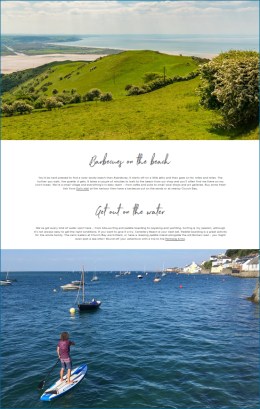
I was actually looking for information about the Gwalia Temperance Hotel that once occupied 1 Chapel Square, where clothing outlet FatFace is now located, and stumbled across this nice little In The Spotlight article written by one of the FatFace staff. It has some lovely photographs and some brief comments about the many outdoor benefits of Aberdovey and the surrounding area, with some sensible advice thrown in:
https://www.fatface.com/blog-articles/things-to-see-and-do-in-aberdovey.html.
 I am a big fan of Critical Path Analysis, essential in project management to track what needs to happen before something else can take place. I did a very simple CPA chart for the very first steps towards making the house suitable for full-time rather than holiday-home living, a lot of which involves finding places to put my stuff, currently blocking up several rooms of my father’s house and his entire double garage. This involves disposing of a lot of things out of the garage, and moving new and existing shelving units into it, creating space in the house for bigger and better shelving and extending the storage capacity of both house and garage.
So my CPA looked something like this yesterday: before I can move in boxes of things, I need to sort out the garage, including removing all the rubbish in there, painting the walls and floor, fixing the leak in the roof, blocking the gaps between the roof and the wall and then putting up heavy duty shelving. Amongst the stuff that needs removing are two huge chests of draws. As there is no council or commercial dump around here since the one at Machynlleth closed, the next step was to order Gwynedd Council’s bulky goods removal service, which would also get rid of a single bed and a futon that are taking up much-needed storage and desk space. So I went ahead and ordered the low shelving for the spare bedroom where the spare single bed currently stands, the high shelving for the main bedroom (replacing the low shelving in the bedroom that will go at the back of the garage), the desk and chair for where the futon sits and the heavy duty shelving for the right side of the garage. Then I went on to the Gwynedd website and ordered my bulk goods removal.
 My Critical Path snafu was ordering the furniture before checking out bulk waste collection dates, based on an erroneous assumption that collection of my bulky items would take place within a couple of days. The earliest that Gwynedd can come is 9th August – 10 days away. So all this stuff from Amazon is turning up and there will be nowhere to put any of it until the 9th!
It is going to be interesting to see how I can fulfil Gwynedd’s requirement for me to get all five objects (two chest of draws, the futon, the bed and the mattress) outside where they are “easily visible” on my own, but I dare say I’ll manage. God help the elderly and the infirm.
Gwynedd Council’s charges a whopping £23 for 5 items, £46 for 10 items. Southwark Council, from which I have just come, charged me £16 for 10 items just before I left. It would be less of a shock if there was anywhere around here where I could take the stuff to dump myself, but since the council dump in Machynlleth closed down a few years ago, there has been nothing. I drove to Dolgellau last year, where the Gwynedd website said there was a recycling centre, but that was a rather pathetic little affair, designed for local recycling of food, tins and bottles, not the disposal of bulk items like an eight-draw chest of draws, a bed base, mattress and a futon. Someone told me that the Machynlleth tip closed because there was a problem with the contractor that operated it on behalf of the council. Whether this is true or not I don’t know, but it would have been handy if Gwynedd had come up with a replacement local solution to disposing of household and similar items. However, I am counting my blessings because my friend Cheryll, who lives in Gloucester, informs me that Gloucester Council charges £24 for three items, £8 for each additional item and take an eternity to arrive.

Still a little hazy, but the sort of day that makes you feel good to be alive
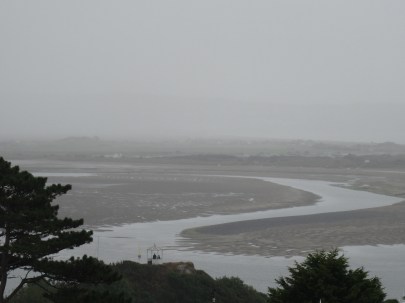
A rather misty and distinctly murky view across the estuary towards Ynys Las.
It is the 27th July and I have arrived. I left my father’s house in Chester, where I had been staying for seven days following my permanent removal from London, in full sunshine. I was in shorts and a t-shirt and summer sandals with my hair, usually twisted into a knot on the back of my head, in a perky summer pony tail. A mile out of Llangollen and the clouds began to gather. By the time I had reached Bala it was a uniform grey, and by the time I reached Tal-y-Llyn there was a tiresome drizzle tapping on the windscreen. When I stopped off at the Spar in Tywyn to buy some odds and ends the skies opened and let rip, and I was more than somewhat embarrassed to find myself the only person in the shop dressed for summer. Everyone else was sensibly attired in weather-resistant clothing and I must have looked a ghastly sight, hair plastered to my skull and dripping rainwater from every bare limb. Typically, it stopped raining as soon as I loaded myself and my shopping into the car.
As I drove into Aberdovey, very warily out of respect to the tourist season that usually sees families and dogs throwing themselves under cars on the seafront road, it was just as I expected. The car park wasn’t completely full but it was seriously busy, and there were a lot of people milling around in that particularly British seaside resort combination of shorts and water-proof jackets.
When I reached the house everything was grey, the opposite side of the estuary at Ynys Las only just visible. The lawn, which was a brown scorched prairie where the grass had been burned by the nuclear generator in the sky, was mute testament to the recent high pressure front and the glorious sunshine of previous weeks. I will have to wait for a month or so to see whether or not it recovers before I decide what to do with it. A survey of the garden revealed that brambles and goose grass are beginning to establish themselves, with tall healthy weeds growing out of the paths, but that many of the garden shrubs are either partly or fully dead. The deep-rooted trees, however, are enormous, and need to be seriously truncated. Root systems really do govern what happens in this garden in a hot summer.
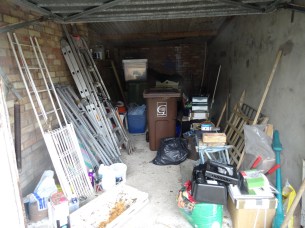
The garage after an initial sort-out.
The garage is such chaos, both inside and out that it is almost funny, and it is damp. No idea where the water is coming from and that needs to be both investigated and resolved. An awful lot of work to be done there! One of the first tasks is to move junk and move in some of the boxes in my father’s garage – but only the weather-resistant ones! I suspect that there will be a lot of work to get the garage fully water-tight. It has that look about it.
The balcony, or decking, needs some work – flaking paintwork on the balustrade needs sanding down, some small patches of rotted wood need scraping out, painting with rot-killer, hardener and filler, and the whole lot needs to be repainted. The decking itself needs sanding and weather-proofing. On most days the view from the decking is wonderful, a joy, although the growth of the fig and bay trees has impinged on it, and that needs to be sorted out.
Lots of work to be done. Should keep me busy to get it looking good, or at least organized, before winter sets in.
 Aberdovey Londoner