Author Archives: Andie

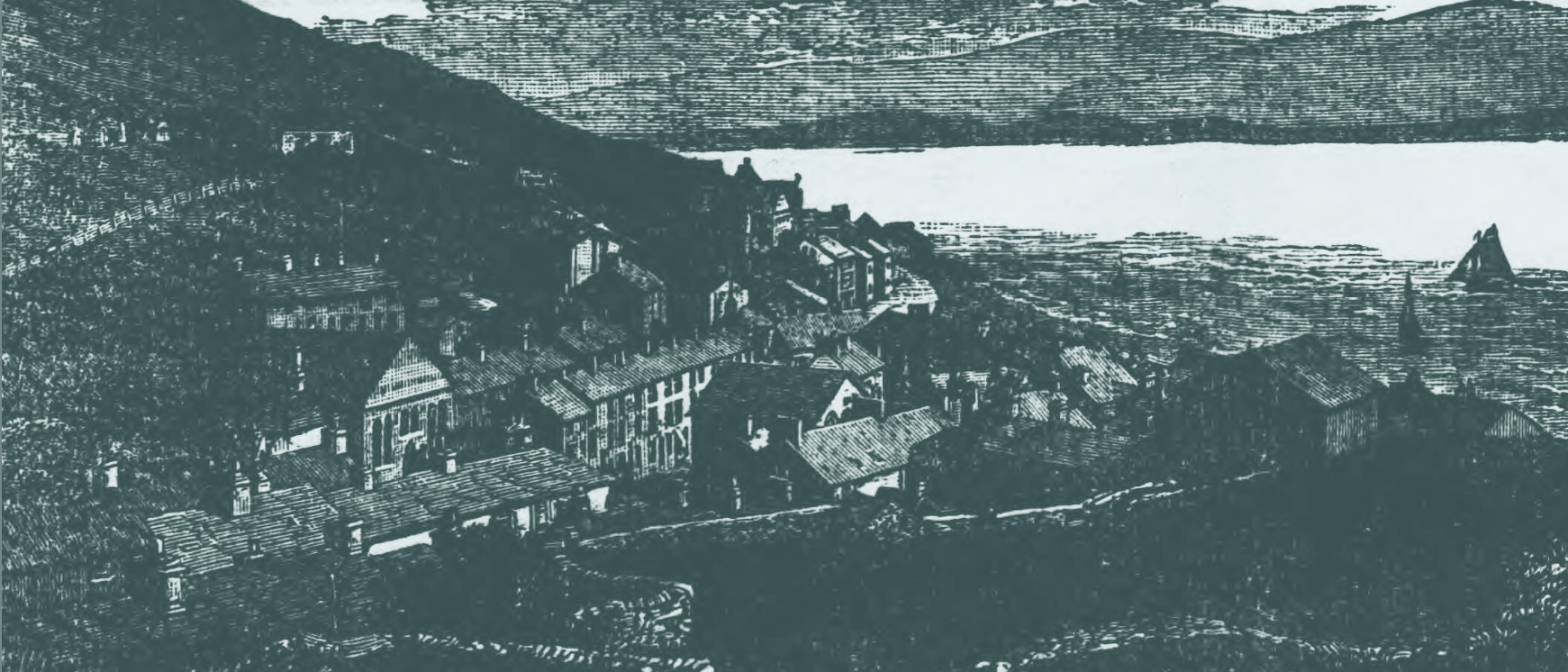
Newspaper advertisement feature for Aberdovey, 30th June 1894

I was looking, as usual, for something else entirely when I stumbled across this advert on the Welsh Newsapers online website, in The Cardigan Bay Visitor.  It dates to June 30th 1894. It picks up on an 1892 story in another publication and repeats it with what feels like a distinctly self-satisfied air.  There’s nothing much to add to it, I just thought that people might like to see it.  You can click on the text to enlarge it to a readable size, but the text is also copied out in full below the image.


“ABERDOVEY AS A WINTER RESORT. We have just heard of Aberdovey as being a splendid winter resort, and it is considered by eminent medical authorities to be a friendly rival to Torquay. Aber- dovey faces full south, and the high hills behind completely shelter it from the cold and boisterous North-east, North, and North-west winds. Now we have all heated of the “Bells of Aberdovey,” and almost every school girl who has “spanked on the grand pianner” has learnt to play Brinley Richards’—or was it some other musicians ?—composition on the much-tortured instrument which is supposed to simulate the harmonious tinkling of those famous Welsh Bells. But have we all heard Happy Valley, about two miles from Aberdovey ? Have we taken those walks to the legendary Bearded Lake and Arthur’s Hoof? Then the long, long miles of the sands of Aberdovey, so rich in shells and pebbles, what a splendid promenade they make.  Now all you non-fashionable people whose purses are not sufficiently long for Bath, Bournemouth, and Torquay, hie you to Aberdovey for the winter, if you shrink from the idea of the Continent on account of the recent cholera out- breaks. You will find plenty to interest you; and the golf ground is said to be one of the best in the United Kingdom. Hotels are not extravagant in their prices, and apartments may be obtained at very moderate terms.  SELF AND PARTNER, in Sala’s Journal, November 19th, 1892.”

You can check out the original page at
https://newspapers.library.wales/view/3824070/3824072/7/

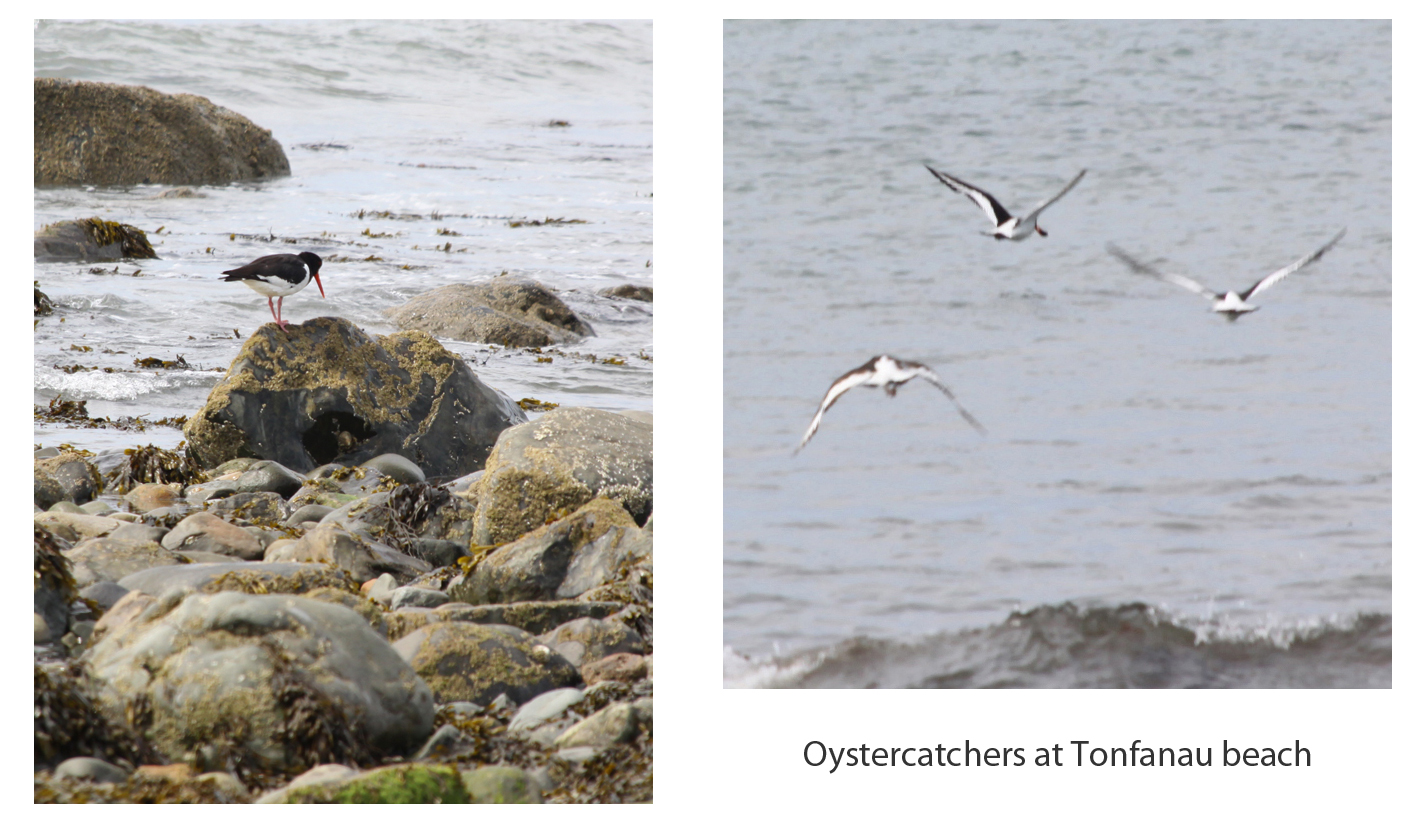
Video: Oystercatchers on the beach near Tonfanau station

After walking up Tonfanau to see the Iron Age hillfort I went along the road to Tonfanau station, crossed the tracks and passed part of the old military camp to go down to the pebble beach.  It is an excellent place for watching the oyster catchers, and I was lucky to find some pottering around at the water’s edge, amongst the small rocks.  Oystercatchers are lovely to look at.  Their bright orange beak and pink legs make them stand out from any background, whilst their black and white plumage is particularly distinctive when the birds are in flight.  They make a piercing peeping sound, which can be heard here on the British Birdsongs website.  Oystercatchers feed on molluscs that the find on rocky shorelines, which they open by stabbing the sharp beak through linking muscles, and then hitting on stones and rocks to break them up, sometimes audibly.  The video below shows a pair of them on the beach at Tonfanau.  Duration:  1 minute, 33 seconds.

Due to the difficulty of walking on pebbles and the discomfort of lying on them, together with the rocky approach to the sea that challenges bare feet, there are rarely many other people there.  Whilst Aberdovey was simply packed, there were only a handful of people along that stretch of the sea, two of them fishing in waders, quite a long way out.  Walking back to the Tonfanau bridge over the Dysynni as it opens out into the sea, the path is flanked either side with verges full of wild flowers at the moment.


A walk to the top of Tonfanau to explore the Tal y Garreg Iron Age hillfort

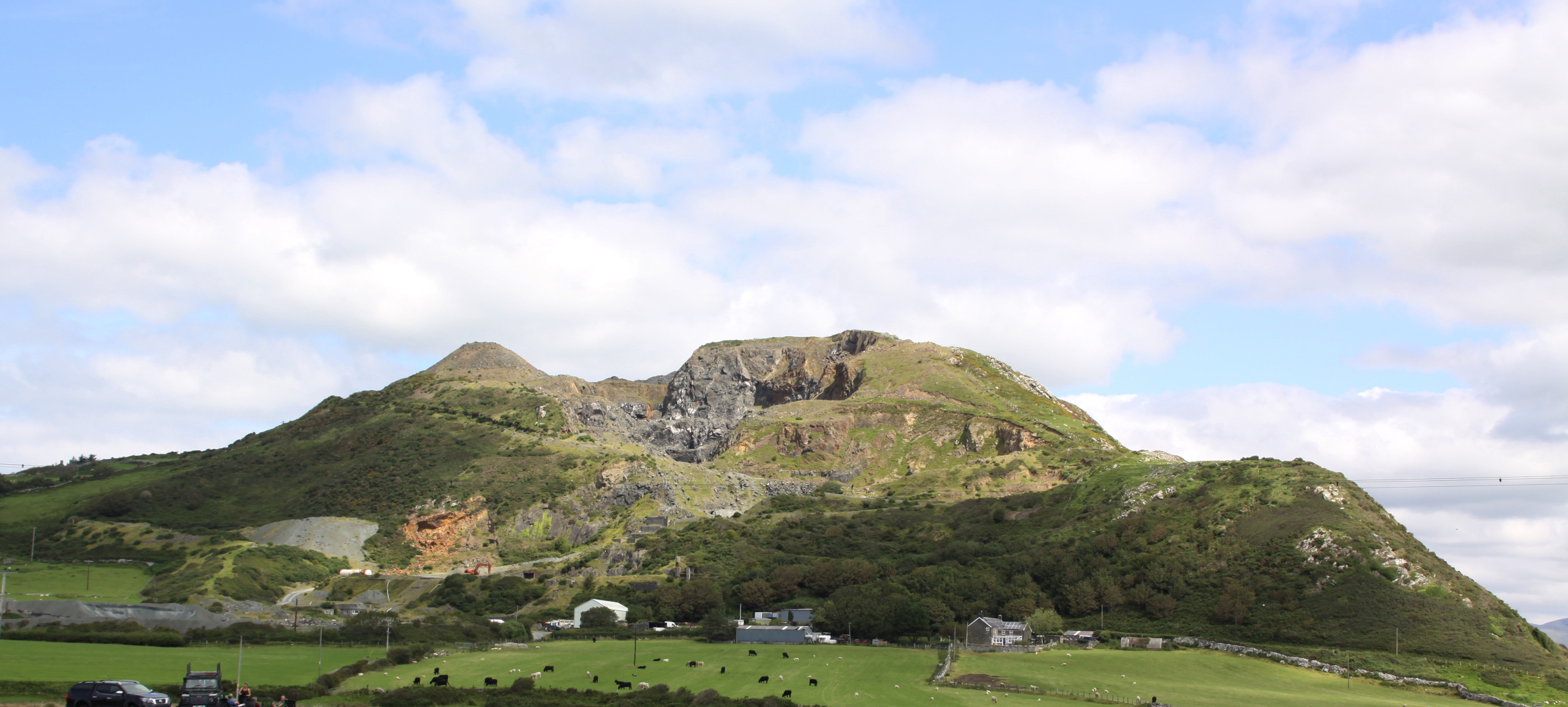
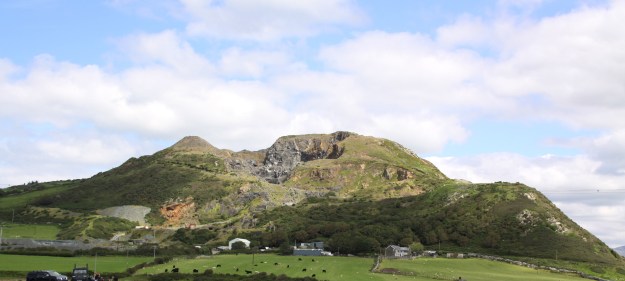
Tonfanau from the southwest. Tal y Garreg is immediately above the quarry
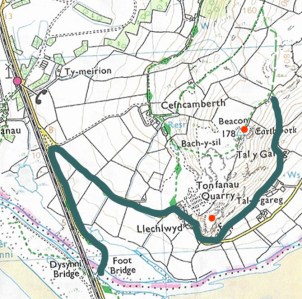
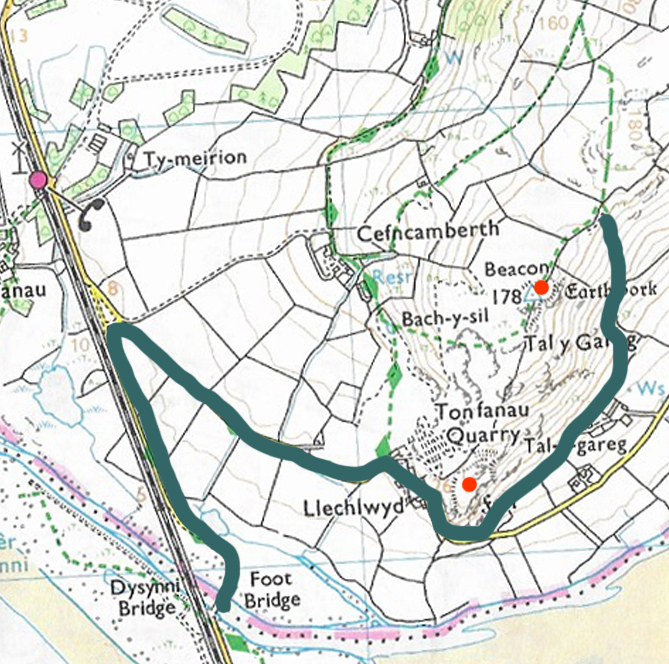
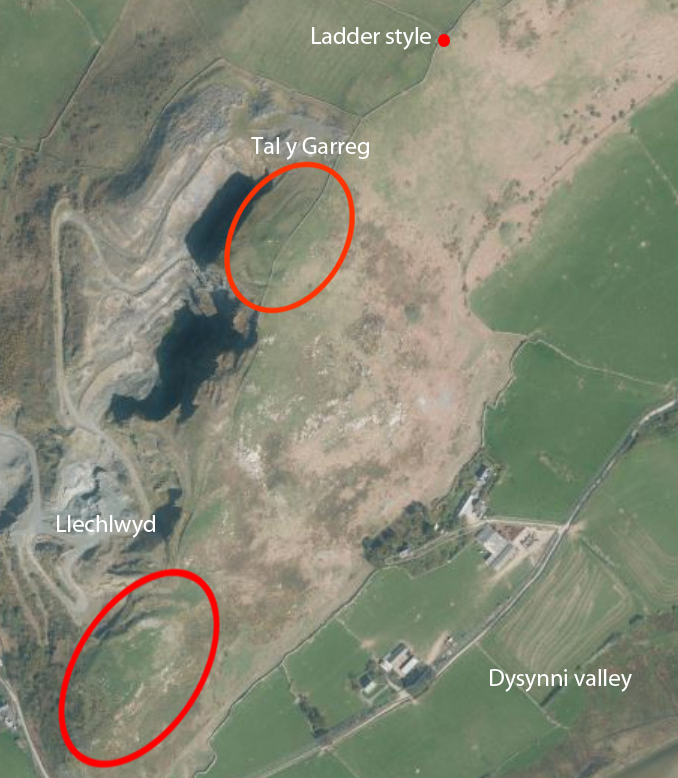
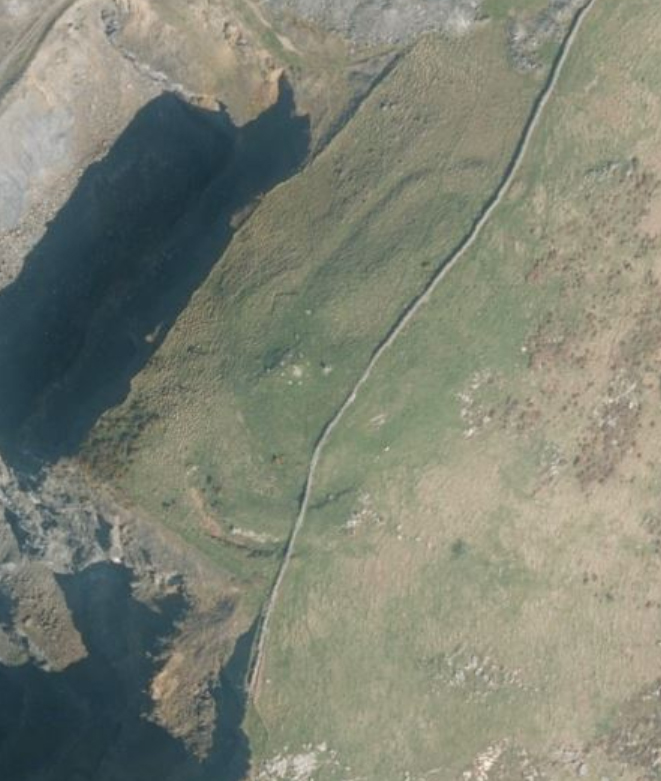
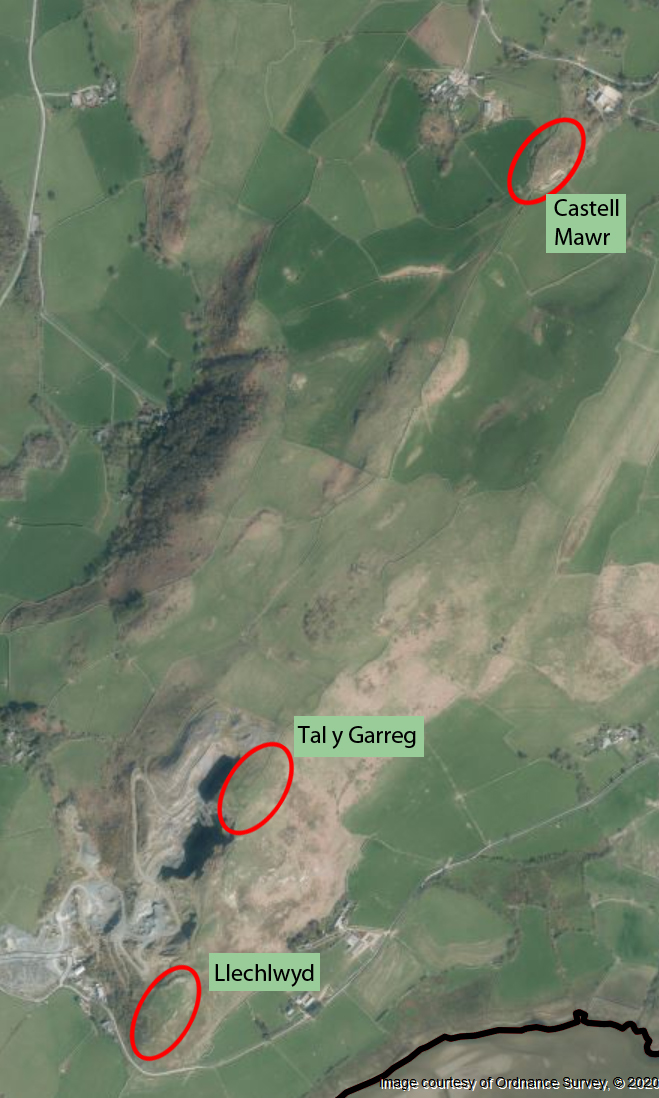
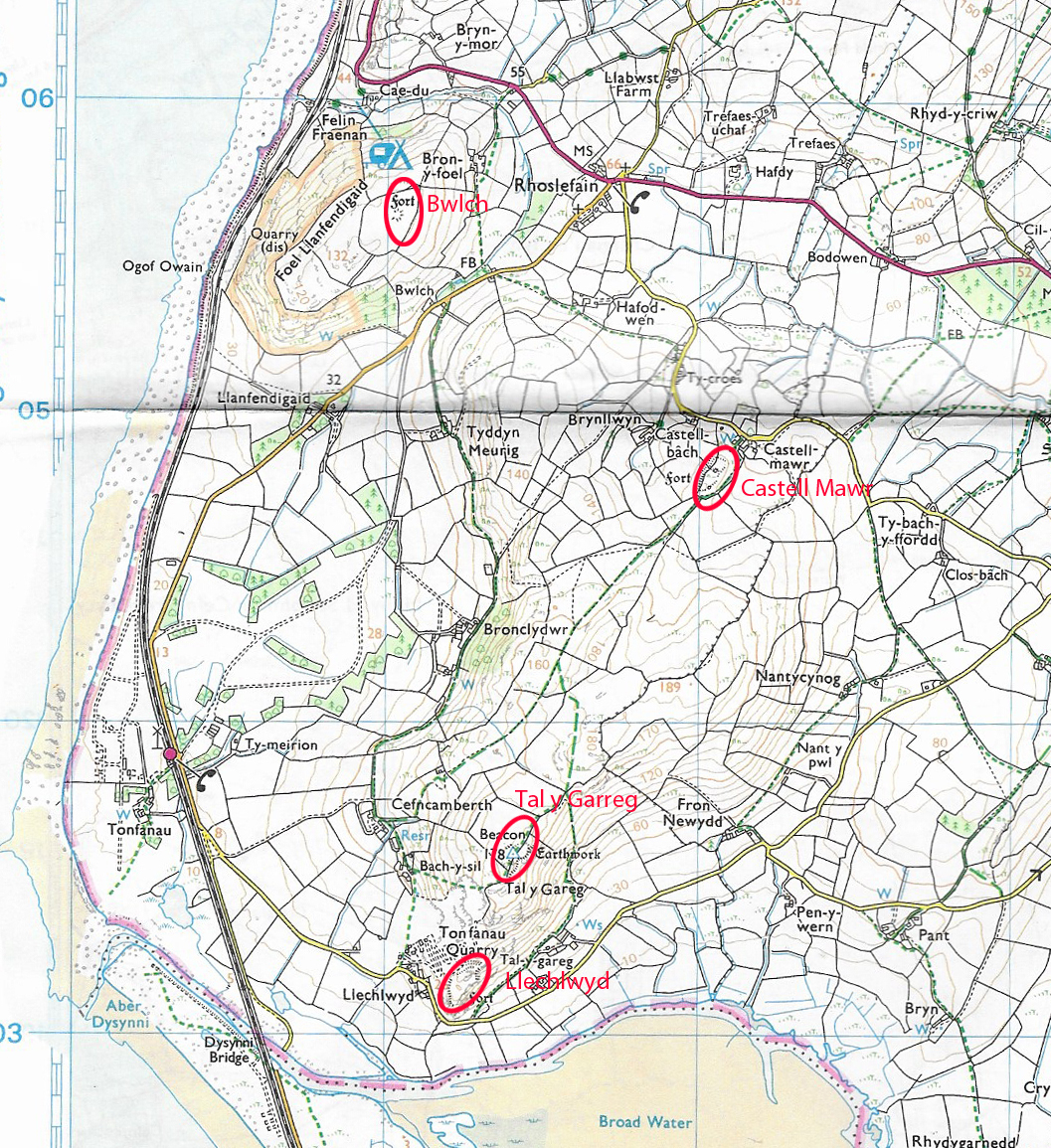
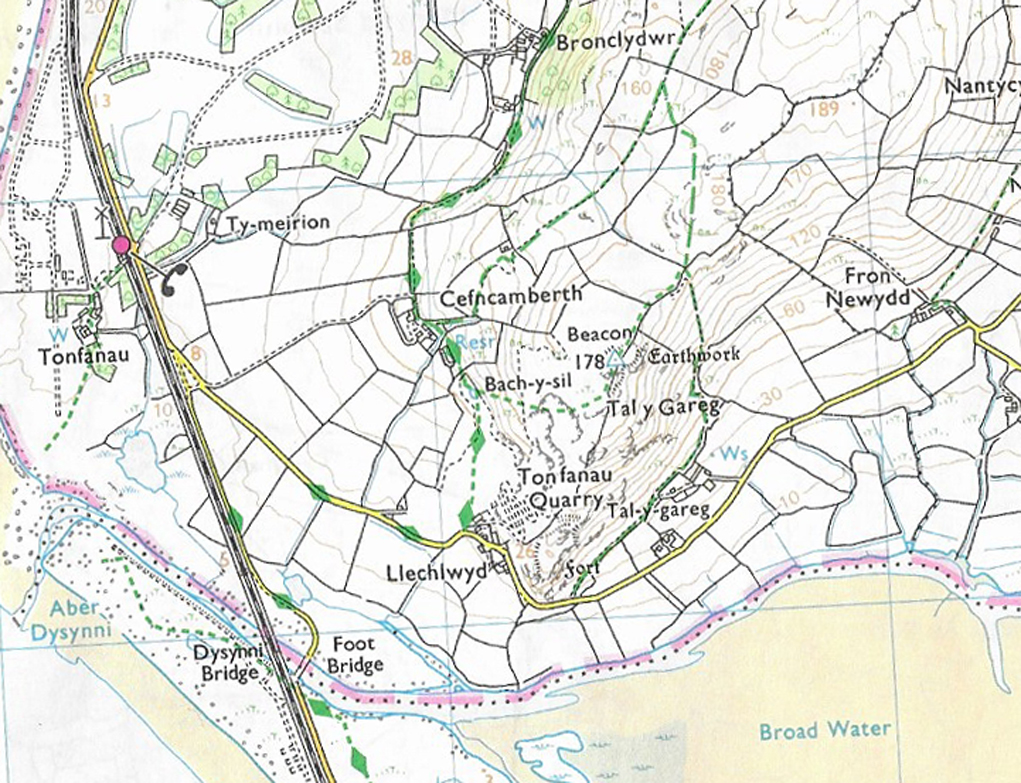
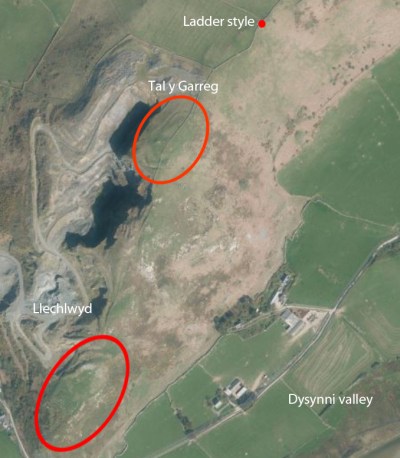
Ordnance Survey map showing the route taken up the hill, and the location of the two hillforts, marked by red dots. These two sites are also marked on an aerial photograph below.

I have wanted to see the Tal y Garreg Iron Age hillfort at the top of Tonfanau quarry, on Mynydd Garreg (rock hill), for some time, so on Sunday (9th August) I packed my rucksack and went along the route I had scoped out on Saturday, which had been made so enjoyable by the verges filled with wild flowers.  I parked the car on the road leading up to the Tonfanau footbridge, as before and followed exactly the same route, but this time instead of stopping at the gate into the field at the end of the bridlepath, I followed the faint track of the footpath up the hill.  The route is marked in dark green on the map to the left.  There are two hillforts on Tonfanau, both of which are marked with red dots, Tal y Garreg at the summit overlooking the quarry, and Llechlwyd on a lower promontory to the east of the quarry.   On this post I will talk about Tal y Garreg, but I covered Llechlwyd on another post, and the map above and an aerial shot below show the geographical relationship between the two.  The walk up the side of the hill is very beautiful, and the views from all around the top of the hill are breathtaking.  I should, however, make a couple of health and safety notes about this walk before I recommend it as a great one to do
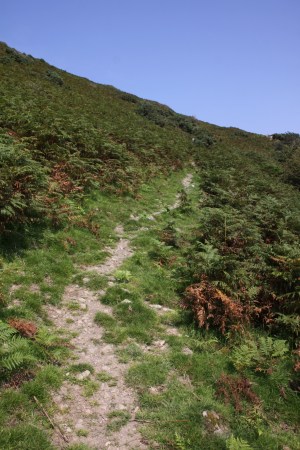
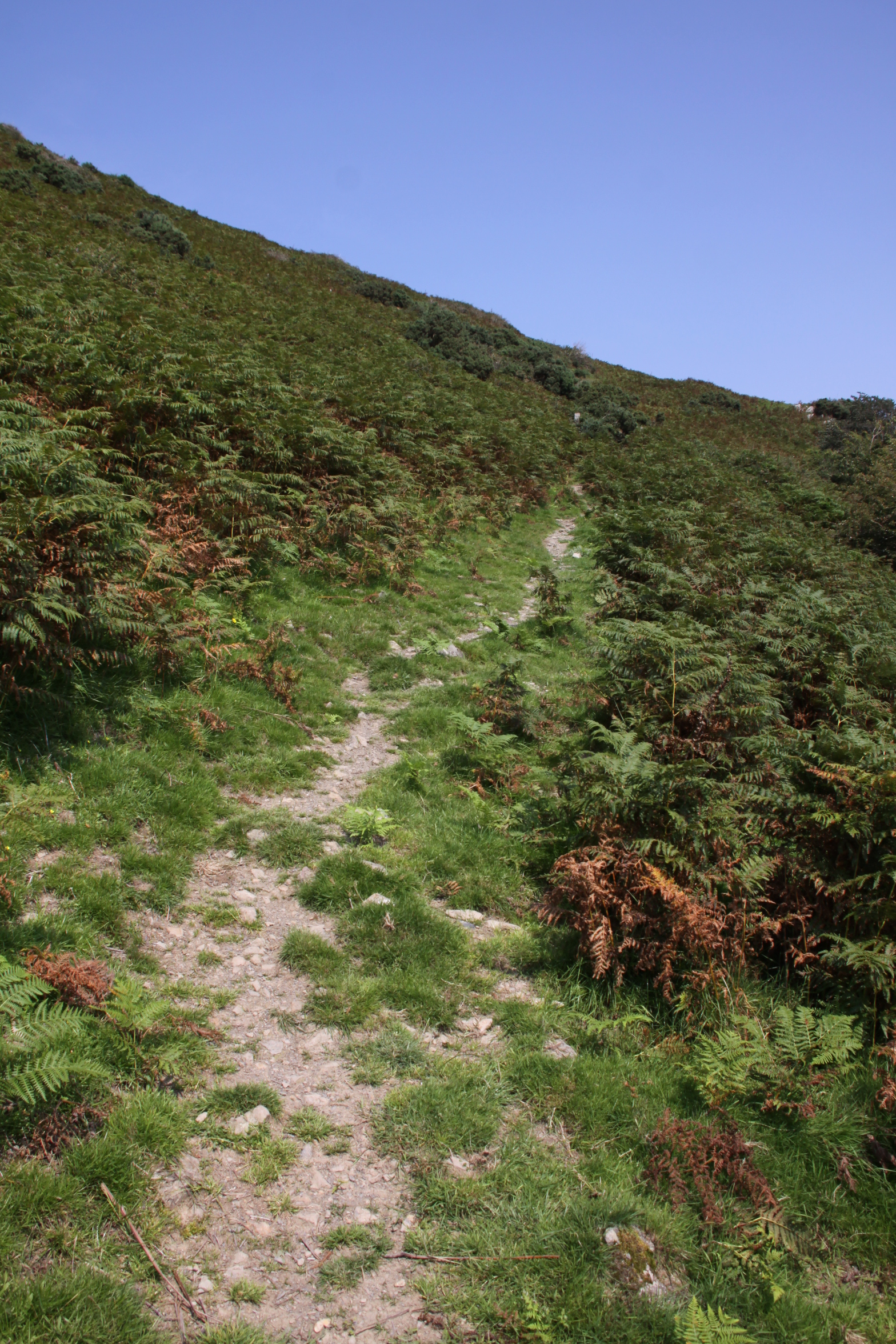
First, the track starts to climb fairly easily, as in the photo on the right, but as you near the top, where the bracken gives way to open ground, it becomes steep.  When you turn around to admire the view, the ground seems to drop sharply away beneath you, and falling would result in an unimpeded roll downhill.  I am very sure-footed, but instead of tacking to reduce the effort, I went straight up, leaning forward, to reduce the risk of tripping.  The views are stunning, just be careful. There are other public footpath approaches marked on the map, which might be easier.  Second, the hillfort of Tal y Gareg sits above the quarry.  Indeed, the quarry has removed a big part of the hillfort.  When you climb to the brick monument on the summit of the hillfort you are getting near to the edge of the quarry, and at the edge there is almost nothing to prevent you falling the steep drop into the quarry should you lose your footing – just fence poles with a single run of wire to mark the edge.   Perfectly okay if you’re aware of it, but do not let children loose up there.
Access over two sets of steps to the ridge at the top of the hill

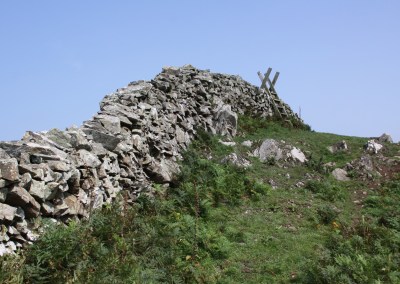
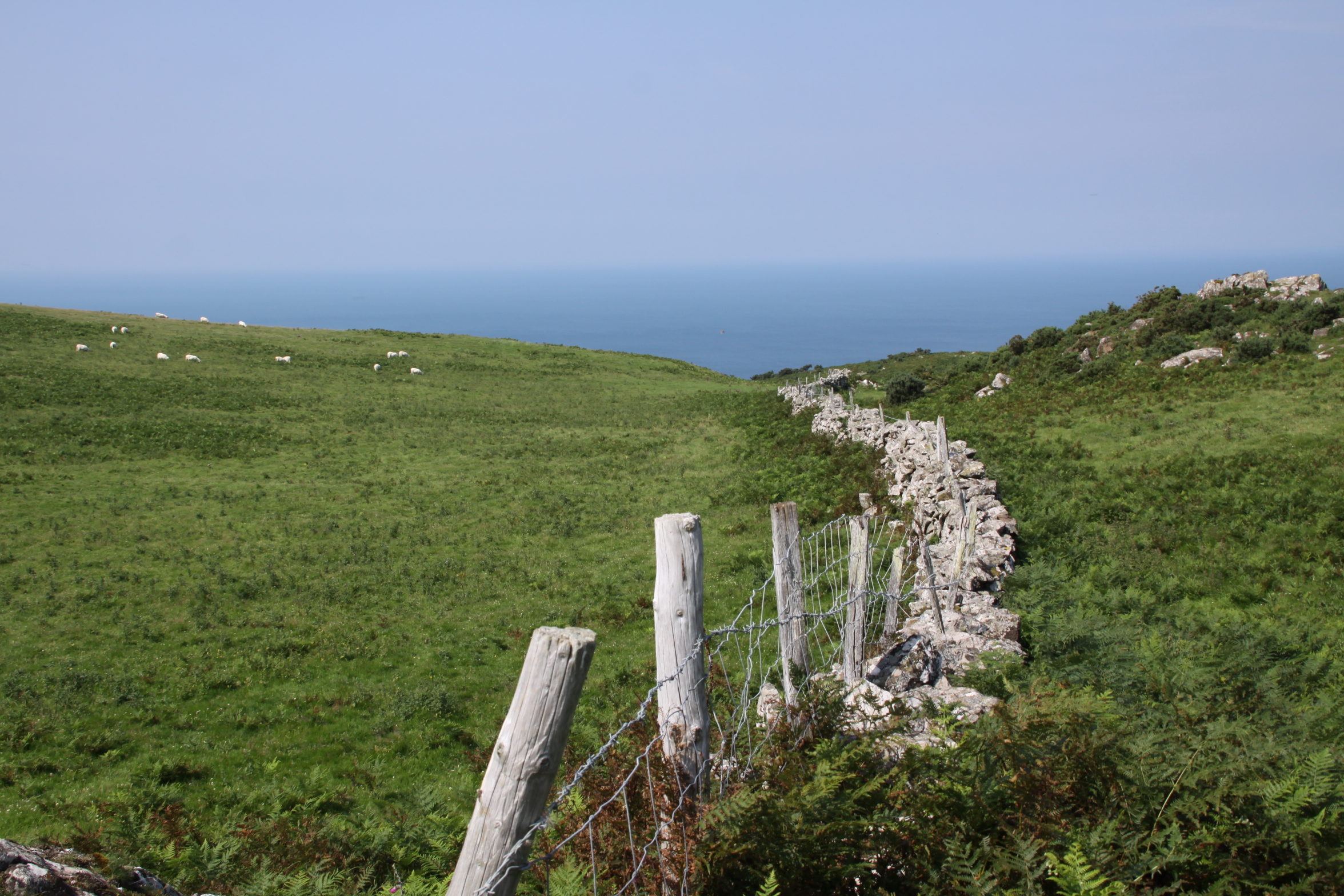
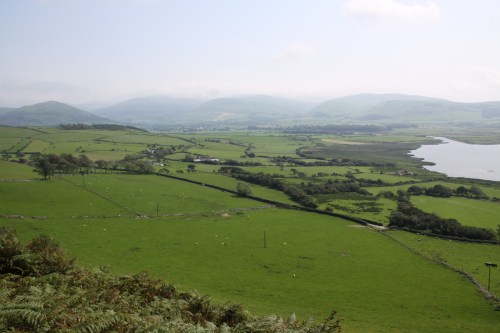
The top of the hill is a ridge that extends 1.5km to the northeast, with terrific views either side.  The ridge is enclosed today by a long, winding drystone wall that extends as far as the eye can see.  A short wooden ladder on either side of the wall allows you to cross the wall easily, but take care – two of the steps on the ridge side are rotten, one completely broken.  The inside of this drystone perimeter is divided up into separate enclosures by more drystone walling, but all of them have gates or are open so you can wander freely across the top.  To the southwest is the river Dysynni, at the eastern end are views over the hills flanking the valley, including Craig yr Aderyn (Bird Rock).
I was up there partly for the views, but mainly because I am on a hillfort mission at the moment and wanted to check out what was left of one of two small Iron Age hillforts.  In the area between the Mawddach estury and the Dyfi estuary are fifteen known hillforts.  These fall into two distinct geographical groupings, a northern and southern group.  Eight of the fifteen are in the southern group and I am hoping to walk all of those that are accessible by public footpath.

When the first hillforts were excavated during the late 19th Century, it was assumed that all hillforts were defensive, and some southern hillforts certainly were, but it is by no means clear if all hillforts were built as a response to conflict.  Because so few hillforts have been excavated in northwest and mid Wales, it is impossible to establish exactly what they were designed to do, and most of them probably had multiple functions.  I’ll be talking more about the roles of hillforts in this area on a future post.

It is almost impossible to photograph a hillfort sensibly at ground level, although some banks and ditches can usually be captured.  Aerial photographs and excavation plans are the best ways of of visualizing individual hillforts.
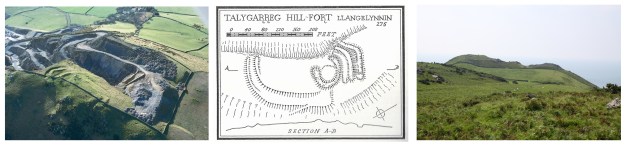
 

Another view of the quarry. Source: Gwynedd Archaeological Trust

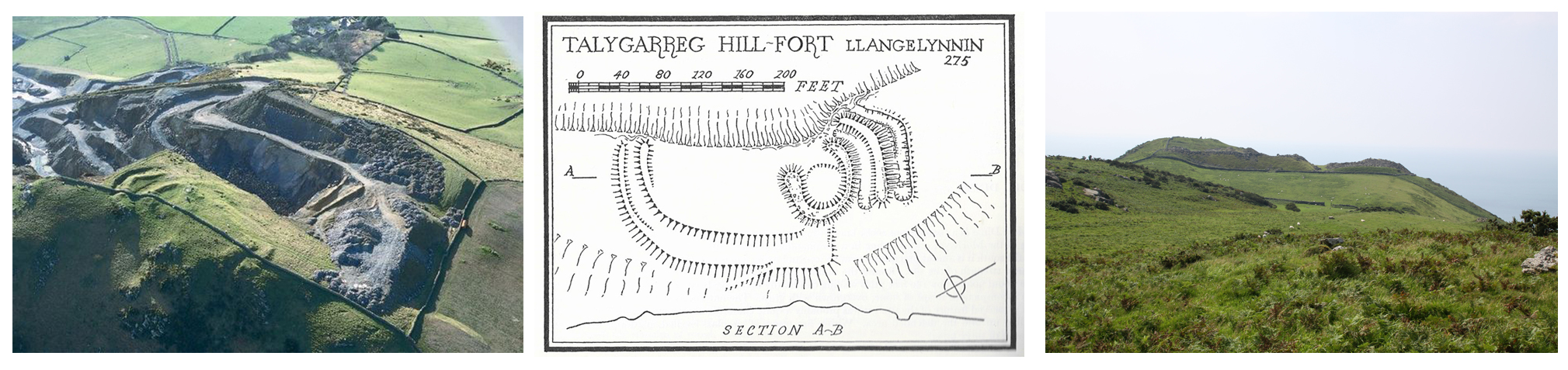
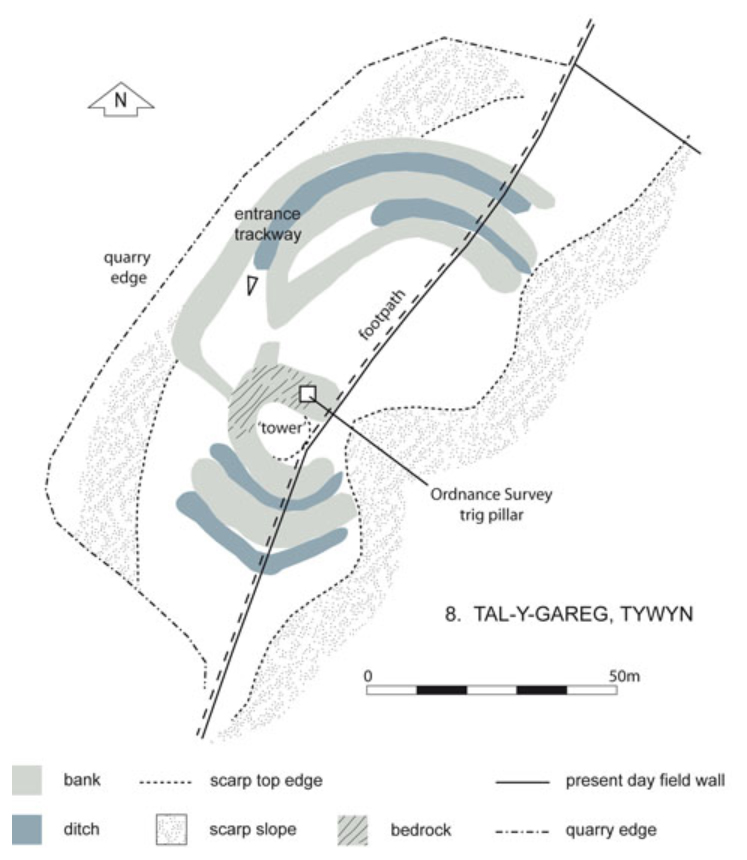
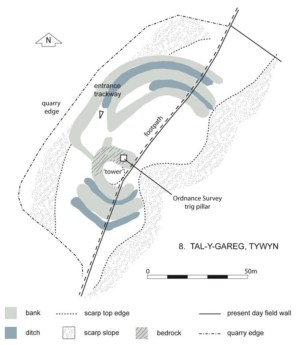
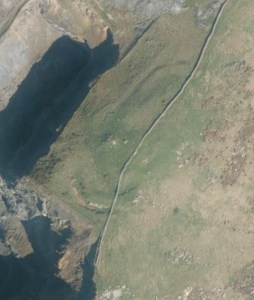
In fact, Tal y Garreg hillfort was very easy to spot from the ground, as the builders made use of a rise in the local topography and natural escarpments that face north.  Tal y Garreg means “end of the rock/cliff” and probably refers to the rocky ridge on which it is built. It lies at the southwest end of a 1.5km ridge at c.170m OD.   The natural lift in the land, shown on the above photograph at far right makes the hillfort highly visible from the ridge behind it.  The composite image above (click to enlarge if required) shows Tal y Garreg hillfort from the air with the 1967 site plan (upside down in terms of the photograph – Bowen and Gresham 1967) and a view of it from the middle of the ridge.  Another plan to the left offers a different view.  Today, massive piles of rock from the quarrying activity are left lying around, so it is not immediately easy to see the structural features and it helps to have the plan to hand to locate them.  There are two sets of banks and ditches, referred to as bivallate on the northeastern and southwestern sides.  The banks, or ramparts, were probably pallisaded to make it even more impressive from a distance, and to make it easier to protect if needed.  These ramparts contain an area around 45m long by 22m wide, small in hillfort terms.  Still, it was clear that although the space it contained wasn’t large, it had been built on an impressive scale.  The entrance was simple, inturned, and cut through the scarp to the north, facing the ridge.  It’s worth walking along the the edge of the drystone wall that runs behind the fort so that you can get a feel for the banks and ditches shown on the far left in the aerial photo, but be careful how near you get to the quarry edge.  One of the banks and ditches, cut into bedrock, is shown below, with the sea in the background.  Tal y Garreg overlooks the Dysynni valley rather than establishing a good line of sight with hills to the east or the coast to the north, although a short walk along the ridge on an averagely clear day provides those views.  The views have been radically changed by quarrying, but there were clearly good lines of sight across the sea, down into the Dysynni valley and back along the ridge.
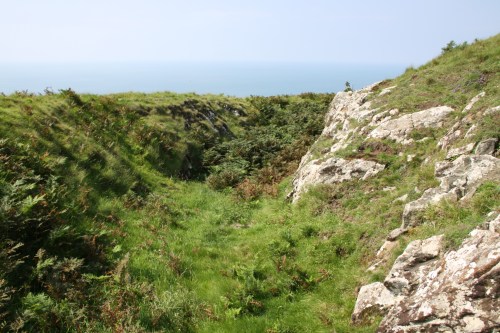
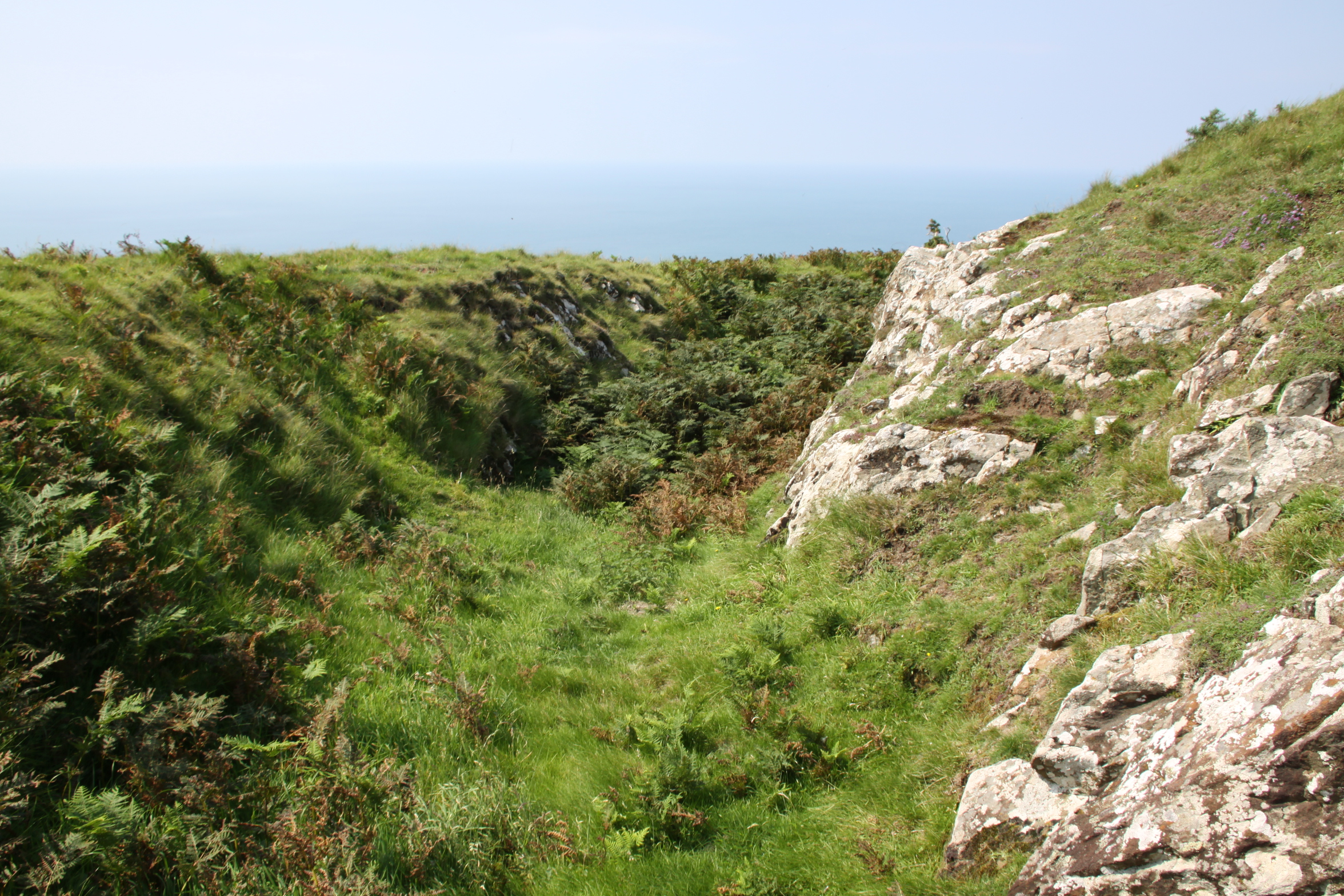
Ditch at Tal y Garreg, excavated through the bedrock. Ramparts on the bank at this point would have given views over the Dysynni valley and Cardigan Bay.

The site has never been excavated, so any thoughts on its date or the number of phases involved in its construction are purely speculative.  On both plans a 10m diameter “tower” is marked, and this was a circular structure, in front of which is a rock-cut ditch now full of stone, which may be the remains of the tower, suggesting that it was quite a substantial feature.  One proposal is that the small primary bivallate hillfort may have been overlain by a smaller and later fort that made use of the earlier features, and that the tower may have been part of this later re-use, dating to a Roman or post-Roman/Early Medieval re-occupation.  In fact, there is so little evidence of Roman presence in the area that it seems rather unlikely that a Roman fort was located here, so it is more likely that any second phase was post-Roman.
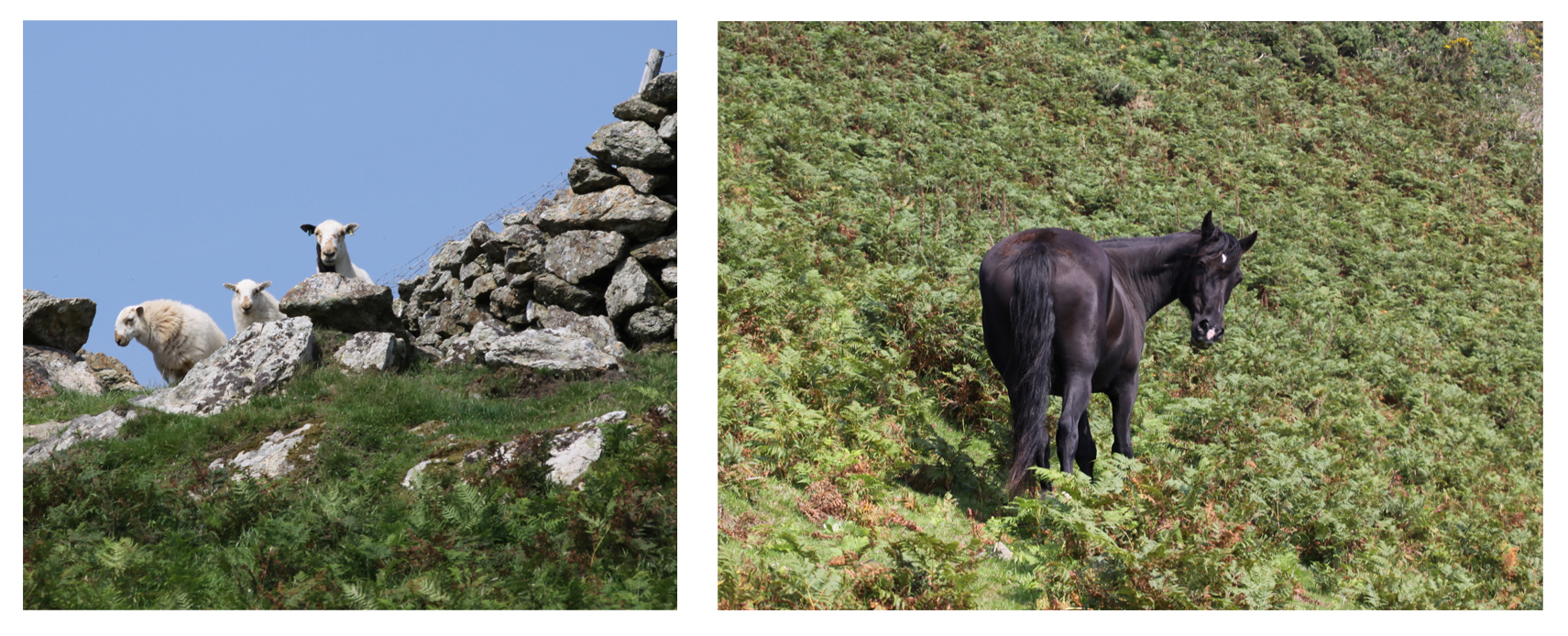
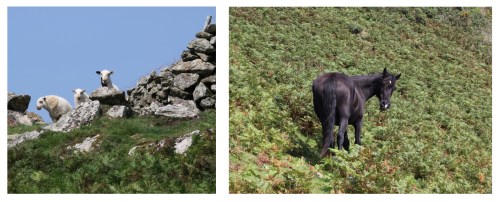
The Tal y Garreg hillfort is so small that I am not sure that it really qualifies for the title “hillfort,” when compared with more massive and impressive examples, that contained a number of other structures within their ramparts.  It does, however, feature typical hillfort characteristics. It took advantage of strong strategic position that could be partially barricaded with banks and ditches on vulnerable sides, using steep sides to provide natural barriers to attack.  Like most hillforts, although not all, it is on high ground overlooking good farming land or pasture.  Although there are no known settlements in the area, farmsteads were almost certainly dotted around the landscape much as they are today, and the hillforts probably overlooked some of these in the valley.  The ridge itself may have been used for grazing livestock, just as it is today. In the photograph below, the sheep were on top of the ridge and the horses were just outside the drystone wall at the top of the approach to the ridge.
The hillfort had no water supply other than rainfall.  This small defended enclosure could not have sheltered large numbers of people against hostilities, and could not have been reached in a hurry from the valley below, so it was either designed to shelter a privileged few;  to store important resources in a relatively inaccessible location;  to segregate certain centralized activities in a single location;  to be a visible symbol of territorial tenure – or a mixture of various roles.
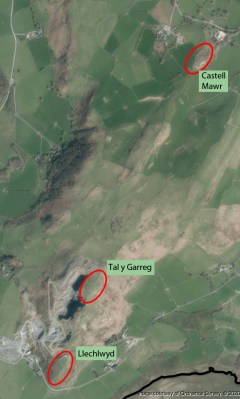
Located both on the edge of the Dysynni valley and on the coastal plain, lines of communication could have extended both on a north-south axis and along the Dysynni valley, past Craig yr Aderyn (Bird Rock) hillfort, and into the Tal y Llyn valley heading northwest towards the hillforts near Corwen and Ruthin.  The ridge itself would have provided a high-level route alongside the Dysynni valley for c.1.5km.  At the other end of the ridge is another hillfort, Castell Mawr, which appears to have had a large annex that could have been used as a livestock corral.

Tal y Garreg is only a short walk from Llechlwyd hillfort, which also sits on the side of Tonfanau quarry, and I will be posting about in the future.  Both are poorly understood, and it is not known if they were related to each other or were chronologically separate.  They could have been contemporary but they may have been separated by anything from years or decades to one or more centuries. Until they are excavated this relationship will not be clarified.
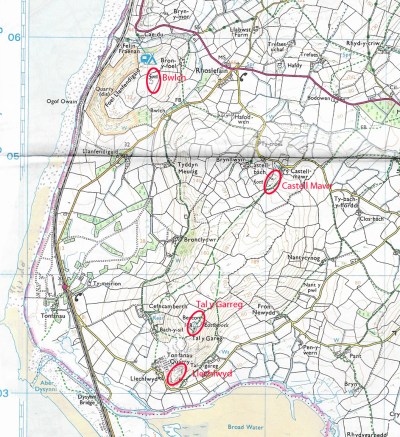
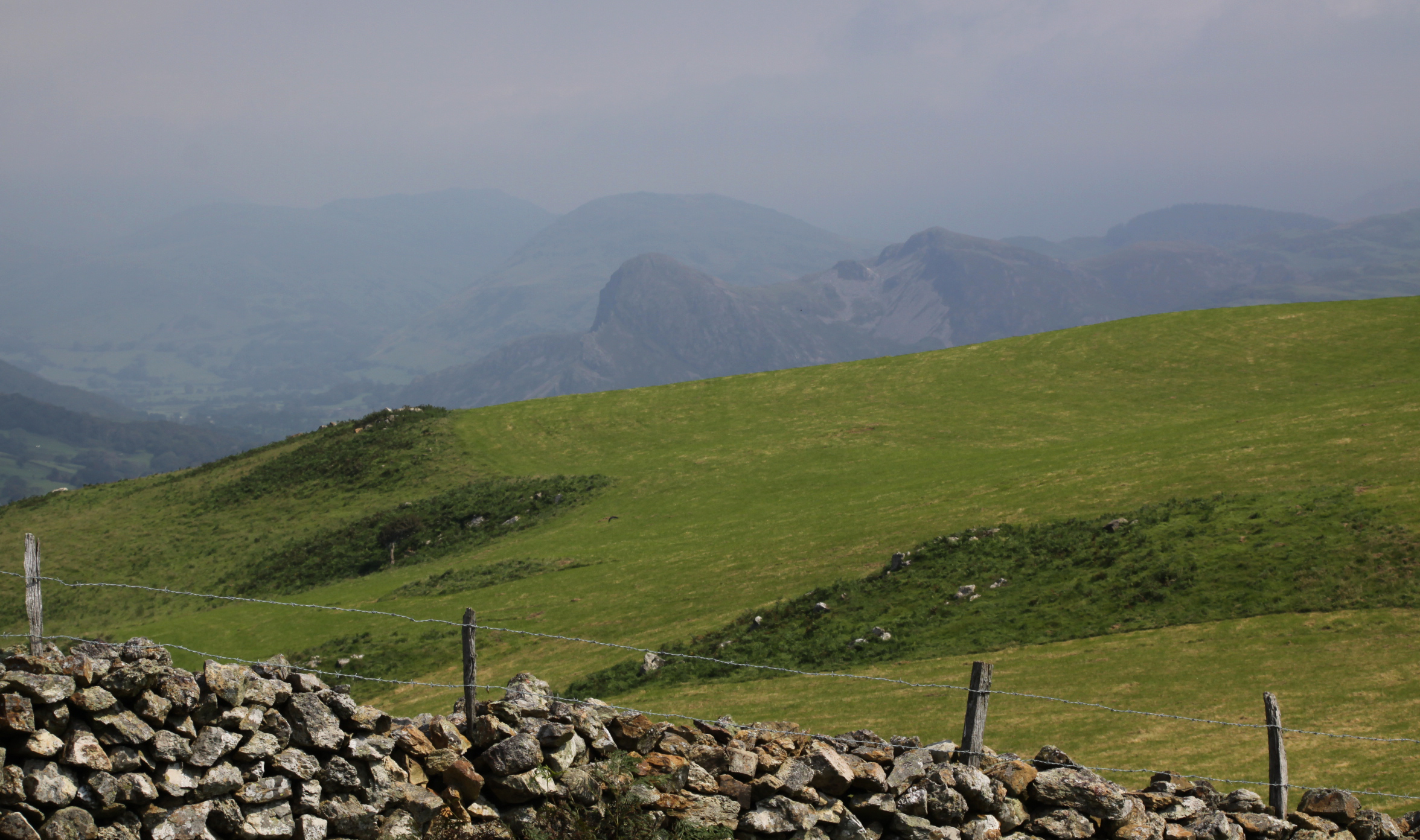
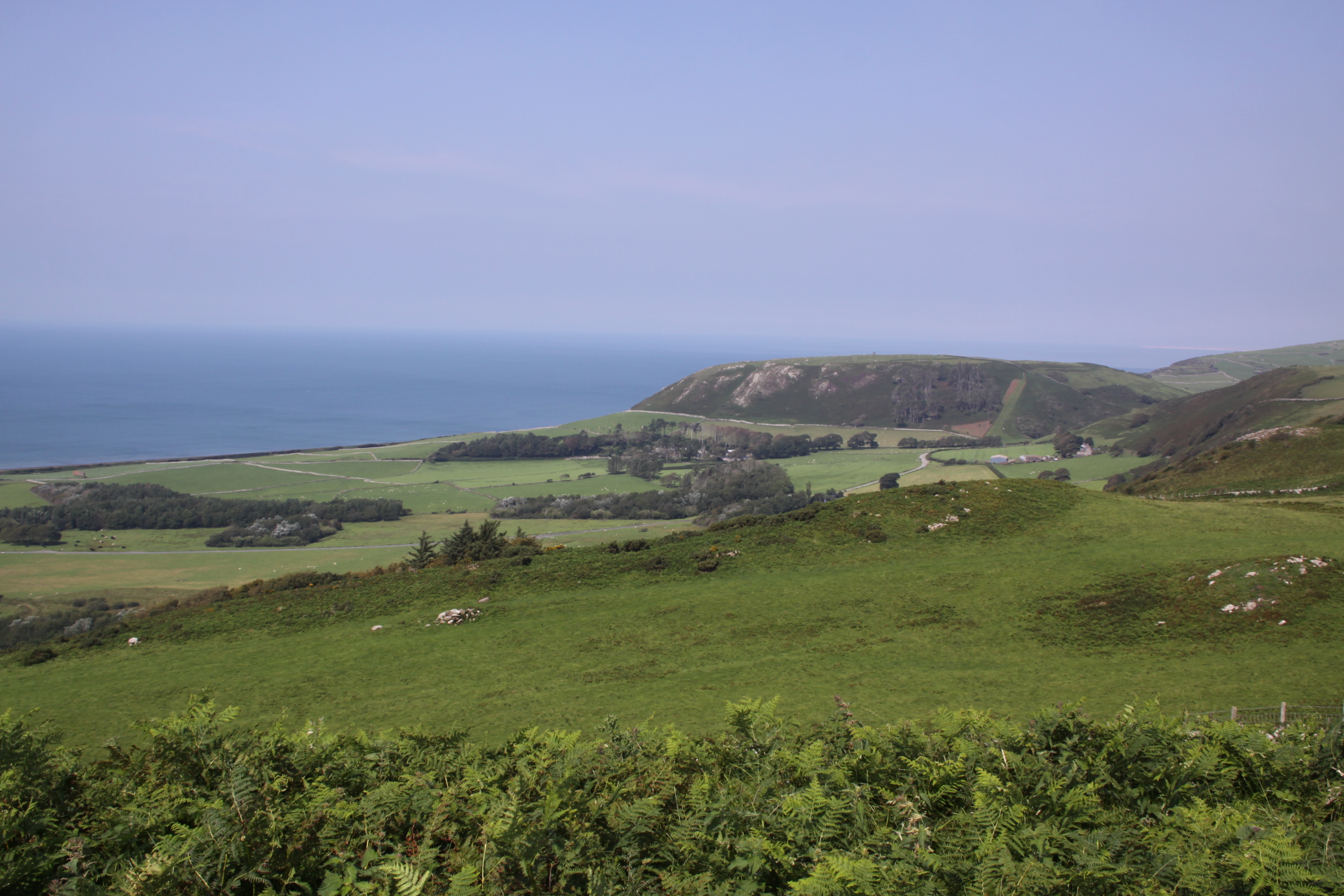
I wanted to see if there was a clear line of sight from Tal y Garreg to the hillforts of Llechlwyd, also at the southwestern end of the ridge at the top of Tonfanau, Craig yr Aderyn (Bird Rock) c.8km to the east and Bwlch hillfort on the next hilltop, 2km to the north, Foel Llanfendigaid.  As none of these sites have been excavated it is not known whether they were contemporary, but in the event that they were, having a clear line of sight might have had many benefits, irrespective of whether the occupants of the hillforts were friends or enemies. The nearest hillfort, Llechlwyd, is visible from Tal y Garreg, which has a view down into the much lower promontory fort.   Craig yr Aderyn is visible from Tal y Garreg, although in the distance.  If required, it would have been easy enough to set up a signal on a clear day.  Bwlch is very easily visible, and looks like the perfect location for a hillfort.  Between the two, a near-flat piece of coastal plain is divided today into fields and used for pasture.
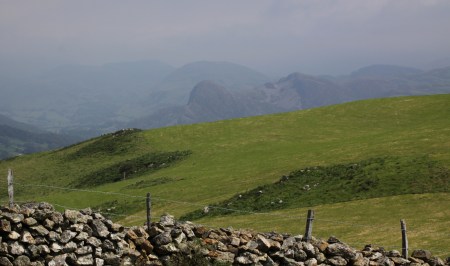
Craig yr Aderyn (Bird Rock) c.8km from Tal y Garreg
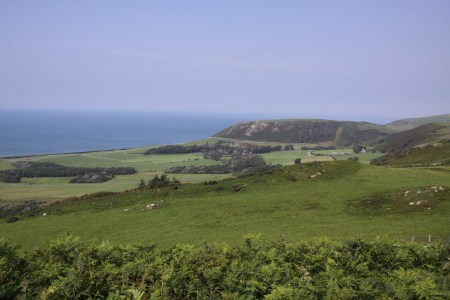
View from Tal y Garreg to Foel Llanfendigaid, on top of which is the hillfort Bwlch

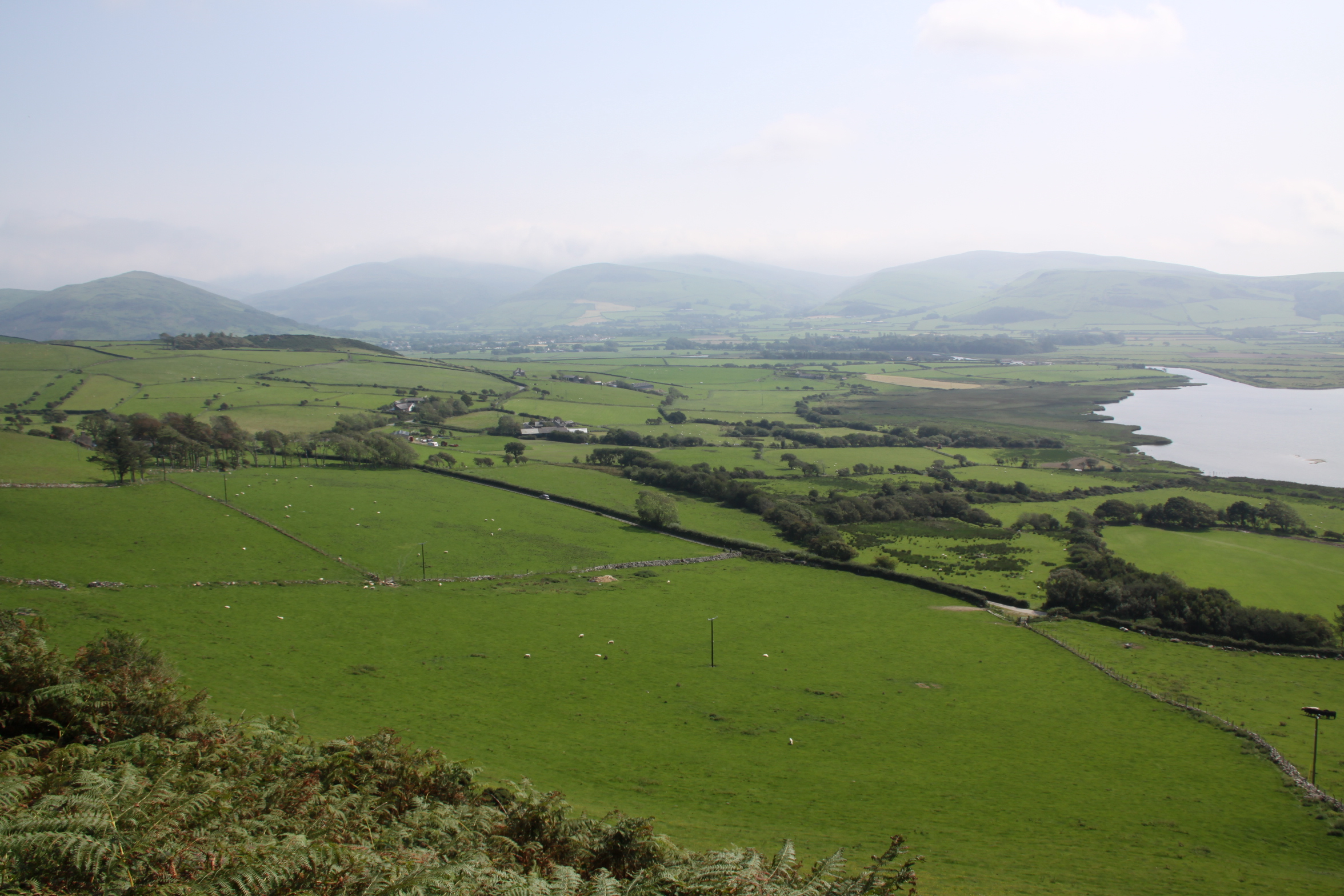
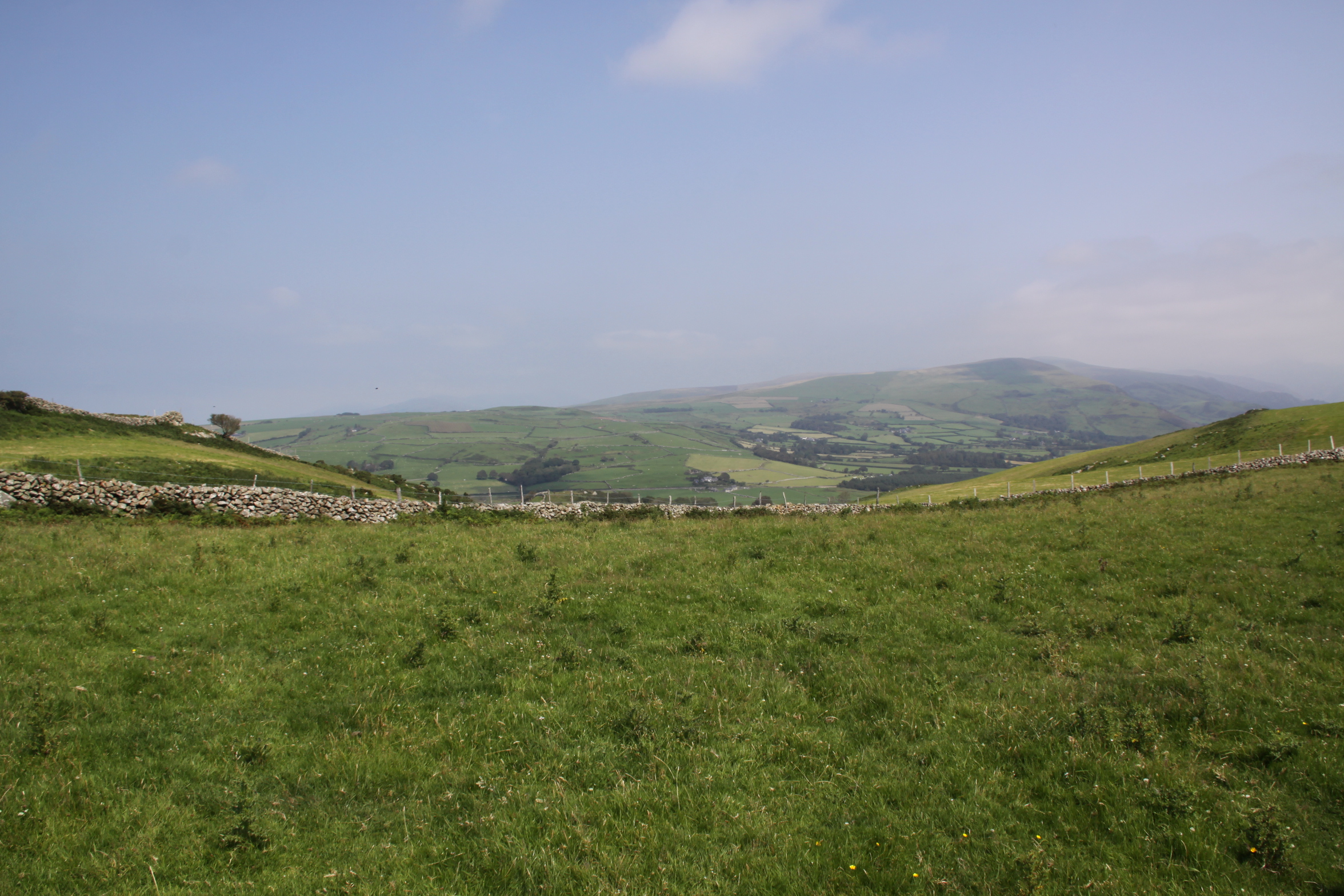
It was useful to see what could be viewed when outside the hillfort, but still along the ridge, and it was impressive how many broad views were available from the ridge beyond the hillfort, some of which are below, all overlooking good quality pasture, currently being grazed by sheep and cattle, and far into the distance in all directions including the sea.  It was a hazy day so the views weren’t quite as spectacular as they might have been, but they showed enough to indicate that Tal y Garreg was a good site for watching movements for many miles around.
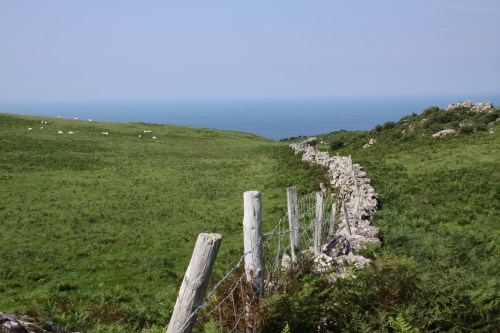
View from one side of the ridge to the other, taken from the stile.
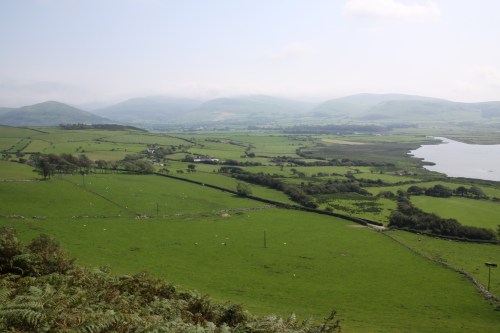
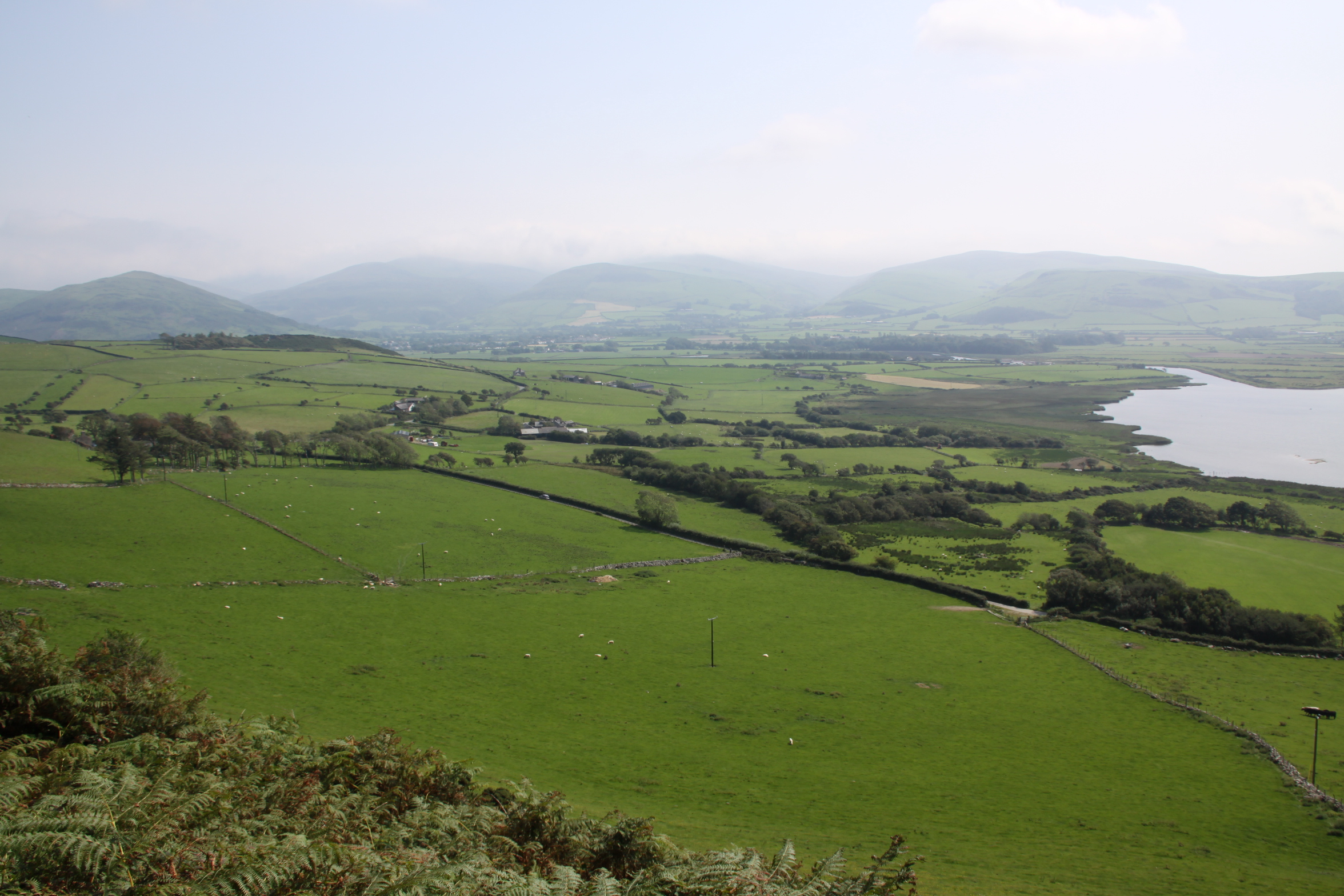
Dysynni valley, looking east
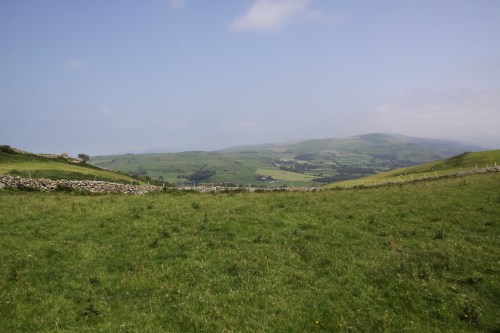
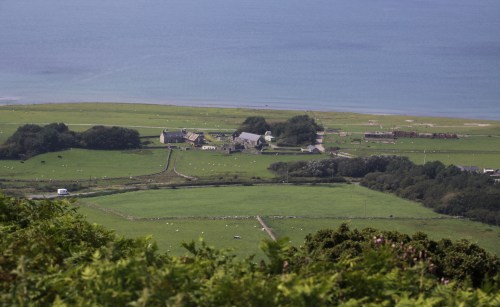
A final though on the views available from the hillfort and visibility from below is that a couple of days later I went to walk along the Dysynni from Tonfanau bridge to Ynysymaengwyn, skirting the broadwater, and found that the entire of the top of Tonfanau was under a cloud, just where Tal y Garreg was built.  It was impossible to see its location, and it would be impossible to see anything at all from the hillfort down into the valley.  This could have been a distinct disadvantage in its location!  The second hillfort, Llechlwyd, which is on the lower promontory at 70m OD, was not shrouded in cloud, so although it had no visibility of the ridge behind it, it did have the advantage of being less prone to cloud cover.
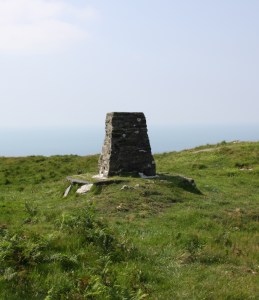
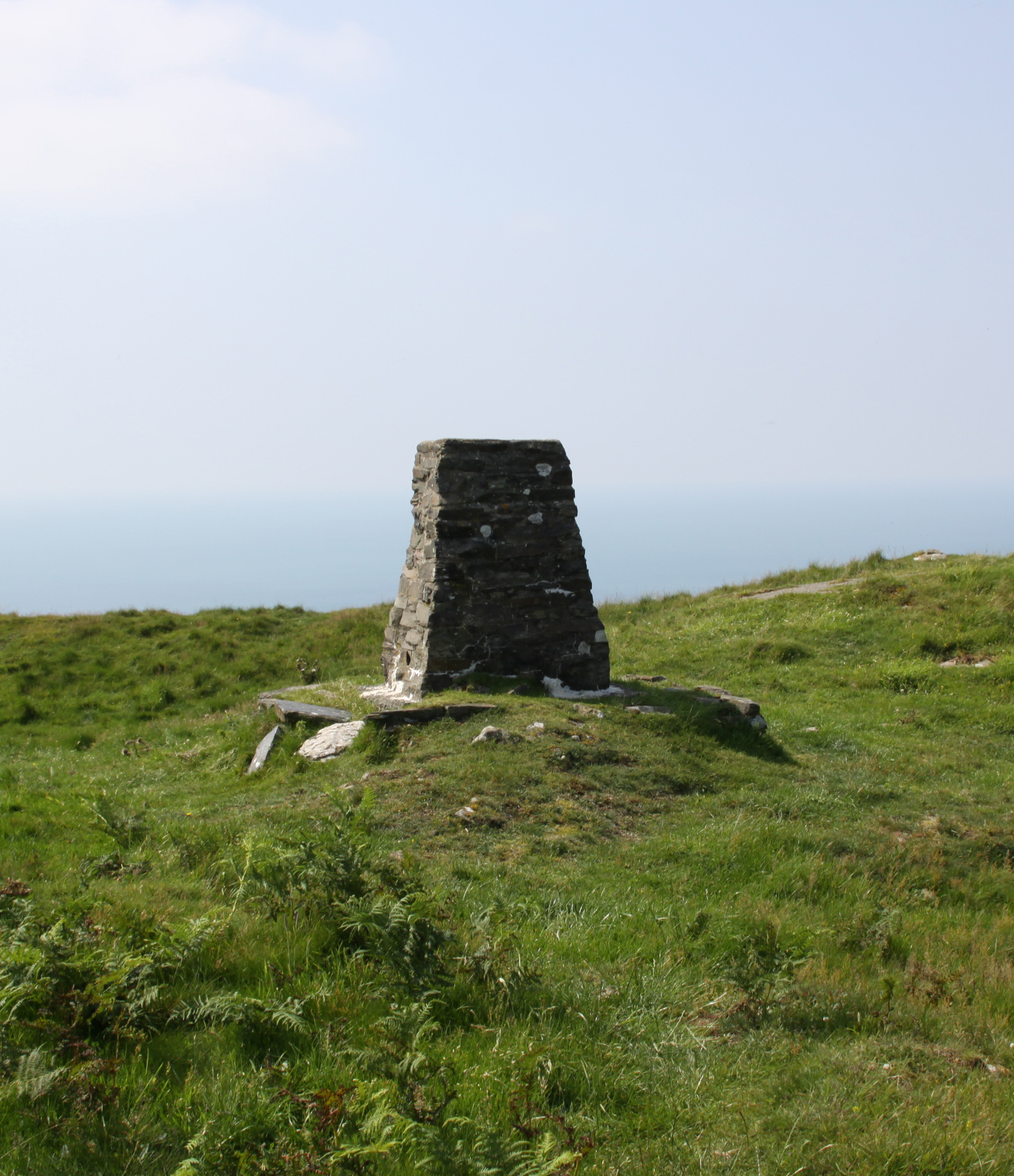
There’s a modern structure on top of the hill at this point, which is an Ordnance Survey trig pillar.  There are also the foundations of an old shipping signal.  Ordnance Survey trig pillars (or points) are part of the history of mapping in the UK.  Trig is shorthand for triangulation, and in 1936 the first of c.6500 trig pillars were built as part of the project to retriangulate Britain.  Most of them made of concrete but the Tal y Garreg trig pillar was made  of local stone, and is shown on the right.  The OS is still responsible for maintaining the pillars, of which around 6000 remain at similar locations. The project was designed to improve the accuracy of mapping, and although it has been surpassed by modern techniques and technologies, it revolutionized map-making in Britain.  Here’s an excerpt from the Ordnance Survey page on the subject of the trig pillars:

Triangulation works by determining the location of a point by measuring angles to it from known points at either end of a fixed baseline and in this case, those known points were the 6,500 + trig pillars erected across the country. In practice, a theodolite would have been secured to the top mounting plate and made level. It would then be directly over the brass bolt underneath the pillar. Angles were then measured from the pillar to other surrounding points. For the highest accuracy primary points in the retriangulation, many rounds of angles would have been measured with the observations taking several hours.

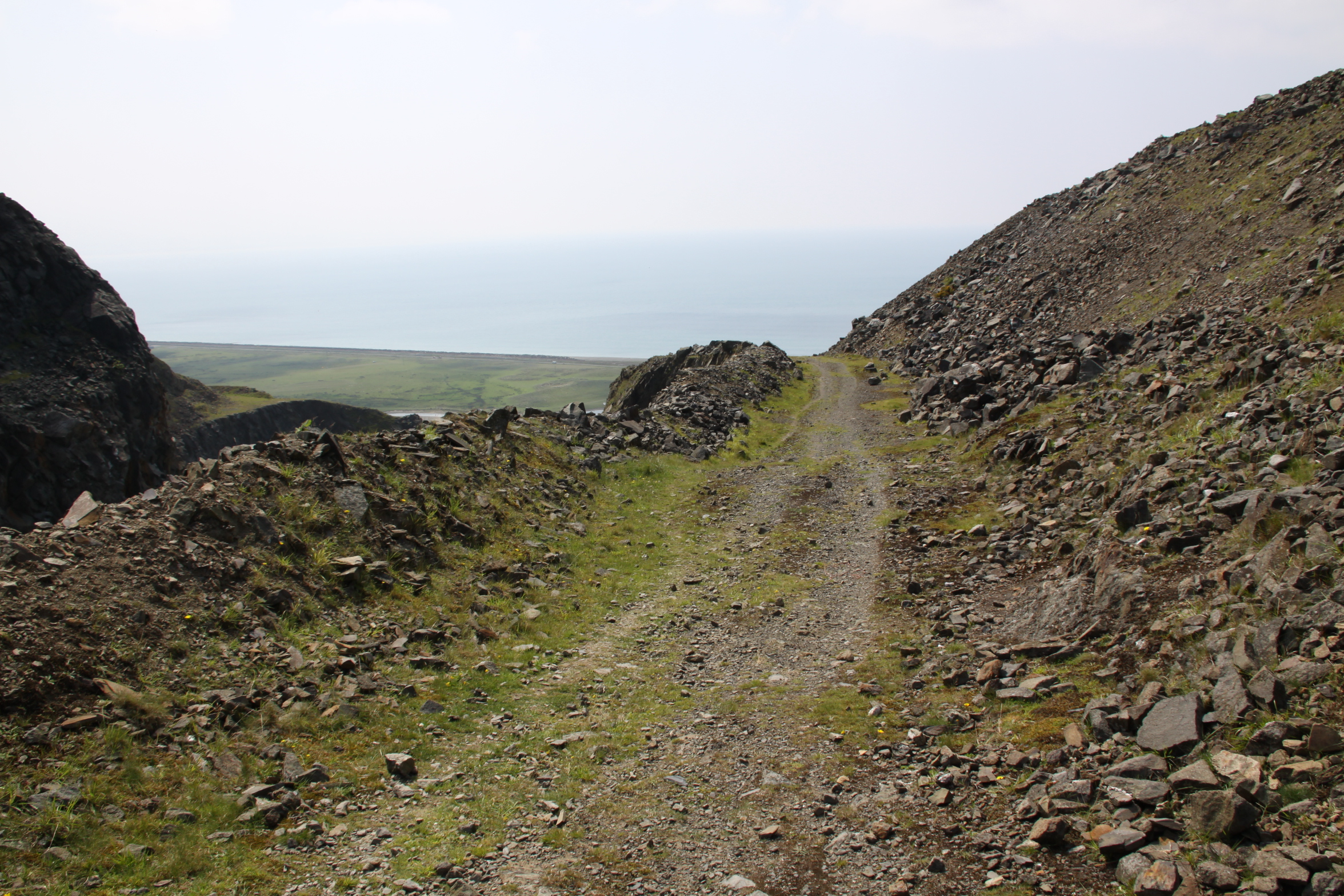
I was expecting to have the hill to myself, but there was a group of around 10 people up there enjoying the view.  We exchanged cheerful greetings, and when they left I noticed that they took the  wide quarry track that runs on a shallow incline alongside the quarry scar.  Out of curiosity I took the same route down, and it runs into the quarry yard, which is the same as the access point to the Wales Coast Path.  A farm gate opens out onto the B-road.  The quarry track is not a public footpath, but it is not barred in any way, is safe, and as the quarry is out of use it seems okay to use it.  It’s a much easier, much shallower incline than the steep path that I took up.  Although not as attractive, it gives remarkable and safe views over the quarry itself.
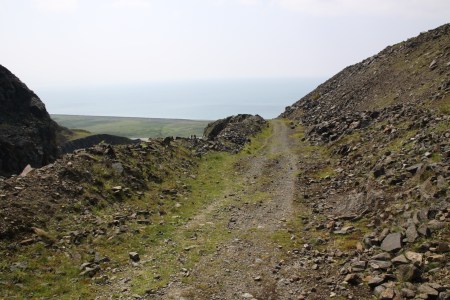
The quarry track

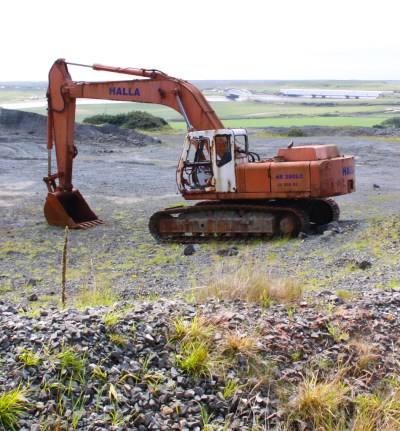
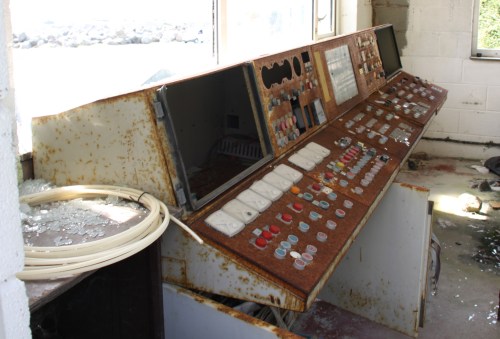
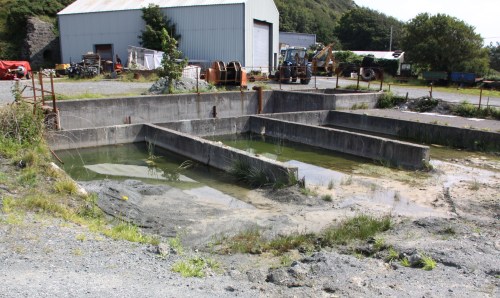
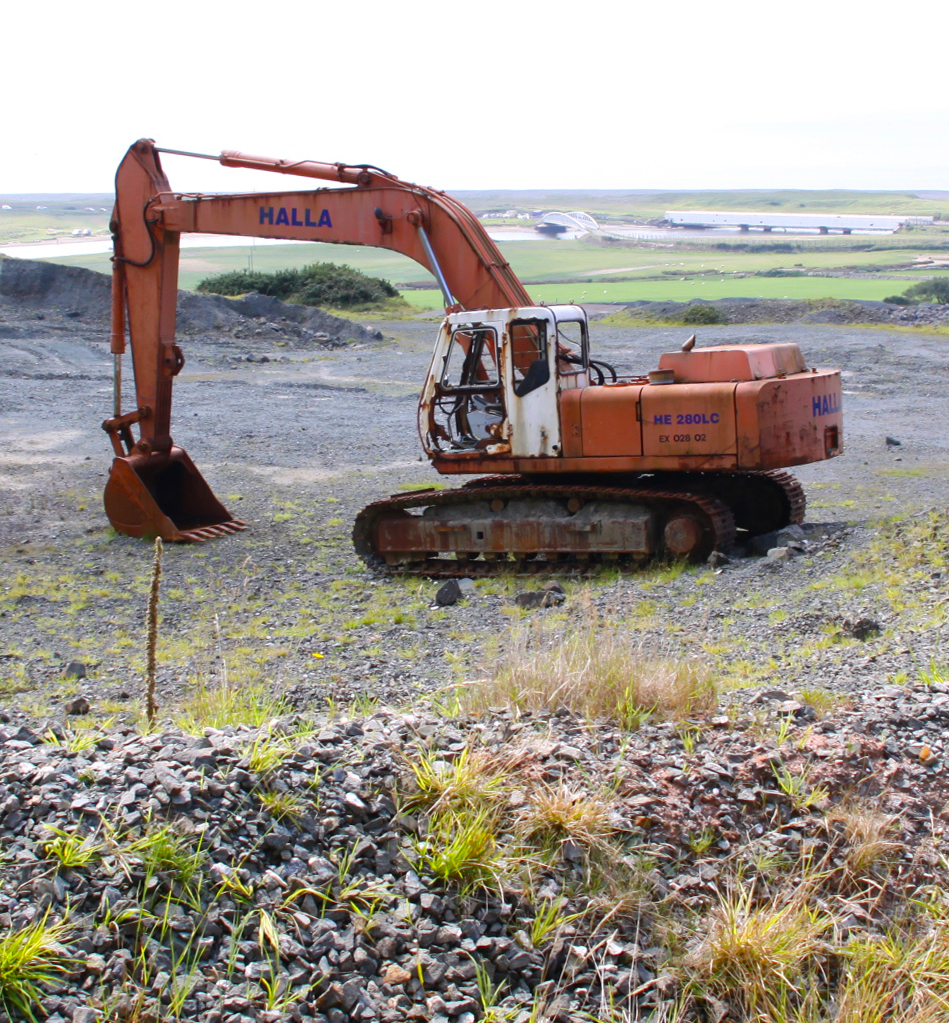
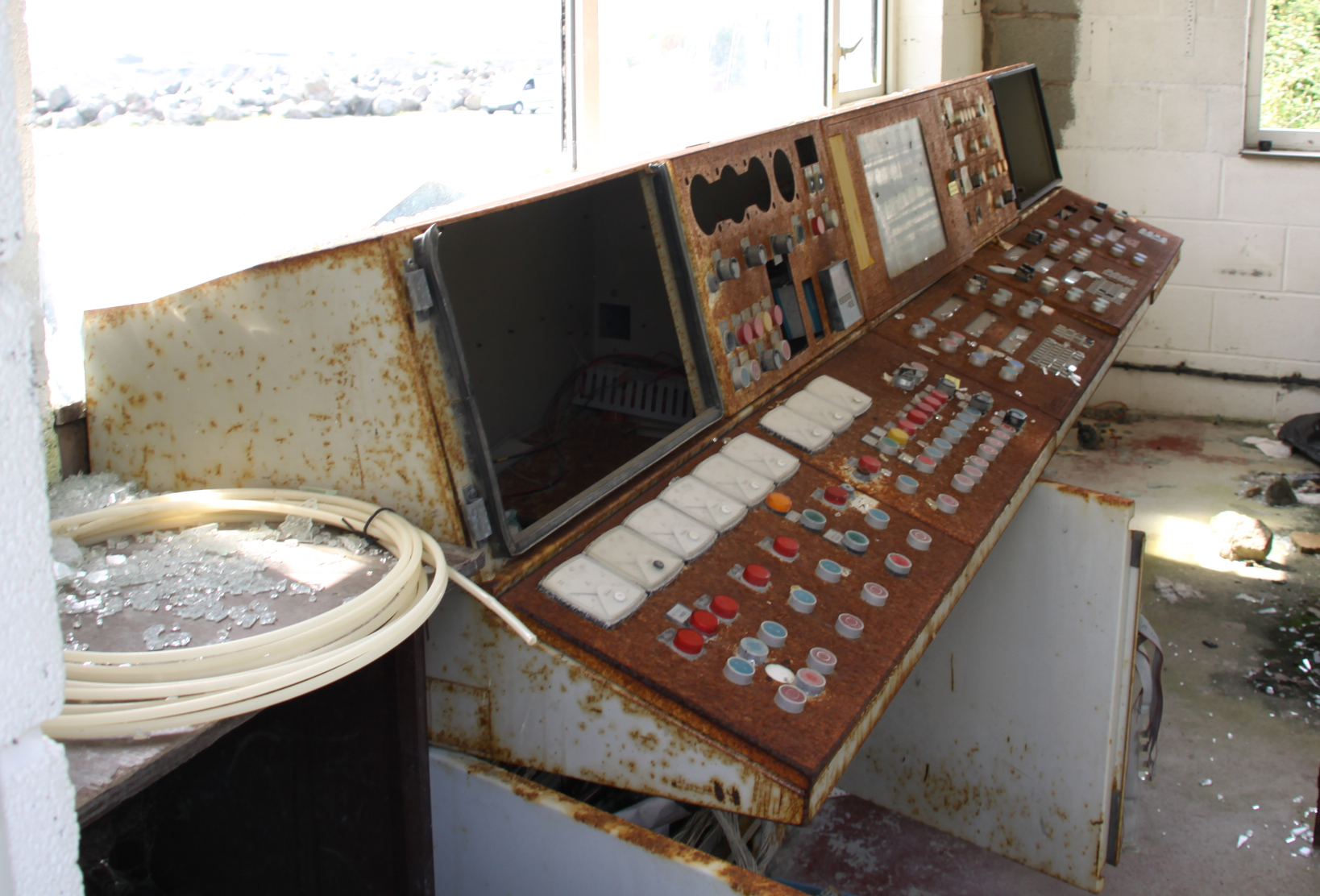
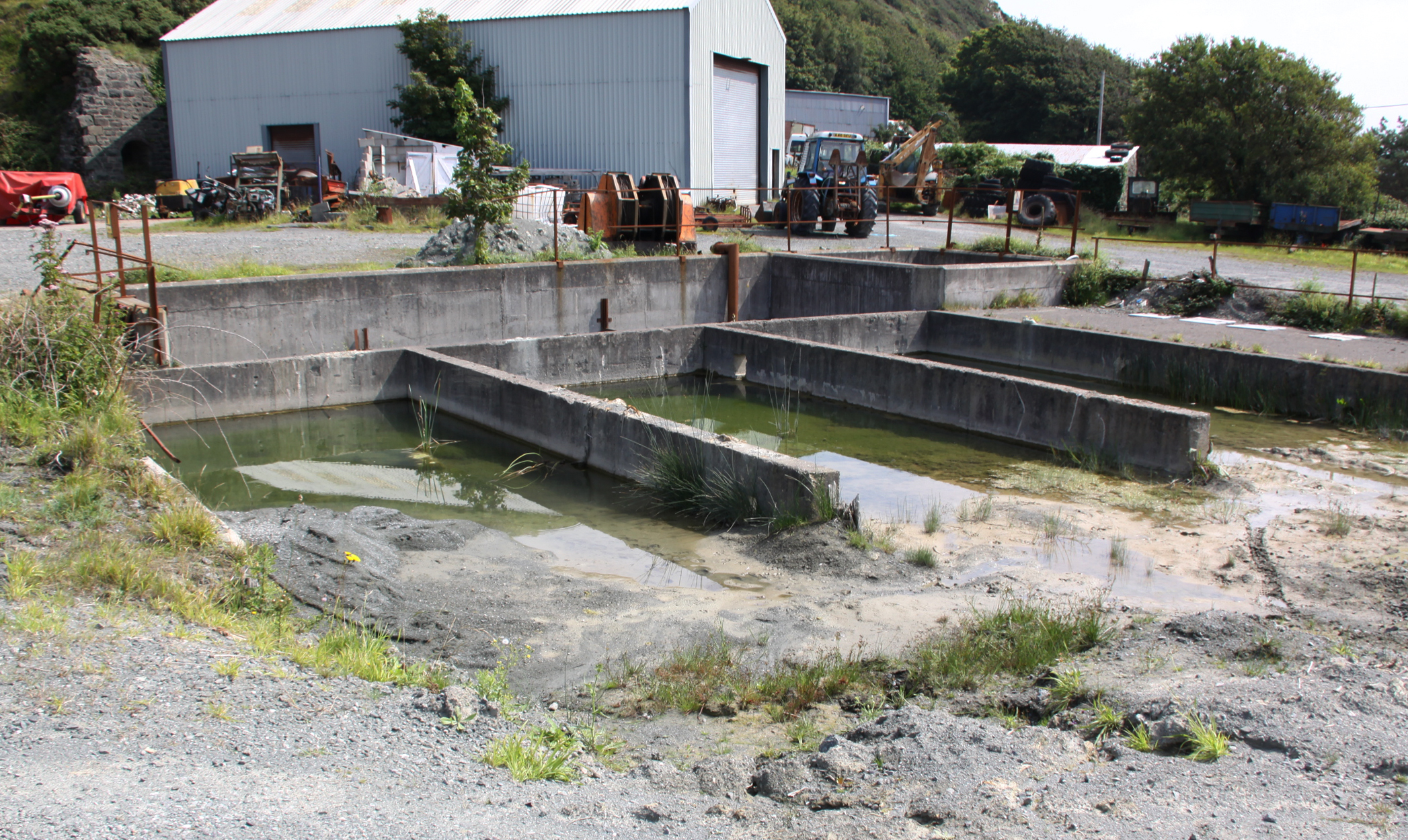
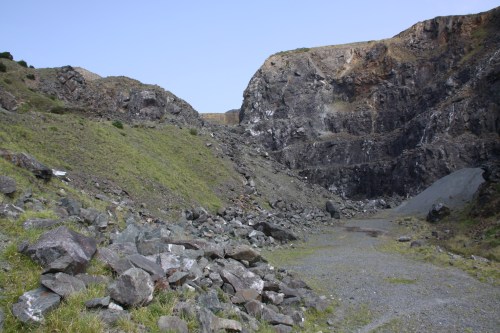
When you reach the quarry yard, you’ll find that it is a piece of industrial archaeology in its own right, with an abandoned control panel in a small building, and various bits of abandoned heavy-duty hardware lying around, plus various shallow concrete water holders, presumably for filtration purposes.  One of them had a healthy population of bullrushes growing out of it.  Gwynedd Archaeological Trust reports that the quarry was first used for extracting granite, which is unusual in this area:

The ridge has been quarried since at least the nineteenth century. A narrow-gauge link to the Cambrian Railways was put in c. 1898, superseded by a standard-gauge siding in 1906, around the time it was taken over directly by John Corbett of Ynysymaengwyn, working as Tonfanau Granite Quarries. In 1965 this became a subsidiary of Penmaenmawr and Welsh Granite Co., and operated as Kingston Minerals from 1965 to 1981. It was thereafter worked by Mr G.C. Evans of Aberllefenni.

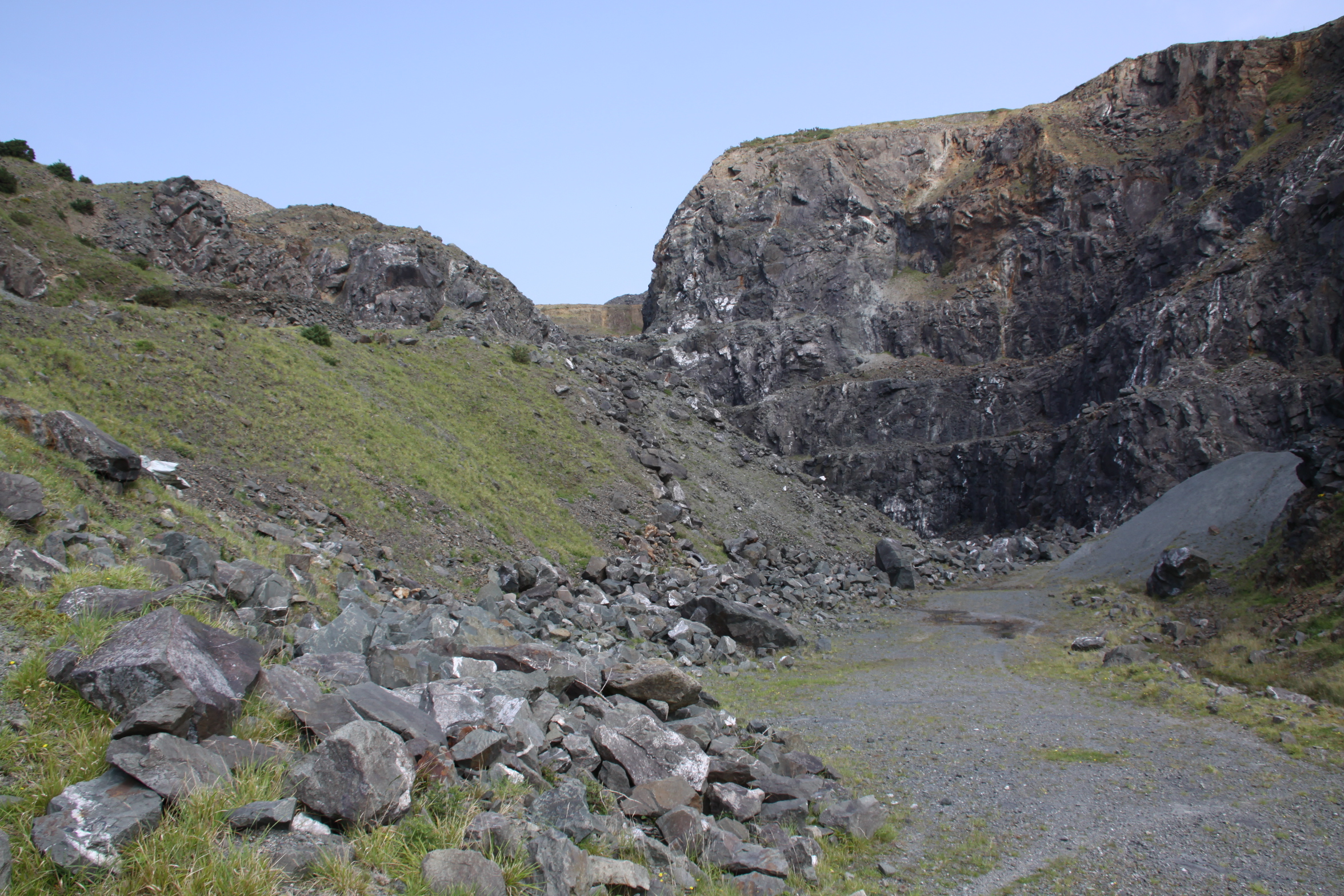
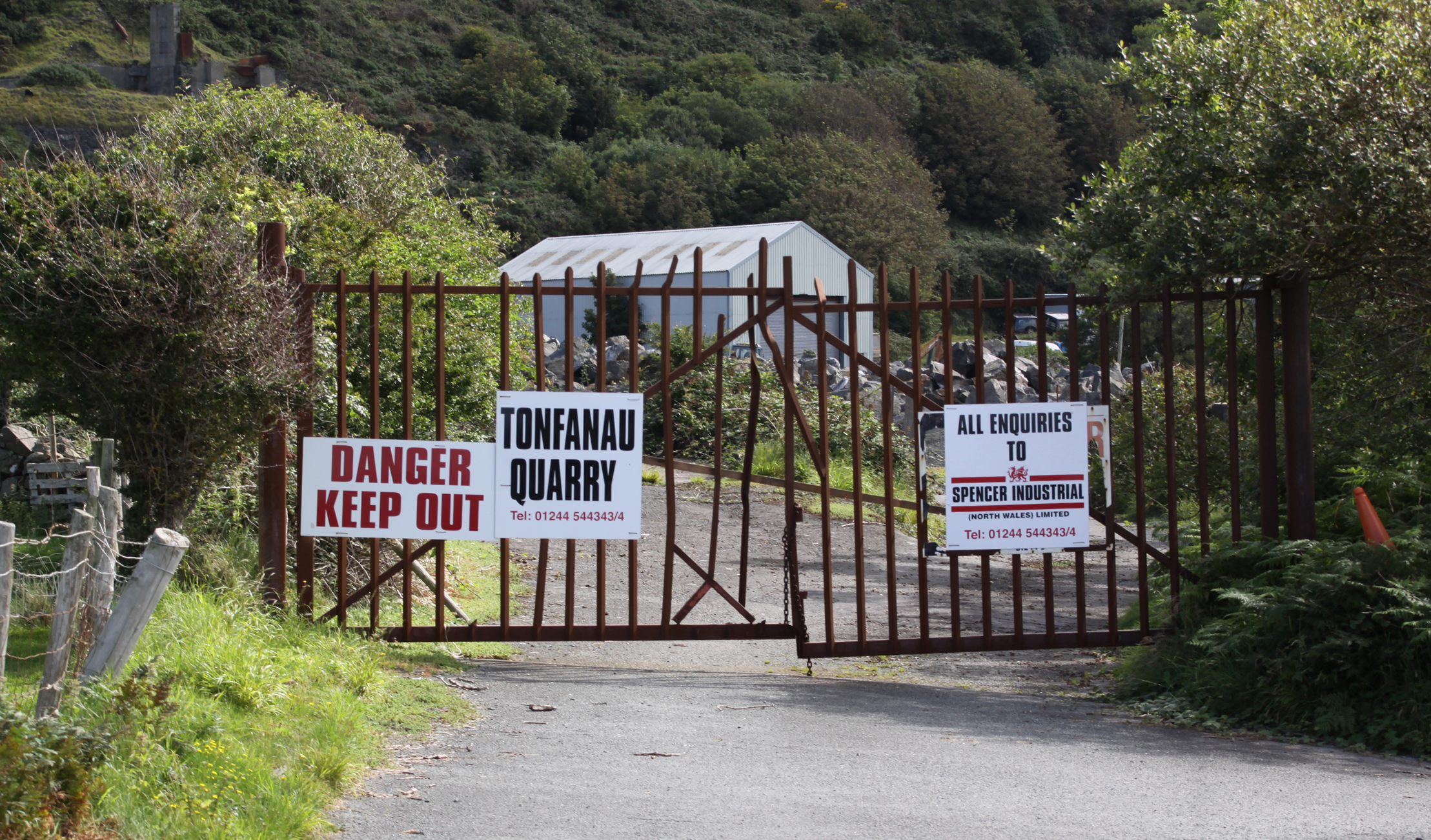
The report goes on to say that latterly the quarry was used to exploit a sill of coarse dolerite and gabbro that is suitable for use as road surfacing material.  Here are a few snaps of the quarry as I was on my way out, but I will be going back to explore in more depth.
Sources:

Bowen, E.G. and Gresham, C.A. 1967.  History of Merioneth, volume 1.  From the earliest times to the Age of the Native Princes.  The Merioneth Historical and Record Society.

Gwynedd Archaeological Trust 2009.  A visitor guide to the main Iron Age hill forts of Meirionnydd.  Project No. G1770. Report No. 839

Sjöberg, K.S. 2014.  Hidden possibilities.  Possible uses of hillforts in southern Gwynedd, north-west Wales. Unpublished Masters thesis, Uppsala University, Department of archaeology and ancient history. http://www.diva-portal.org/smash/record.jsf?pid=diva2%3A799381&dswid=8151

Websites:

Coflein
https://www.coflein.gov.uk/

Gwynedd Archaeological Trust (no date).  Historic Landscape Characterisation: The Dysynni
http://www.heneb.co.uk/hlc/dysynni/dysynni2.html

Mad weather, but still very beautiful

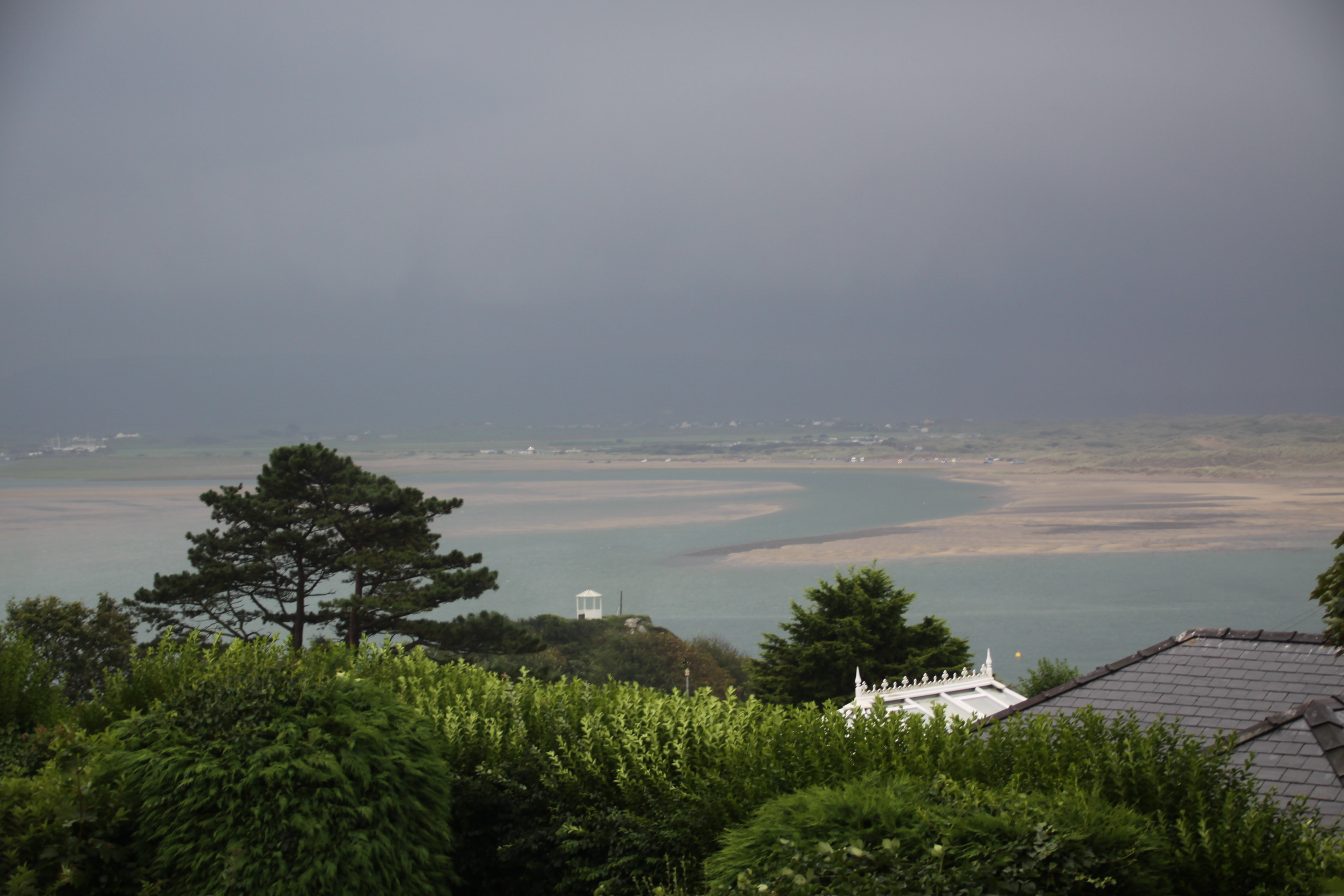
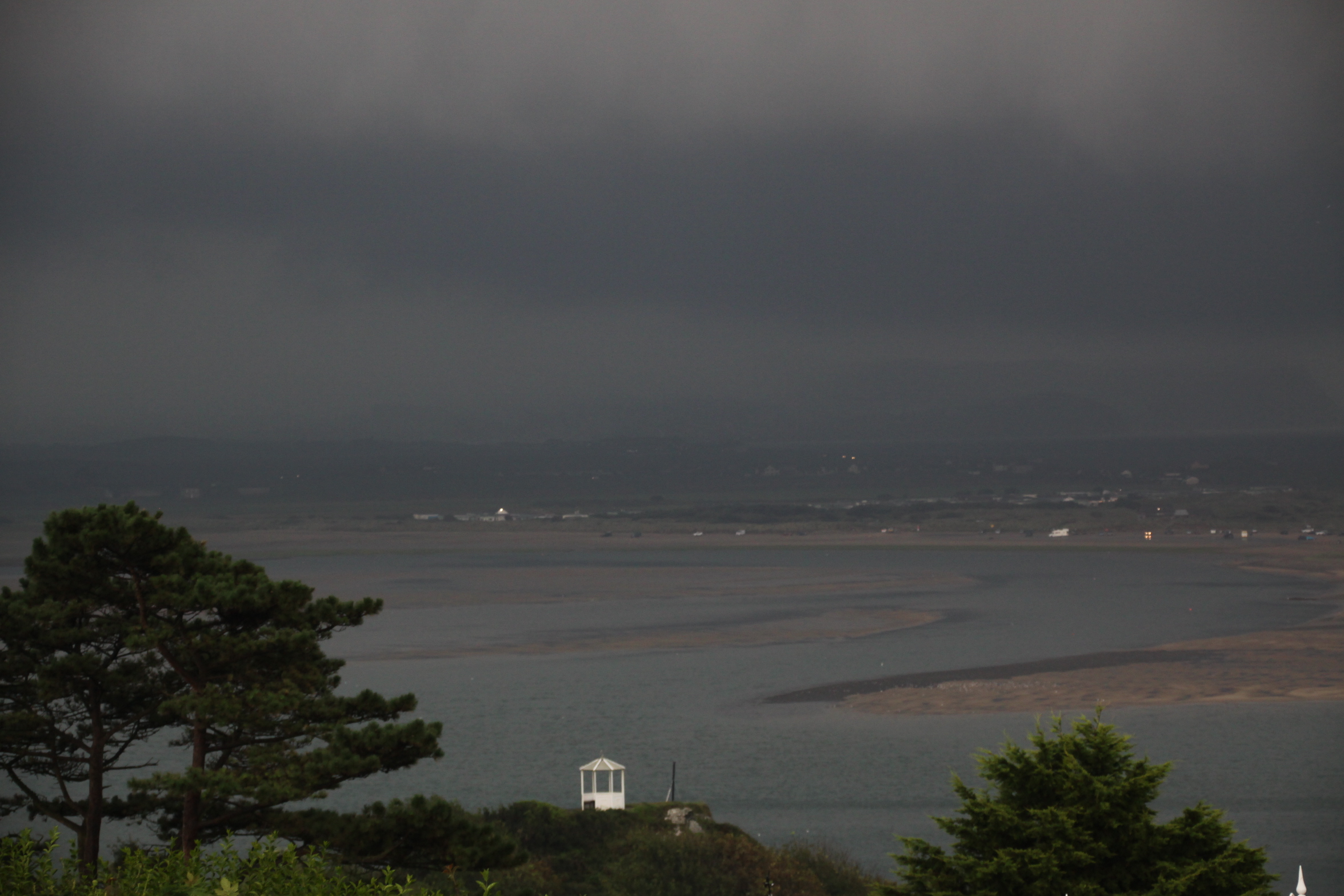
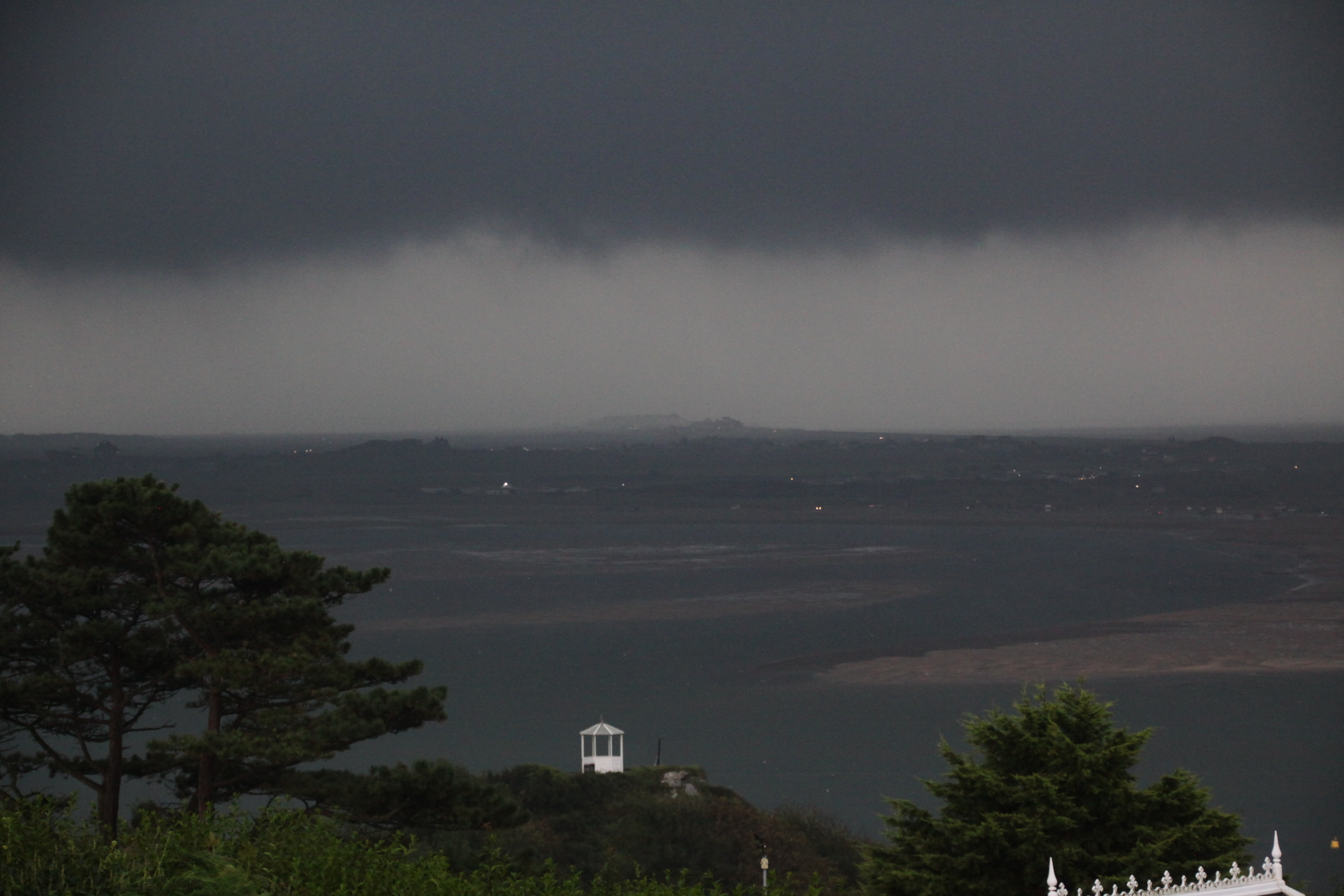
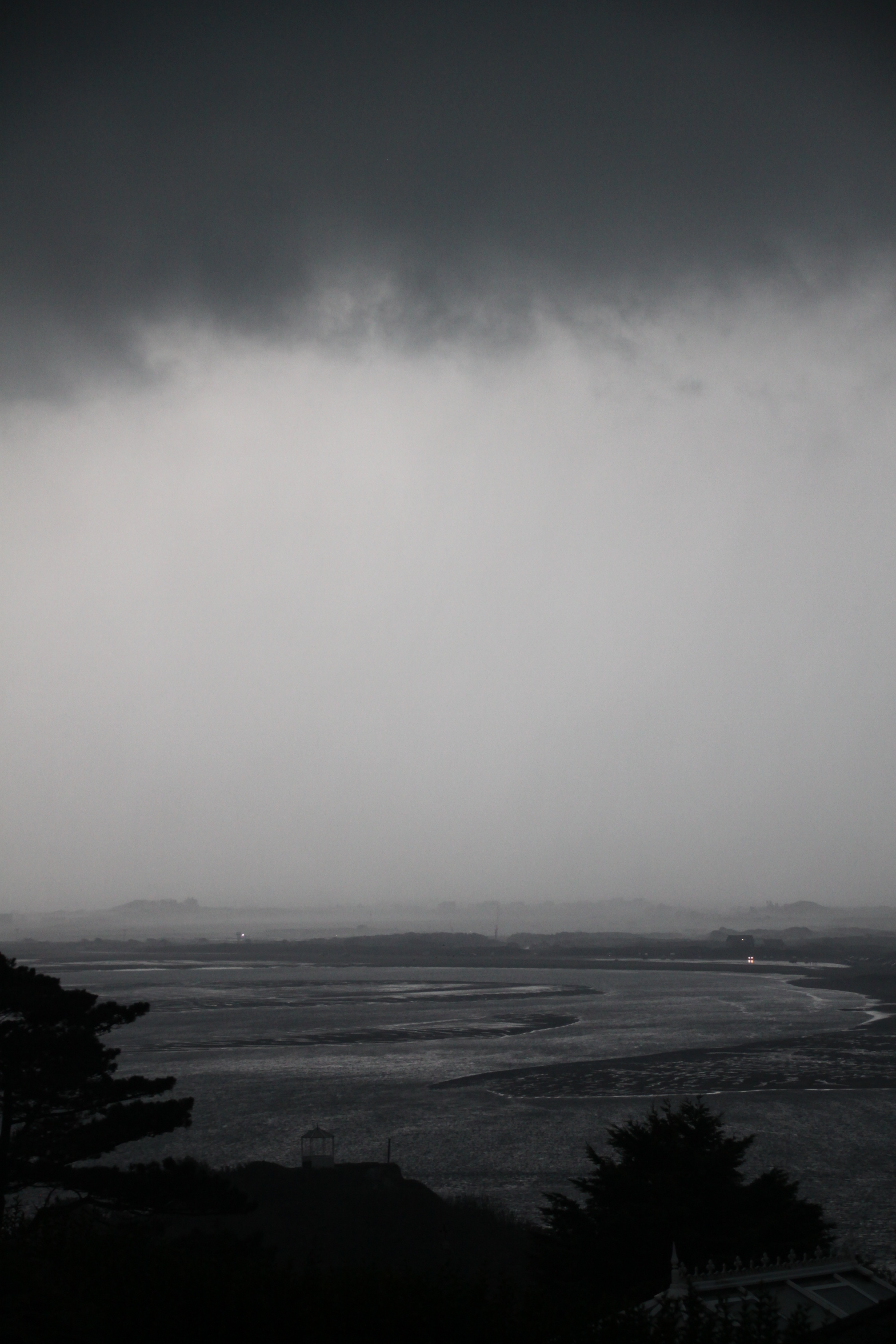
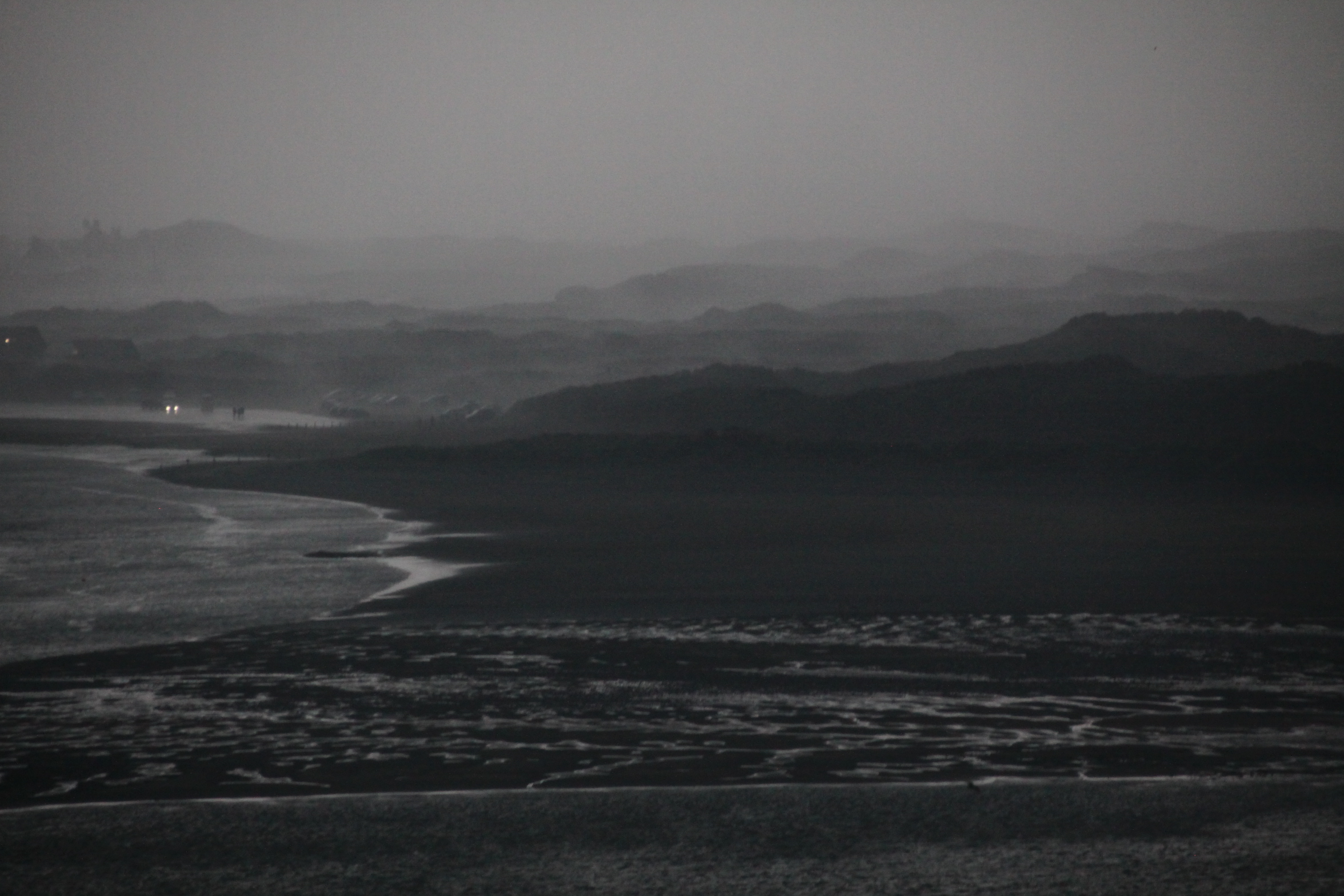
So much for my plans for another long walk today.  Had a late swim in the sea last night after most of the beach-dwellers had gone home for the evening, and it was still very warm when I returned to the house.  I had been planning another hill walk today, but the weather forecast wasn’t promising, and it’s just as well I didn’t venture out early because by mid-morning thunder was rumbling and there were flashes of lightning and by the afternoon the sky had turned charcoal, and when the rain came it wasn’t messing around!  Even so, the view was amazingly striking.  Aberdovey and Ynyslas still look fabulous even under looming blue-black clouds!  The photos below show the sequence, over 16 minutes from 1502 this afternoon, from mildly intimidating to fully apocalyptic 🙂

On the next one, see if you can spot the bandstand on Pen Y Bryn!


A short wildflower walk from the Dysynni (Tonfanau) bridge

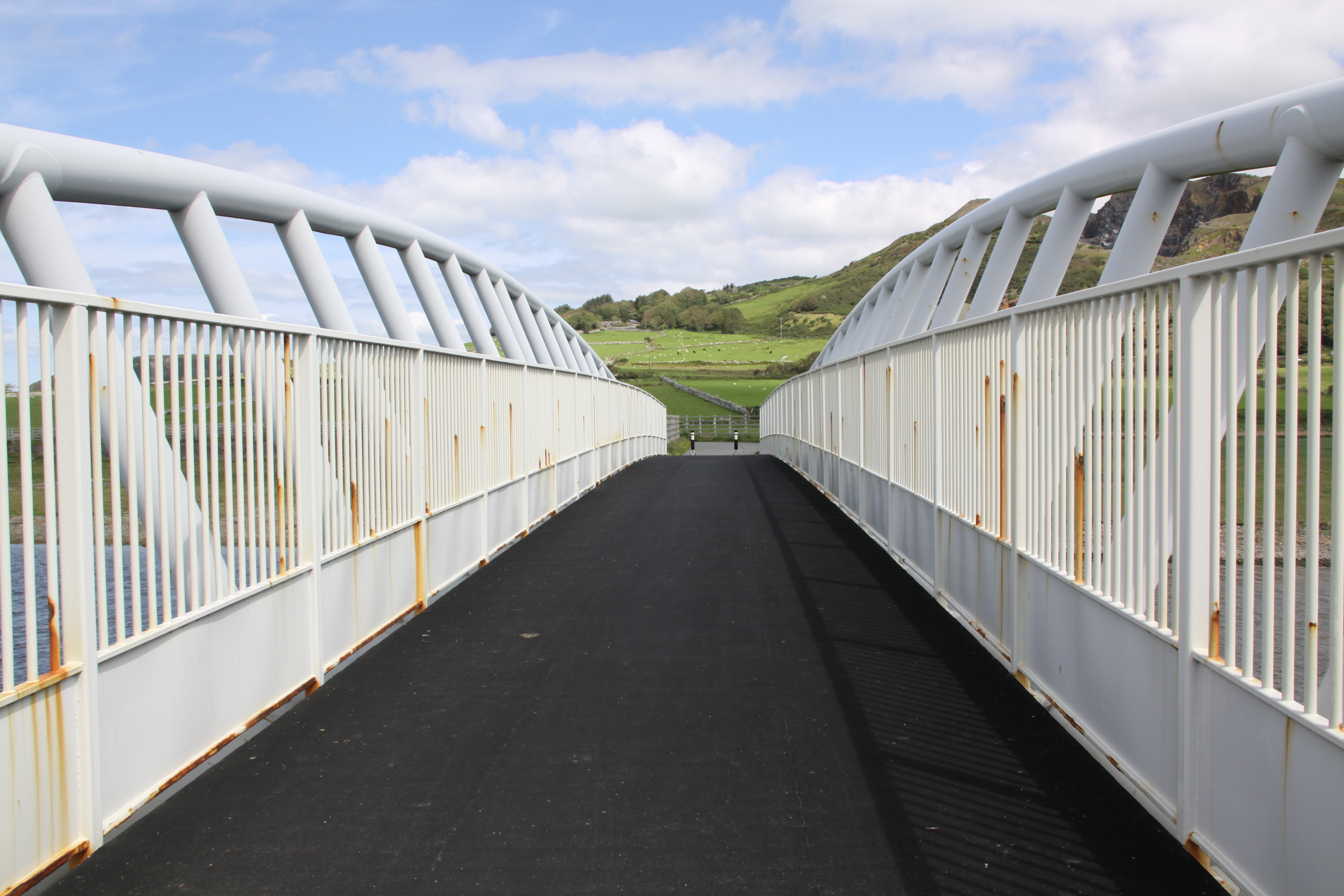
Bottom left of this map is the Dysynni rail bridge with the more recent Tonfanau foot bridge immediately alongside.  The bridge was built in 2013, just north of Tywyn (see more about the bridge on an earlier post here).  On Saturday, having escaped the truly appalling traffic carnage and the suicidal pedestrians in Aberdovey, I parked up just short of the bridge, hauled on some walking shoes and crossed over the bridge, pausing to admire the Dysynni river. The railway bridge that runs alongside, a nice bit of local heritage, is currently encased in white plastic.  Heaven knows what is being done, but good to see that it is being cared for.  The footpath beneath the railway bridge, by the way, is closed as a result.  I had only very limited time, but yesterday I simply wanted to scope out the best way of getting to the top of the Tonfanau hill that dominates the Dysynni at this point, so was looking for the footpaths that would take me up on another day.

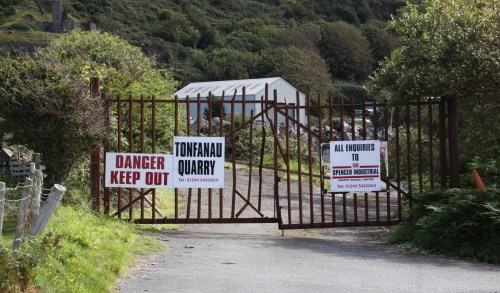
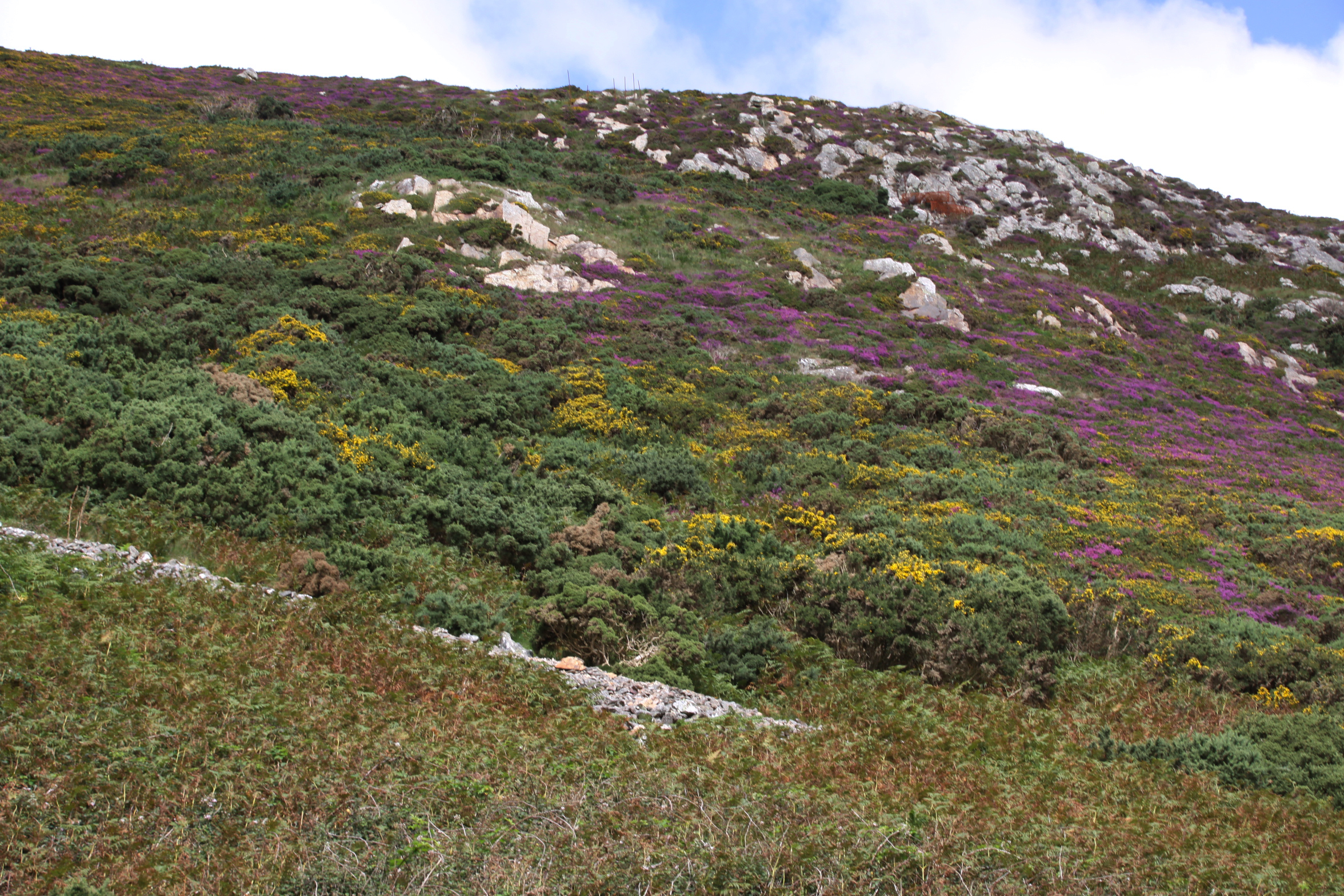
The walk along the Wales Coast Path extends towards Tonfanau station from the bridge, but turns back along a hairpin turn along the road until just past the main quarry gates, when it turns left through a farm gate into the quarry yard to proceed along the western edge of the hill, as shown on the above map.  I ignored that turning and walked past the quarry until I reached a bridlepath sign on the left at Lechlwyd, also shown on the above map, which takes a route along the eastern edge of the hill.  Along the bridlepath, the hill soars steeply above the track.  It is beautiful, vibrantly green, and in places covered in dense swathes of glorious gorse and heather.  At the point where a gate opened into a big field I turned back, but the footpath eventually leads up to the top of the hill and the Iron Age hillforts.  I did that walk on Sunday, and I’ll post about that walk in a couple of days.

Although part of my walk was B-road, only two cars passed me, and there were plenty of verges onto which to retreat to let the occasional vehicle go past.

The walk offers some fine views over the Dysynni and the hills beyond, but perhaps the most remarkable aspect of it was the amazing density of wild flowers bursting up and out of the verges and reaching through the hedges.  If you are looking for a short and very easy walk that requires no preparation or planning, and is easy on the legs, this one, at this time of the year, is a very good option.


Tonfanau footbridge

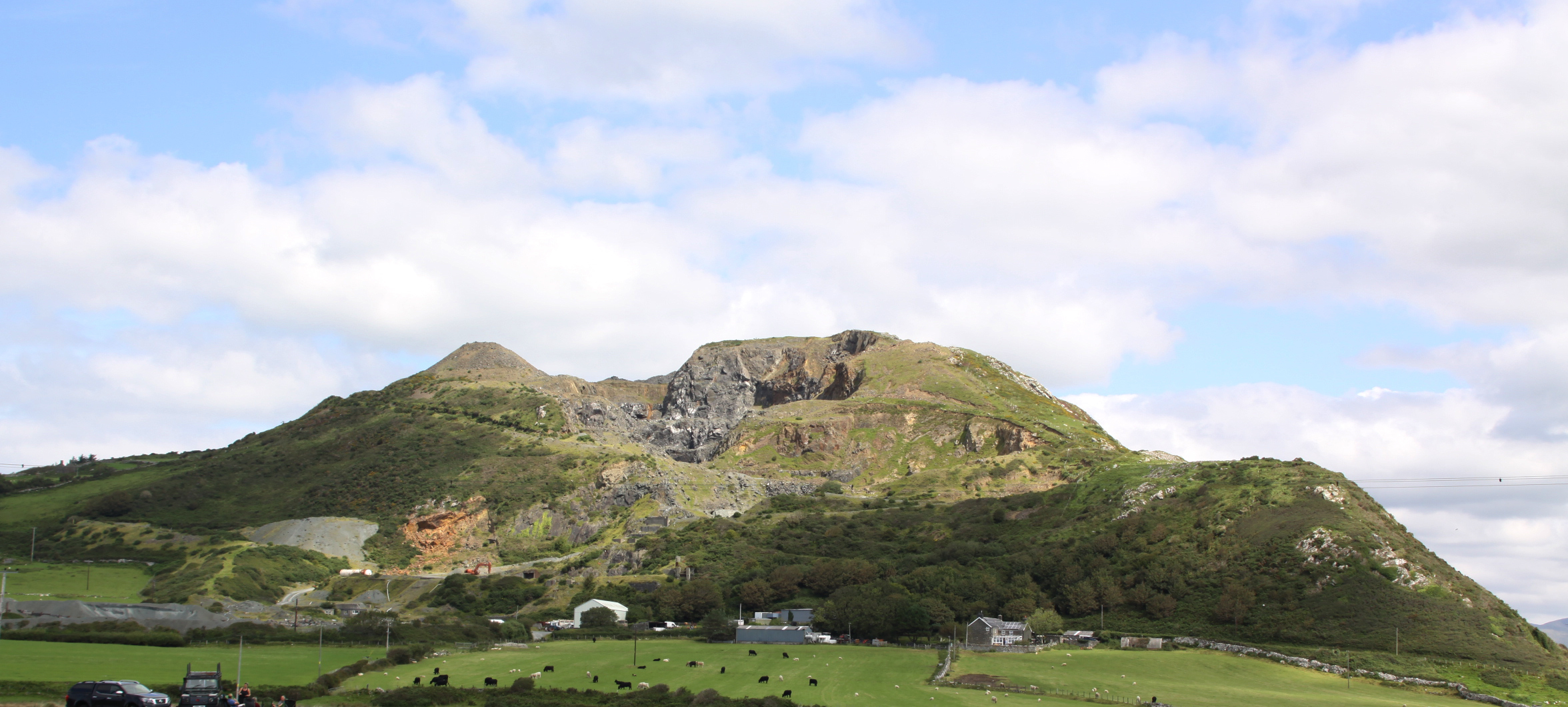
Tonfanau, with the scarring from the quarry

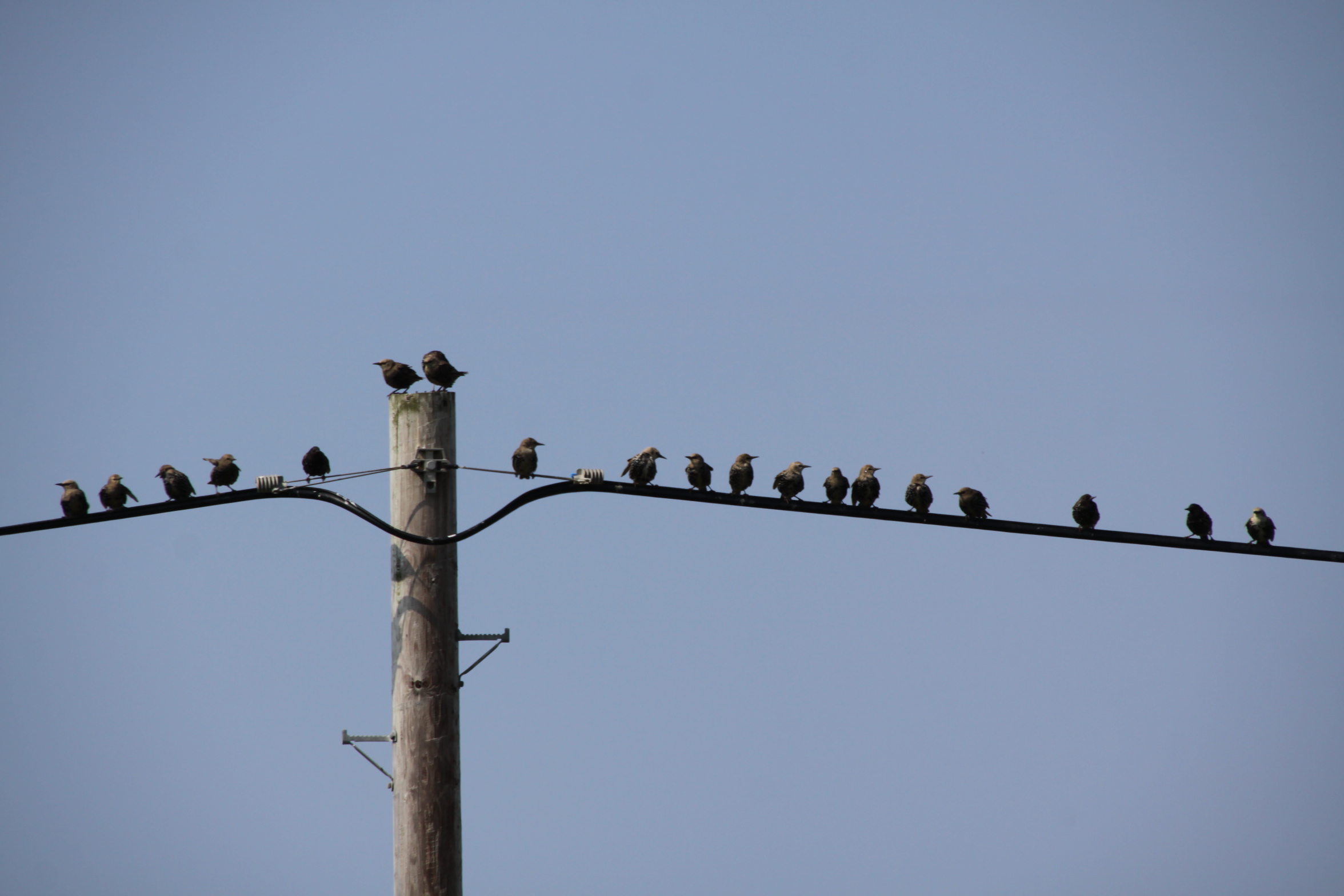
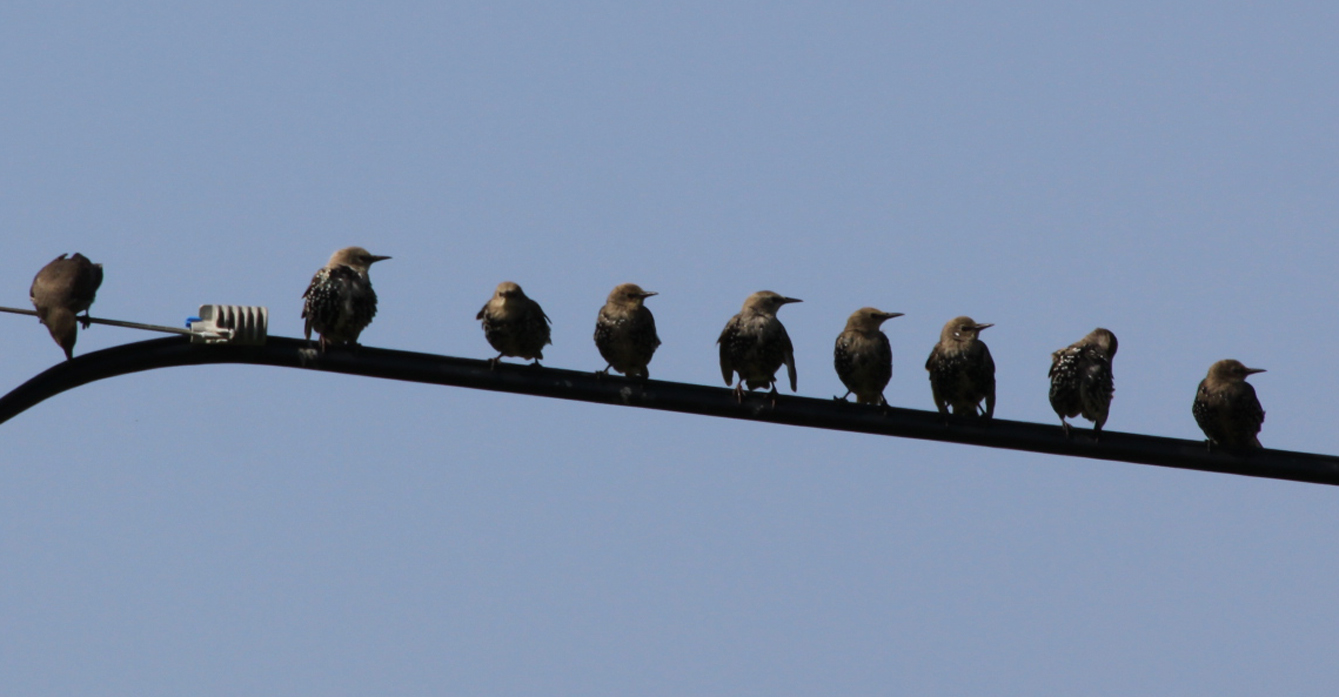
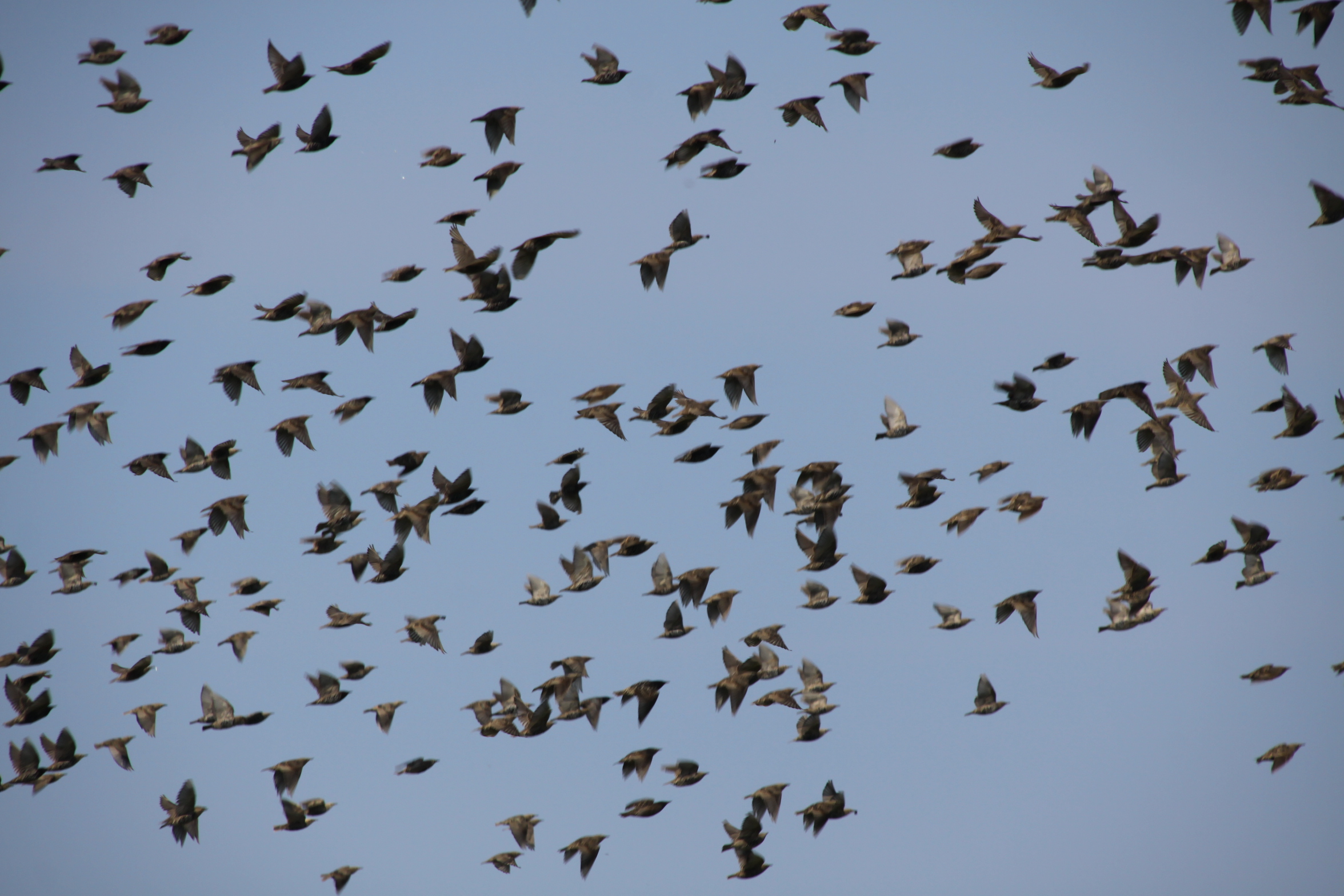
I’m not sure what this flock of birds consists of.  My initial thought was that they are starlings, but although the shape and beak are right, they seem far too light, unless it’s a trick of the sun.

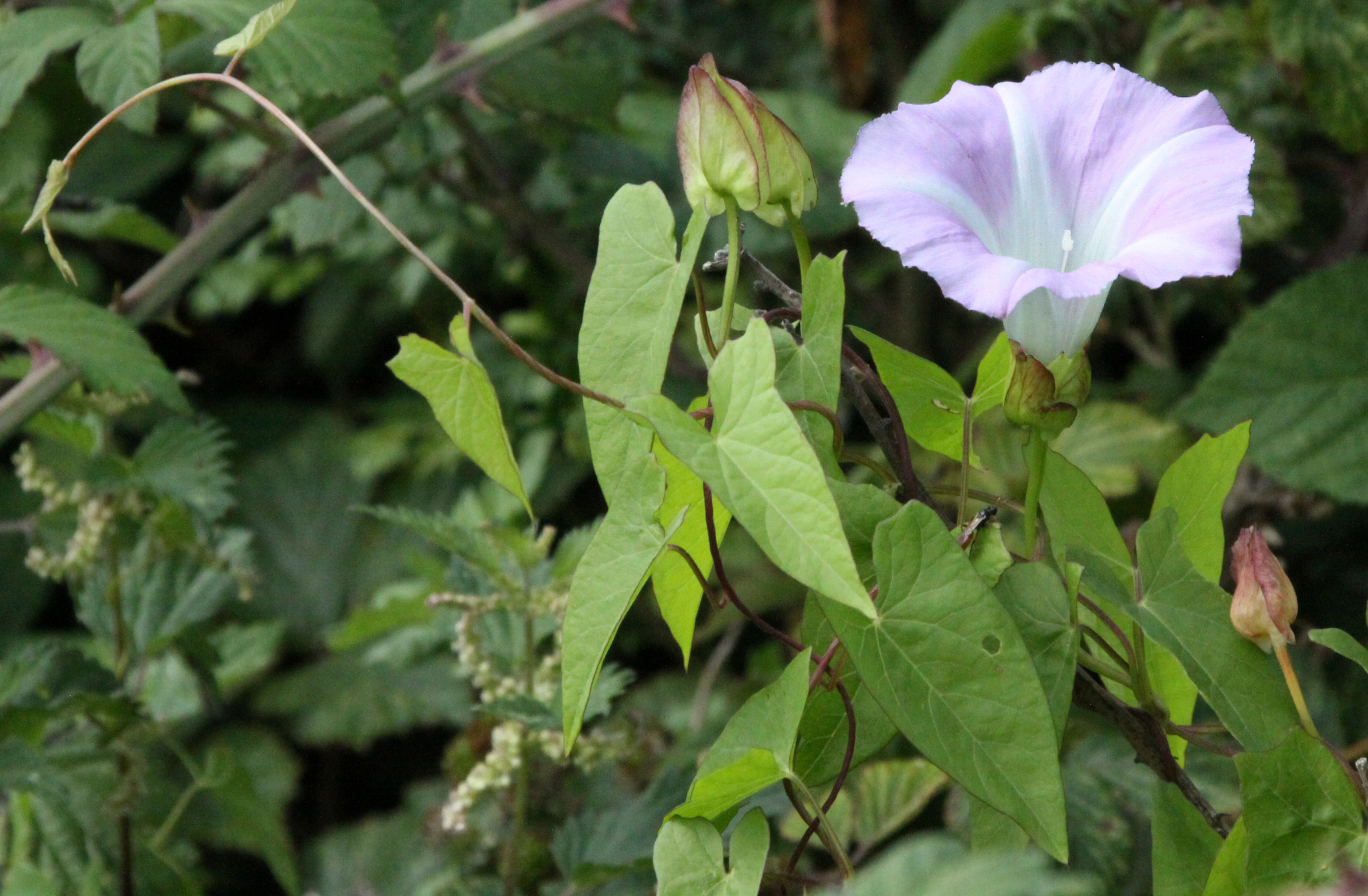
Field or common bindweed (Convolvulus arvensis).  Visually similar to sea bindweed (Calystegia soldanella), which I have posted about from dune walks, but common bindweed has smaller flowers and different leaves, much longer and thinner.  One of my books (Spencer-Jones and Cuttle 2005) says that once they begin to coil anti-clockwise around a support they grow so fast that a stem can complete one coil in less than two hours.  As a result they spread fiendishly fast, colonizing whole hedges and shrubs.

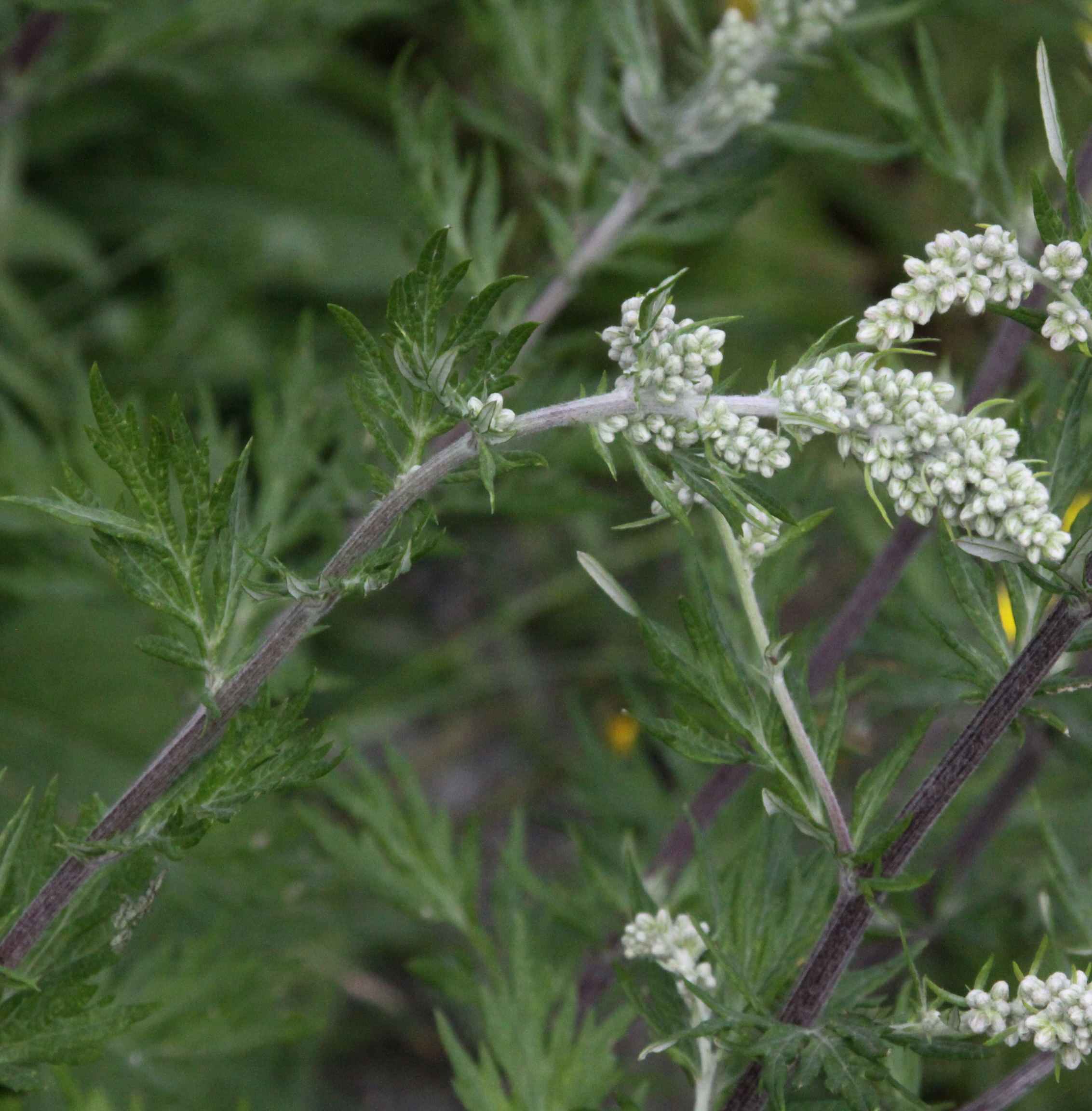
Mugwort (Artemisia vulgaris) is liberally distribute throughout all the verges near the Dysynni.
It is very common on wastelands, and reaches 150cm, forming clumps.  At the moment the bright white flowers on purple-red stems are particularly attractive.

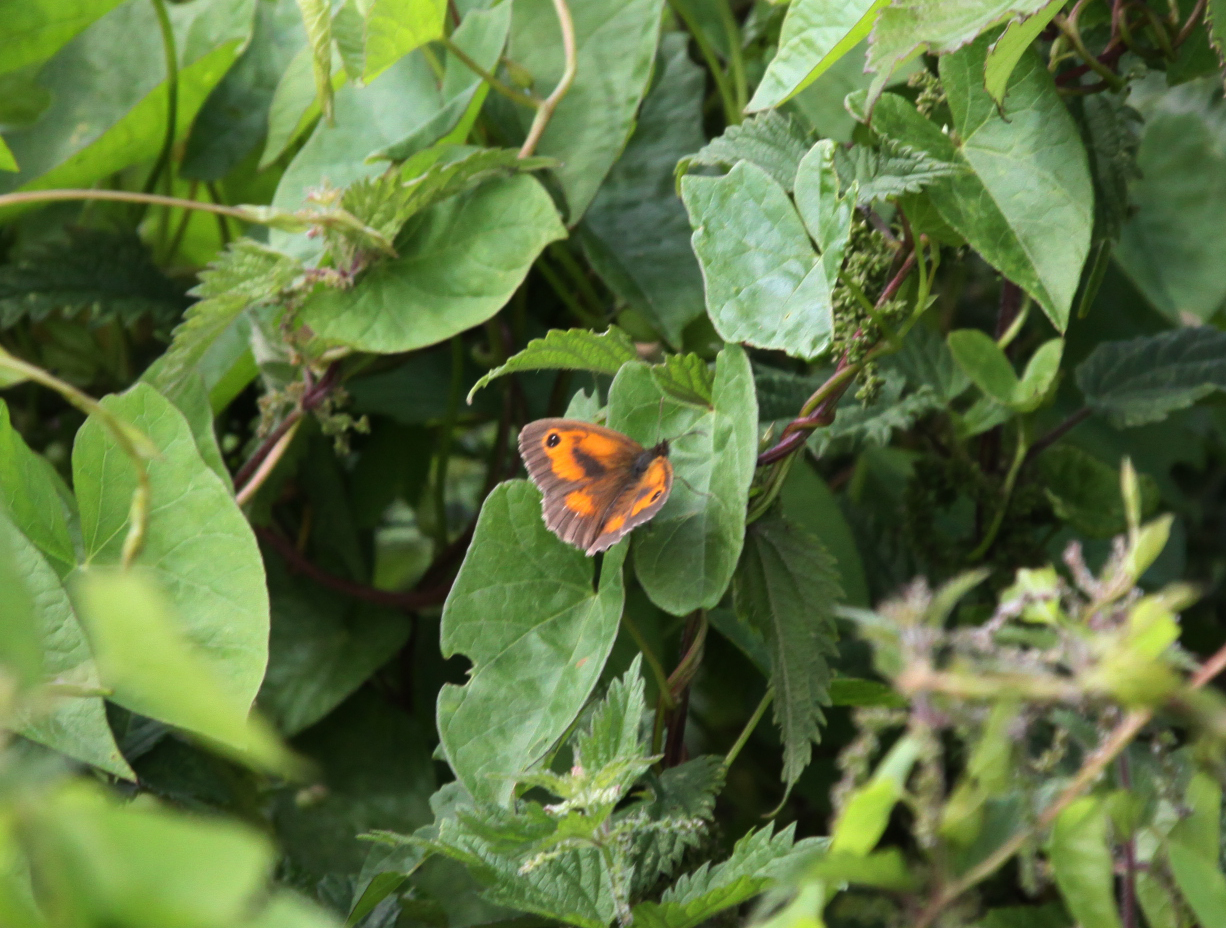
Gatekeeper (Pyronia tithonus)

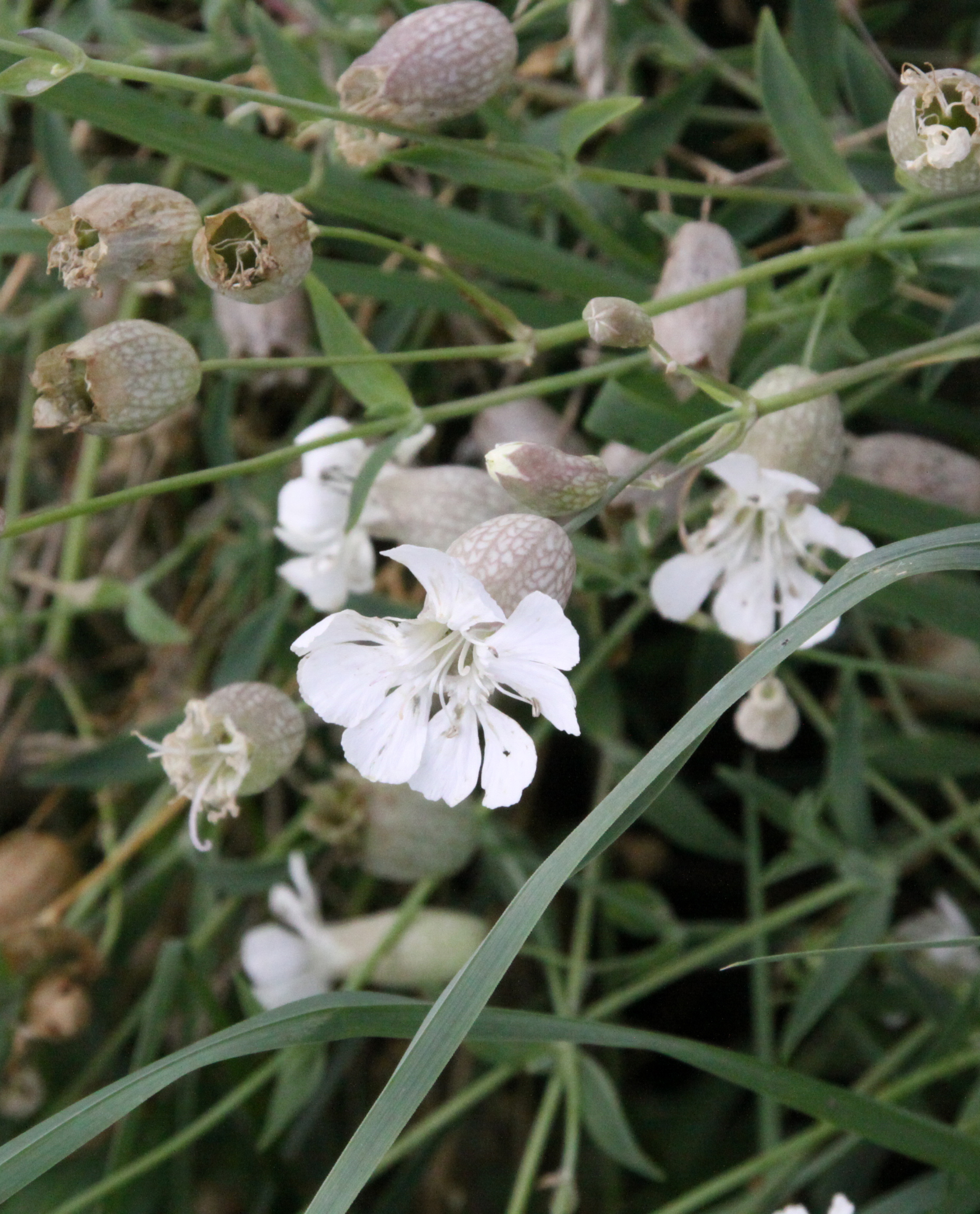
Bladder campion (Silene vulgaris) apparently smells similar to cloves at night.  The leaves are edible when boiled and smell like fresh peas.

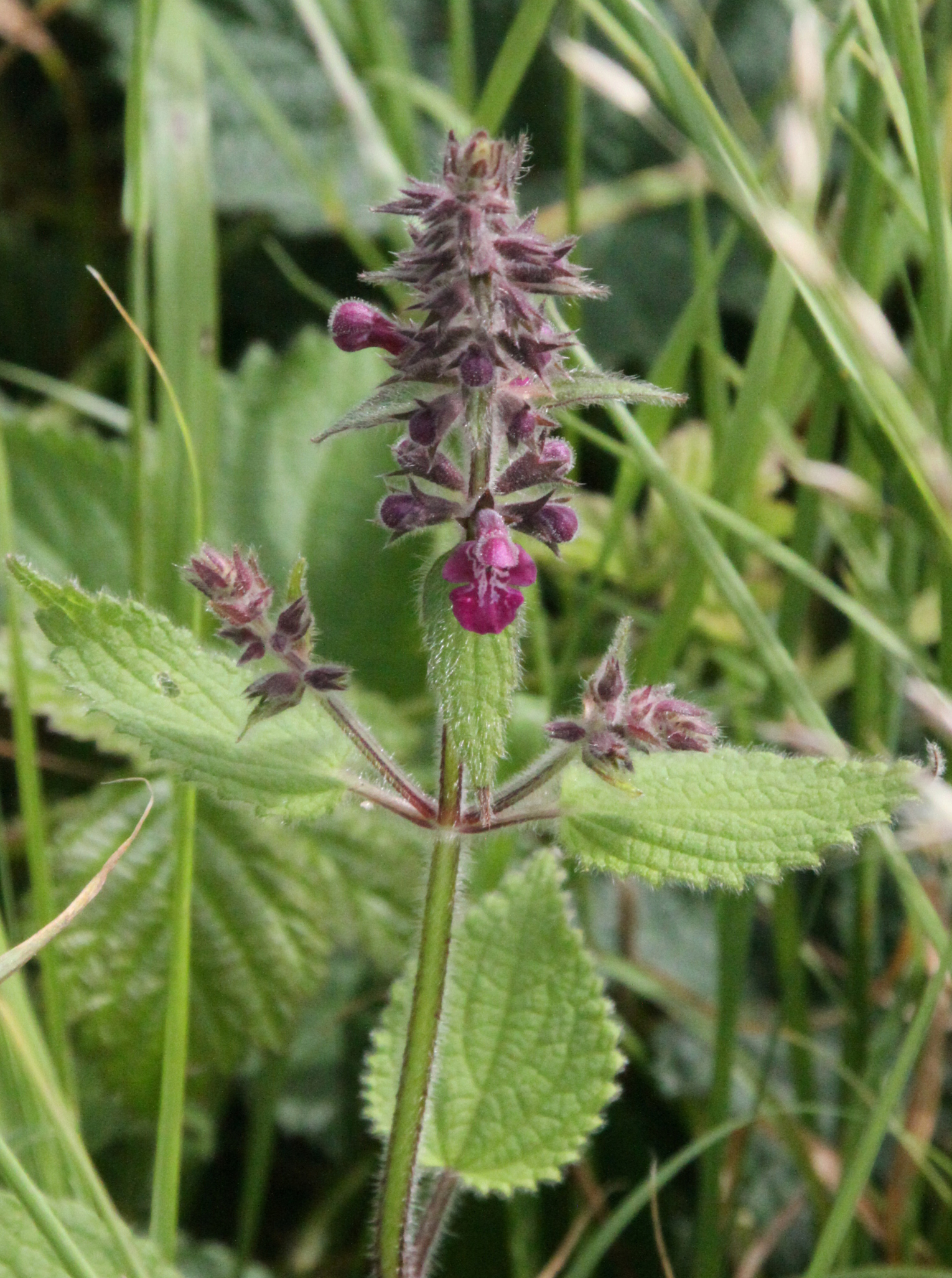
Hedge woundwort (Stachys sylvatica) grows on the wasteland and the edge of cultivated land and footpaths, with a preference for semi shade.  The toothed leaves look rather like nettles.  They grow up to 1m tall.   It was renowned from the 16th Century for its healing properties, and it has proved to be mildly antiseptic.  White markings on the lower lip of the two-lip flower guides bees to nectar.

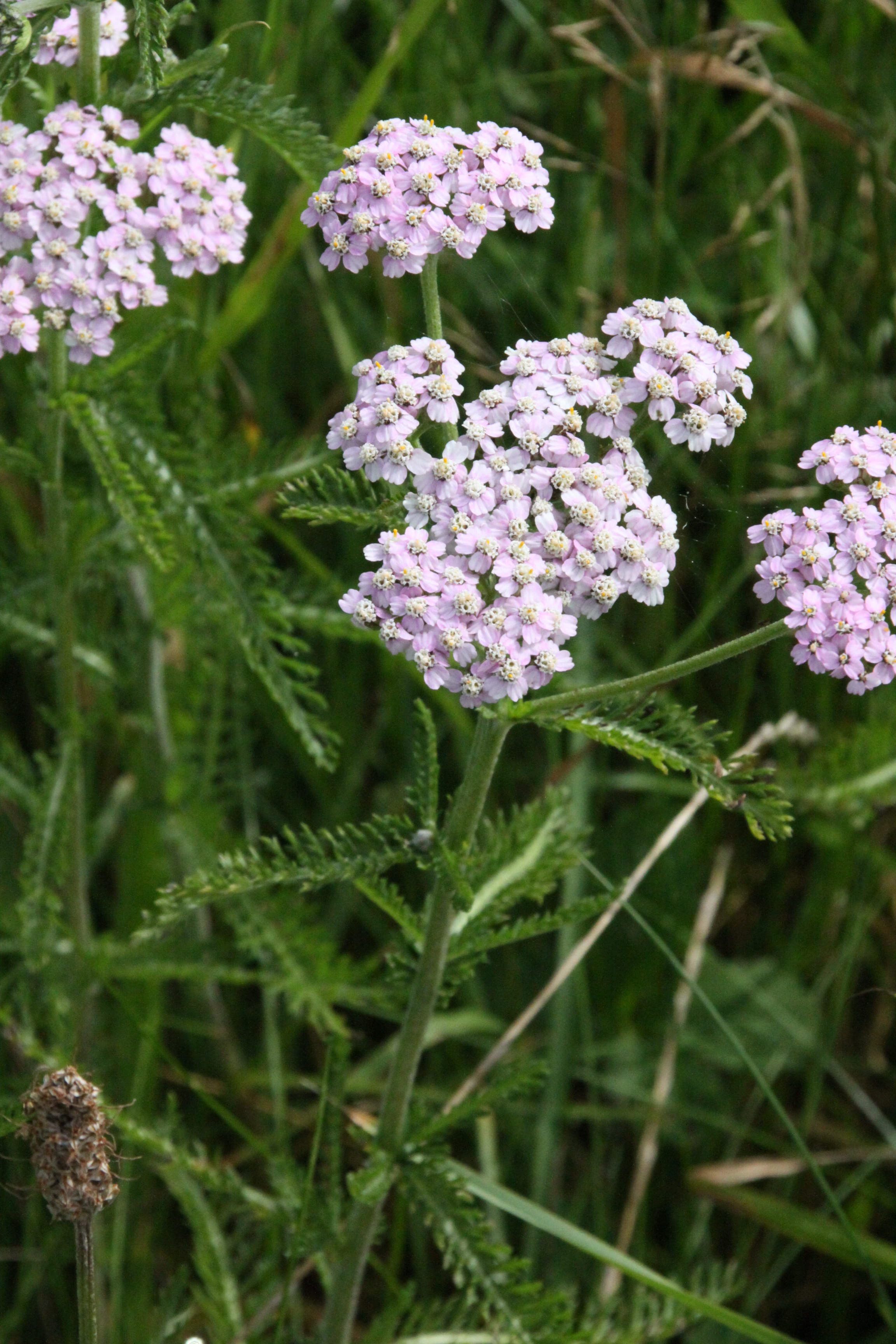
A pink version of yarrow, which is usually white (Achillea millefolium).  The name, meaning thousand leaf, refers to the feathery leaves.  They thrive in coastal areas.  I’ve posted about it before, but I love the story behind the name.  spreads by underground stems, and is patch-forming. It is disease resistant, which can benefit neighbouring plants, and its small leaves prevent excessive moisture loss. It was named for Achilles, who used it to heal the wounds of his soldiers, and it retains its reputation as a good cure for cuts and bruises. It has a long history as a remedy for colds and fevers (as a tea) and for toothache (when the leaves are chewed). Its leaves and flowers are used in salads in small quantities, it can be boiled as a vegetable and served with butter, and it can be thrown into soups and stews. It has a slightly bitter taste. Flowers July to October.

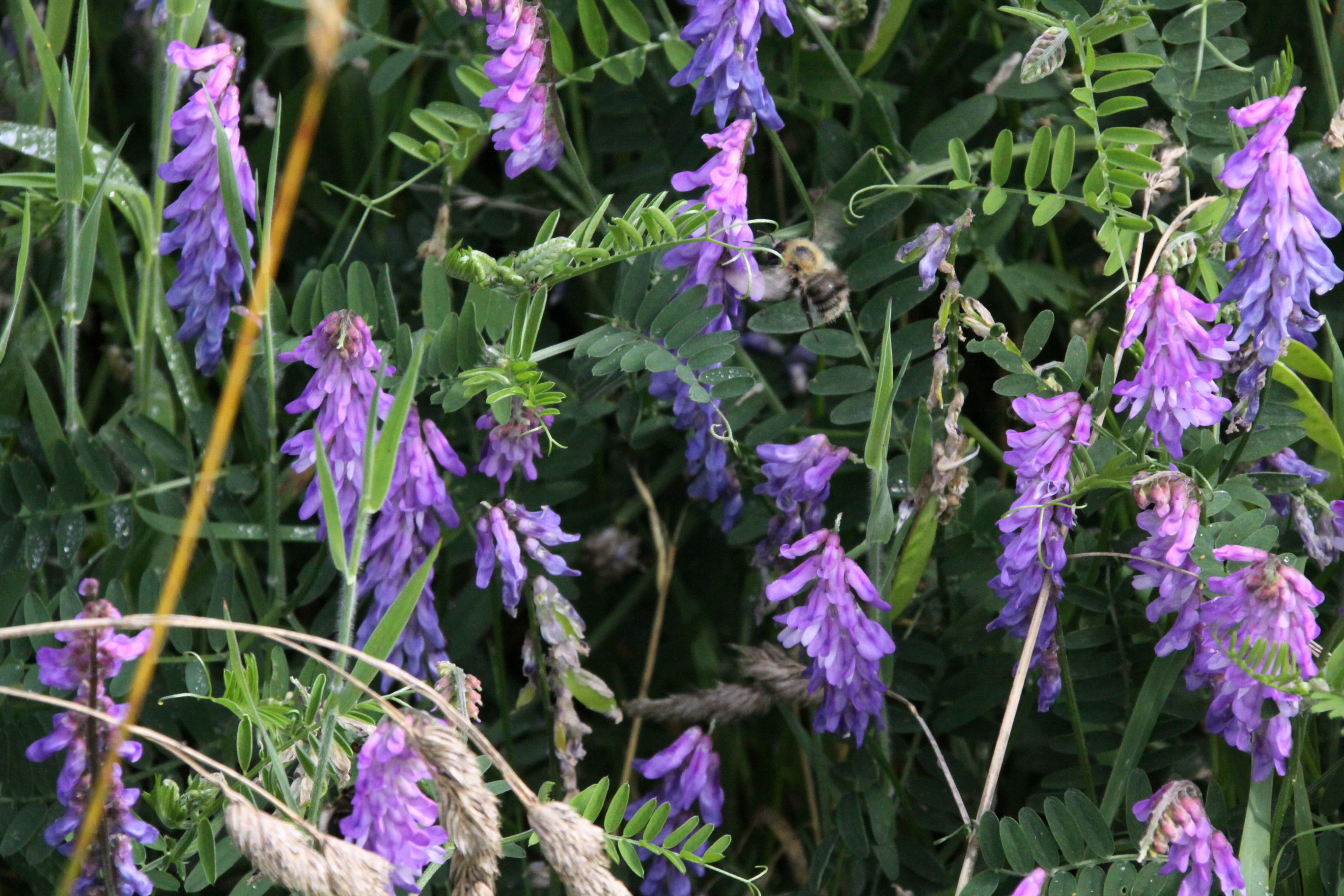
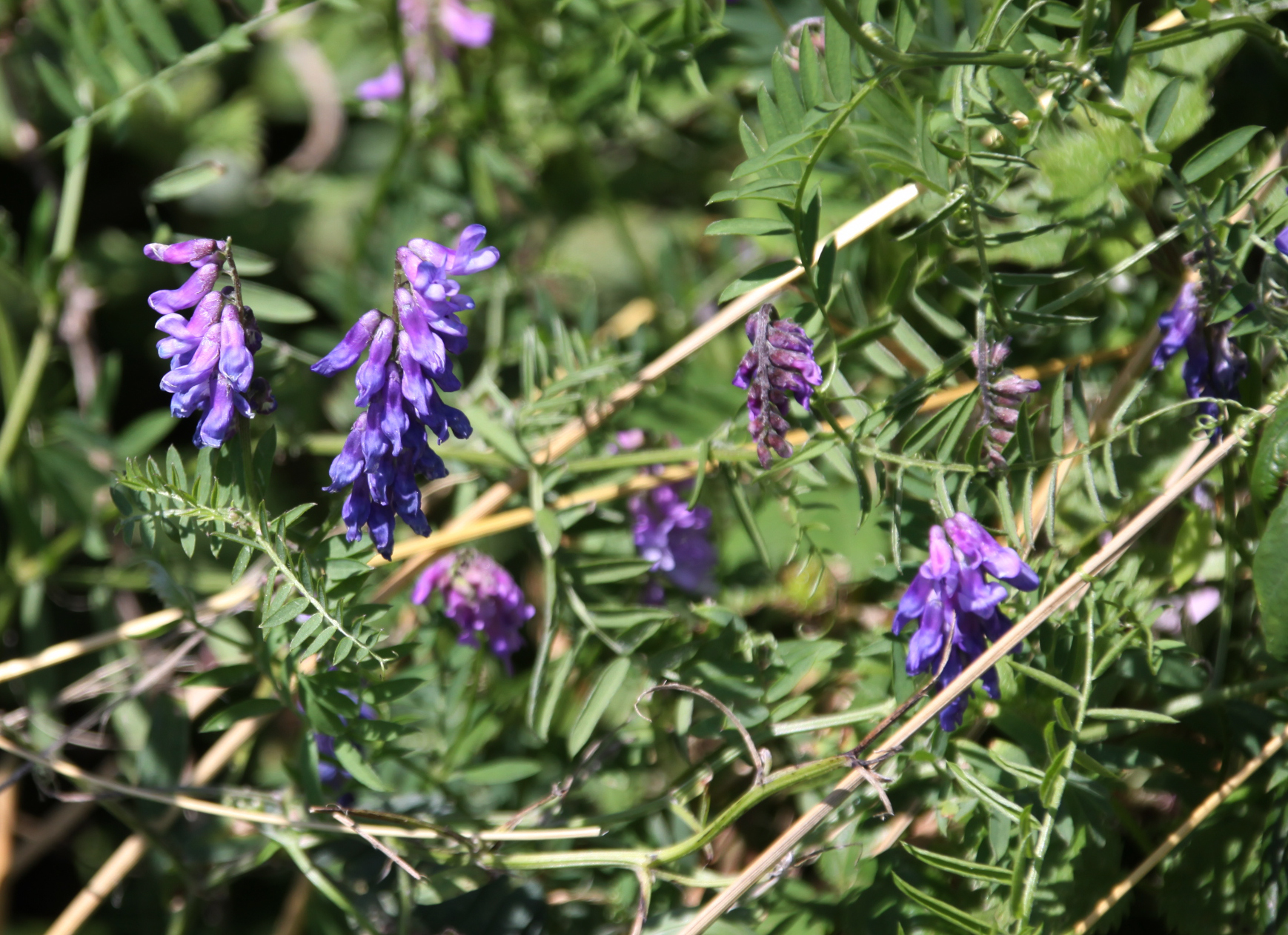
Tufted vetch (Vicia cracca). A climber that uses long tendrils to scramble through hedges and shrubs.

Agrimony (Agrimonia eupatoria) – there were loads of these, which I had never seen before, and they were very pretty.  When they have finished flowering a fruit forms, the calyx of which has hooked spines that attach themselves easily to animal fur for dispersal.  A standard tool in the physician’s herbal remedy kit in the past, and still used as a component in solutions for catarrh and digestive problems.

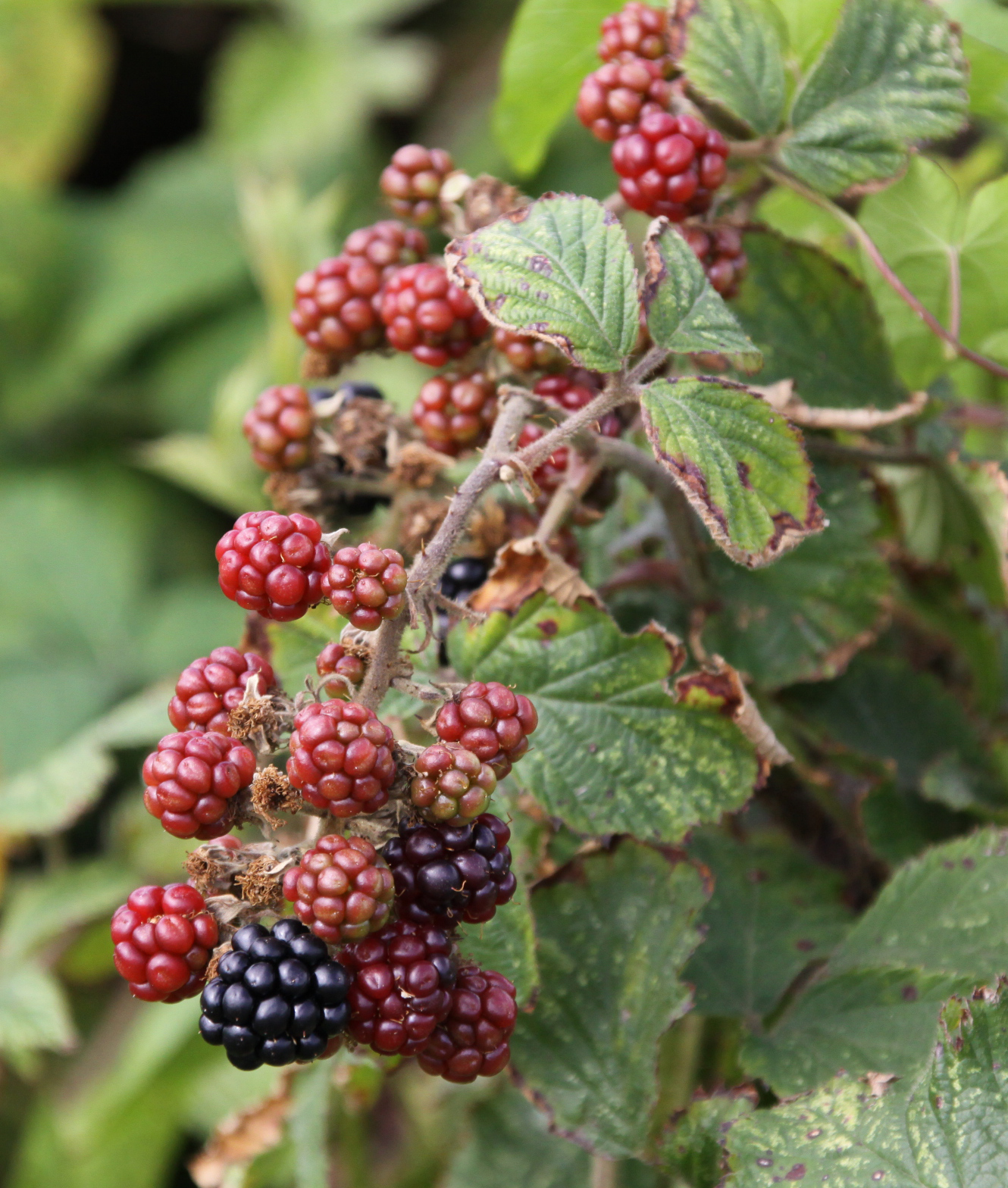
The blackberries (Rubus fruticocus) are ripening!  Not long now :-).  Apparently there are nearly 2000 micro-species, so telling one from another is more of a challenge than I feel the need to get to grips with.

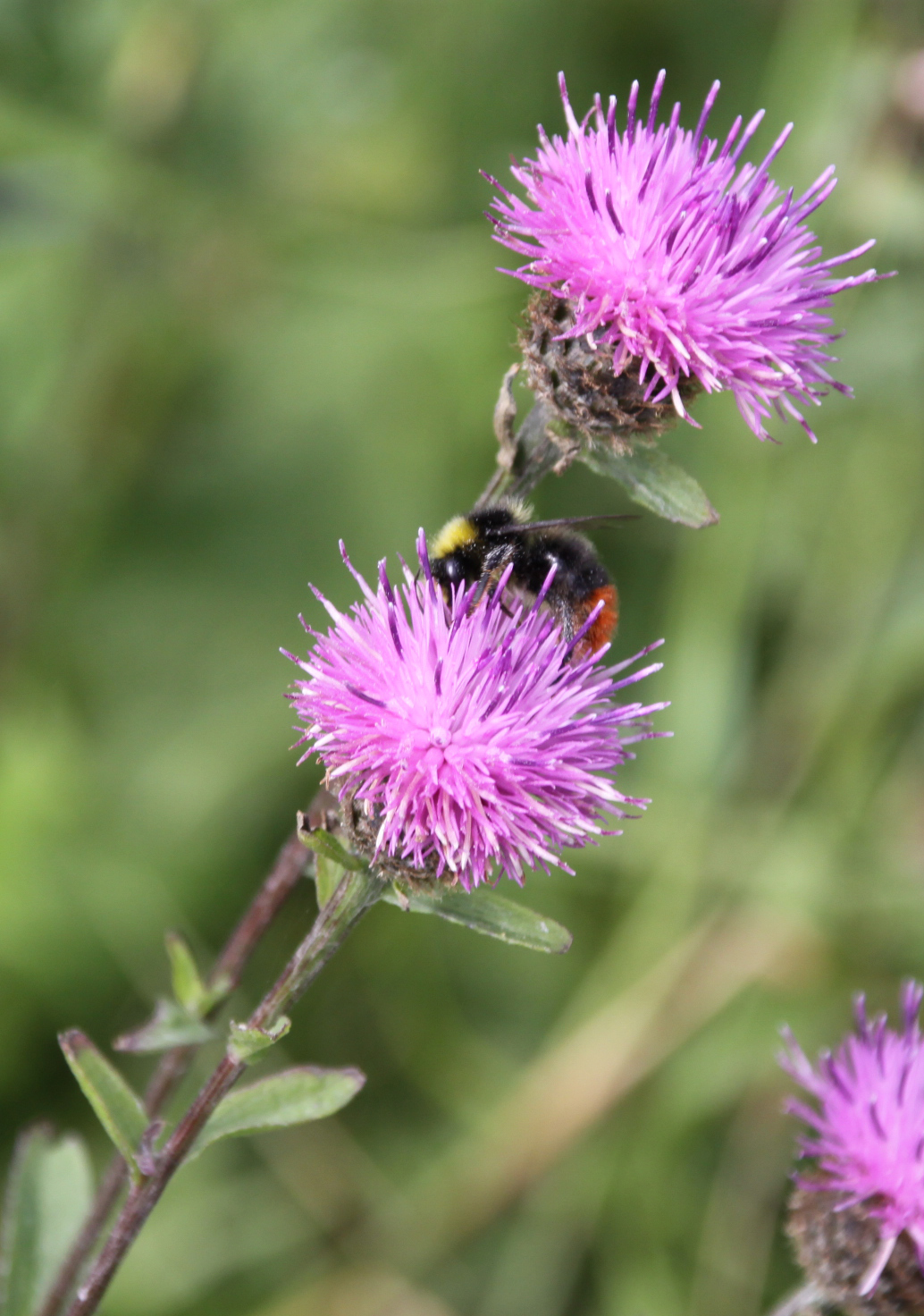
Common knapweed (Centaurea nigra), looking very like a thistle, but with long pointed leaves and no spines.  The brightly coloured bee is a male red-tailed bumble bee (Bombus lapidarius)

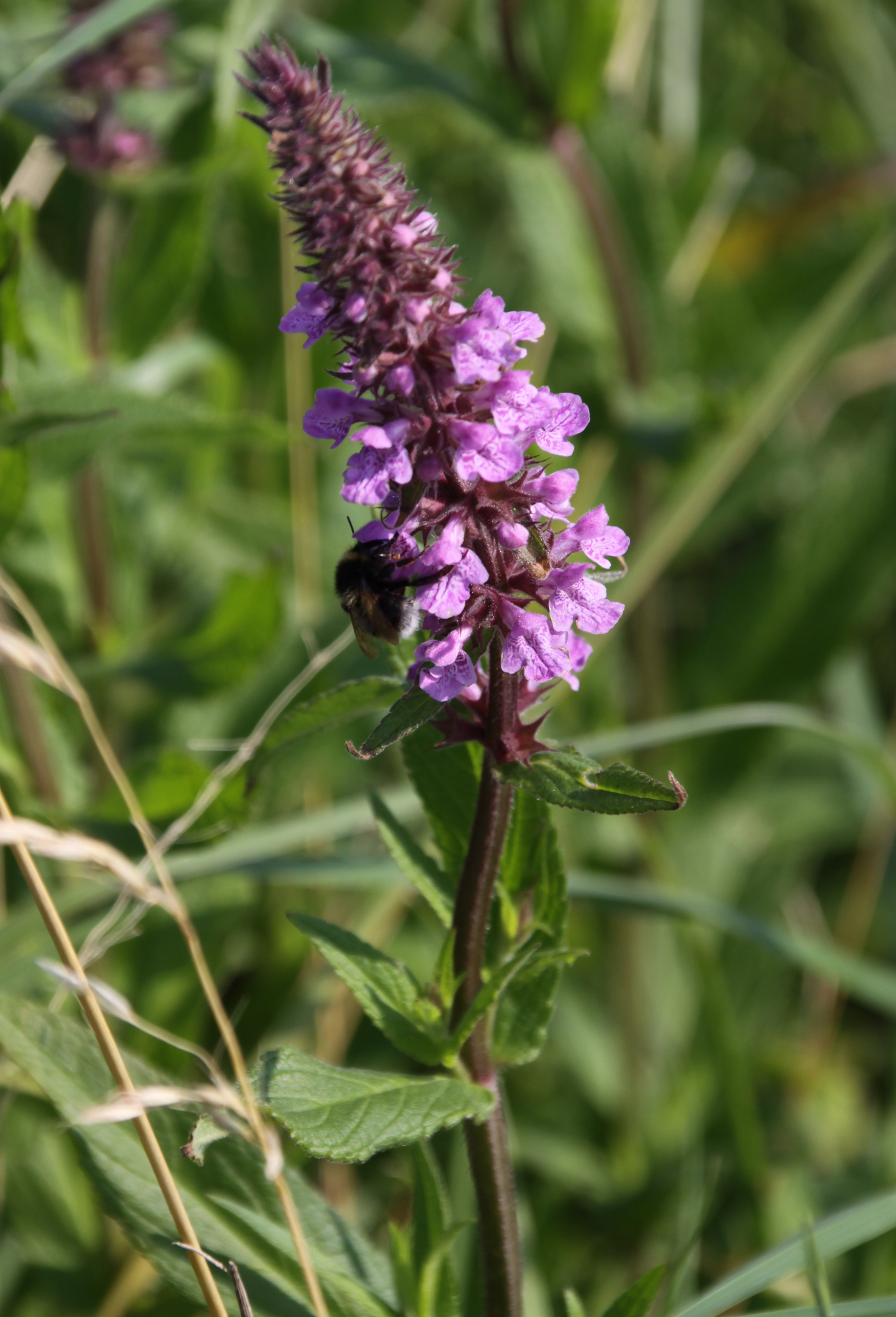
Betony (Stachys officinalis)

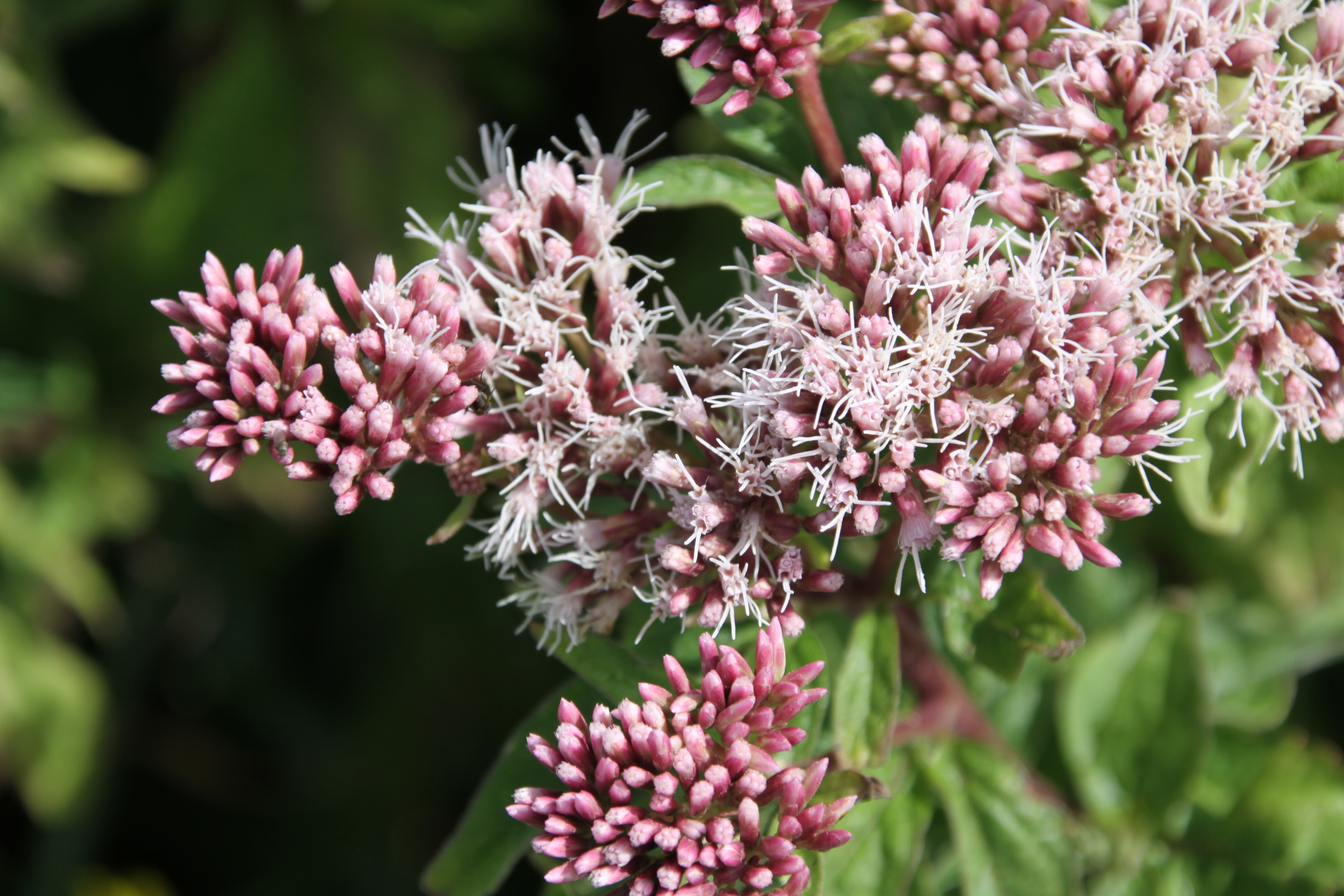
Hemp agrimony (Eupatorium cannabinum).  It produces white hairs to disperse its seeds, giving it a rather fluffy appearance.  The name Eupatorium comes from Eupator Mithradates the Great of Pontus (which under Mithradates incorporated Turkey and various territories around the Black Sea).  Mithradates allegedly used it for making antidotes to poisons.


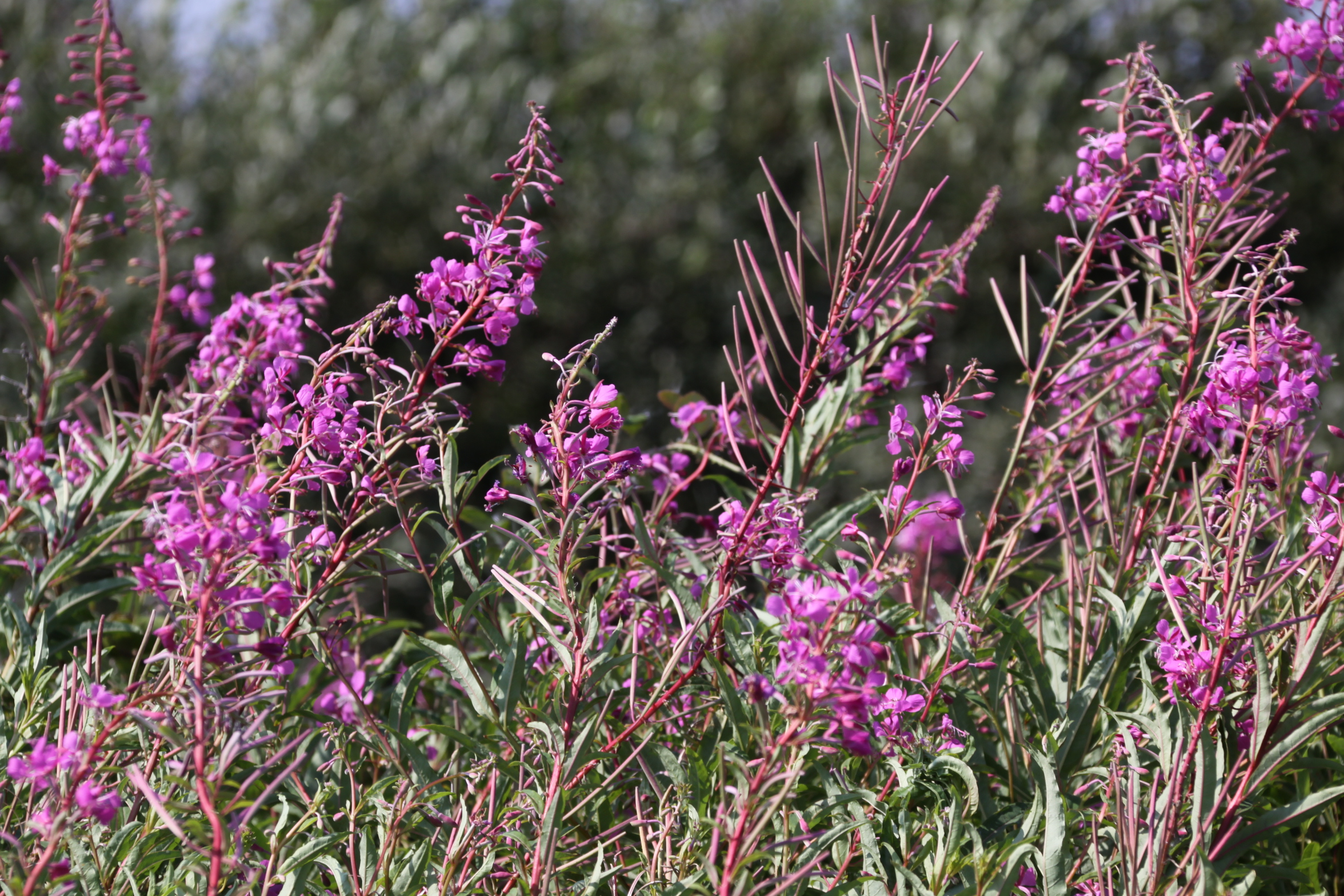
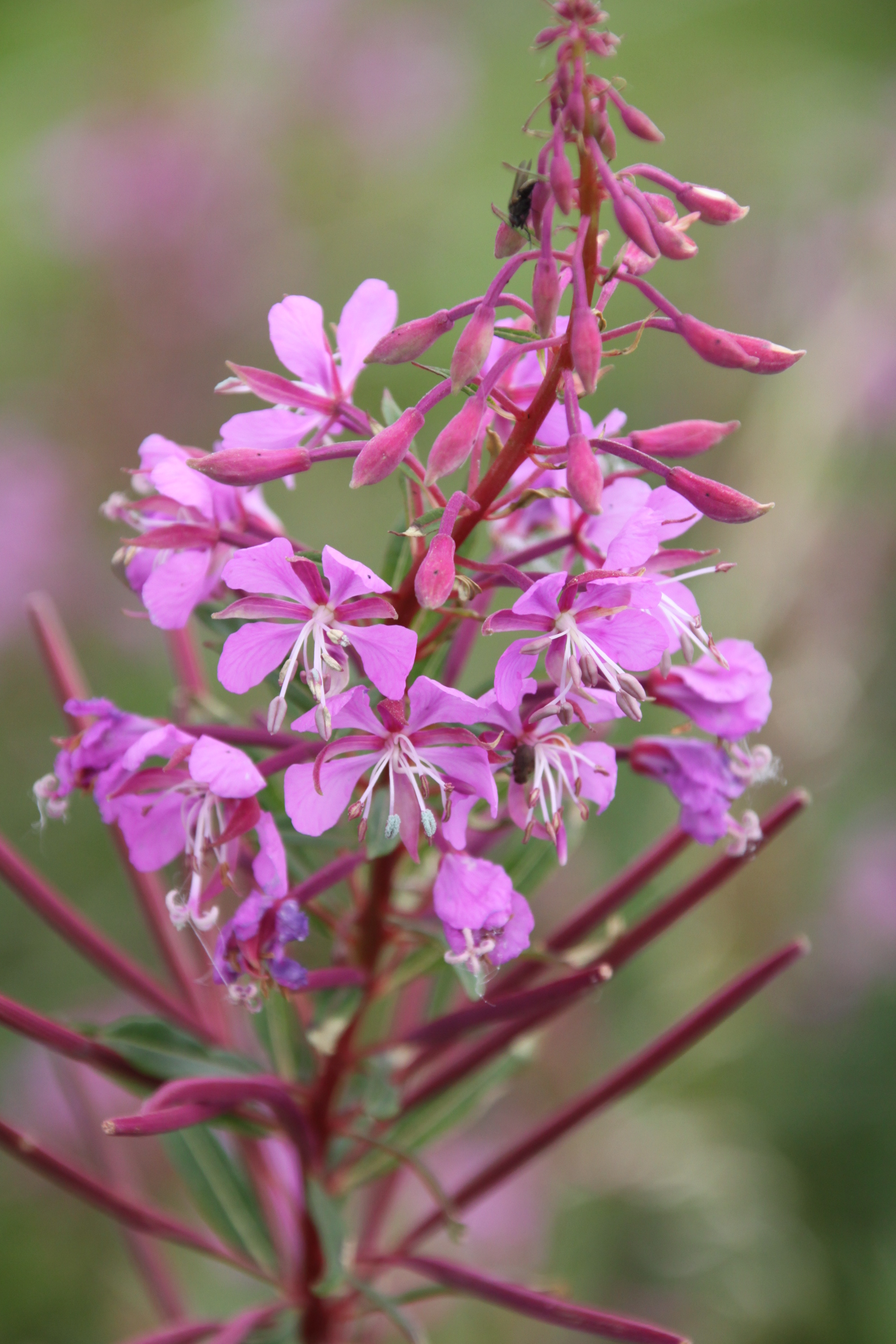
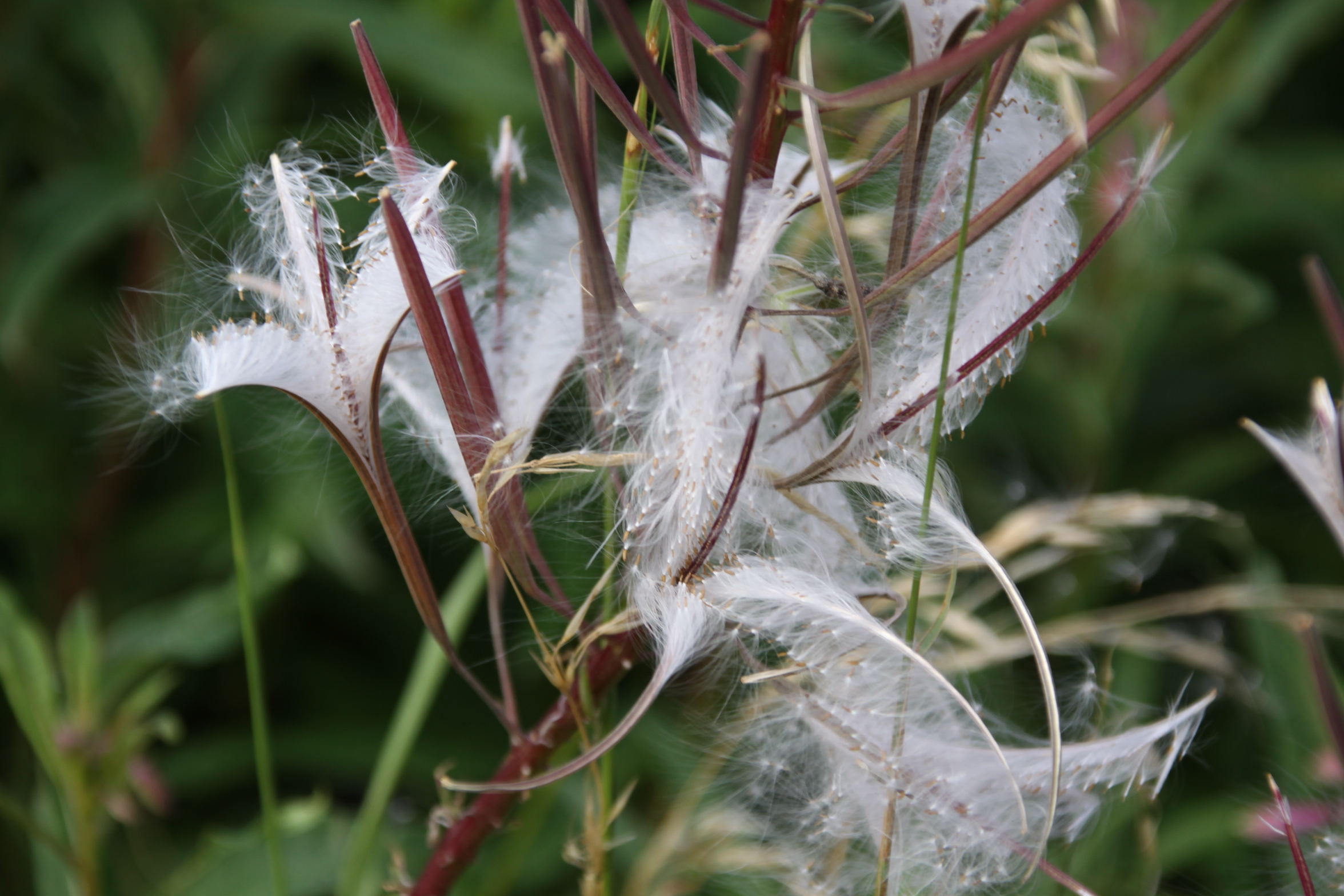
The perennial Rosebay willowherb (Chamerion augustfolium) is everywhere hereabouts at this time of year.  Because it has rhizomes, it forms in large patches that are actually a single plant.  Each spear has a marvellous grouping of bright pink flowers with long white stamen, as below.  When the seedpods open, seeds spreads by means of attached plumes, forming pretty fibrous masses, as shown below.  The plant used to be known as fireweed due to its prevalence on WW2 bomb sites, and it is frequently found in wasteland and poor soils.

Rosebay willowherb seed pods and plumes

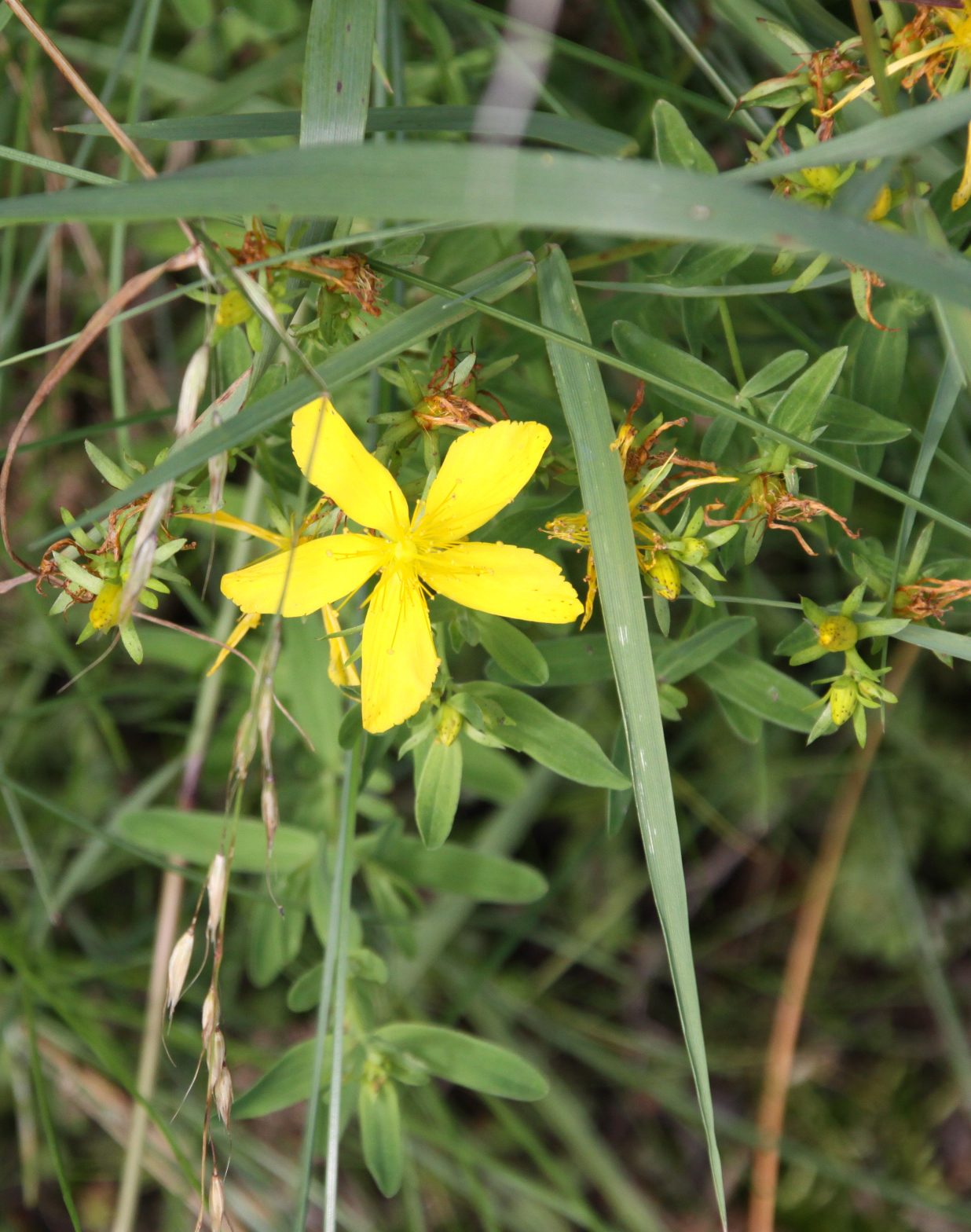
Perforate St John’s-wort (Hypericum perforatum)

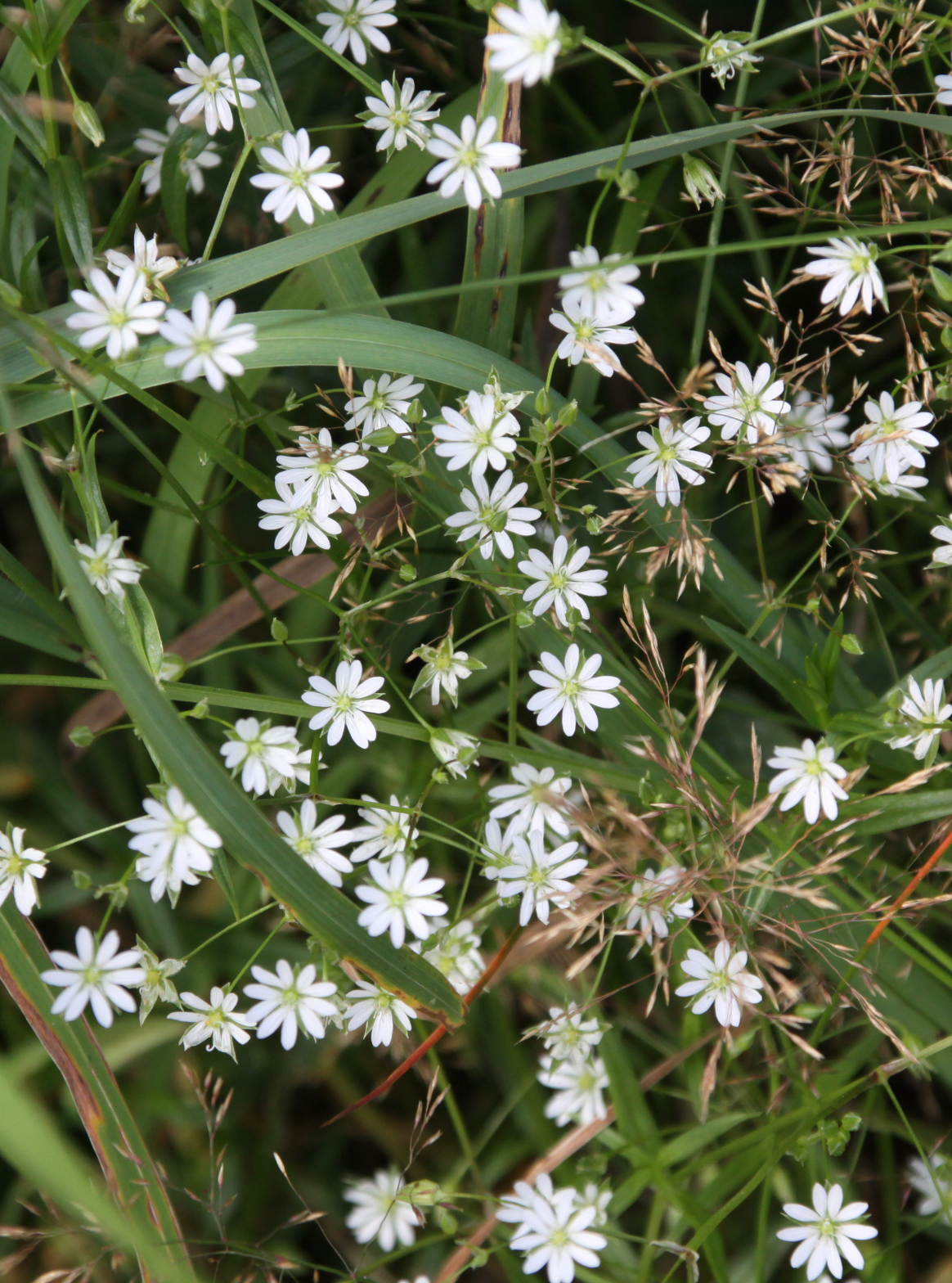
Greater stitchwort (Stellaria holostea)

Common/yellow toadflax (Linaria vulgaris) looks so exotic, like an orchid, but is relatively commonplace.  It is a perennial that flowers between July and October.  Narrow leaves grow spirally up the stems.  The flower is two-lipped and only large long-tongued bees can push the two closed lips apart to reach the nectar.  Colloquial names include squeeze-jaw and bunny-mouth.  It likes open fields and sandy soils.

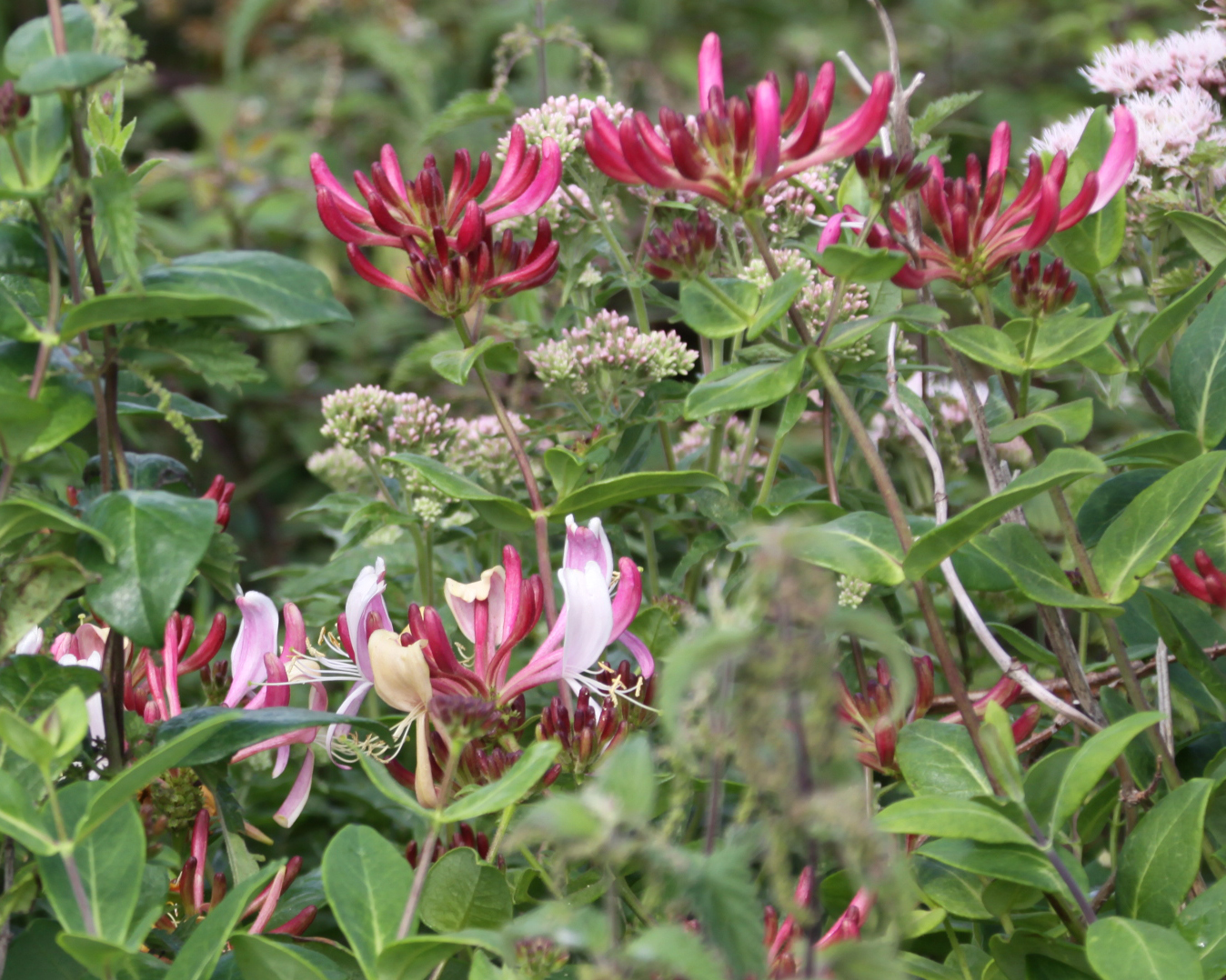
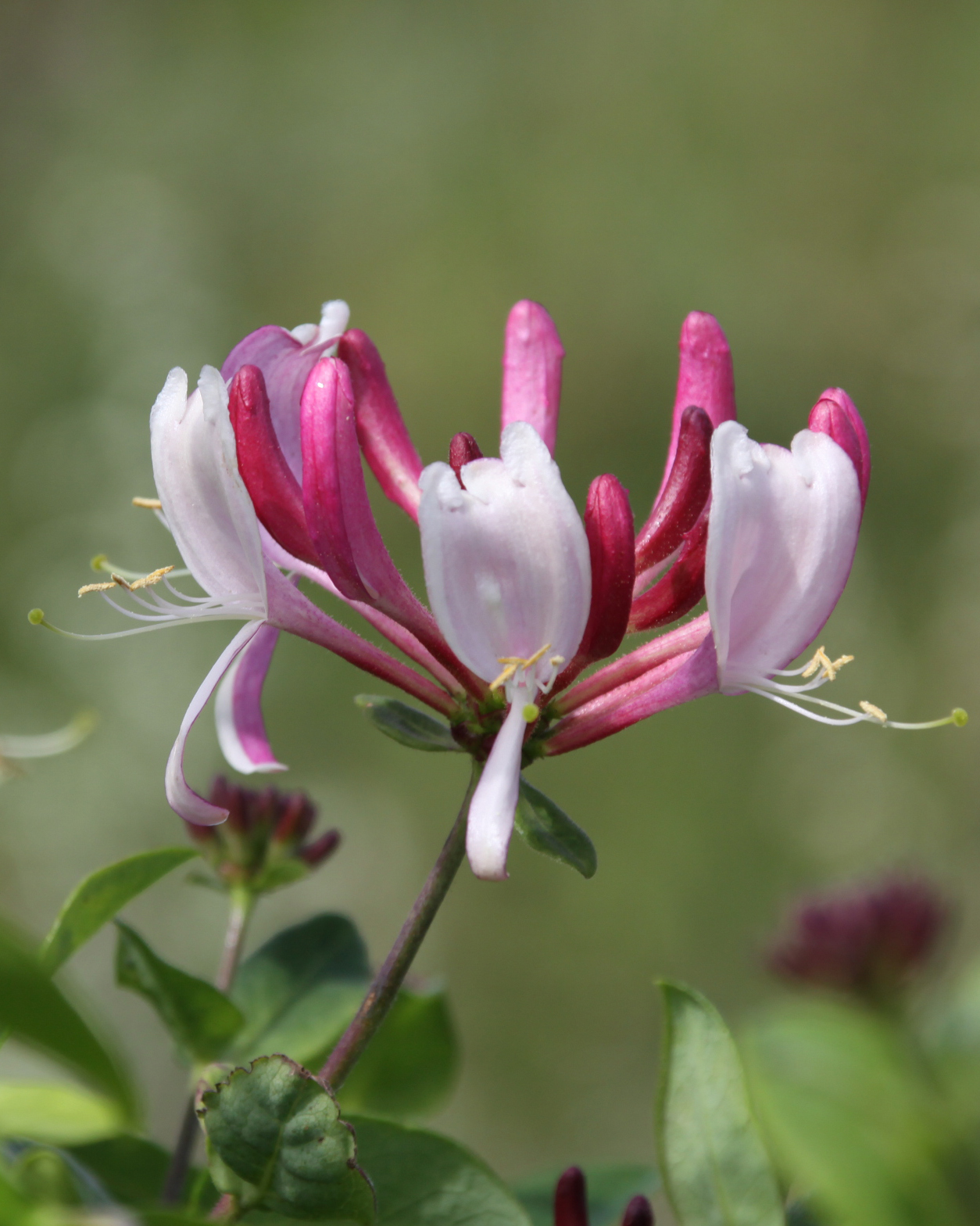
Beautifully scented honeysuckle (Lonicera periclymenum) was in all the hedges

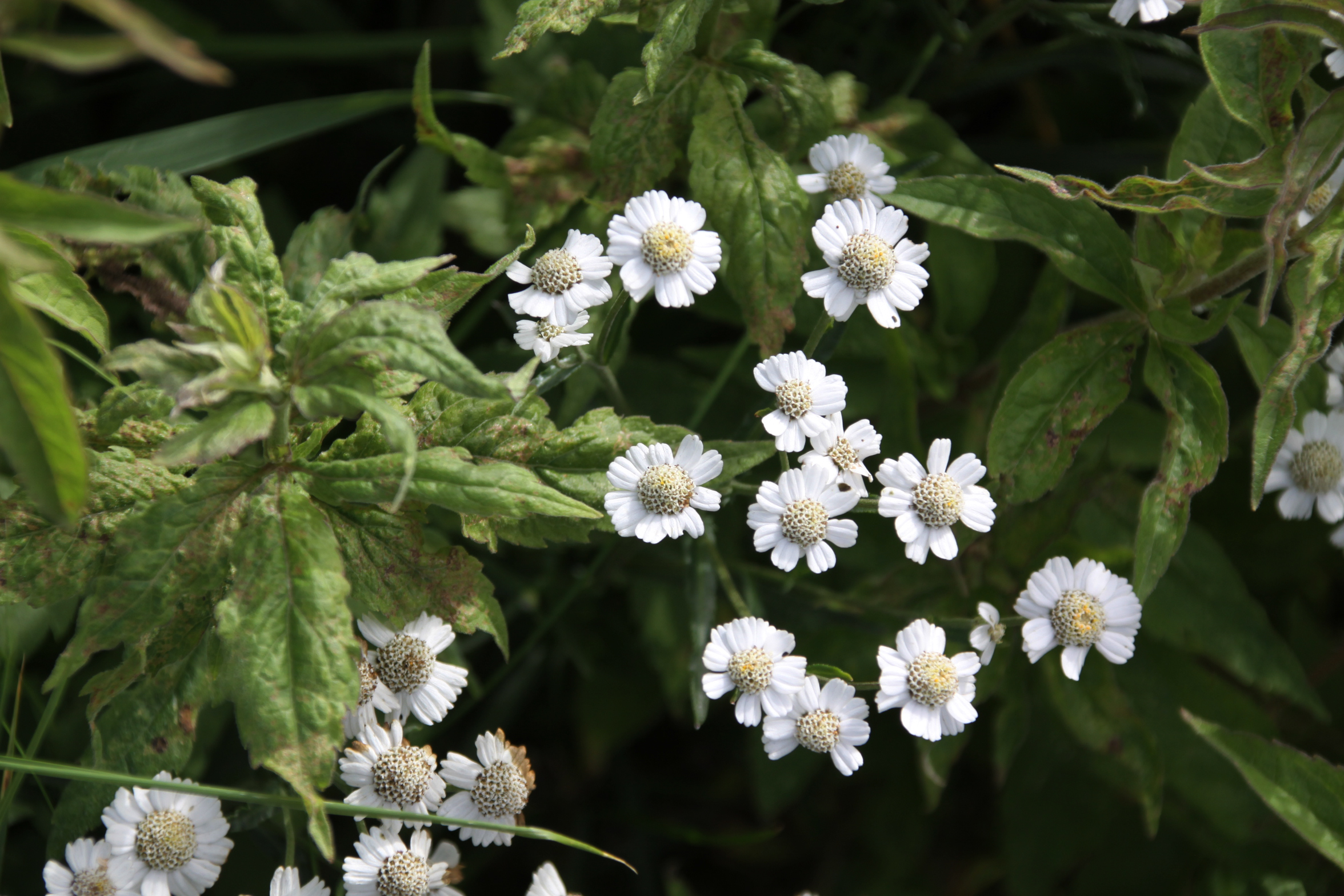
Sneezewort (Achillea ptarmica).

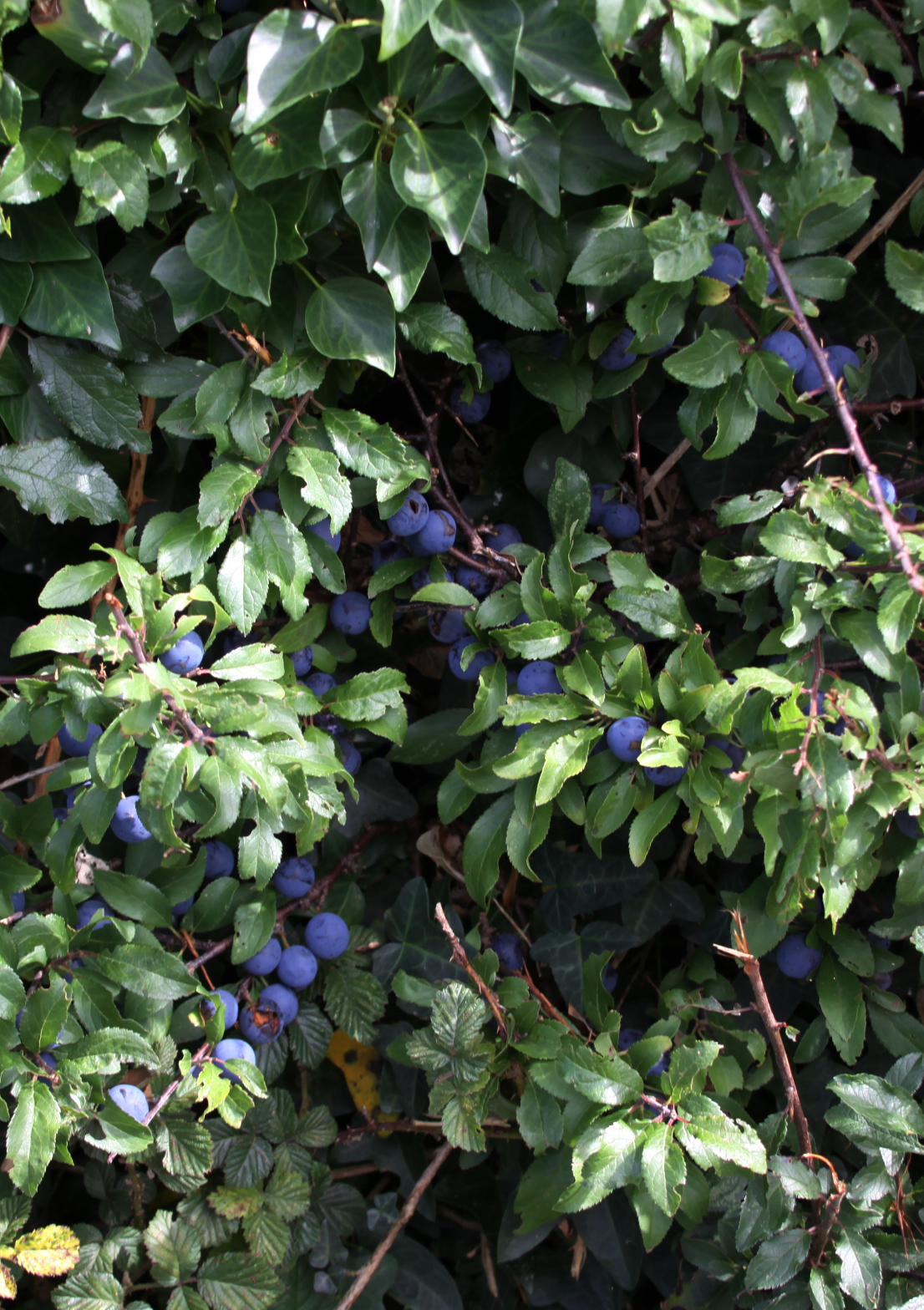
Update on a very wet Monday (10th August):  I couldn’t find out what these are, but in reply to my request for help, Jean suggests that they may be bullace, wild plums.  I’ll go back and pick one when it stops raining.

Sheep’s-bit (Jasione montana)
Sometimes called Sheep’s-bit scabious, this is actually a perennial member of the campanula family, even though it has no obvious resemblance to the usual bell-flowered character of campanulaceae and at first glace looks much more like a true scabious.  Unlike scabious, it has small, alternate hairy leaves. and tiny narrow petals.  According to the Wildlife Trusts website, pollinating insects, which see a different light spectrum to humans, find it highly visible under ultraviolet (UV) light, and use the patterns and colours on the petals to guide them to the nectar and pollen.  It usually starts flowering in July, but thanks to the remarkably warm spring, a lot of species are flowering early.  It likes a wide variety of environments, including dry grassland, and is often found in coastal areas.  It is an excellent pollinator.

Heather and broom on the southern slopes of Tonfanau.

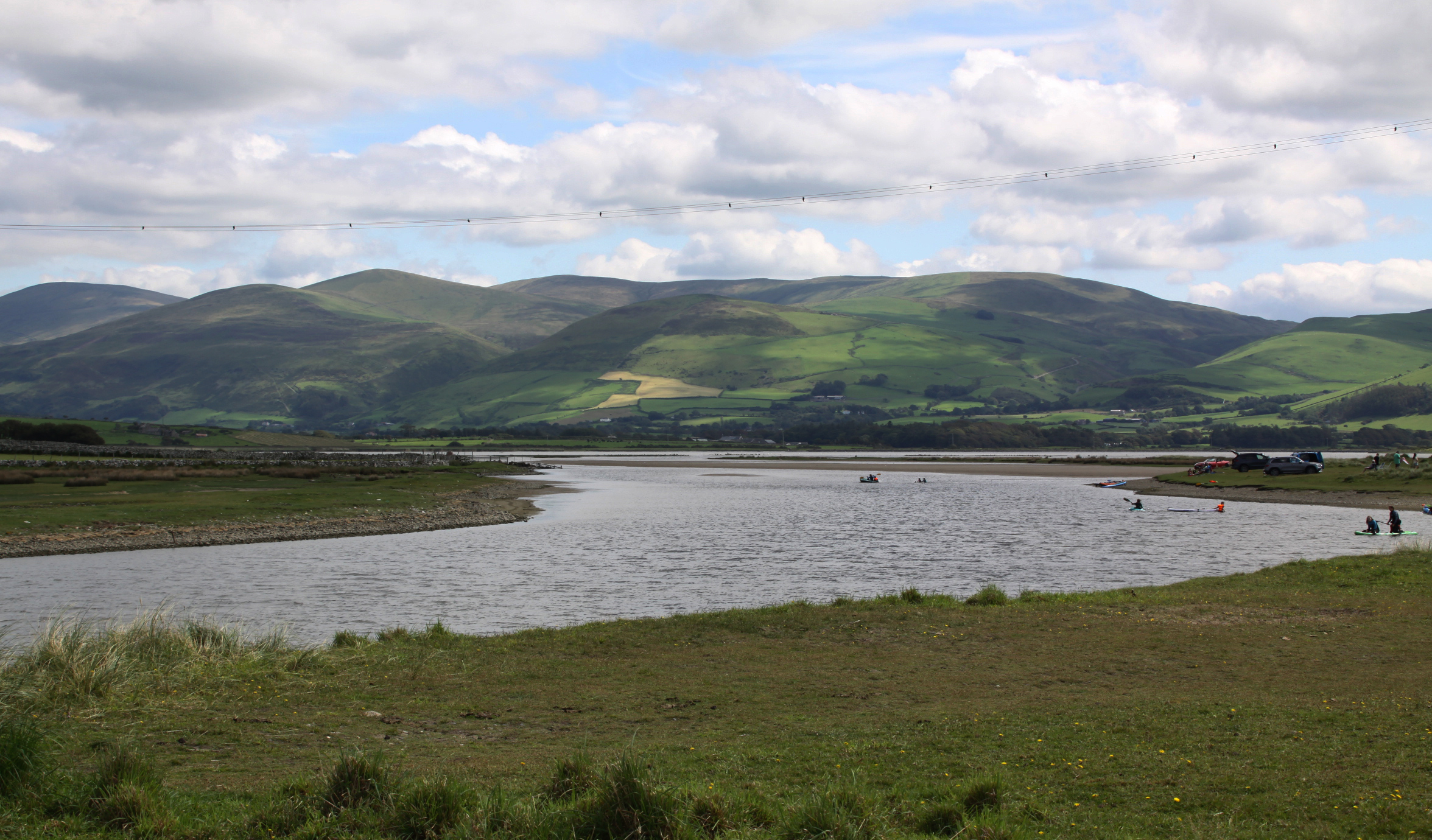
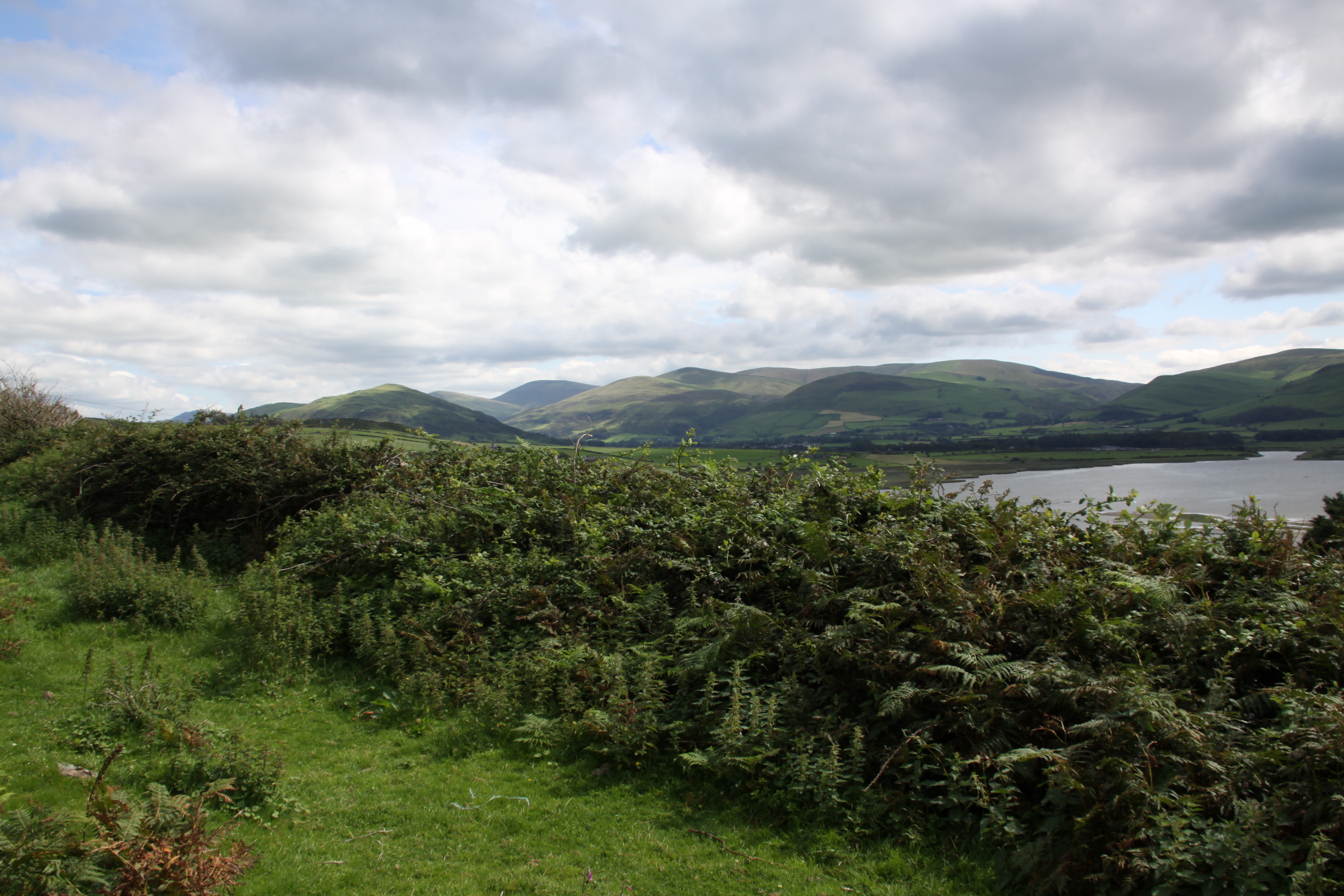
View from the bridlepath across the Dysynni to the hills beyond

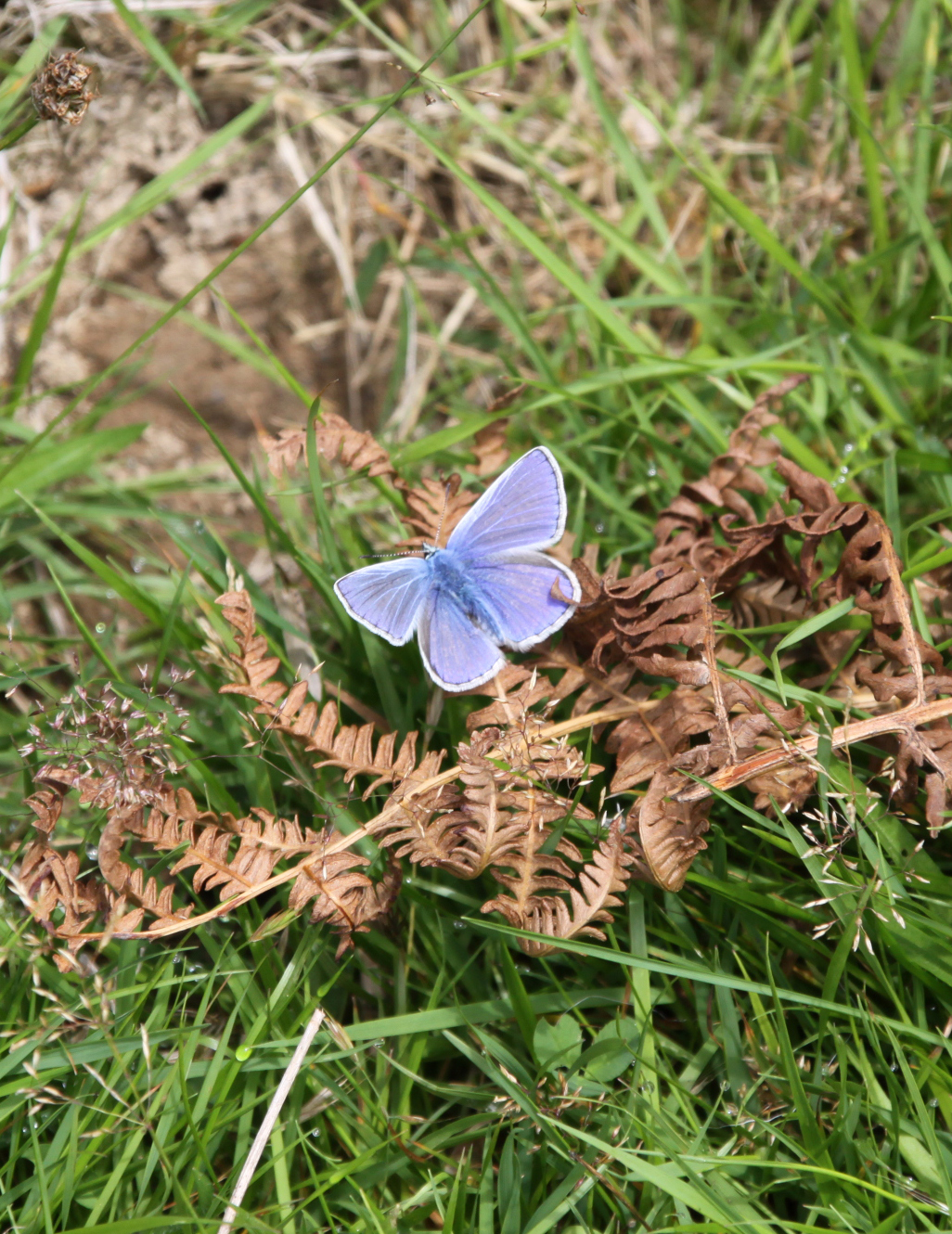
Holly blue (Celastrina argiolus)

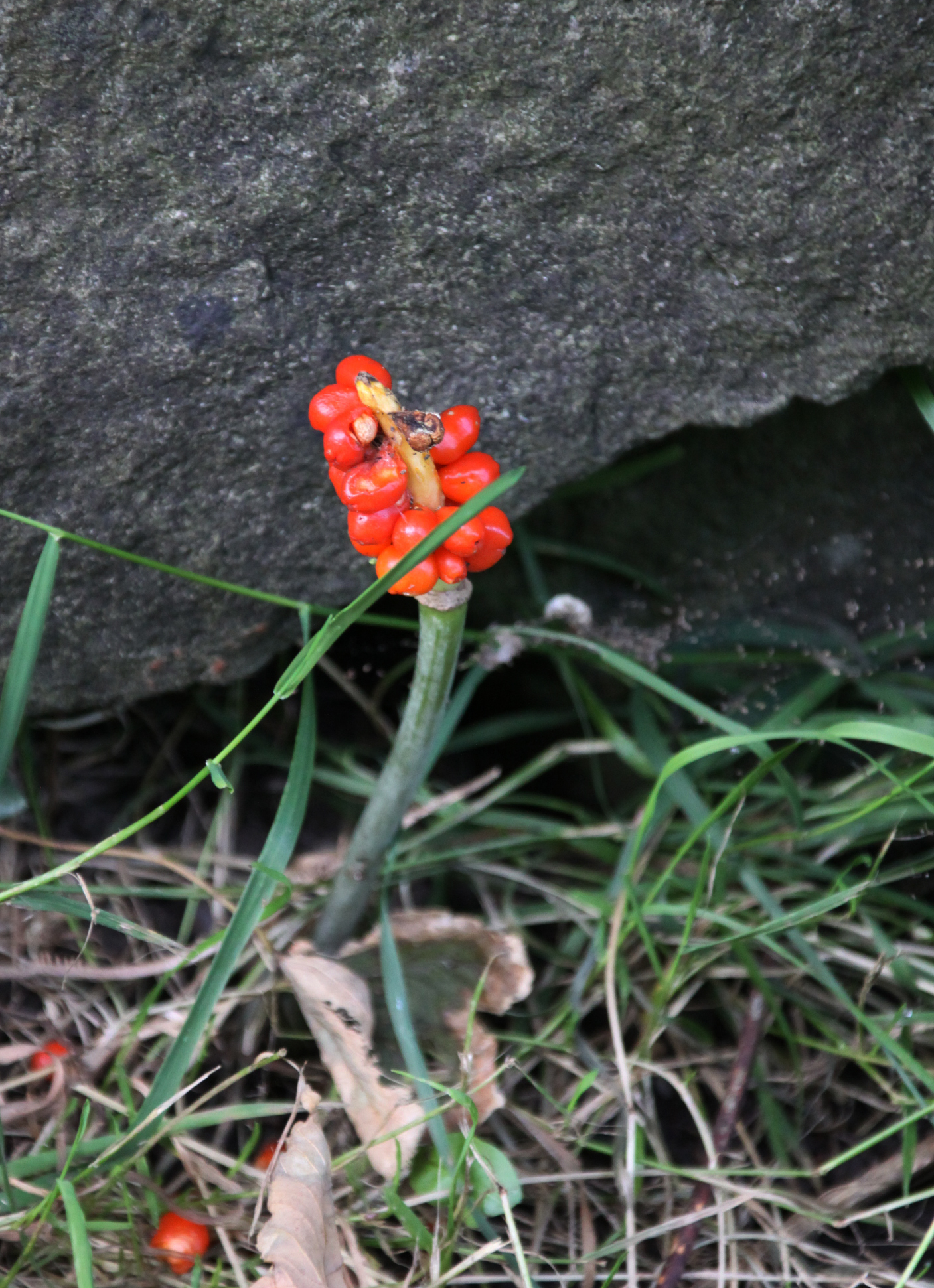
Lord and Ladies (Arum maculatum) fruit, what we used to call cuckoopint when I was a child.

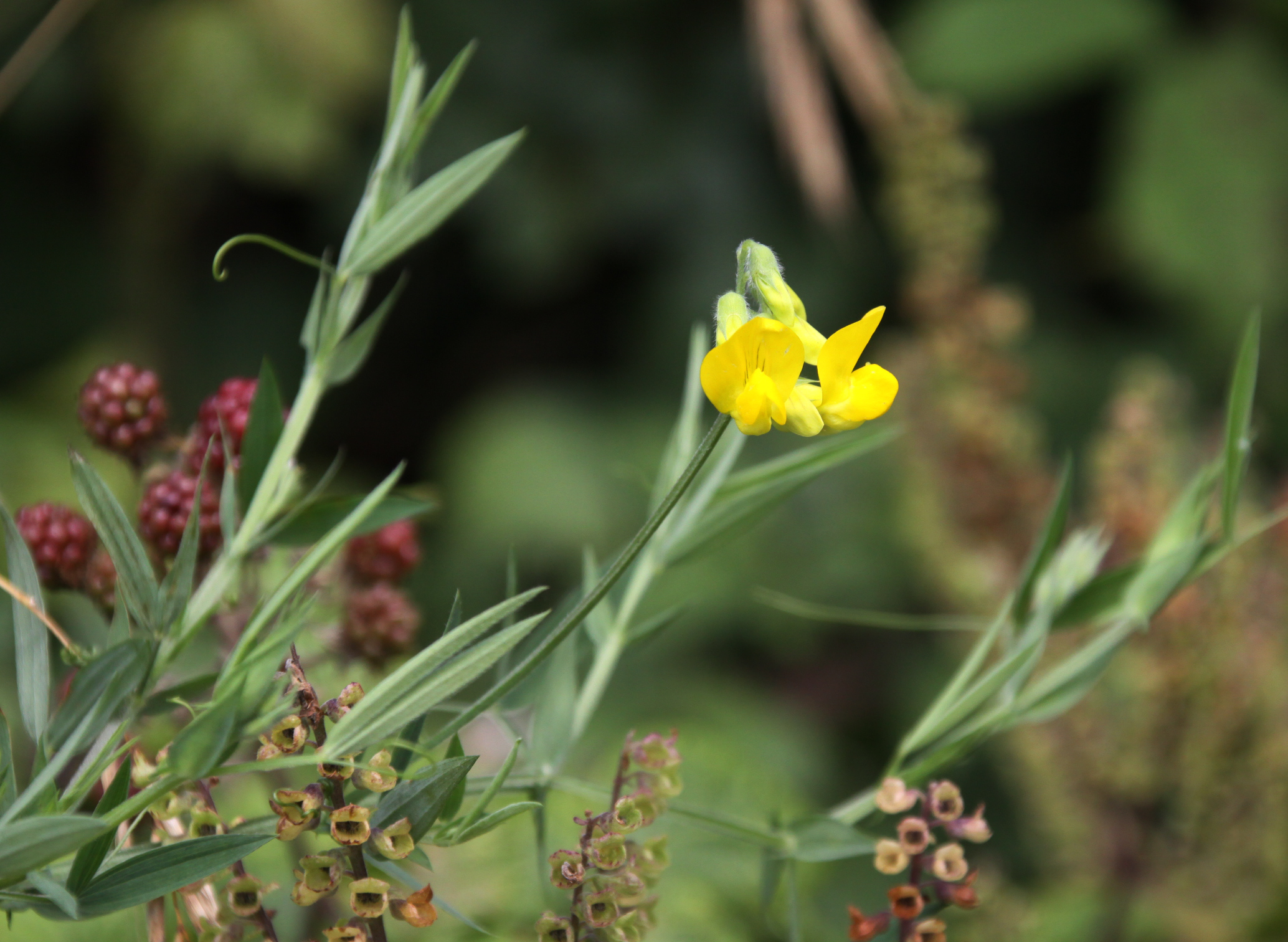
Meadow vetchling (Lathyrus pratensis)

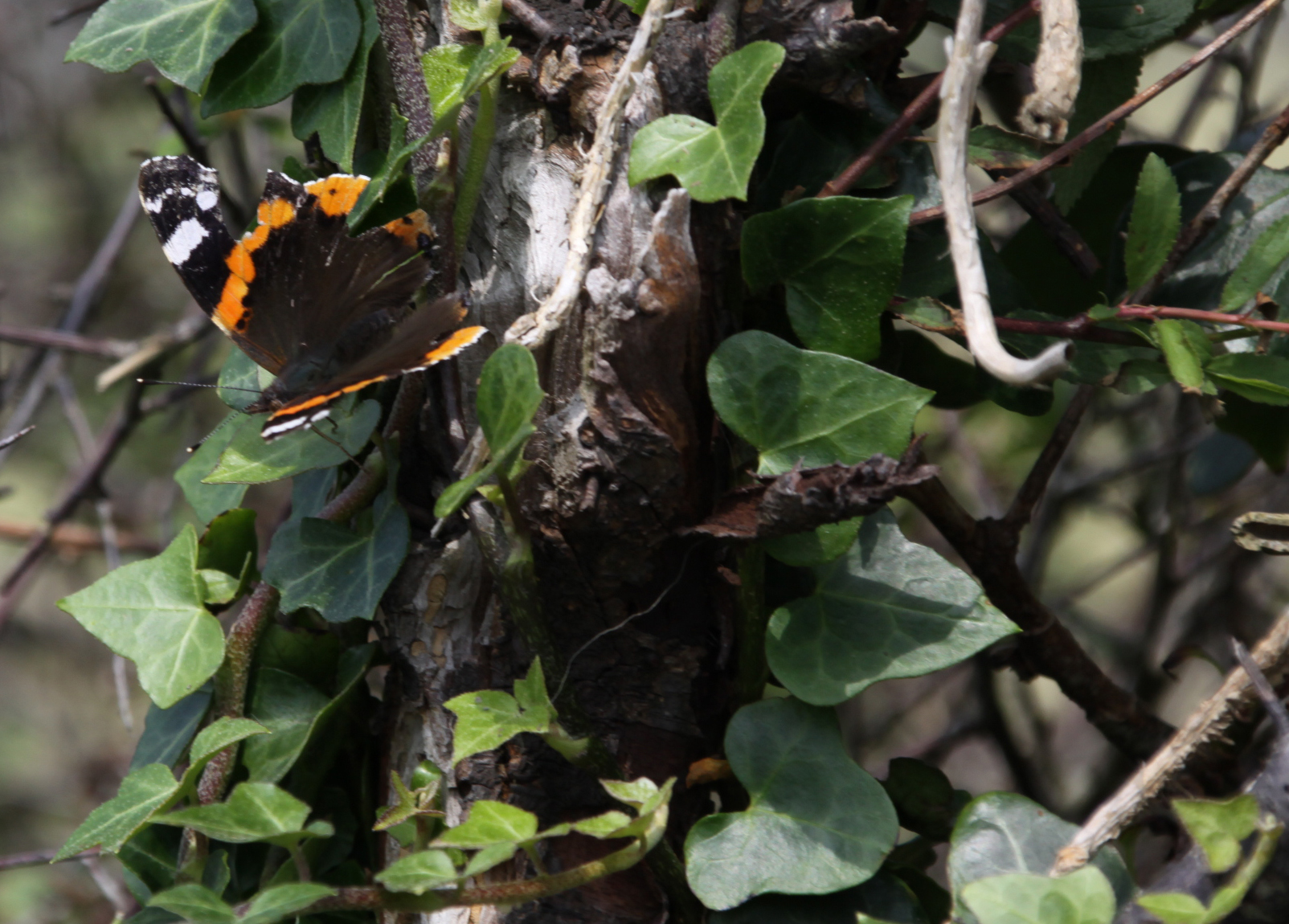
Red admiral (Vanessa atalanta)

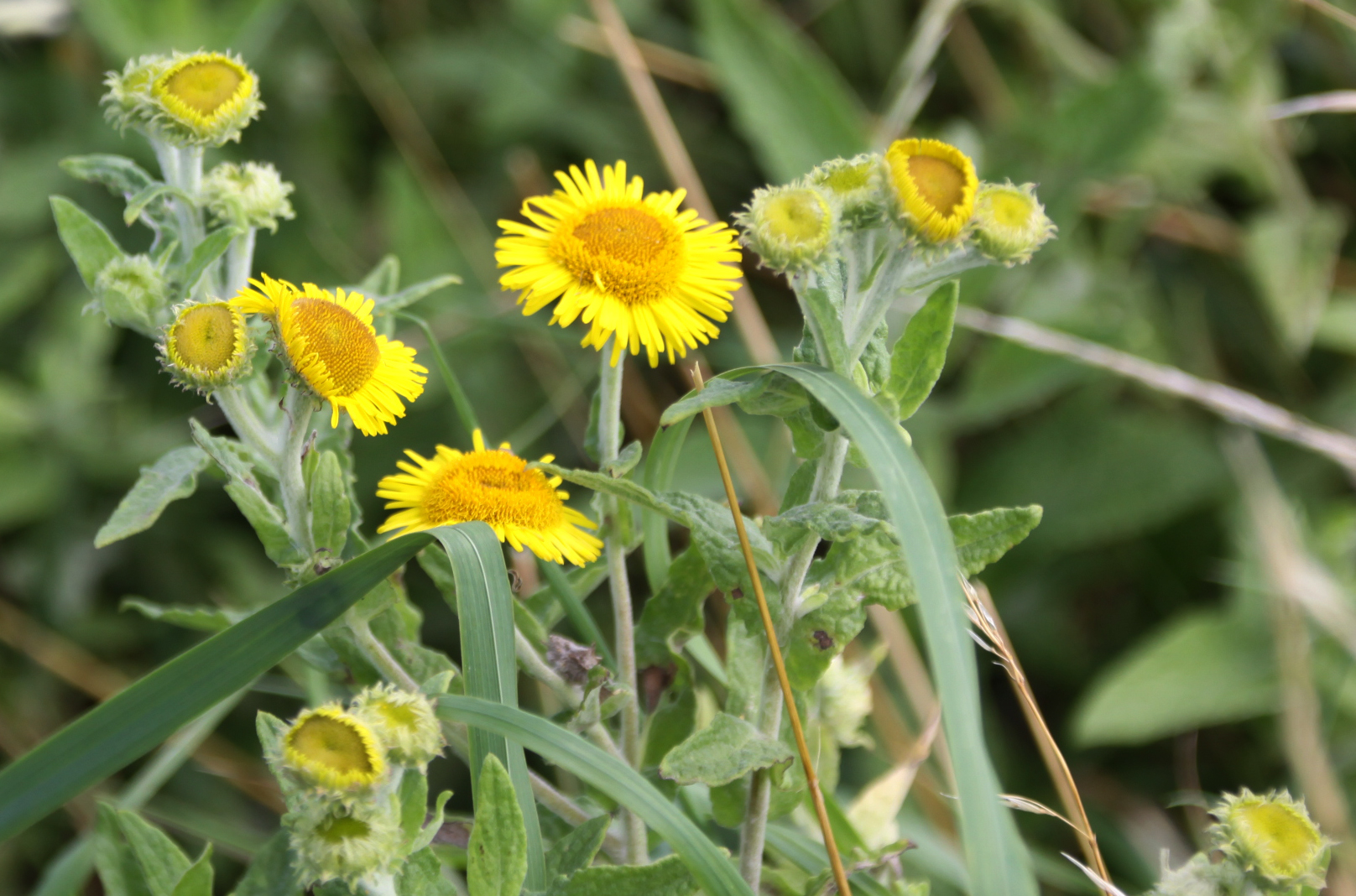
Common fleabane (Pulicaria dysenterica).  Pulix in Latin means flea, and the plant was used was used as a flea deterrent.

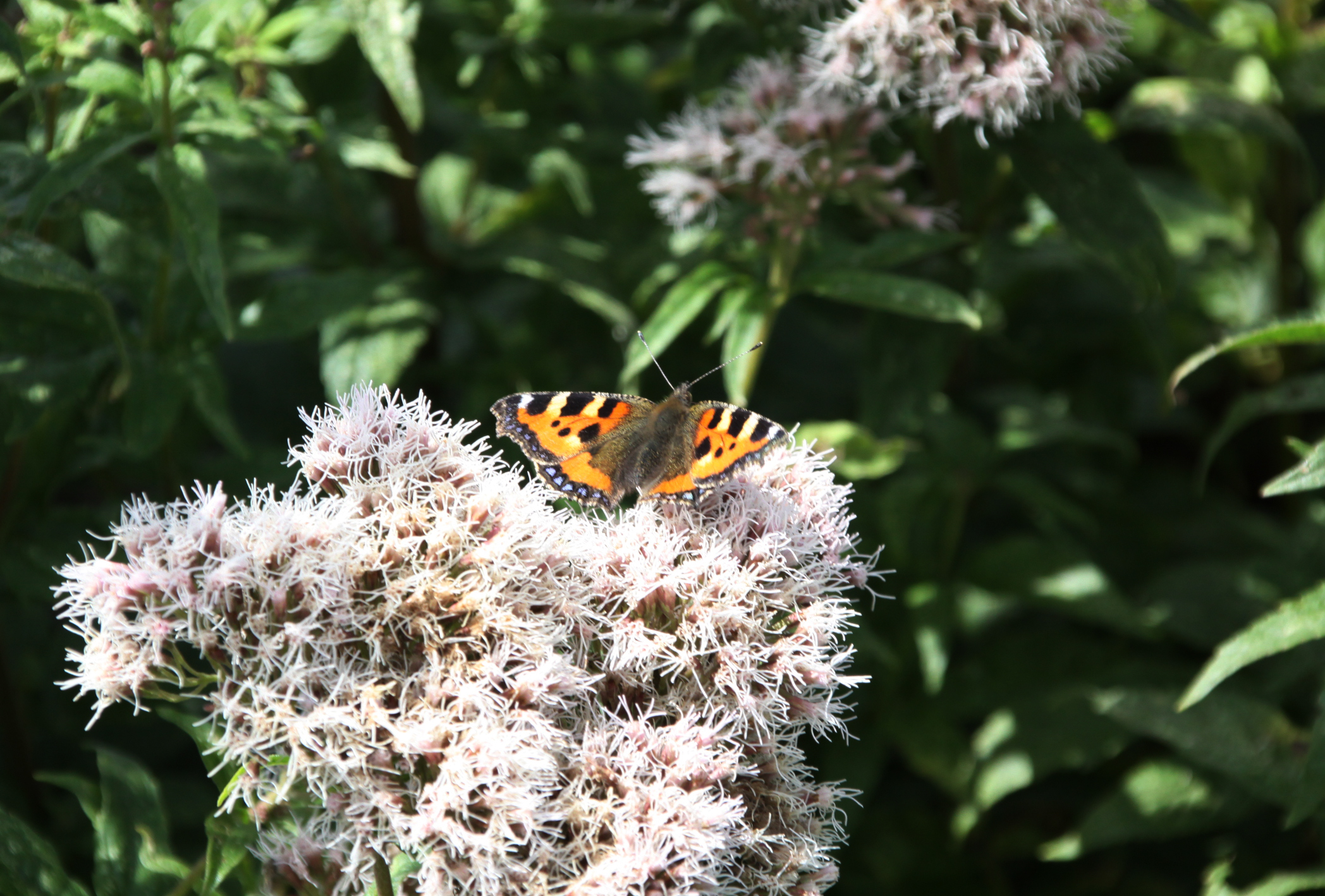
Small tortoiseshell (Aglais urticae) on Hemp agrimony.

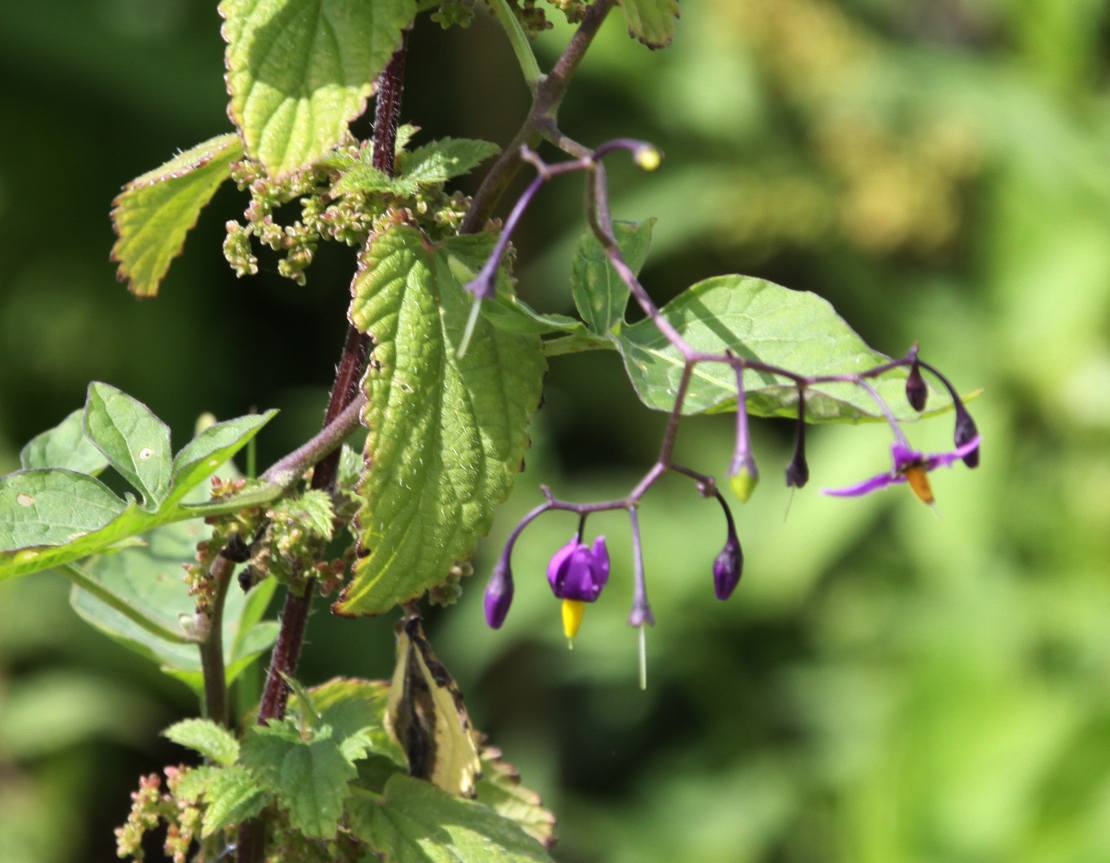
Bittersweet, or woody nightshade (Solanum dulcamara).  All parts of the plant are poisonous but in humans usually cause only upset stomachs. The latin species name “dulcamara” means sweet-bitter, which describes the bitter taste, followed by a sweet after-taste. In Germany physicians used it as a cure for rheumatism and it was hung around the necks of cattle to ward off evil. It flowers from June to September and is happy in hedgerows and woods. After flowering it produces egg-shaped berries that start off green, as above, and slowly become a bright, shiny red.

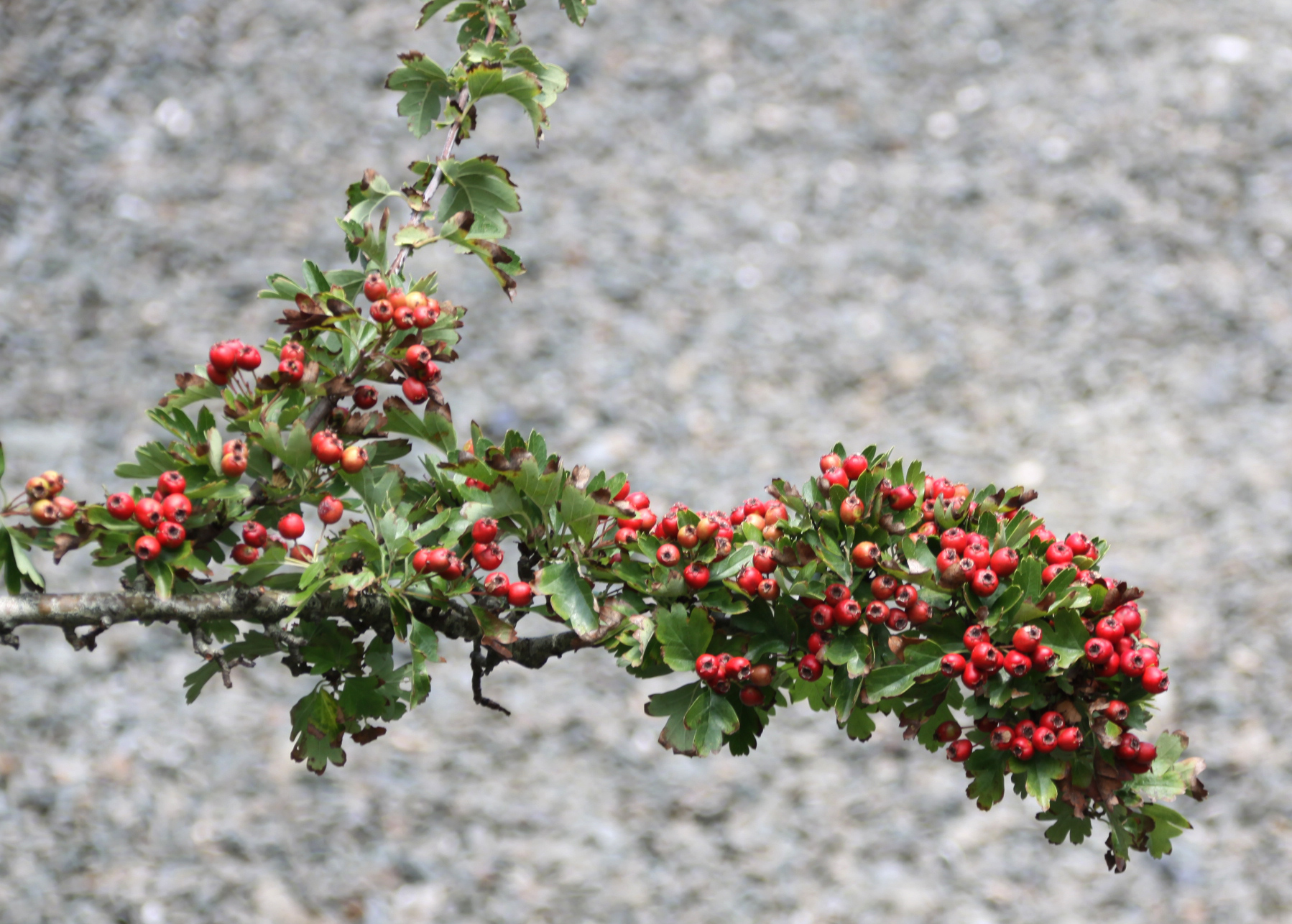
Hawthorn berries (Crataegus monogyna)

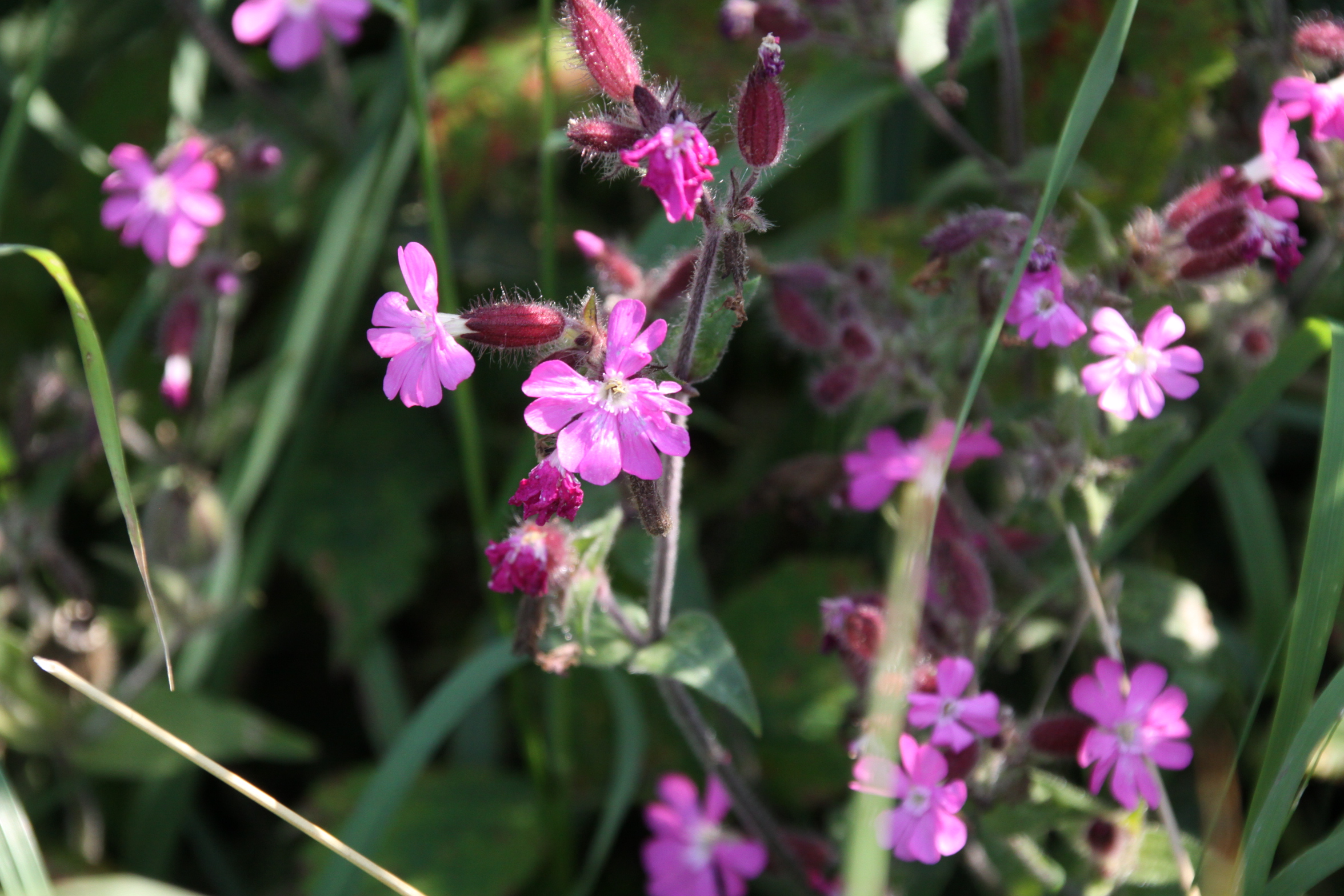
Red campion (Silene dioica). Campions are one of the flowers I remember very fondly from childhood.

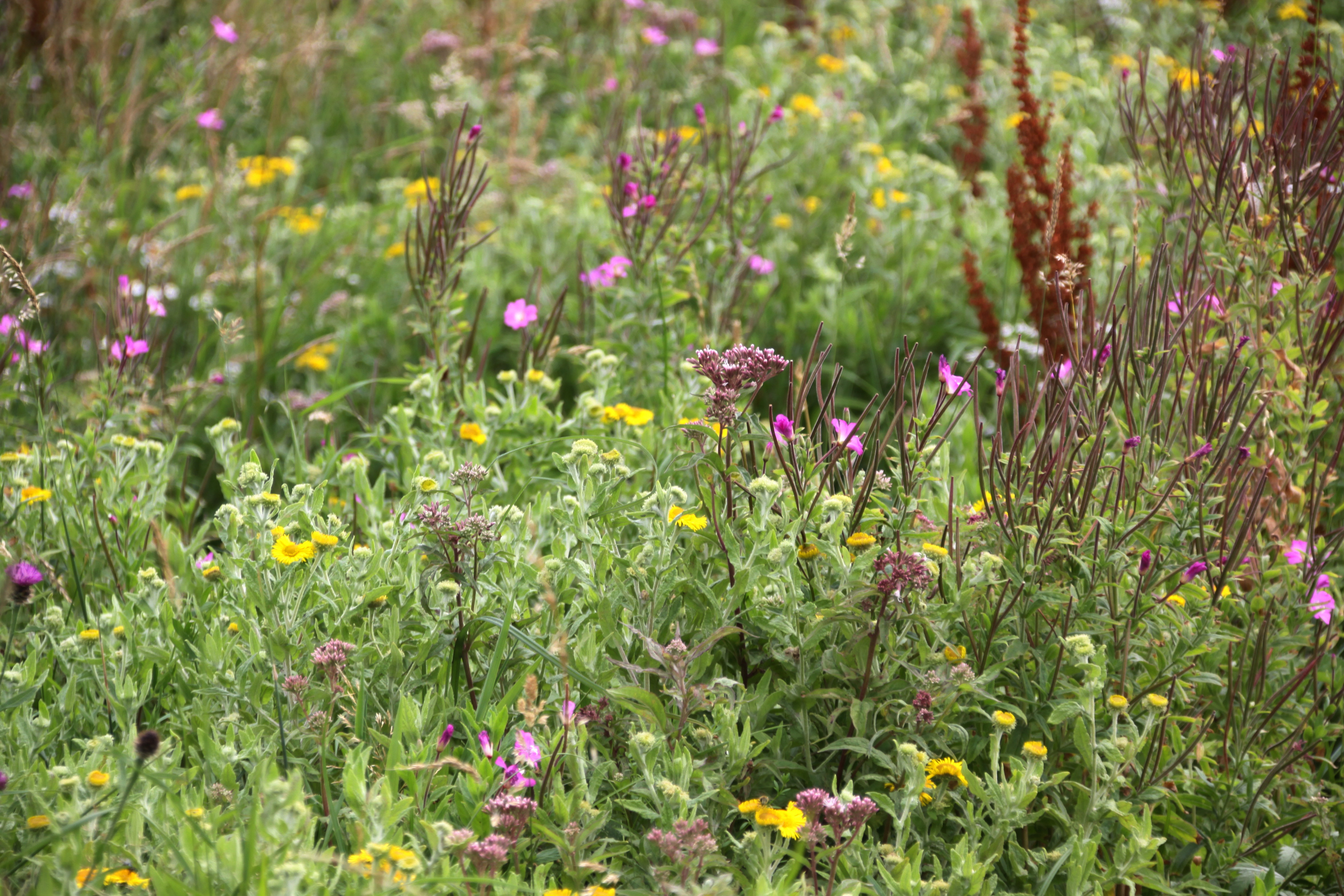
A verge full of splendid colour.


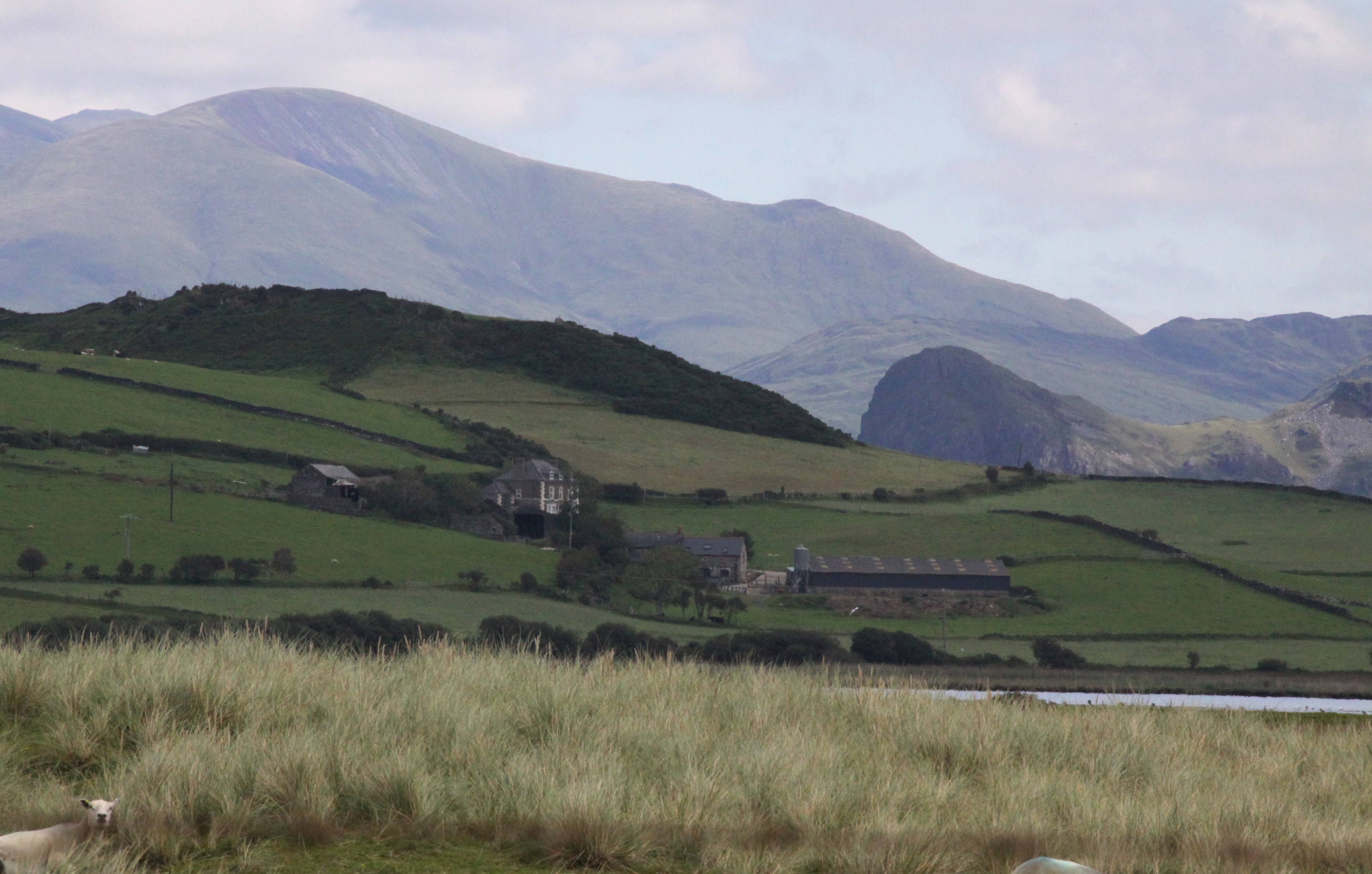
An imposing farmhouse and fields int he foreground, with
Craig yr Aderyn (bird rock) and soaring hills beyond

The drive back into Aberdovey from Tywyn defies description.  The road was lined with parked cars, often in places where I’ve never seen cars parked before (and in several places where cars simply shouldn’t be parked).   It seems as though a lot of people who would normally be holidaying on the Mediterranean have decided to come to Aberdovey instead.  I am sincerely happy for the Aberdovey businesses, but social distancing is non-existant, masks are few and far between, and the whole thing looks like a seething petrie dish for the transmission of nasties.  After one experimental foray, I’m staying well out of it.


North and mid-Wales railway e-Books

For the last few years I’ve been purchasing e-books from the British Transport Treasures website, which is dedicated to supplying good quality digitized copies of out-of-print British transport titles, some dating back to the turn of the 20th Century and many of them really difficult to get hold of.  Prices are generally very low, and support the hosting of the website.  I came across the site when chatting with the site’s owner, who’s an expert on the local history of the area where I used to live in London.  I think that the site is a brilliant way of keeping some of these old titles alive and accessible.  The following railway e-books may be of interest to local railway enthusiasts:

The Story of the Cambrian, by C. P. Gasquoine,Woodall, Minshall, Thomas & Co. Ltd., 1922 [ebook]
£4.05
Hard back book, 10”x 6.5 “, pp. 158, 34 B&W half tone images, appendices of old timetables. Map of Cambrian Railways.
http://www.britishtransporttreasures.com/product/the-story-of-the-cambrian-by-c-p-gasquoinewoodall-minshall-thomas-co-ltd-1922-ebook/

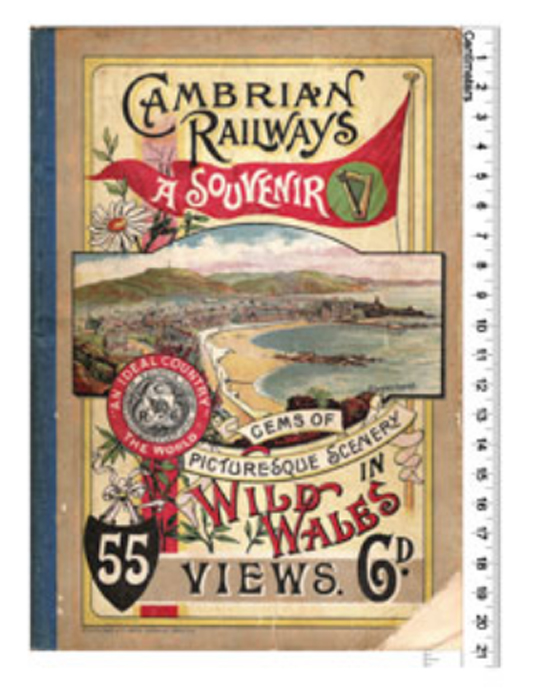
Cambrian Railways A Souvenir – 1895 [ebook]
£2.15
Bbooklet, 9.5”x 6.5”, 40pp superb black and white photographs, adverts Cambrian services, coloured map of railway on back cover.
http://www.britishtransporttreasures.com/product/cambrian-railways-a-souvenir-1895/

Locomotives of the Cambrian, Barry and Rhymney Railways. By M. C. V. Allchin, self published 1943 [ebook]
£2.95
http://www.britishtransporttreasures.com/product/locomotives-of-the-cambrian-barry-and-rhymney-railways-by-m-c-v-allchin-self-published-1943-ebook/

Welsh Mountain Railways 1924 [ebook]
£2.15
Booklet 7.25”x 4.25 50pp. inc. covers, two maps, 16 black and white photographs tipped in, not paginated.
http://www.britishtransporttreasures.com/product/welsh-mountain-railways-1924

Snowdon and the mountain railway, by anon. (“E. W.”) Woodall, Minshall & Co. nd. But c1900. [ebook]
£3.95
Paper covers, silk cord binding, 11X 8”, P. 18 inc. covers and adverts. 12 B&W photogravure photographs of trains, the railway Snowdon and surroundings.
http://www.britishtransporttreasures.com/product/snowdon-and-the-mountain-railway-by-anon-e-w-woodall-minshall-co-nd-but-c1900-ebook/

The Wonderland of Wales, GWR, Ffestiniog, Snowdon and Welsh Highland Railways, Timetables, etc., summer 1923 [Booklet]
£2.00 Booklet, 7.25”x 4.75”, pp. 16, inc. paper covers.
http://www.britishtransporttreasures.com/product/the-wonderland-of-wales-gwr-festiniog-snowdon-and-welsh-highland-railways-timetables-etc-summer-1923-booklet/


Watersports, the golf course, wild mushrooms, and a superbly moody sky

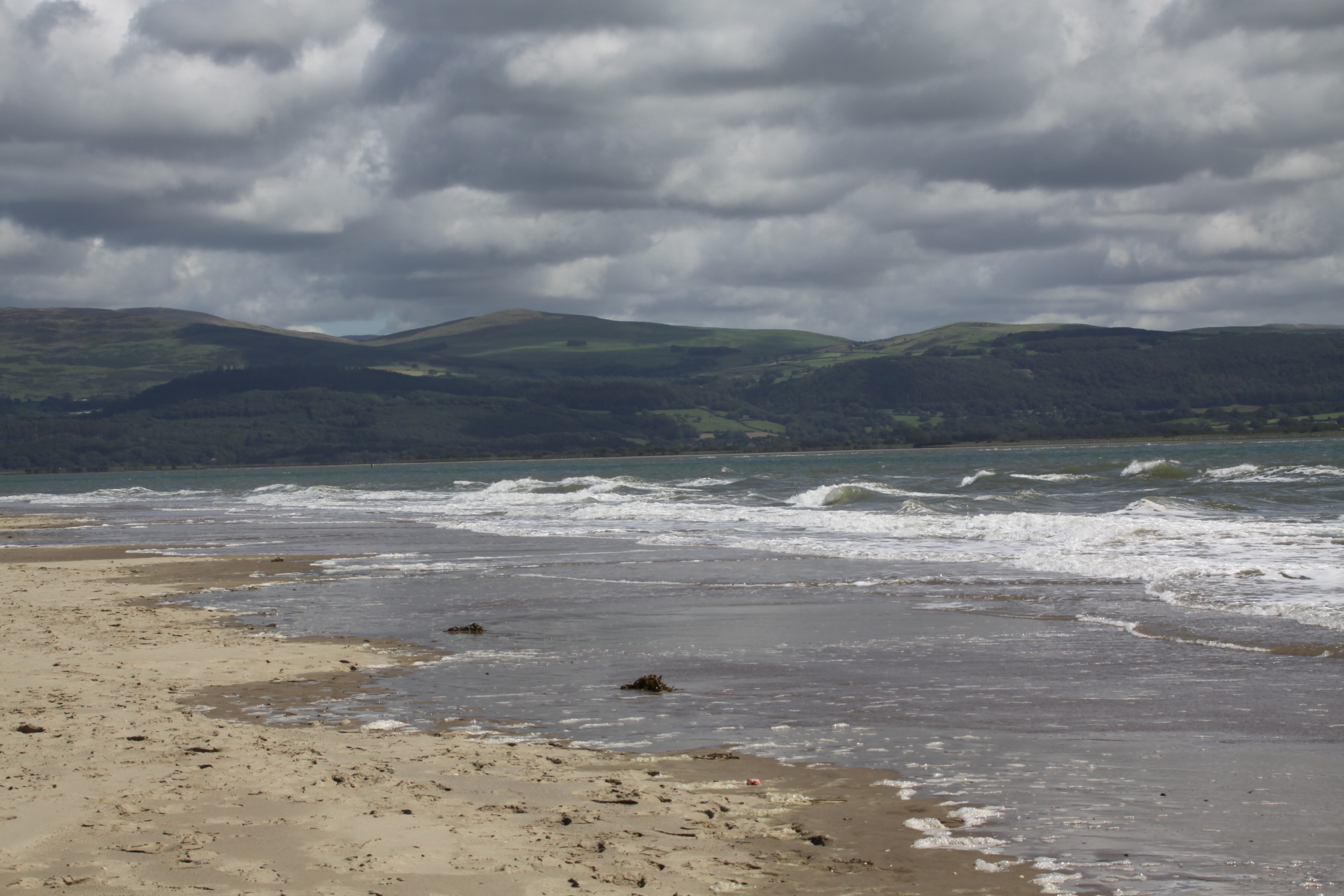
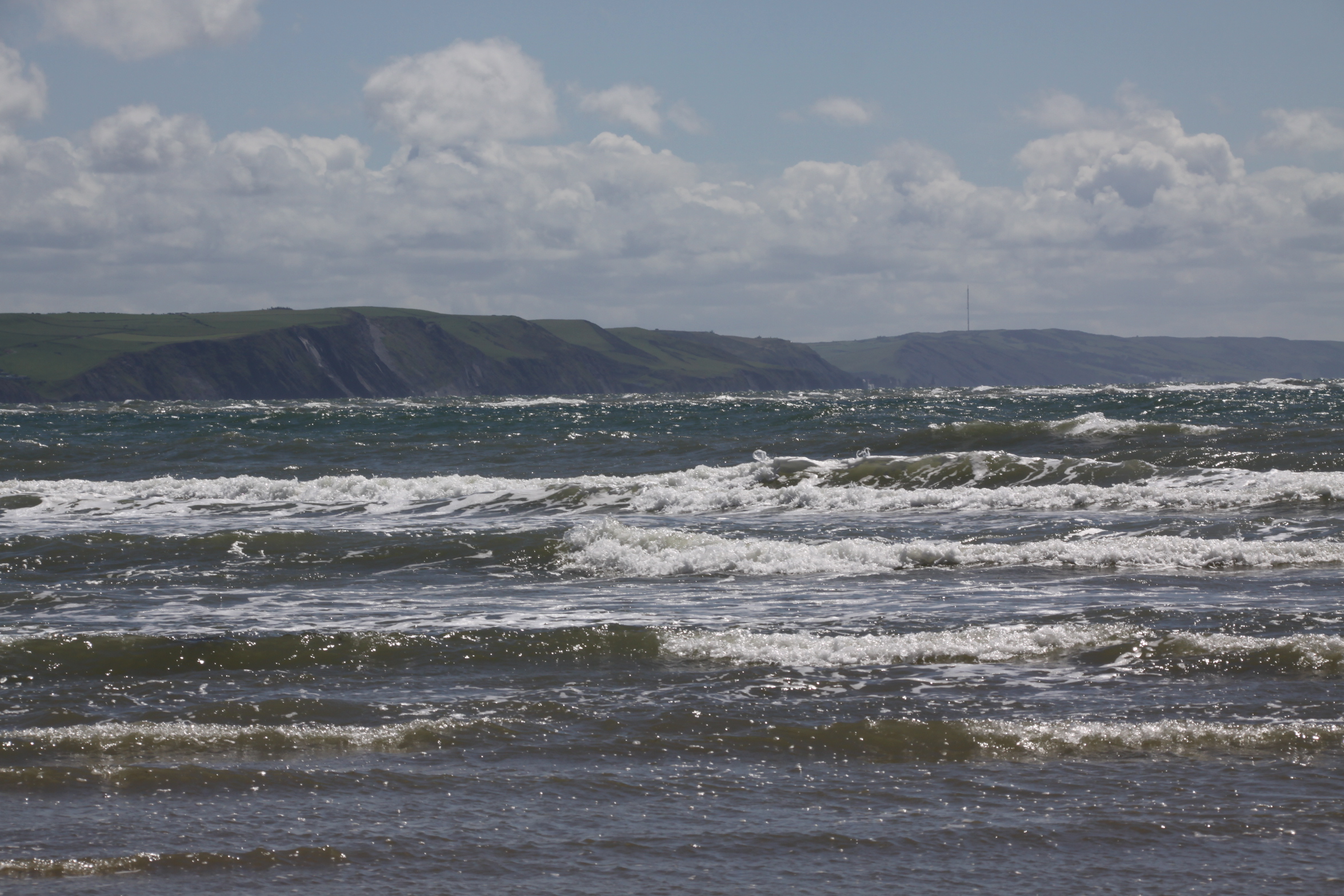
Often when I walk on the beach in the summer, looking north to Tywyn there is a big blue sky with little fluffy white clouds and when I turn round to look back at Cerdigion it looks like the coming of Armageddon, with dark clouds gathering in an unbroken, uncompromising line.  It was just like that yesterday, and it made for some  dramatic colour and light contrasts.

I came down Gwelfor Road, emerging on the coast road by the Post Office, thereby bypassing what I always think of as the family section of the beach, the stretch leading away from the lifeboat station, handily close to all the facilities.  It tends to be fairly jam-packed at this time of year.  I usually like to wend my way through the melee to enjoy people having fun, but given the ongoing risks I thought I’d give it a miss.  I headed straight into the sand dunes, which were only being used by others as a thoroughfare to cross from the road to the beach.

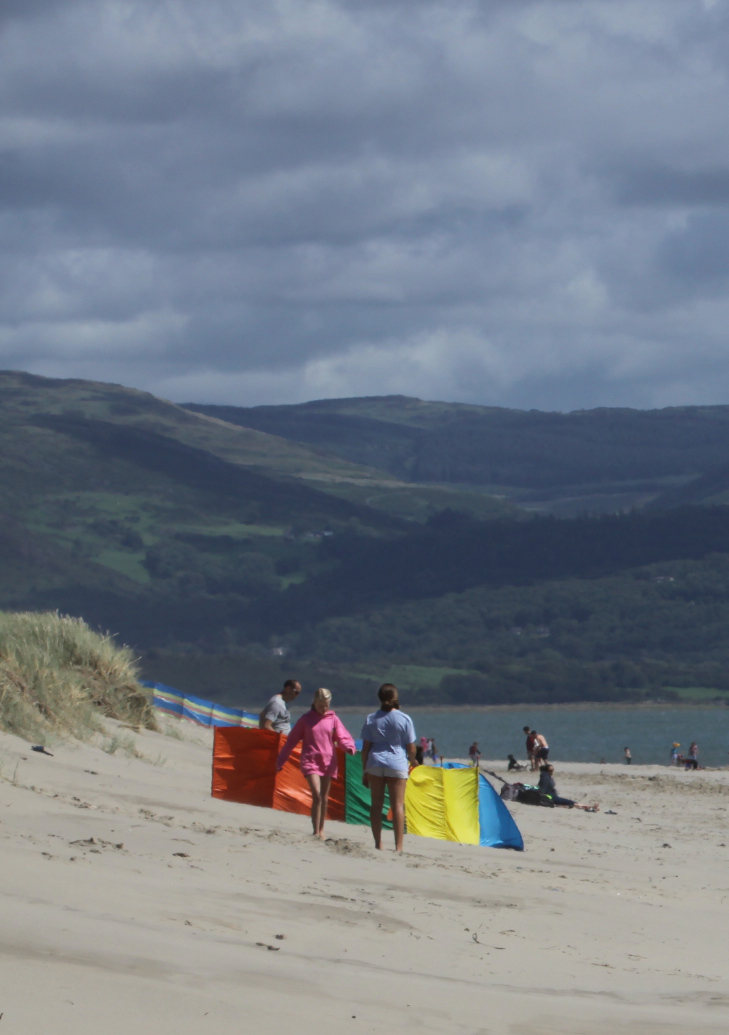
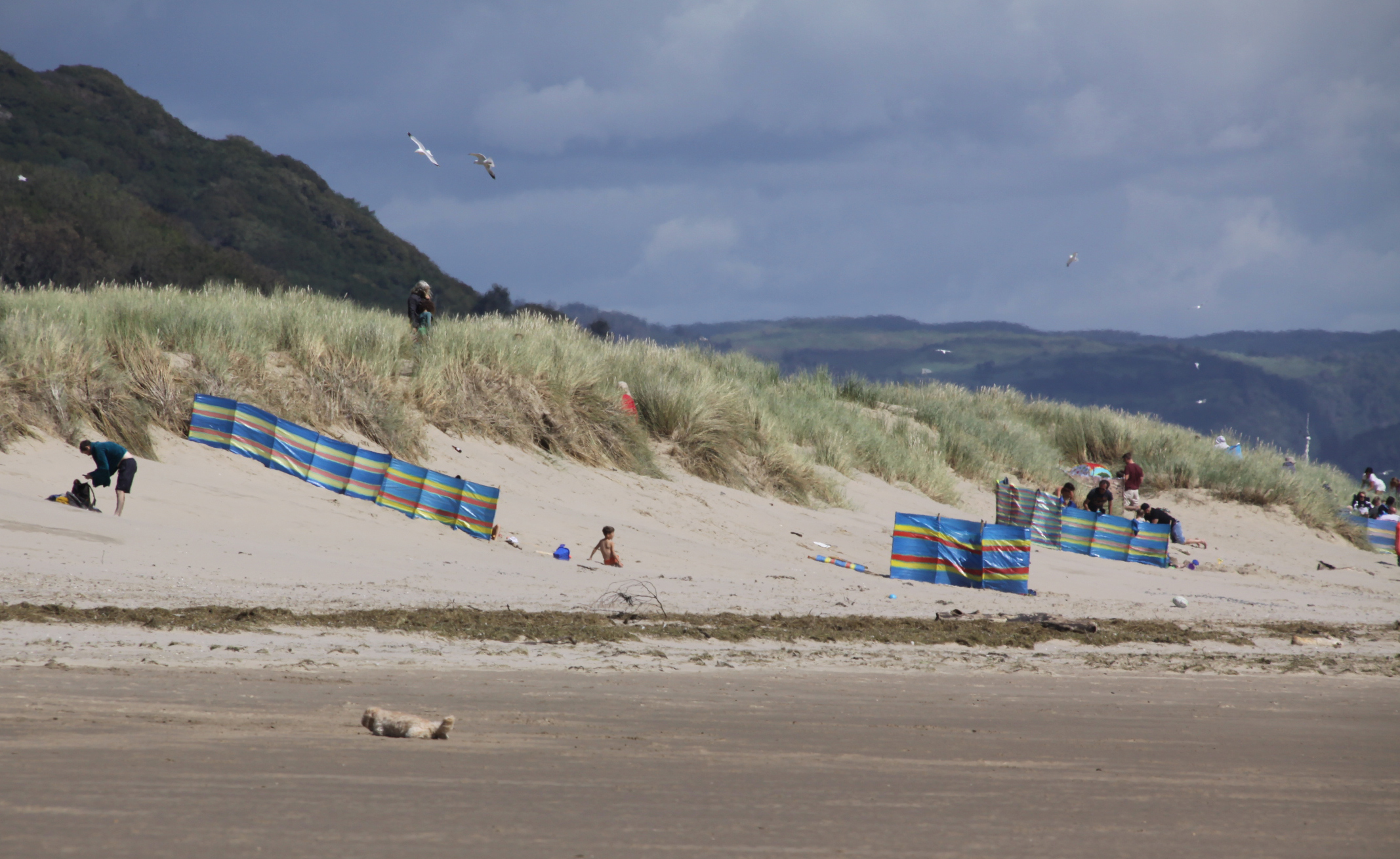
There was a stiff and slightly chilly breeze that occasionally developed into a fairly strong wind.  Although most people were in shorts, as I was myself, most also wore jackets and fleeces, and on the beach there were a lot of colourful windbreaks erected.

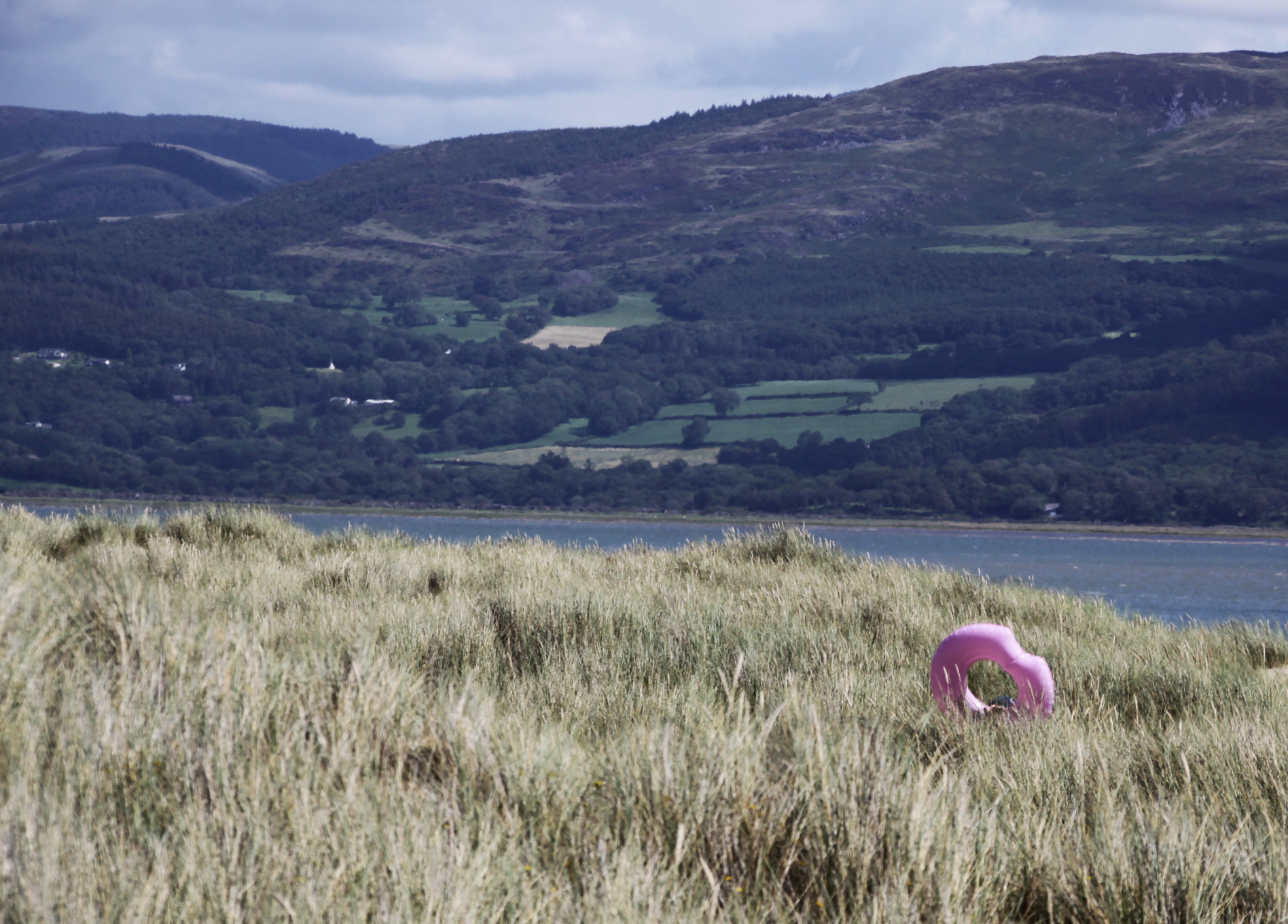
A giant inflatable pink swim-ring making its way apparently under its own steam across the dunes, one of the more surreal things that have caught my eye this year.  Eventually the owner became visible as he and his swim-ring, still held aloft, proceeded down the beach towards the water’s edge.  I assume that a child was following on somewhere behind.
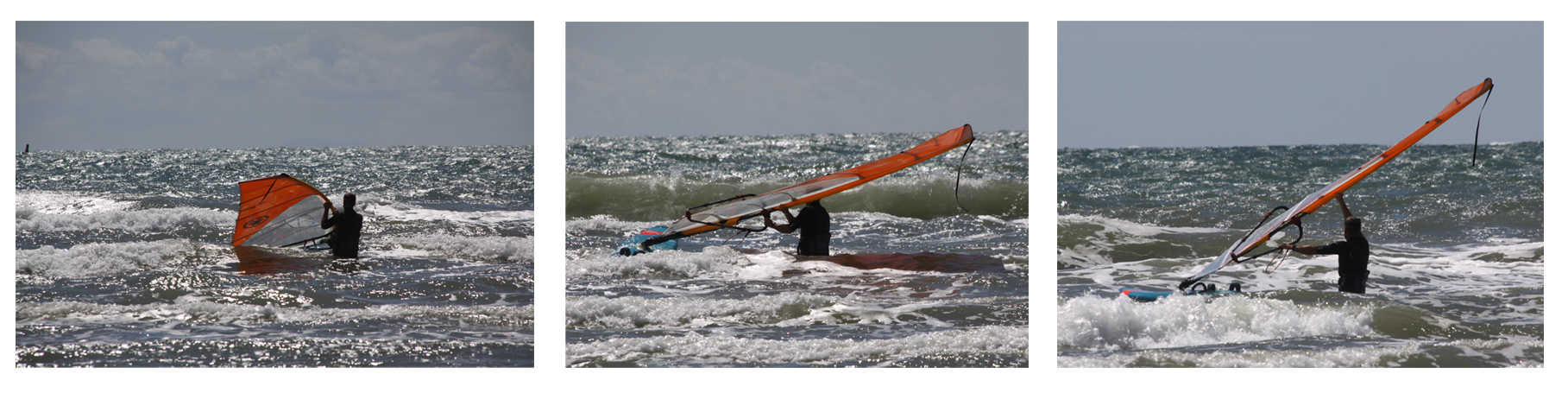
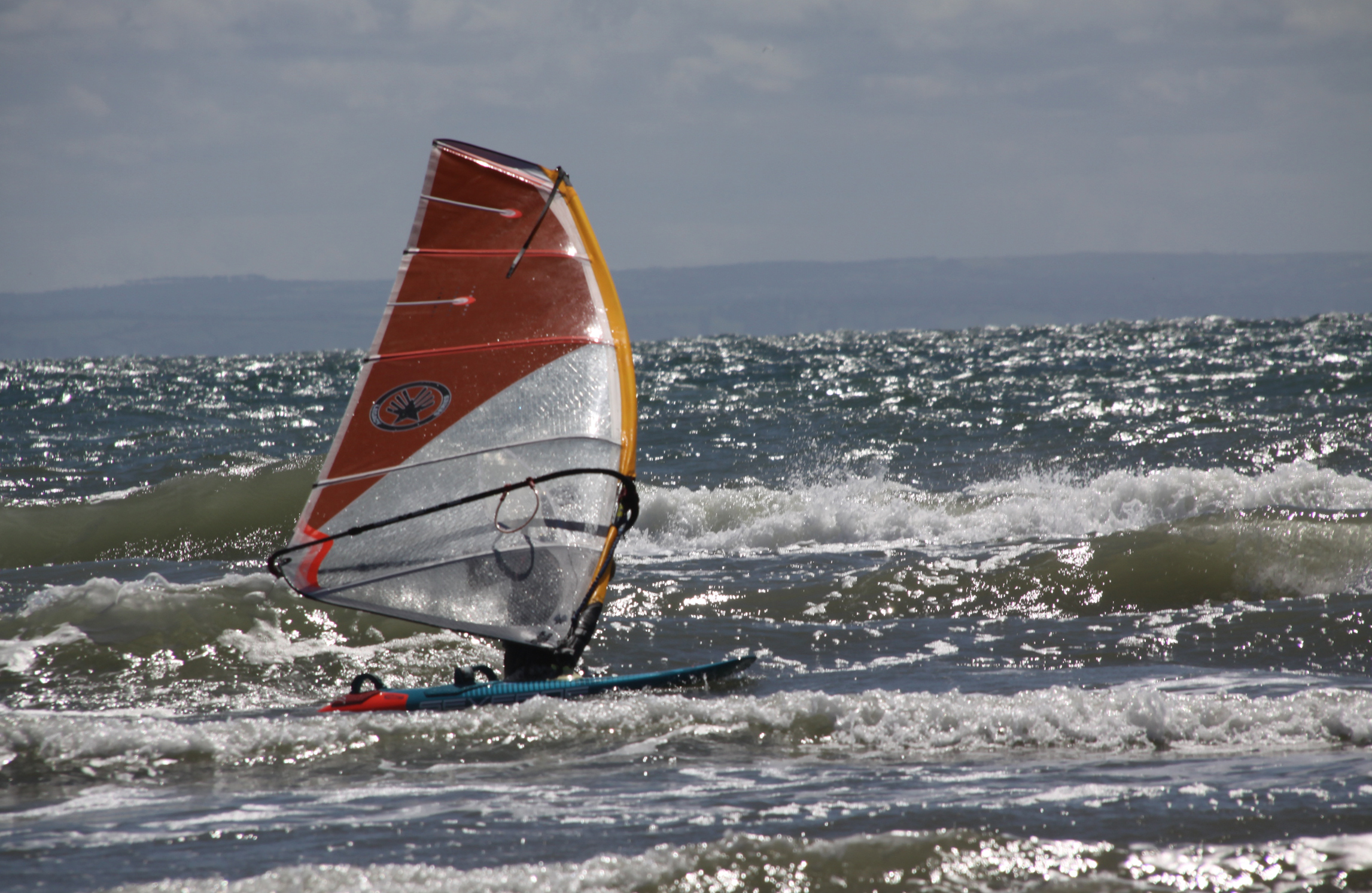
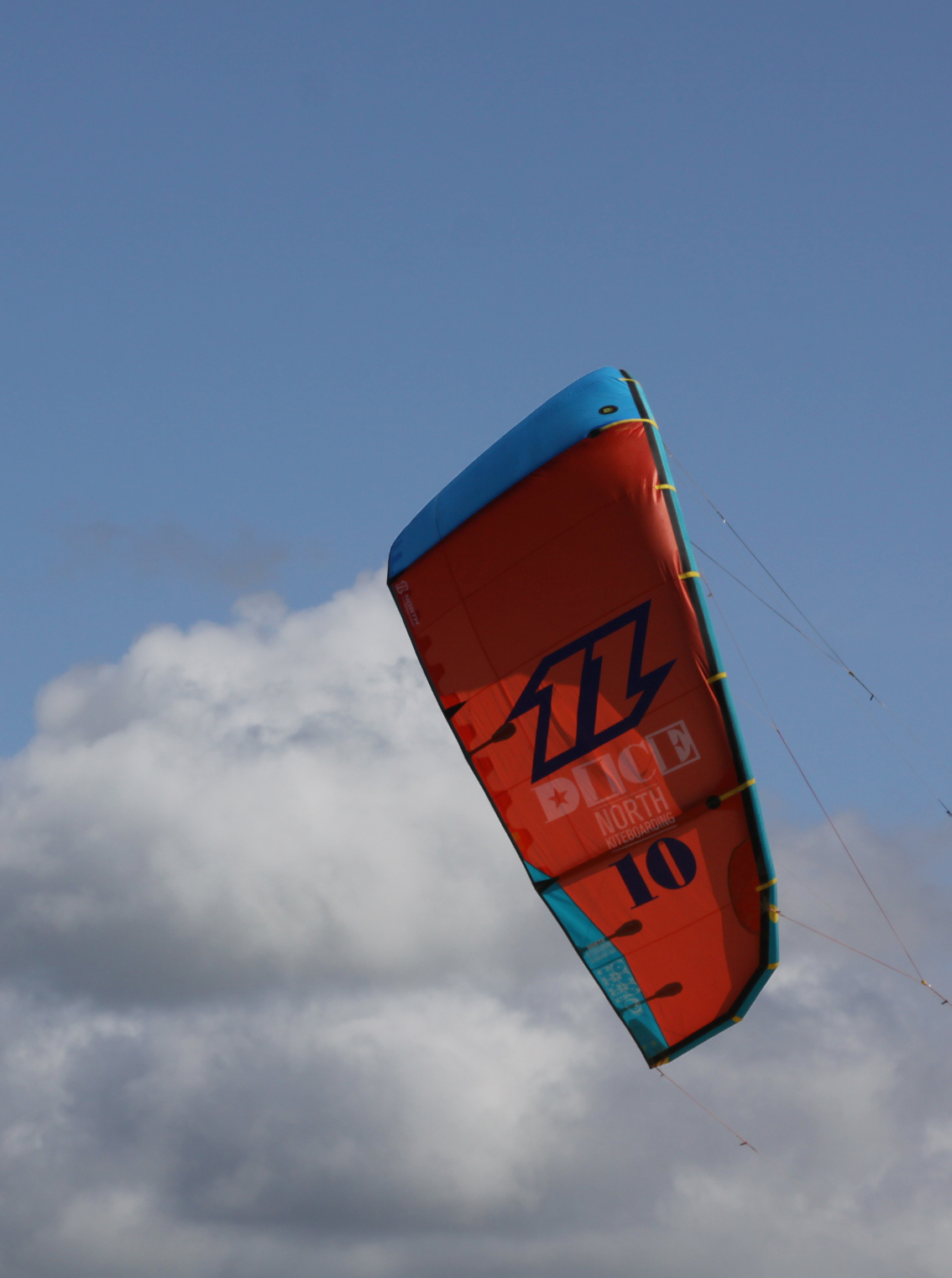
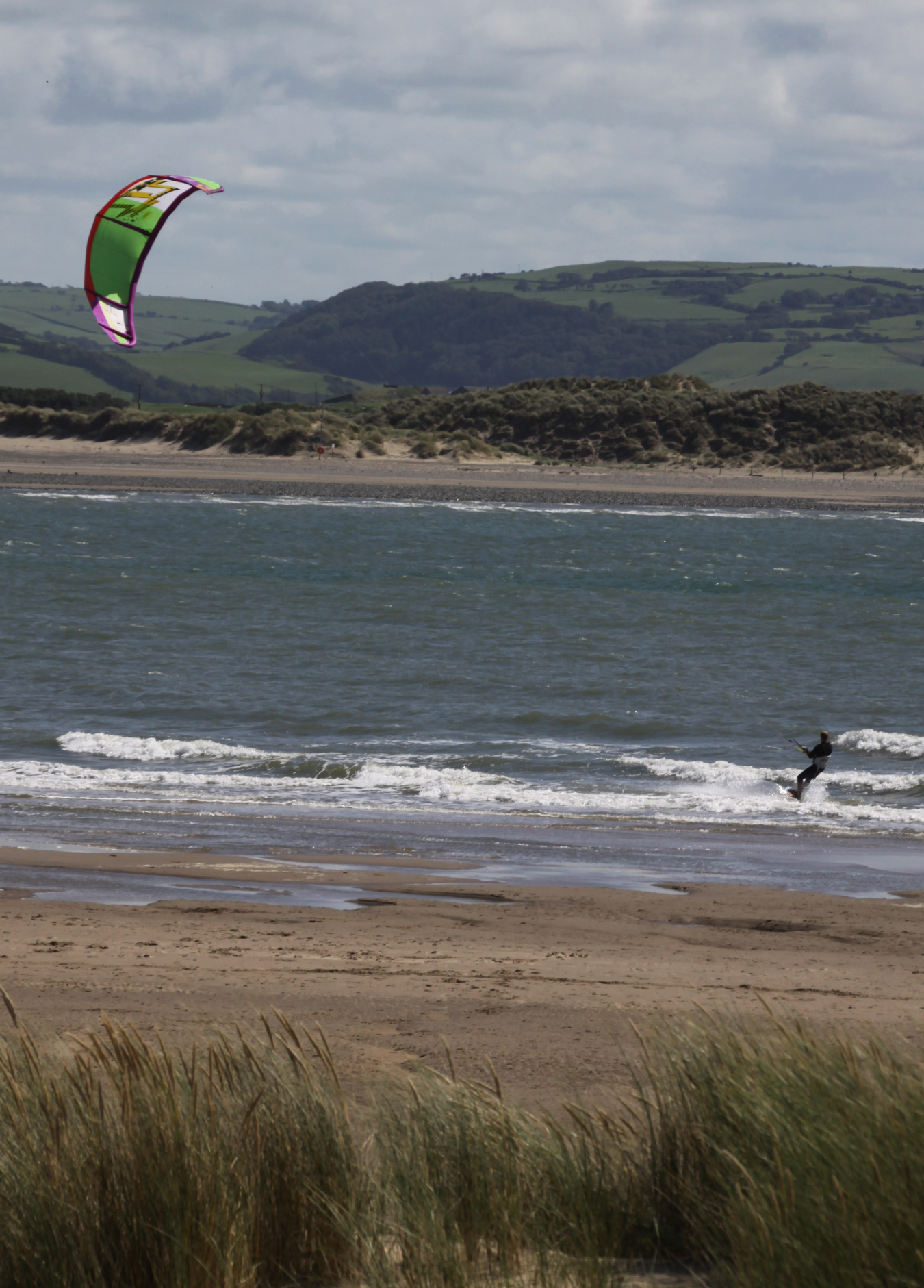
There wasn’t much in the way of wild flowers and I eventually walked down to the beach and along the water’s edge.  The sea was fairly turbulent for the time of the year, and the combination of a good wind and waves seemed to be ideal for some watersports.
Watching one sailborder wading with his kit into the sea, it seemed to me that one needed a fairly impressive amount of strength just to get it out beyond the shallows, never mind to climb on board, stay on board and direct the thing.  Very skillful, and so much more rewarding than thundering around on a jet ski.


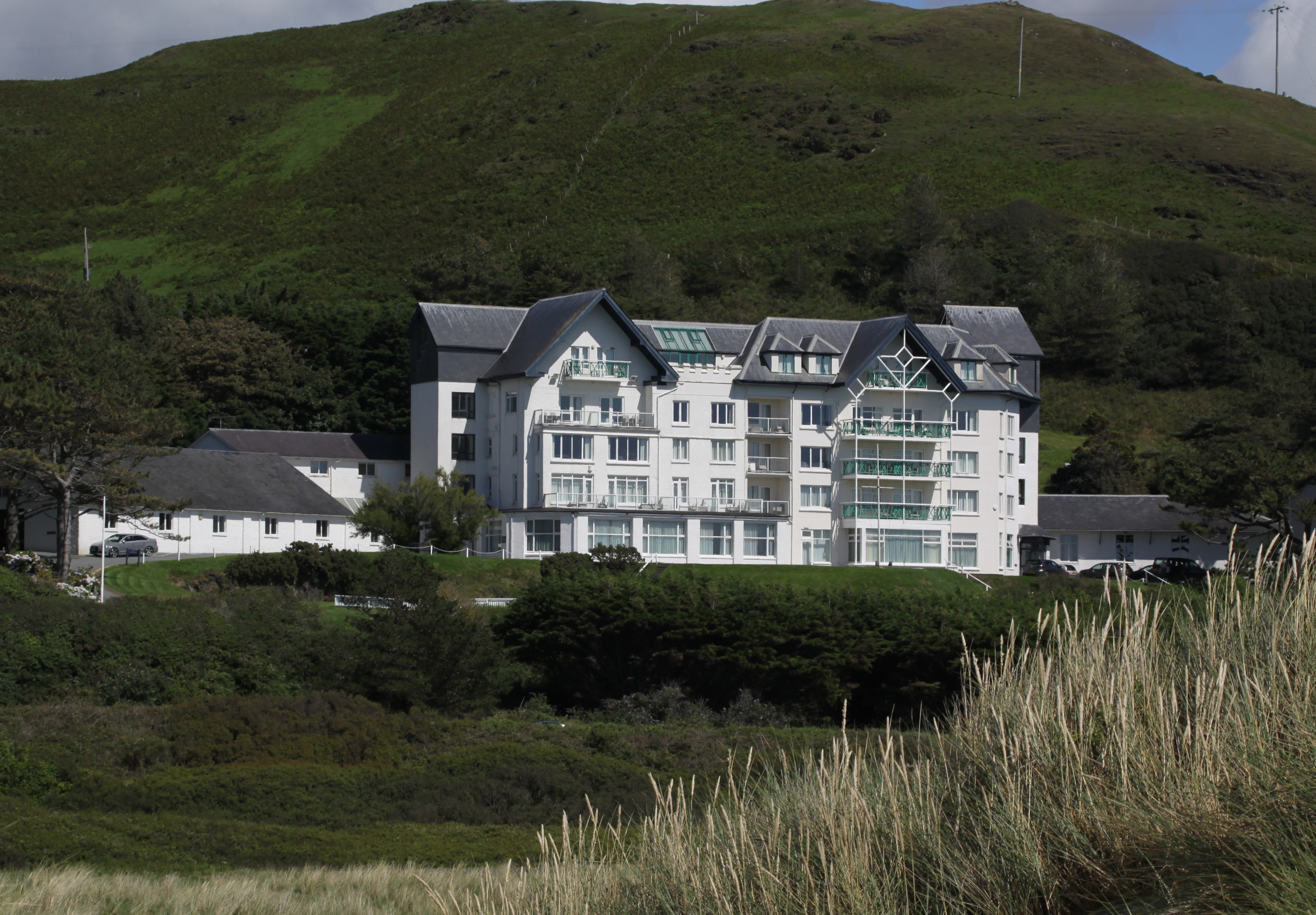
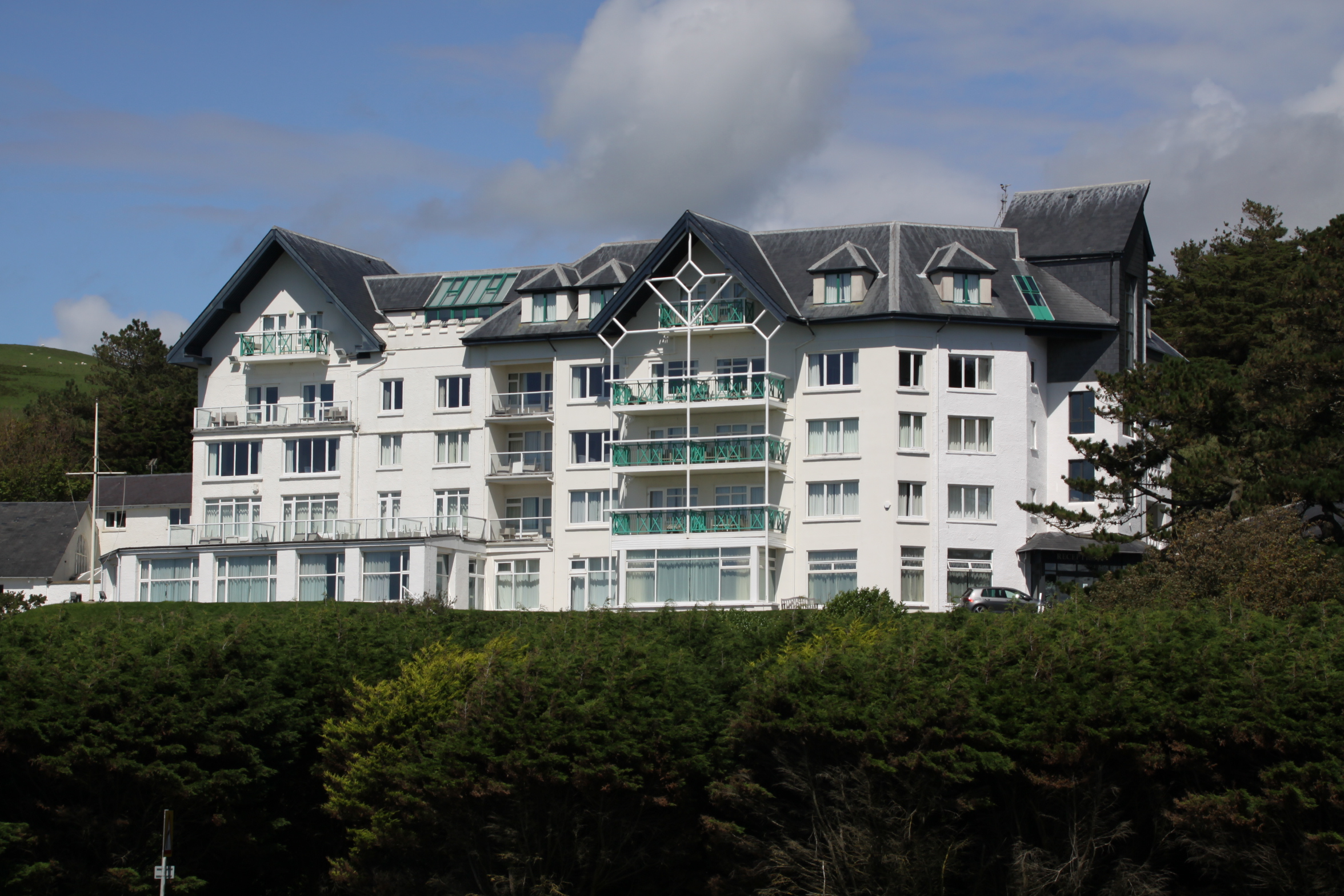
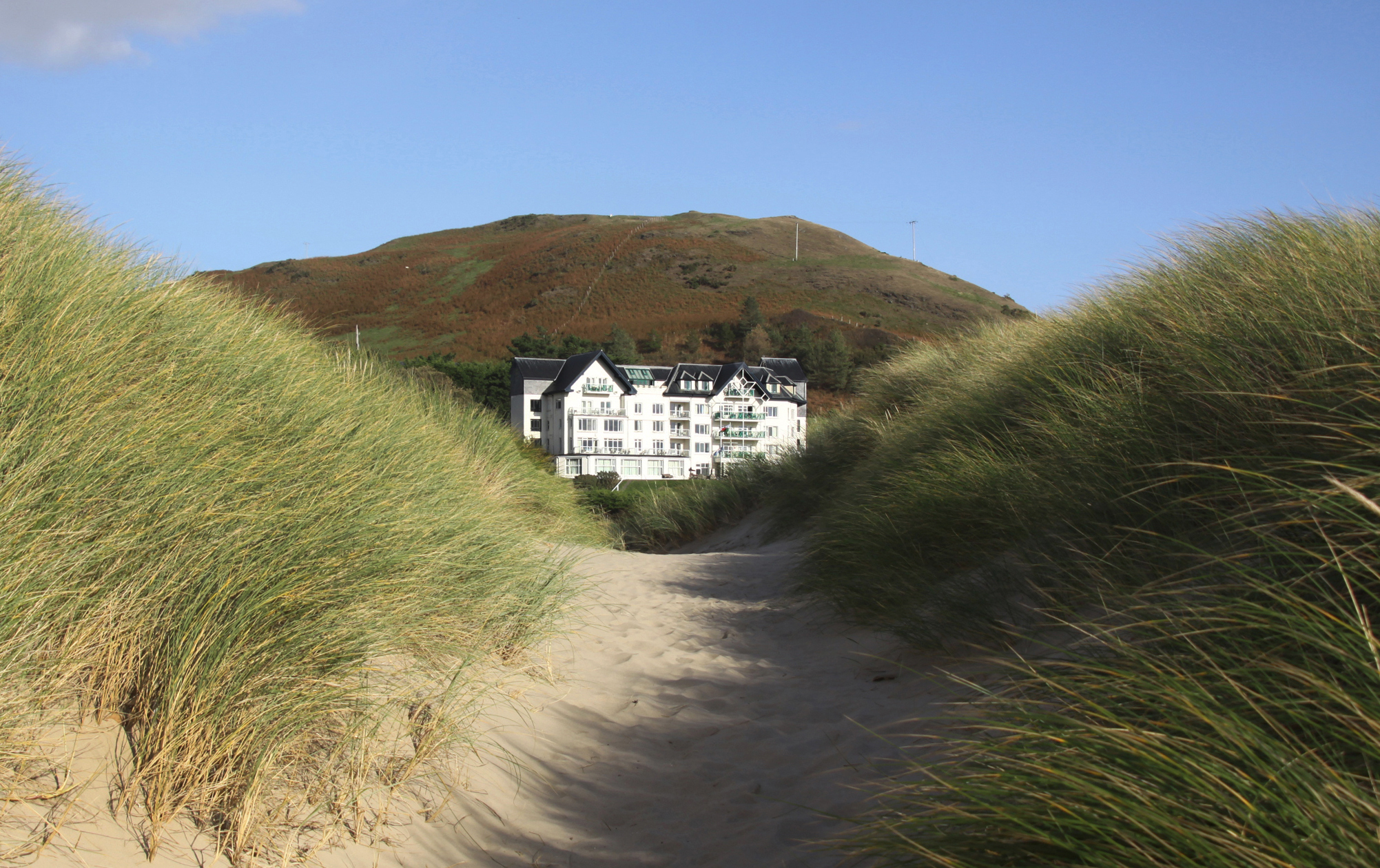
When I reached the Second World War pillbox (about which I have previously written here), I crossed the dunes to take photos of the Trefeddian Hotel for yesterday’s post about the hotel’s  architectural changes.  It was looking quite dramatic in the full sunshine against the dark hillside.
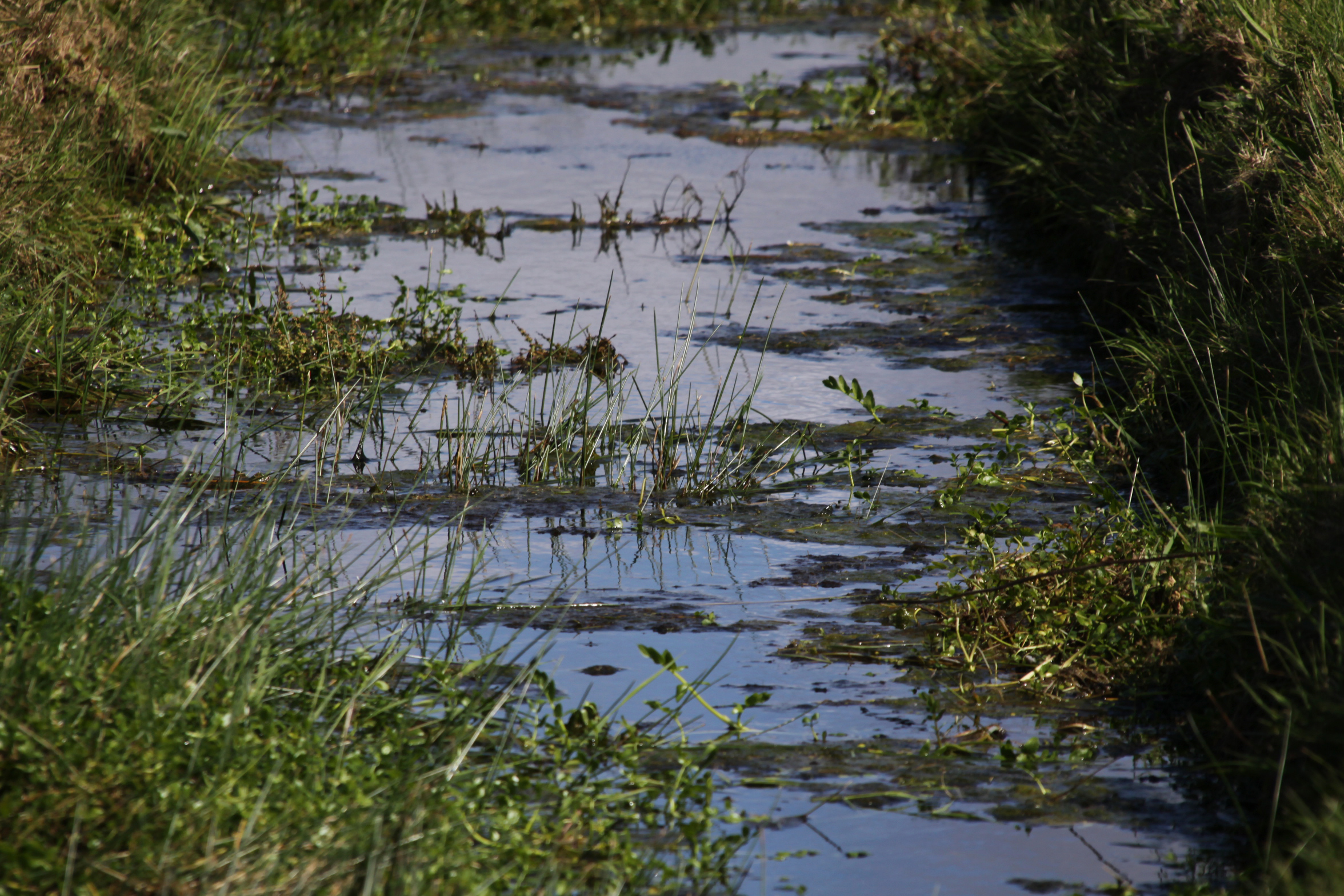
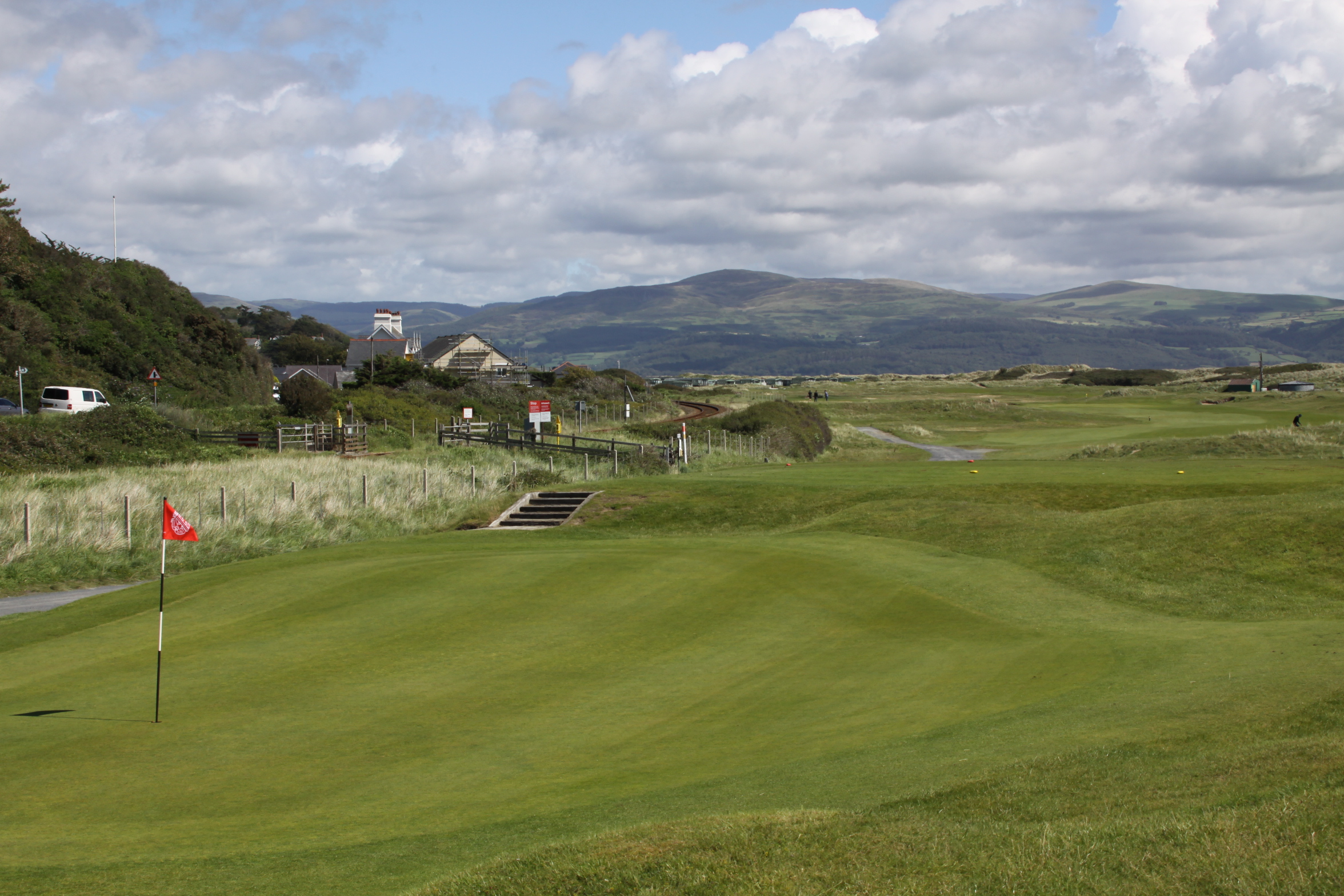
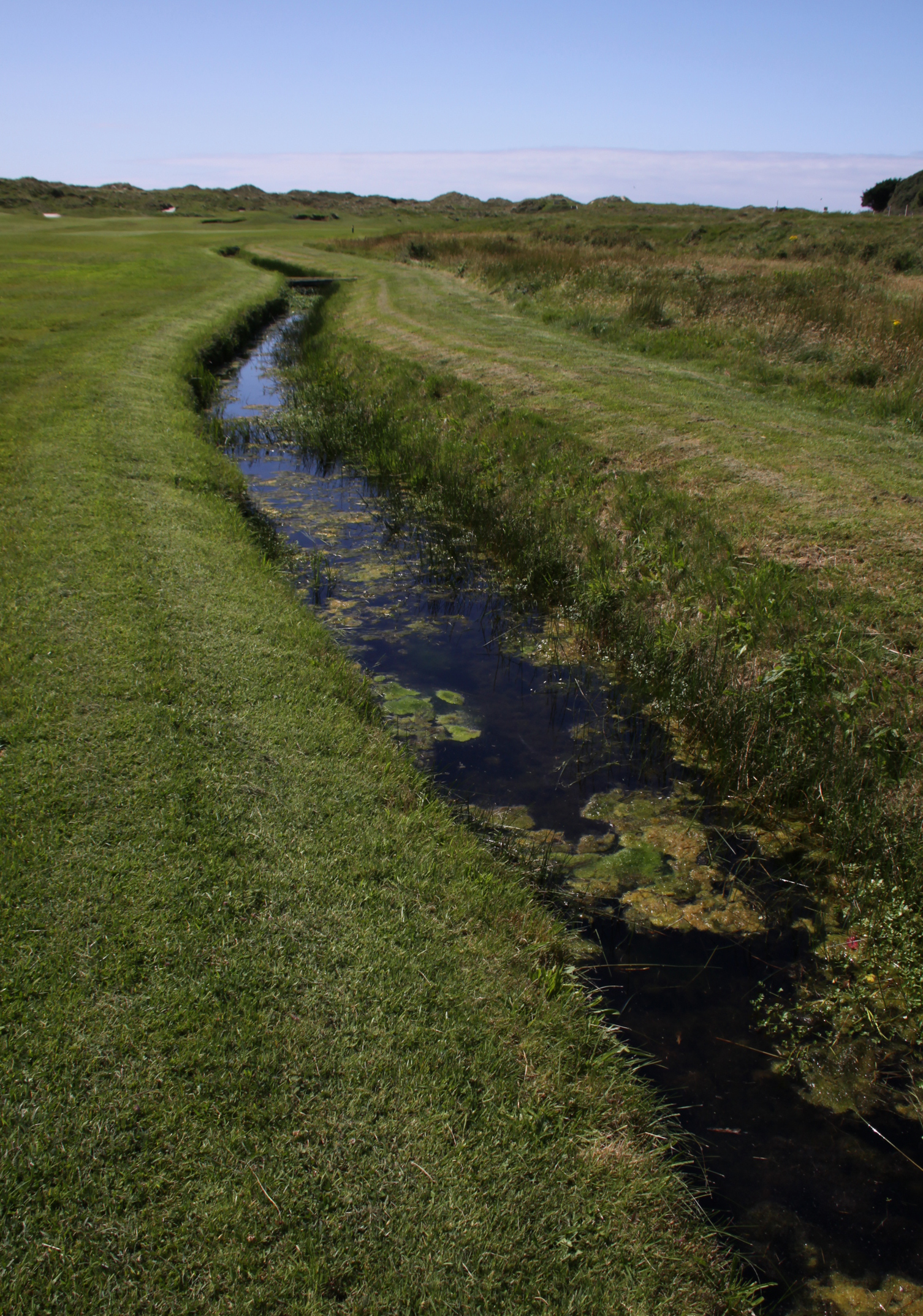
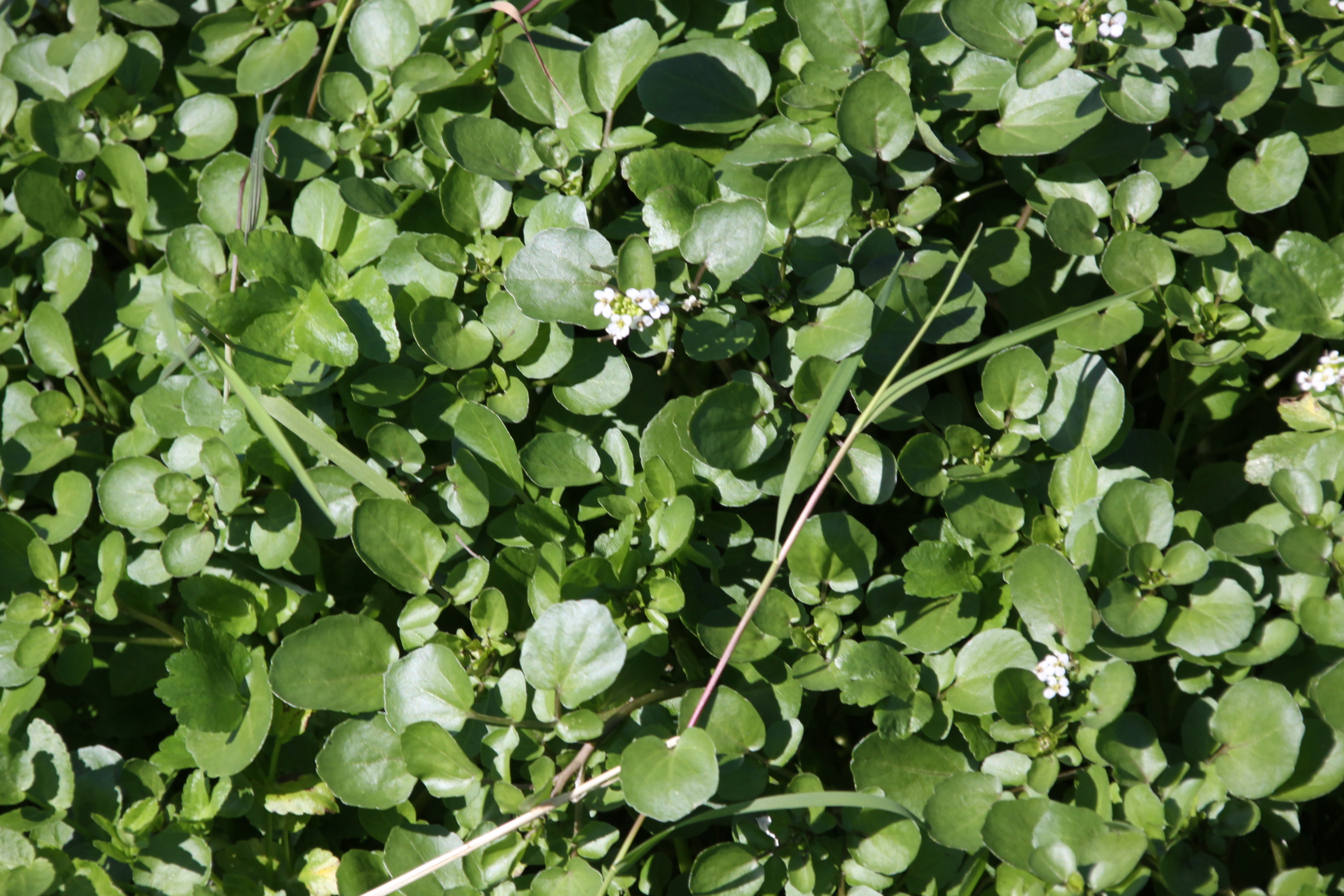
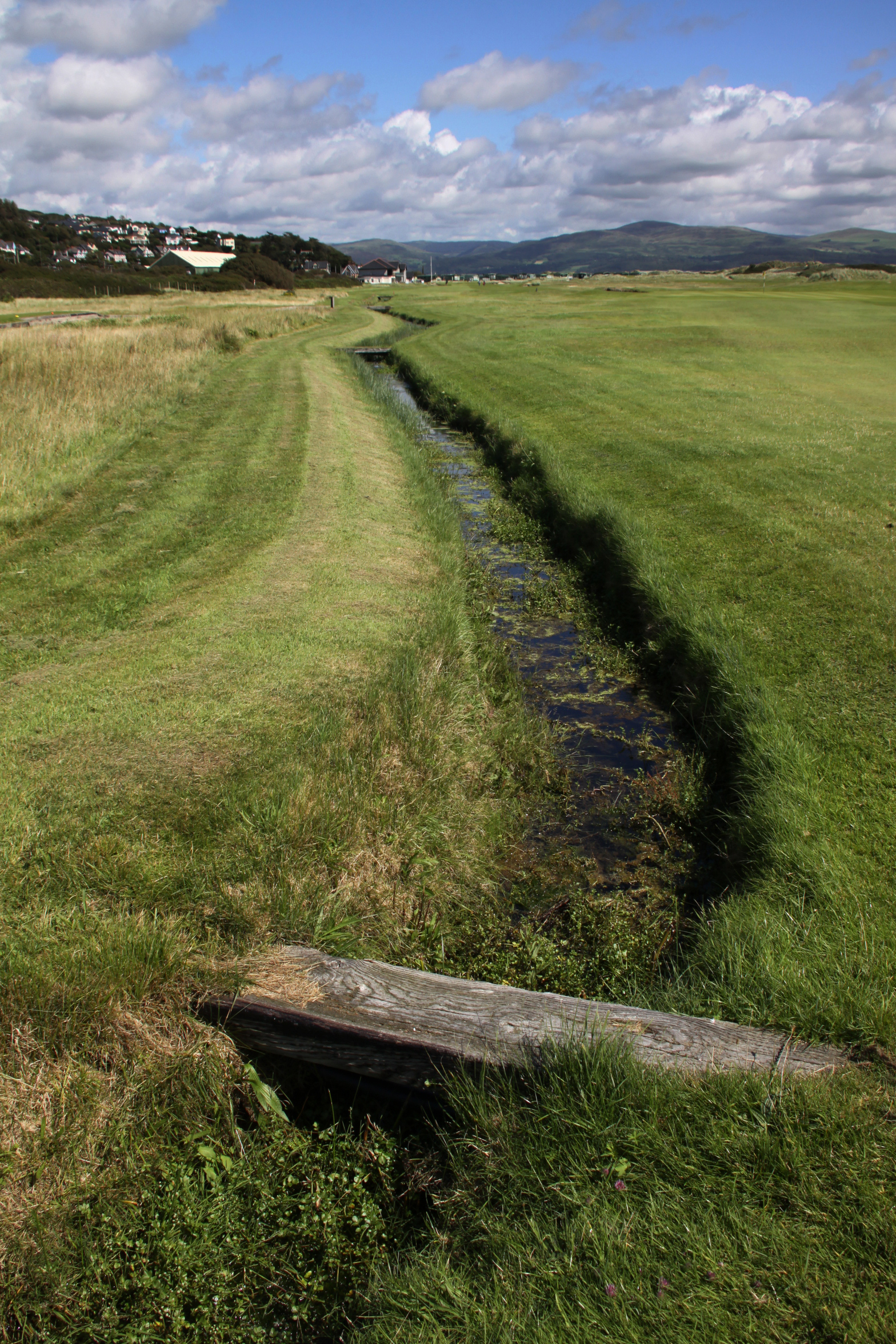
There were a few people using the golf course, but not very many, so I wandered back along one of the water courses that wend their way through the course.  I know nothing about golf, but in spite of the blatant artifice I have always found the undulating landscape and the manicured greens of a golf course rather soothing.  Or at least, when not at risk of being hit in the head by a golf ball.  The water courses are thriving ecosystems in their own right, with incredibly clear water and a remarkable variety of plant life.  They appear from and disappear into underground conduits.  There must be a direction of flow, but no current was visible today.  Most of the plant life likes shallow, slow-moving water, like the great swathes of water cress, and full sunshine, like the patches of duck weed and blanket weed.  There were several  red damsel flies darting around, only occasionally settling.
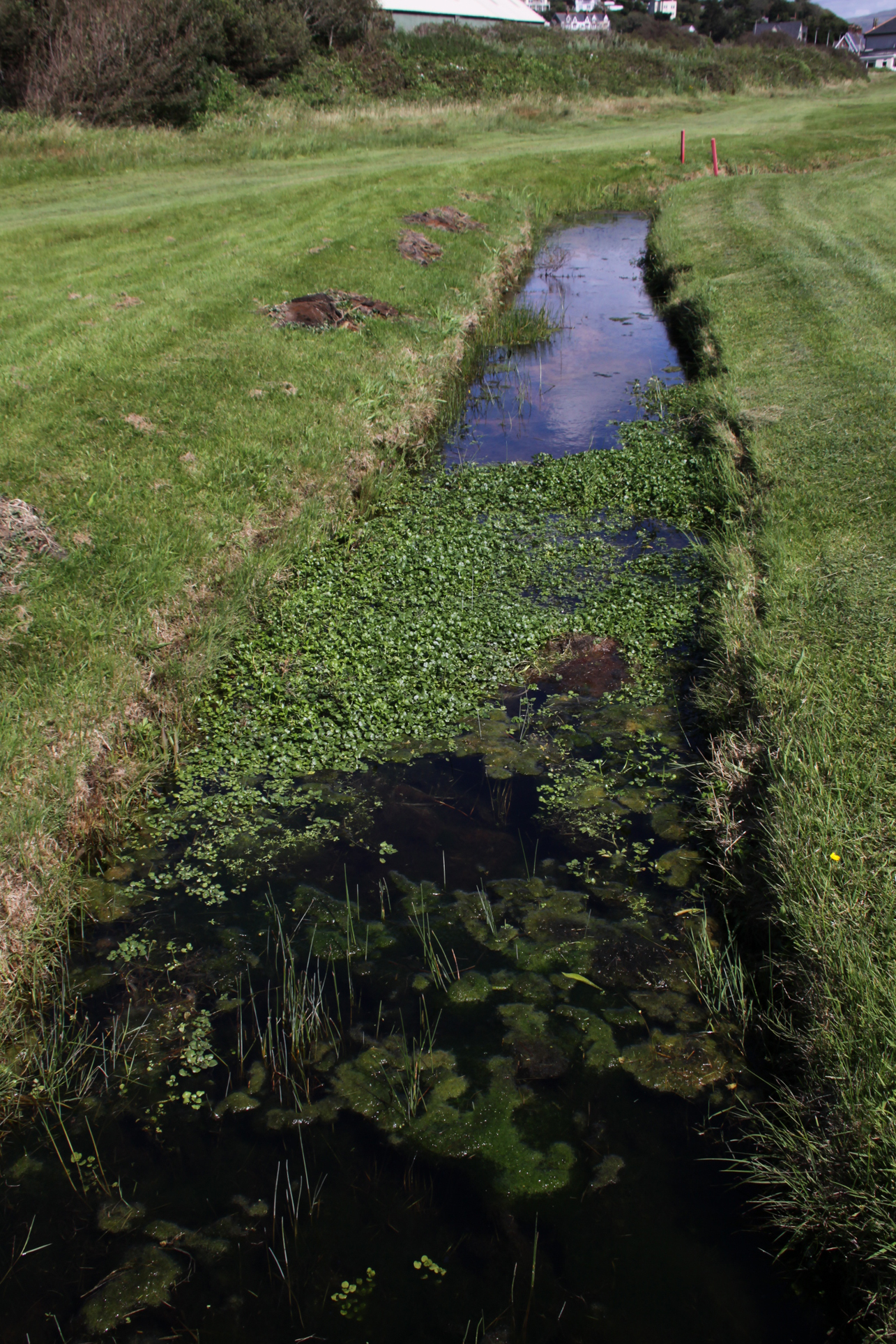
One of a number of rich patches of watercress (above and below), just where the stream disappears again.  Not to be eaten without treatment due to the high risk of liver fluke.

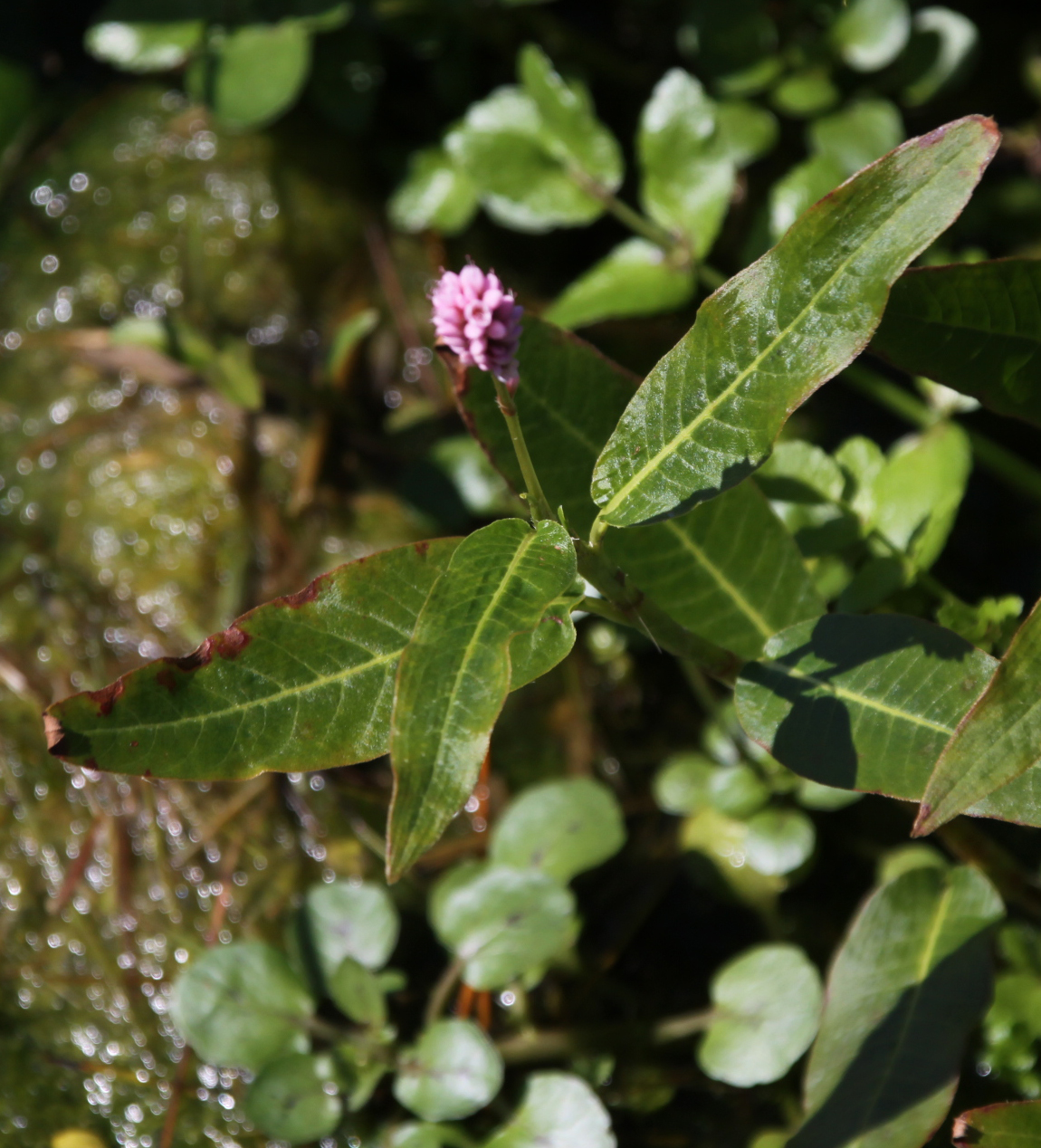
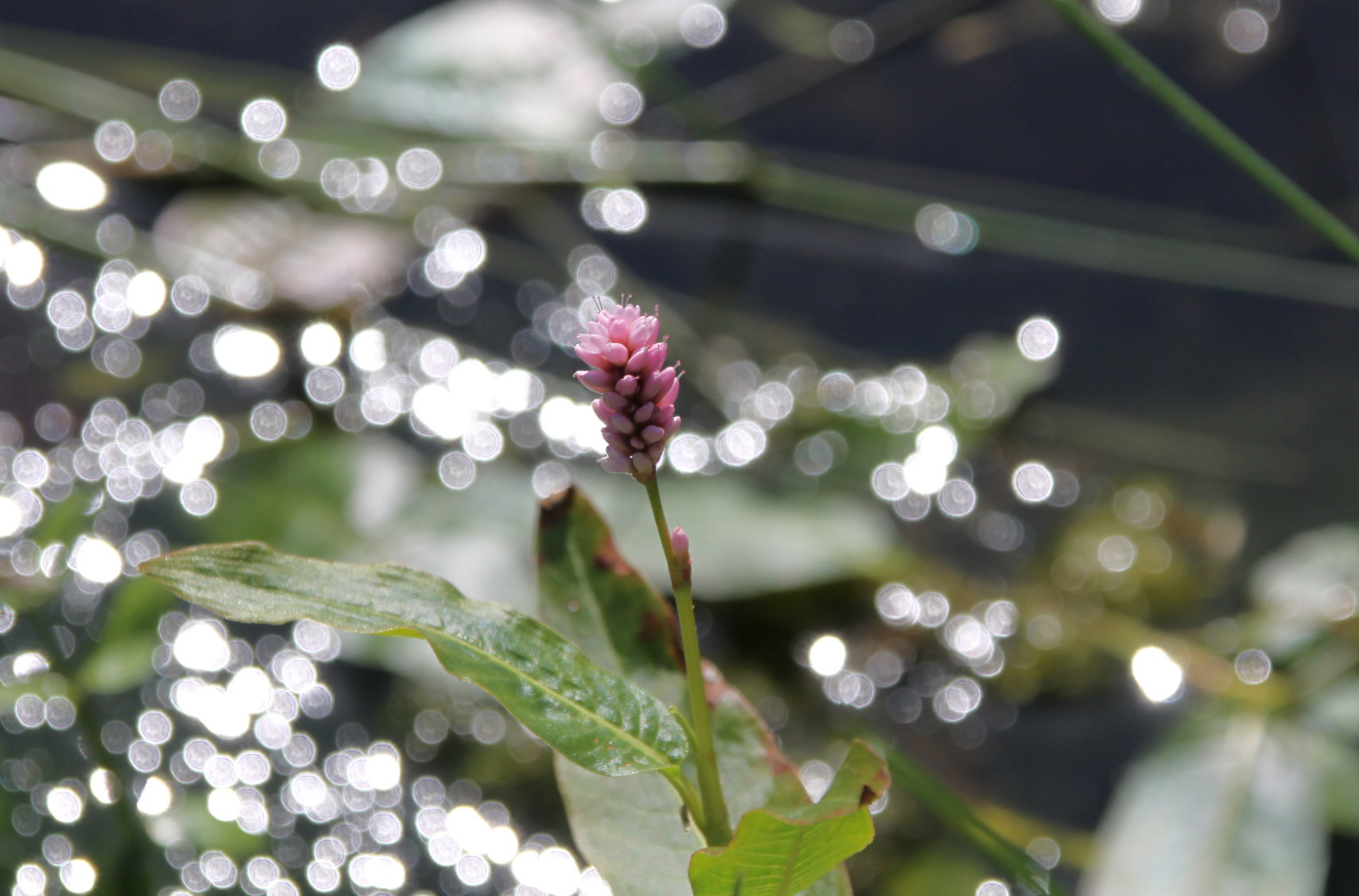
Amphibious bistort, above and below (Persicaria amphibium).  Sorry about the fuzzy image of the flower above – it was seriously windy and it simply wouldn’t sit still for long enough for me to get a clear shot.  It did, however, show the leaves clearly.  Between that and the one below, which shows the flower a little more clearly, but not much of the leaves, I think you can get the idea.  It’s a perennial and flowers in slow-moving water from June to September.

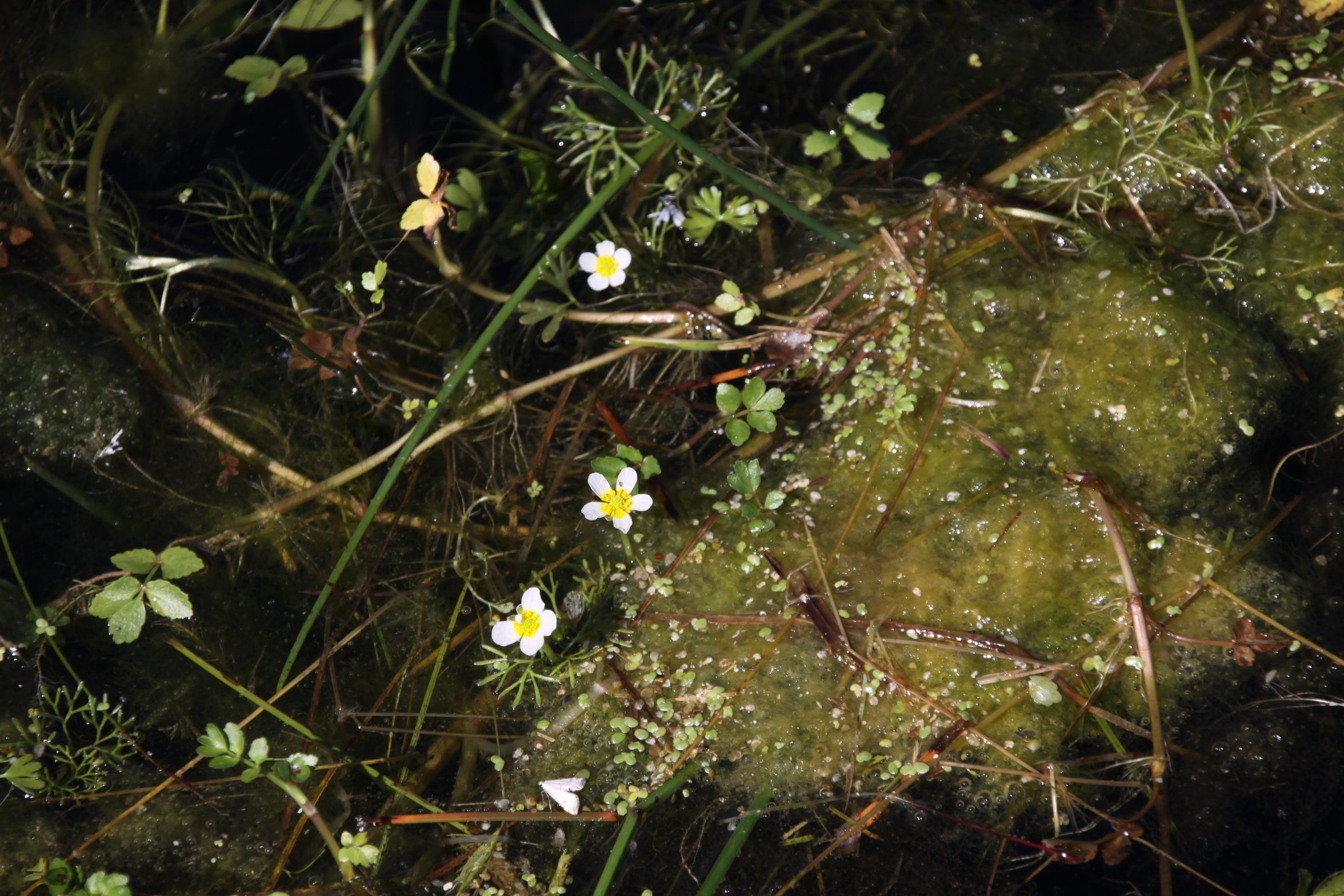
Water crowfoot (Ranunculus aquatilis) and blanketweed (Spyrogyra)

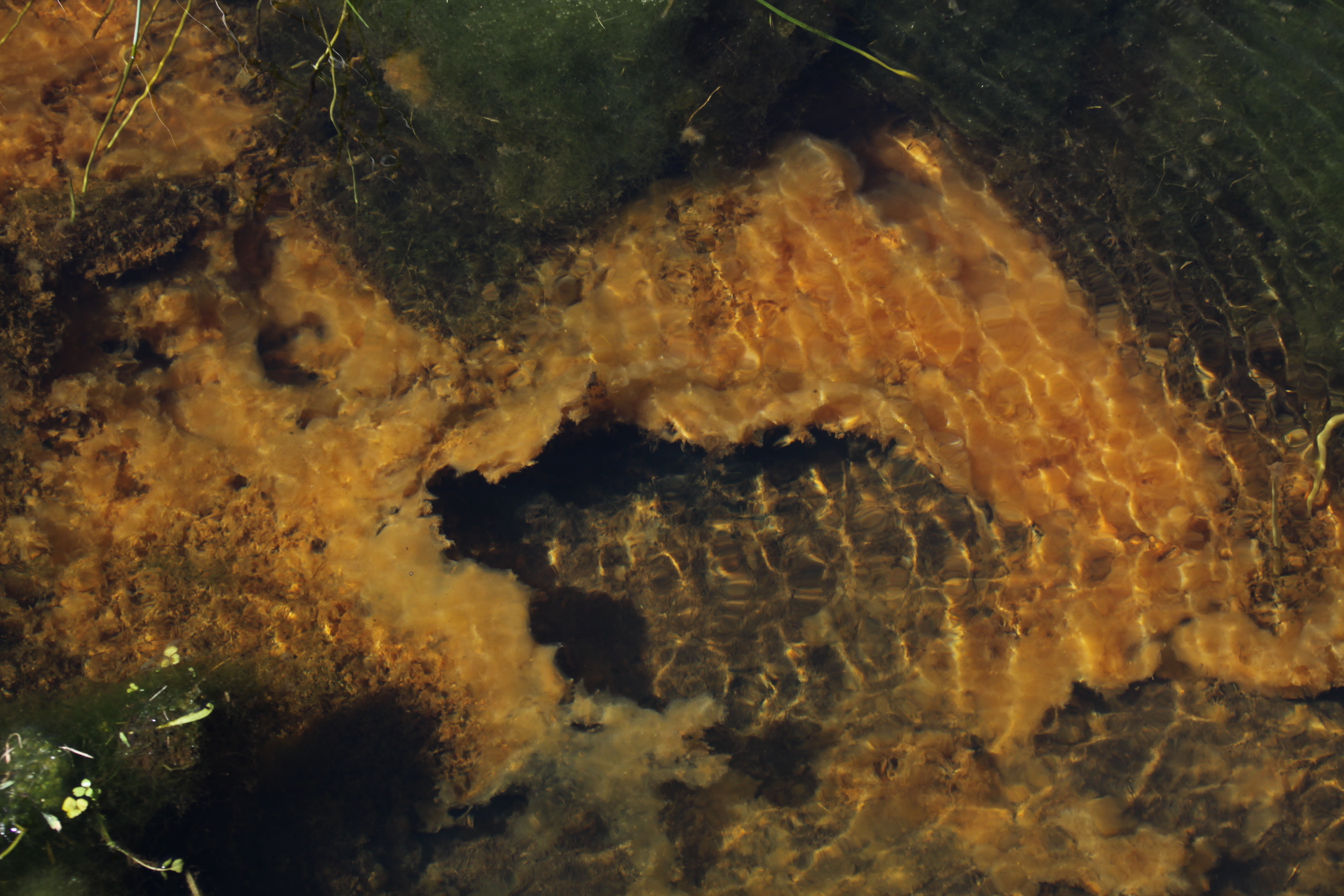
A beautiful orange weed, that probably does the stream no good at all.  It lies on the bed of the stream, but this was floating slightly clear of it.  I’ve tried to find out what it is to no avail.

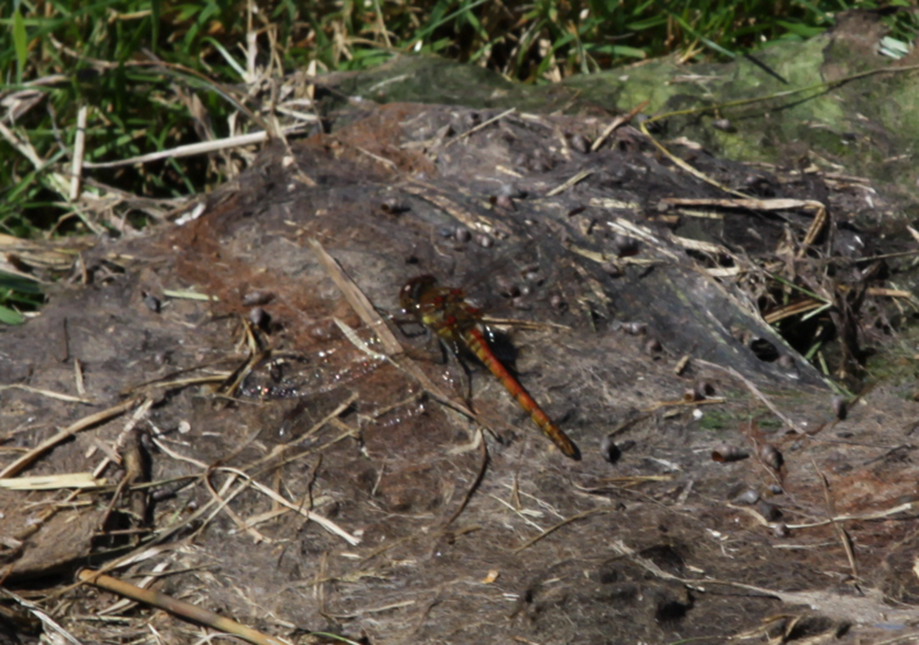
A very poor photo of a damselfly, right at the limit of my lens’s reach

Nearby in a hedge, was a curtain of purple, which turned out to be tufted vetch (Vicia cracca).
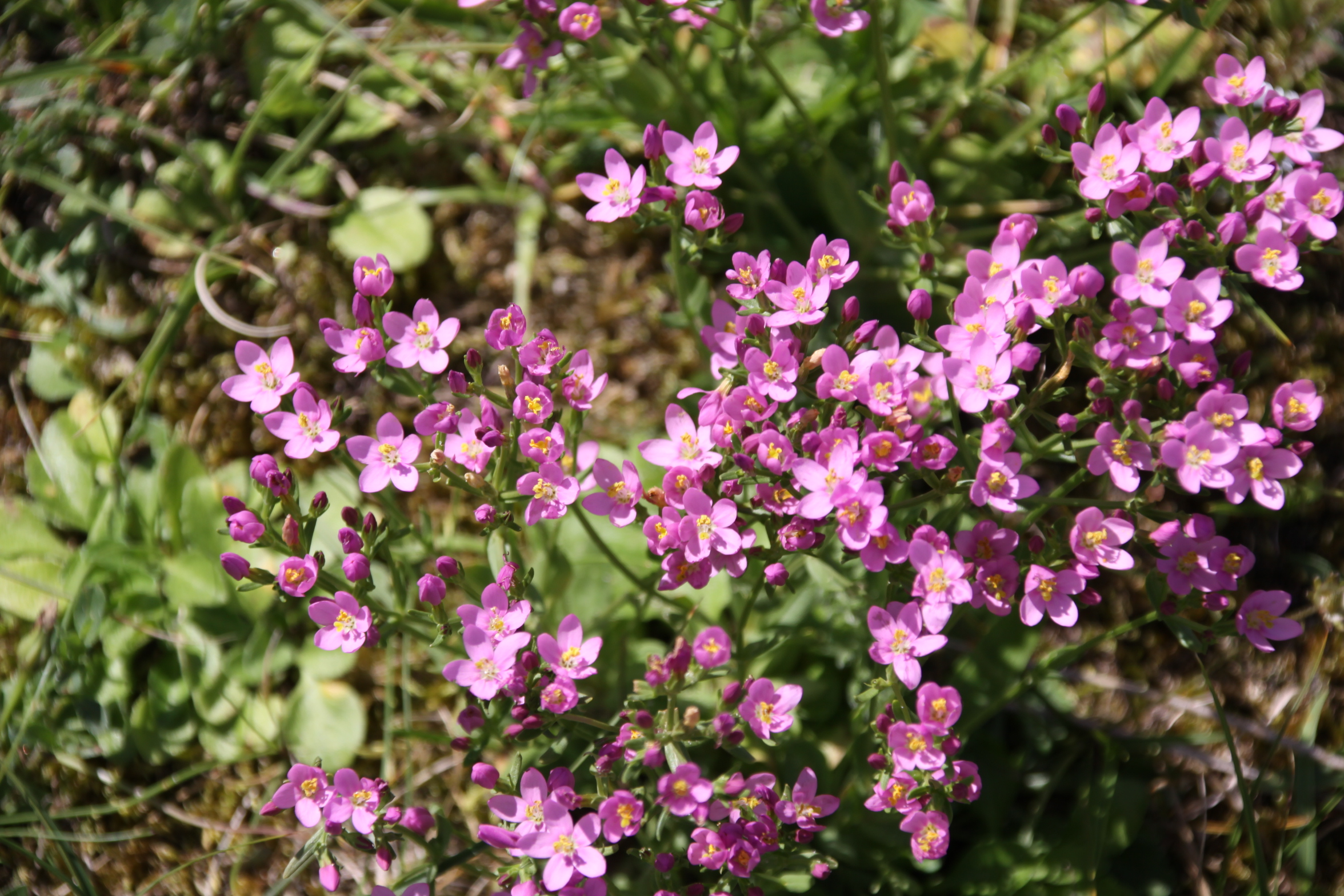
Patches of Ccommon centaury (Centaruium erythraea) were on the edges of the sand dunes and the golf course.  Centaury is named for the centaur Chiron who used it to cure wounds inflicted by the multi-headed Greek Hydra, but it has been used as an improbable cure-all for all sorts of diverse conditions.

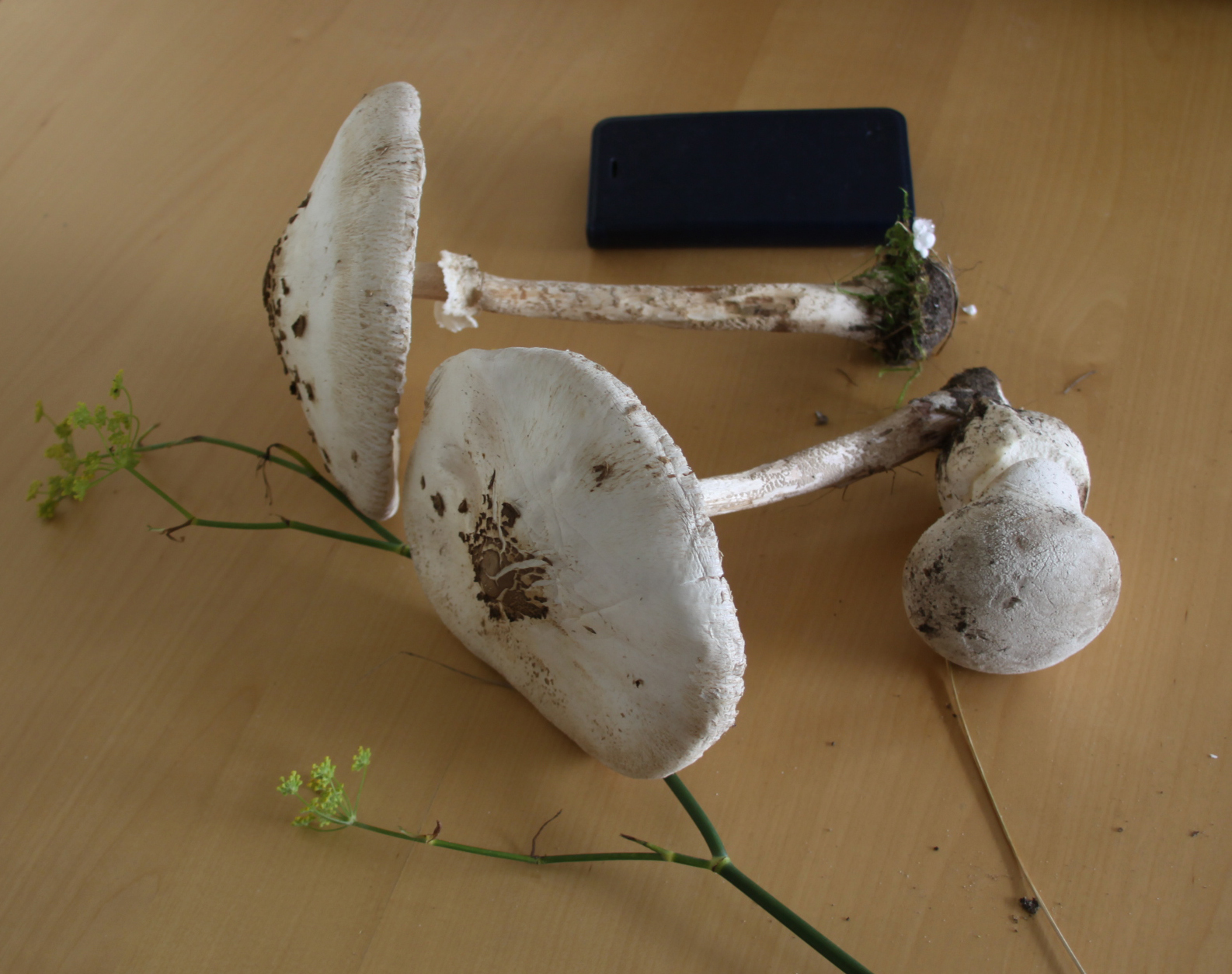
Walking back along the golf course, I was lucky enough to find both a puffball and, the absolute highlight of my nascent foraging activities, two enormous parasol toadstools!  They were both about 10 inches tall and around 6 inches across.  Absolute beauties.  The nearby fennel has now gone to seed, but I picked some of that too, as it makes a great base for a stock.

Parasol mushrooms, a puffball and wild fennel, with my iPhone in the background for scale

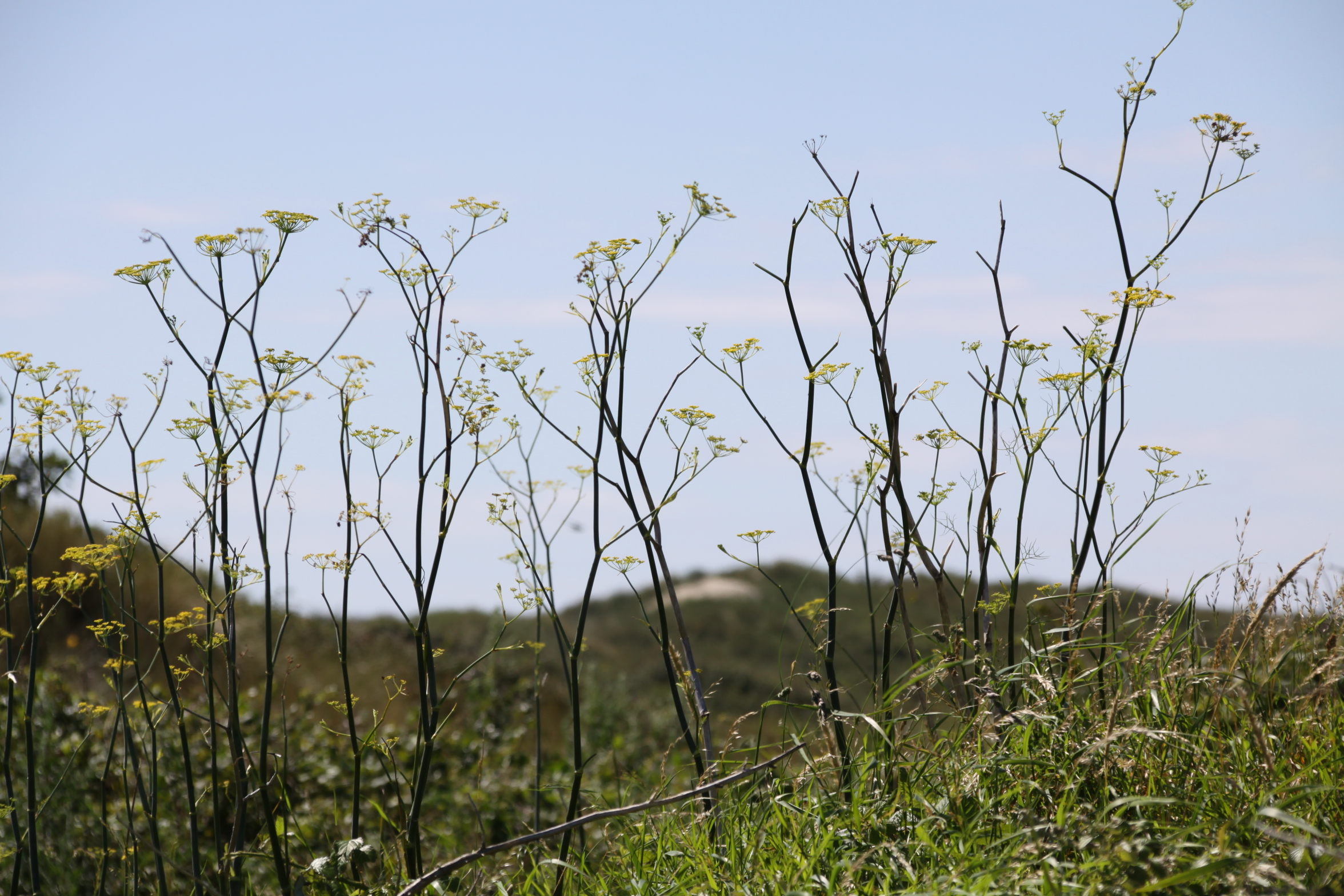
Wild fennel.  A few weeks ago it was covered with feathery green leaves, but now it has gone to seed.  The stems and seeds are still wonderful in stock, and the seeds can be dried out and ground into and over all sorts of things, imparting a delicious, slightly aniseed flavour.  Where I group up in Spain it was known locally simply as “anis.”

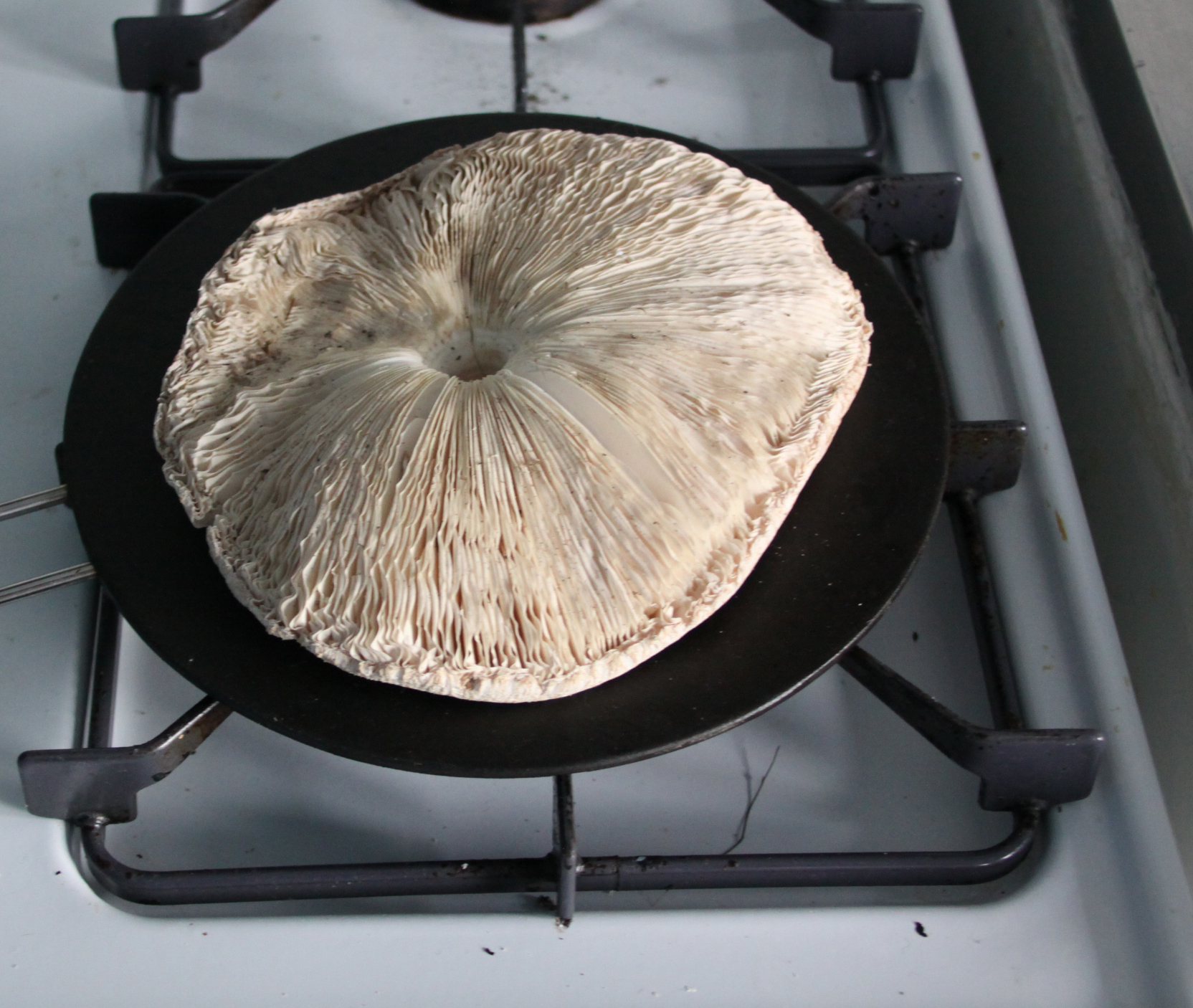
And here is one of the parasol tops sitting on a handy diffuser, ready for the frying pan.  The stalks are too tough to eat, but I put it in a bag in the freezer for making a stock for a beef dish on another day.

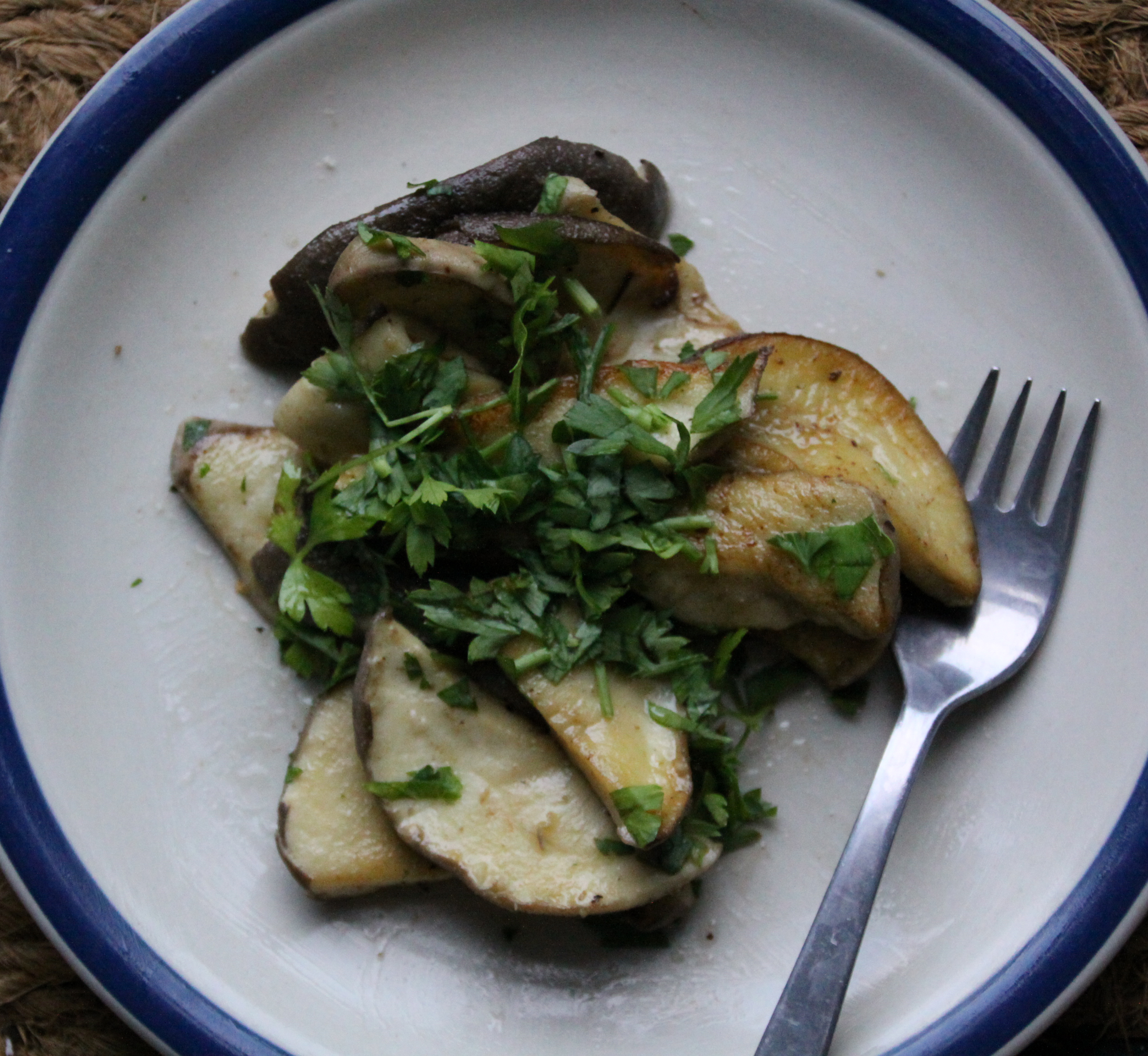
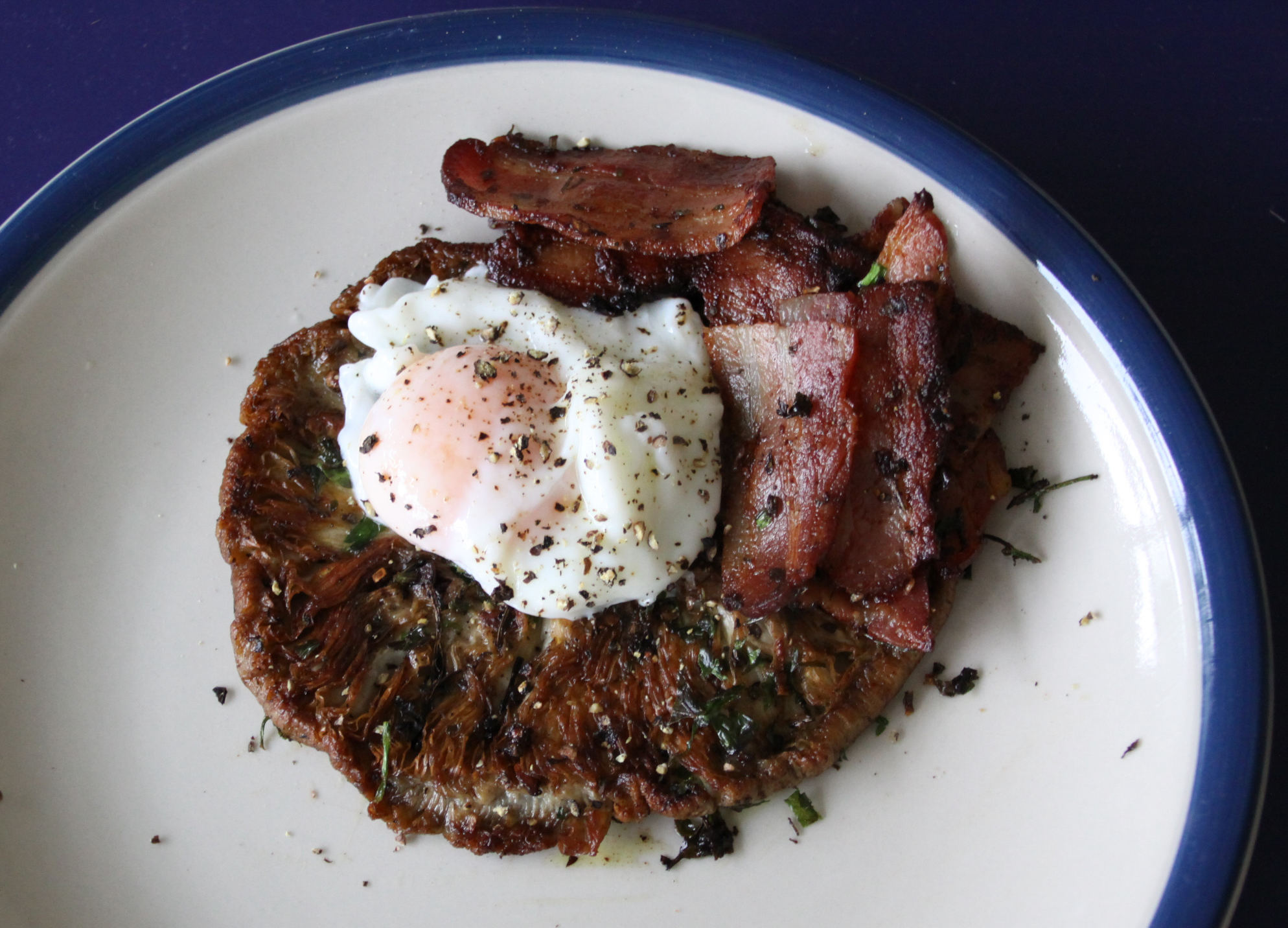
I had the puffball sliced and fried in a little butter with a sprinkling of parsley on a side dish as a starter.  I saved one of the parasol mushrooms for my father and served the other fried almost the same way in butter, parsley and a little garlic, with streaky bacon and a poached egg on top.  It looks a bit like very flat burger in the picture, but that’s just the colouring from the butter and bacon.  Dividing the two mushrooms into two dishes allowed each one to be appreciated for its own particular virtues. Wonderful.  God I was stuffed!

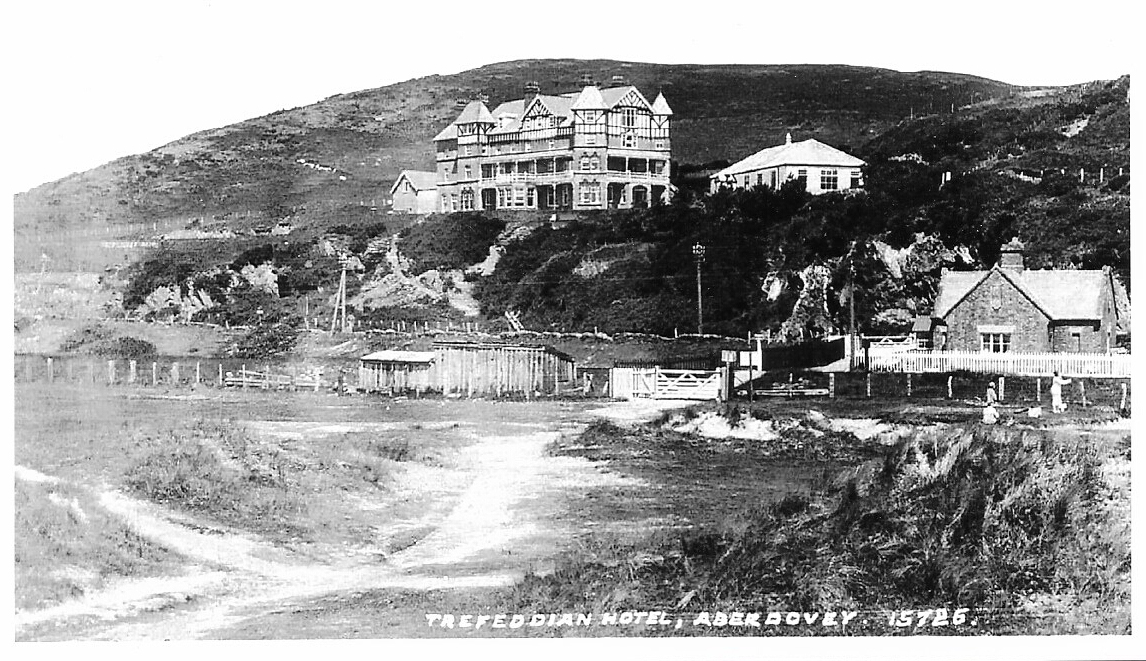
The changing appearance of the Trefeddian Hotel in postcards

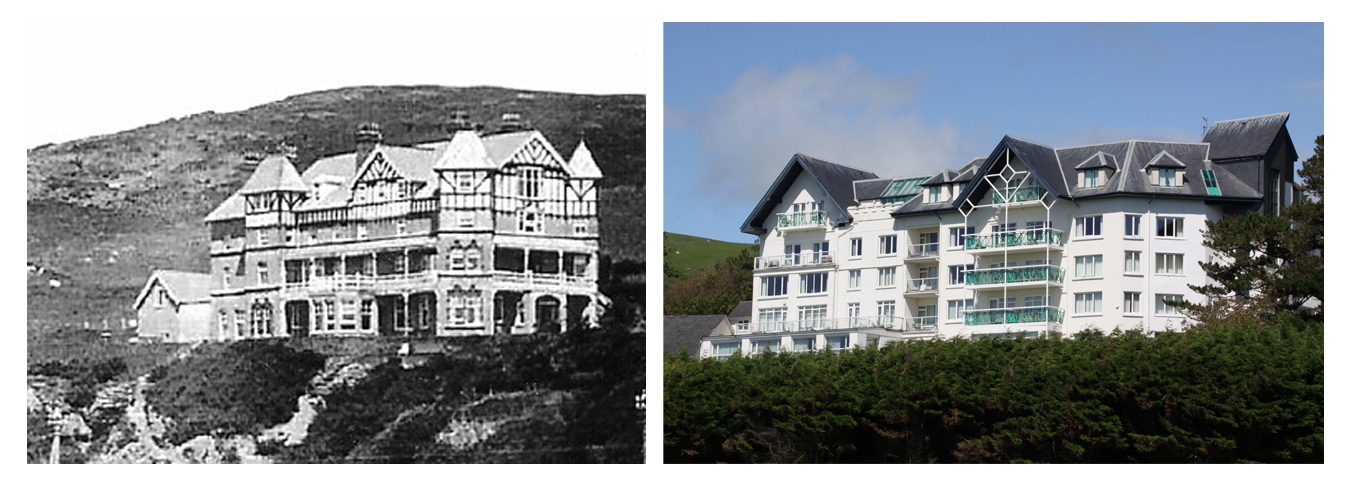
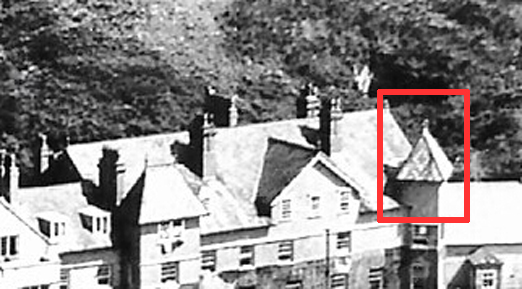
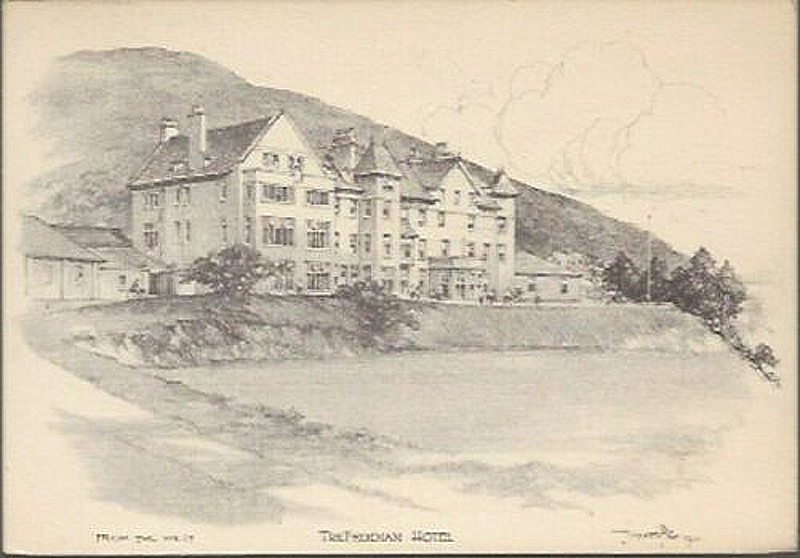
The Trefeddian as it was built on the left, and my photograph of it today (28th July 2020) taken from roughly the same angle but from a lower level

You can click on any of the images to enlarge them to get a better look at the details of the building.

The Trefeddian Hotel is one of the major local landmarks, a palatial white immensity overlooking the golf course, sand dunes and beach, recipient of the AA Hotel of the Year Award for Wales 2018/19.  I don’t know anything about the history of the Trefeddian Hotel, but images of the hotel in postcards provide a fascinating record of architectural changes to the building’s exterior features.  It would be great to know the background to these changes and to find out if the interior evolved at a similar rate to the exterior.  All of the images can be clicked on to get a better view of the details.

I have to admit to being slightly in love with the original vision, above, left and below, with its wonderful square chateau-like towers and its mock-Tudor half-timbered exterior.  Or was it inspired by the Alsace as the decorative tiling on the roof may imply?  Whatever the inspiration, it is a bizarre mish-mash of ideas.  Although it breaks all the rules and is anything but elegant, I think that it is delightful, a truly riotous expression of enthusiasm for a very personal conceptualization.  Whoever designed it, it looks as though they were having a great time.  I do wish I could have seen it.  The only piece of history that I’ve picked up is that the hotel has been in the hands of the same family for a century, so it dates at least to the 1920s if not before.  Note the single-storey building to its right/the south, which remains today.

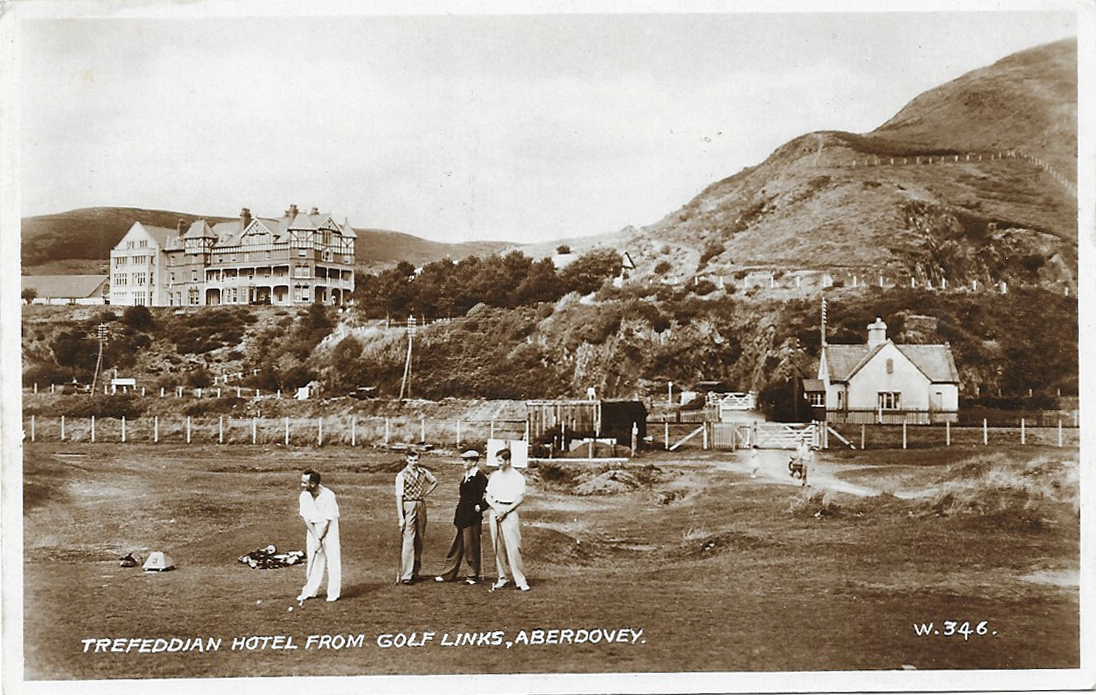
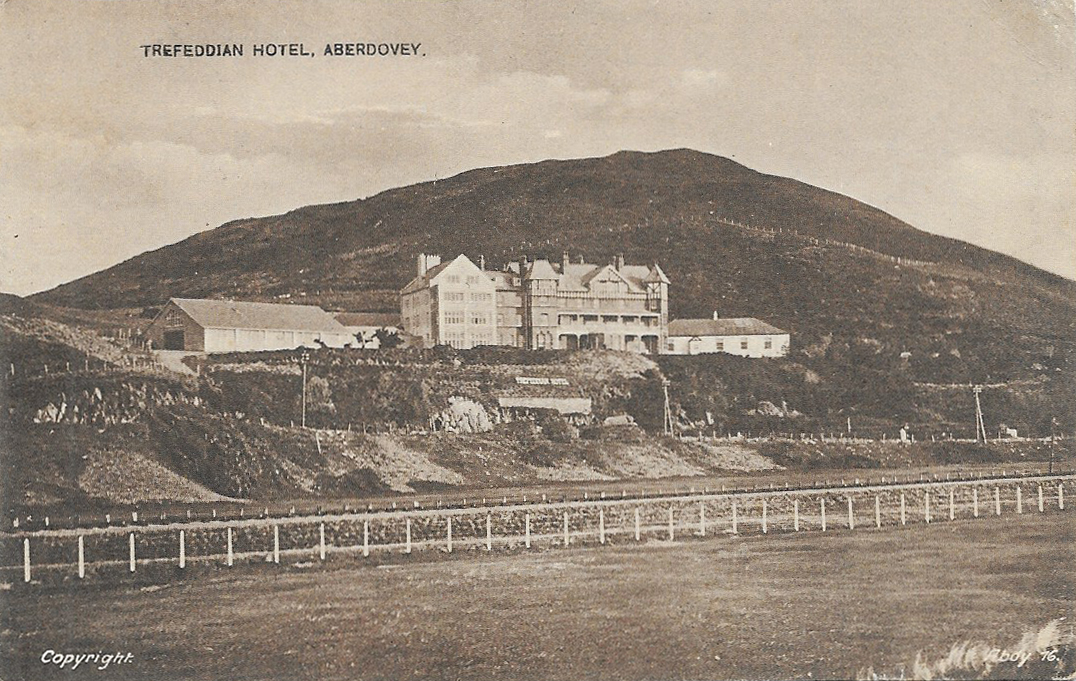
The postcards below show the extension that was added to the north (left, in these postcards).  The second of the two has a postmark of 1934, which indicates that the extension predated that year.  There was no attempt to integrate it stylistically with the original, and it looks very peculiar.  A single storey building to the north, on the far left of this postcard is retained today.

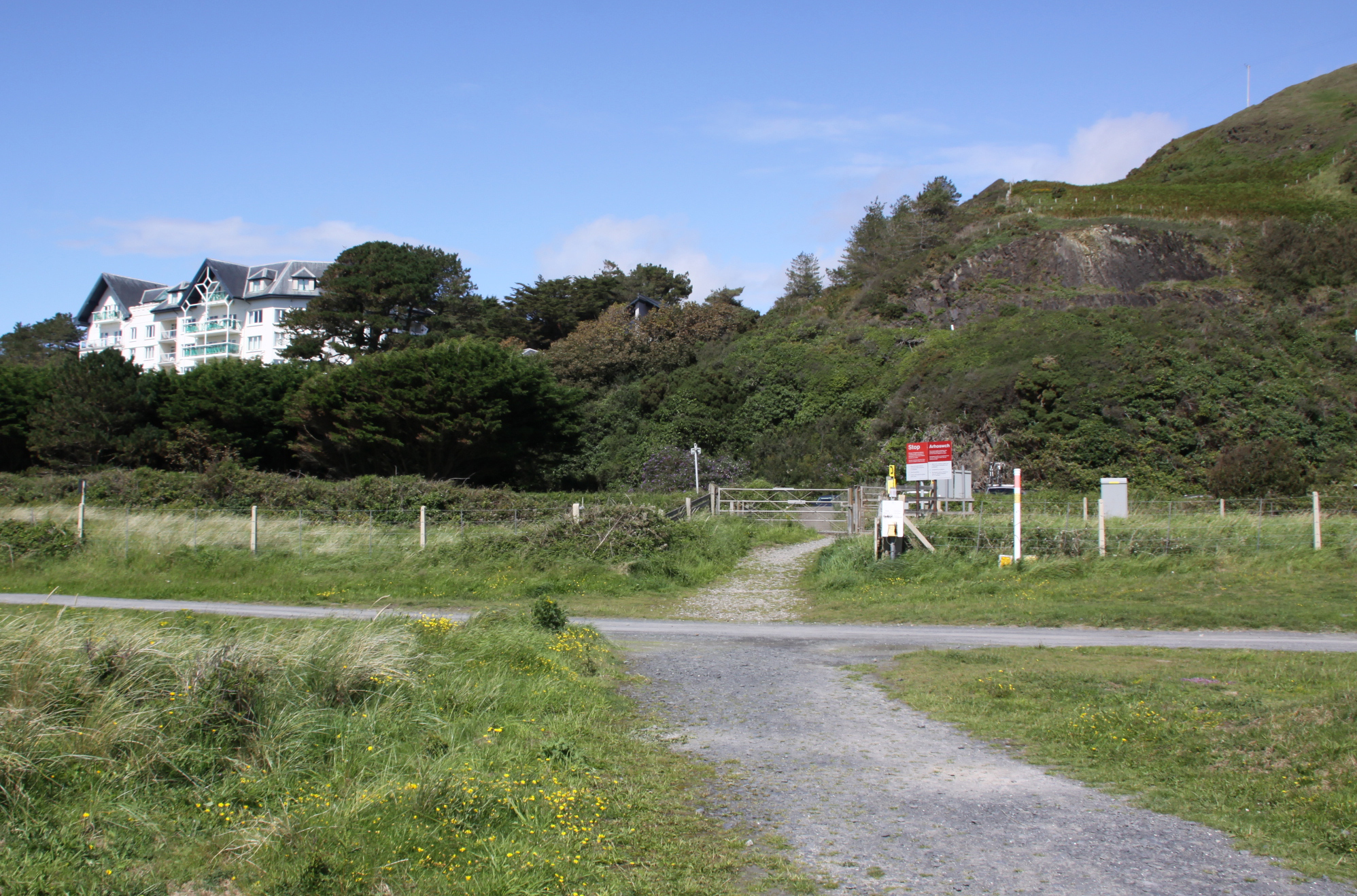
In the first of the two cards, the railway crossing on to the golf course is accompanied by a small building that looks rather like a toll house.  This was the crossing-keeper’s house, and was still standing at least in July 1965 when it was photographed by C.C. Green for his book The Coast Lines of the Cambrian Railways vol.2.  Today the crossing remains, but the house has vanished.  I’m surprised that the crossing ever needed a keeper, because the traffic crossing the railway must have been minimal, and mainly on foot.

In the two postcards below, the half-timbered effect seems to have been removed, and may have been in the image above as well.  It would make sense that it was taken away at the time that the new wing was added to lessen the contrast between the two.

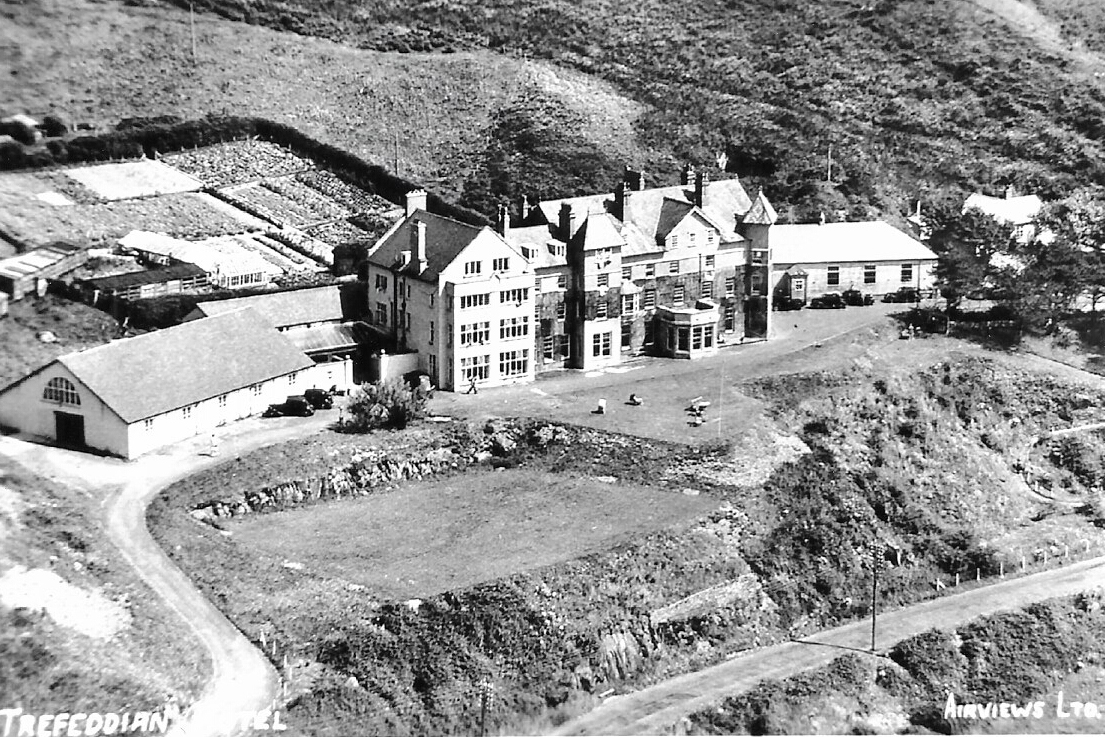
The following photograph gives a good view of the elaborate porch into the old wing and shows the complex of single and two-storey buildings to the north of the new wing, at the left side of the postcard. The enclosed garden at the rear of the building appears to have a small greenhouse as well as other structures, and looks as though it is laid down, at least partly, to rows of vegetables.

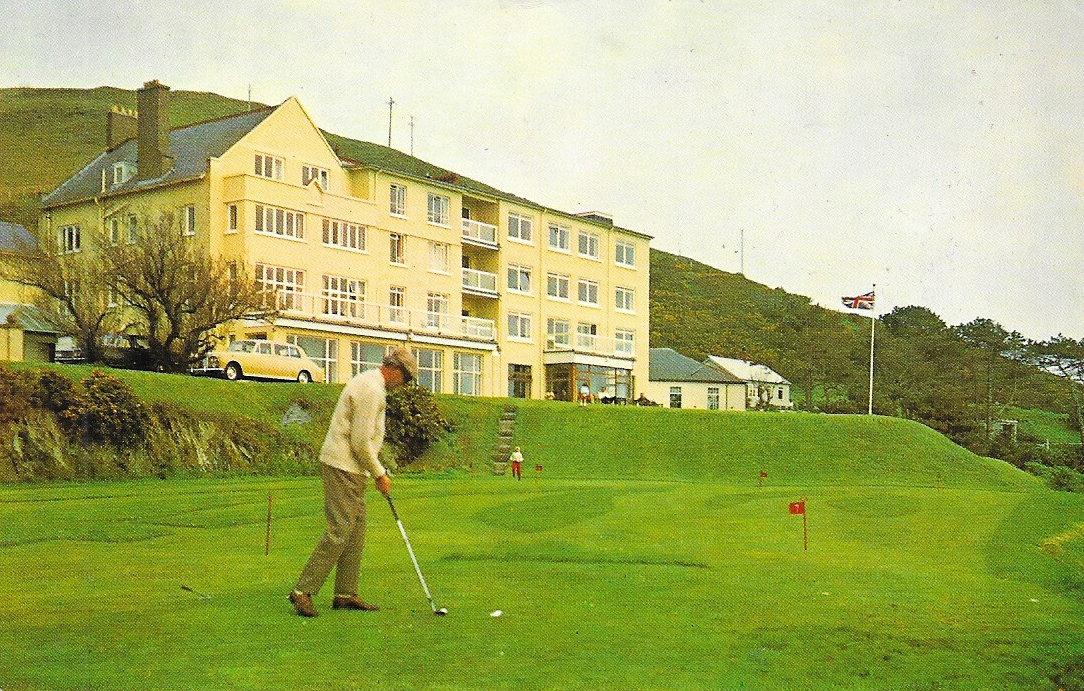
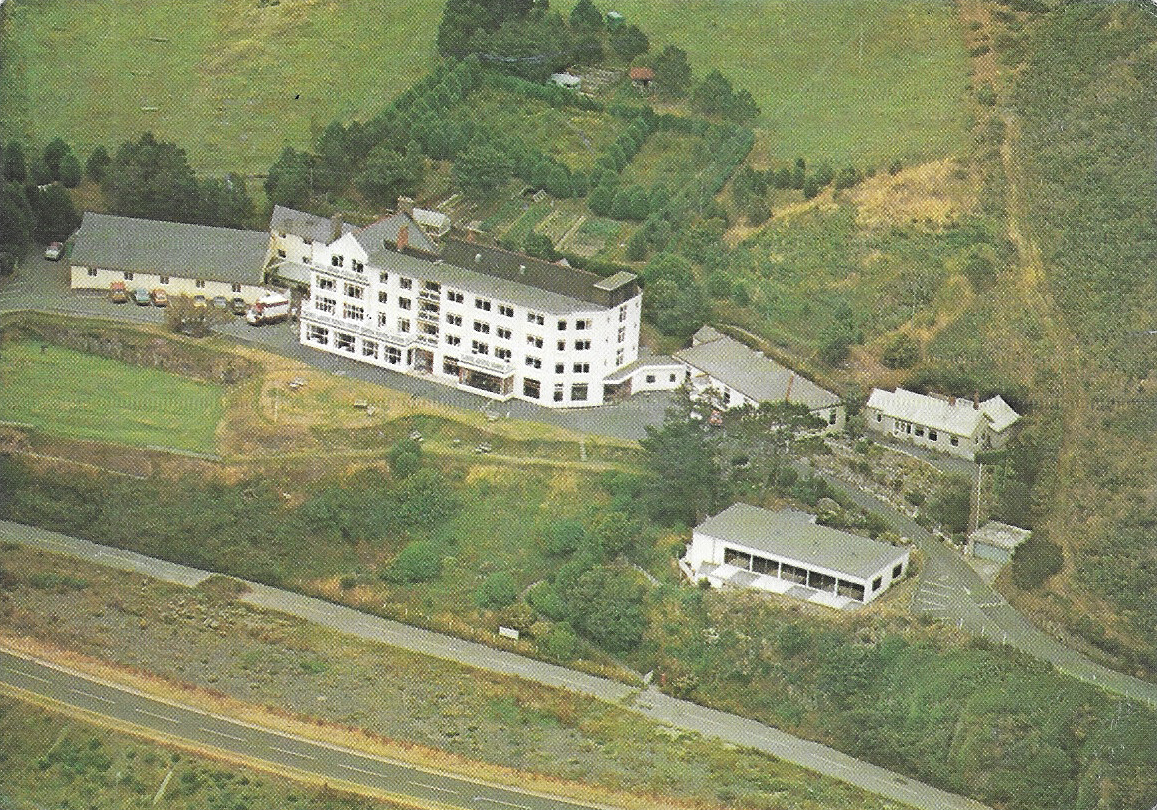
The next architectural reinvention of the building retains the new wing and removes all the original external features including the towers, the original gable and any remaining half-timbering.  Was it a complete rebuild on more or less the same footprint, or just a change to the external features?  I am guessing from the angled corner at the south end where the south tower once stood, visible in the second of the two photographs, that it was a re-invention rather than a complete rebuild.  The aerial view in the second postcard shows the outbuildings and an intriguing view of the garden, all providing a good idea of the scale of the operation.  The first of the enclosed gardens at the rear of the hotel looks as though it was turned over to vegetables. I can’t work out what the other two enclosed gardens contained.

The postcards have postmarks dated 1972 and 1979 respectively, so the conversion was probably done in the 1960s and looks like it.  The northern extension to the left has been retained, but the towers and the mock half-timber have gone and the replacement facade has about as much personality as a cereal box.  The colour change from yellow to white by the end of the 70s was a good move.  The single storey building at the right that I menitoned at the start of the post is visible in the second photograph, now connected to the main building by a corridor with windows.

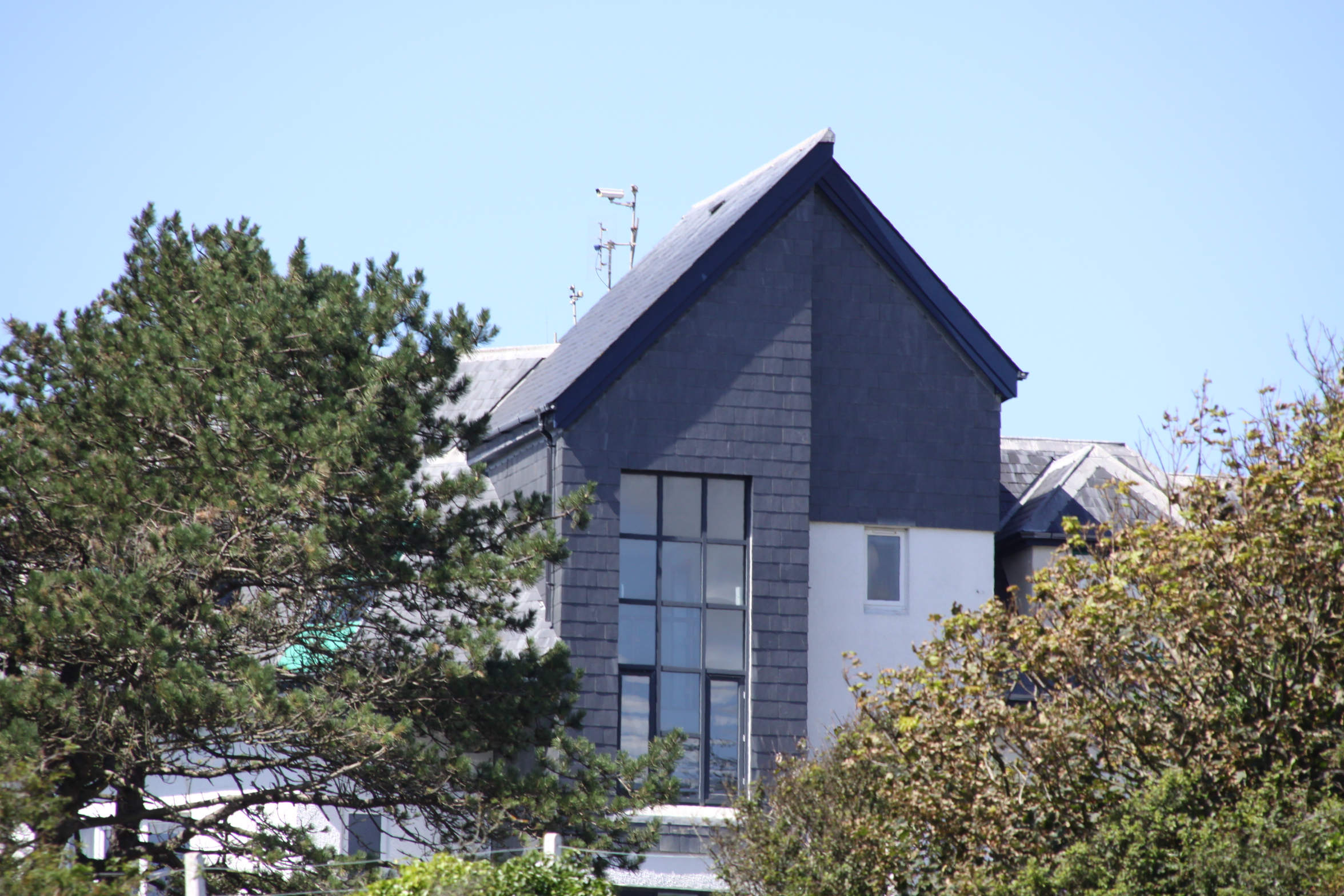
Today the Trefeddian has retained its gabled north wing, but its box-like southern section has again been reinvented, with a new gable, decorative metalwork and balconies.  Two extensions to north and south have been added, flanking the two main wings, and there are dormer windows in the roof.  The building is still asymmetrical, but it has a much more aesthetically appealing appearance than its previous incarnation.  All the ancillary annexes to north and south of the main hotel building have been retained.

Detail of the top of the southern extension

Compare with the third and fourth photographs from top, where the same railway crossing is shown with a small building, the crossing keeper’s house, to the right of the gates.  As mentioned above, it was still standing in 1965 and looked as though it was in fairly good condition.  It’s a shame that it vanished at some point after that date.


A sunny Monday walk, avoiding the village

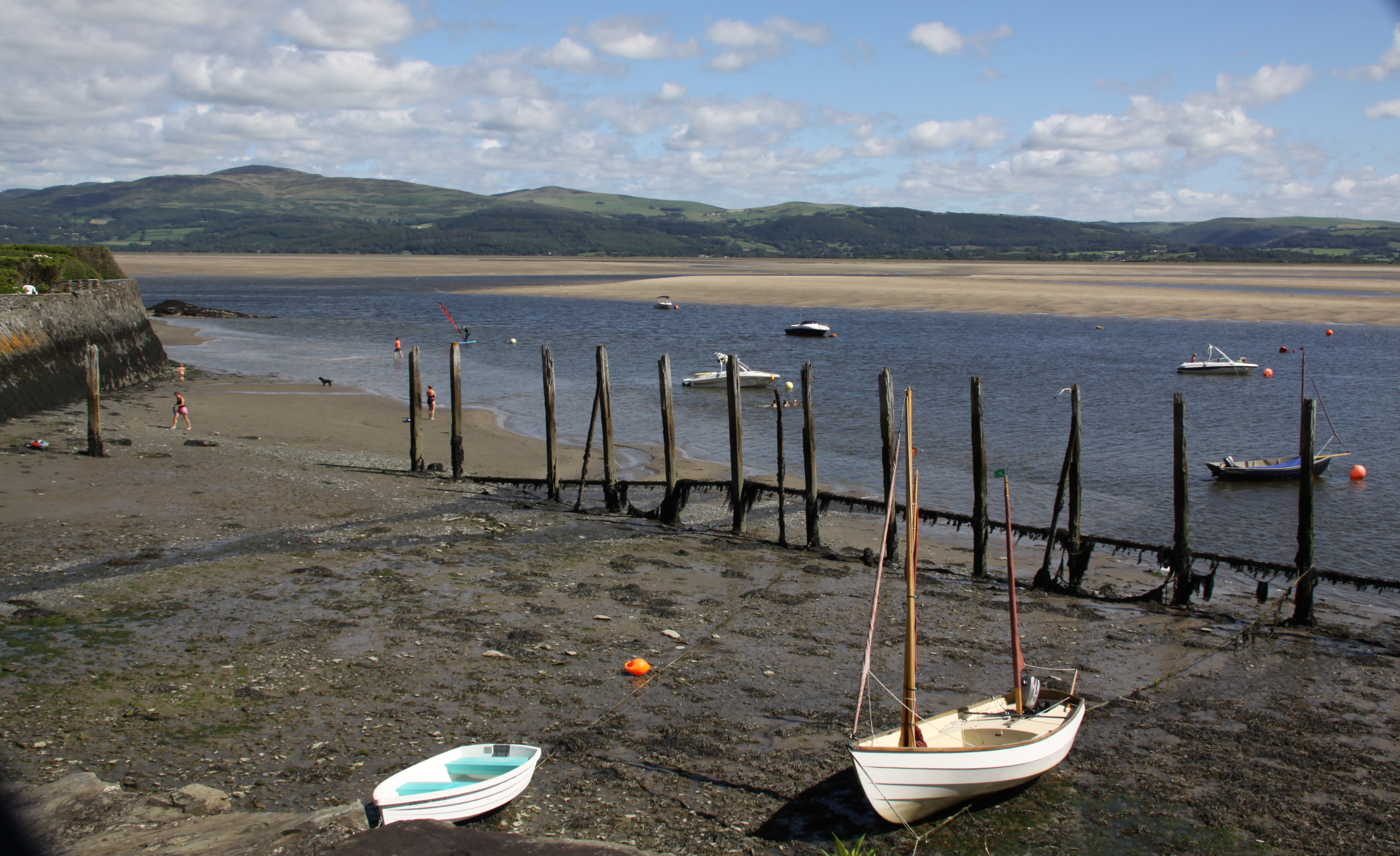
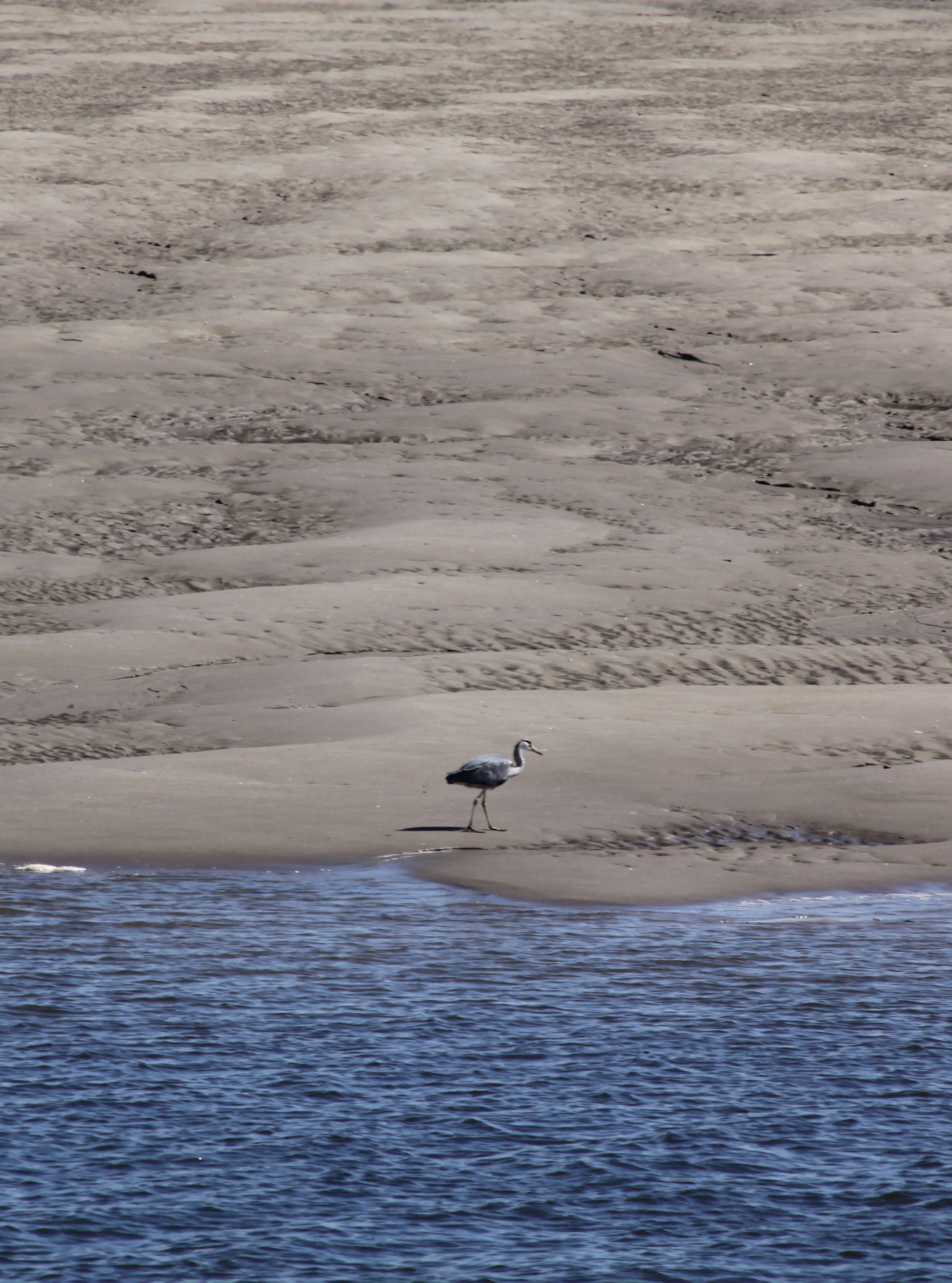
I was quite mad to drive into Tywyn at 10 to 4 on Friday, just as the tourist season was belatedly kicking off, and paid the price in the form of a short queue to get into the Co-Op (the first time I’ve had to queue) and the joys of dodging some truly execrable driving and parking in Aberdovey itself.   So on Monday afternoon, although its great that the visitors have returned, it was something of a relief to take the footpath from the top of Church Street down into Penhelig, avoiding the vehicular chaos in Aberdovey itself.  We walked through the Memorial Park and part way along the estuary, which was as stunning as usual, with lovely views, and people fishing and kayaking.   There was a heron on a sandbank, the first I have seen in the estuary, although a few years ago I saw one in a similar situation in Port Meirion so I suppose that they are happy in brackish waters when there are sufficient fish to tempt them.


We went up the first flight of steps to the road, and it was then a matter of walking down the road as far as the footpath that runs up past the Outward Bound centre.  This is not for the faint-hearted.  With the bridge from Picnic Island still closed, and now firmly boarded up to prevent access, it’s a hair-raising walk along the road, facing into the traffic piling in from the direction of Machynlleth.  Absolutely not to be attempted with children or dogs in tow.   The bright new Aberdovey welcome signs are up, the first time I had noticed one, although I suppose there must be one on the way in to Aberdovey from the Tywyn direction too.

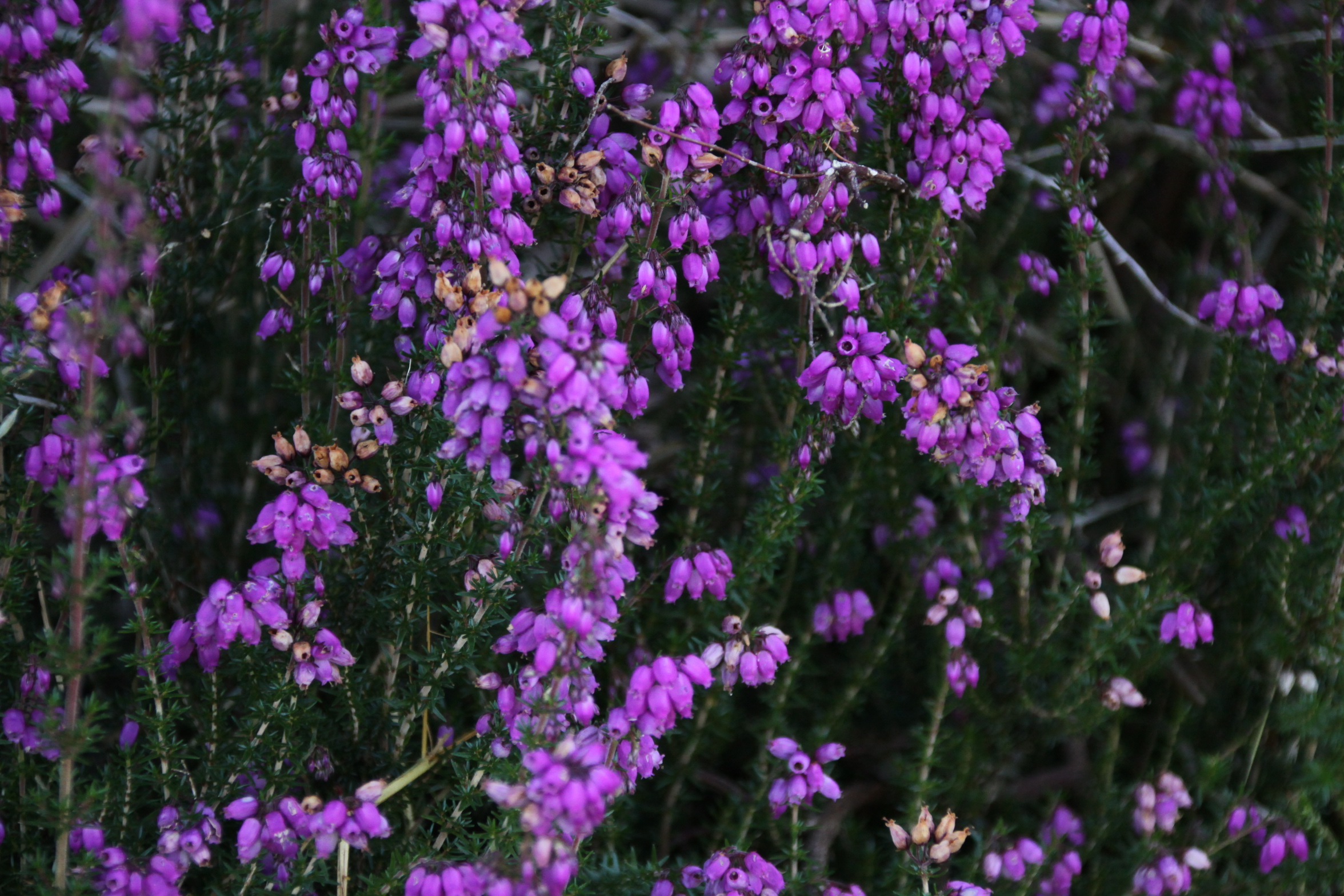
The rest of the walk is very rewarding once the road is left behind, walking first along a bubbling stream for a short way, and then up through a wood behind the Outward Bound centre before emerging into the sun on the side of the hill overlooking the estuary.  The hills above the estuary are far more lush than the exposed slopes along the coast, with longer grass, and a lot more shrubs and trees, and the views over the estuary are spectacular.  Afon Leri has always been a remarkable landmark crossing Cors Fochno to the east of Ynys Las, but I hadn’t noticed a smaller, parallel canalized section of stream further upriver, Afon Clettwr, with a small bridge carrying the railway. There weren’t a lot of wild flowers to comment on, but there was a thistle absolutely swarming with bright orange Rhagonycha fulva beetles, some lovely bright heather, and bright red berries on Mountain Ash.

We circled back over the hill to Aberdovey, emerging behind the highest reaches of the village, where there was a lovely patch of lavatera in bloom.

A colourful patch of Lavatera overlooking the estuary

A busy beach, but the hills are still empty as lockdown relaxes still further

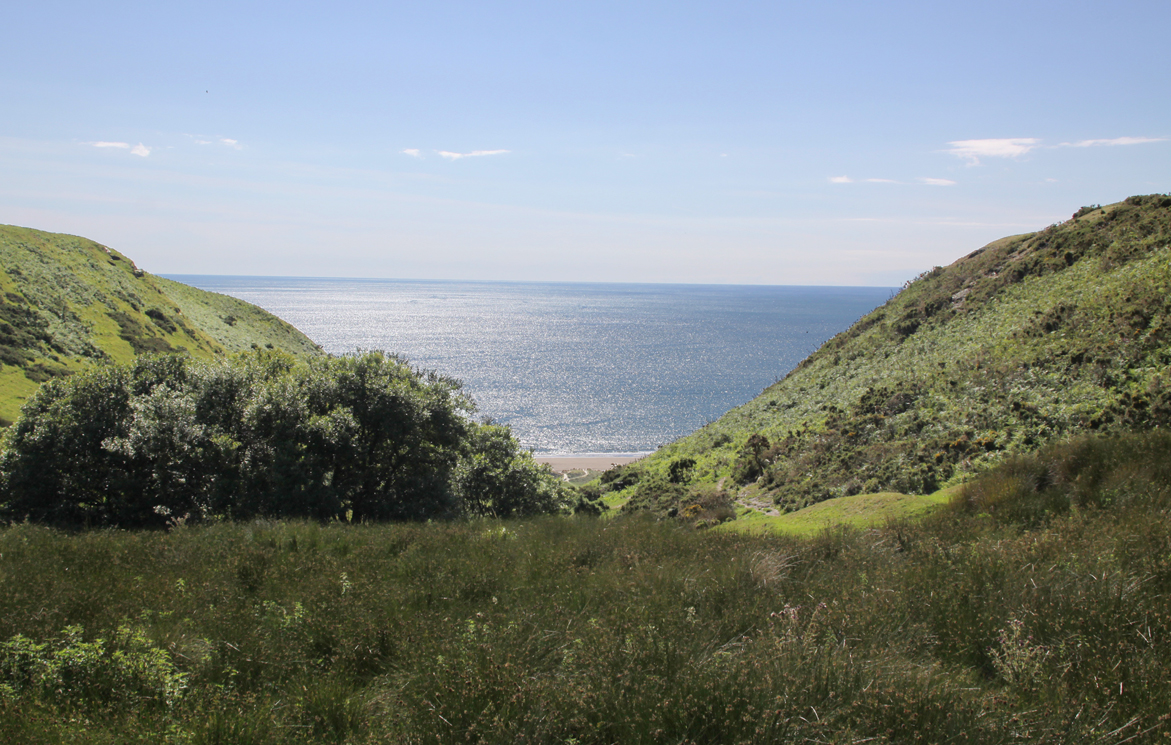
Another lovely walk on Saturday, along the beach, paddling in the sea, turning up into the hills past the cemetery, and along lovely footpaths until we emerged just above Aberdovey.  I was particularly tired after a restless night, so it was super just to drift along enjoying the sights and sounds.  There was an intensity to the light that reflected off the water, the dominating colour silver rather than blue, and anything in front of it was silhouetted.  How the weather changed on Monday!

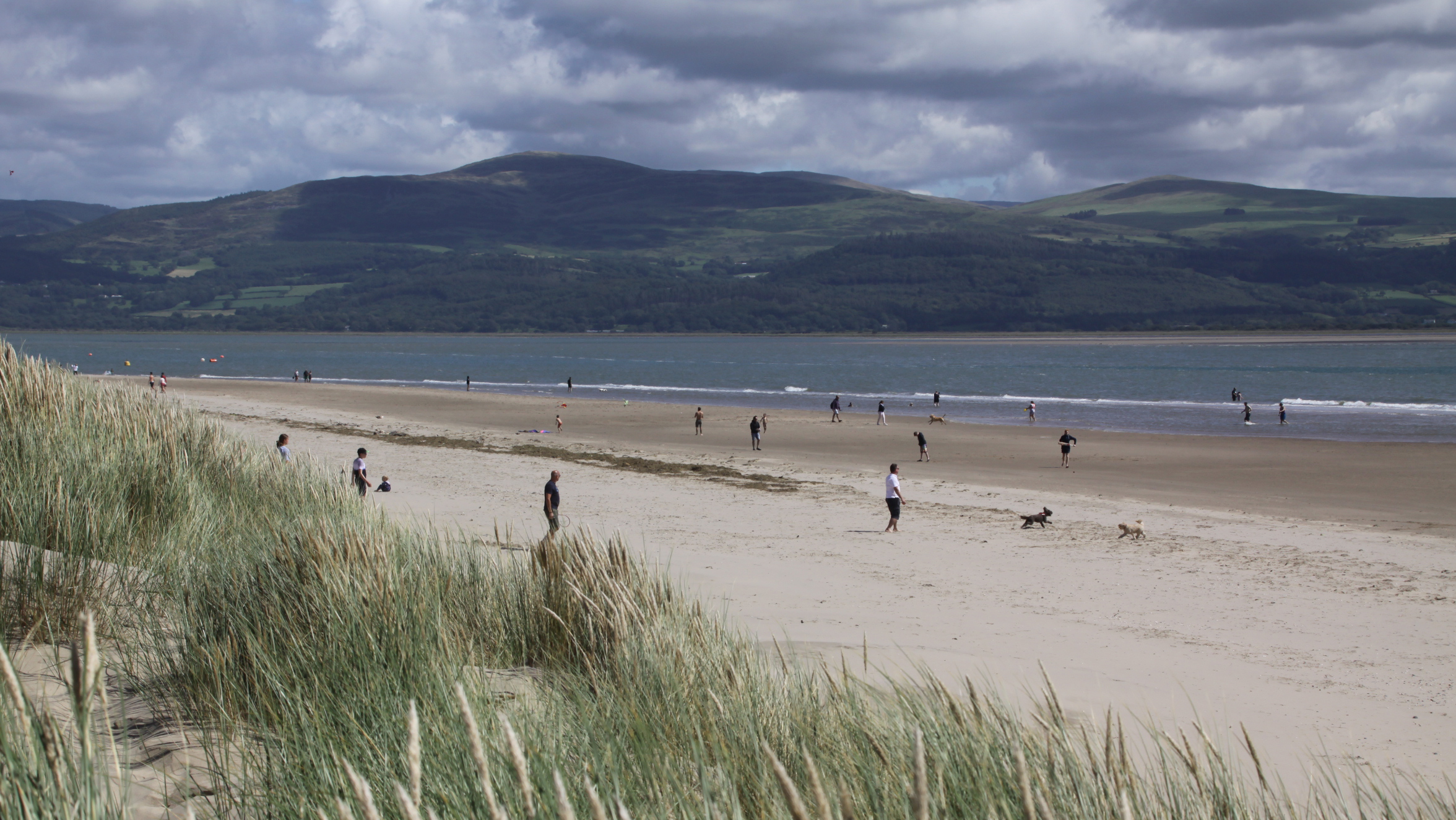
This is the first time I’ve seen the beach with more than a couple of people on it.  It was something of a visual shock, although it is great that people are able to enjoy themselves.  A lot of second home owners are back too.  The ice cream shops were a bit chaotic, with very little distance between people in the queues, but I expect that that will be sorted soon.  Further along the beach, several people were swimming, which was a bit brave as the water was frankly very chilly.

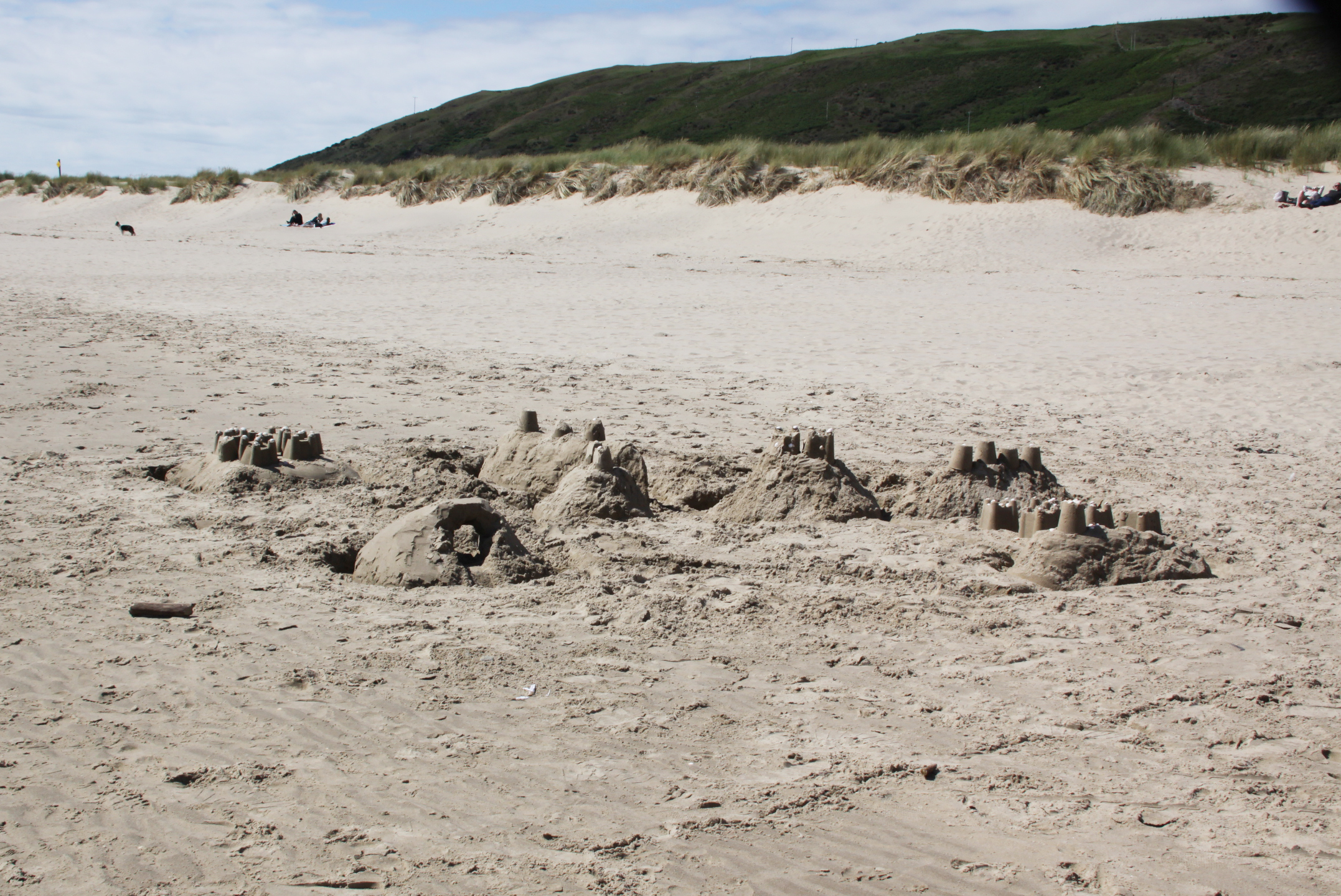
Not just a sand castle, but an entire neighbourhood of sand castles.


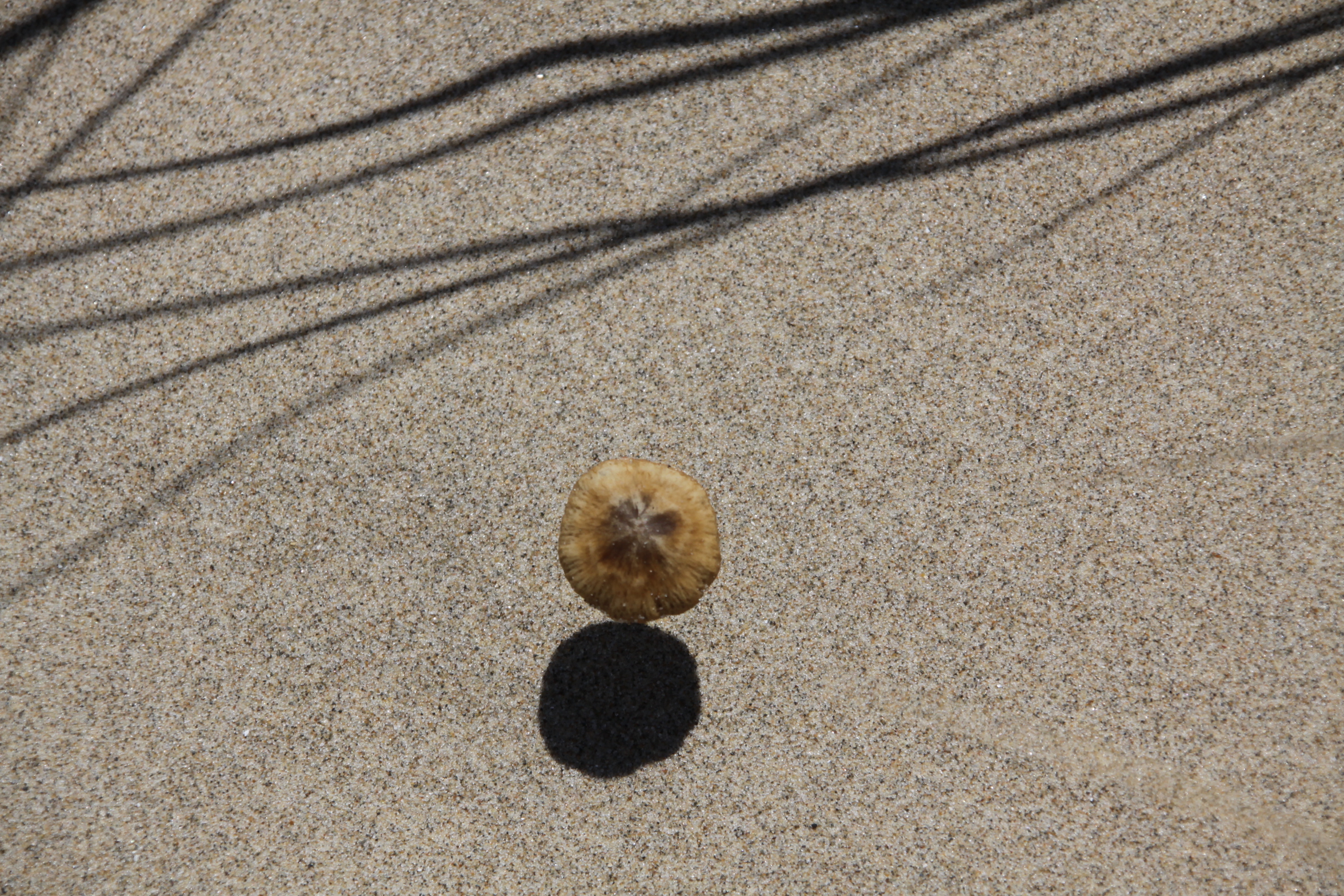
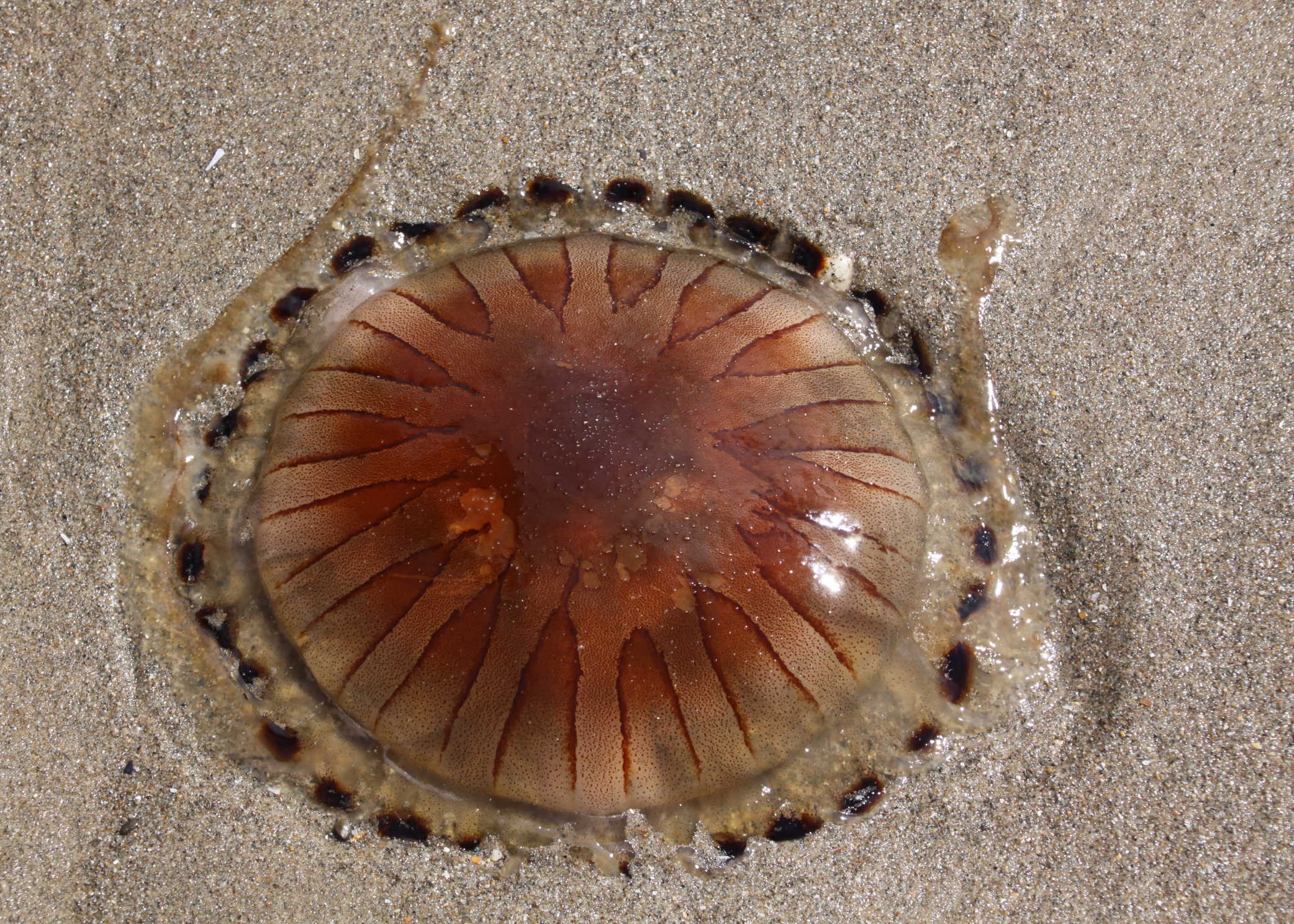
Normally the jellyfish that wash up on the beach are Barrel jellyfish (Rhizostoma pulma) but today there were none.  Instead, there were several Compass jellyfish (Chrysaora hysoscella), common in the south and west during the summer, where they feed on small fish and crustaceans.  The name derives from the dark brown markings that radiate from the centre.  These jellyfish are venomous, with stinging cells all along their tentacles.


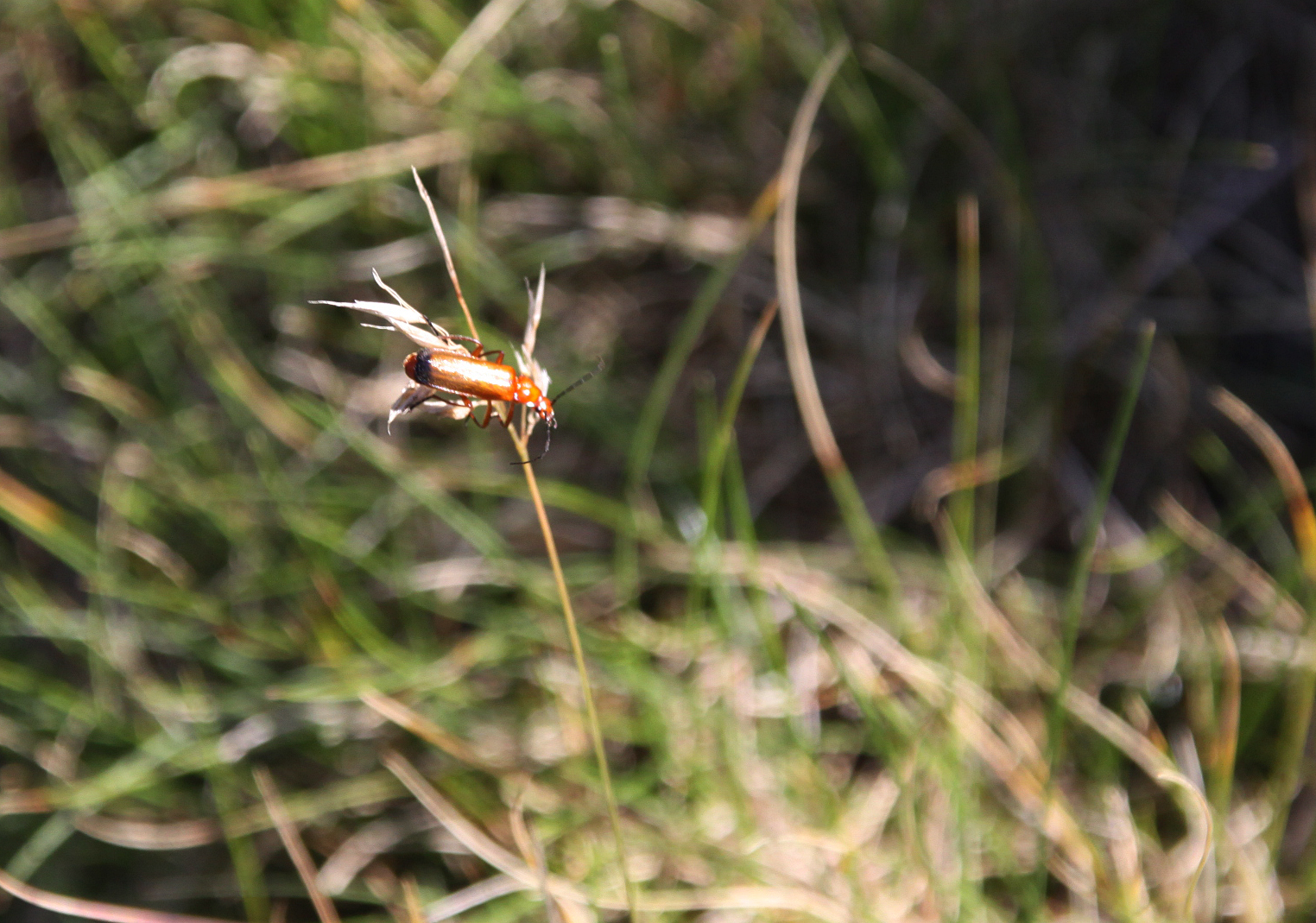
The beetle Rhagonycha fulva, common all over the UK from May to August.

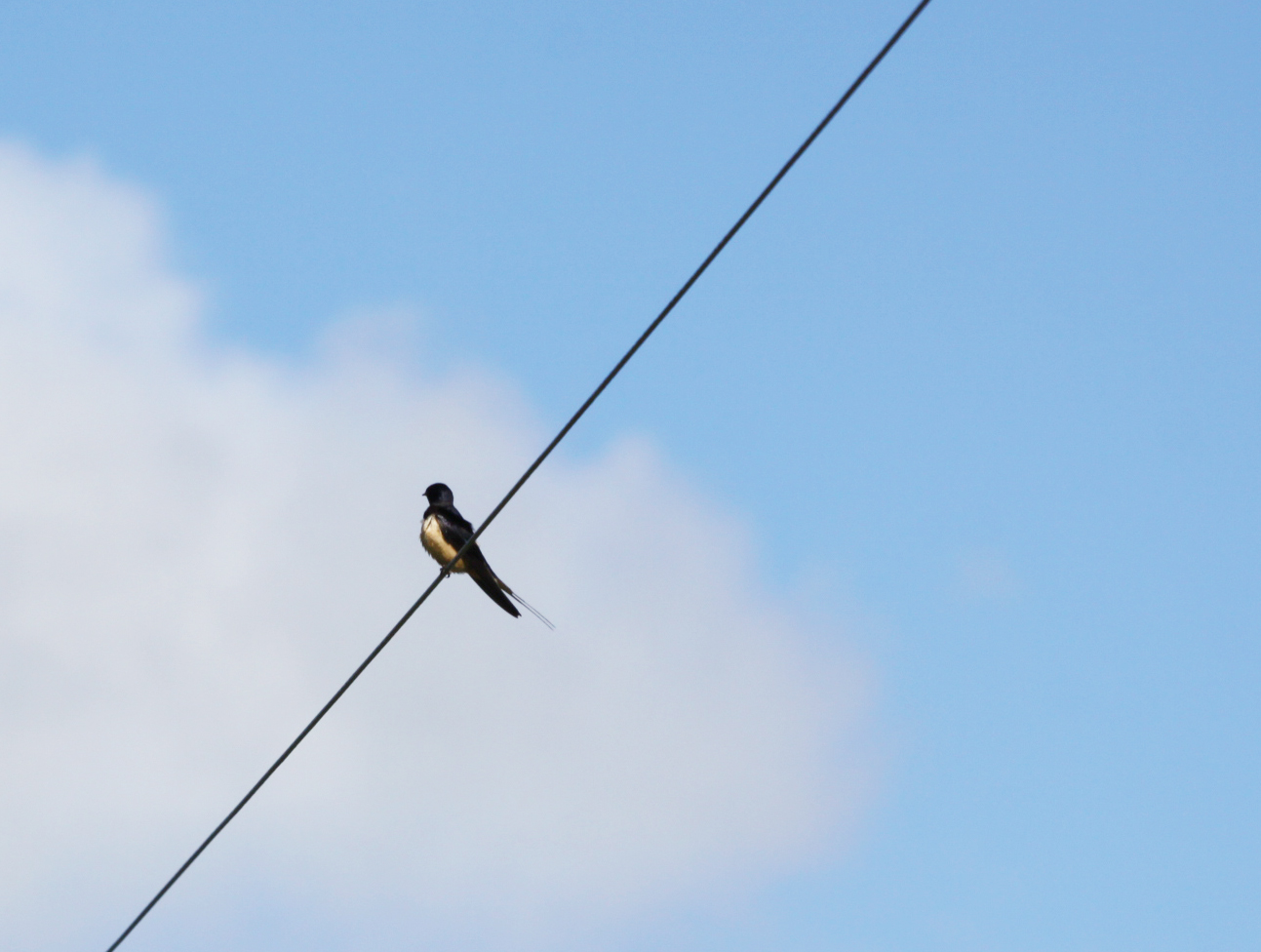
Swallow (Hirundo rustica).  A terrible photograph, shooting into the sun.  I was convinced that this was a swift, because the forked tails didn’t look long enough, but the swift doesn’t have the big white breast. They are migrating birds, spending winter in southern Africa and returning to the north to breed.

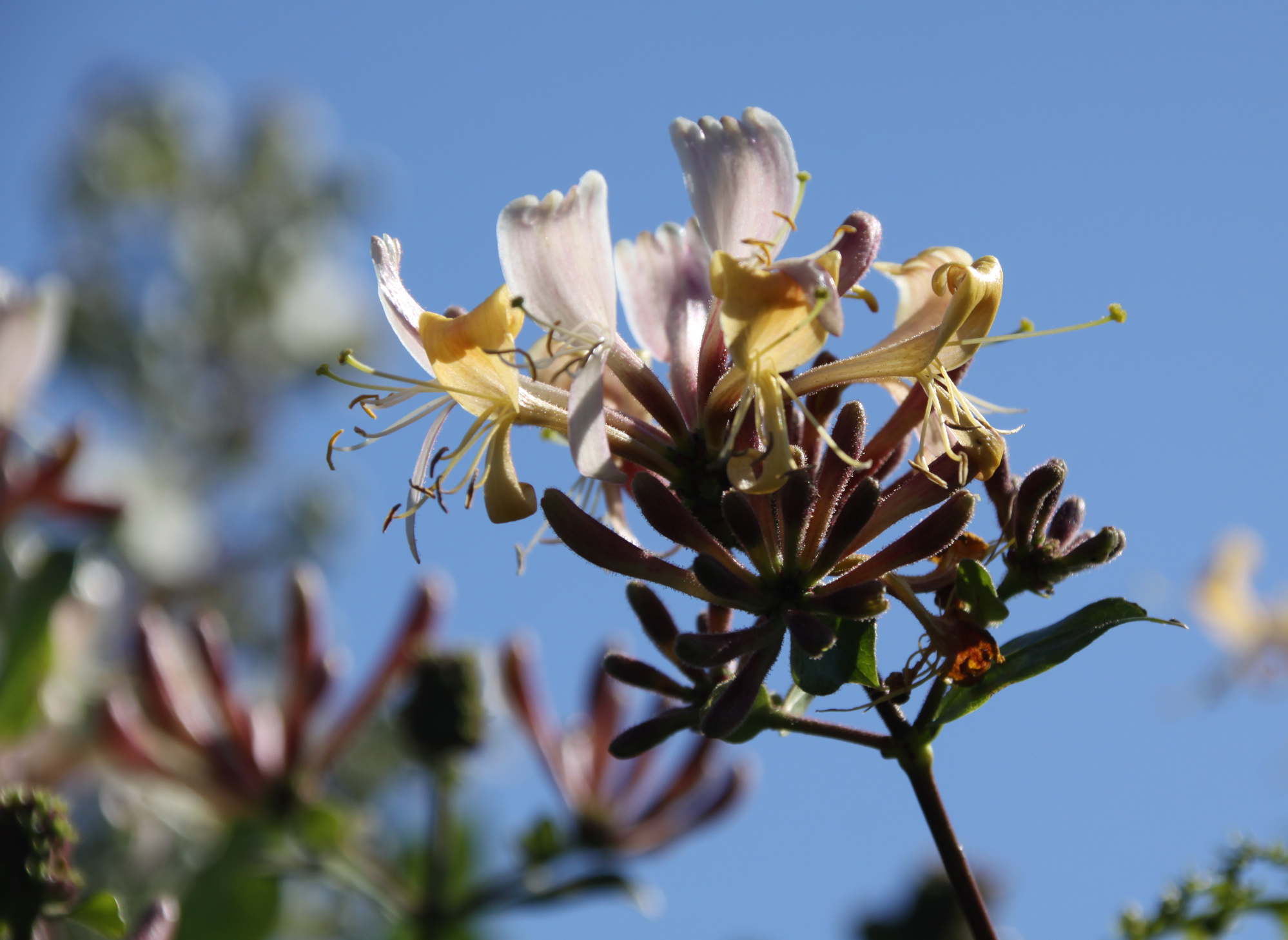
Honeysuckle (Lonicera periclymenum) produces a beautiful perfume, particularly in the evenings to attract pollinating moths.  It climbs up and over hedges and shrubs and flowers from June to October, with petals that ivory coloured until pollinated by bees or moths, when they turn yellow.  The produce red berries following the flowering, during the autumn.

Another first for the year:  the beach at Ynyslas is covered in cars.