Category Archives: Vistas

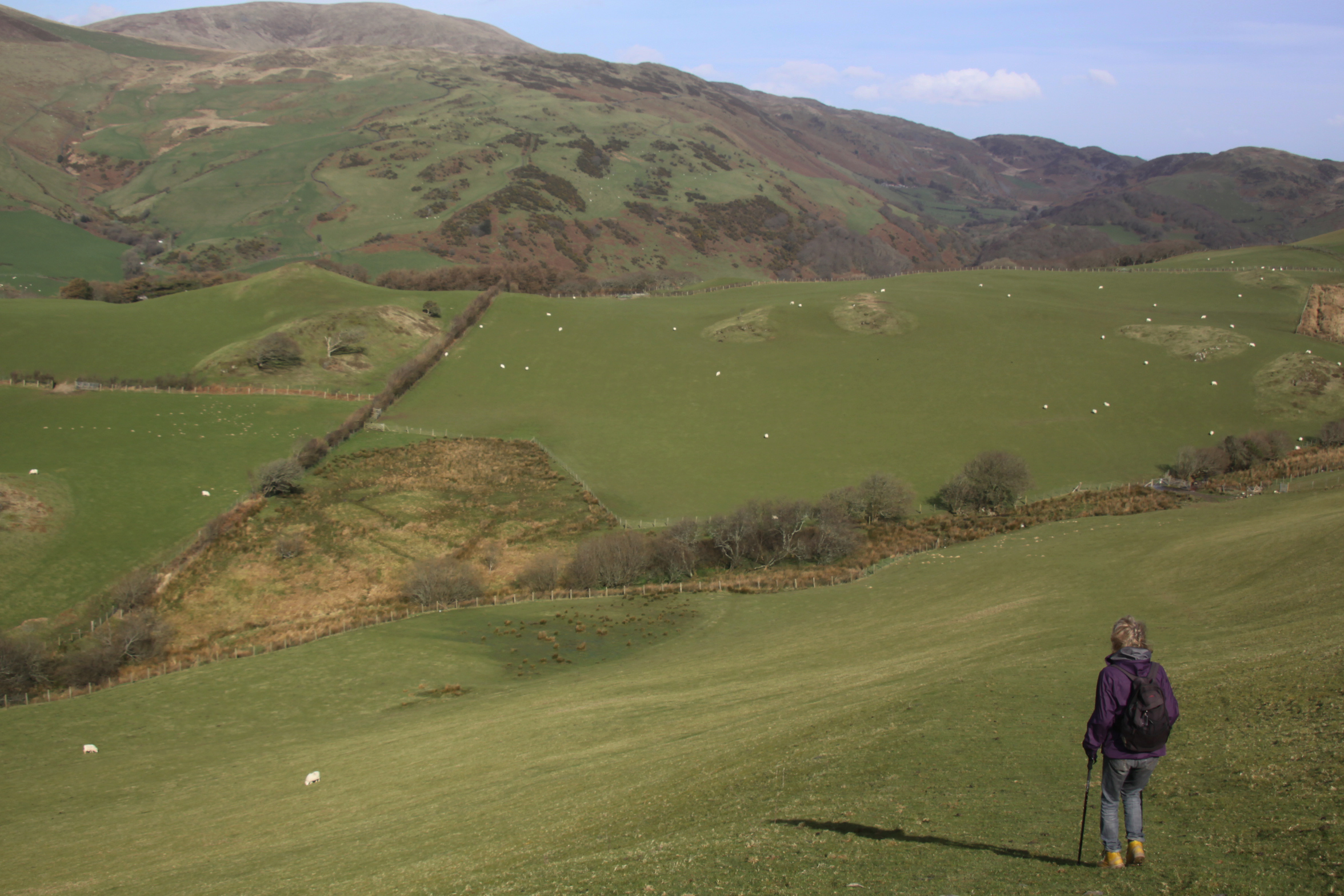
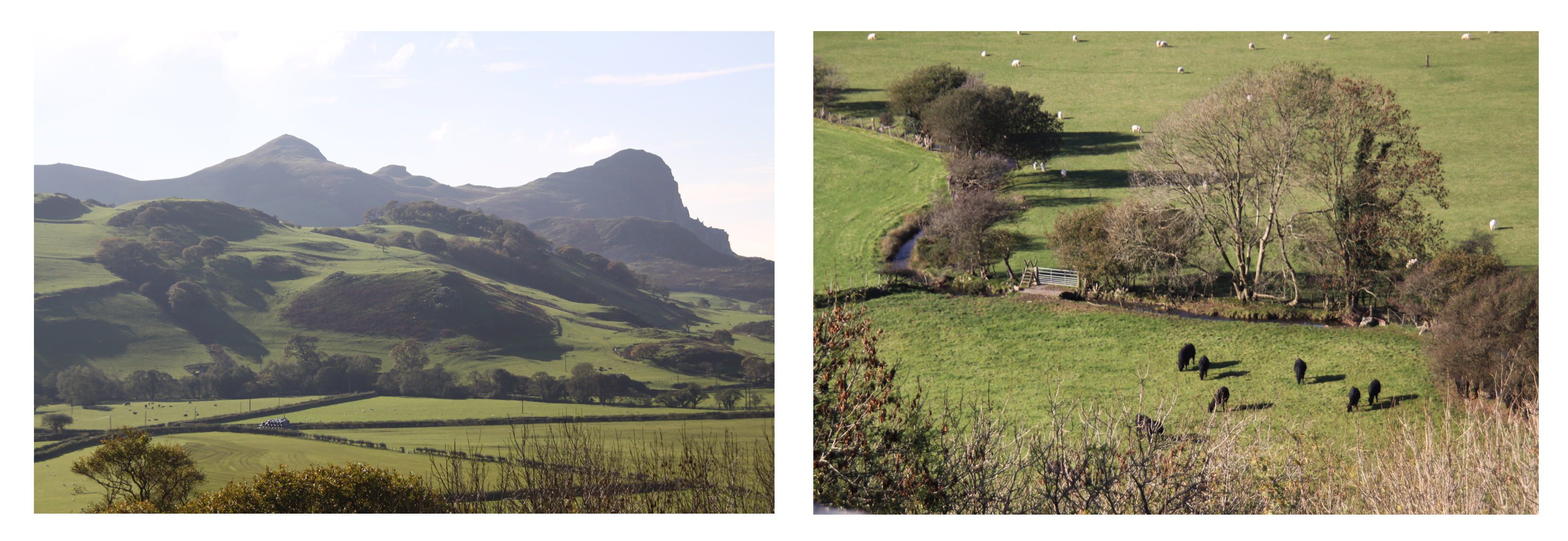
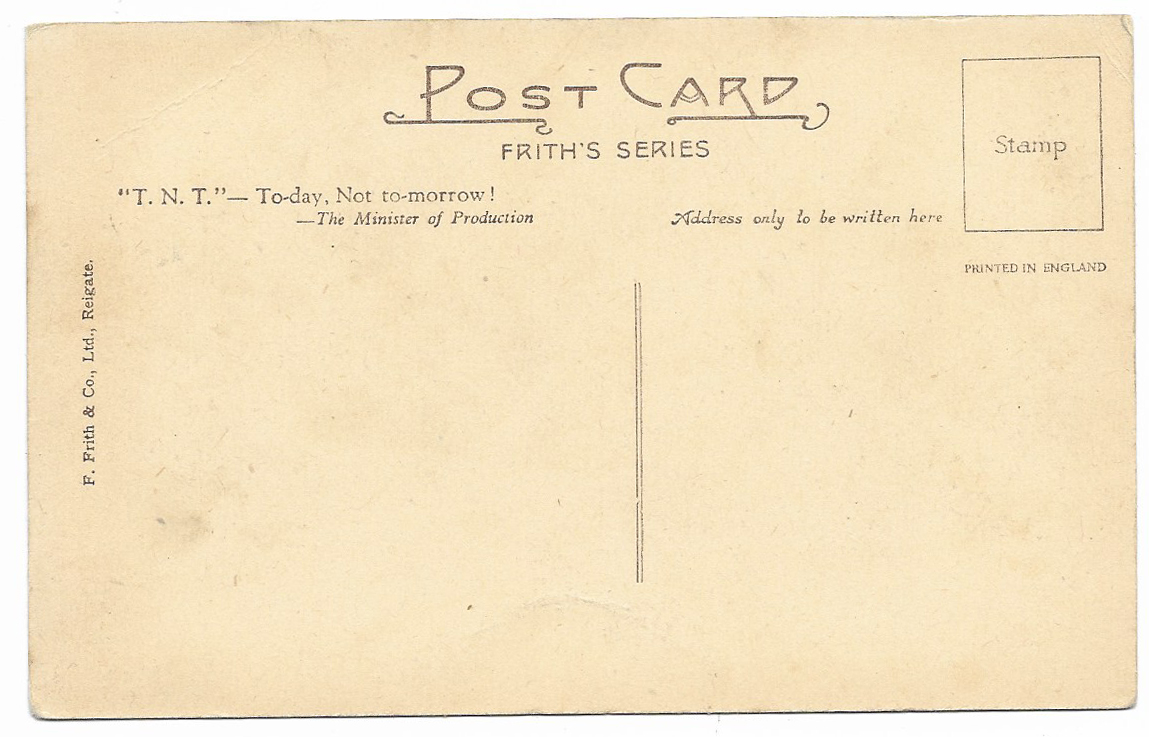
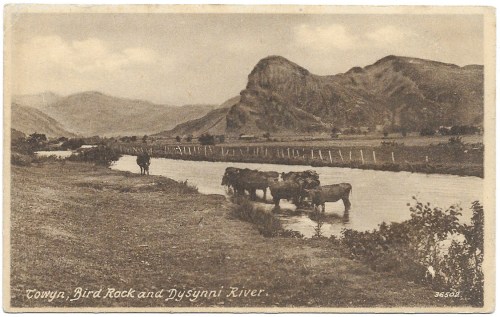
An idyllic circular walk today; Aberdovey via Happy Valley

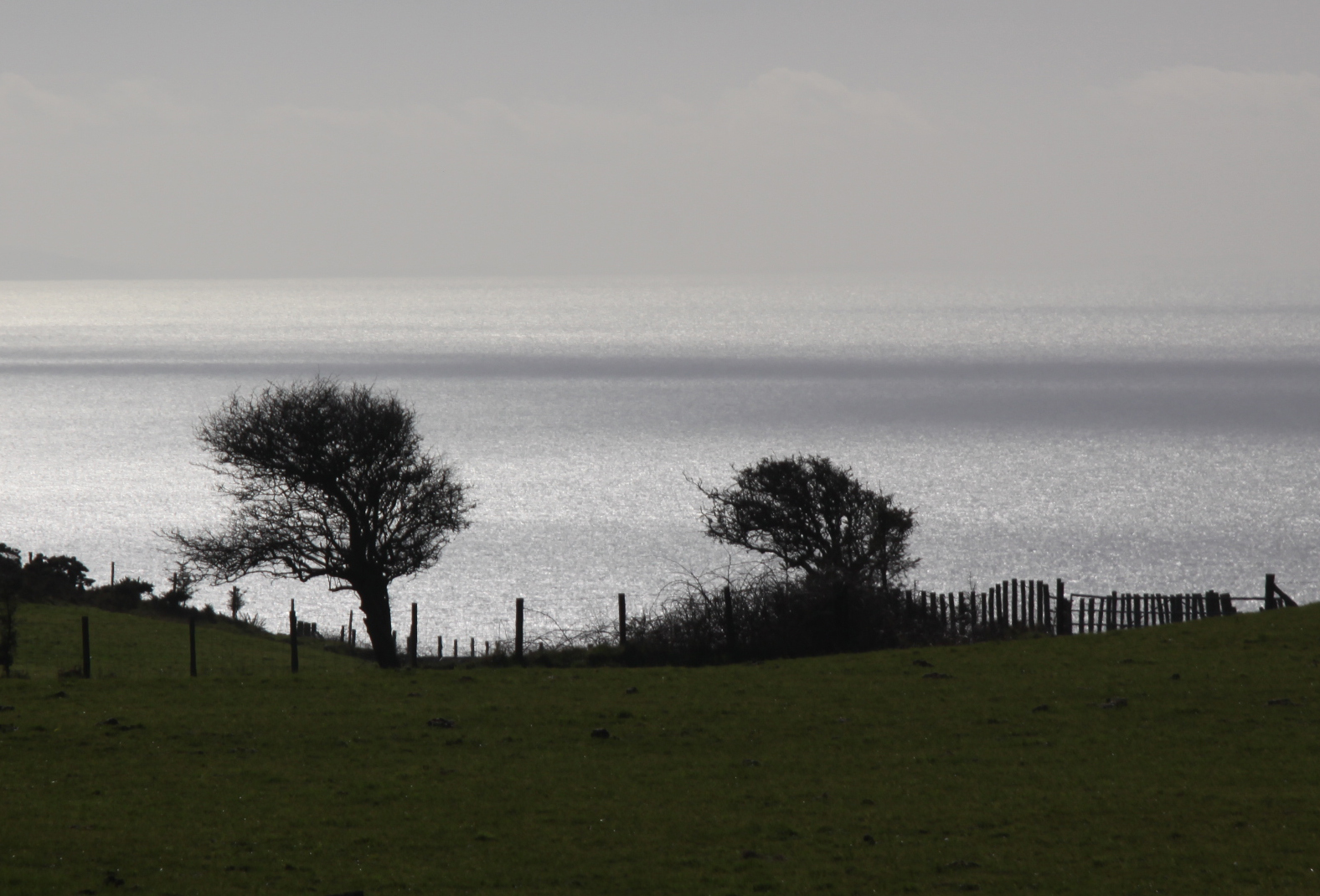
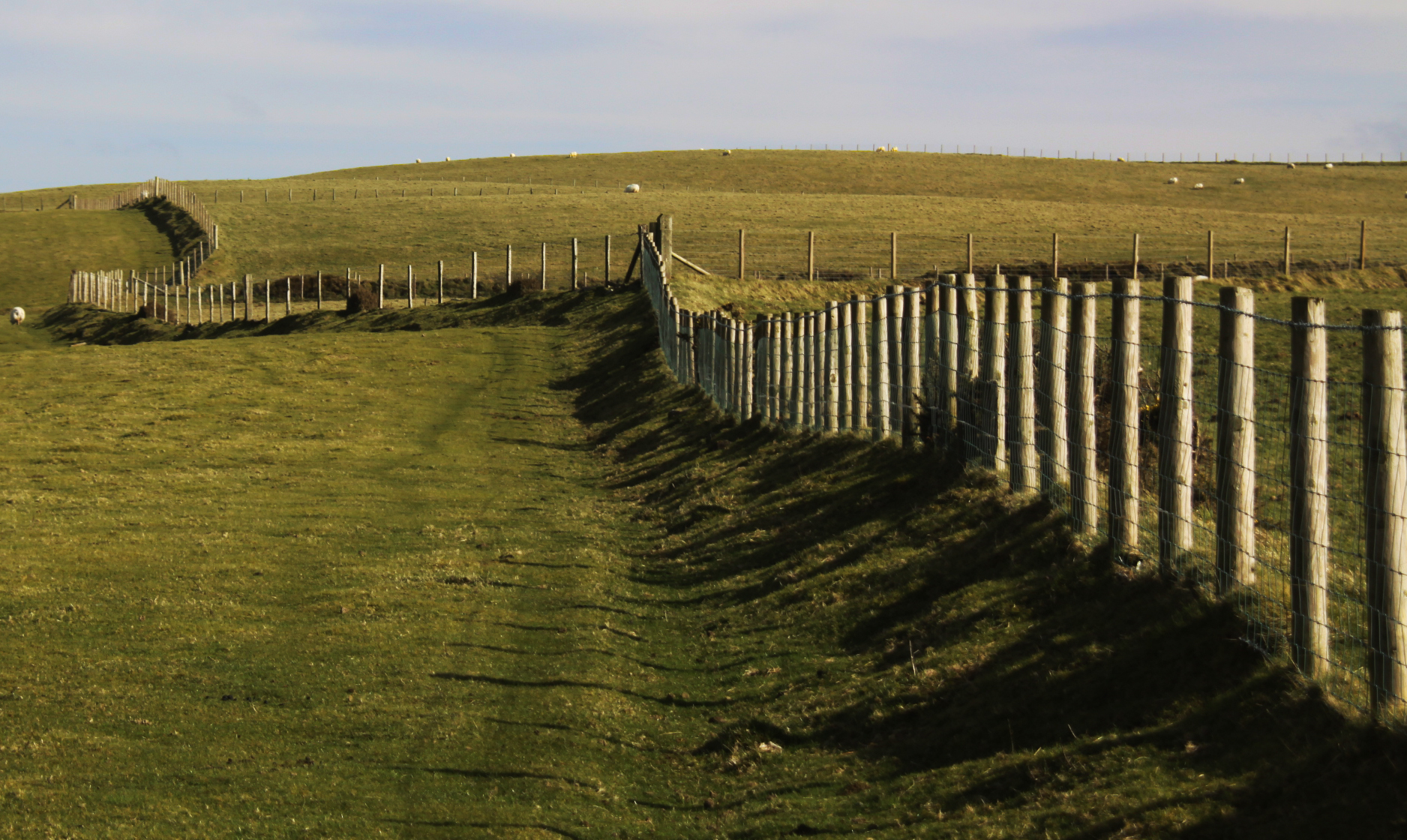
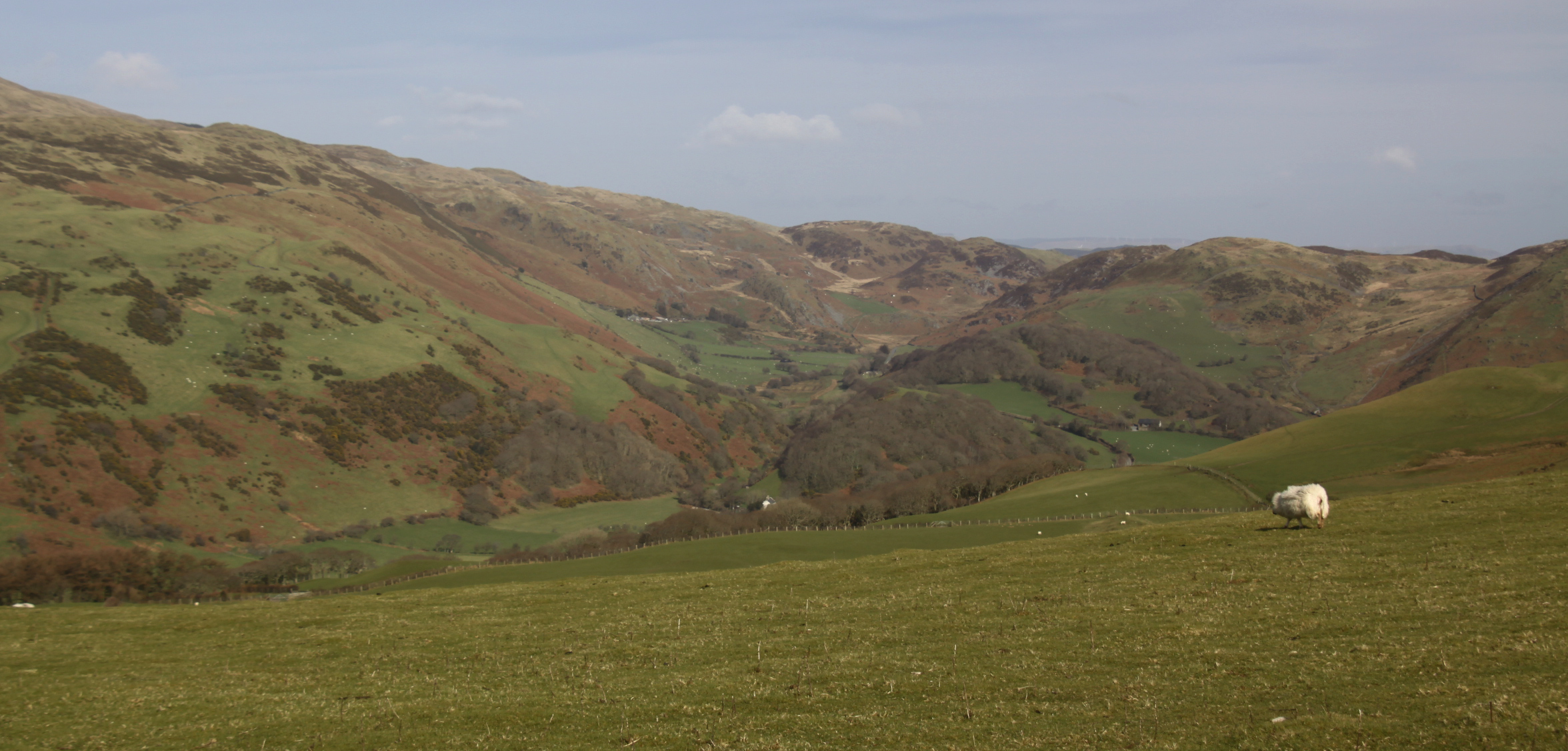
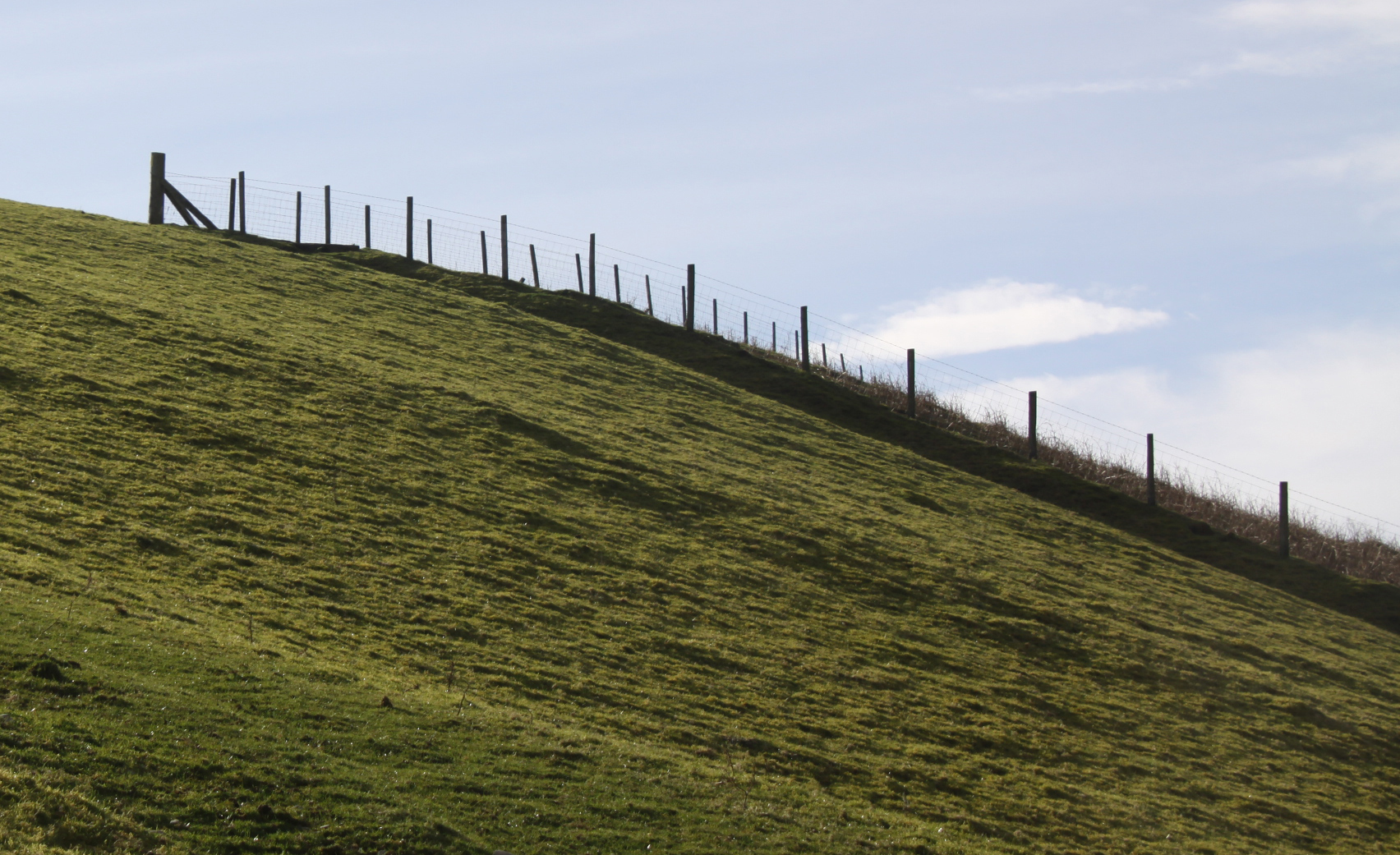
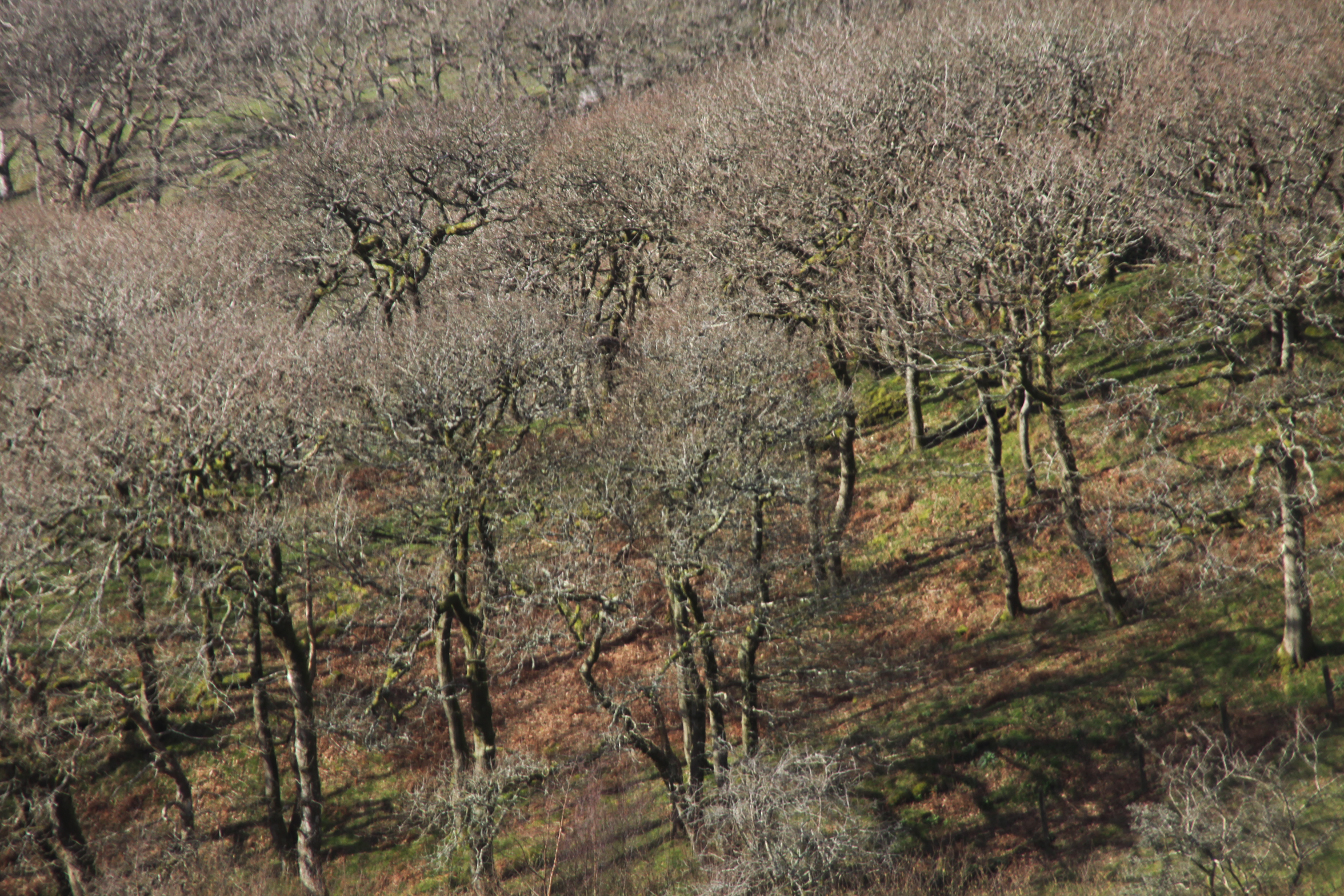
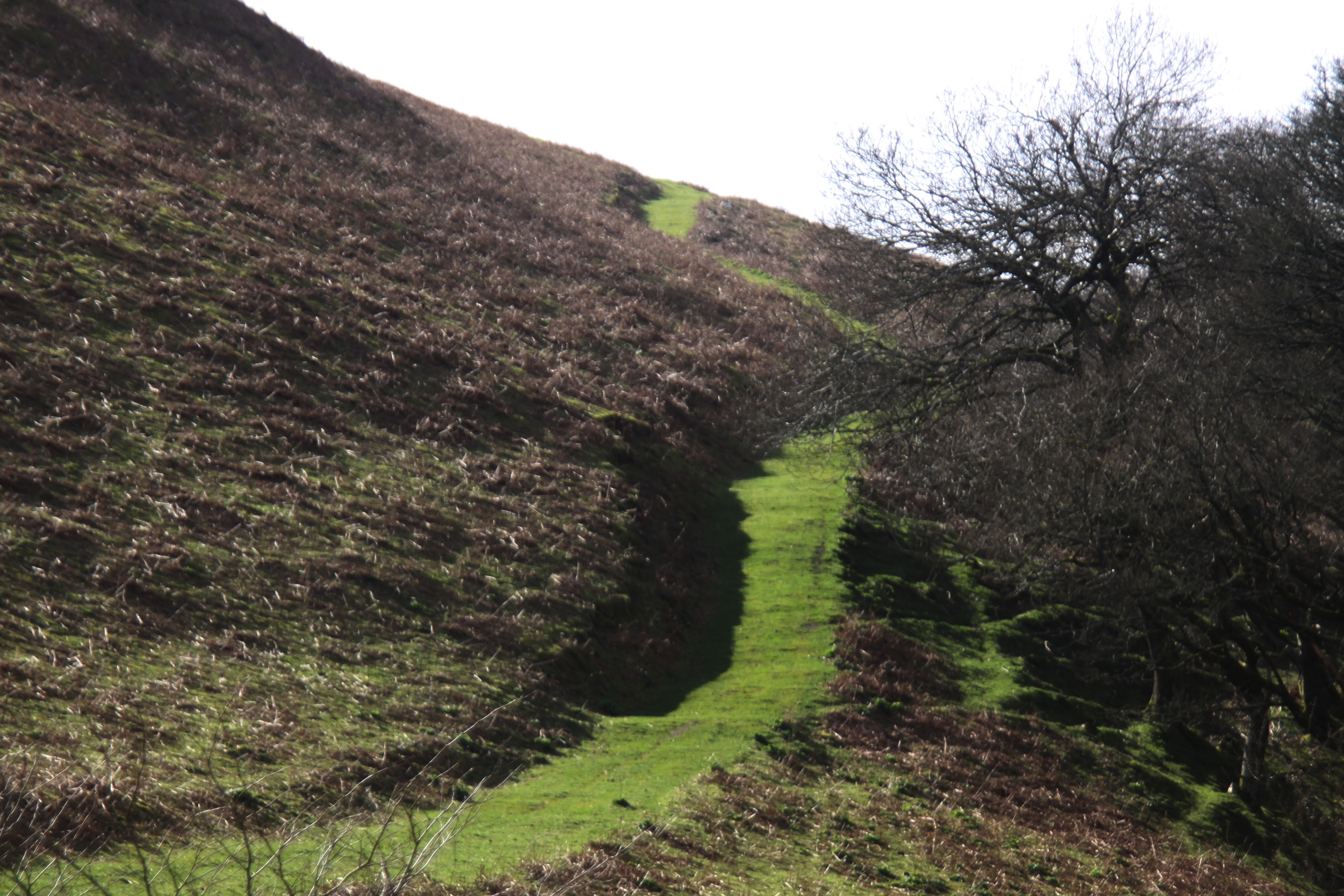
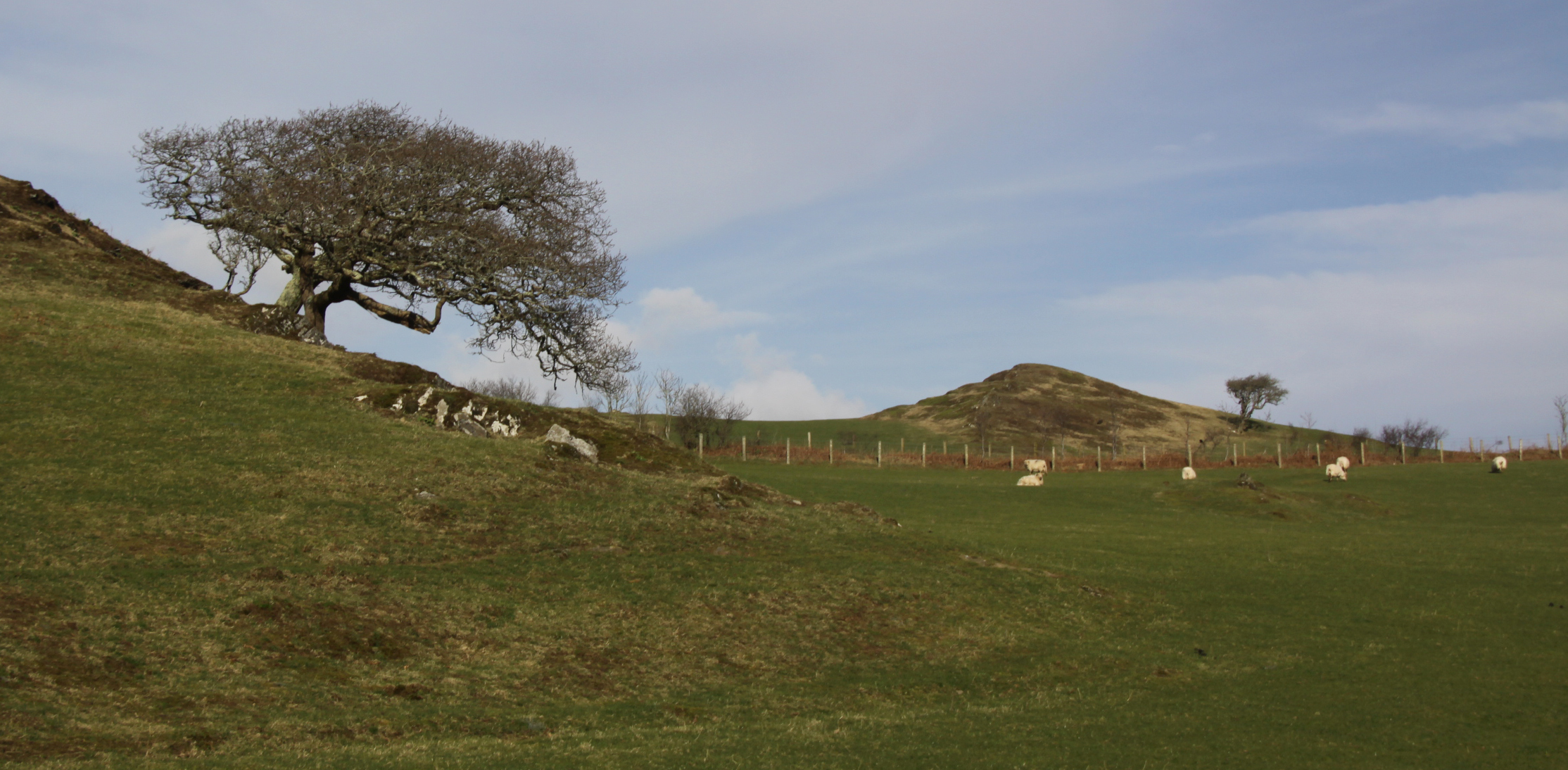
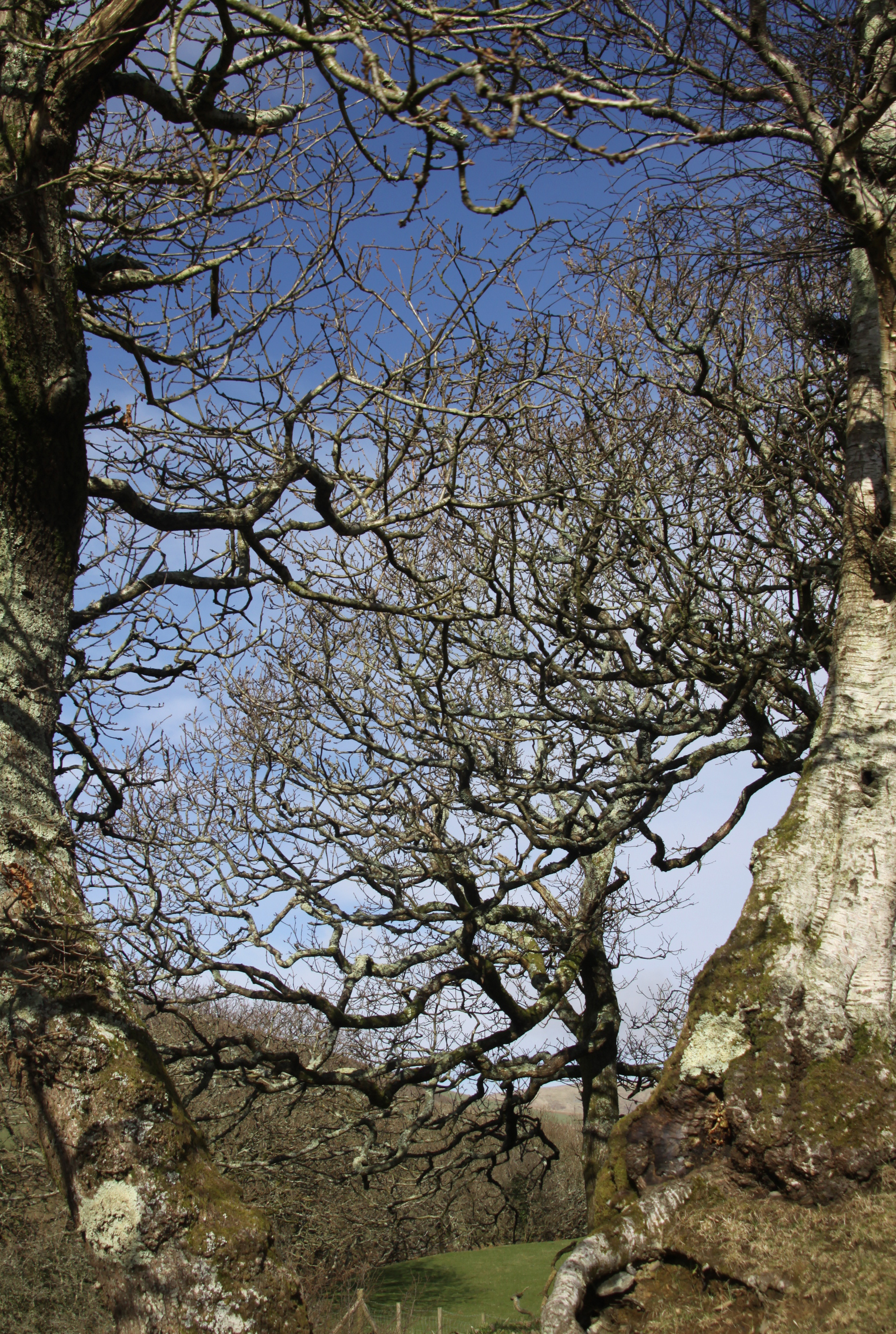
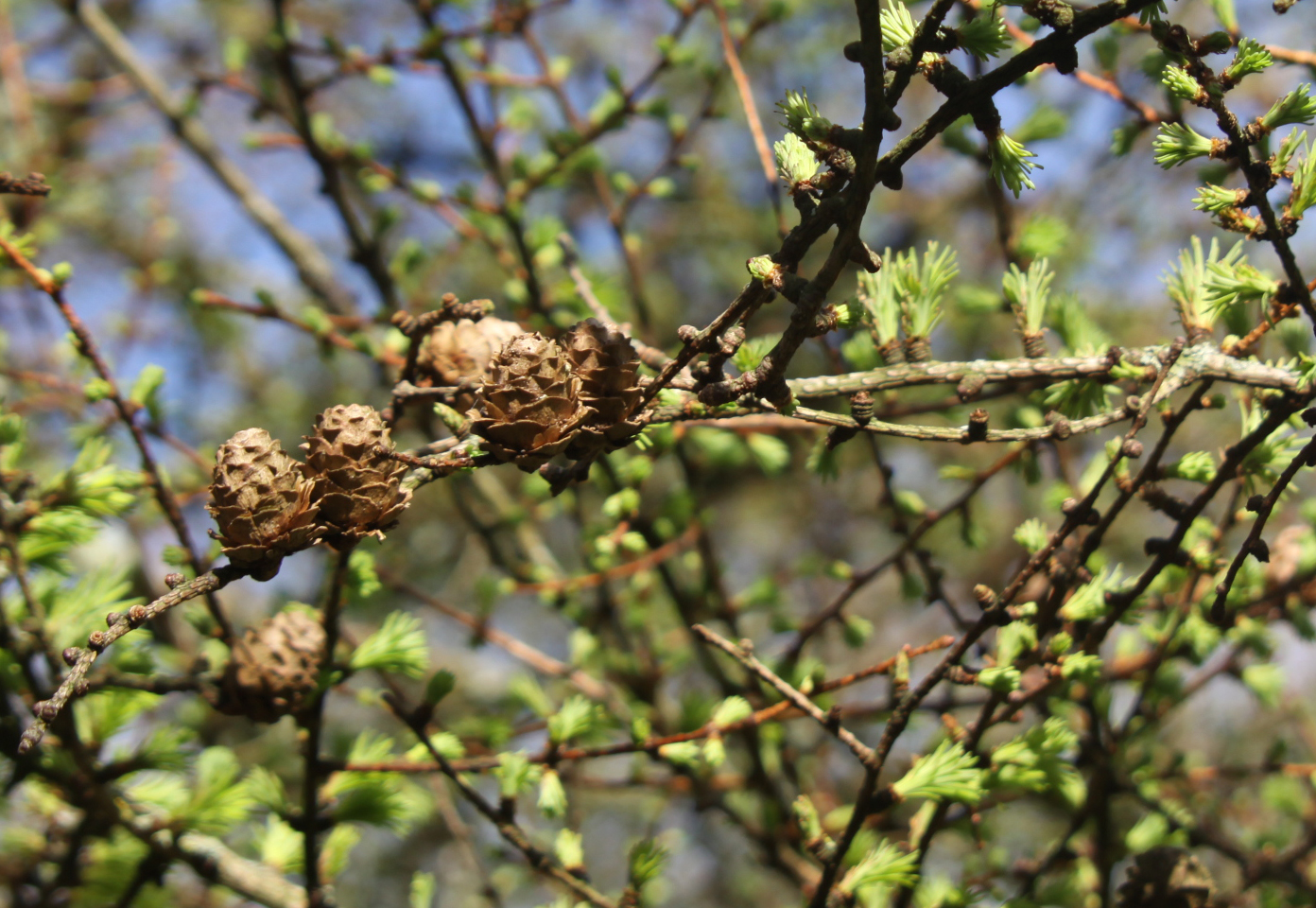
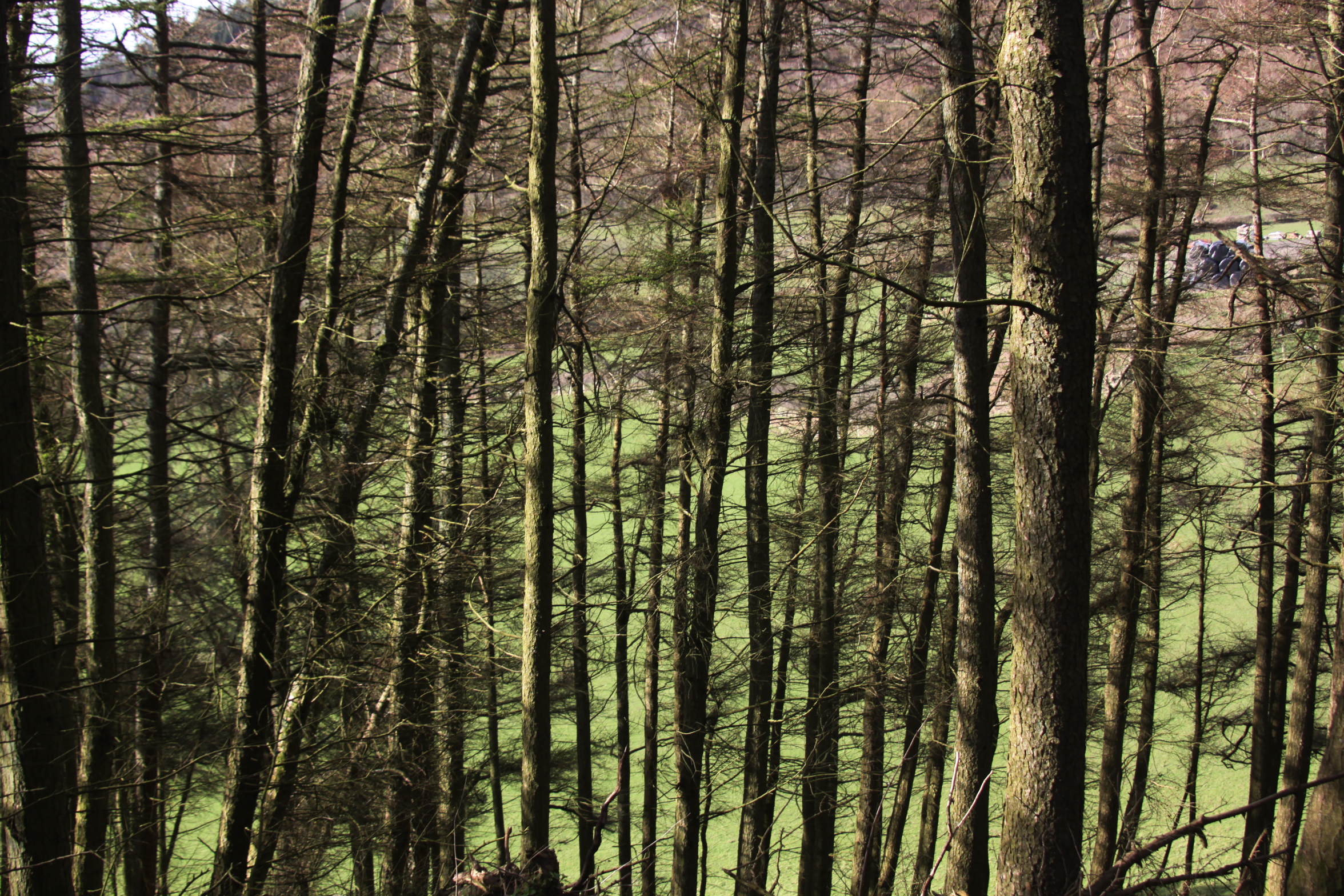
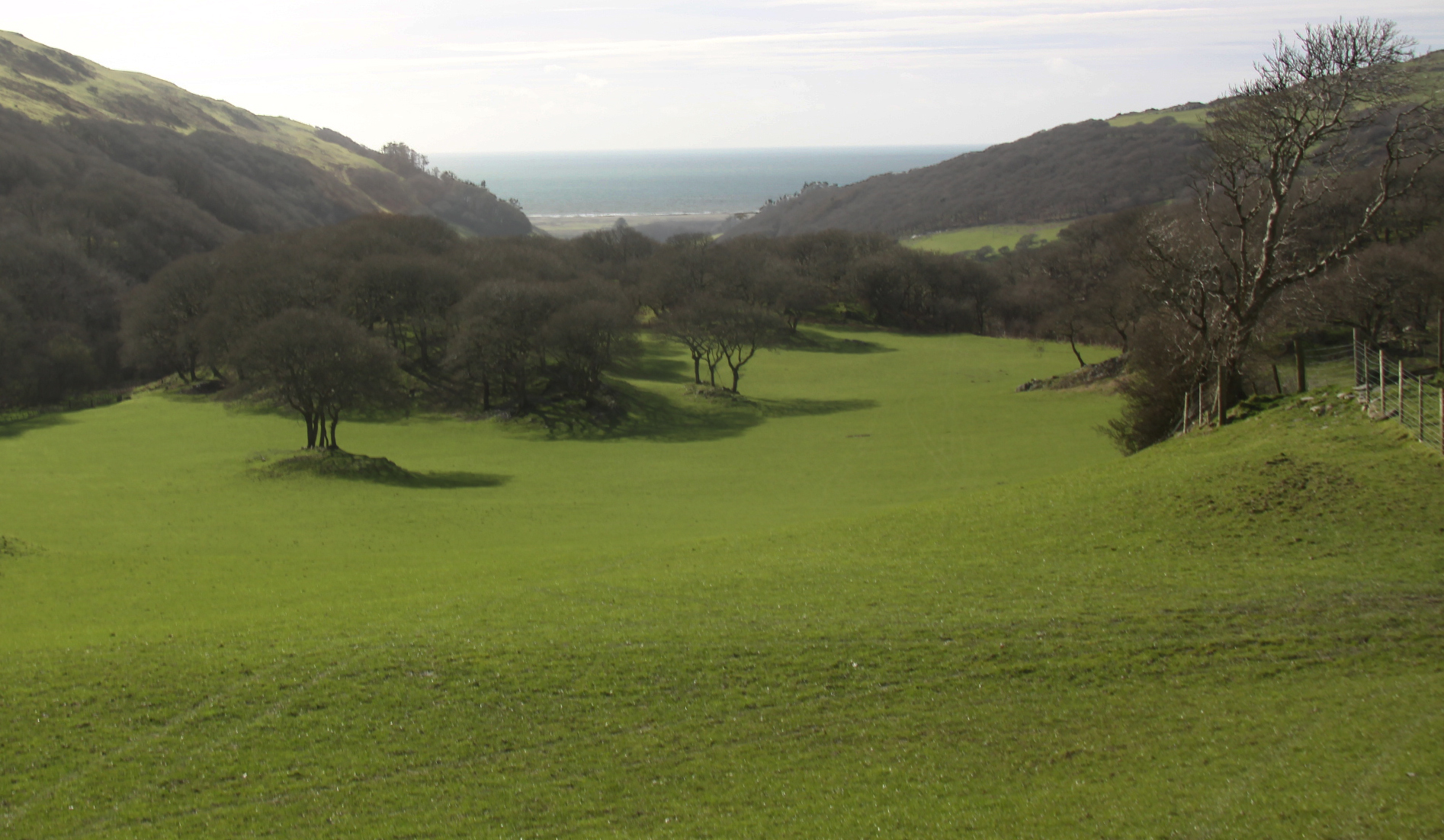
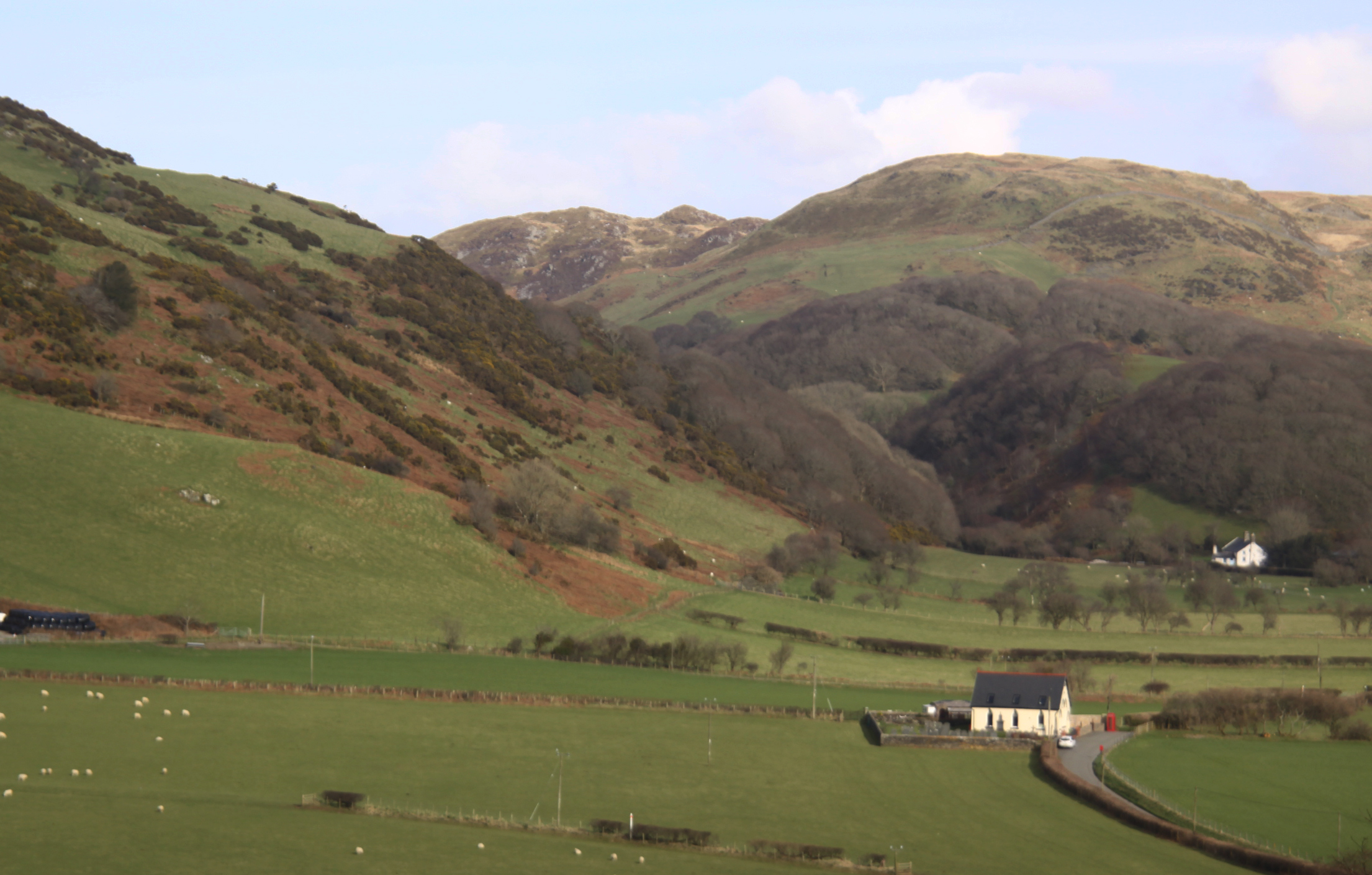
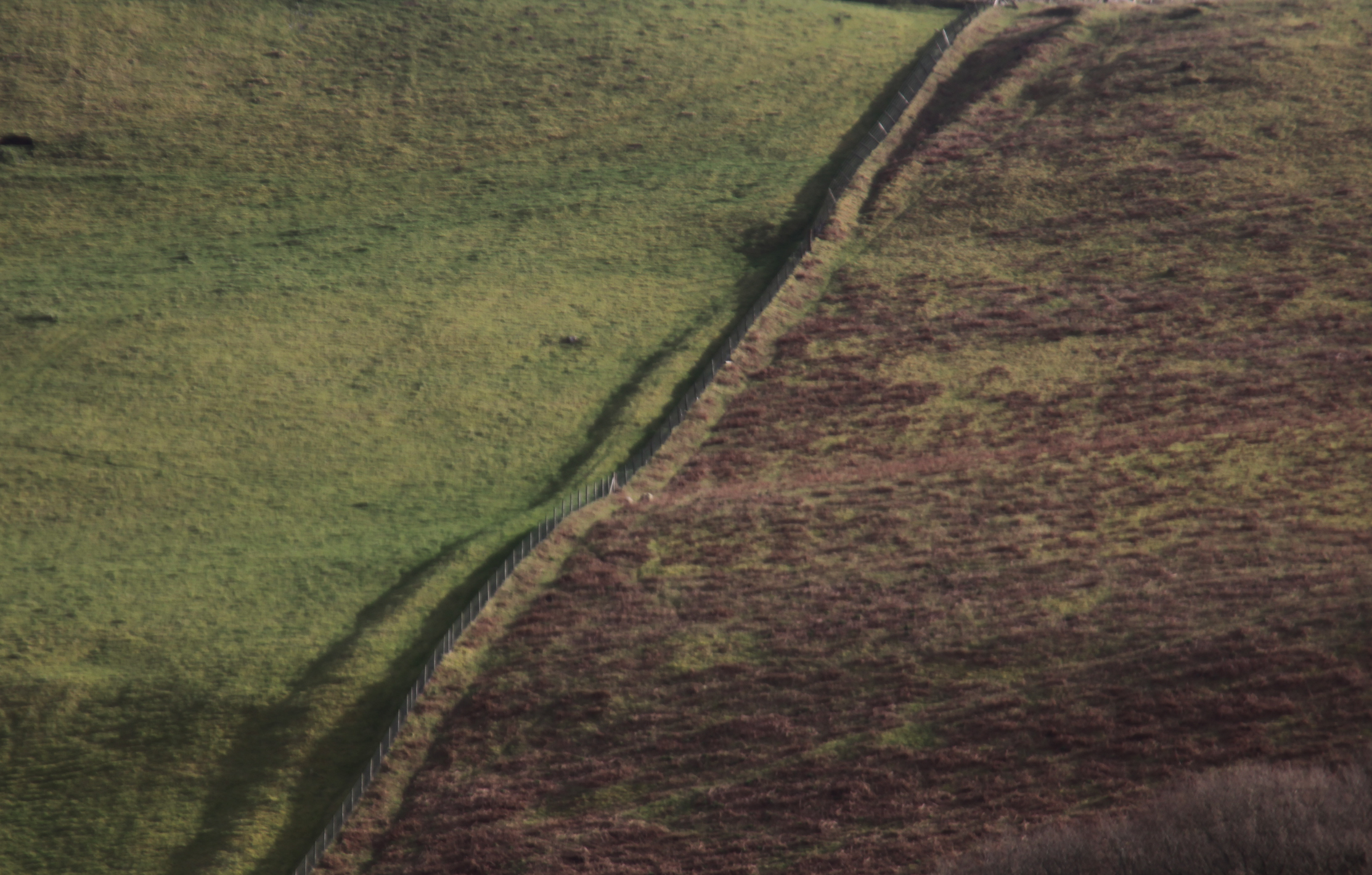
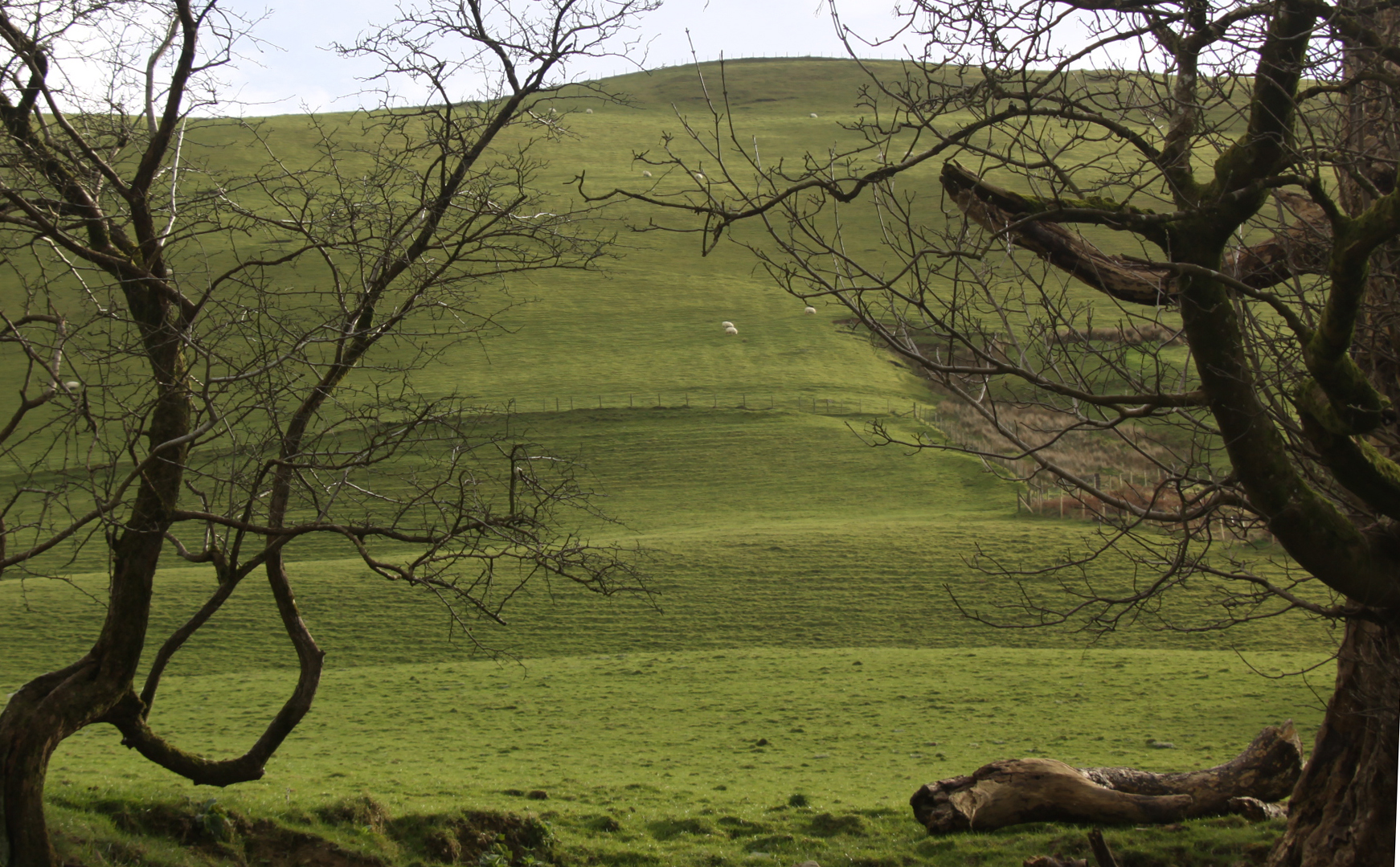
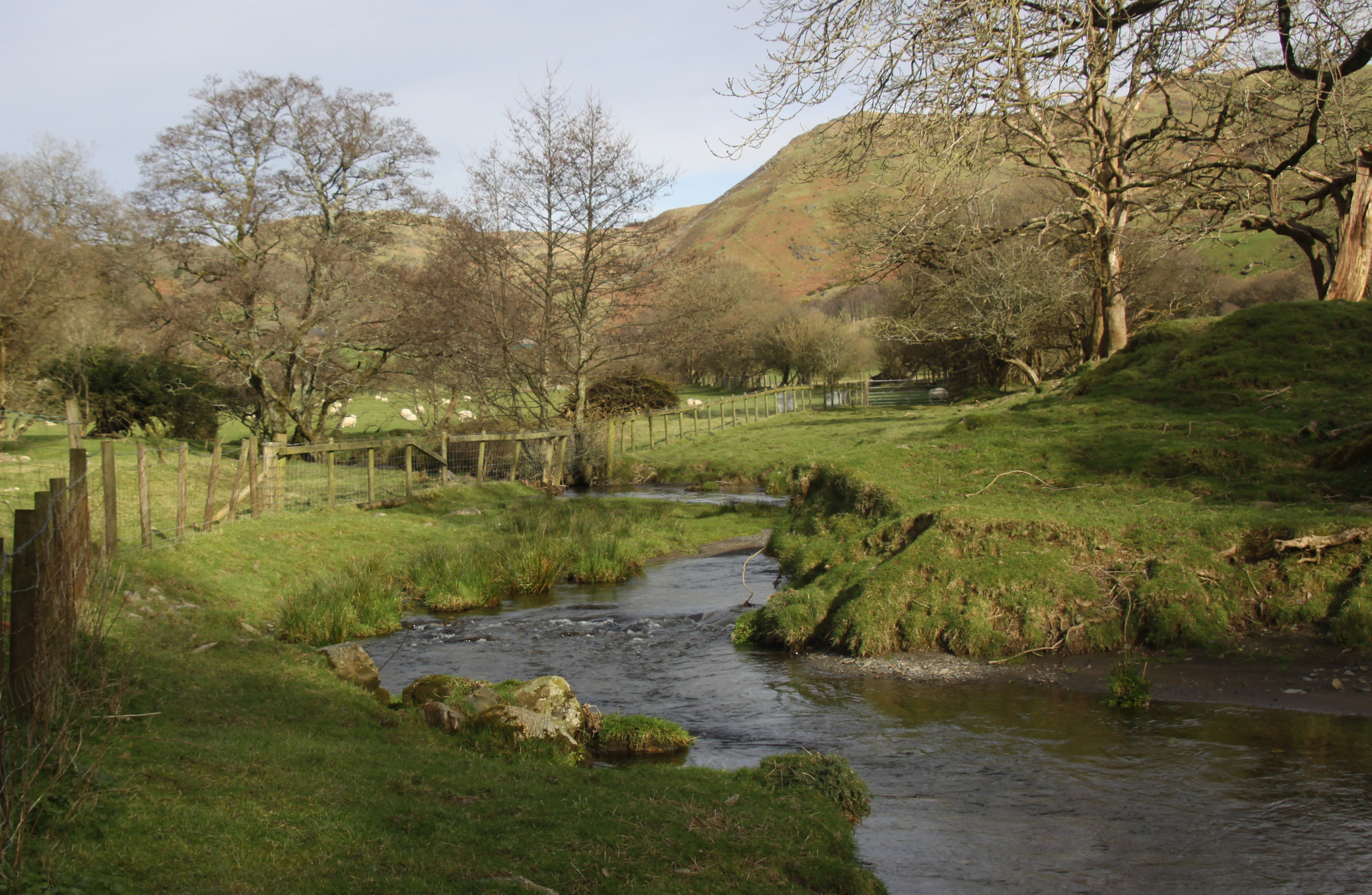
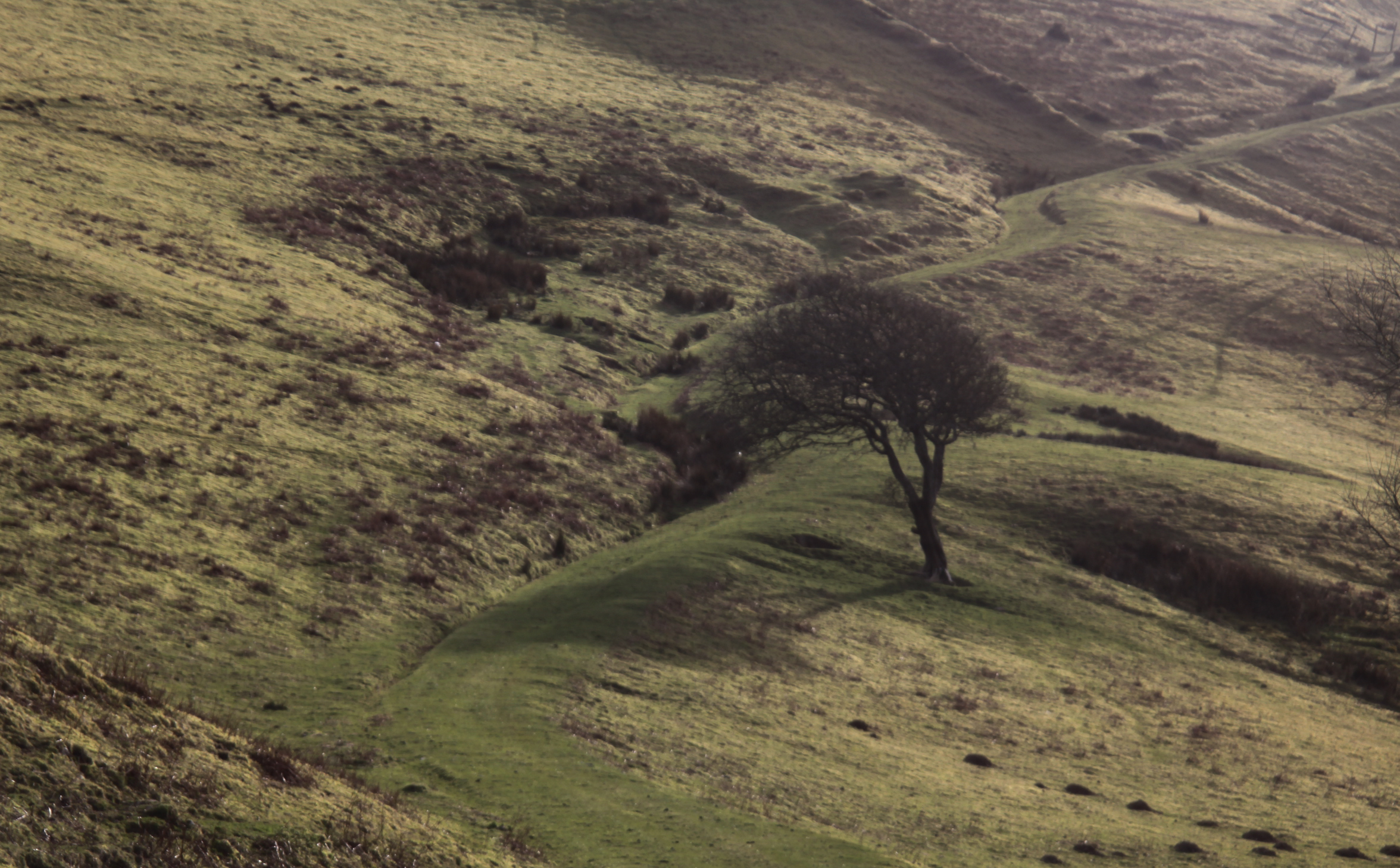
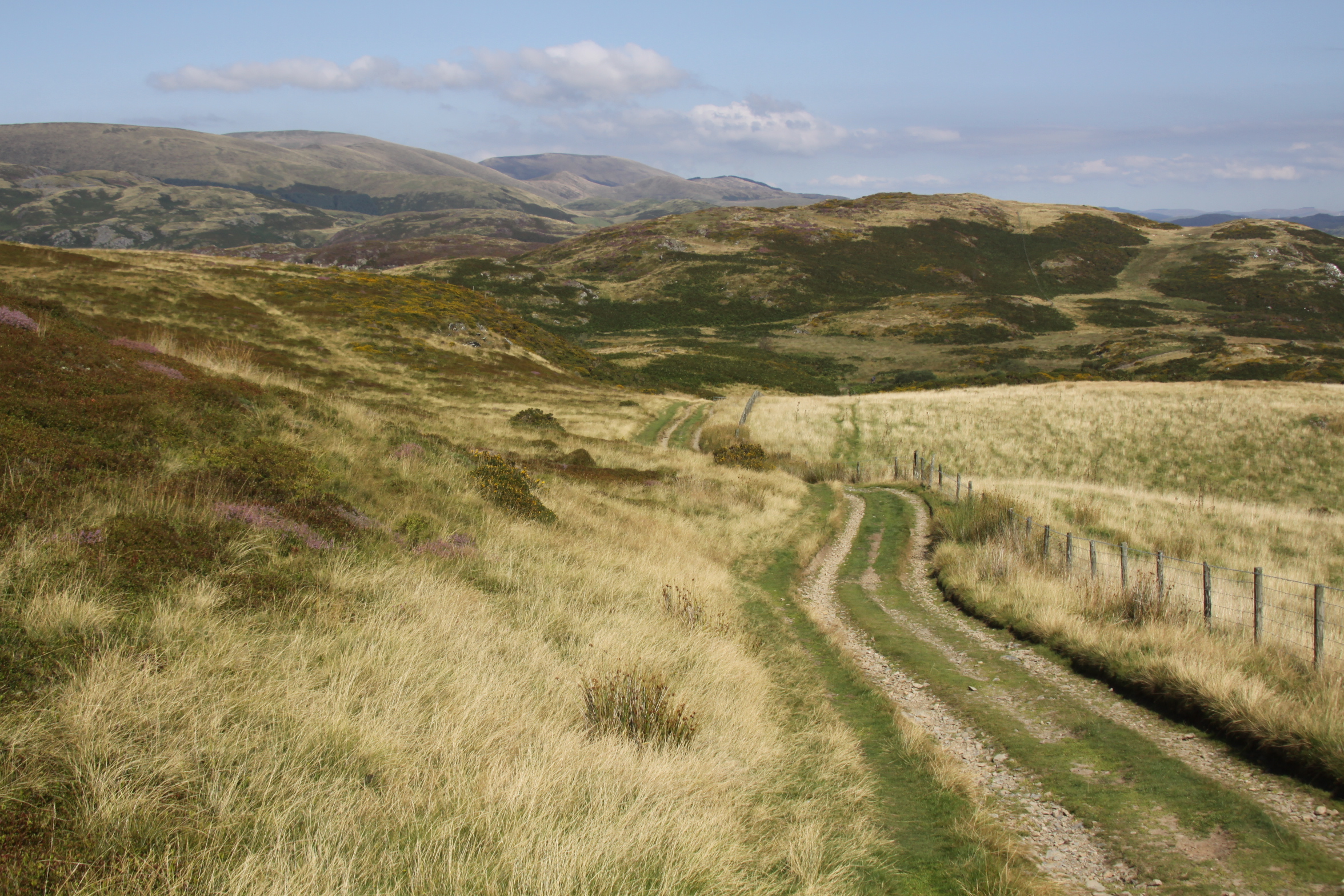
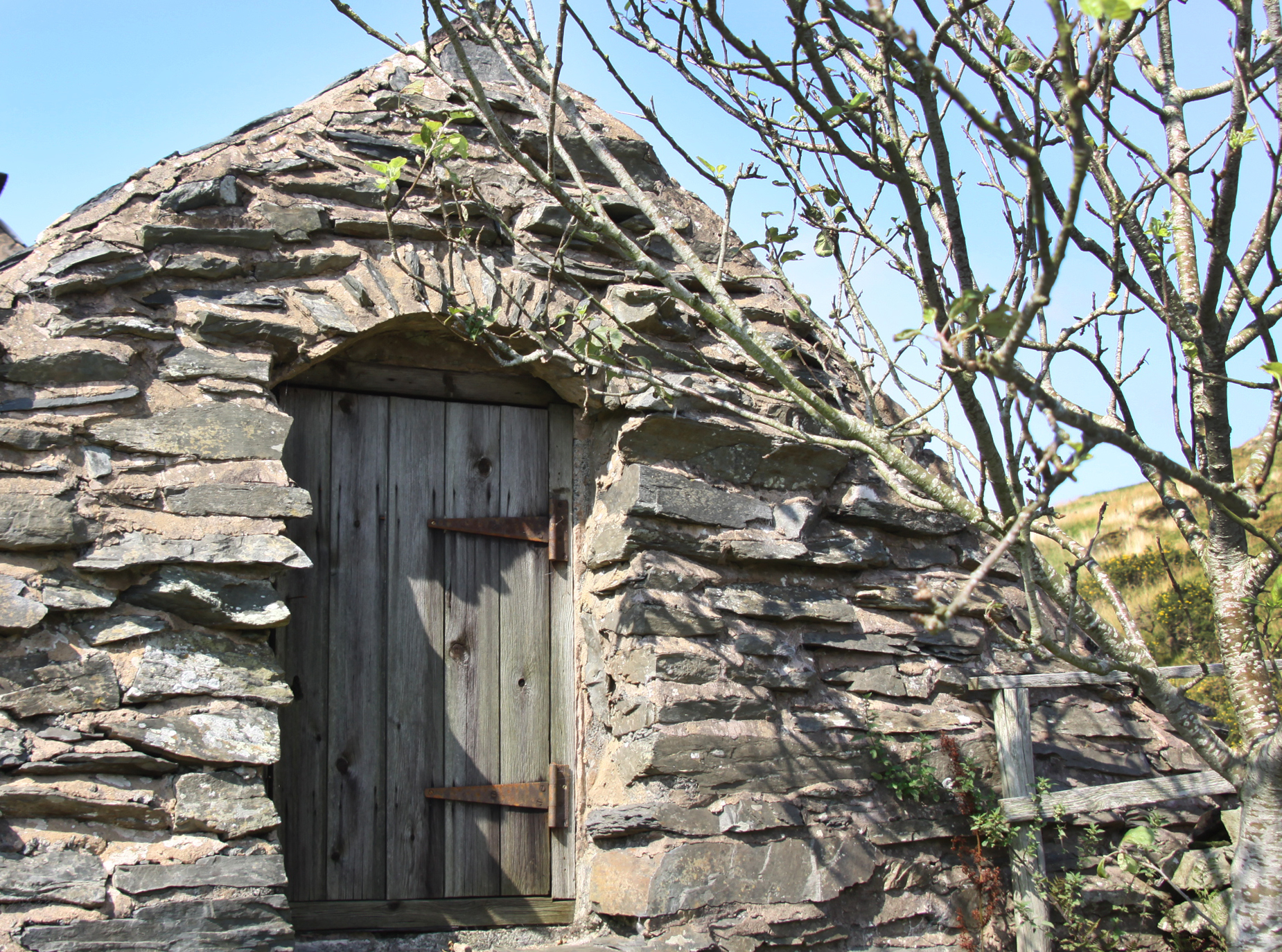
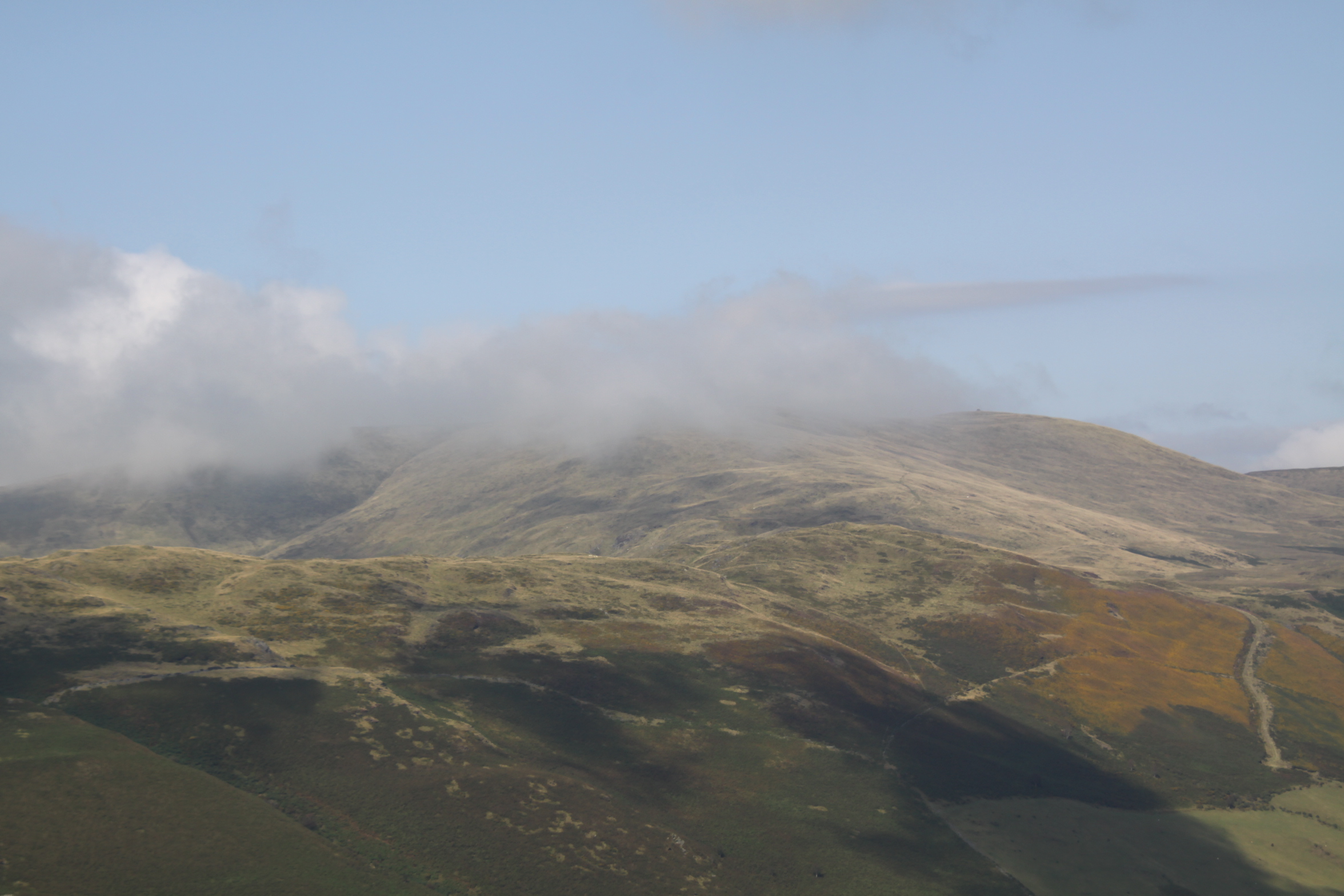
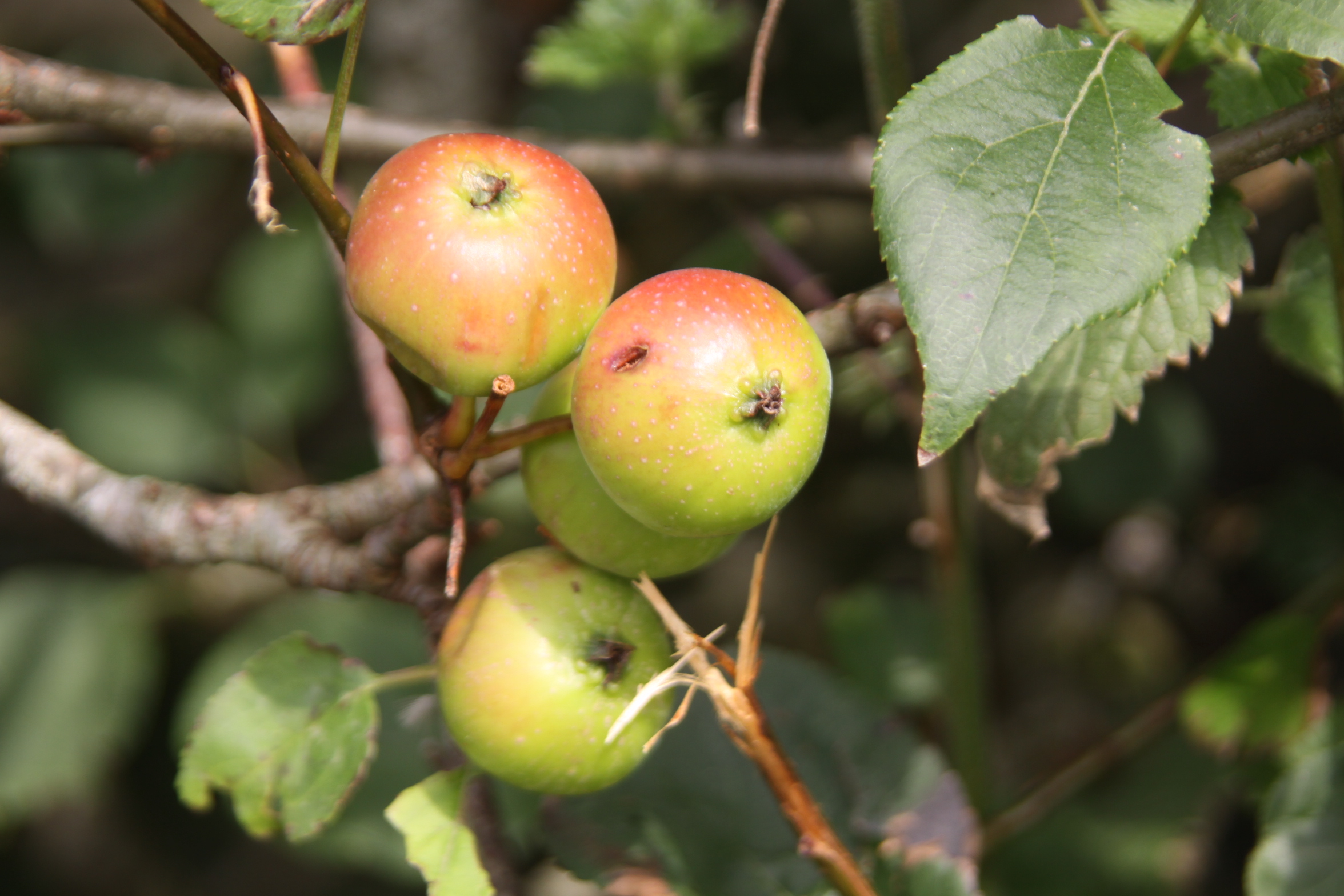
My sincere thanks to Caroline for introducing me to a glorious walk today, new to me, and for the great company.  The light was wonderful, the air pure, the breeze fresh and the scenery, from distant vistas to hedgerows a few steps away, were a delight.  The larks were singing beautifully on the top of the hill, and we witnessed a bird of prey, no more than 15ft away from us, capturing a rabbit or something equally substantial.  The spring lambs were tiny, leggy, ridiculously endearing.  On the entire walk we only saw two other people, a couple who had come up for the day from Shrewsbury.  Here are a few photographs to celebrate a super day, and what a sublimely great feeling it is to feel that winter may be, at long last, in slow albeit intermittent retreat.  Click on any of the photographs to see the full-sized image.

The Panorama Walk on the August Bank Holiday 2019

I have just realized that this post from August 2019, last year, was still in Draft status, so I’ve hit the Publish button.  A lovely day, a superb walk, part of the Wales Coast Path and it seemed a shame to waste it.  Also, given that it’s early March right now, it’s a really rather nice reminder that the summer will eventually return :-).

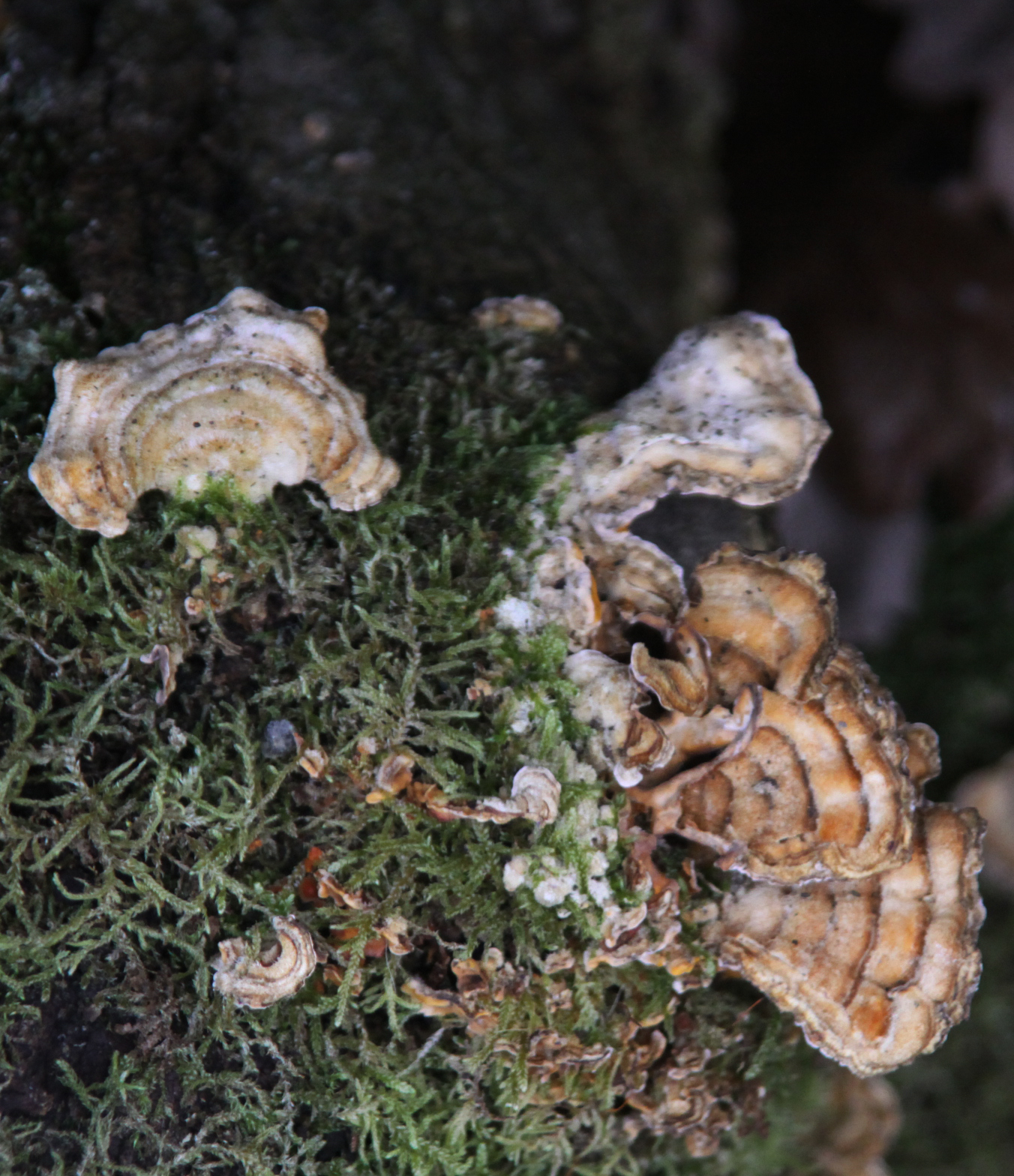
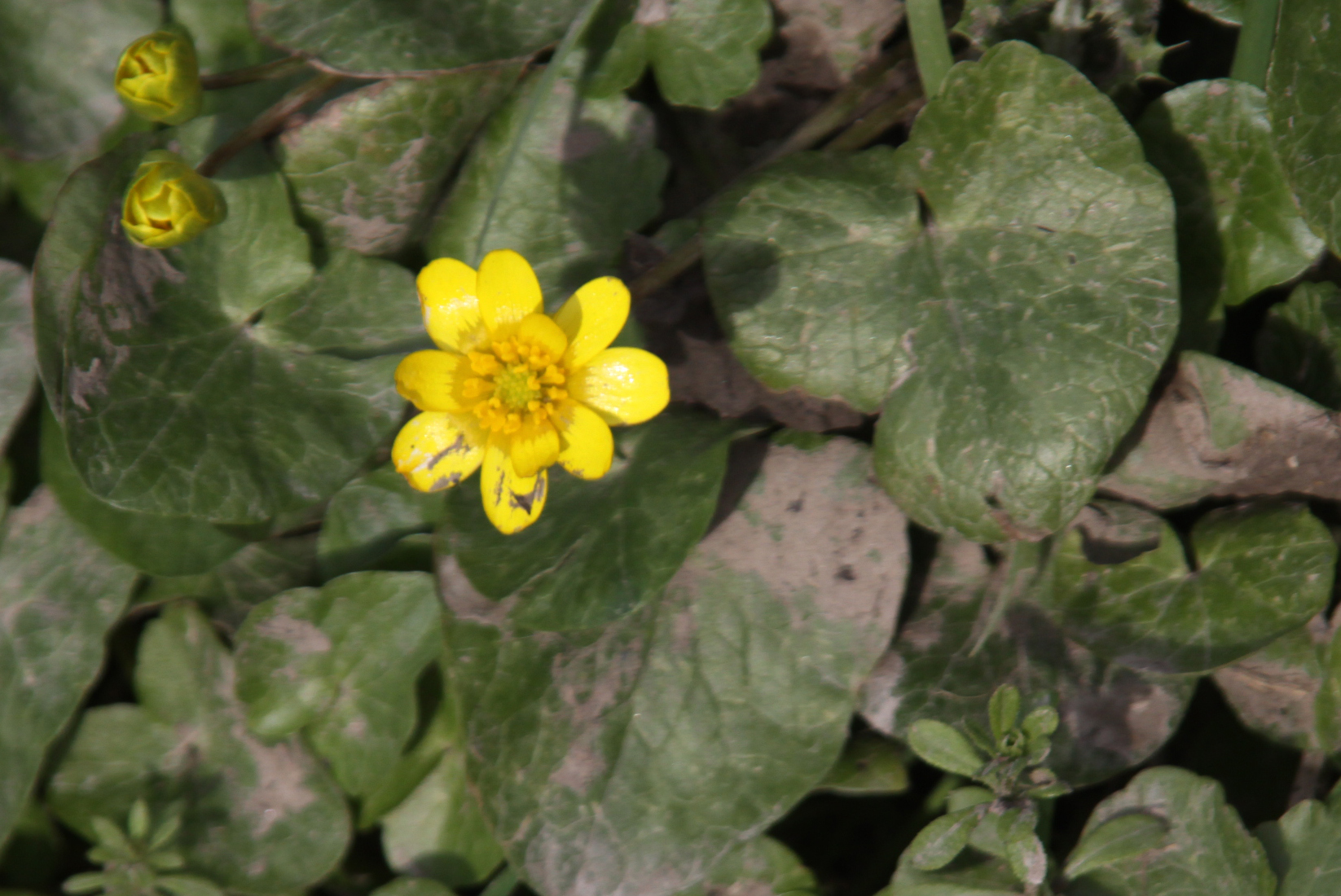
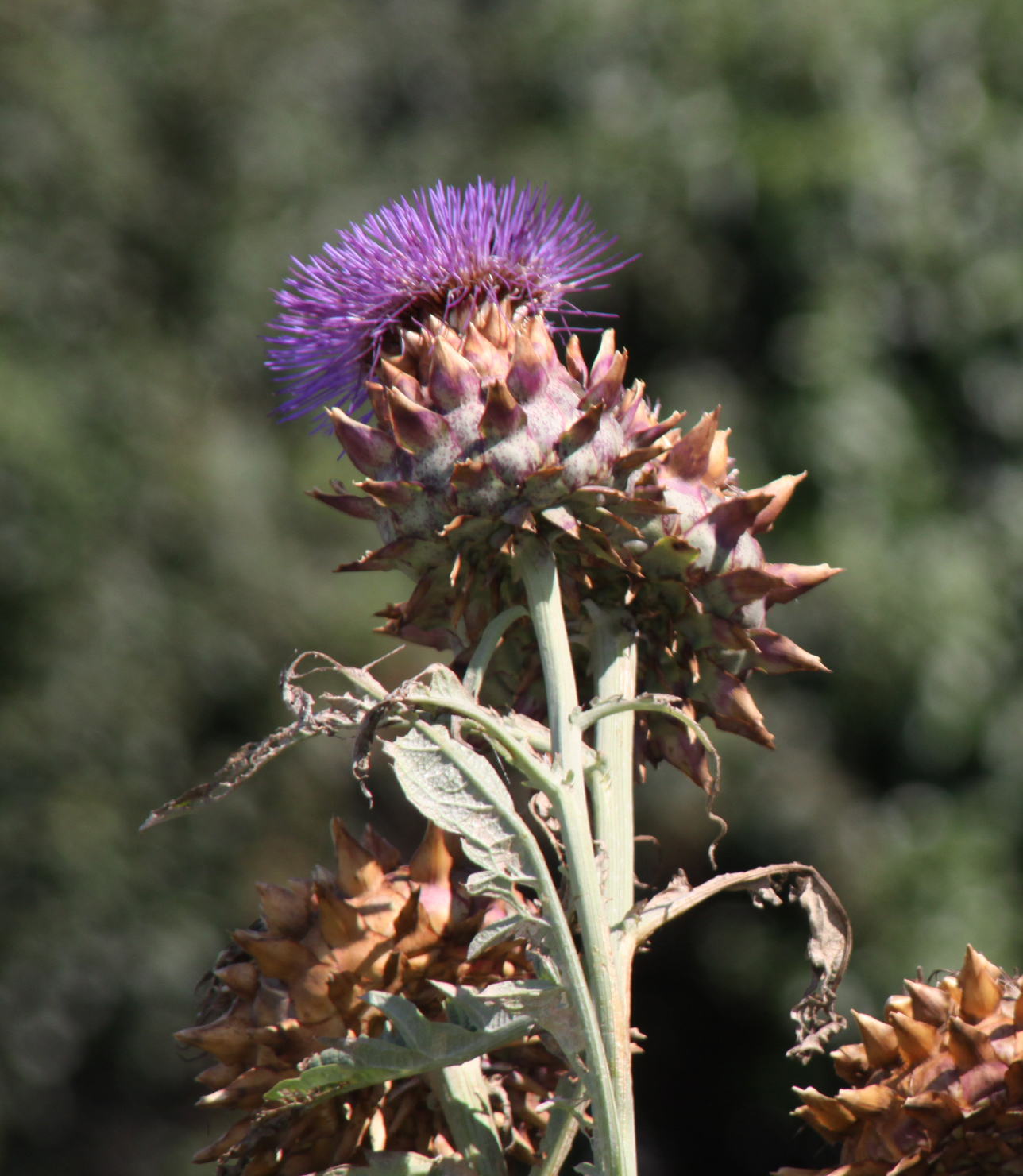
To enjoy the Panorama Walk using Aberdovey as a starting point, turn into Chapel Square, go straight up Copper Hill Street, take the second turn on the right, which takes you into Mynydd Isaf. At the top of the road turn left and follow the road to a junction, and turn right, following the Wales Coast Path signs. From there follow the single track lane all the way. You can walk or drive. The path is clearly marked. You will cross several cattle grids, and if you are driving you will need to stop to open a gate at one point.  If you are driving you will need to keep an eye open for passing places and when you reach the end of the metalled road you can either park and do the walk to Bearded Lake, or turn around and go back. You can also start from a Snowdonia National Park car park in Happy Valley, but it’s a steeper climb.  Look out for wild flowers and insects in the hedges and verges.


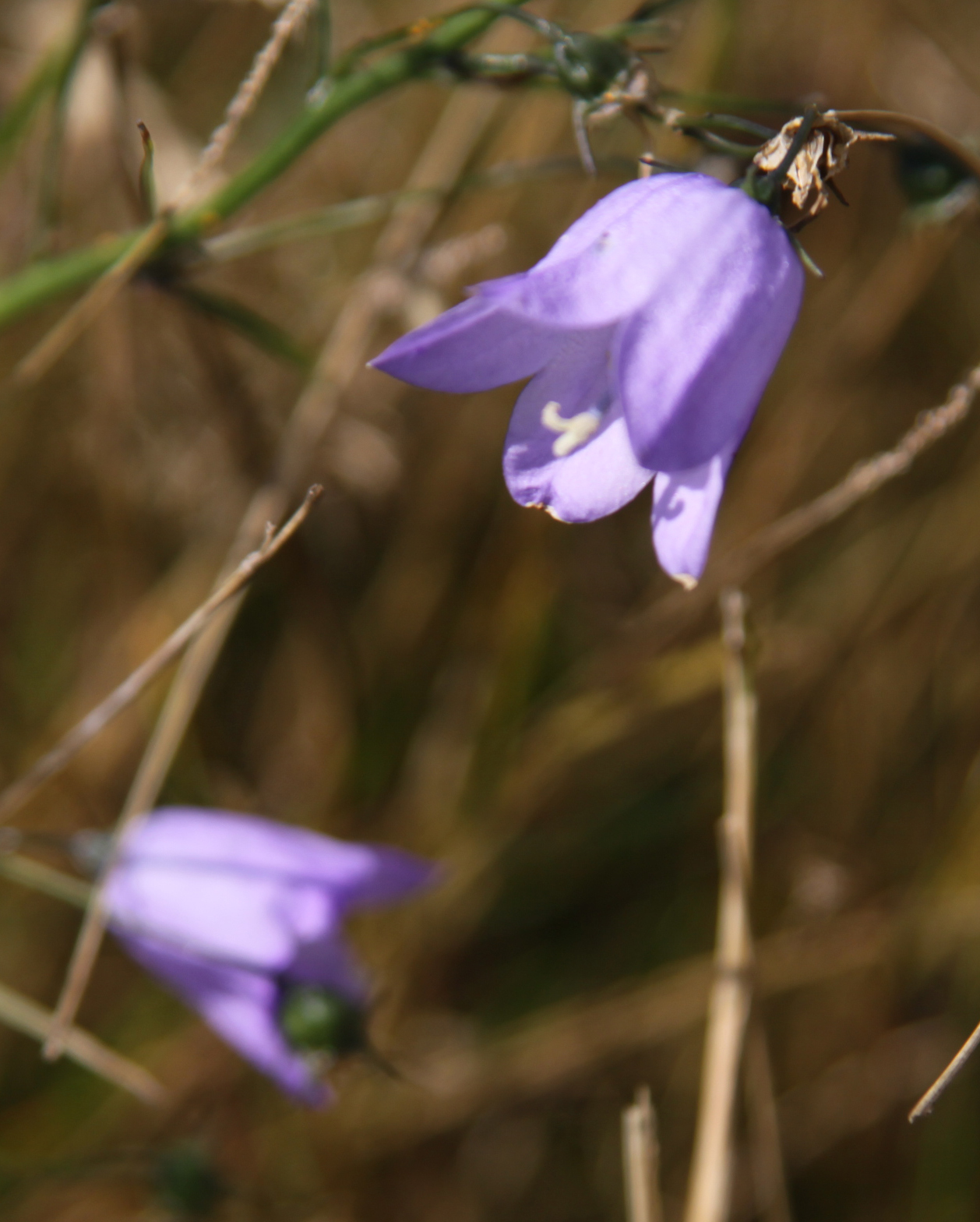
Video:  the solitary harebell at the end is amazing.  It is unimaginable how anything so delicate on such a fragile stem can stand up to the wind buffeting it around like that.  The camcorder work on the rest of it is a bit wobbly.  It was a very breezy day in exposed parts of the walk, and I haven’t got the hang of taking a tripod around with me.  Holding the camcorder level in a strong breeze, particularly when panning, is something of a challenge, but the video combines quite a nice contrast to the still shots above.


Photographs today of Tal y Llyn, Llanuwchllyn and Bala

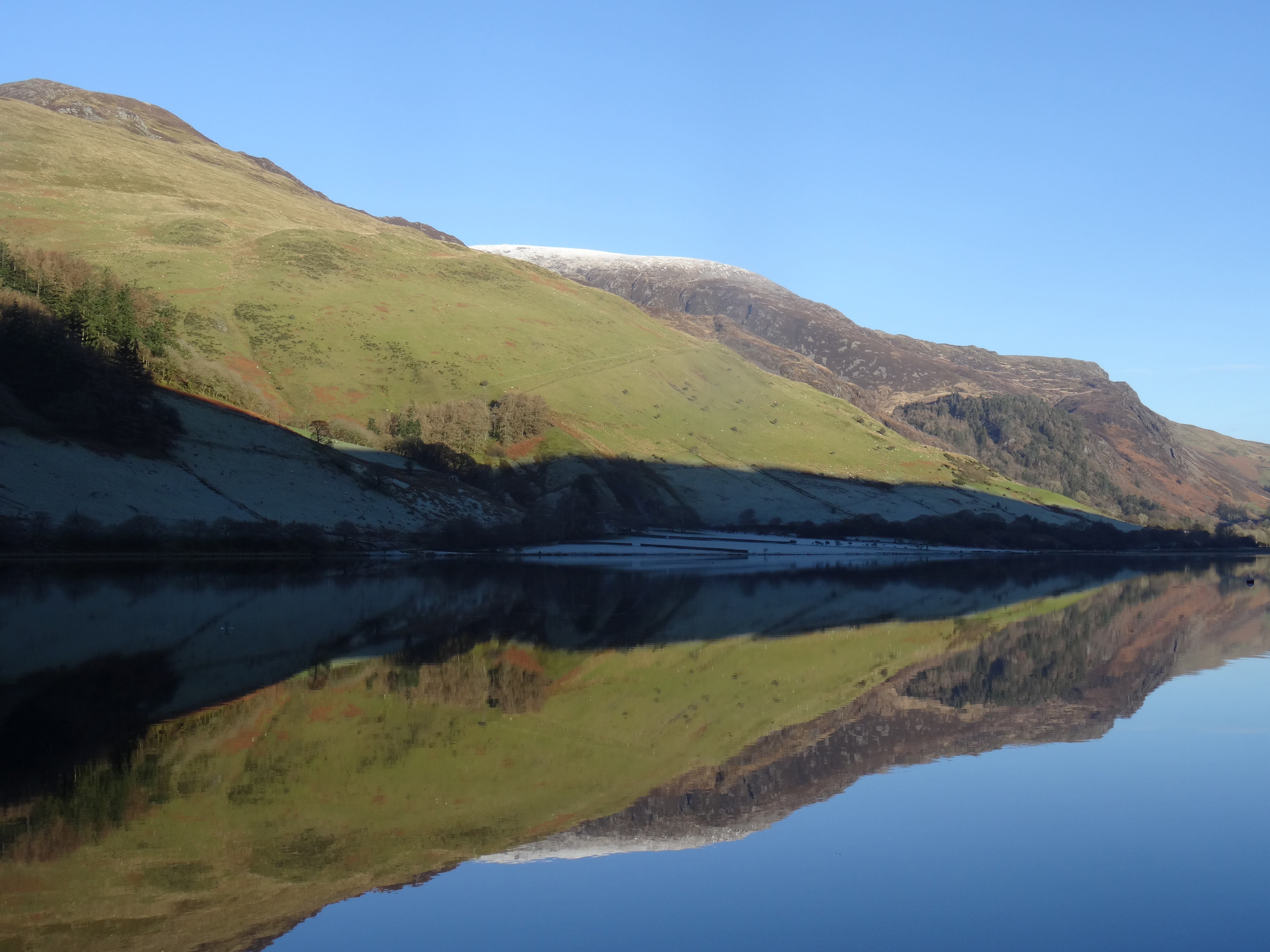
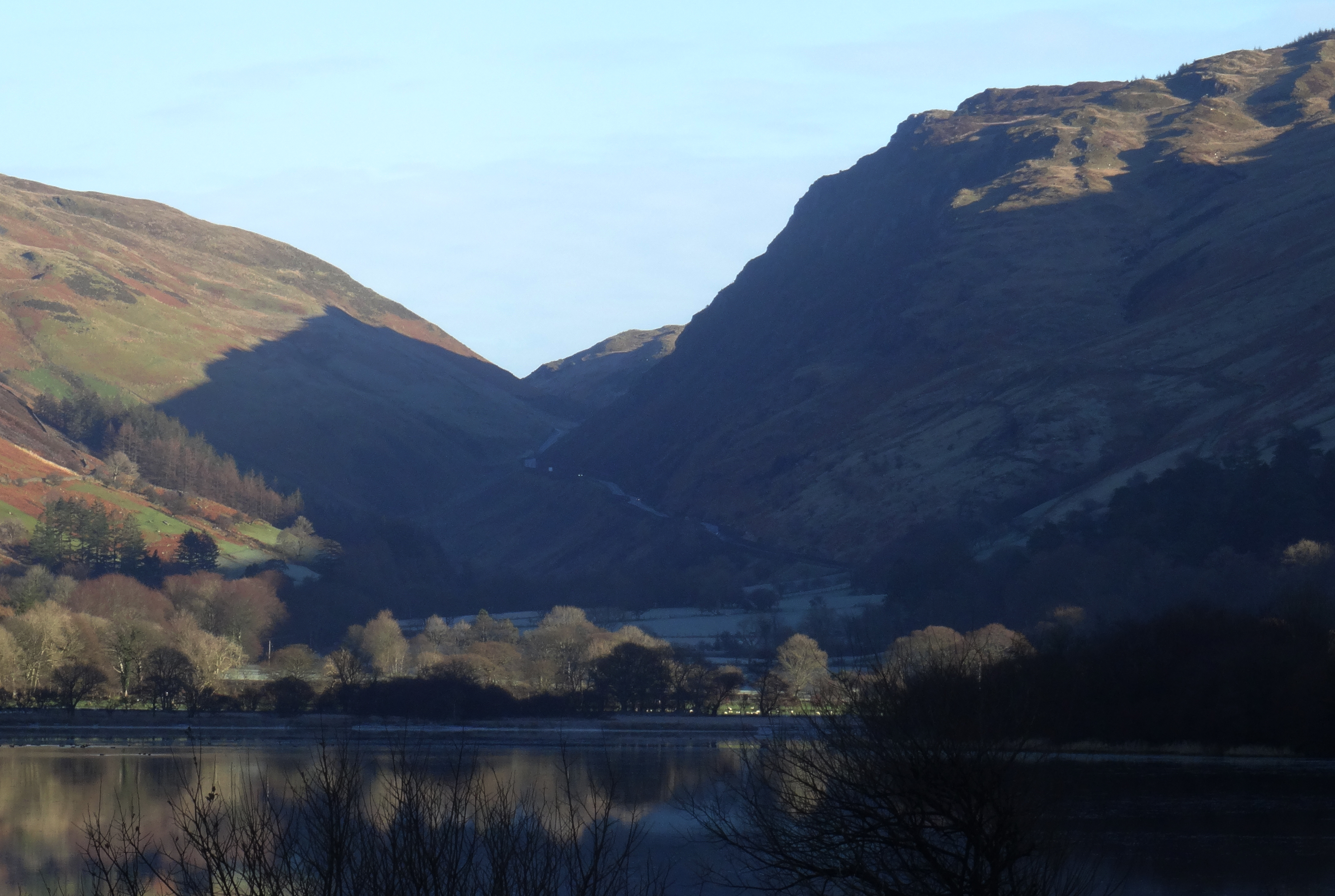
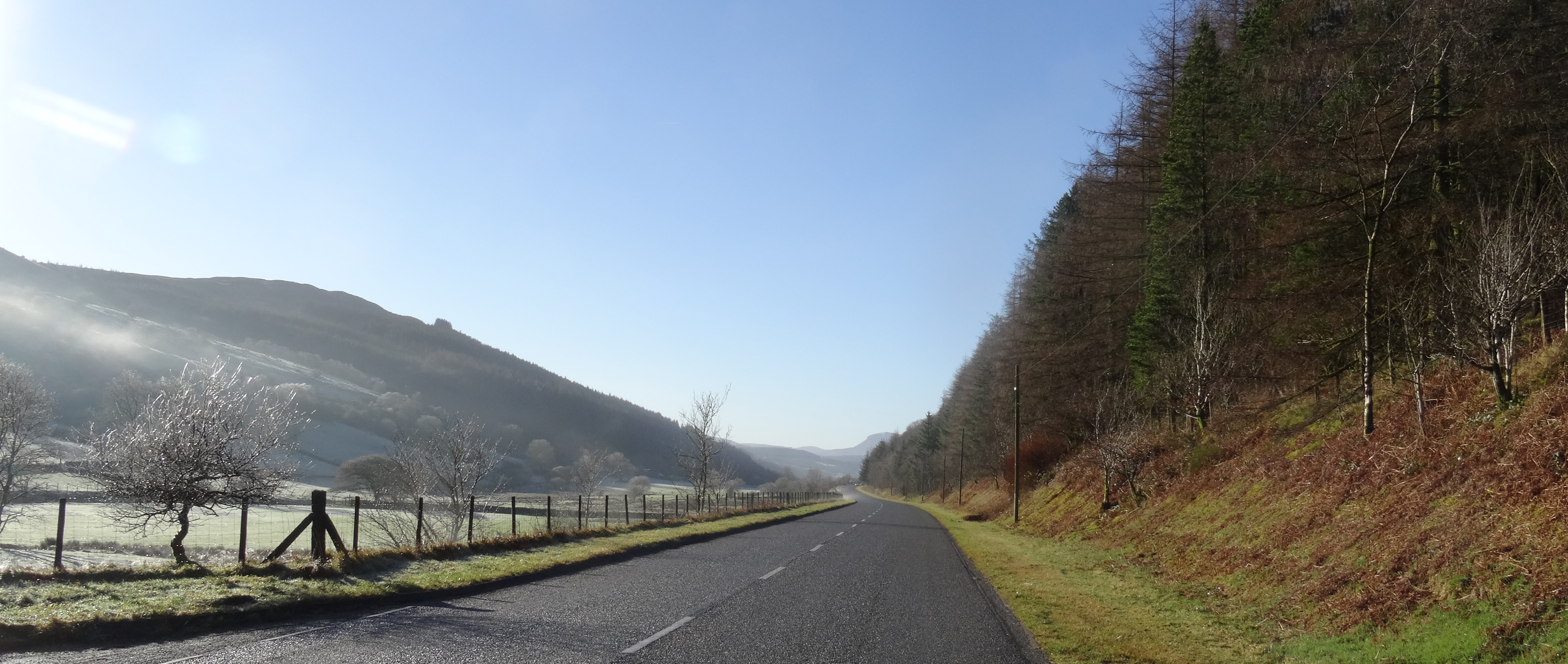
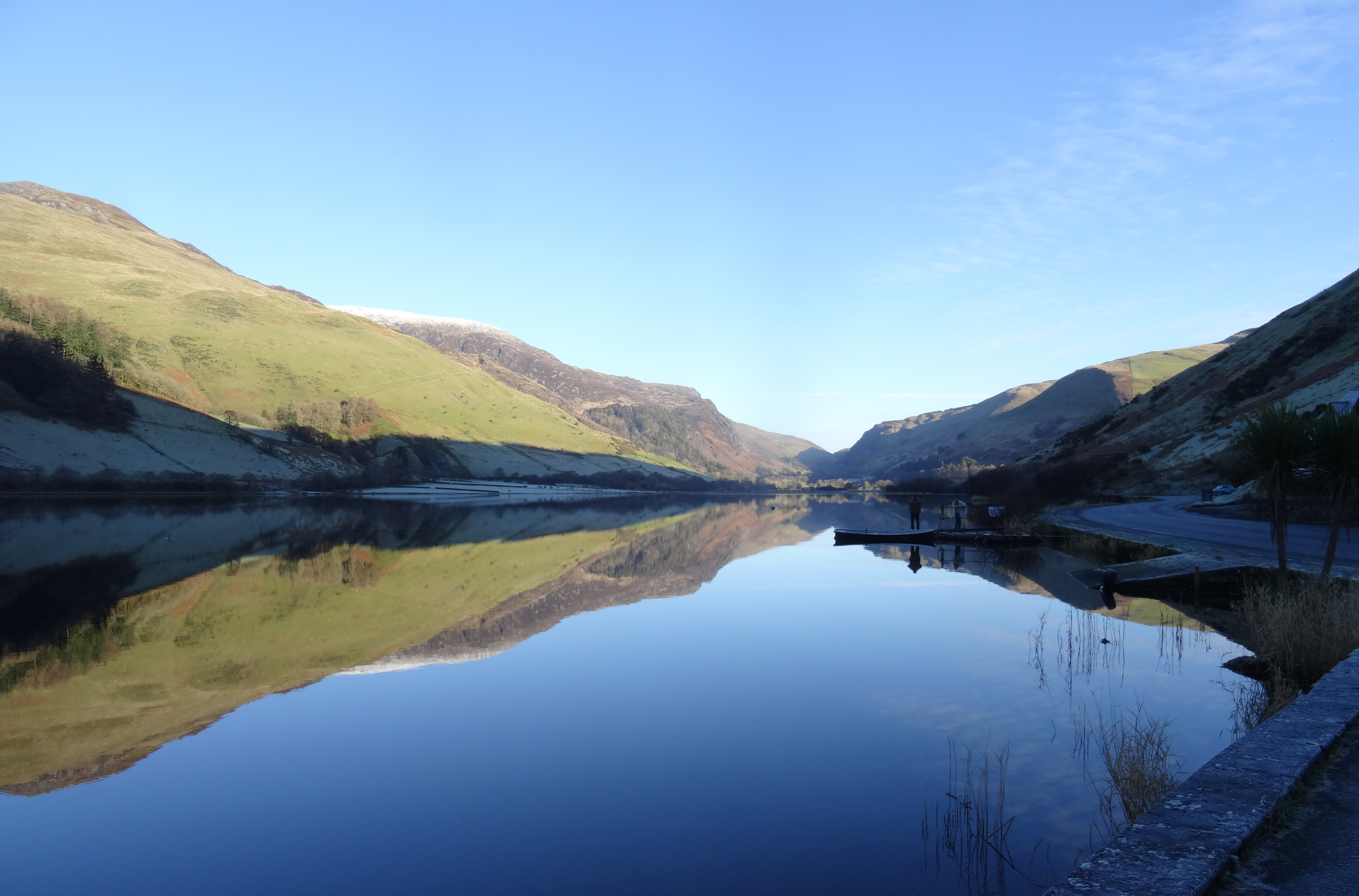
On my travels today I was lucky enough to see some remarkable weather.  Things started out with a sky so blue and a sun so yellow that the colours seemed almost fantasy-land.  The grass was white-topped and scrunched under foot when I left the house, and the air was so cold that it froze my breath.   It was a challenge, after turning right at Bryncrug and heading towards Tal y Llyn, to keep my eyes on the road, because the scenery was so glorious as it emerged from its icy white lace.  Tal y Llyn itself was simply spectacular, mirroring the sun-lit south-facing slopes in a near-perfect reflection.  At this time of year the contrast between sunny colours and black shadows is dramatic.

Tal y Llyn

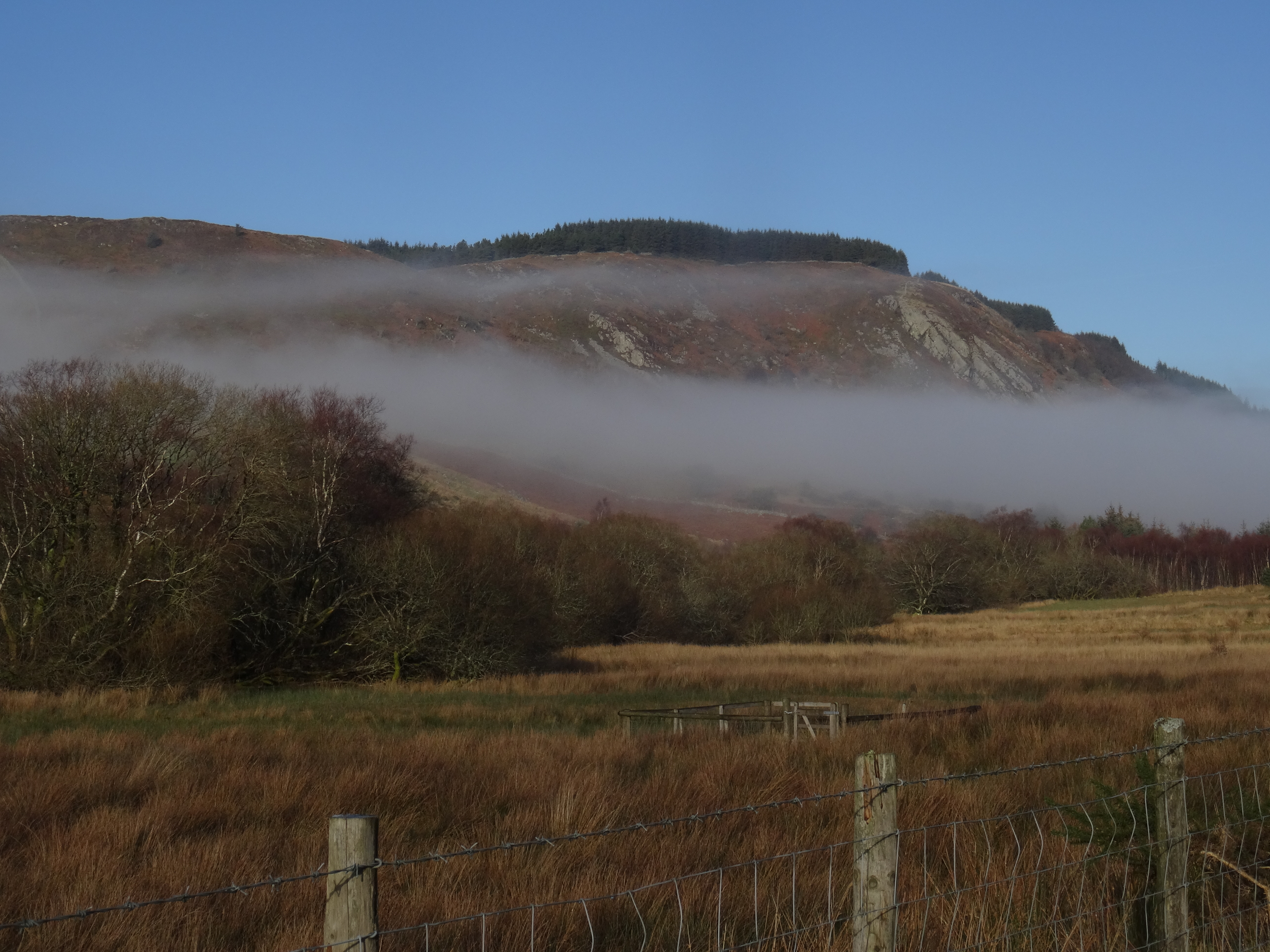
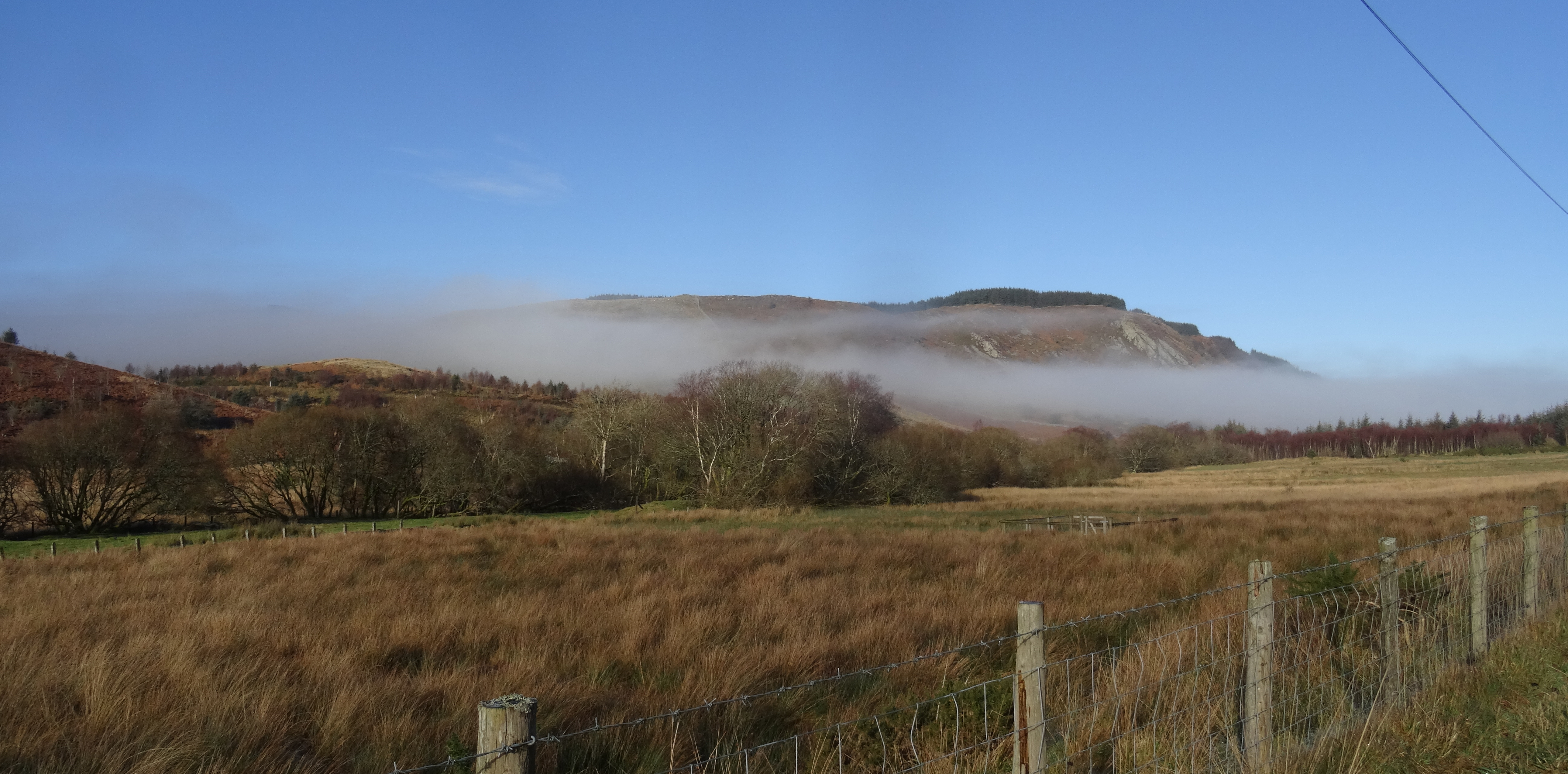
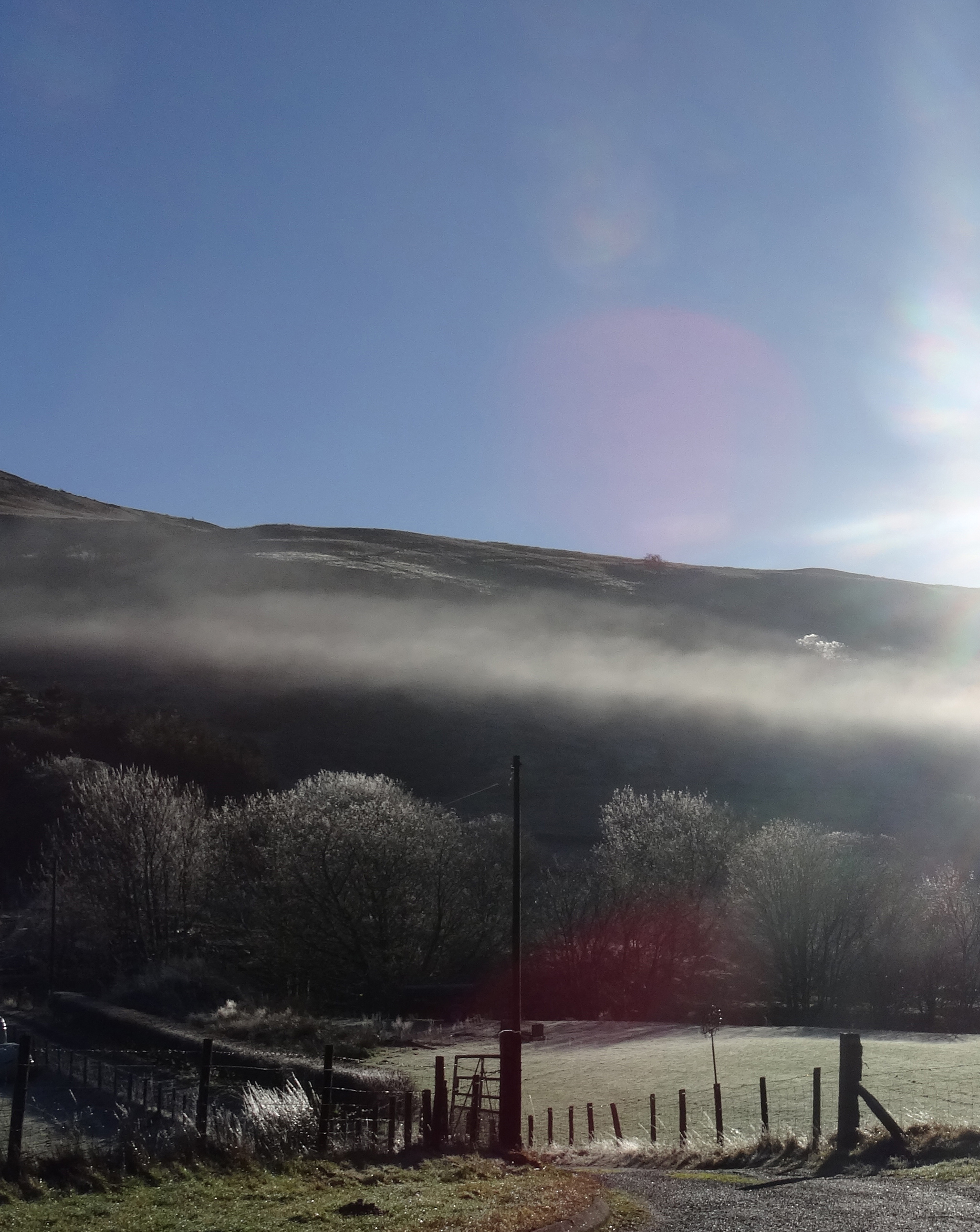
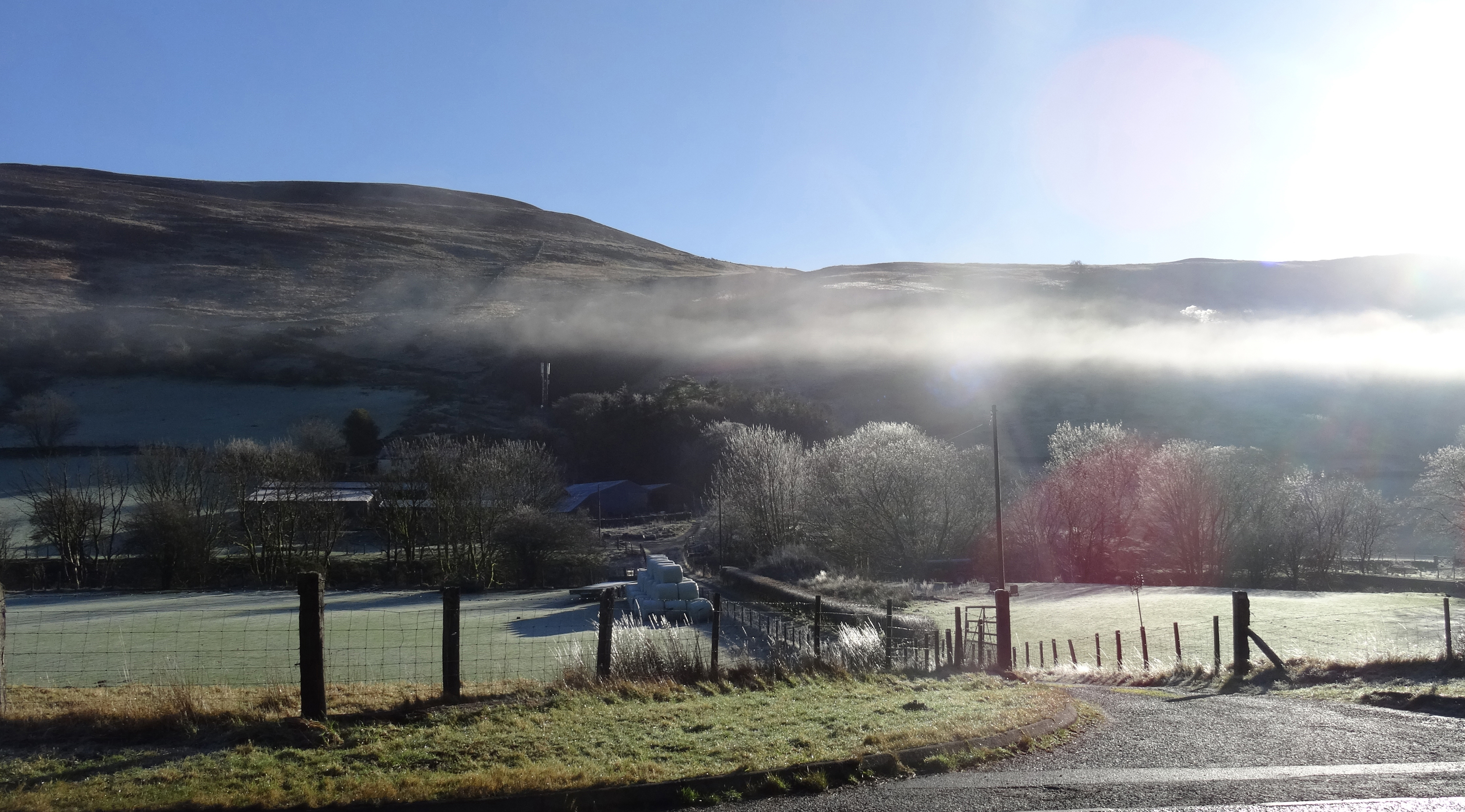
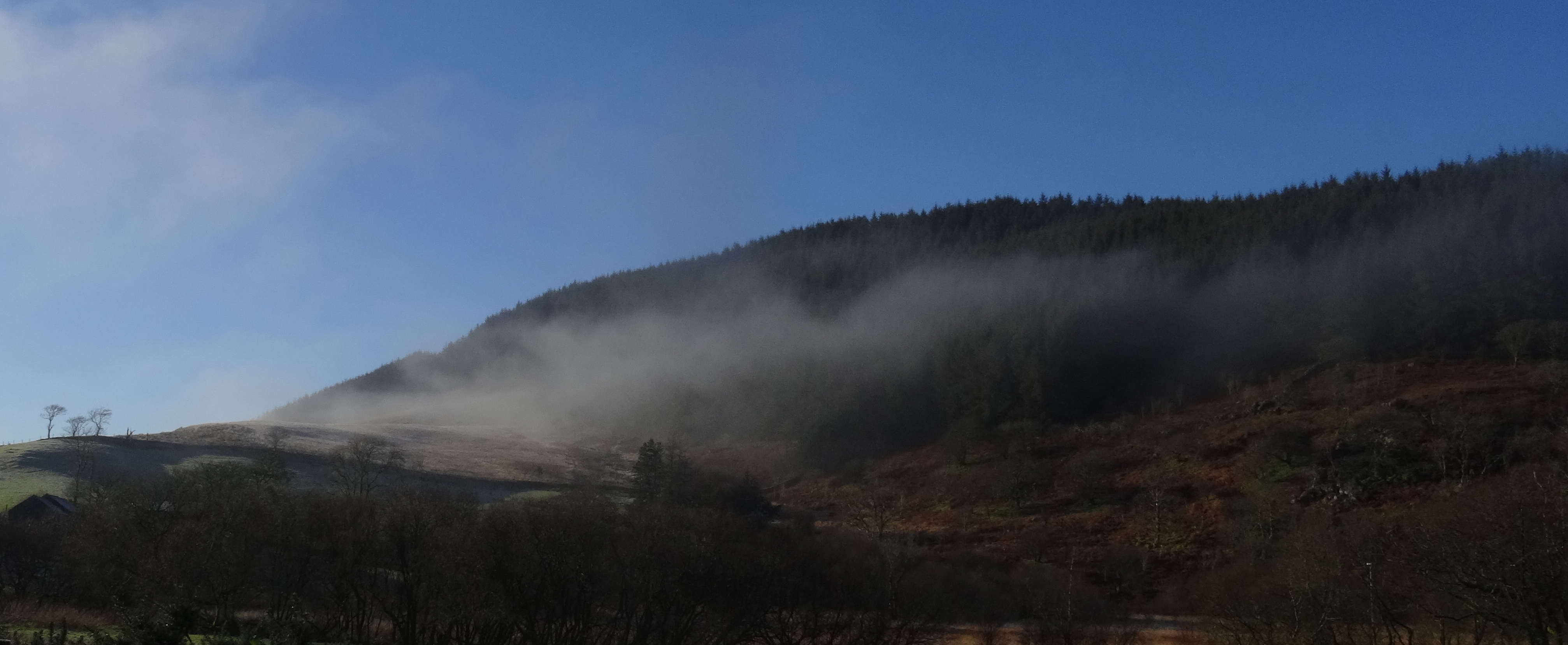
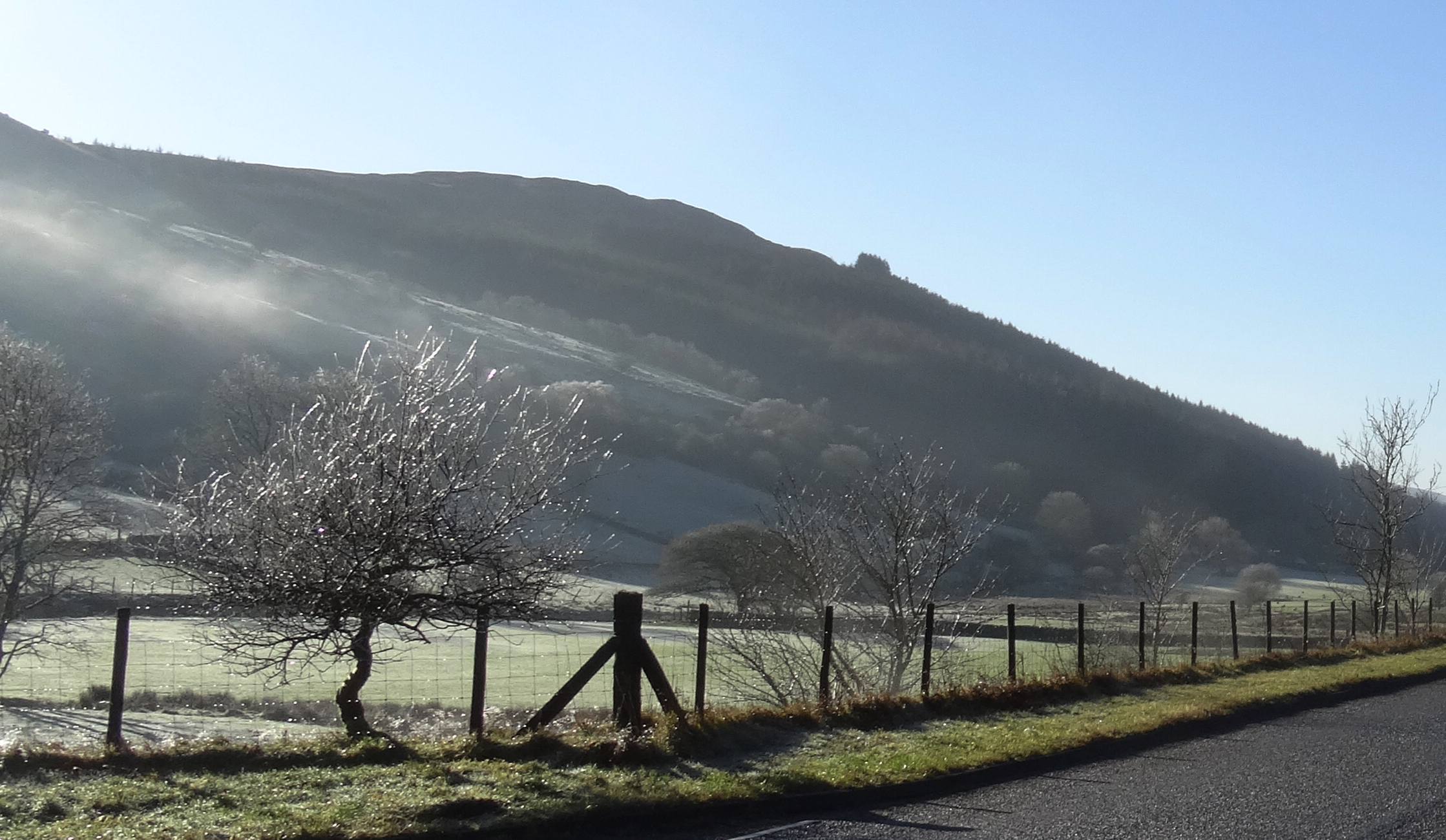
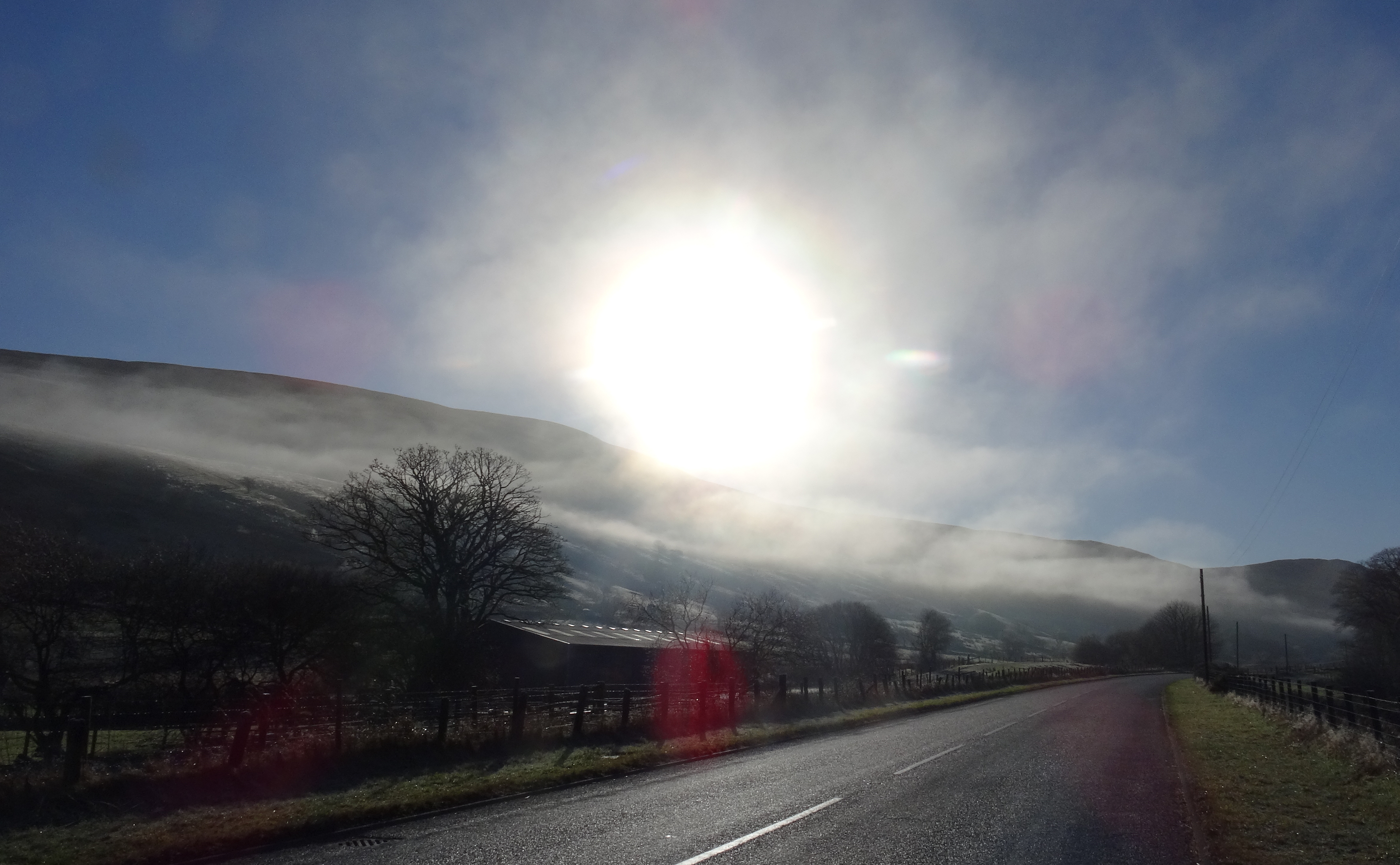
As I approached Llanuwchllyn, which sits at the foot of Llyn Tegid (Lake Bala) and according to the Visit Bala website means “Church at the top of the lake,” there were fascinating horizontal bands of cloud sitting above the ground and beneath the hilltops.  On the south-facing slopes these were against bright hillside colours and blue skies.  On the north-facing slopes they sat above trees and fields still spiked with frost, the sun so bright that the sky seemed silver against the darkness of the hills.  My lovely Canon digital SLR (known for reasons lost in the mists of time as Josephine The Second) turned out to be impossible to get to in a hurry, so I used the little Sony that I keep in my handbag.  It struggled desperately with some of the lighting conditions, but I have posted the photos anyway because they do capture something of the magic.


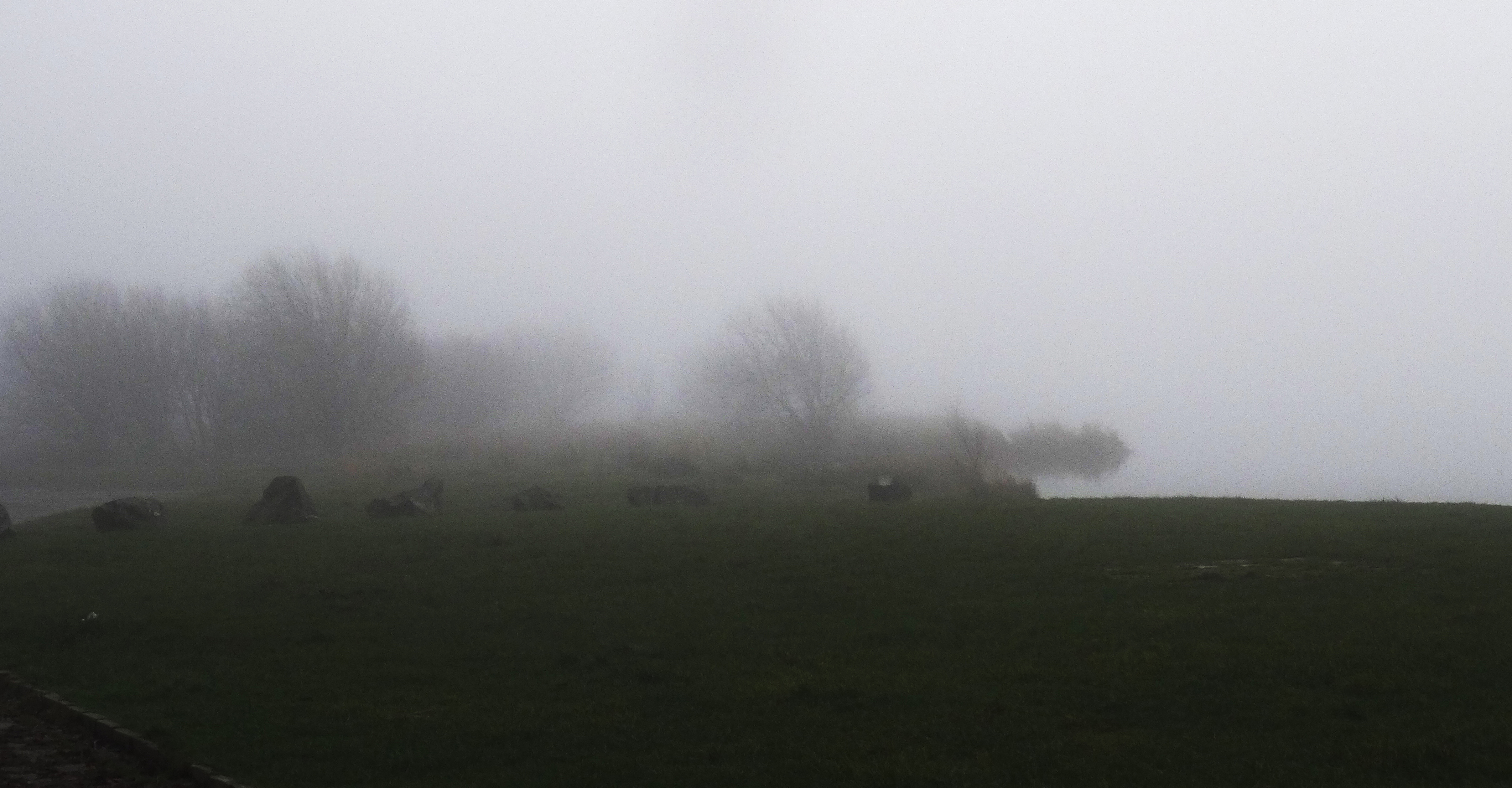
These strands of white mist presaged, to my surprise and dismay, a tediously dreary fog.  Ahead of me a car was just a ghostly shape, and beyond that any other vehicles were a mere suggestion.  The lake was invisible.  I had been expecting to stop and take photographs of another beautiful mirror image, another spectacular vista, but beyond the road that runs along its north bank there was nothing but a dense veil of unvarying, damp, impenetrable murk.  In the picture below, where I pulled the car over, I am standing at the water’s edge.  Normally the lake would stretch out as far as the eye can see, contained within a sloping valley, very beautiful.  Today even the seagull floating only a few feet away from me was seriously blurred and ill-defined.

When I quite suddenly re-emerged into the sunshine, the impact was rather like stepping off an air-conditioned plane onto the top of the mobile steps in a very hot country – a moment of pure sensation and a blissful sense of mild disorientation and very pleasurable surprise.

Vintage Postcards #23: Tal y Llyn Pass

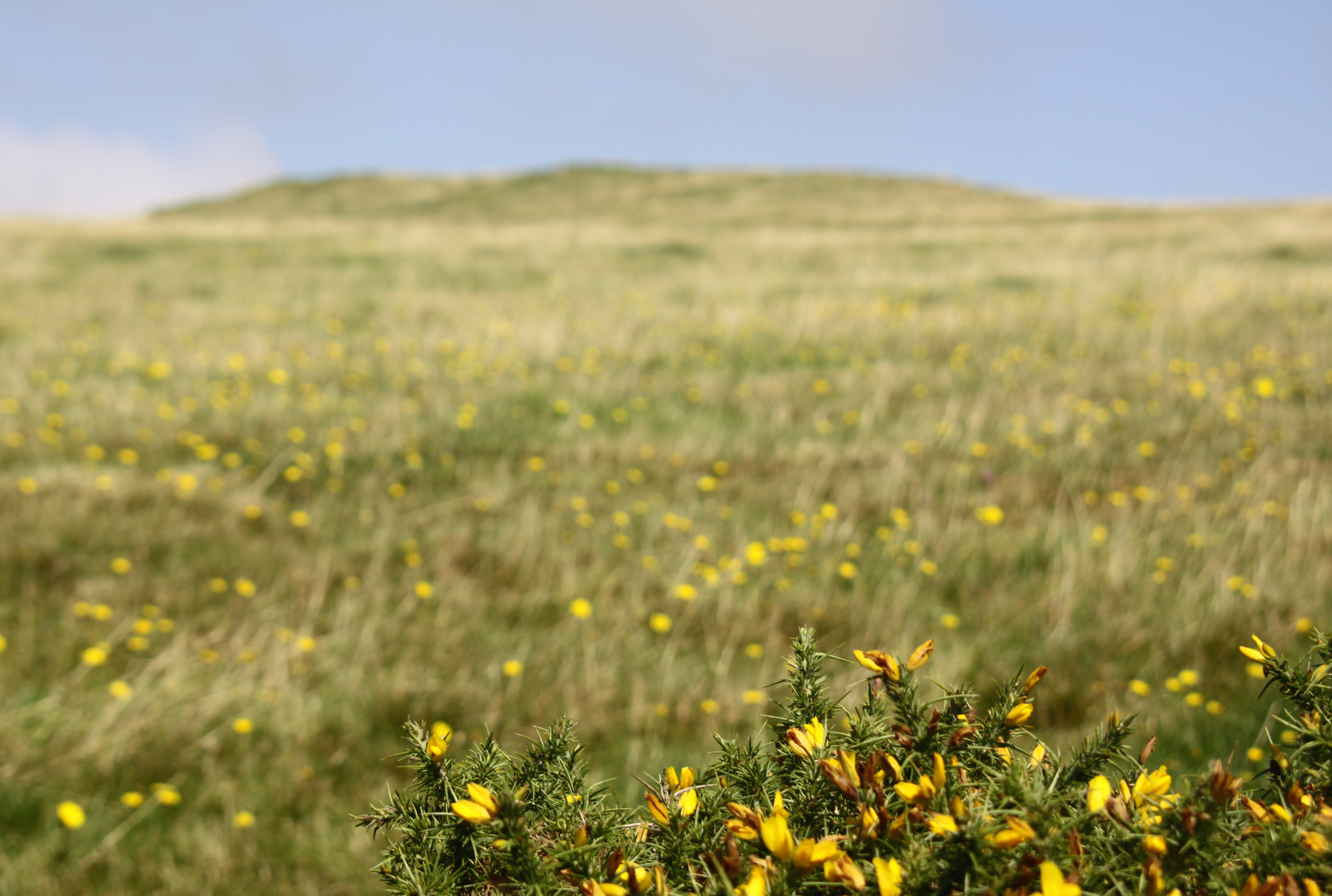
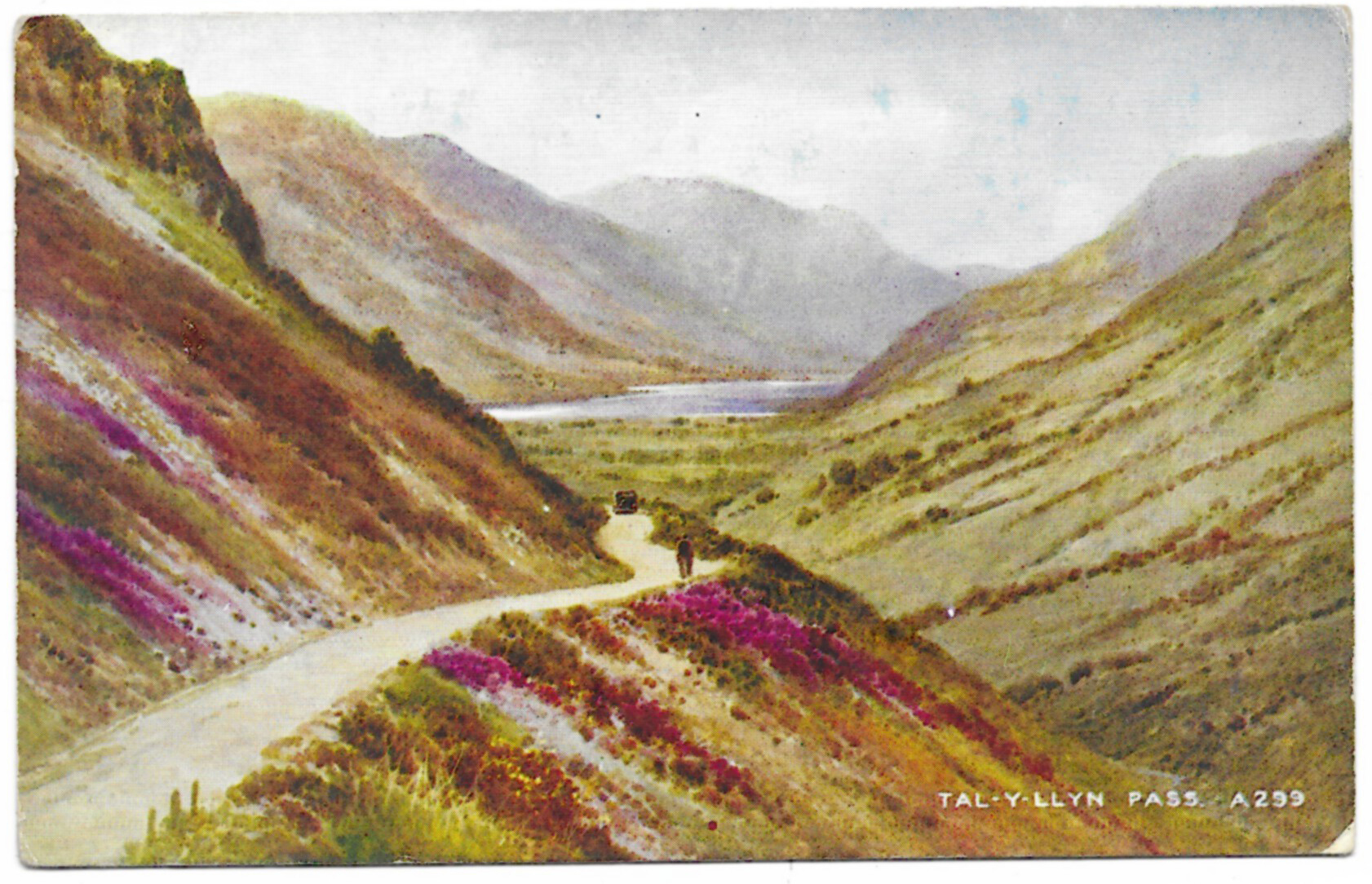
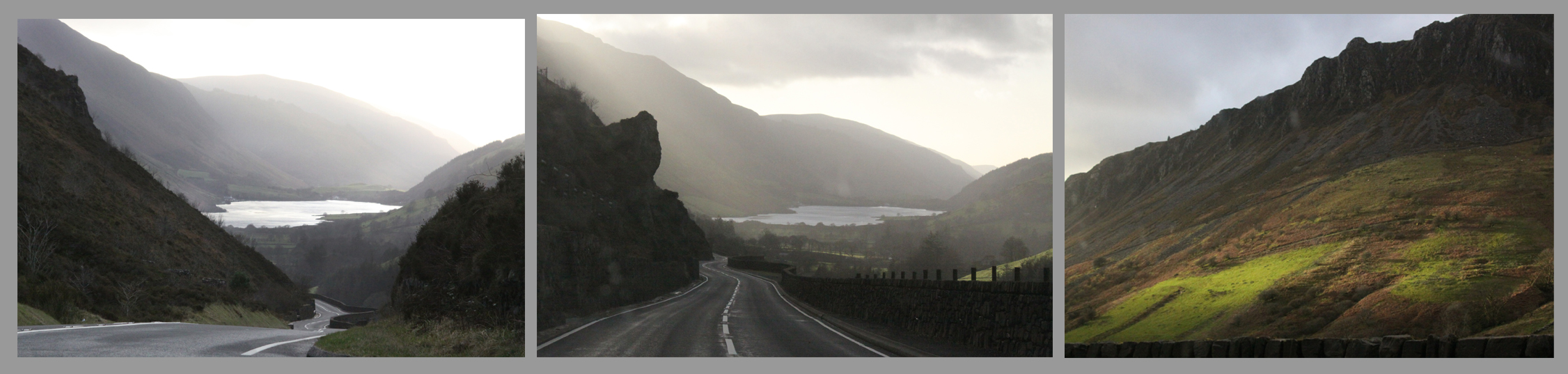
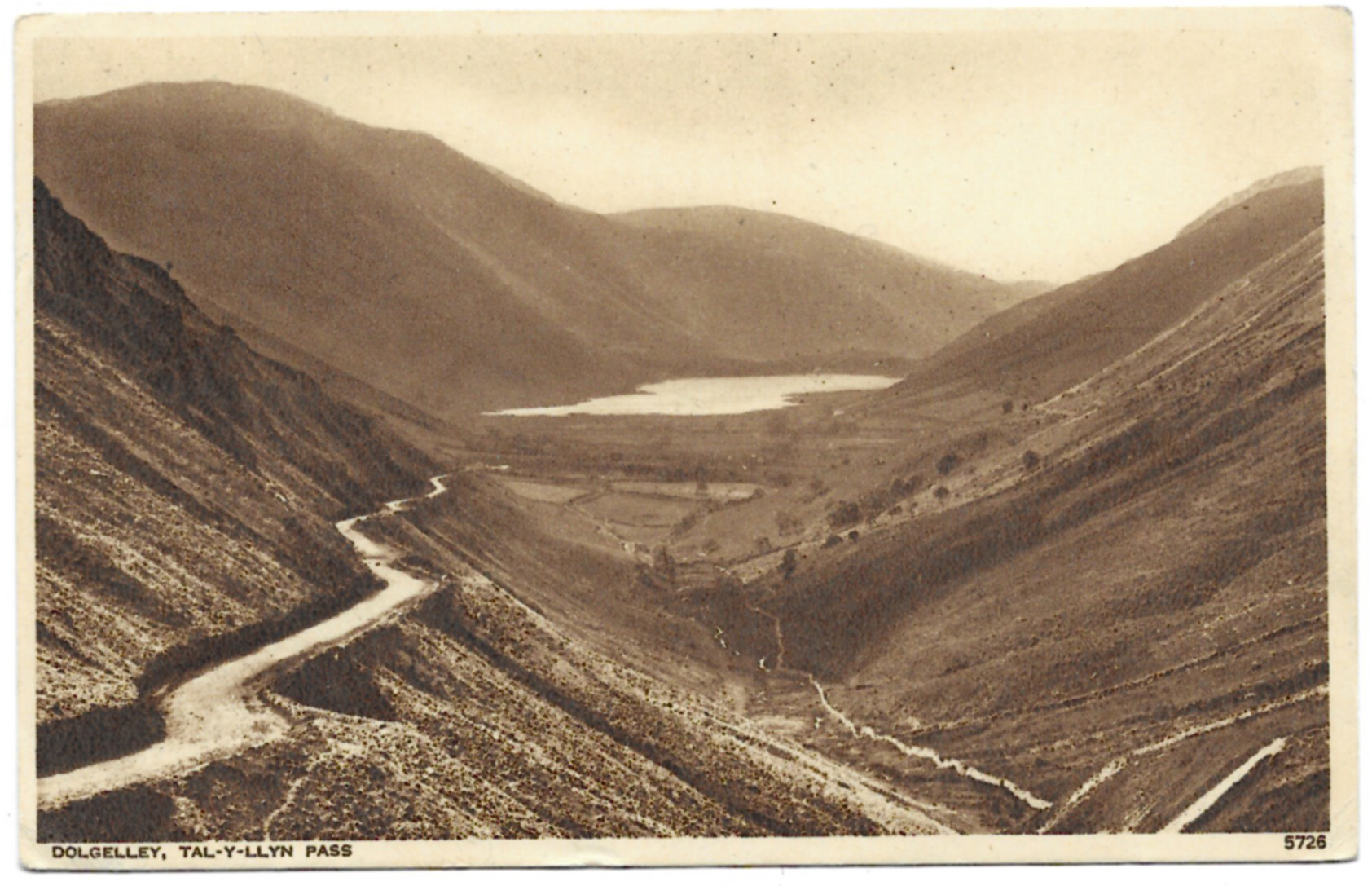
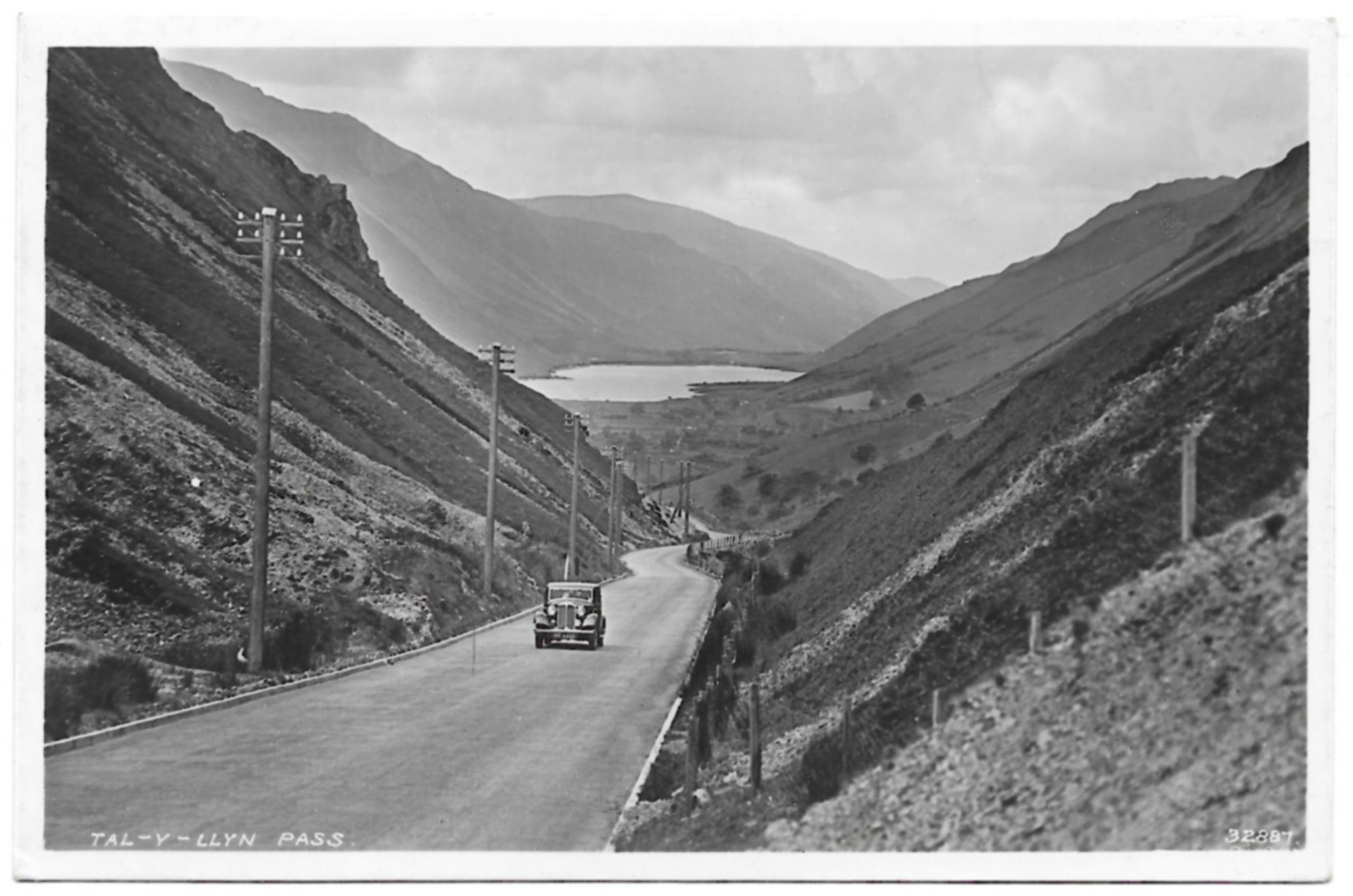
Whenever I return to Aberdovey after visiting Chester this is a defining moment in the drive after the climb from Sarn Helen, when I come over the summit of the A487 and a whole new world unfolds before me.   The Tal y Llyn pass.  The road, carved into the side of a deeply impressive and imposing steep-sided valley, plunges its winding way under Craig y Llam towards an almost sublimely perfect stretch of water at the foot of Cadair Idris.  The slopes change character throughout the year, at their most colourful during heather, gorse and bluebell seasons.  I have seen it looking seraphically innocent and picturesque on sunny blue-skied days, the lake a blissful saphire mirror.  On other days, in wind and torrential rain, snow or hail, everything merges into an undifferentiated vista of muddled shades of  grey and brown, with waterfalls cascading fiercely down the steep slopes, the lake indistinct. I have also driven over that summit when the fog has been so thick that I have only been able to see six feet ahead of me.

In the card to the left, the artist has tried to capture the pass on one of its more socially acceptable days, the colours evoking the valley on a typical cloud-on-blue-sky autumn day, with patches of deeply coloured heather, the lake a moody blue-grey, all very mellow and scenic.  When the heather and broom flower together, purple and yellow, with the heather metamorphosing into bright rust as it goes over, the colour combinations produced could only ever work in nature, and they bring a brightness to the valley that transforms it.  Unused, it is in the Valentine’s “Art Colour” series (number A299) and is from an original watercolour by Brian Gerald.  There’s a lot of information about Valentine’s on the MetroPostcard website, which says that the Art Colour series were produced during the 1940s and 50s using the tricolor technique that was introduced by the company in the early 1900s:  “The basic idea behind tricolor printing is to reproduce a full color image by printing with only three primary colors. This can be used to reproduce illustrations, but the primary goal was to create photo-based images in natural color. While this remained the ultimate goal it did not stop printers in the first half of the 20th century from utilizing the method in various ways that produced very unnatural looking pictures” (MetroPostcard.com).

I took the photographs above on 3rd January 2020, silvery in sun and cloud, on my way back to Aberdovey from Chester, a singularly beautiful trip.

In the second photograph, the road and lake form a dramatic  silver slash across the dark landscape, a sensational image.  I suspect from the bright surface of the lake that it was actually a sunny day, but the darkness of the hillsides evoke the valley on one of its angrier autumn or winter moods.  It was posted from Aberystwyth in August 1953 to an address in Warwickshire.  The writer of the card asks the recipient to bake her a loaf for her return.  It’s the first postcard in this blog series that was produced by Photochrom Co. Ltd., “Publishers to the World,” in Tunbridge Wells, number 5726.  According to the MetroPostcard website, Photochrom originally produced Christmas cards before becoming a major publisher and printer of tourist albums, guide books, and postcards in black and white, monochrome, and colour.

The third card, unused, is a delight less for the view than for the lovely car that drives straight up the middle of the road.  Not that driving up the middle of the road is an uncommon sight in mid Wales, but here it carries much less risk than today!  This is the only postcard that I have produced by Jones Corner Shop in Machynlleth, in their “Maglona” series.  I assume that the series refers to the dubious identification of the name Maglona with the Roman fortlet Cefn Caer at Pennal, near Machynlleth.  All of the photographs in the series were of local views.

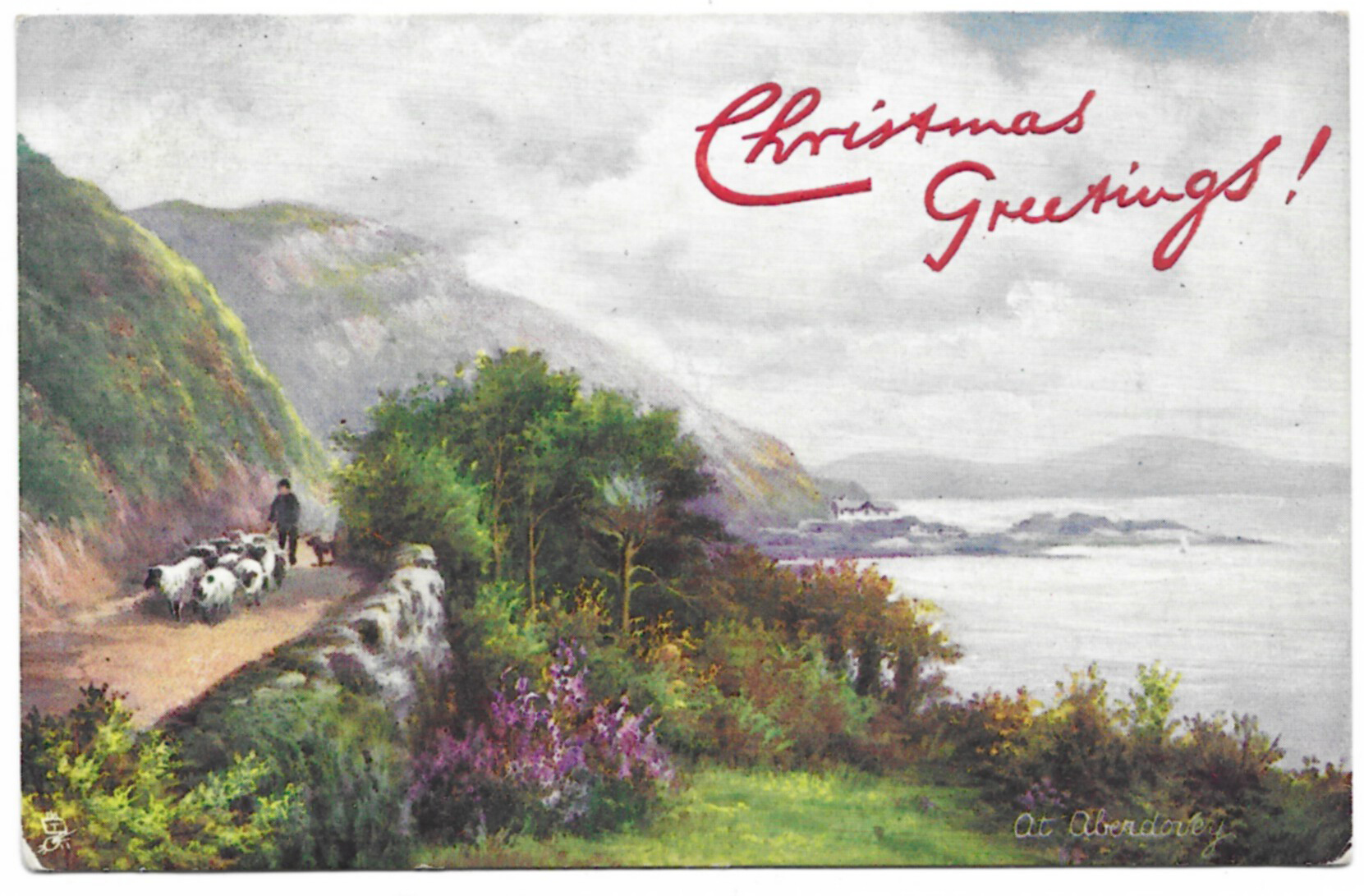
Aberdovey Vintage Postcard #18: Christmas Greetings!


This is the colourized version of the second vintage postcard that I posted, showing sheep being driven down the Machynlleth-Aberdovey road towards Aberdovey village. The sepia one was dated  to 1903 but according to the Tuck’s database, the colour version was issued later, appearing in the 1908/1909 and 1911/1912 Tuck’s Postcard Catalogue.  All the information about the scene, together with some details about what Aberdovey was like at that time, information about Frederick William Hayes, the artist who painted it, and Raphael Tuck and Sons, the company that produced it, are on that post.

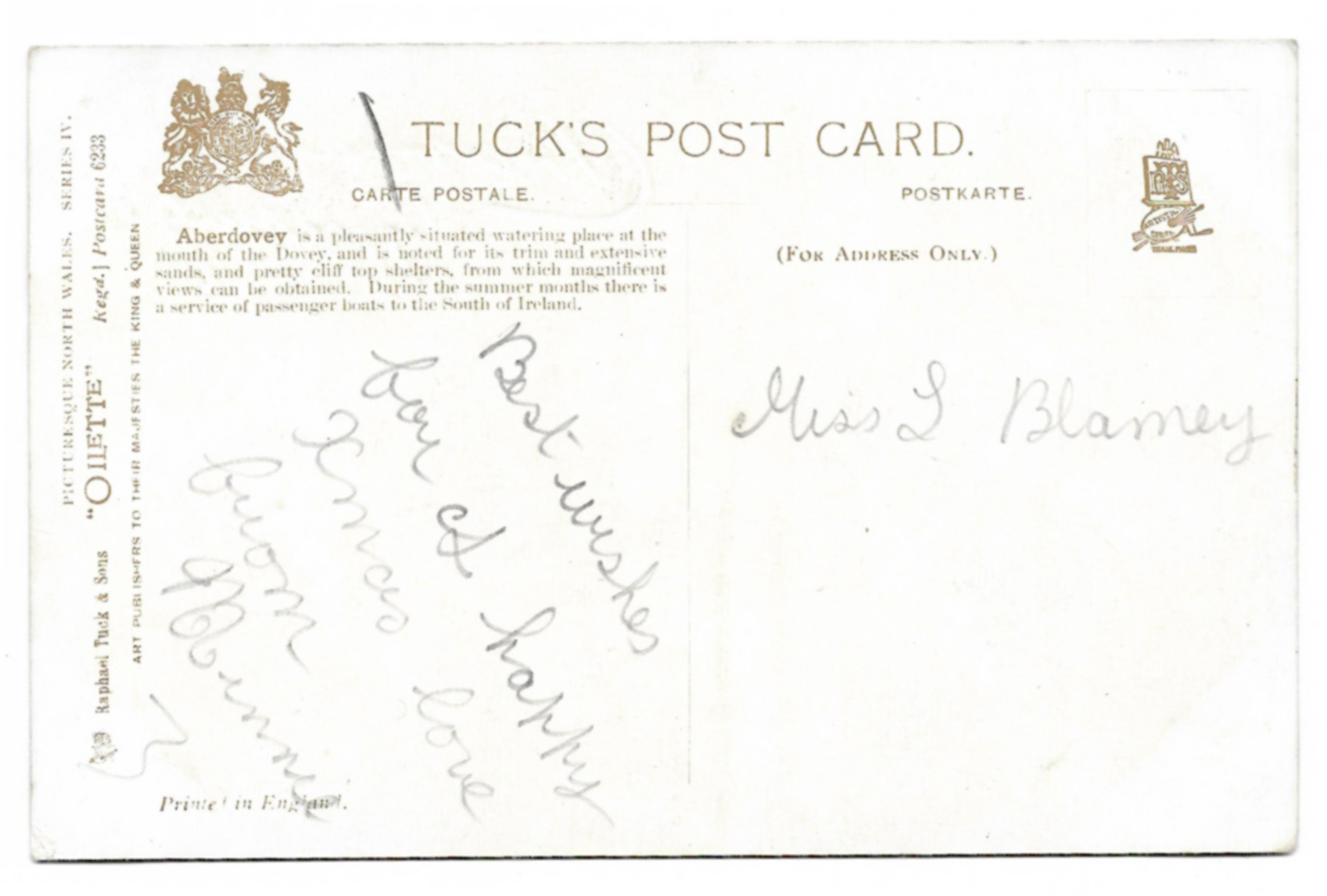
The description on the reverse of this postcard says “Aberdovey is a pleasantly situated watering place at the mouth of the Dovey, and is noted for its trim and extensive sands and pretty cliff top shelters, from which magnificent views can be obtained.  During the summer months there is a service of passenger boats to the South of Ireland.”

This card, registration number 6233, was in the Oilette series, which came in during 1903, was one of a series of postcards of which each image was either designed to look like an oil painting or was a reproduction of an actual oil painting.  Most of Tuck’s chromographic (colour) printing was done in Germany, but this one was printed in England.  The red letters “Christmas Greetings” stand proud from the surface of the card.

I hope that everyone has a very Happy Christmas!


Video: The Dyfi Estuary at Aberdovey

This was a very windy late afternoon in mid December 2019, and I have been messing around in my software to figure out how to eliminate the intense sound distortion that ruins the sound tracks of many of my videos.  It is clear that I need a dead cat mic (charming name!) but it is impressive how well the software can compensate once the damage is done, leaving the gentle sounds of water on the seashore and the bright birdsong in tact.


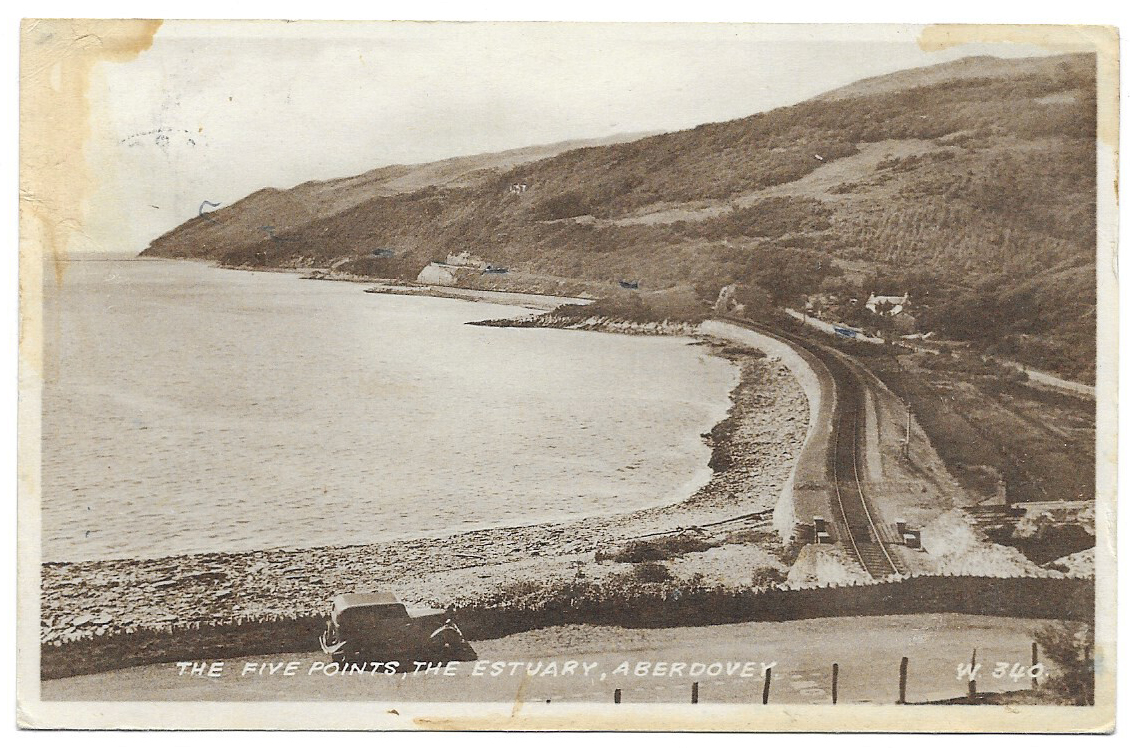
Vintage Postcards #15: Five Points, Smugglers Cove, Frongoch


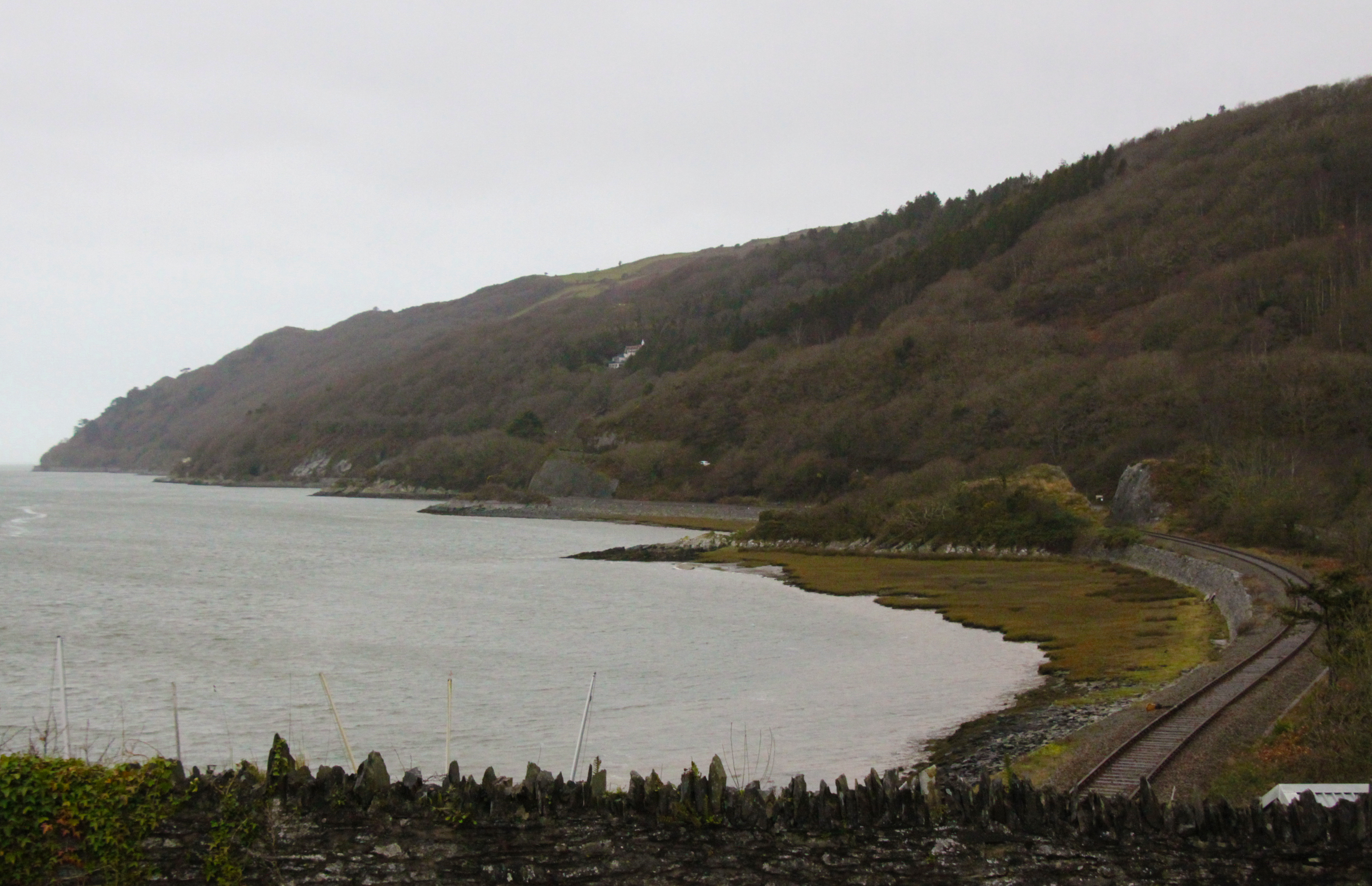
Five points in December 2019 on a very murky, rainy day, resulting in a soggy photographer and a damp camera. I’ll try for a better photo on a sunnier day!

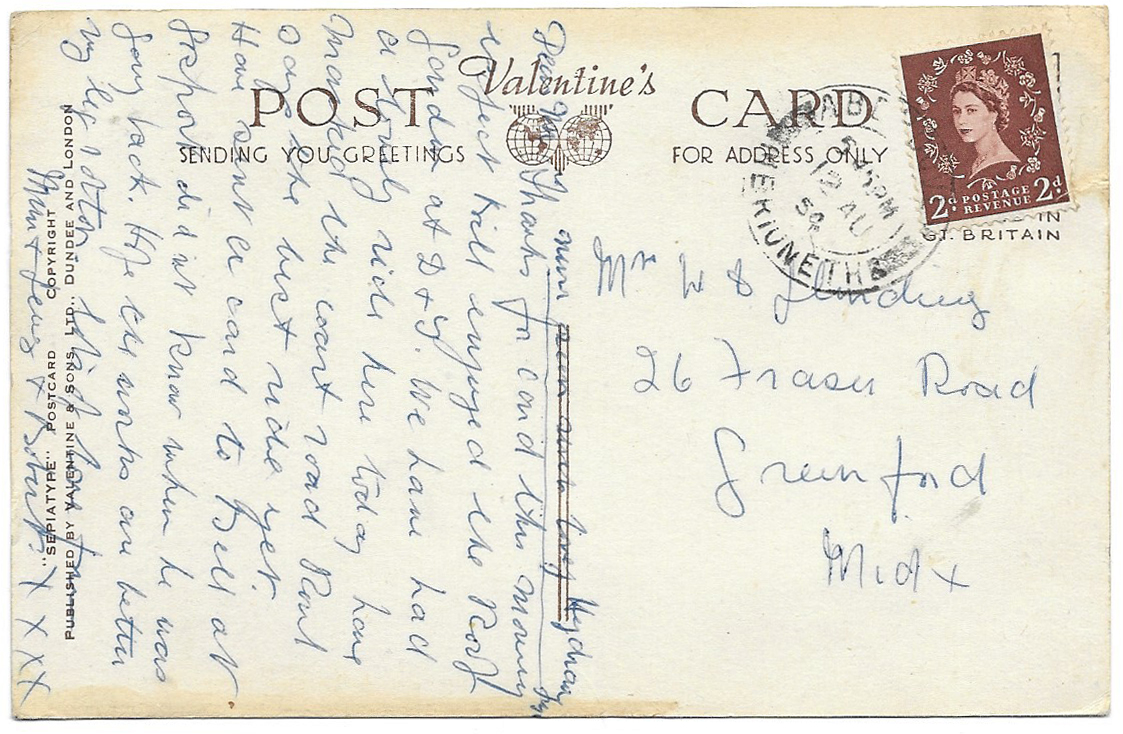
This postcard shows the River Dyfi at Frongoch where it widens into the estuary, with the five small promontories known as Five Points.  The viewpoint is on the road from Machynlleth to Aberdovey just above the Frongoch boatyard, and just around a particularly nasty bend. In the postcard, there’s a lovely vehicle in the foreground, and the railway is ever-present.  The wall between the road and the modern boatyard at Smuggler’s Cove below doesn’t seem to have changed much since the postcard photograph was taken, but the foreshore in the first cove has expanded out into the estuary.  Dated 5th August 1950, the card was sent to an address in Greenford in Middlesex, and has an Aberdovey-Merioneth postmark.

Published by Valentine and Sons of Dundee in their “sepiatype” series, it is numbered W340.  The Jisc archives hub has this to say about Valentine’s:

The company Valentine & Sons was established in 1851 by Mr James Valentine (1814-1879), the son of Mr John Valentine, engineer of wood blocks for linen printing, Dundee. The firm began as early exponents of photography, became pioneers in the postcard industry and later developed the production of greetings cards, novelties, calendars and illustrated children’s books.

James Valentine began in business aged 17 as an engraver. He began to practice Daguerrotype photography, first as an amateur, as an aid to engraving. He was soon proficient and began to take views and portraits in c.1850. He went to Paris to train under M. Bulow, one of the most skilful photographers in that city. On his return to Dundee he set up a studio in the High Street. He received a commission from the Queen to photograph a set of 40 views of Highland scenery and in 1868 was appointed as the Royal Photographer.

James Valentine’s sons were both early to develop skills in photography and by 1879 they were in great demand, having grown into one of the largest establishments in the country. In 1897 the government allowed correspondence to be written on the reverse of a postcard. This coincided with Valentine’s success in collotype printing, a lithographic technique which mechanically reproduced images for printing as postcards. By the end of the century, Valentines had established the perfect method for cheap reproduction of postcards. They were also able to use their immense collection of topographical negatives to issue series after series of scenes from throughout Britain.

By the early 1900s they also had a growing trade in Christmas cards and children’s books and had begun to publish fancy cards. In 1908 they became the official postcard publishers for the international Franco-British exhibition at the White City, and began to publish exhibition cards which are noted for their high quality of design. By the time of the First World War they had become a world-wide name with office branches in Canada, South Africa, Australia, America and Norway. In the 1920s they expanded their trade in Christmas cards and calendars and then in greetings cards which forms the basis of their business today. In 1963 the company became a subsidiary of John Waddington Ltd.

It was during the 1950s that the postcard business began to go into decline, and Valentine’s focused on the more profitable greeting card side of their enterprise.

Videos: Pheasant preening after breakfast; Pen Y Bryn in rain and sun

The first video shows a male pheasant preening in a burst of sunshine – a post-peanut mellow moment.  Two male pheasants arrived today, some time after the females had arrived, eaten, sat for a while with their feathers puffed up, and left.  It had finally stopped raining and at mid-day the garden was bathed briefly in a thin silvery sunshine, which lasted for about an hour and a half before the rain resumed.  The familiar harsh loud squawk announced their arrival so I threw down some peanuts and went down into the village, leaving them to it.  When I returned they were pottering around in the garden, and one of them was enjoying an industrious preen, the bright feathers given a thorough going over.

The second video shows two views of Pen Y Bryn from my garden, one clip from yesterday in the pouring rain and the second in the today’s brief reprieve when the sun came out before the rain returned.  Both are shades of grey, but the main difference between the two scenes is the sound.  In the first clip, even in the downpour Pen Y Bryn looks atmospheric but the sound of the rain is unrelenting.  In the second, with light glinting off the water, peace and quiet has been restored.

I should perhaps apologize for the completely gratuitous scrolling text.  I’ve been messing around with new video editing software, as my previous prog was at all not user-friendly and it had the antisocial habit of freezing solid.  Many of the features in the new application are very gimmicky, with shades of PowerPoint, but the ability to add text in various different forms is useful.  This is the fourth piece of video editing software that I have tried, so I am seriously hoping that this one will be a keeper.


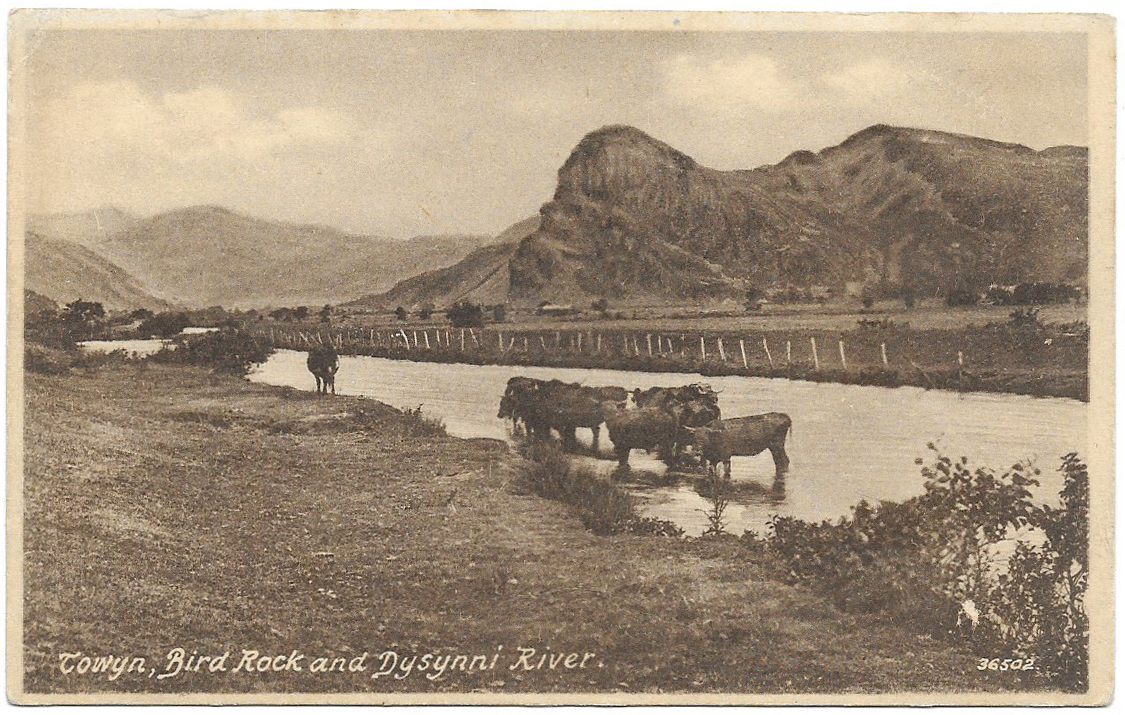
Vintage Postcards #6: Dysynni valley and Bird Rock

Amongst all the recent postcards, this is one of my favourites, mainly because it is so relentlessly prosaic.  Straying out of Aberdovey, but not too far, it’s a peaceful view of cattle in the Dysynni valley with Bird Rock unmistakeable in the background, seen from the west near the coast.  Numbered 36502, and dating to 1895 (courtesy of the Francis Frith Collection website for the date) it is characteristic of Francis Frith photographs, offering a slightly unusual take on the usual subject matter.  Unlike other contemporary views of scenery which focus on the romantic this shot is particularly evocotive of the the landscape as I have seen it so often, with Bird Rock looking rather intimidating, and the lugubrious cattle waiting patiently for whatever weather is about to emerge from the clouds.  Cattle stand in water to cool themselves down on hot days (in some states in America where summer temperatures are usually high, cooling ponds are often provided) so although the sky looks rather overcast, it was probably a hot, sunny day.  There is a real sense of timelessness about this photograph.

In a part of the Dysynni valley to further to the east (with Bird Rock this time to the west) and below Castell-y-Bere are fields along the river Dysynni that are still used for pasturing cattle, as well as sheep.  There are some lovely walks along the Dysynni valley, which is well worth exploring.
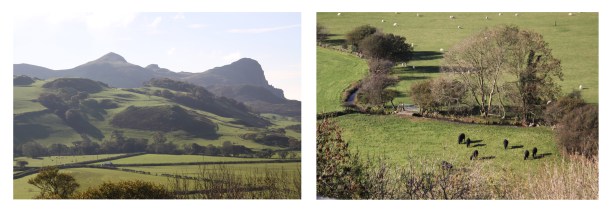
The card was completely unused. I like the “Post Card” font, which has panache.  I instantly liked the little saying at the top of the reverse side, below, “T.N.T. – Today, Not Tomorrow!”  At first it amused me because it could have been written for me, as procrastionation is probably my worst sin, and I could often do with a bit of explosive to move me in the right direction :-).  But when I looked into it, it turns out to be a wartime slogan introduced by British Minister of Production, Captain Oliver Lyttleton, during September 1942, the thrust of which was that there was a new urgency to the production of war supplies. It gives one pause for thought.  What is interesting here is that, as above, the photograph is listed in the Francis Frith archive as dating to 1895, but it is clear that the early photograph was re-used later for post-1902 postcard production (see below) and in at least one of its more modern iterations carried a 1942 slogan.
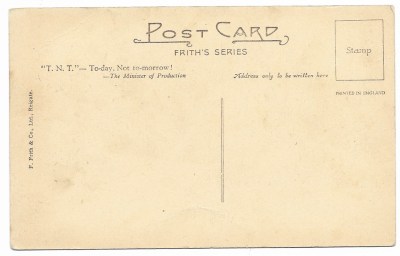
Francis Frith is probably the best name, amongst non-specialists of early postcard production.  There is a lot about Frith and his photography business on the Francis Frith Collection website, which is a going concern and preserves an archive of his work.  It is a really fascinating story.  Frith was born into a Quaker family in 1822 in Derbyshire.  He built up a thriving grocery business in Liverpool, which he sold in the 1850s, making him financially independent, in today’s terms a multi-millionaire.  A founder member of the Liverpool Photographic Society, only 14 years after the invention of photography, be began to pursue his hobby on a full-time basis, travelling to the Middle East for fourteen years between 1856 and 1860.  I was very familiar with his Egyptian photographs, having a particular interest in this field, but the Francis Frith Collection website gives a real insight into the scope of Frith’s intersets and abilities.   Marketed by Negretti and Zambra of London, he became rich on the sale of his images as prints and steroscopic views.  After he married and settled down in England, he opened his company F. Frith and Co to “create accurate and unromantic photographs of as many cities, towns and villages of the British Isles as possible and sell copies of the photographs to the public, who were travelling in ever greater numbers and looking for souvenirs of their travels.”  He eventually retired and left the company to his sons, dying in 1898.  His sons built on their father’s legacy, and when in 1902 the Post Office agreed the design for the postcard, with a picture on one side and a divided plain side on the other for message and addresss, the Frith brothers jumped on the bandwagon and became one of the market leaders in postcard production and distribution in the first half of the 20th Century, using the extensive archive of existing photographs.
Digitization of the Frith collection, consisting of over 300,000 images, is ongoing on the other website, with a searchable archive, where 21 other views of Dysynni (and 105 of Aberdovey) can be found.