Category Archives: Wales Coast Path

Countryfile – The Dyfi Valley

I caught an episode of Countryfile on BBC 2 this morning, “Dyfi River,” in which the presenters visit different parts of the Dyfi valley on both sides of the river, showing some really super footage:
https://www.bbc.co.uk/iplayer/episode/m002c5gs/countryfile-dyfi-river

John Craven and Sean Fletcher are in Mid Wales around the Dyfi river, exploring the hidden stories of wildlife that flock to the area at this time of year – and the people ready to welcome them. It’s a true patchwork of habitats; salt marshes, mudflats, ancient woodlands and farmland. It’s so special that it’s been designated by the United Nations as part of a larger regional biosphere – one of only seven such places in the UK – due to its amazing wildlife and landscapes.

John comes face to face with the visiting celebrity couple of breeding Ospreys who have made the area world-famous, as well as the conservation work to help the migrant pied flycatchers, fresh from their over 3000-mile journey from west Africa. To celebrate VE day, a local historian reveals the intriguing tale of a group of female army personnel brought to the area to conduct top secret work that was invaluable to the war effort. Meanwhile, Sean spends the day working on a nearby upland farm, where making a living while farming for wildlife is a constant challenge.

And further afield, Adam is all abuzz for his latest new arrival – an army of bees he’s hoping will prevent another expensive crop failure.

  • Duration
  • First shown


Ynyslas Visitor Centre – Local people fight closure

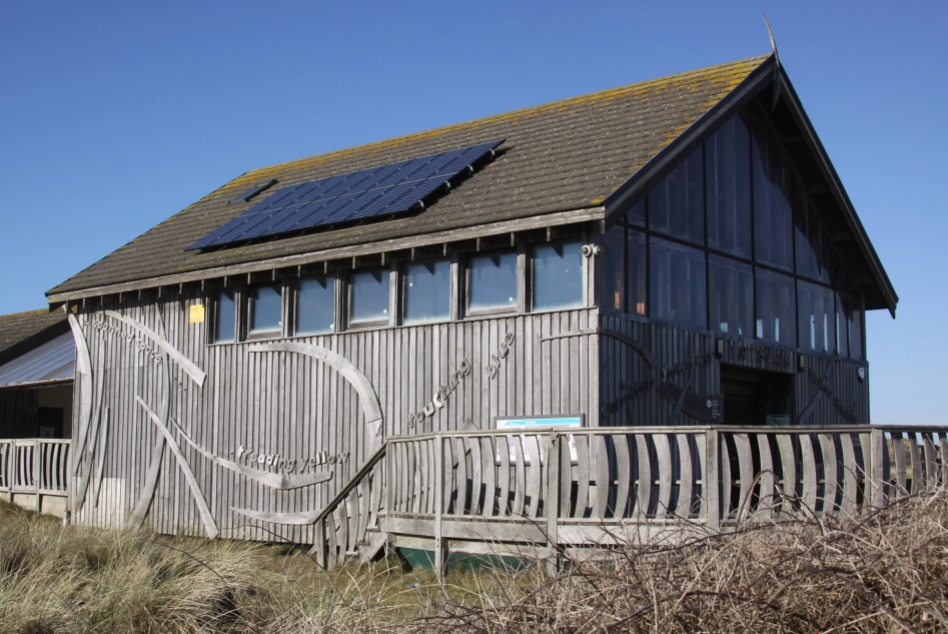
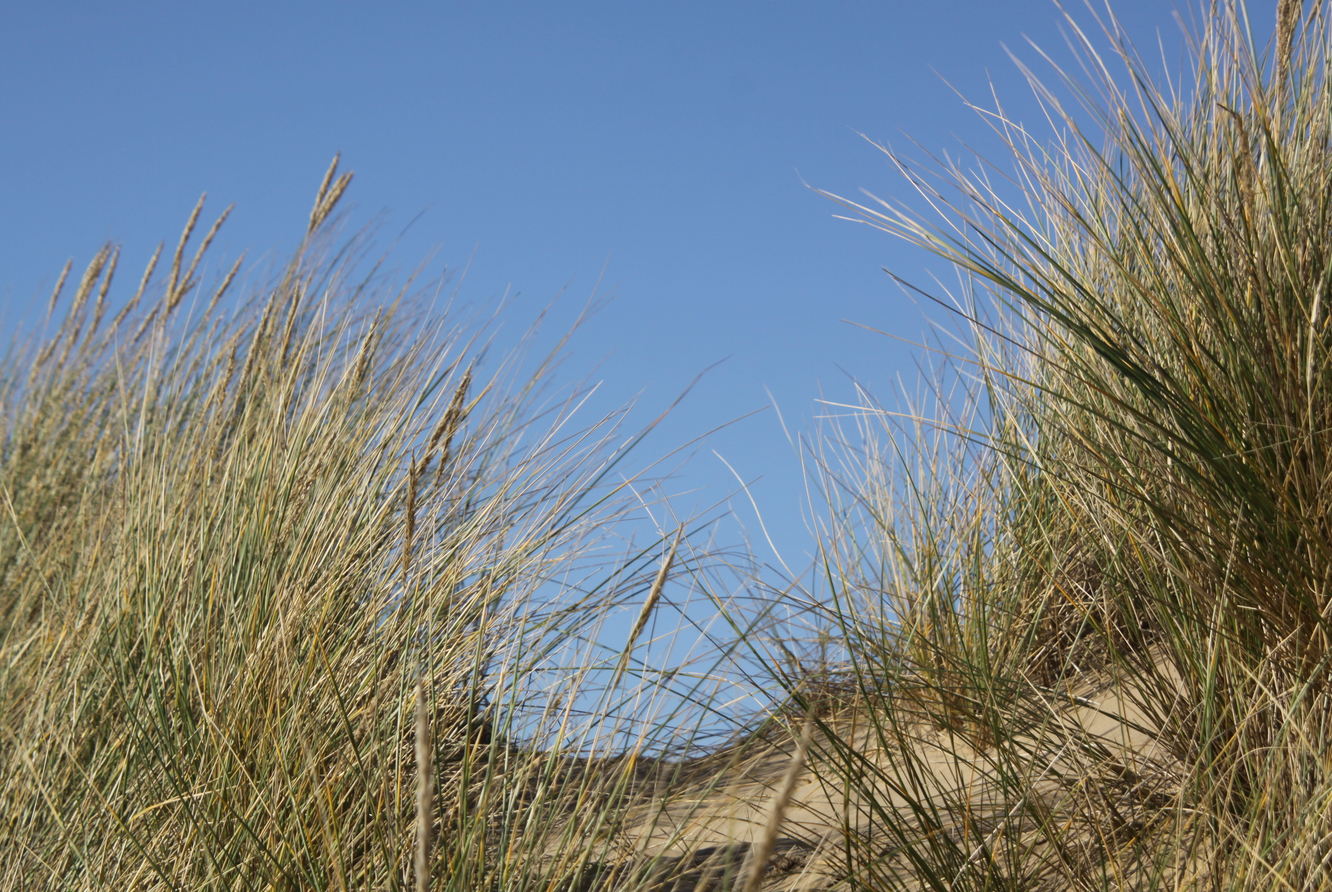
I was so sorry to hear that the excellent Ynyslas Visitor Centre has been threatened with closure by natural Resources Wales, without any public consultation.  Fortunately, there is an active campaign to try to keep it open, but it is important that as many people as possible sign the petitions.  The Visitor Centre is a terrific resource at the heart of the Ynyslas nature reserve, where I spent many happy hours walking through the sand dunes and collecting shells on the beach.  This is a site of special scientific interest, and merits a visitor centre.  The Visitor Centre itself is a lovely building where tea, coffee, sticky buns and relevant literature have always been available, together with information about the nature reserve itself.

Here’s the Press Release from the Prevent the Closure team:

Local residents and concerned ‘Ynyslas lovers’ from as far afield as Knighton and Sheffield met with political representatives to express their opposition to Natural Resources Wales (NRW) plans to mothball the award-winning visitor centre, without any consultation or official announcement. Members of the public had only found out about the proposed closure after it was reported that staff had been told not to return to the building after the Christmas break. Elin Jones (Senedd Member) confirmed that she had met with NRW after this, and they informed her they intend to close the Visitor Centre by the end of the financial year.

NRW claimed they would continue with their statutory requirements to protect the site. However, members of the public pointed out that the staff at the centre are integral to protecting wildlife and the environment. They also play an important safety role and are essential to the nature education element of the site. Without proper management and vigilance, the delicate biodiversity at Ynyslas could be destroyed overnight. There is concern over an influx of unregulated campervans,  large groups of motorbikes, poachers and people generally not understanding the importance of protecting the dunes.

Attracting over 250,000 visitors a year, Ynyslas is a jewel in Ceredigion’s crown. The estuary is a nesting site for ringed plovers, and there is abundant wildlife in the dunes, including grass snakes, adders and rare orchid varieties.

While NRW are claiming they can close the Visitor Centre without endangering the local ecology, the meeting pointed out this was not the case. NRW have tried to close Ynyslas ‘on the quiet’ due to funding shortages. They are now claiming they are looking for a charity, CIC or commercial organisation to take on the management of the building but, to date, have not put out any such information publicly.

The hastily convened ‘Achubwch ein Canolfan – Ynyslas – Save our Centre’ group opposes the closure and is demanding that NRW meet the local community, discuss their plans transparently and rethink their strategy. The activists are of the opinion that the Visitor Centre and the site as a whole is commercially viable, with parking fees bringing in significant revenues. However, without having met NRW, no one really knows what is going on. The group maintains that the site and the centre are inextricably linked and cannot be separated from each other.

A Change.org petition has garnered almost 5,000 signatures https://www.change.org/p/prevent-the-closure-of-ynyslas-visitor-centre

A petition has also been registered with the Senedd https://petitions.senedd.wales/petitions/245961

Contact Polly Ernest on 07980 862582 (pollyernest@me.com) for more information.


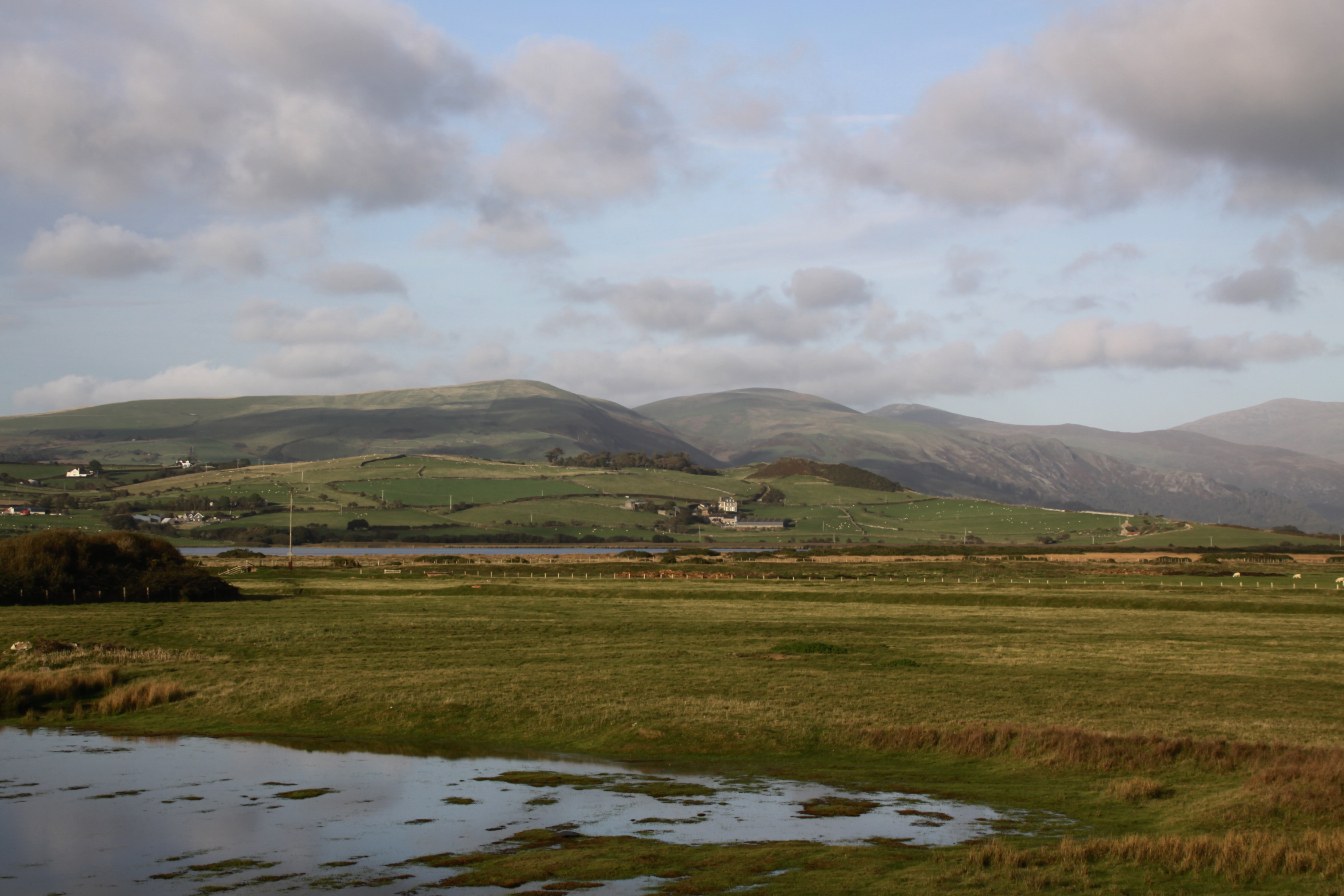
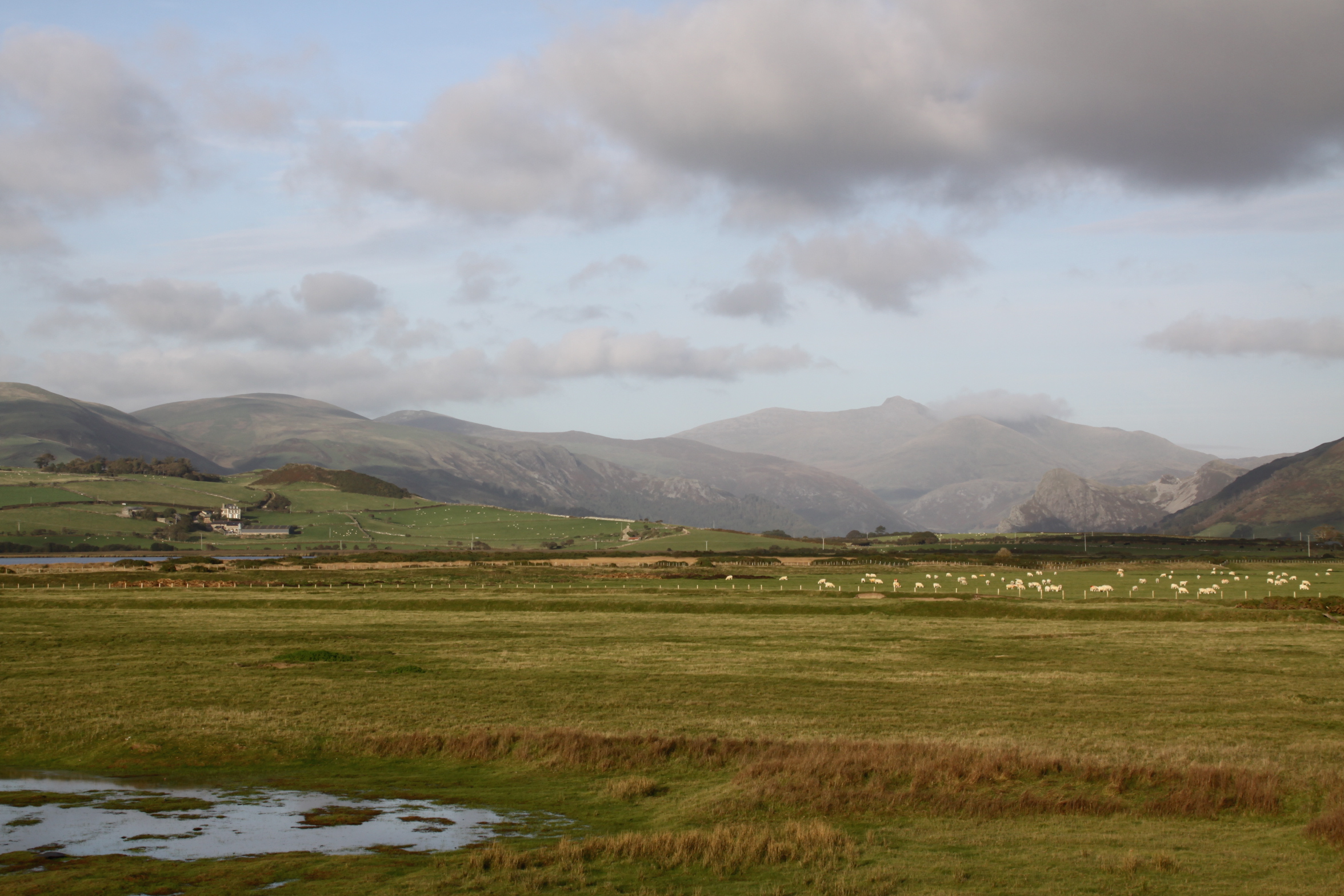
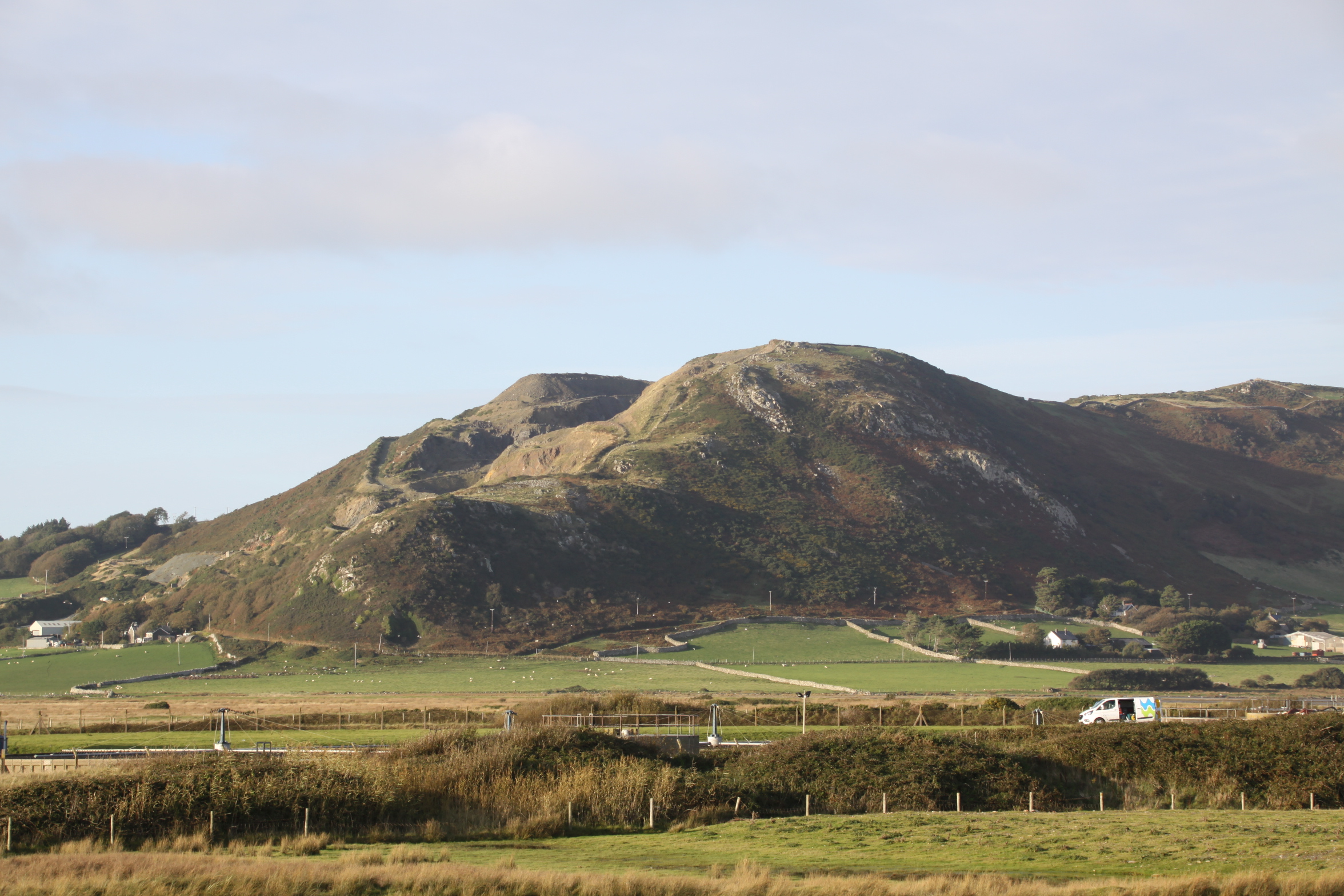
Views from Tywyn over the hills behind the Dysynni and beyond

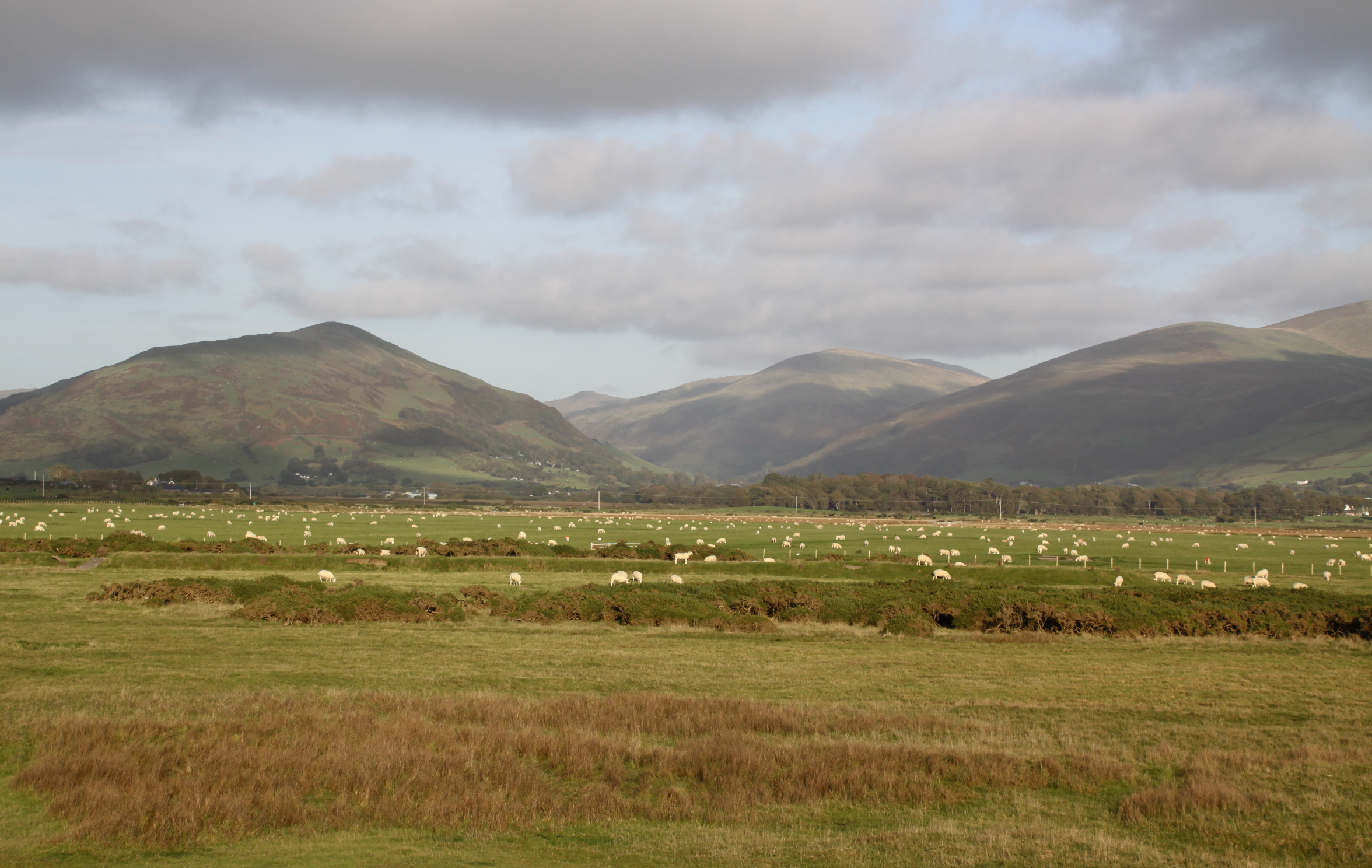
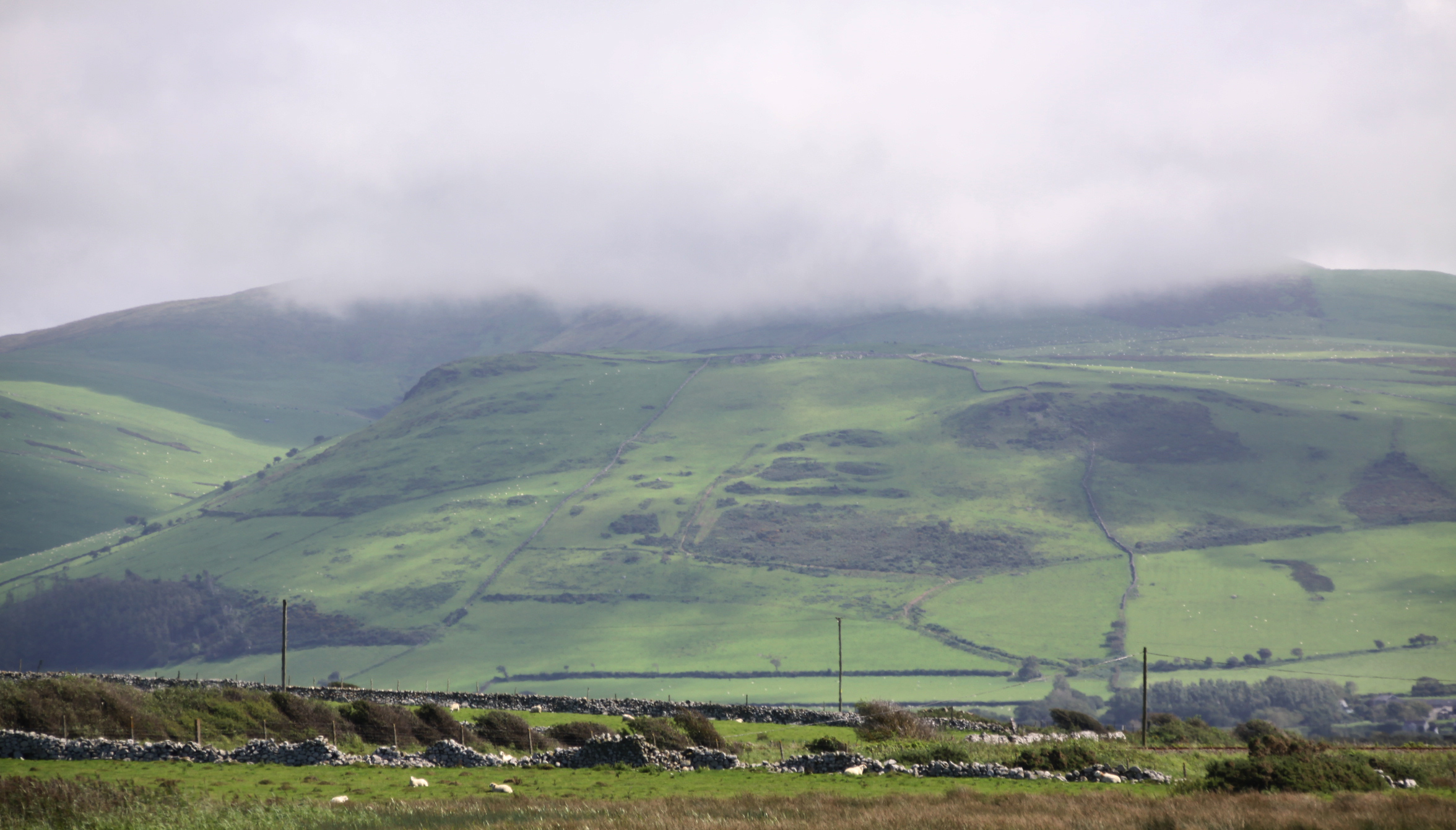
On a recent flying visit to Tywyn, walking along the beach towards the Dysynni, it was terrific to see the autumn light on the hills and water over the Dysynni valley, like Tal y Garreg, Llechlwyd and Craig yr Aderyn (Bird Rock).  During the Iron Age some of these hills housed fortifications, implying that the landscape below was farmed at this time, just as it was further to the north.  A beautiful place to live on a day like this, safe in the knowledge that the central heating waits back at the ranch, but it must have been a hard life during the Iron Age with the winter closing in.


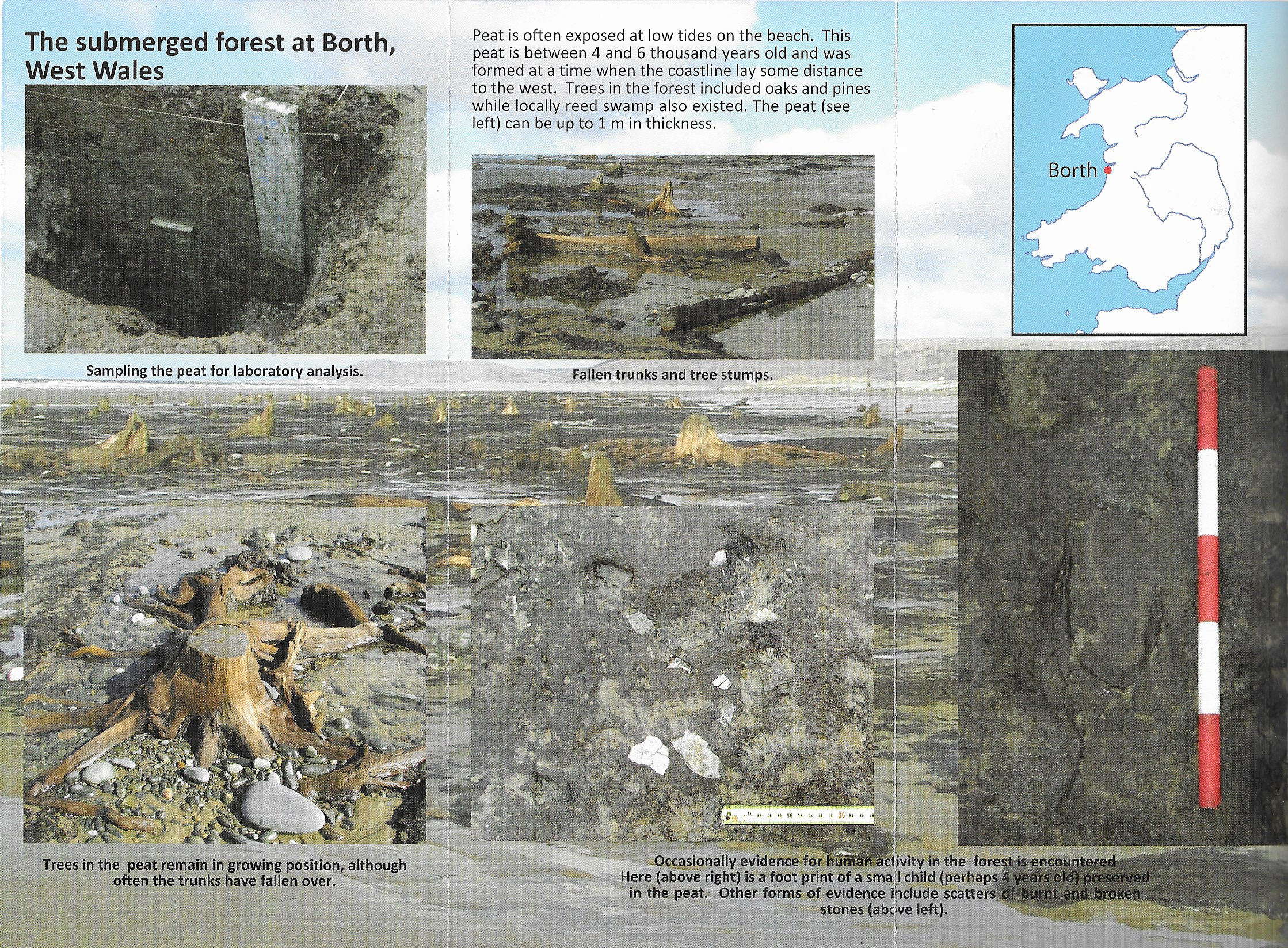
Leaflet: The Submerged Forest at Borth

I found another batch of leaflets today during a sort-out, and will post some of them in the coming weeks in case they are of interest.  I’ve never seen the submerged forest at Borth, which needs a very low tide to see it properly, but it’s now firmly on my radar.  As well as previewing the leaflet in the images below, you can download it as a PDF by clicking here:  Submerged forest leaflet

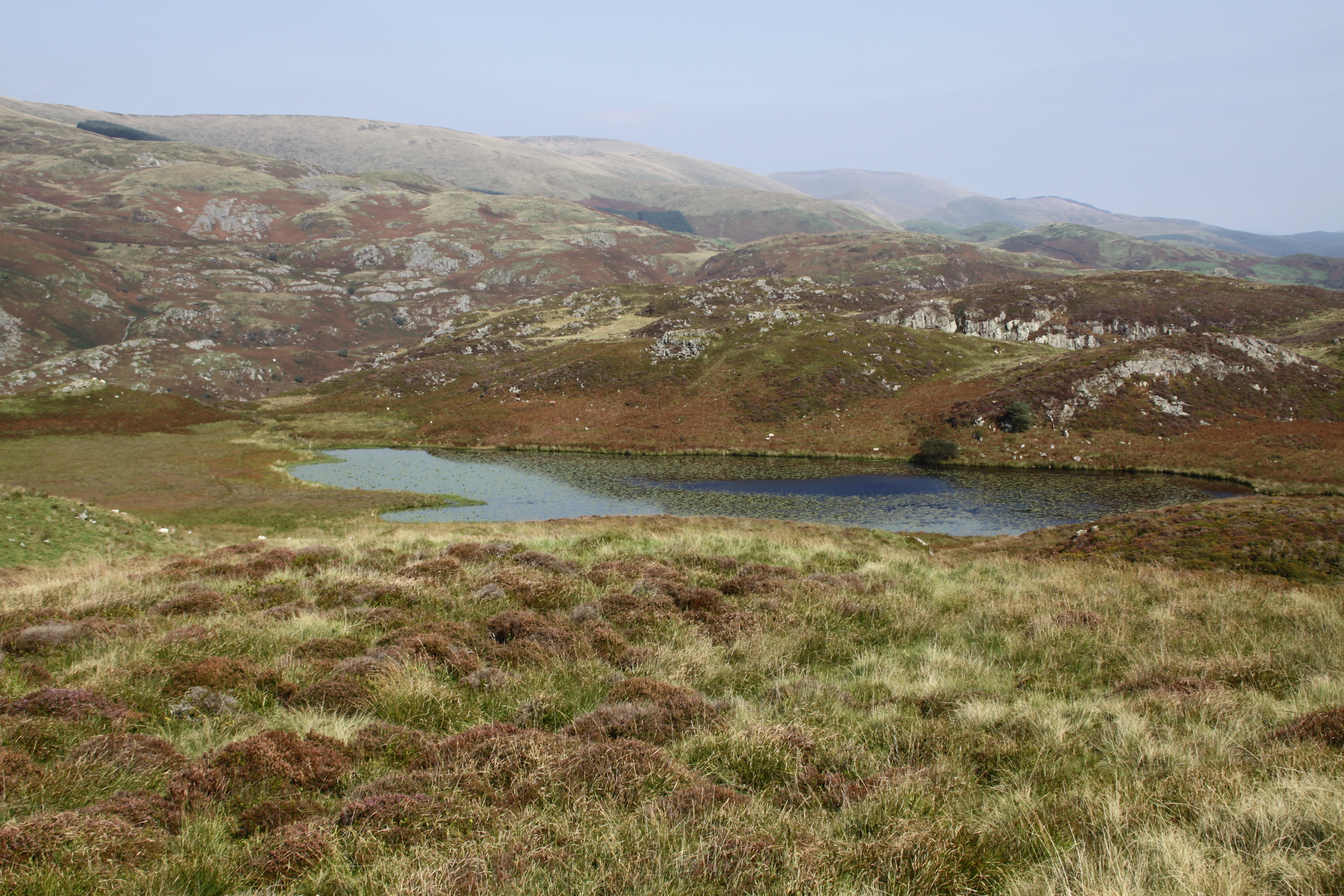
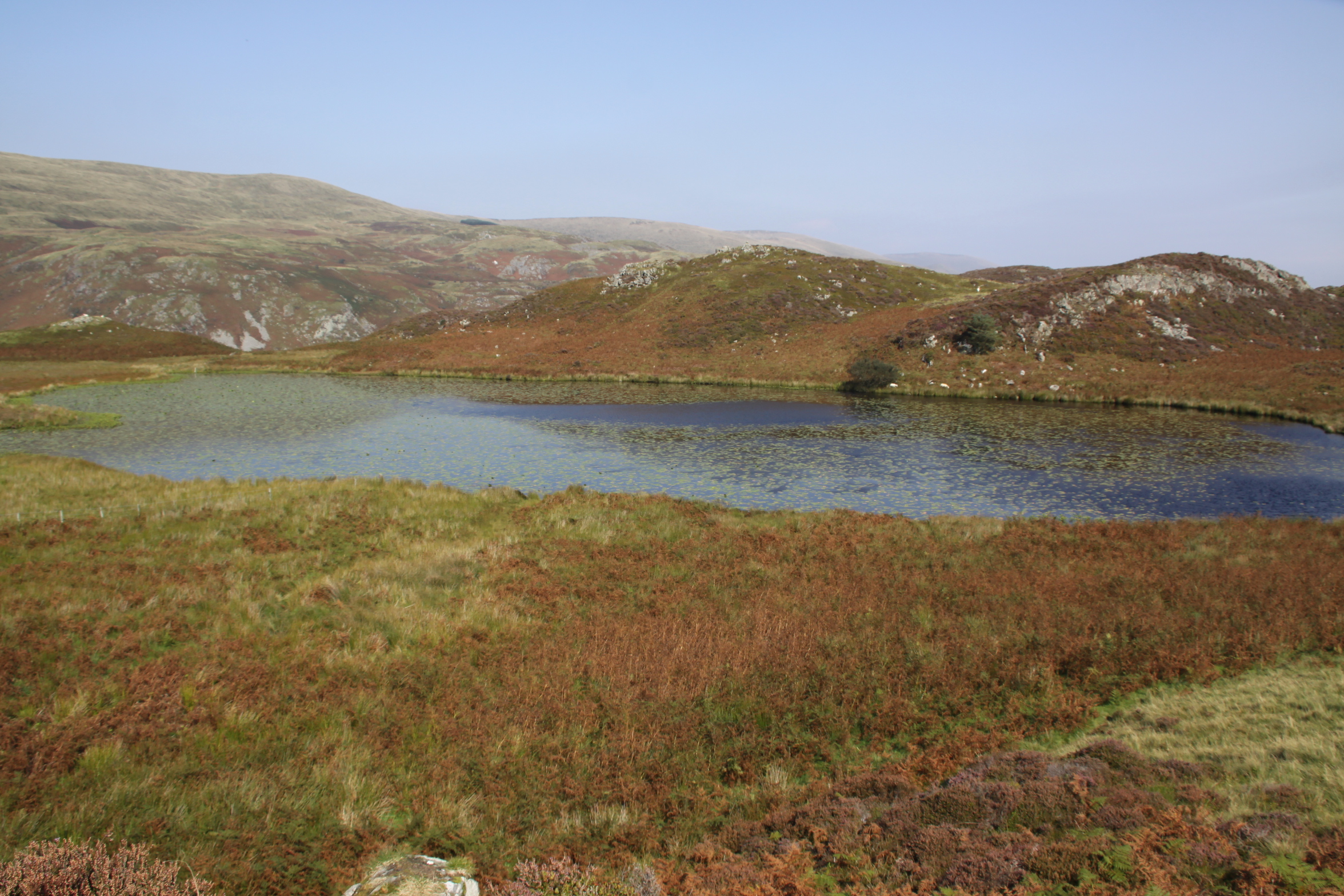
A favourite walk to the Bearded Lake (Llyn Barfog) above the Dyfi estuary

It was supposed to be a hillfort visit, but I was fed up of driving to where I wanted to walk, so two weeks ago I did a route that I could do by leaving the house on foot, taking the Panorama walk to the lake and back again, which takes a route across the ridge.  I had planned to take the longer route via Happy Valley, but was tired after an iffy night, so took the shorter route, which also allowed me to get a look at the rear end of Foel Caethle, a hillfort the lies between Tywyn and Aberdovey, from a slightly higher viewpoint than the peak of Caethle itself.

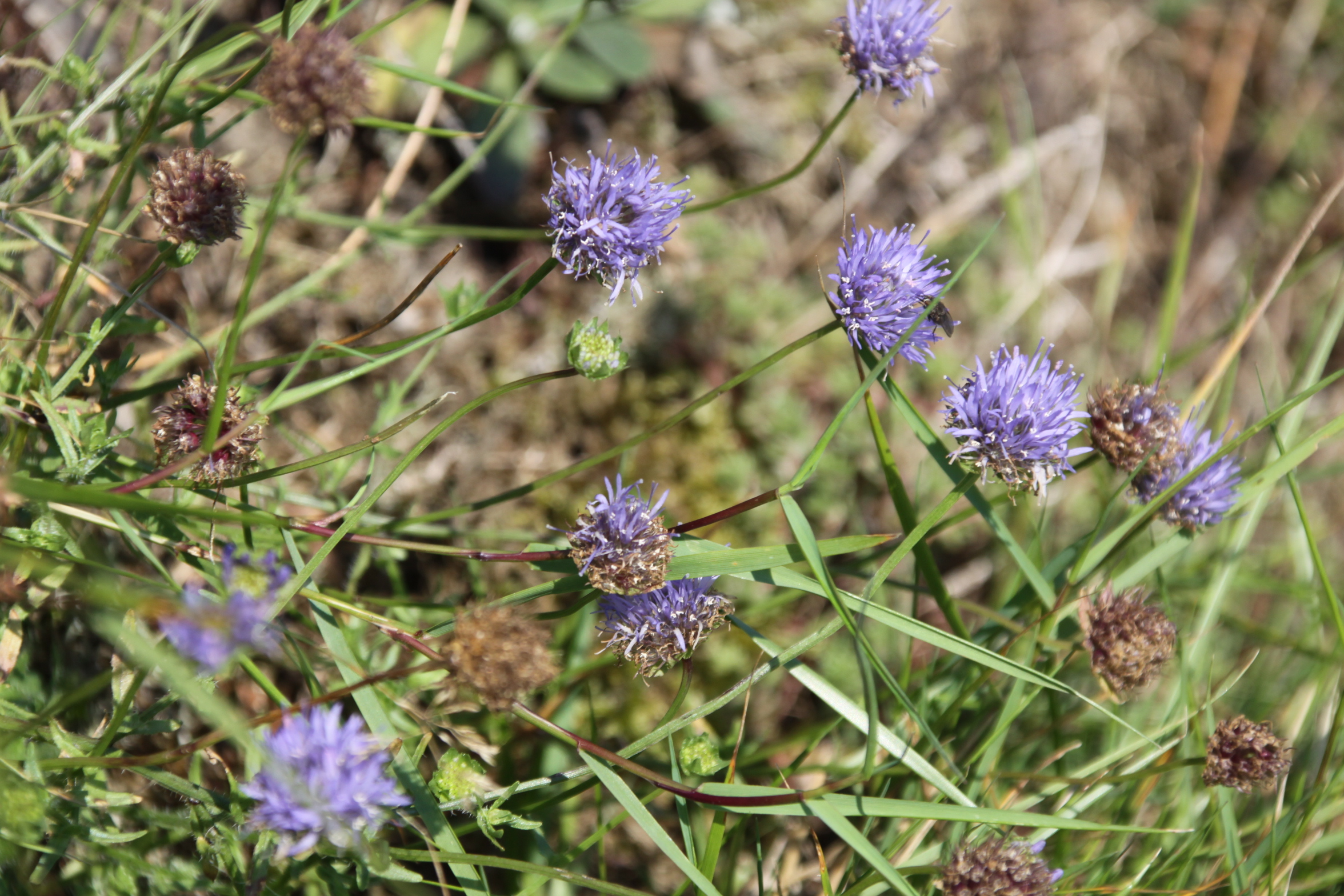
If you haven’t done it before, it’s super-easy to follow the Panorama on the Ordnance Survey map.  You pass through a number of gates (five in total, I think, but more if you choose not to balance your way across cattle grids) so you will need to take hand gel and/or gloves.  Just walk up Copper Hill Street from Chapel Square, and after about five minutes take the right turn into Mynydd Isaf, which is a development of 1960s bungalows.  Follow this all the way to the top and at the crossroads go left.  Keep an eye out in the verges too, for wild flowers and small butterflies.  The harebells are particularly worth seeing – more prolific in August but with many still left in September.  The tormentil is prolific at this time of year, and the last of the little cornflower-blue Sheep’s-bit are still around.  There were lots of red admiral butterflies around, although none of them were obliging enough to settle to have their portraits taken.

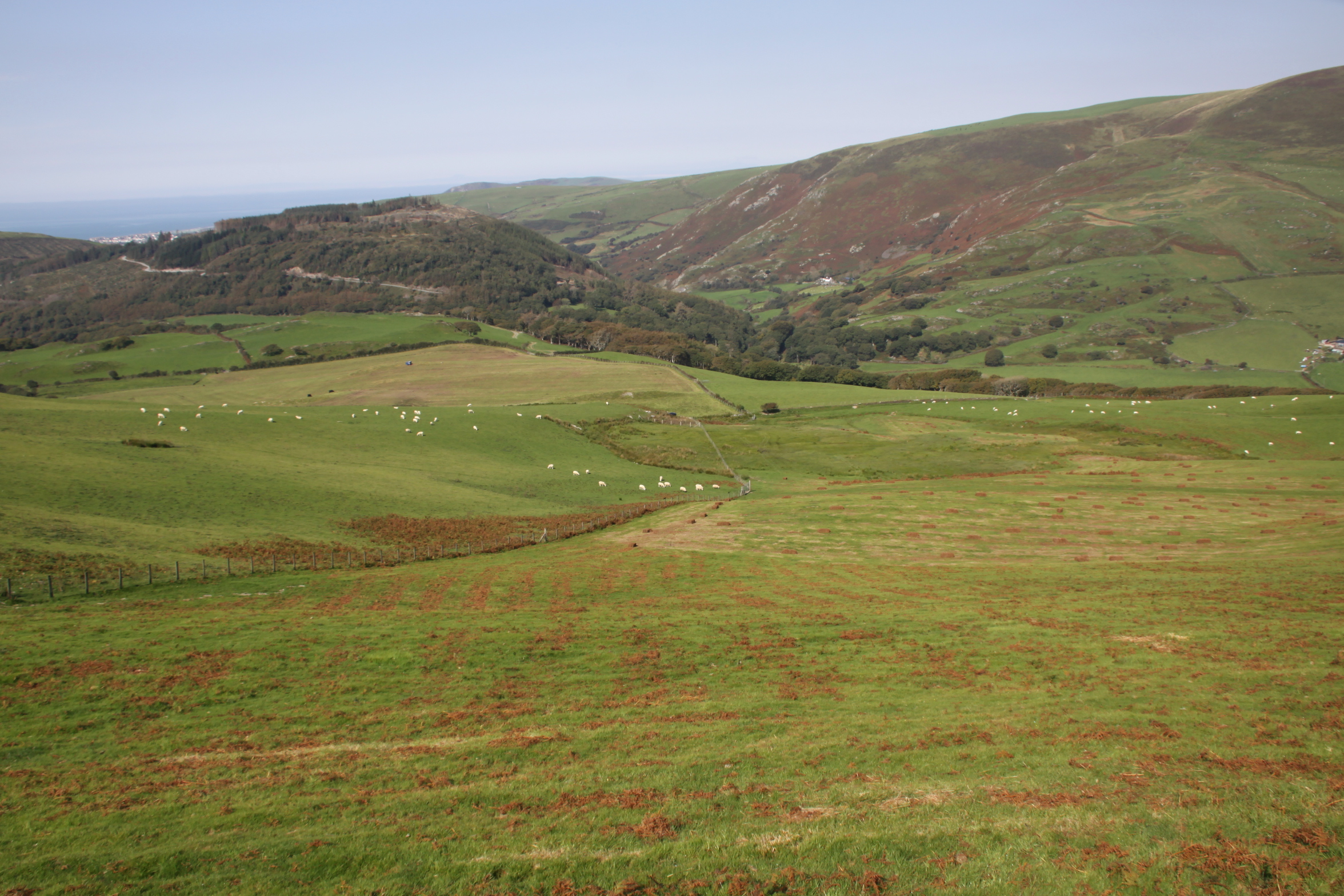
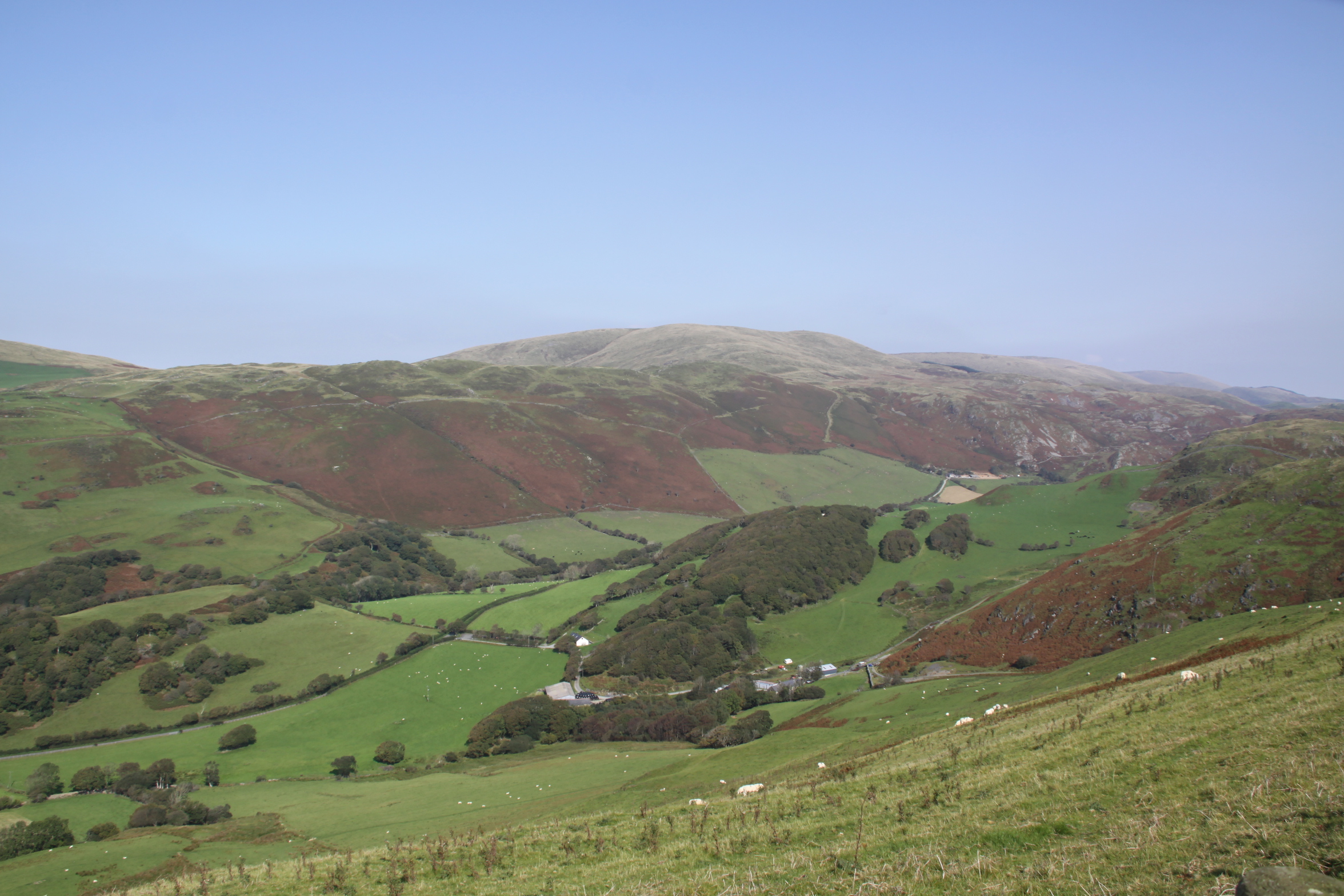
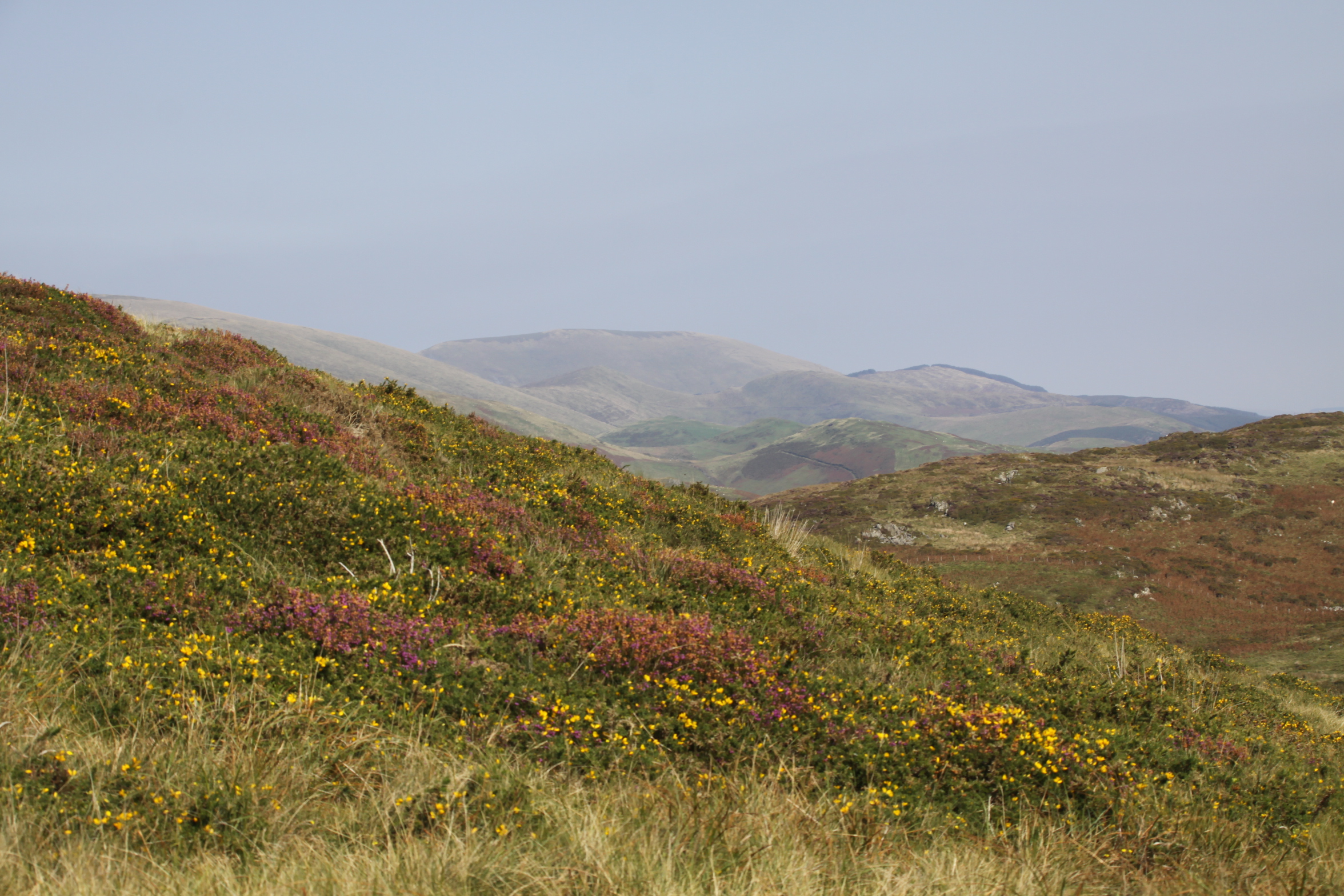
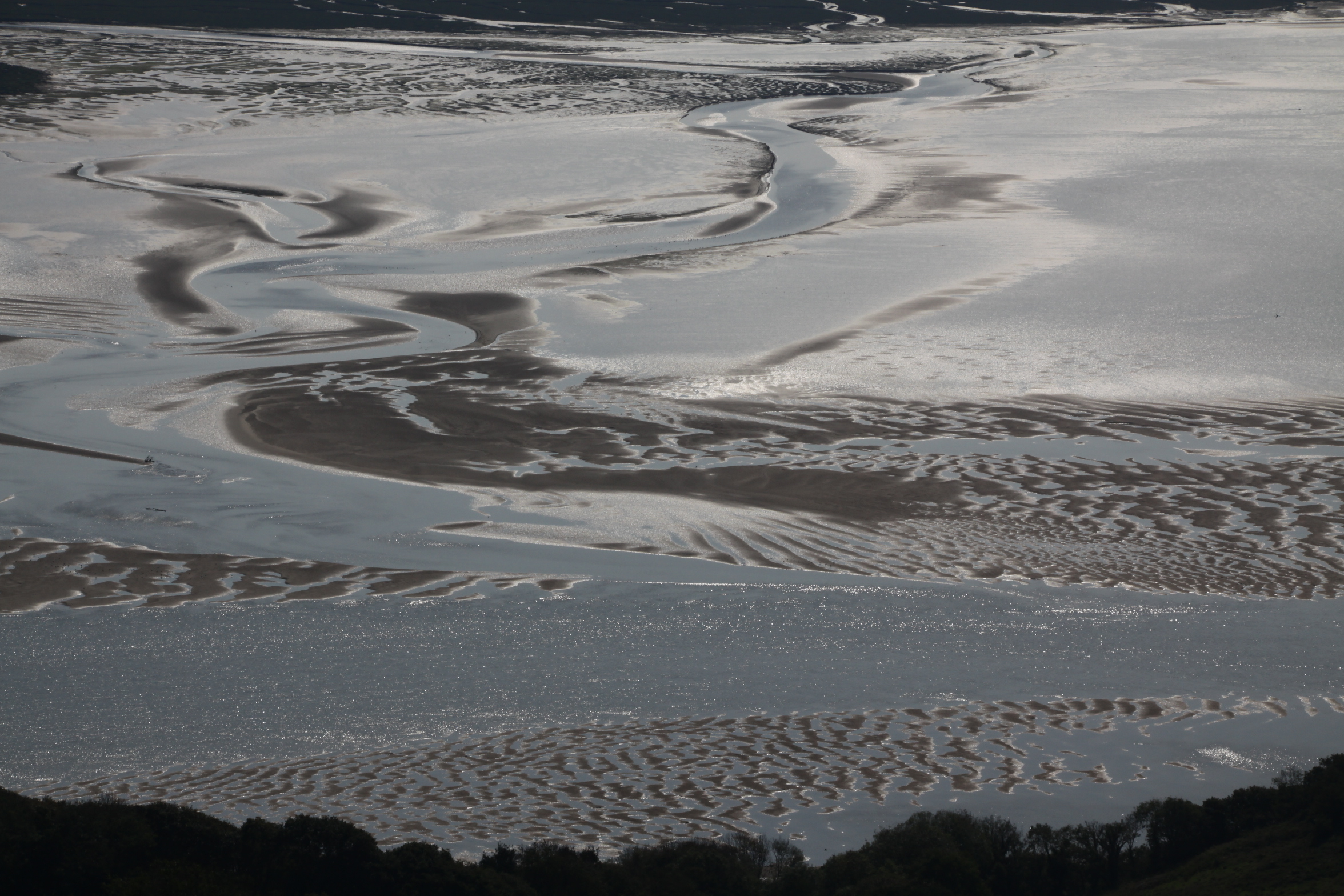
This takes you uphill, and you are instantly in the countryside, passing a farm on your right, with views over Aberdovey to your left.  Just keep walking, not forgetting to turn round and see the gorgeous views over the estuary as you go higher, until you reach a right turn, with the chalet park ahead of you.  It’s about an hour and 15 minutes from here to the fork for Llyn Barfog (and the same on the return leg), with gorgeous views over Happy Valley and the hills to the left, and some views over the glistening estuary to the right, which looks completely different depending on whether the tide is in or out.

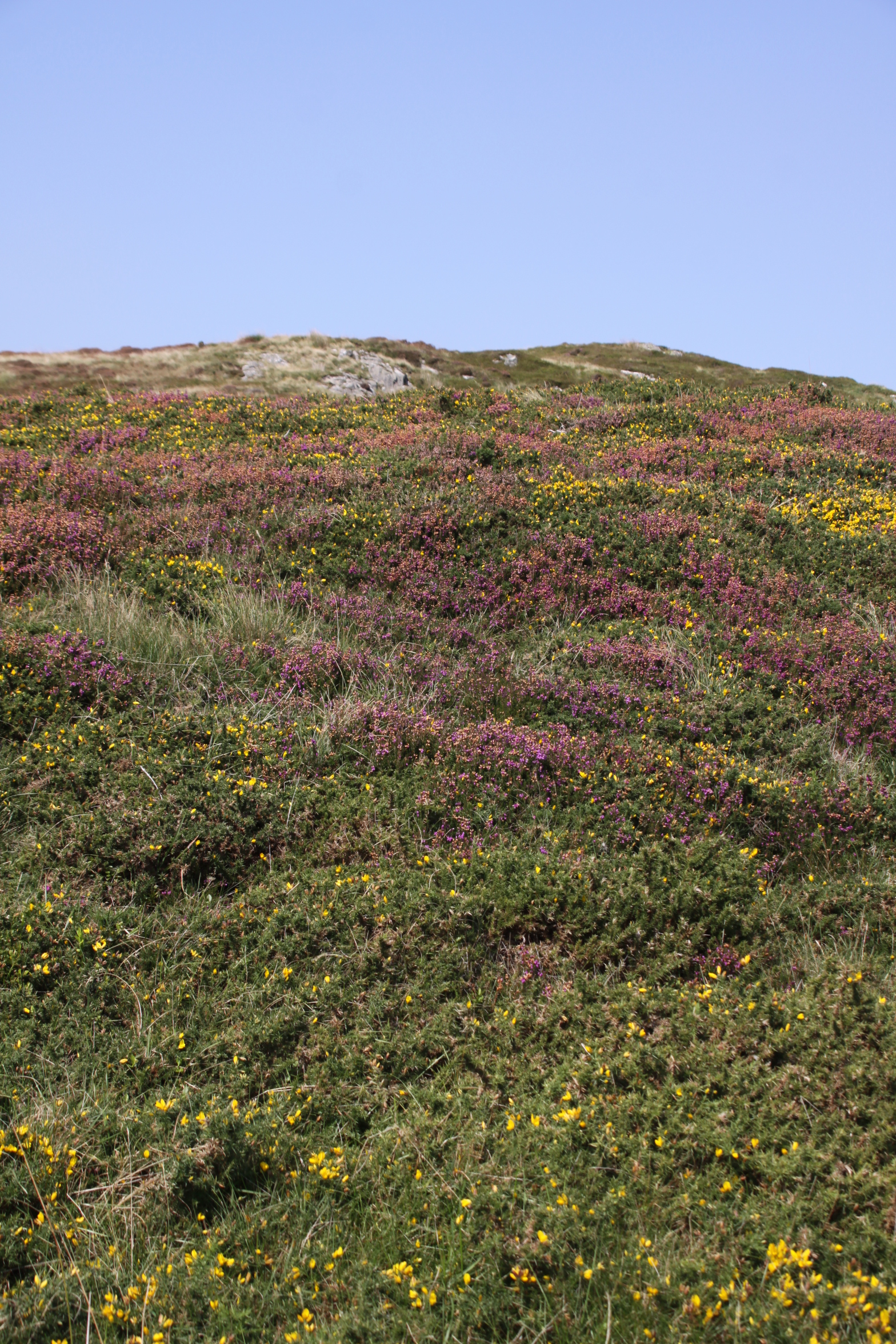
The tarmac eventually runs out at the farm, at which point you pass through two gates and onto a deeply incised farm track with a drystone wall on your right and views now mainly over the estuary, with a slope of gorse and heather rising to your left.

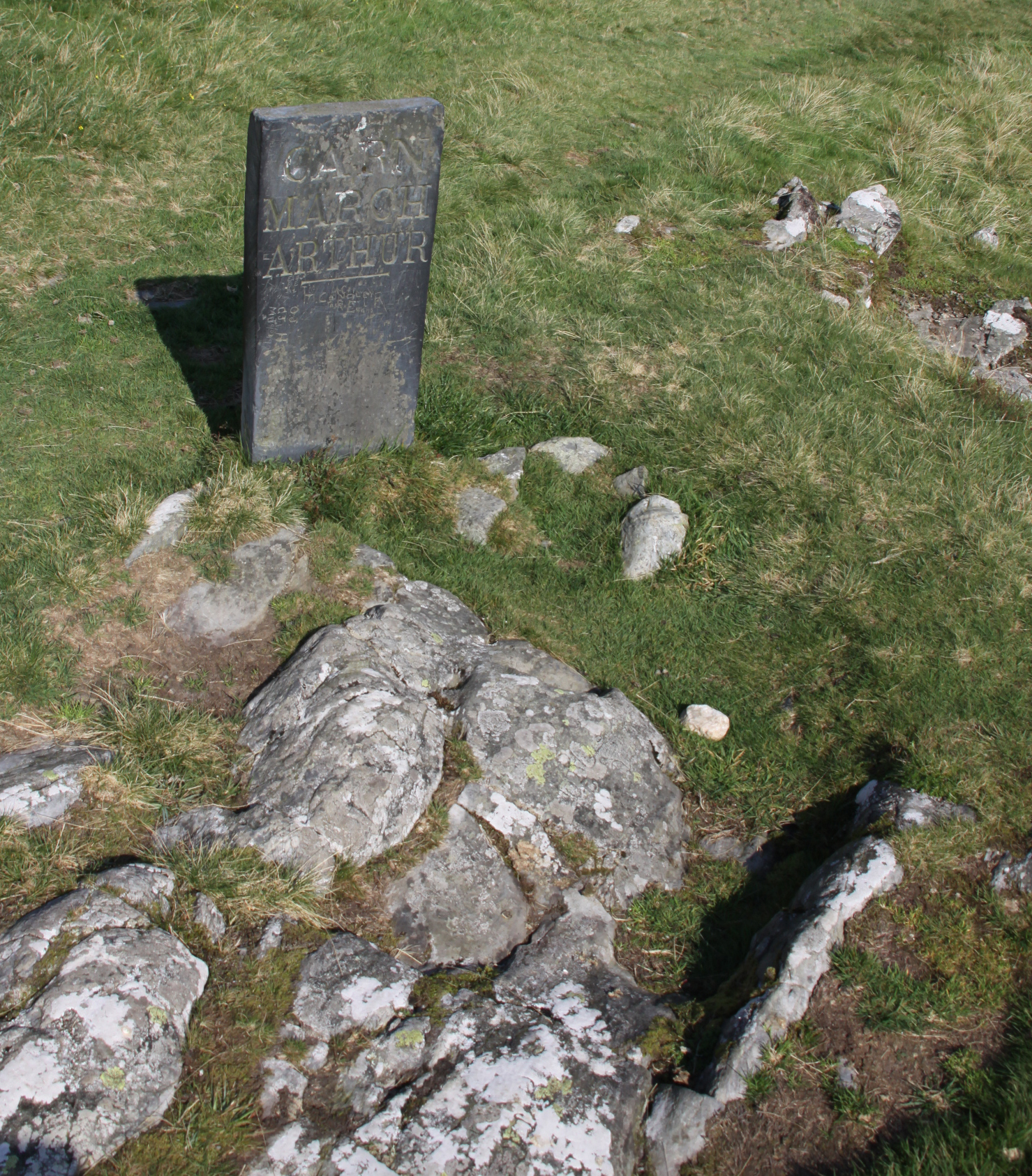
You may want to pause and puzzle over Arthur’s Stone, marked with a dignified slate rectangle, a bit like a headstone, inscribed with the words Carn March Arthur (the stone of Arthur’s horse, which in some legends is called Llamrai).  It has a role in the slaying of the story of the monster, called the afanc, that lived in the lake, which I’ve summarized below, and what you’re looking for is the hoof imprint of the horse of King Arthur.  Good luck with that.

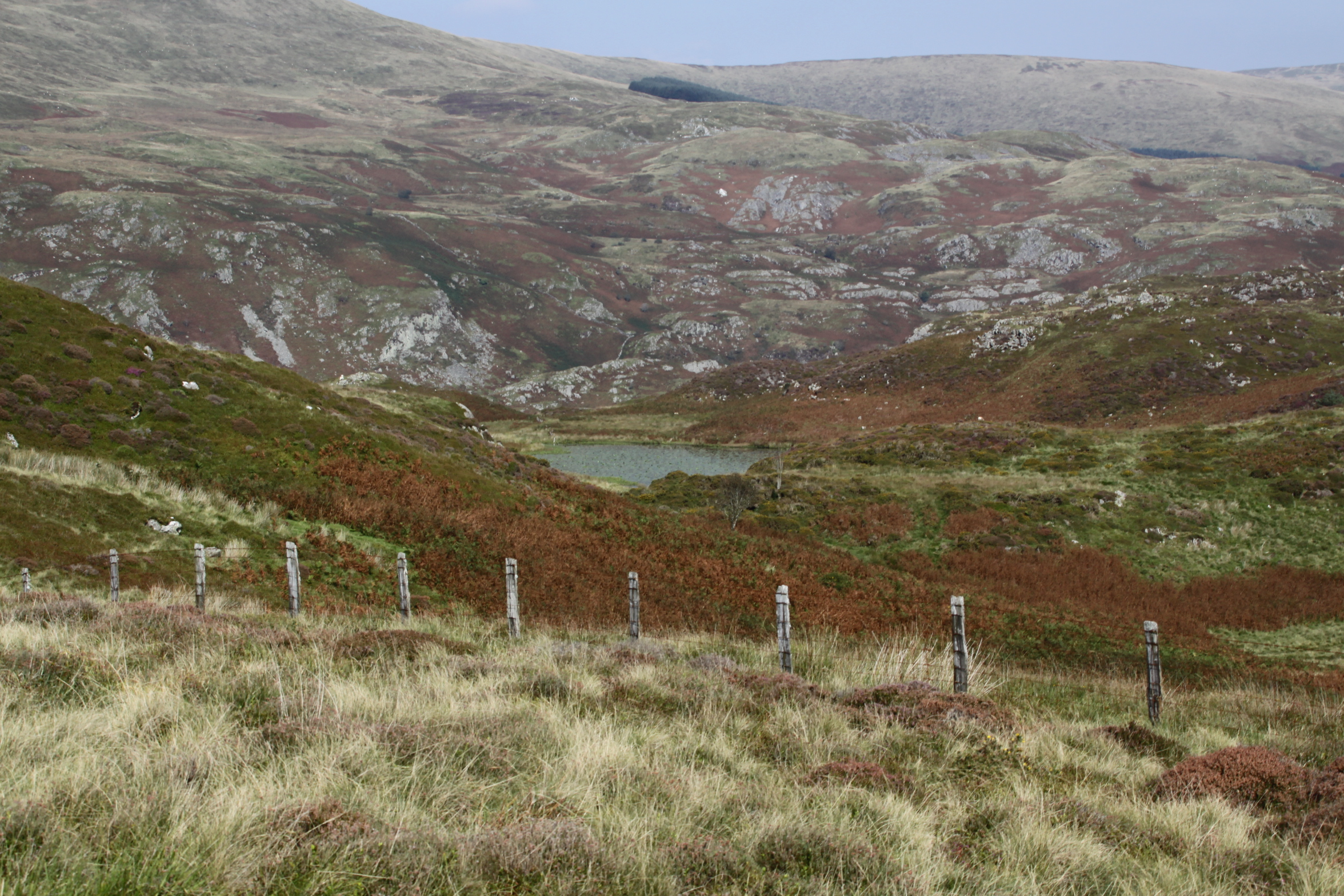
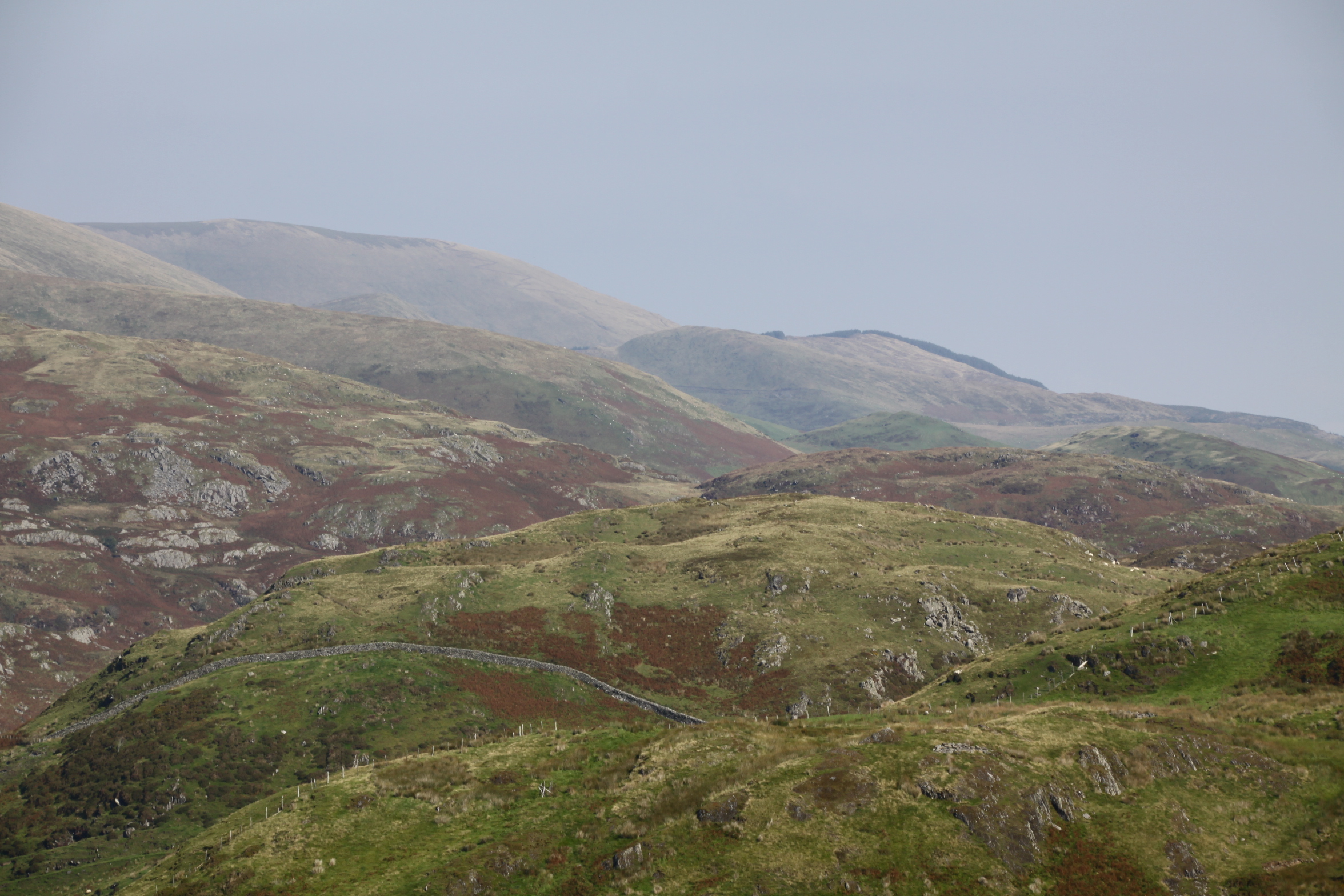
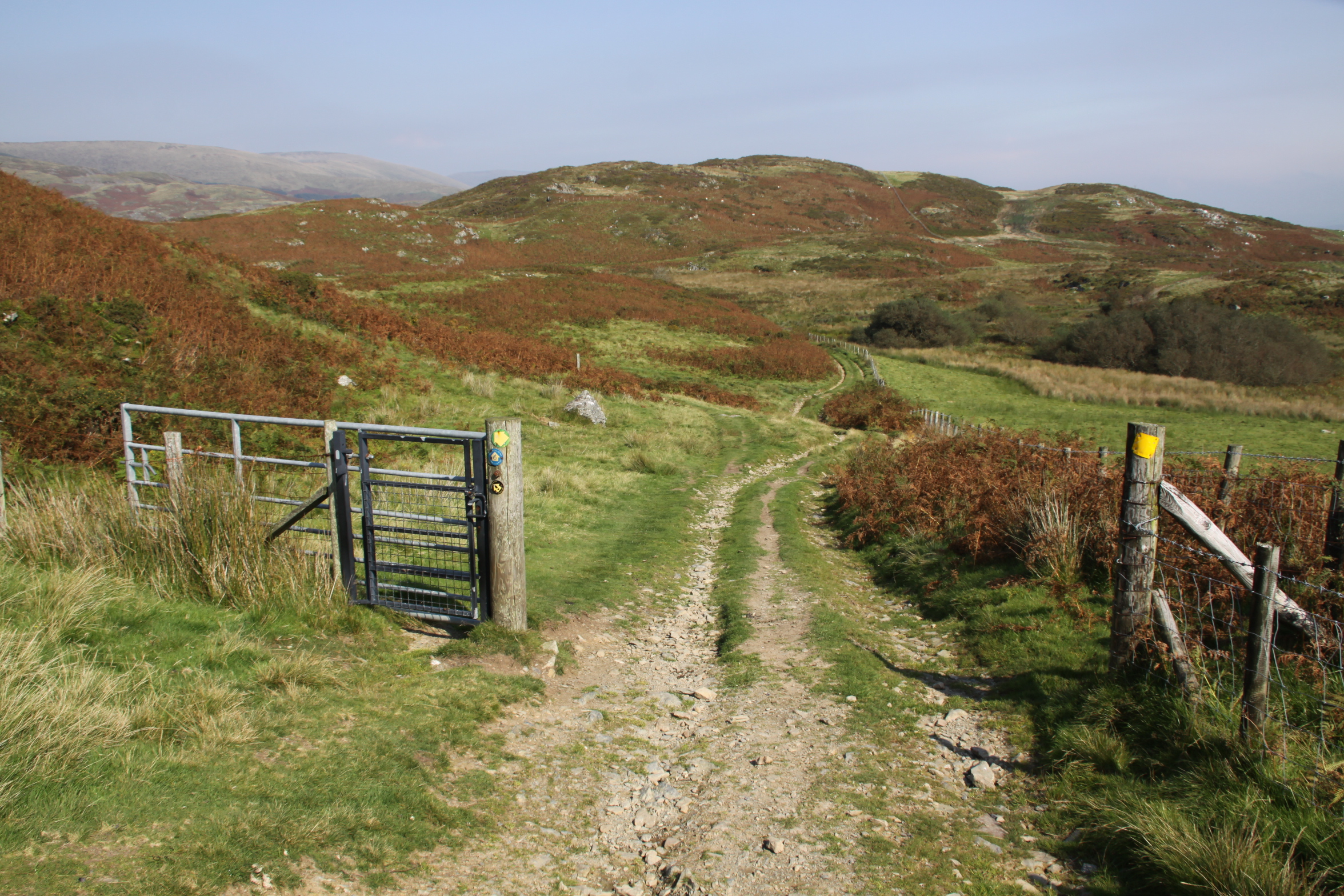
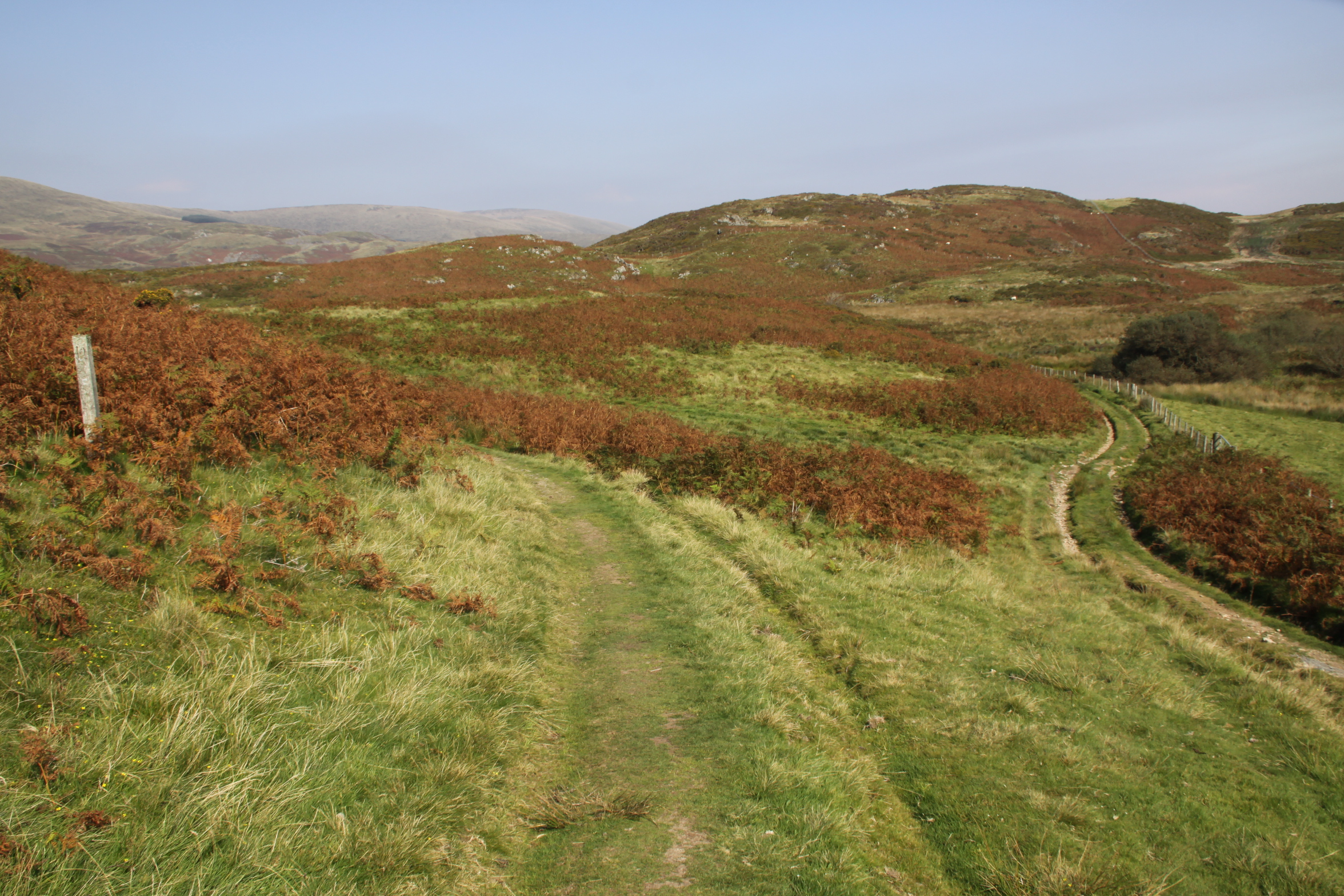
Carrying on a short way downhill, with views over the hills ahead, an array of colours as they fade into the distance, you go through an open gate (shown right) and the footpath for Llyn Barfog is just on the left.  It is easily missed – there is a wooden stake marking it (shown immediately below), but no signpost.  It is, however, quite well worn so if you keep an eye open you should be okay.  This takes you round the foot of a small hill rise and leads you directly to the lake, about a 10 minute walk.  I sometimes follow the sheep tracks to the top of the rise instead and then make my own way down, because the view down onto the lake is great, but the going isn’t easy – the sheep tracks are very narrow and the surface all around consists of big, dense clumps of heather that are not easy to walk between.

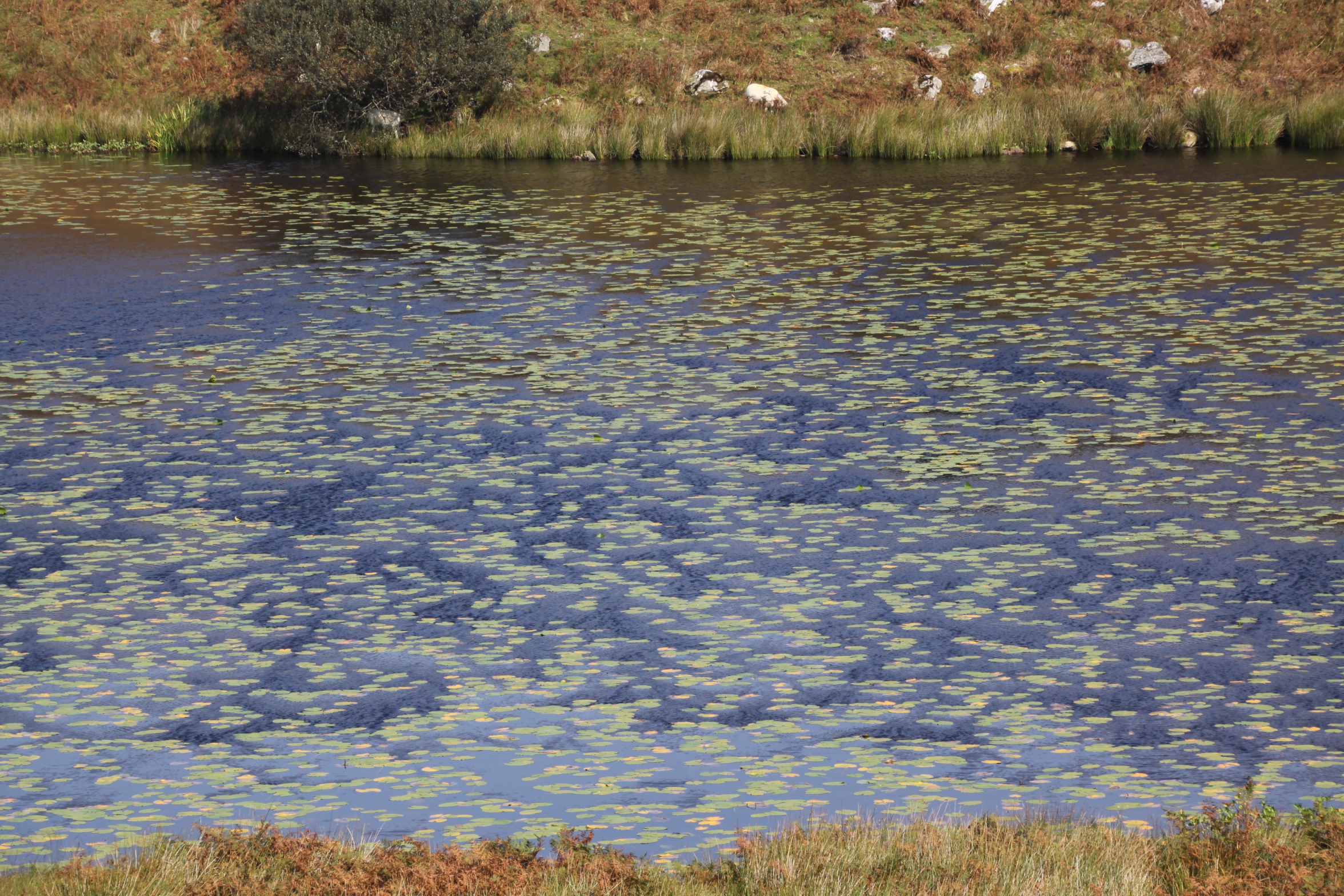
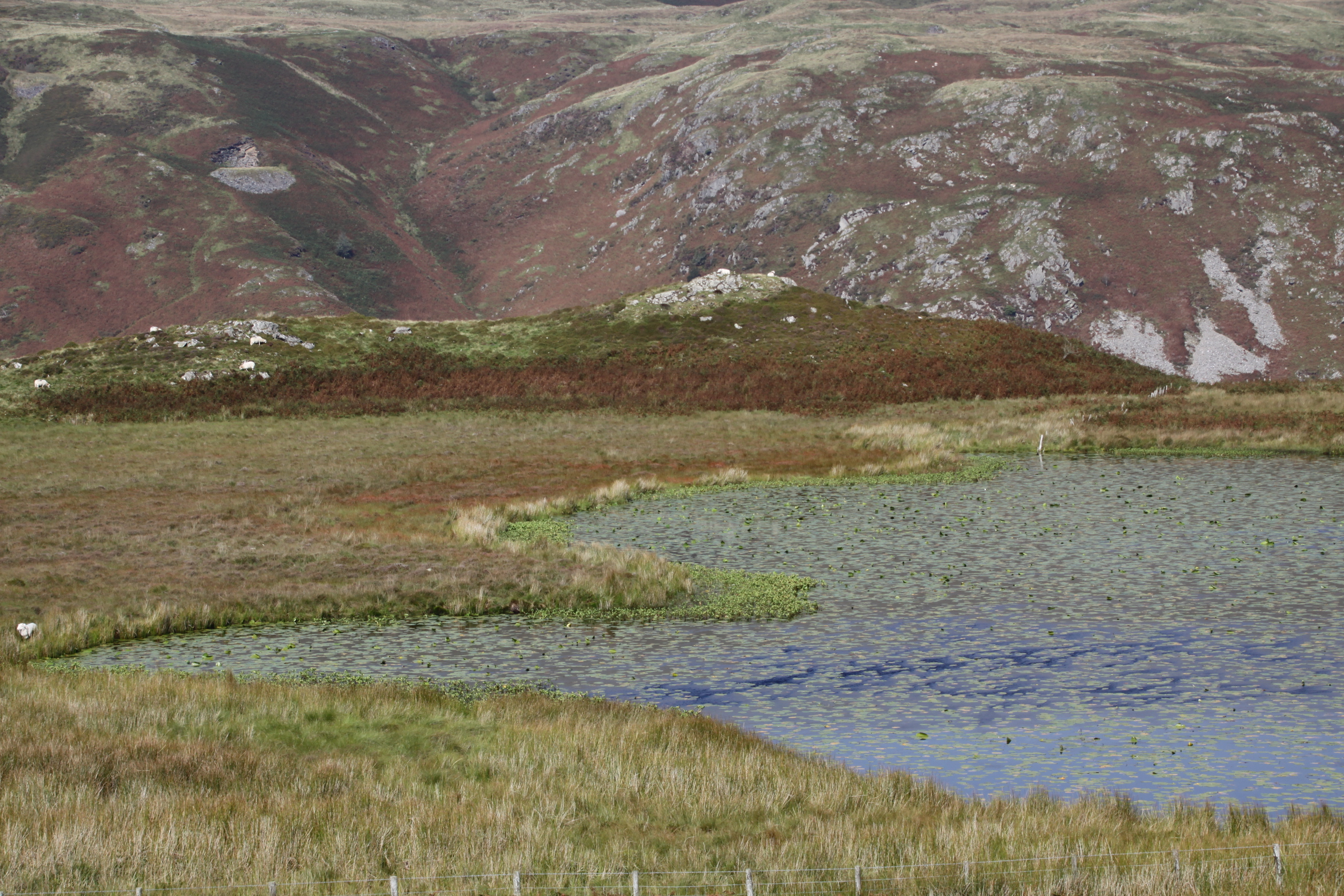
However you arrive at it, the lake always manages to be a bit of a surprise, so high up and so intensely blue.  Each time I visit, I half expect it to have vanished.  I’ve sadly never managed to catch it when the water lilies and other water flowers are in bloom, but today the lily pads were deeply green against the blue water and gave it a rather exotic feel, and the water glowed and sparkled in the sunlight.  I sat on a handy outcrop of quartzite for a while to enjoy the views and the silence.

The name “bearded” is thought to relate to the vegetation around its edges.  Unlike Arthur’s horse’s stone, one really could imagine this being a source of myth and legend, and indeed, there are at least two.  One concerns the water monster known as the afanc, which is associated with other lakes too, a legend that eventually had an Arthurian spin on it.  Here’s the main thrust of it.  The afanc was the cause of flooding and other damage to good land.  In some versions he lives in a cave and slays three princes a day who come to kill him, but they are resurrected, and the cycle repeats.  In the case of Llyn Barfog, the afanc must be lured from the water by a heroic figure who will finish him off, and this hero eventually becomes Arthur.  Arthur and his horse pull the monster from the lake, finishing it off, and one of the horse’s hooves leaves its imprint in the Carn March Arthur.  See more on the Coflein website, where you can read a Llyn Barfog legend of green-clad fairies, two cows in love and a greedy farmer.

The return trip is just as good.  The wind had got up a bit, so it was nowhere near as hot.  On the entire walk I saw only six people, three separate couples.   That surprised me,because at this time of year it is usually quite popular with walkers.


A relaxing stroll on the beach after a frustrating walk

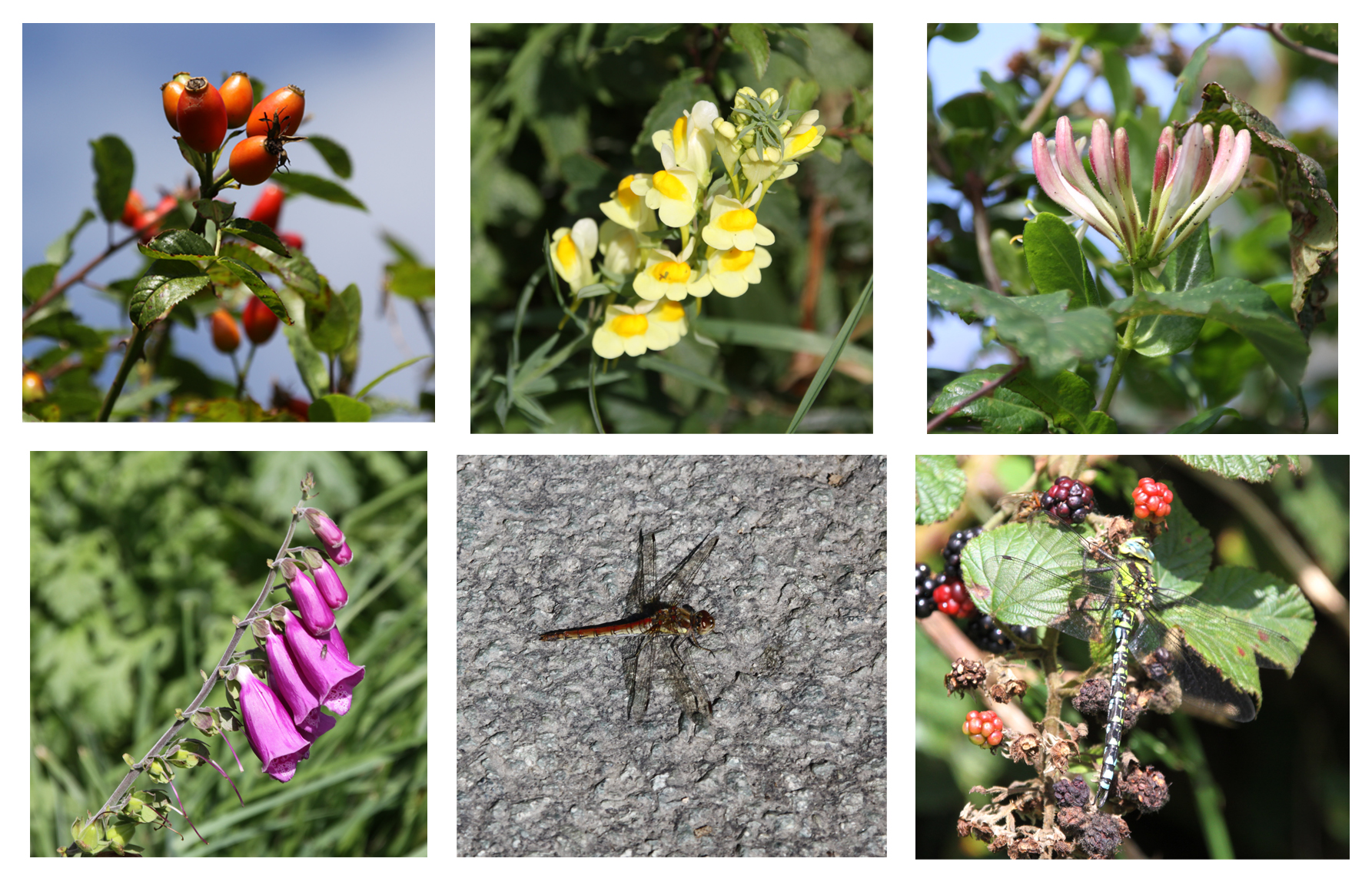
Nearly every walk I’ve done around Aberdovey has been a riotous success, but on Saturday it all went slightly wrong in spite of the stunning sunshine.  I was trying to scope out a route to another hillfort.  I had already made the mistake of crossing a footpath through a field that turned out to be very boggy, so ended up with soggy socks and damp jeans, before turning onto a single track road for a couple of kilometers.  Its hedges were so high that I couldn’t see much of the scenery and when I turned onto the footpath it was so overgrown with brambles that it was a struggle to get anywhere.  There were a few nice flowers, including toadflax, lots of honeysuckle and a few late foxgloves, and a couple of damselflies and dragonflies, but otherwise it was just a fight against the increasingly vigorous thorny tendrils so eventually, when they were knee-high and seriously impeding progress, I gave up.  Fortunately I was in jeans rather than my usual shorts, which saved my legs, but it was disappointing.  There’s another approach that I’ll try on another day.  I decided to return home, stopping first at the beach outside the crush in Aberdovey itself, parking up opposite the cemetery.

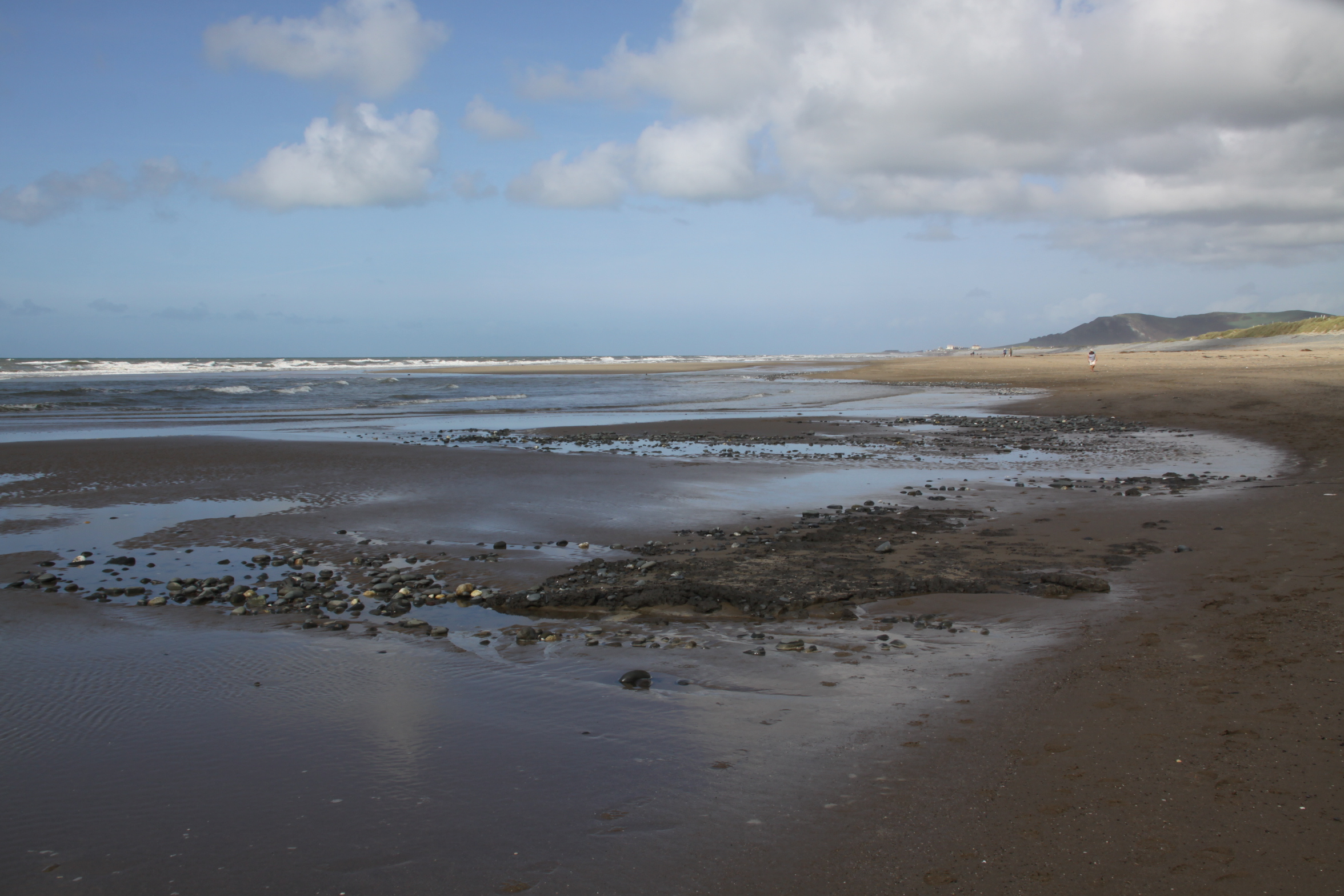
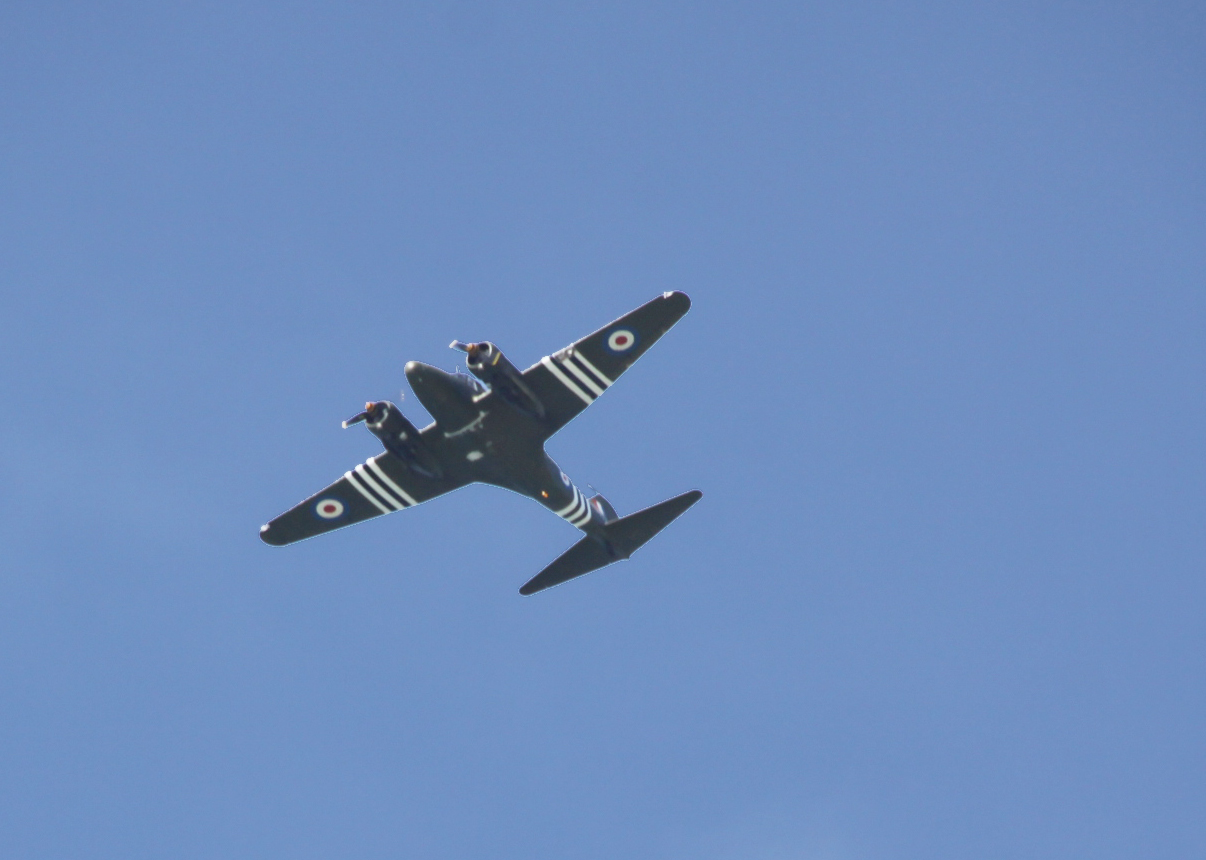
As I crossed the dunes and walked across the grey pebbles down onto the beach, the sight was rather bizarre – facing towards Aberdovey it looked as though several lines of humans in the distance, in silhouette, were moving in slow motion towards me.  It was slightly eerie, shades of zombie invasion movies.  Fortunately, they were just out to enjoy the sunshine, like me.  There was a vintage RAF propeller plane overhead.  Many thanks to Hugh Tyrrell for responding to my request for information about it.  He says that it is a restored Avro Anson from Sleap airfield in Shropshire, painted in D Day colours.  It is owned by a aviation enthusiast who takes passengers for local trips. This time he was further away from home and was probably flying back after visiting Llanbedr.  It was a really marvellous sight, with a very distinctive engine sound.  An elegant visitor and a contrast to the super-fast jets that we often have roaring overhead around here, also rather fascinating in their own particular way.

Stonechat in the sand dunes

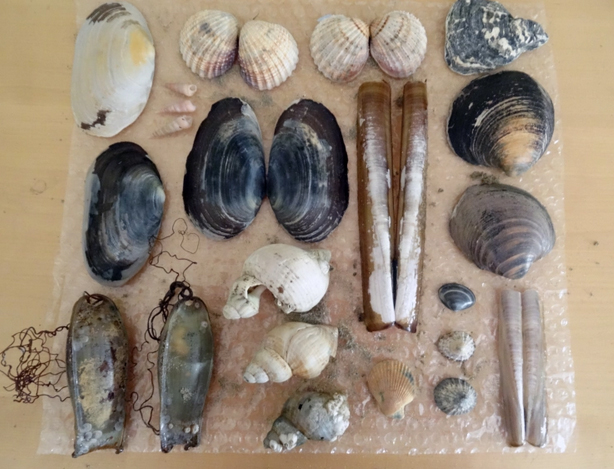
Click to see the details of an amazing crush of shells, in a part of the beach that has an enormous amount of razor clam shells. Razor clam shells always give me real craving for Portuguese food!


Dyfi National Nature Reserve booklet

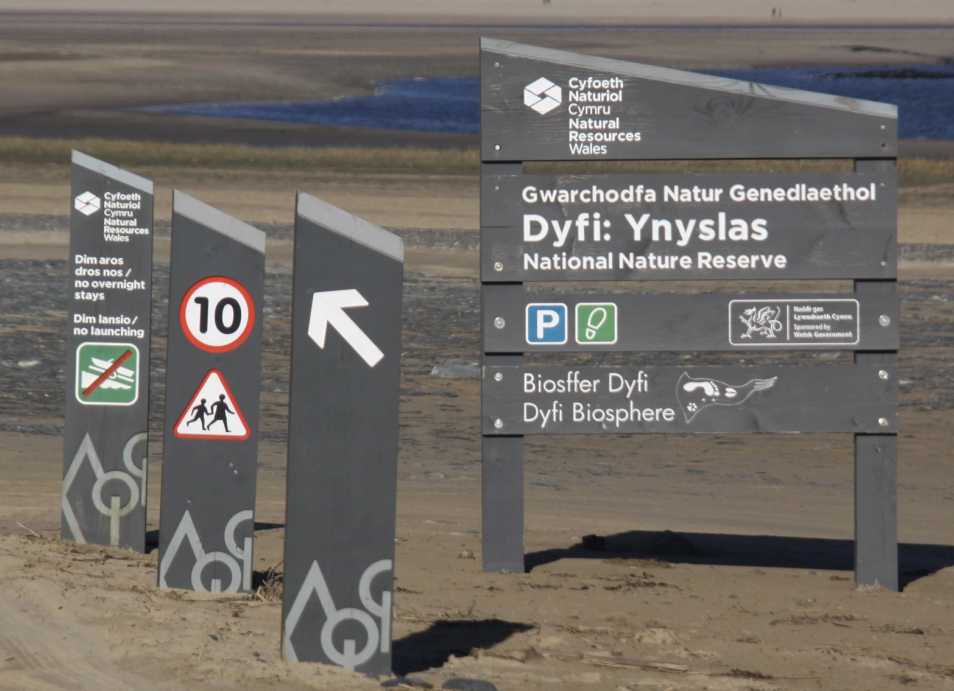
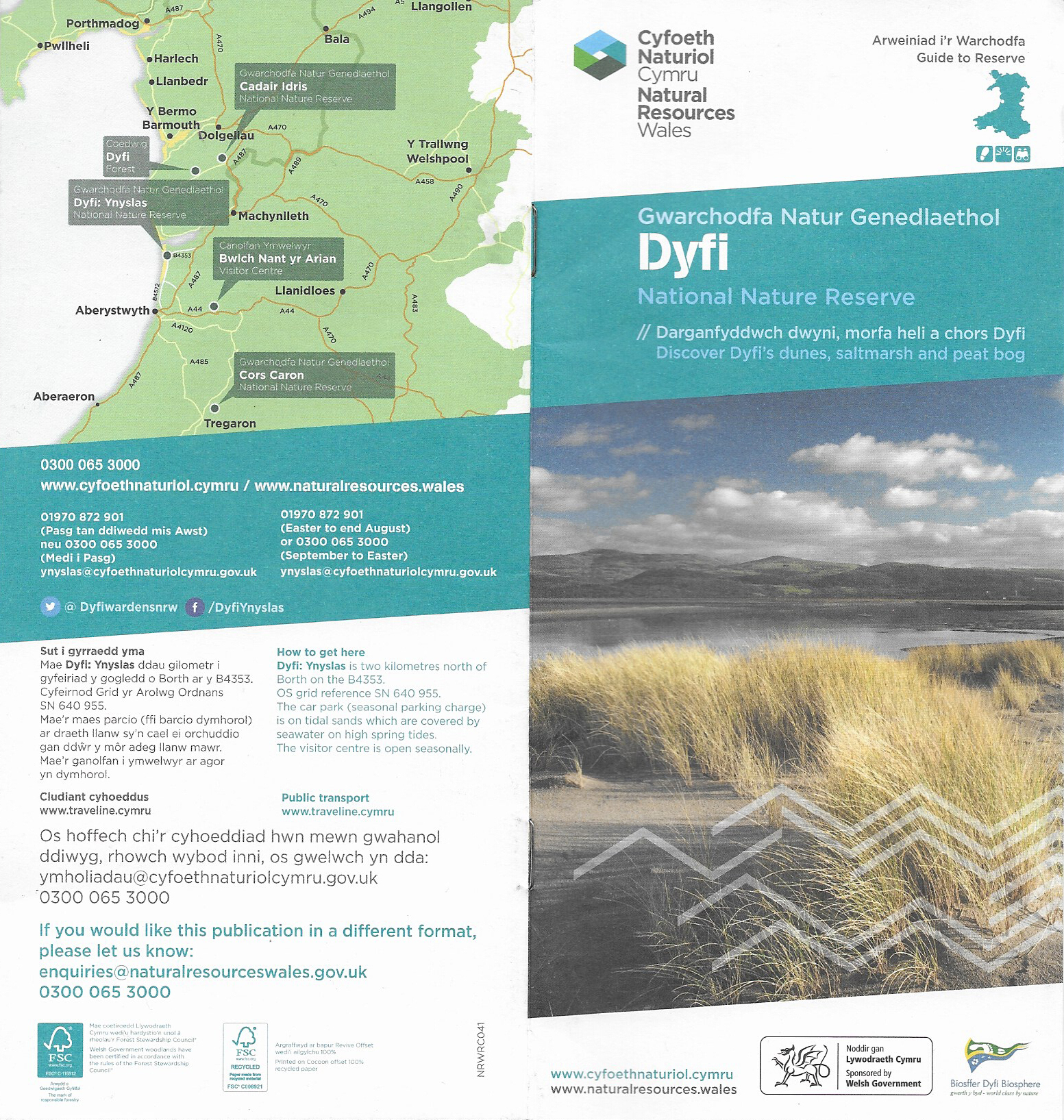
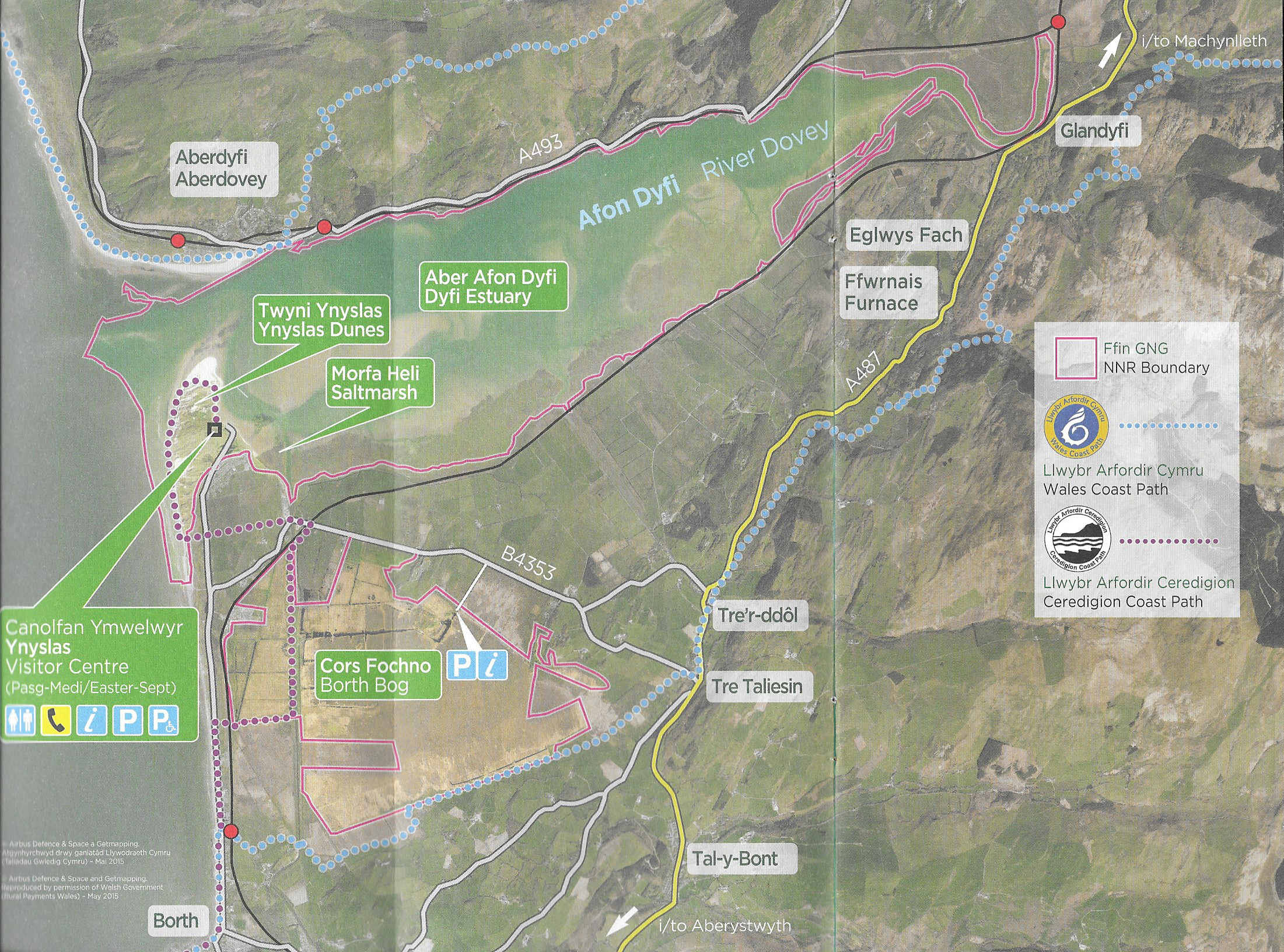
Whilst sorting out some stuff on one of my bookcases I found a bilingual leaflet/booklet produced by Natural Resources Wales giving details of the Dyfi National Nature Reserve, including walks and seasonal highlights.  It was free of charge, and I think I picked it up at the Ynyslas Visitor Centre.  The Dyfi National Nature Reserve includes the Ynyslas sand dunes, the saltmarsh, Cors Fochno, the 5000 year old peat bog and a wide range of wildlife.  It’s an excellent little publication, which I have scanned so that you can download it here.  The following shows the front and back cover, and the fold-out map.

The map shows the village of Furnace on the A487, which has the excellent and well explained remains of the Dyfi royal silver mint and charcoal blast furnace.  I’ve posted about it on the blog here, if you are interested in combining a visit to it with a Dyfi National Nature Reserve walk.

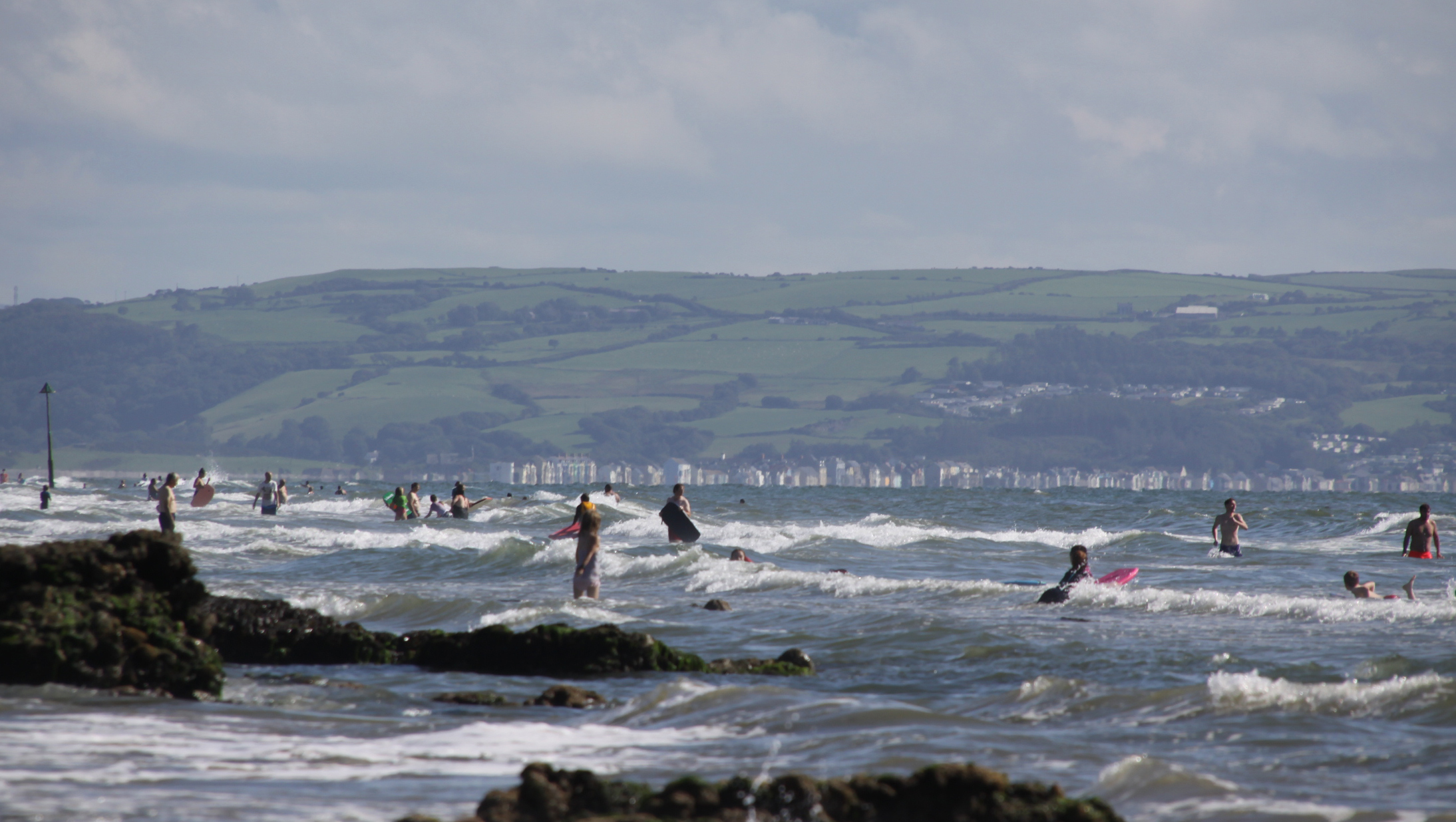
White horses and honeycomb reefs at low tide – the beach at Sandilands (Tywyn)

After a walk along the Dysynni last week, I did a three point turn by the footbridge and drove back along the line of the railway.  Instead of turning left to head back towards Tywyn I decided to turn right over the level crossing and park up to see if I could reproduce the picture from the Cardigan Bay Visitor that I posted last week.    Unfortunately for that plan I had reckoned without the addition of a caravan park since the original illustration was drawn, and both the railway track and the village were completely hidden behind it.  On the other hand, the beach at low tide was a complete revelation.

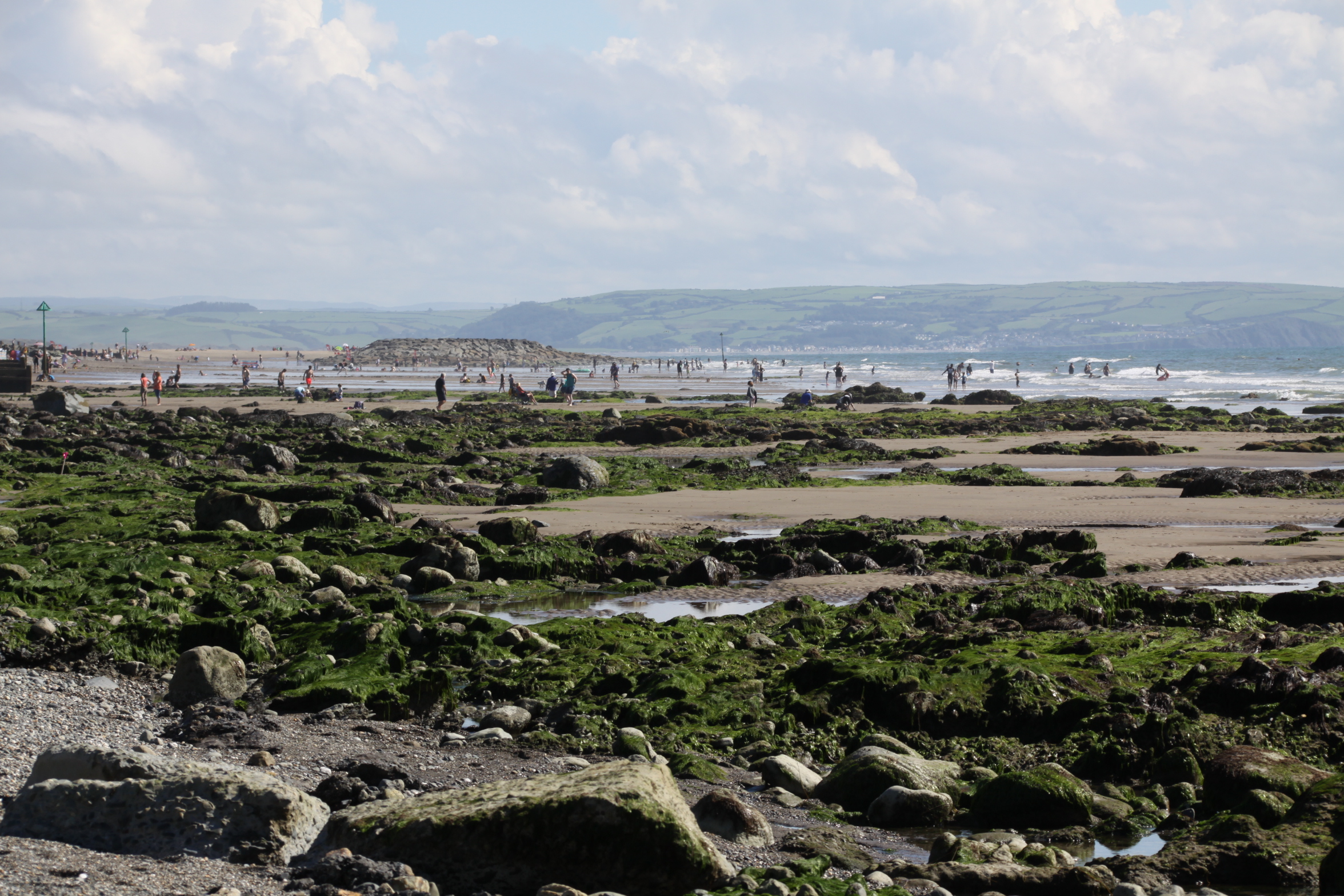
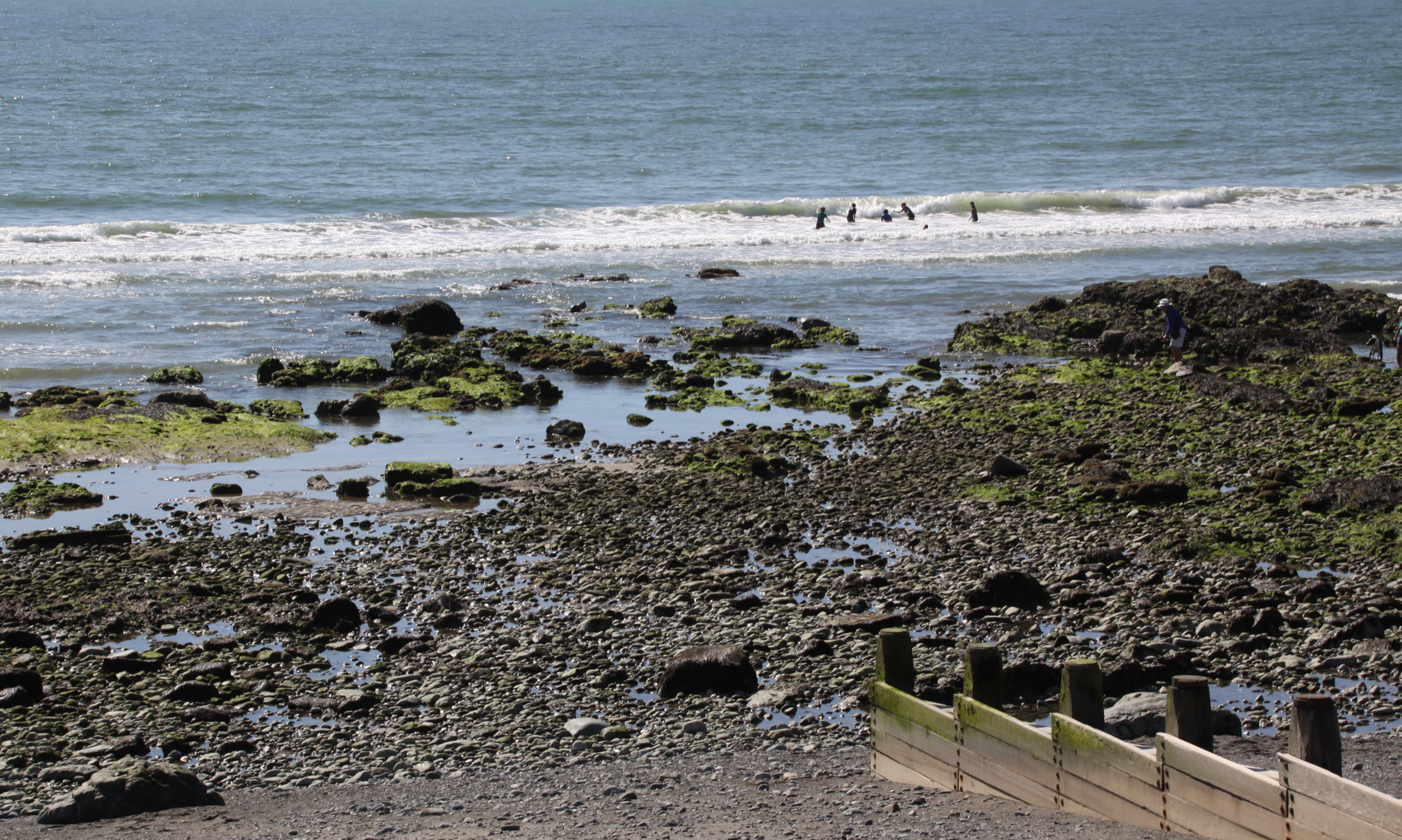
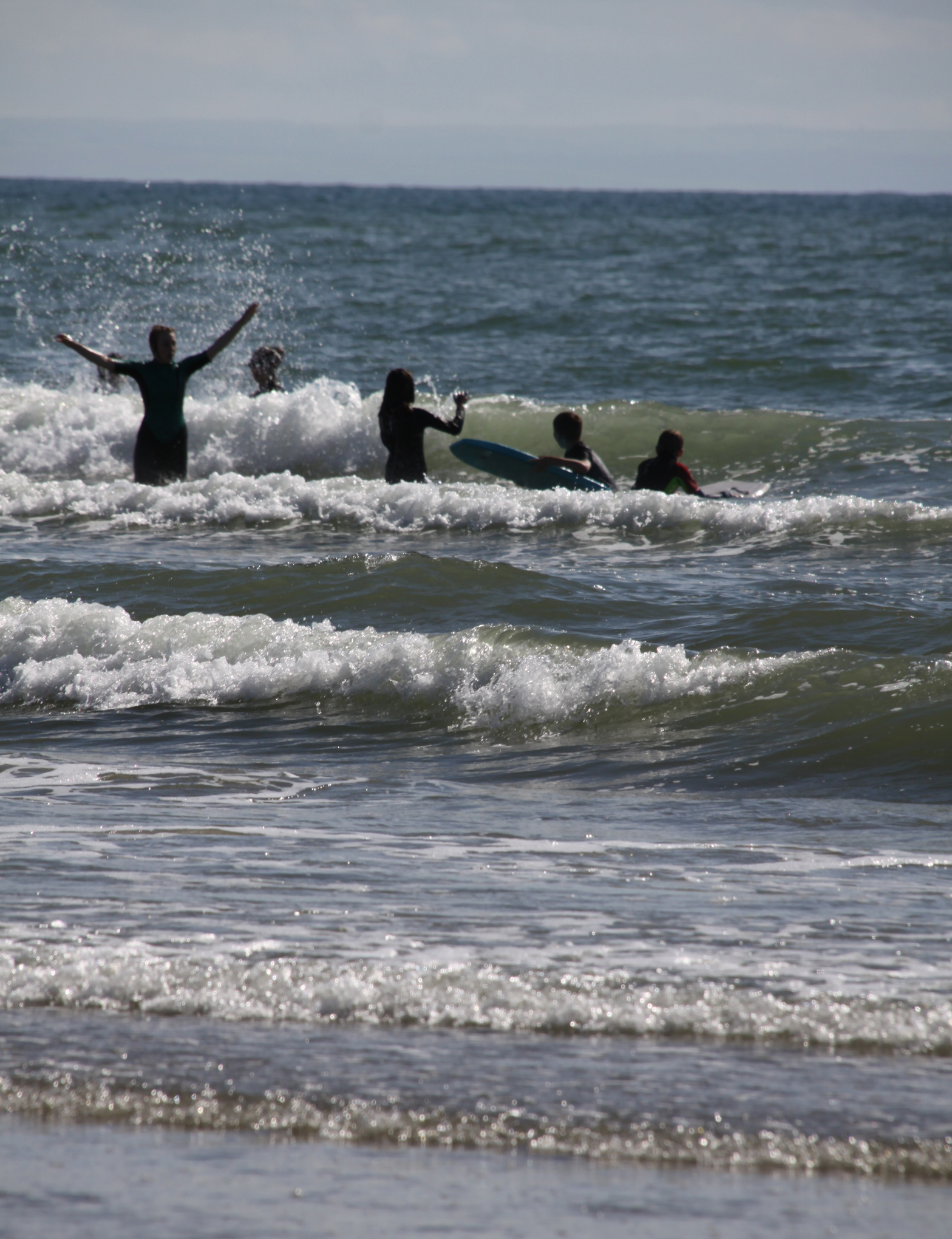
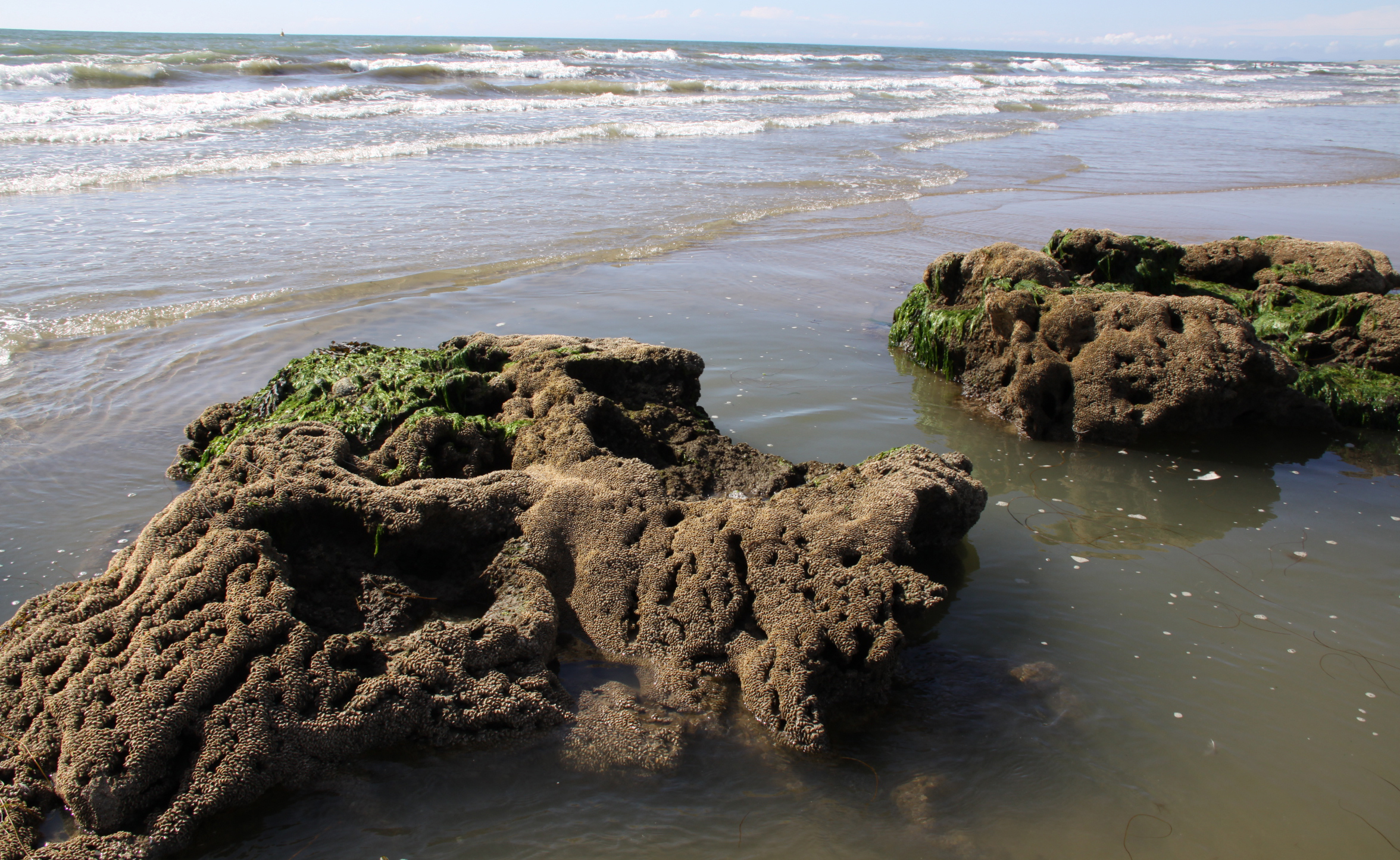
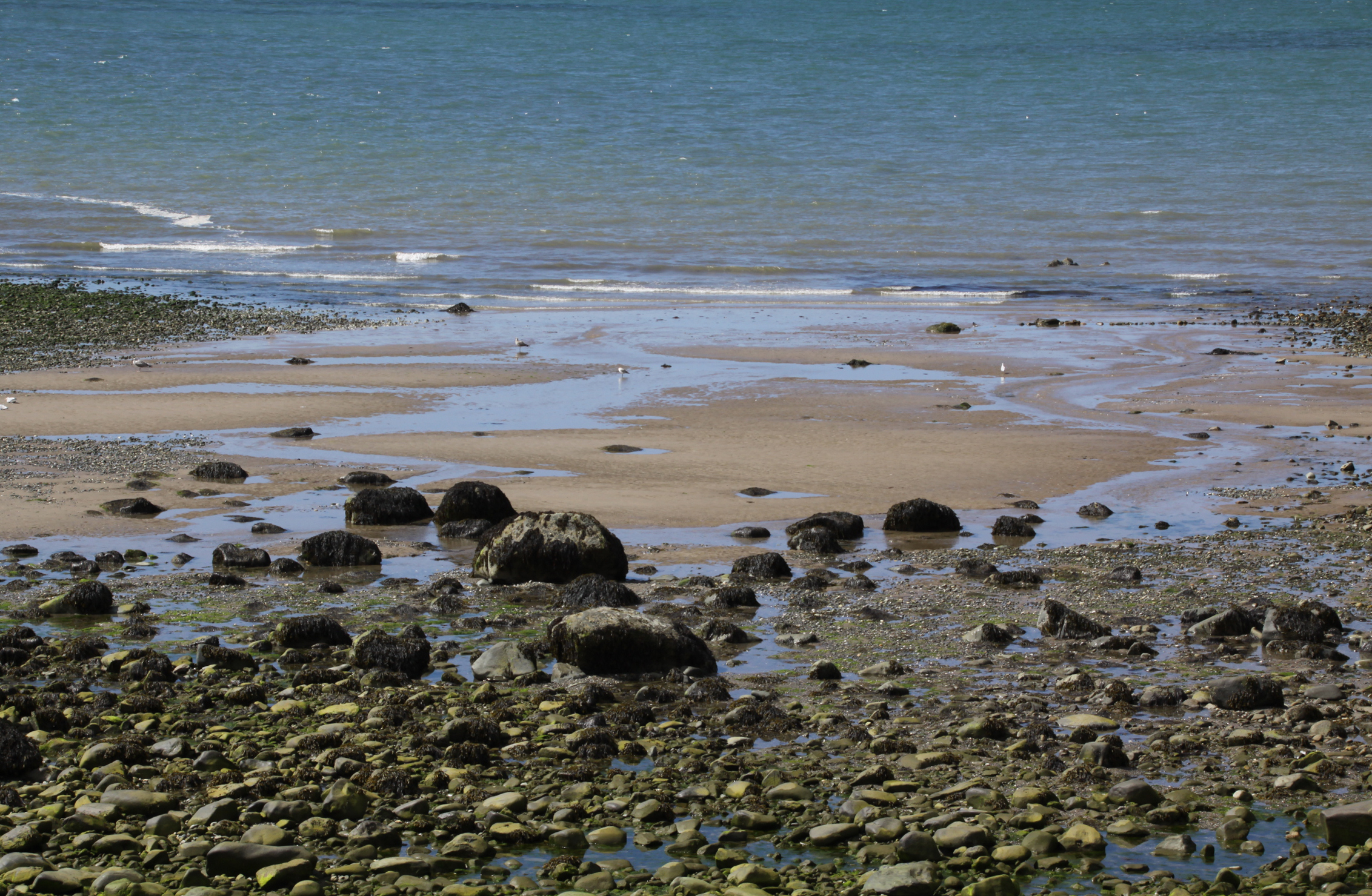
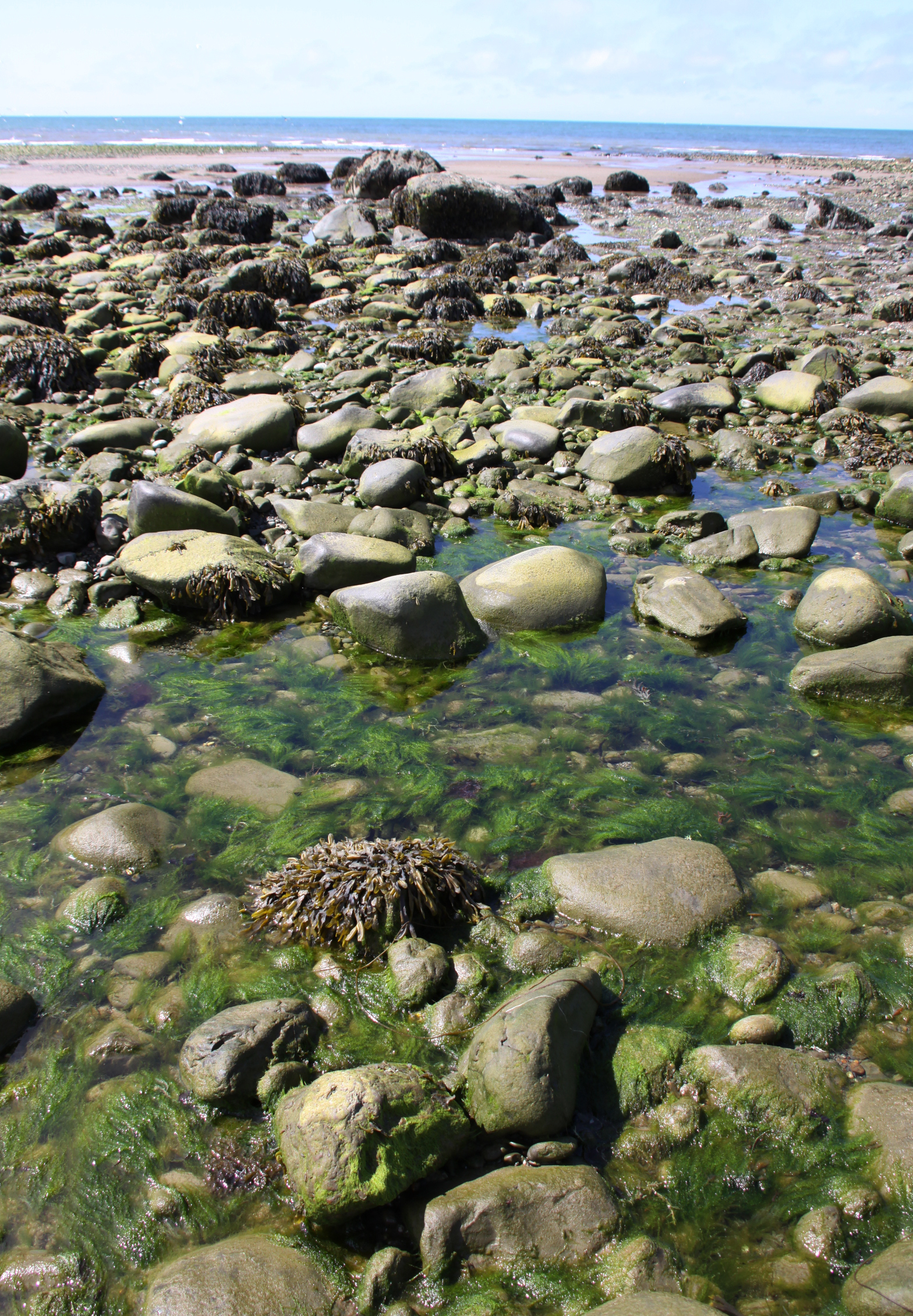
This part of Tywyn is apparently called Sandilands, but is something of a misnomer.  There is certainly sand on the beach, but mostly it is a mixture of fine and coarse gravel, surprisingly harsh on the feet, with some swathes of pebbles around, all divided by wooden breakers.  I had never seen it at low tide, and was amazed to see that the sloping beach ended in huge green-topped rocks and lovely weed-filled rock pools with sand between them, with an enormous stretch of wide open sea on the other side.  The sea was splendid, with lovely white-topped waves chasing each other in, crashing on the rocks and pebbles and sounding just what a seaside should sound like.

There were quite a few people around, most large family/friend groups, but not so many that social distancing was a problem, and it was all terribly civilized.  I had really enjoyed having the Tonfanau beach all to myself, but it was also splendid to see people of all ages launching themselves into the waves and having a really great time.  The caravan park overlooking the beach takes the edge off the beauty of the place, but keep your eyes facing seawards and there is nothing to disappoint.

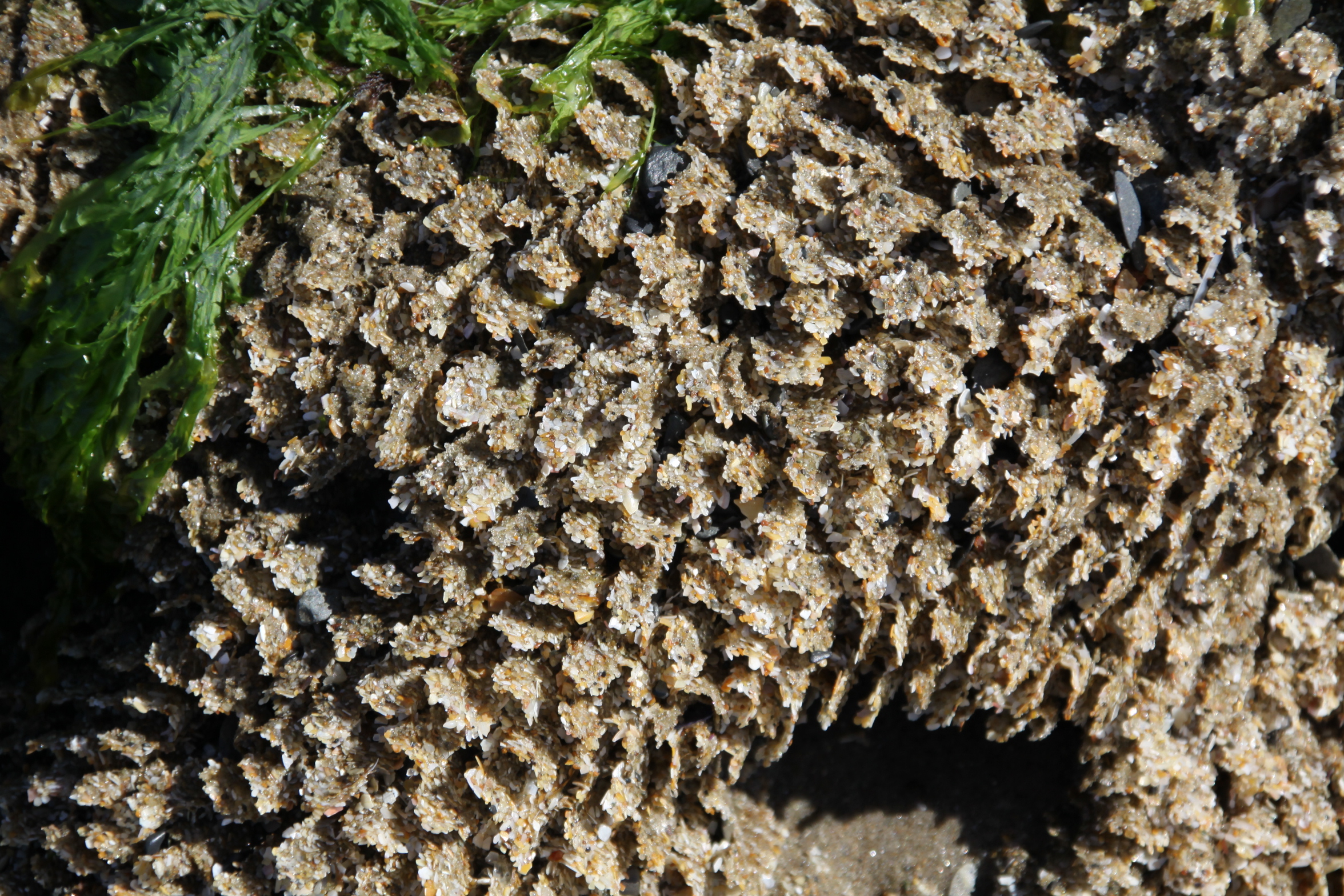
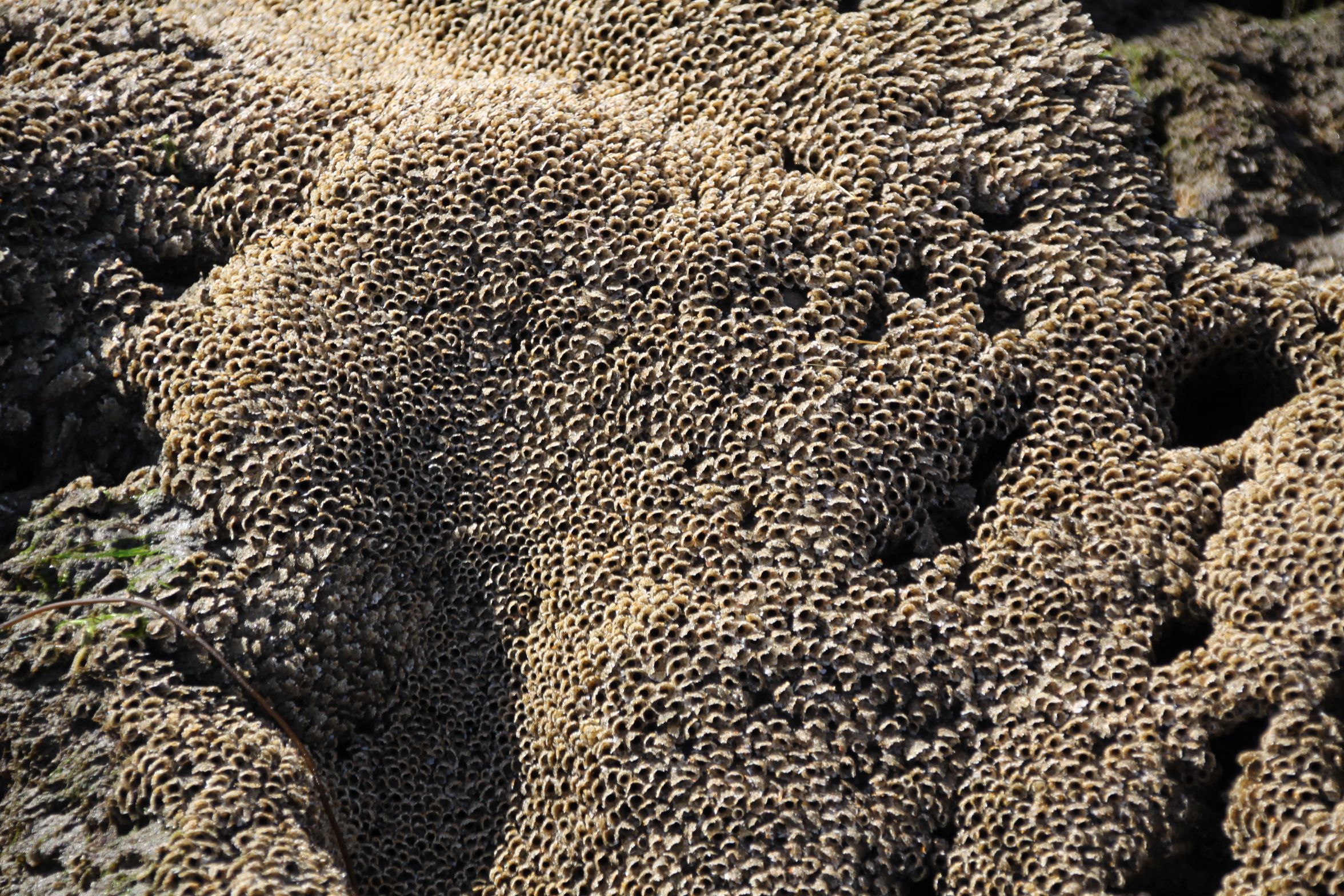
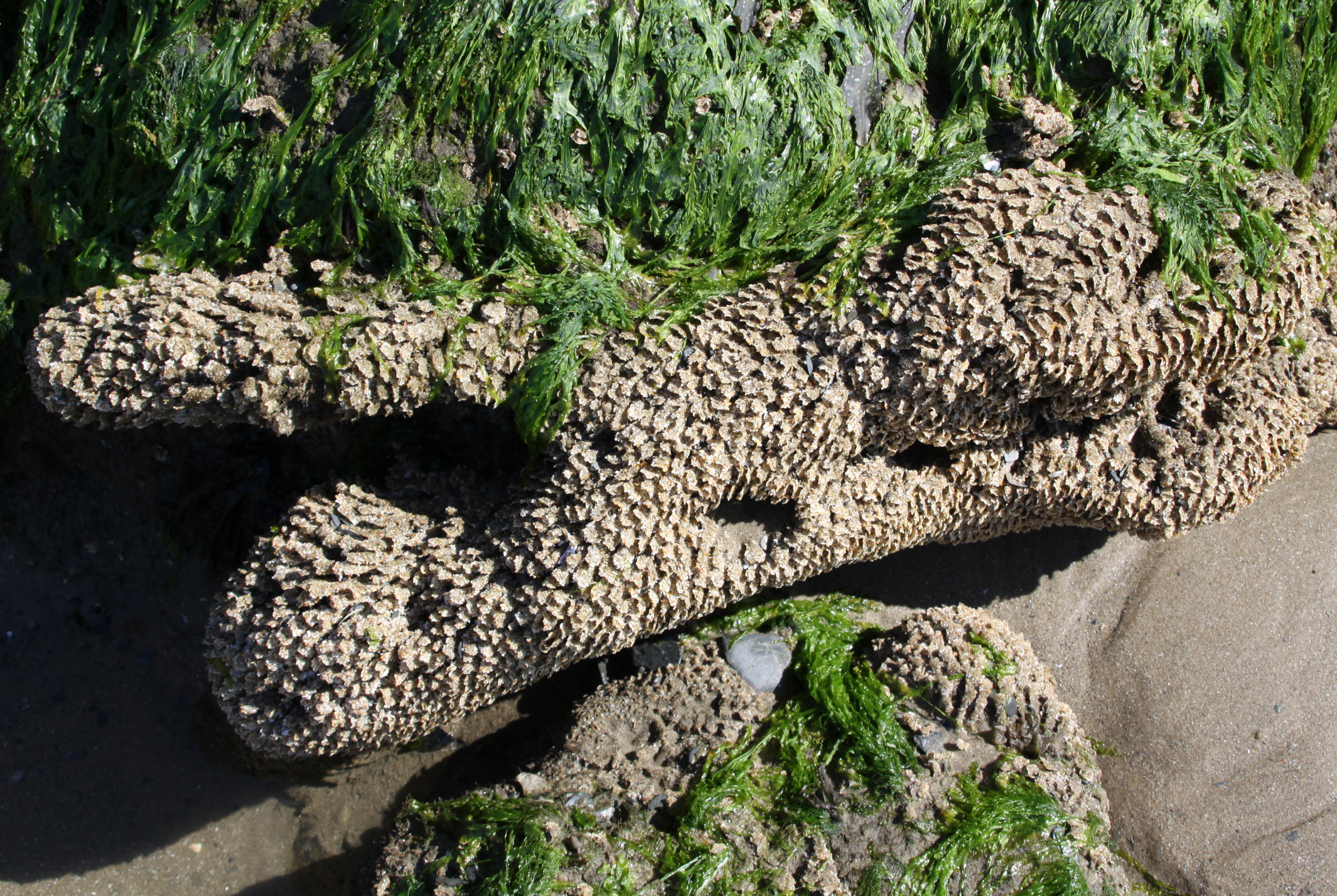
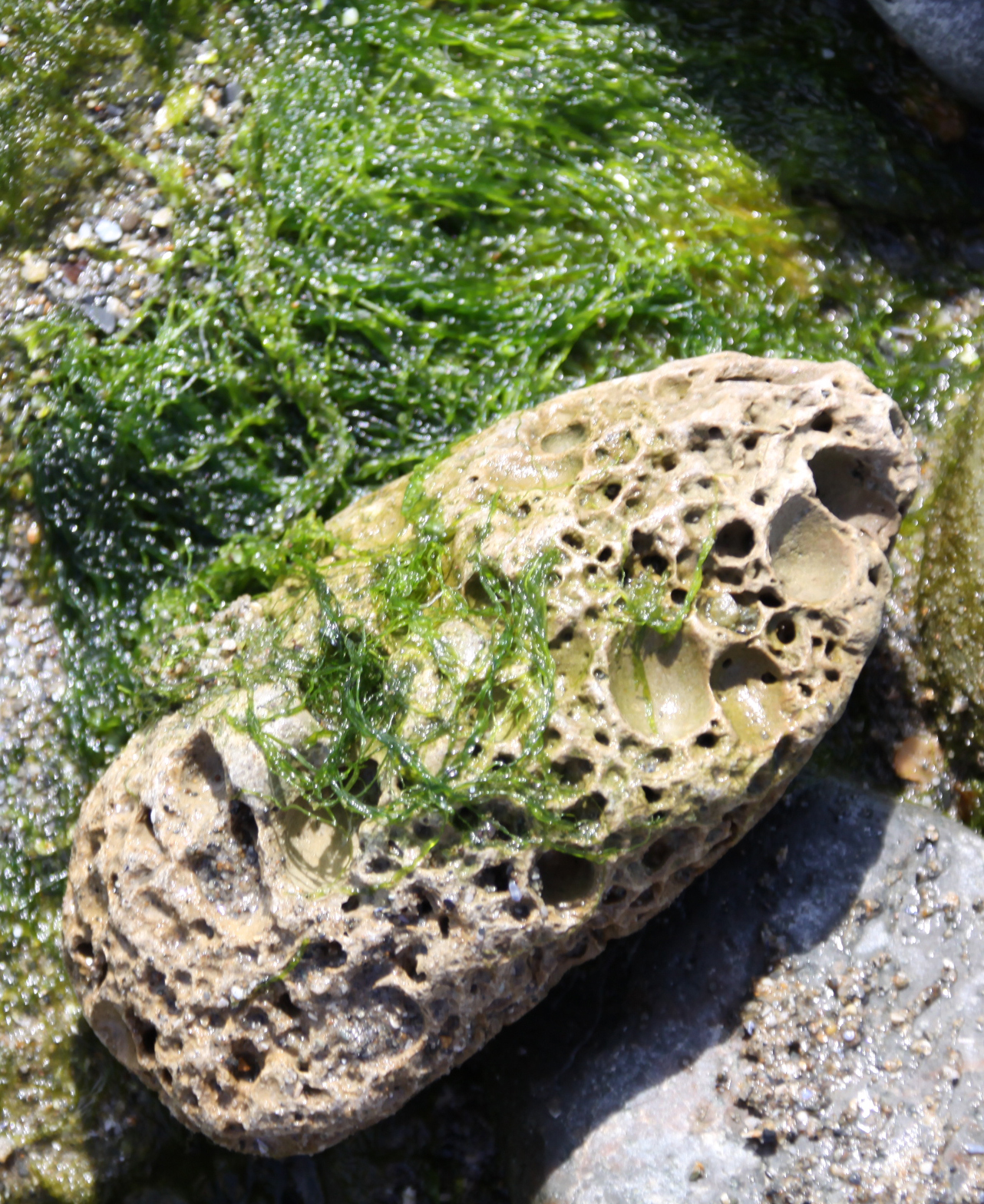
I was intrigued by what looked like huge boulders made of coral.  When I stooped to touch one, it was clear that these rock-like structures were made of sand, and consisted of fine walls dividing thousands of tiny tunnels. The beach is full of them, and they are really very lovely.  After a rumble round the web I found that they are Honeycomb worm (Sabellaria alveolata) colonies.  The reef structures resemble honeycomb.  The colonies form on hard substrates and they need sand and shell fragments for tube-building activities.  They manufacture the tubes from mucus to glue the tiny pieces together.  When the tide is out the worms retreat deep into the tunnels, but when the tide covers their reefs their heads protrude and they feed on micro-organisms in the water, including plankton.

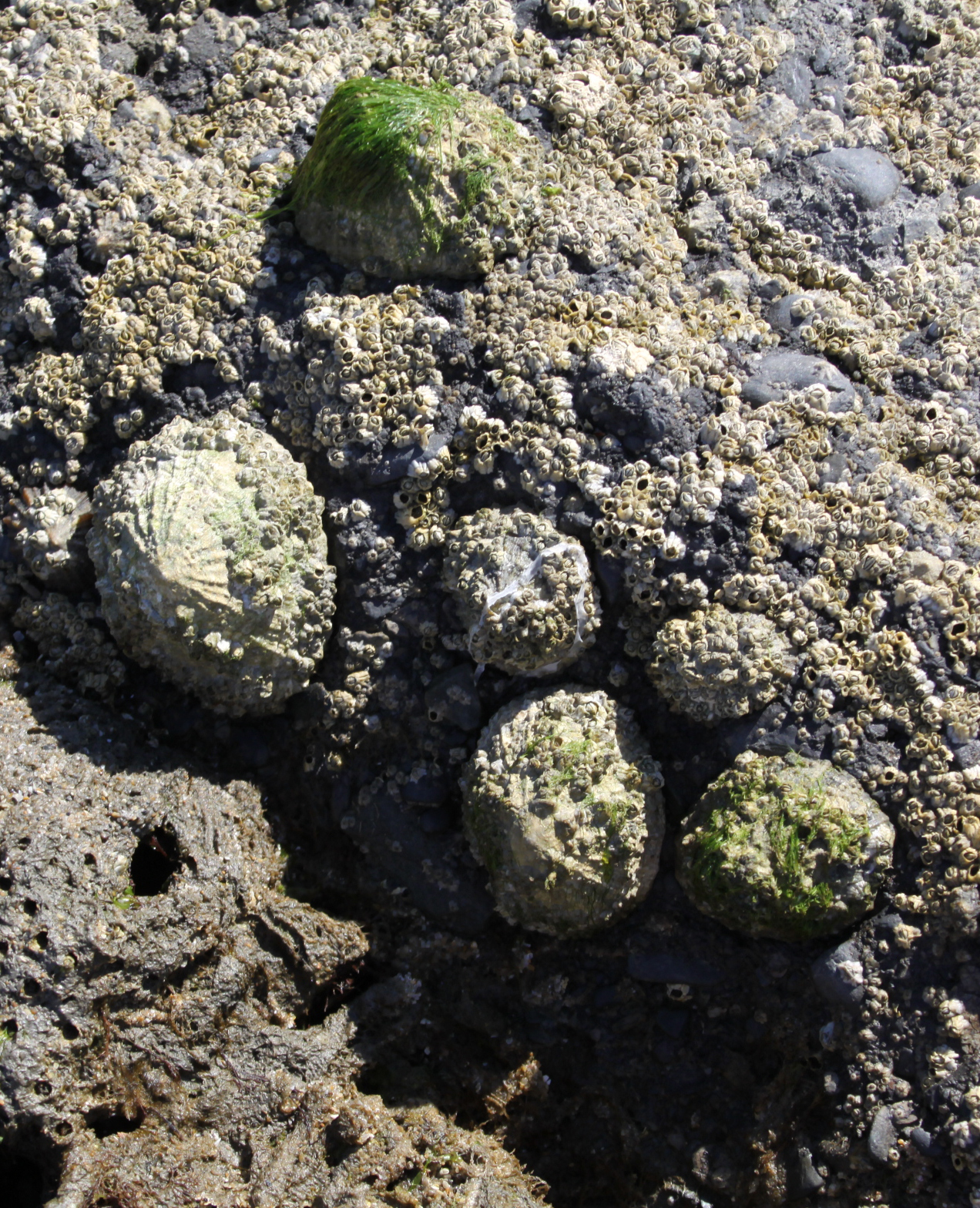
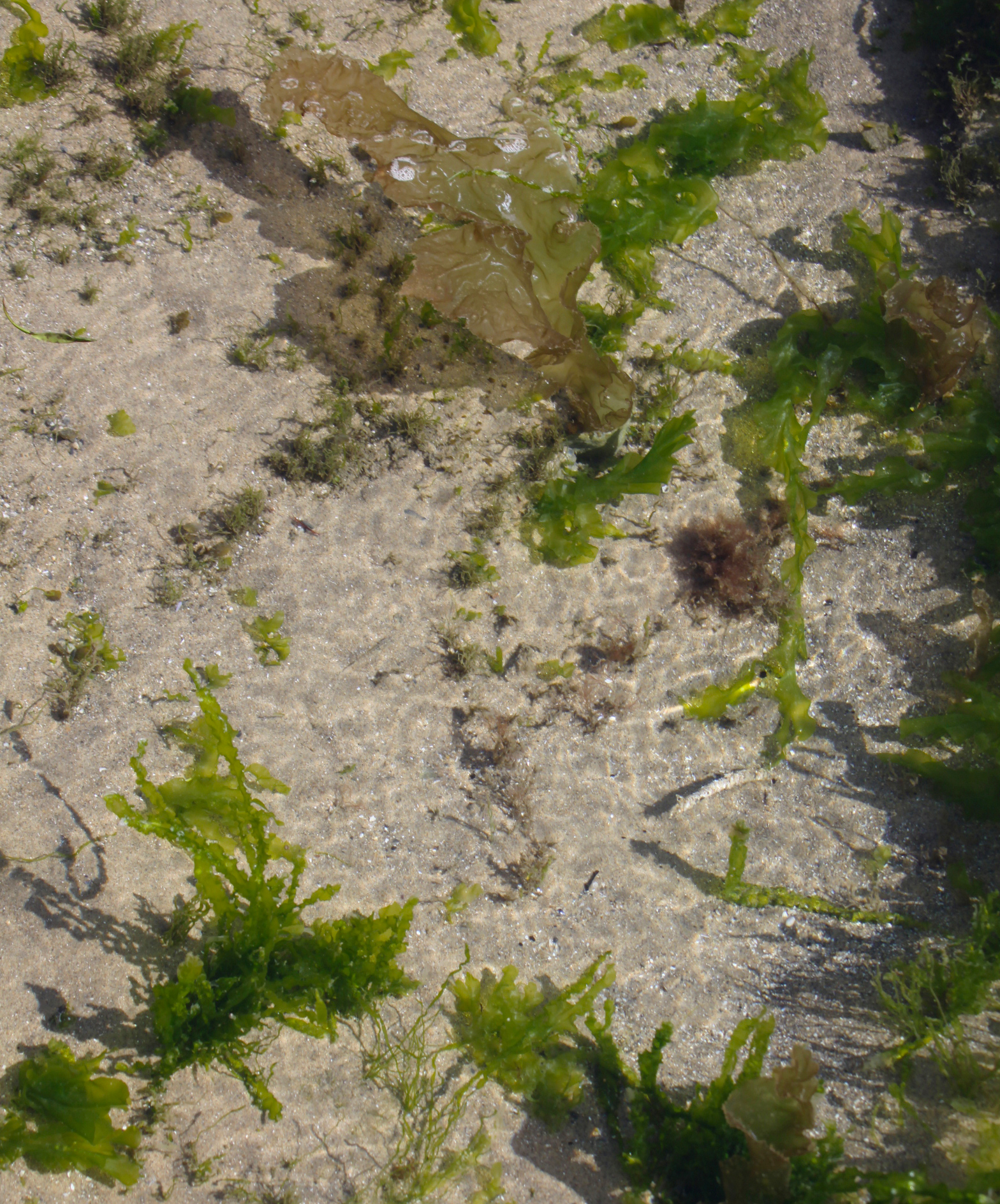
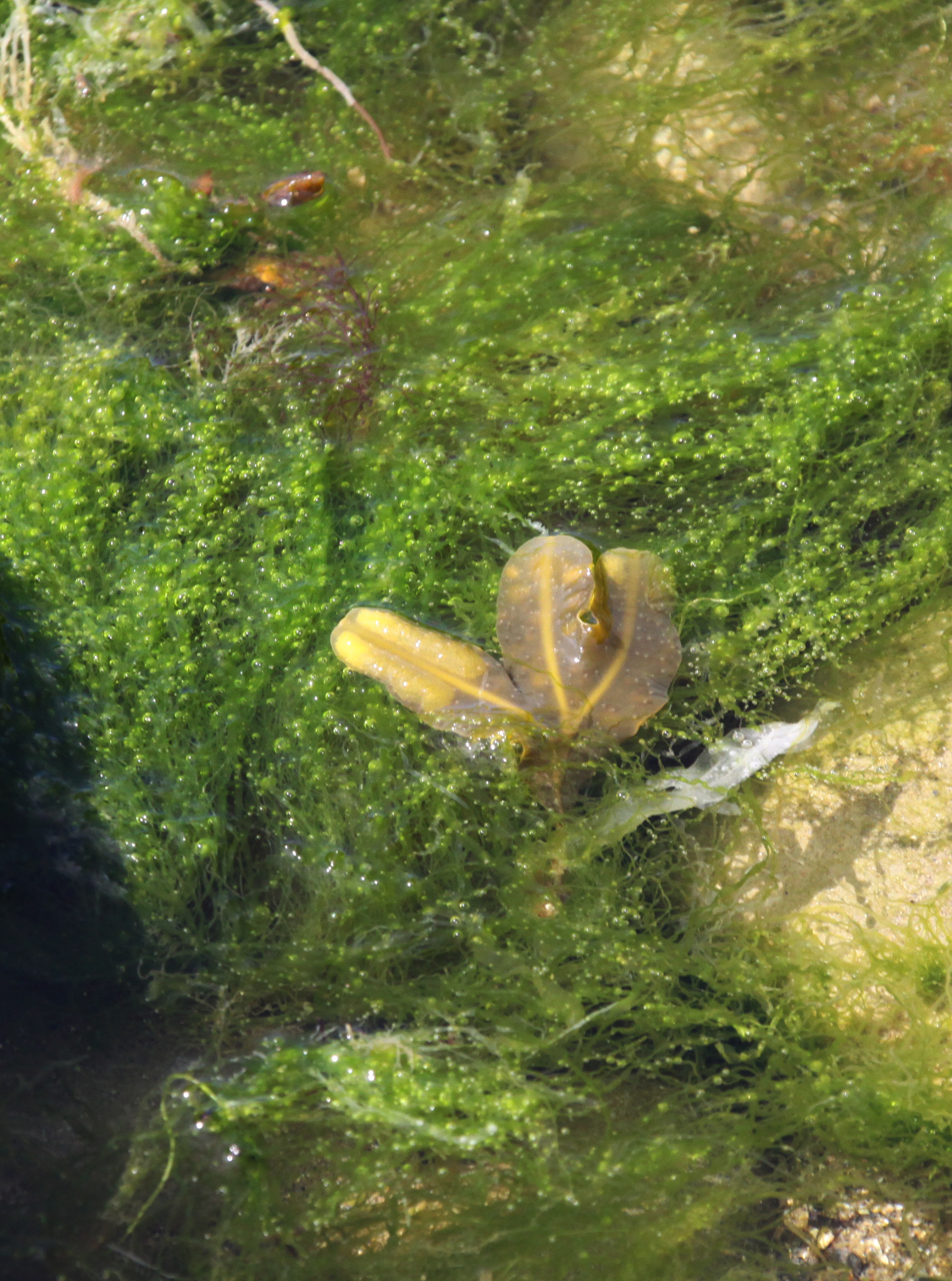
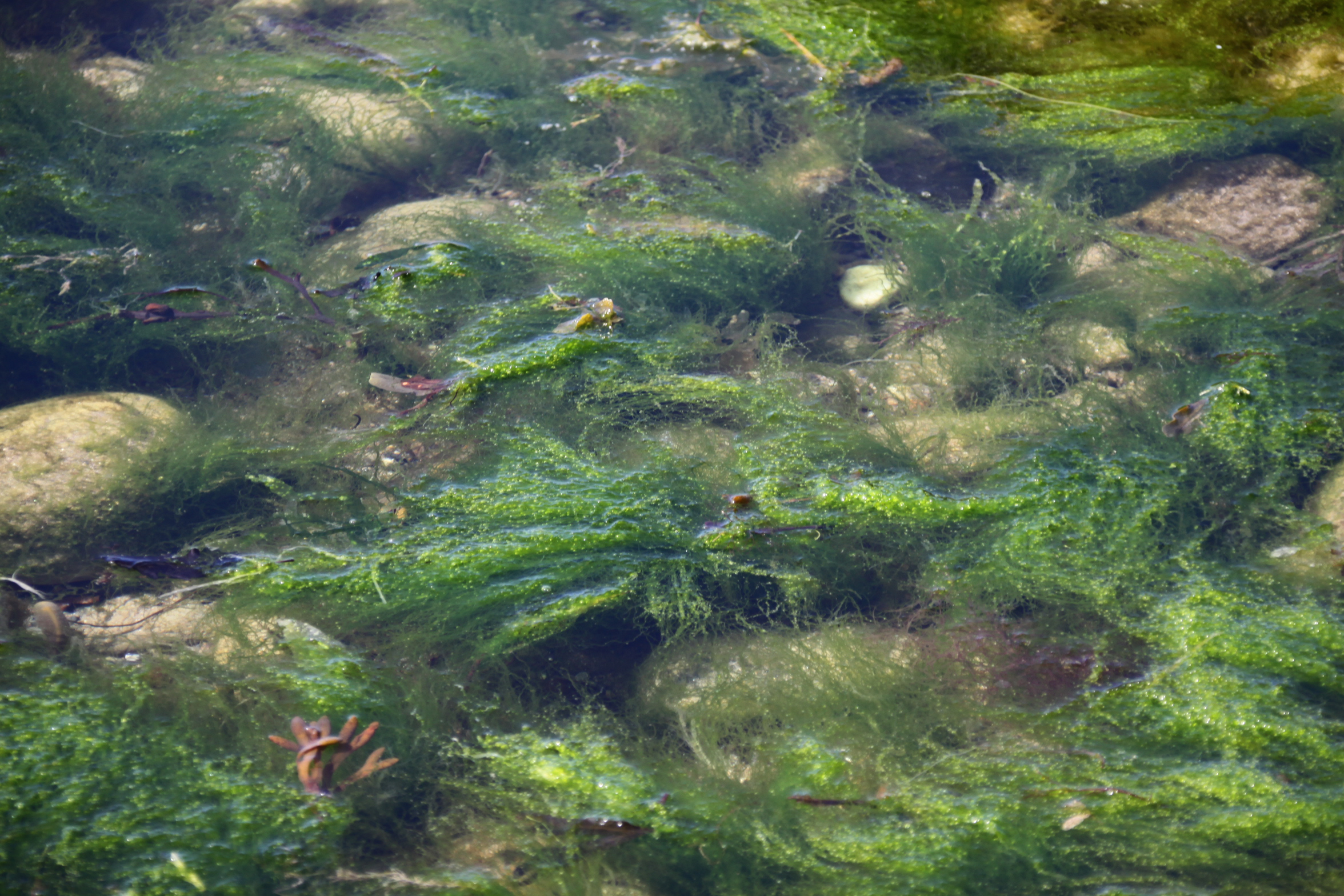
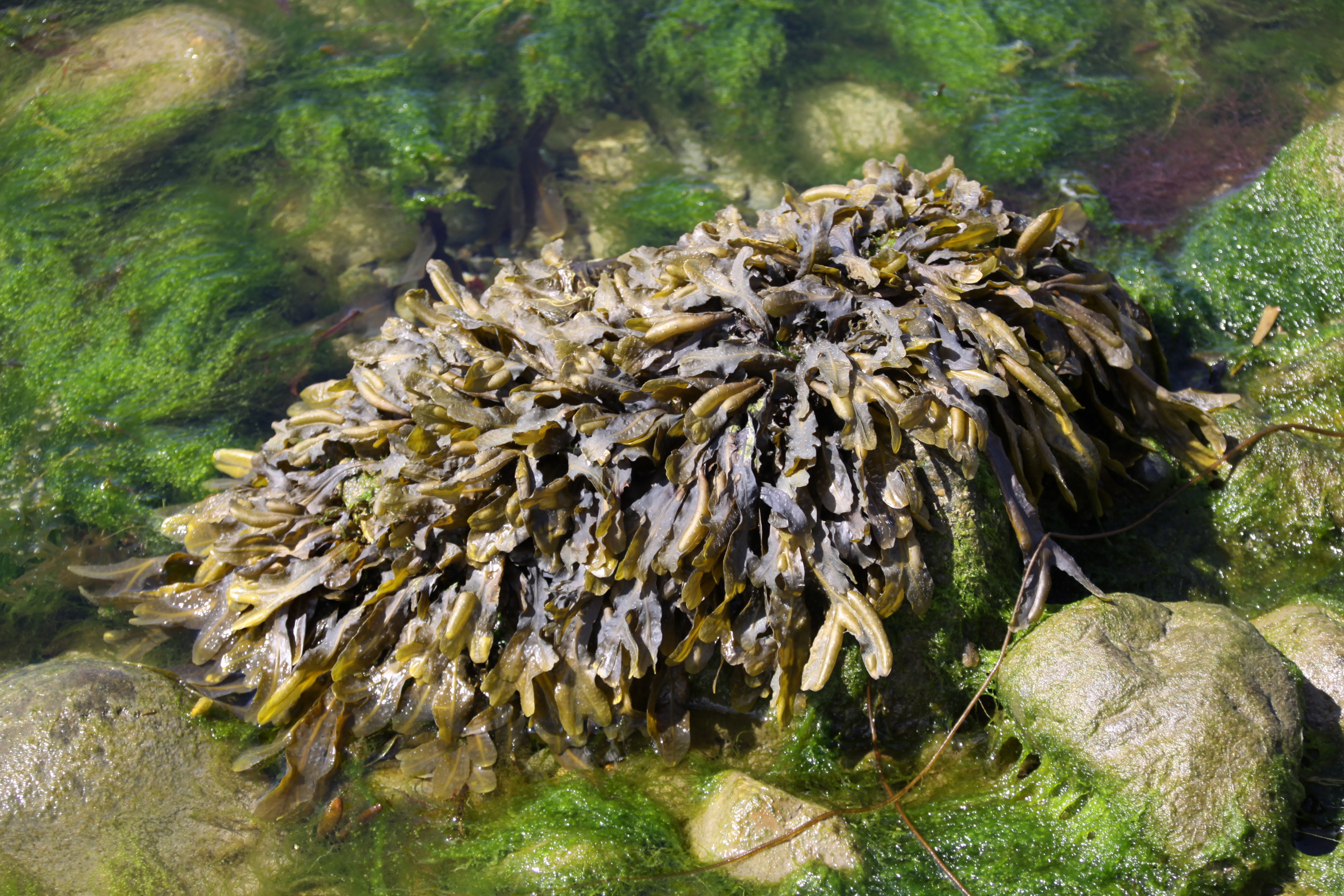
Because there are rock pools, it is possible to see various seaweeds in their natural habitat floating freely in the clear water, a lovely kaleidoscope of colour.  In the pools themselves there were lots of tiny fish, which can be seen in the video.  On the actual rocks (rather than the honecomb worm reefs) there were limpets, barnacles and various sea snails, none of which we have in Aberdovey due to the lack of rocks.   Of course there are none of the shells that Aberdovey’s beach has in such profusion, because they get broken up on the rocks and pebbles but, together with the pebble beach at Tonfanau, it’s super that there are three such contrasting beaches such a short distance apart.

I had a lovely long paddle, and would have loved to have had a swim, but even if I had gone in with my denim shorts and t-shirt, I had no way of drying myself off.  Next time for sure, and I’ll start to keep a towel in the car!

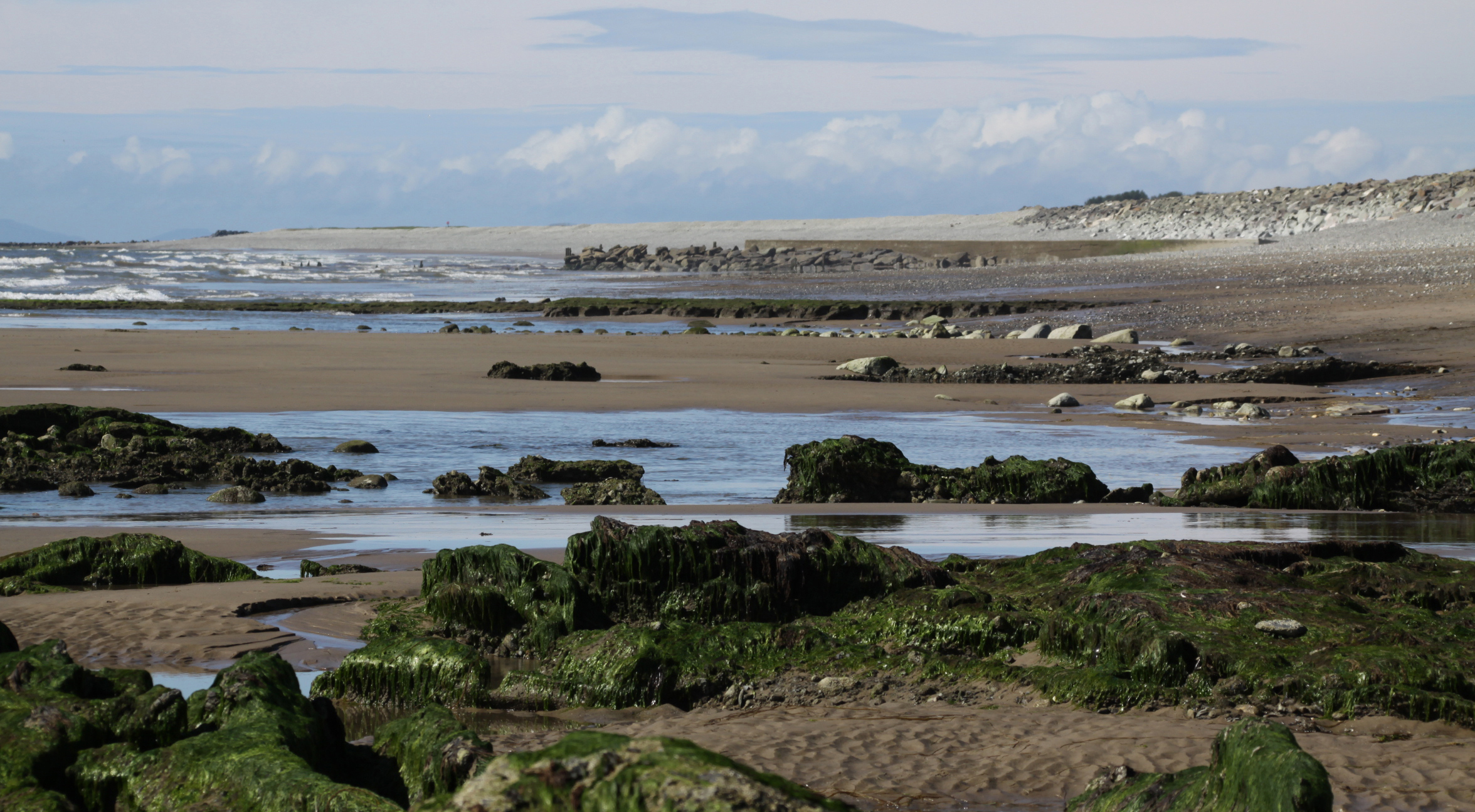
Looking to the north, beyond the caravan park and the breakers, the beach was quite, quite empty. That too is a walk for another day, but it must be a really peaceful way of walking up to the Dysynni.

The video below captures some of the contrasts of the beach – people swimming and enjoying the waves, lovely coloured seaweeds in rock pools, sections of empty sea with waves chasing each other onto the beach, and that fascinating honeycomb reef.

A mellow walk where the river Dysynni meets the sea – with oystercatchers

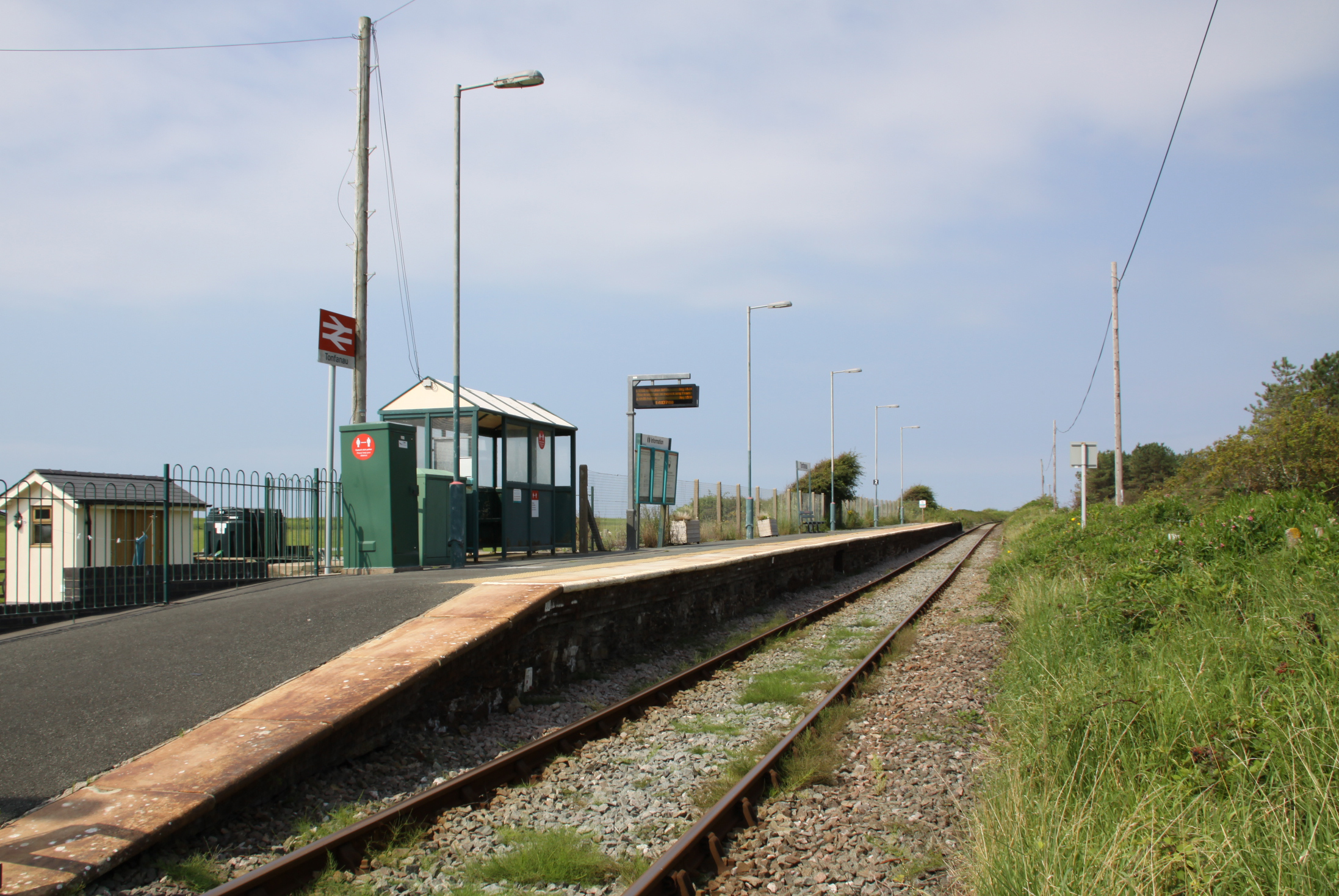
My walk last Tuesday, the only sunny day last week, took me back to Tonfanau.  Tonfanau railway station was added to the Cambrian Line to service the Tonfanau Army Camp, which opened in 1938 and was finally closed in 1973 after a 6 month stint as a refugee camp, before being demolished sometime in the 1980s or 90s.  The camp extended both sides of the railway line, reaching the beach to the west and spreading part way up a slight slope to the east.  I have posted about the camp here.  When Tonfanau was at its height as an anti-aircraft training facility, with emplacements of enormous guns along the field at the top of the beach, it would have been anything but a peaceful place to go for a stroll.  Today, however, it is probably the most quiet stretch of seaside in the Aberdovey and Tywyn areas.

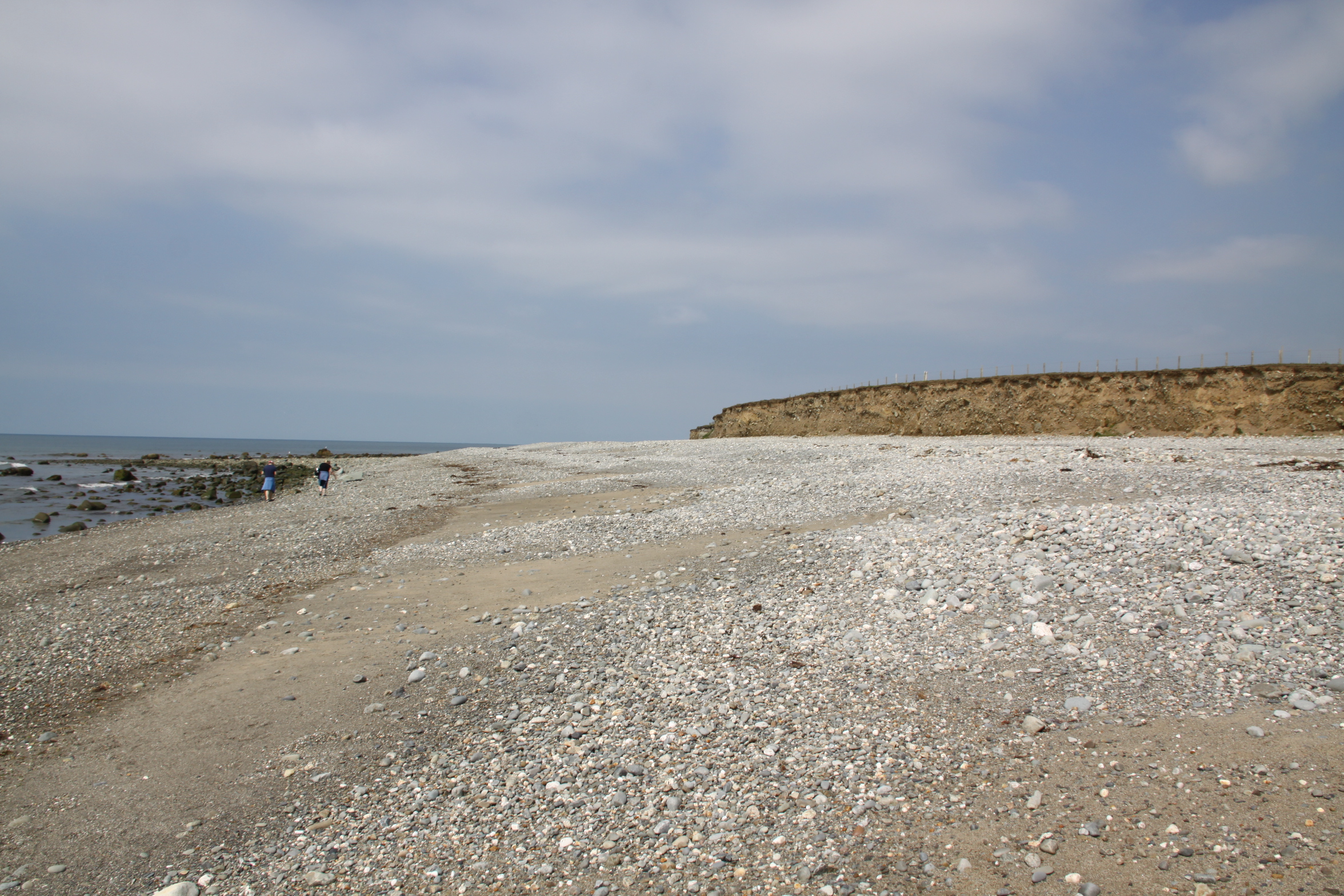
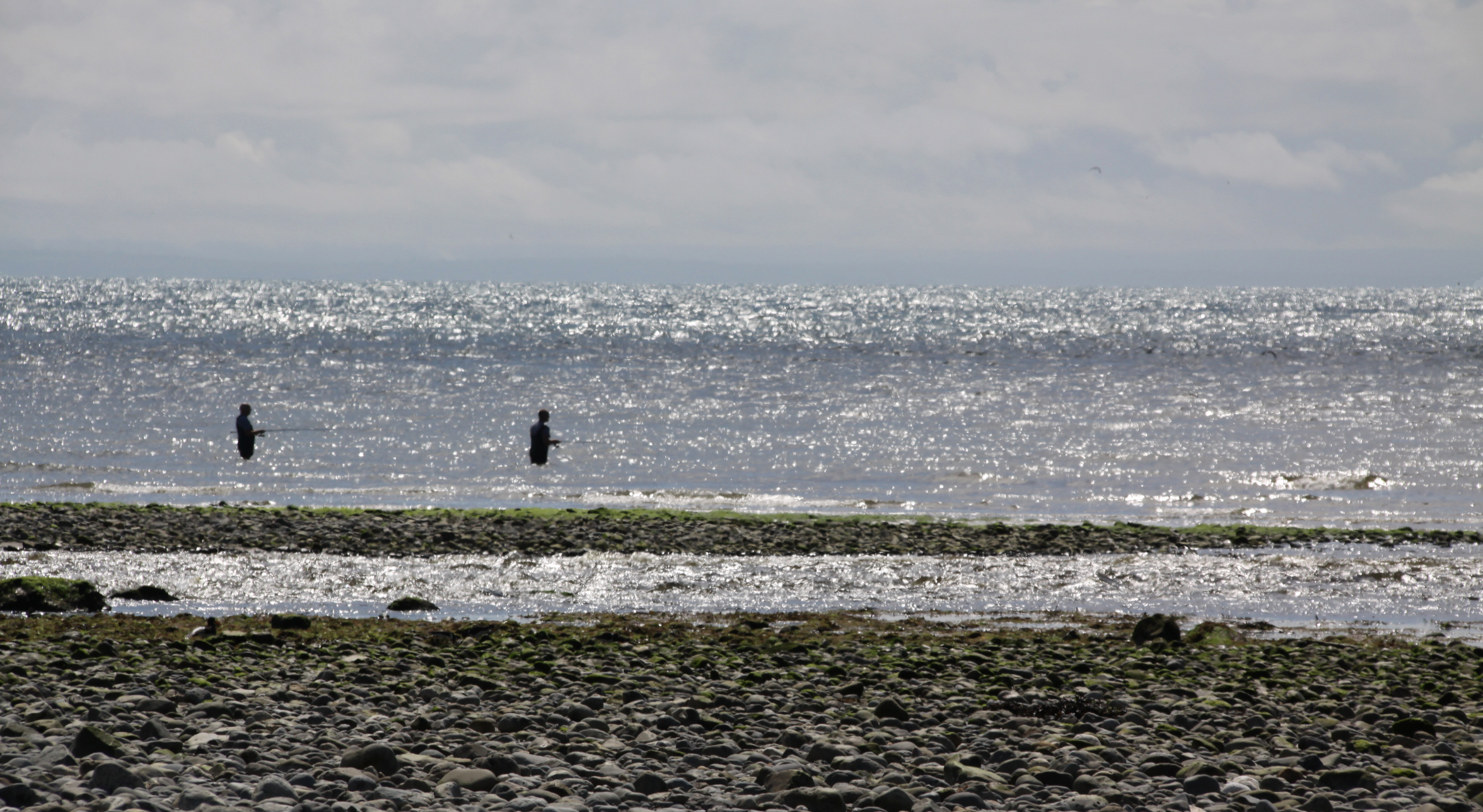
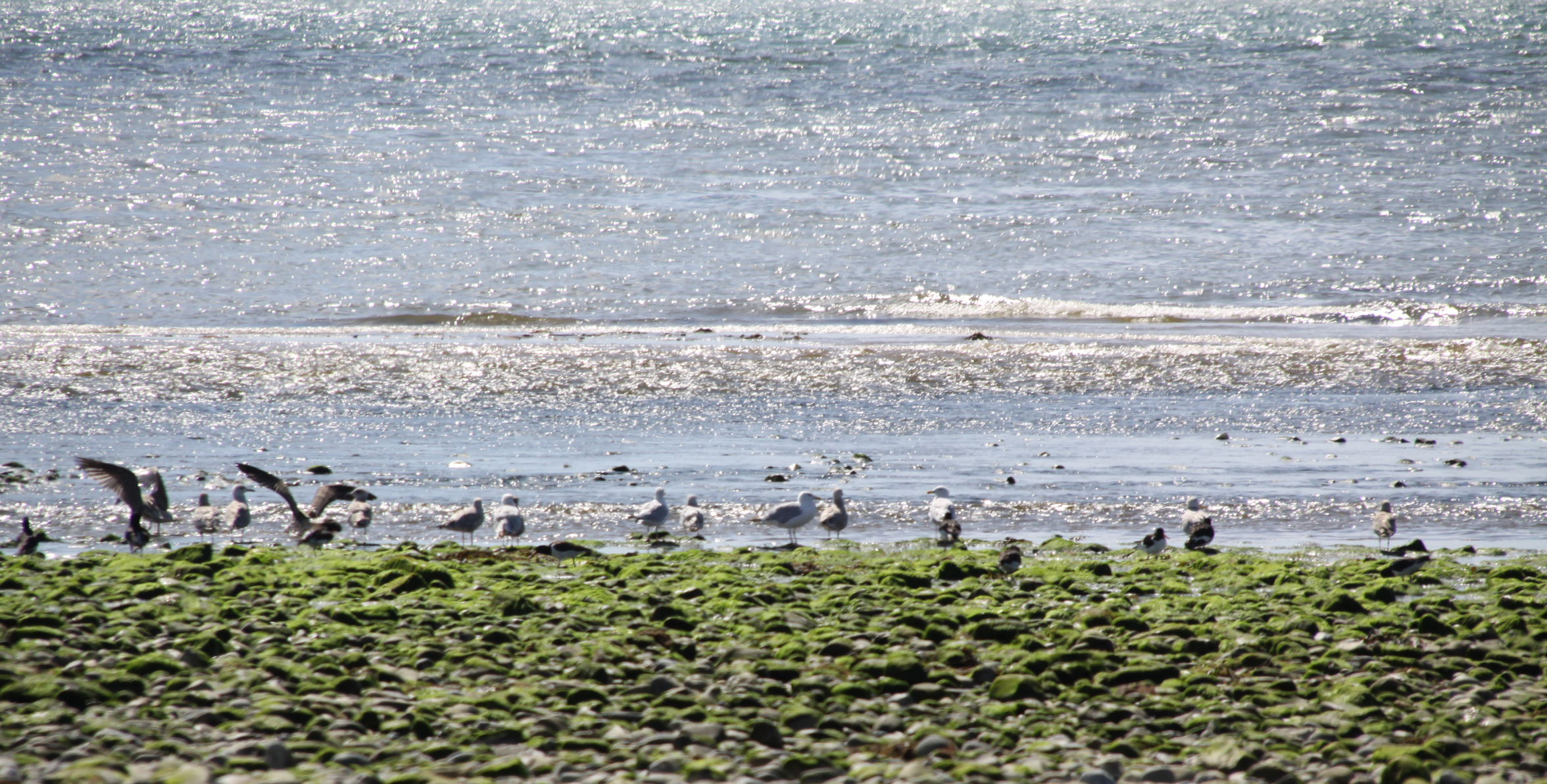
The reason for the lack of human presence, other than fishermen some way out at sea in waders, is certainly because the beach is uncompromisingly uncomfortable to walk, sit or lie on.  Apart from a few isolated islands of sand or gravel, it is a pebble beach running down a shallow slope into a rocky foreshore.   Footwear is required.  This, together with the complete absence of gift shops, public toilets and ice-cream stalls, makes it undesirable for most families, and there is rarely any more than a handful of people there even at the height of the tourist season.  This makes it a very good retreat for sea birds, which line the water’s edge at a very safe distance from anyone who might be walking along the stony beach or investigating the rock pools.  Oystercatchers, terns and various types of seagull are all in evidence at this time of year.

The views along the beach are splendid.  After the recent heavy rain the Dysynni charges at high speed through a surprisingly narrow mouth into the sea, fascinating to watch, and you can see it and hear its roar on the video at the end of the post.  This understated but impressive meeting of the Dysynni with the sea is marked as Aber Dysynni (mouth of the Dysynni) on the Ordnance Survey map.  The sea itself makes a lovely sound on the rocky foreshore and gravel, drawing the gravel back as it retreats, and colliding with the rocks as it advances.  Above the sound of the sea and wind are the musical voices of sea birds.  As you walk along it, the beach curves around a long corner promising more of the same untroubled vistas over an empty beach, rolling white horses and, in the distance, the Llyn peninsula.  Behind the beach, looking east, are views of the major summits of Tonfanau and Foel Llanfendigaid, as well as the smooth green slopes of the hills between them

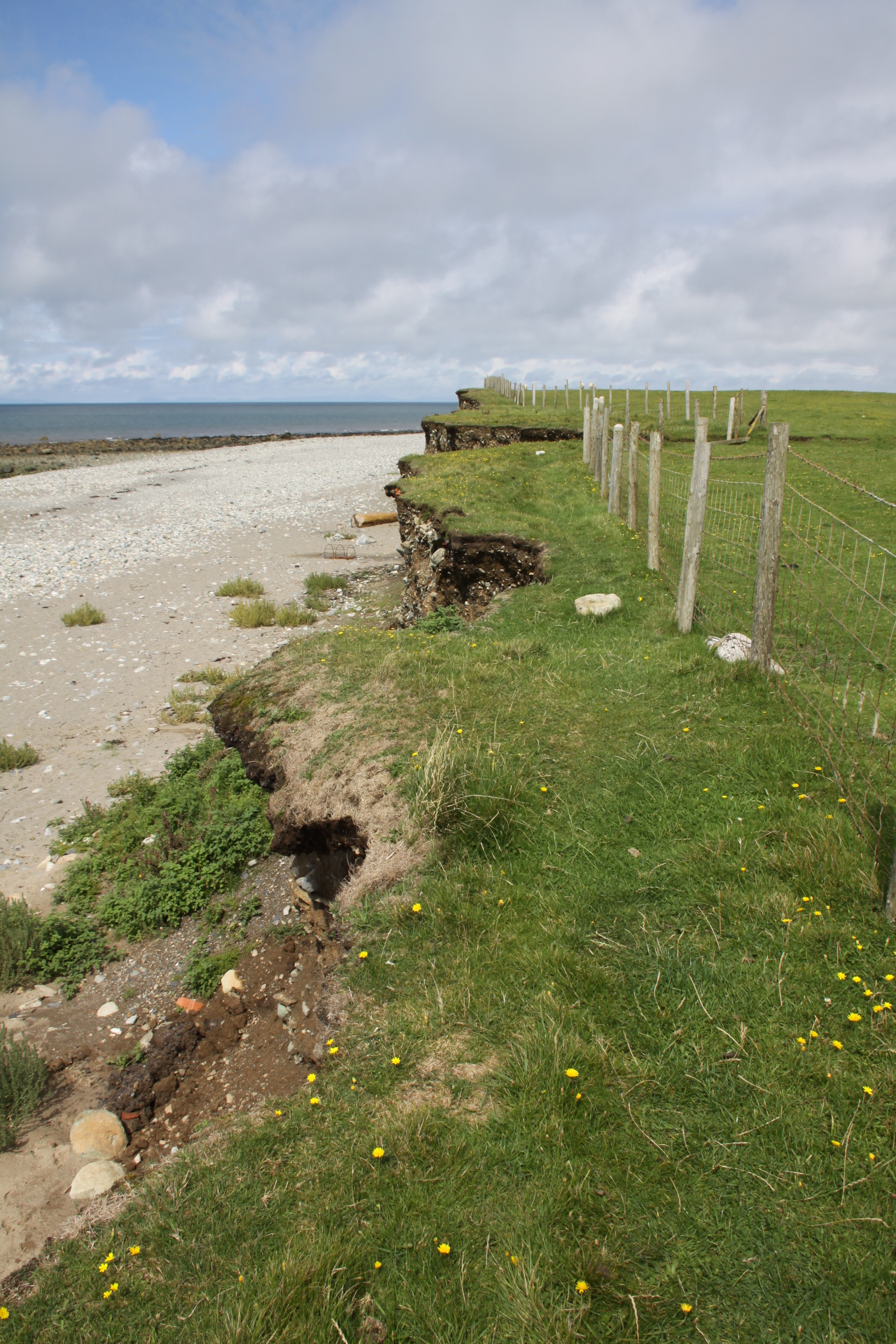
I started out walking along the top of the small “cliff” that runs along the top of the beach.  It is only a couple of feet wide, drops only about eight foot or so above the beach below and stops where the publicly accessible land meets the fence of a farmer’s field after about 10 minutes of walking.  It offers a terrific view down onto the beach, there are always some interesting wild flowers, and it is well worth doing if you are sure of your footing.

I then executed a controlled skid down a bit of the “cliff” that had collapsed into a sloping mound of earth, a quick way down onto the beach, and headed for the rocks.  The lush green seaweed  is glossy and lustrous, a great contrast to the darkness of the rocks in the bright sun.  The overall effect was delightful.  Water trickles through the multiple channels formed by the rocks, crossing the glistening gravel in a way that is quite unlike the sea flowing through channels in the sand at Aberdovey.

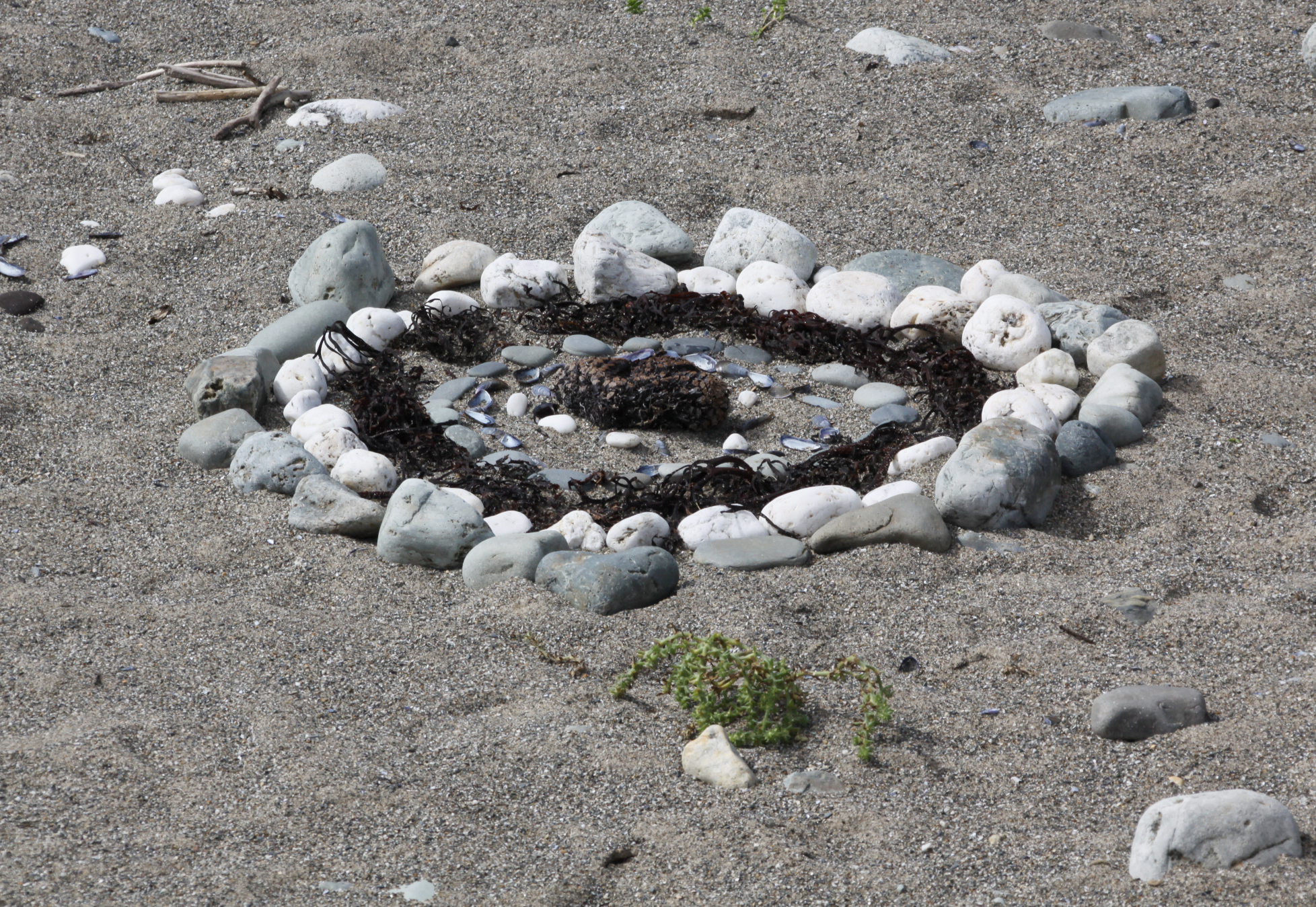
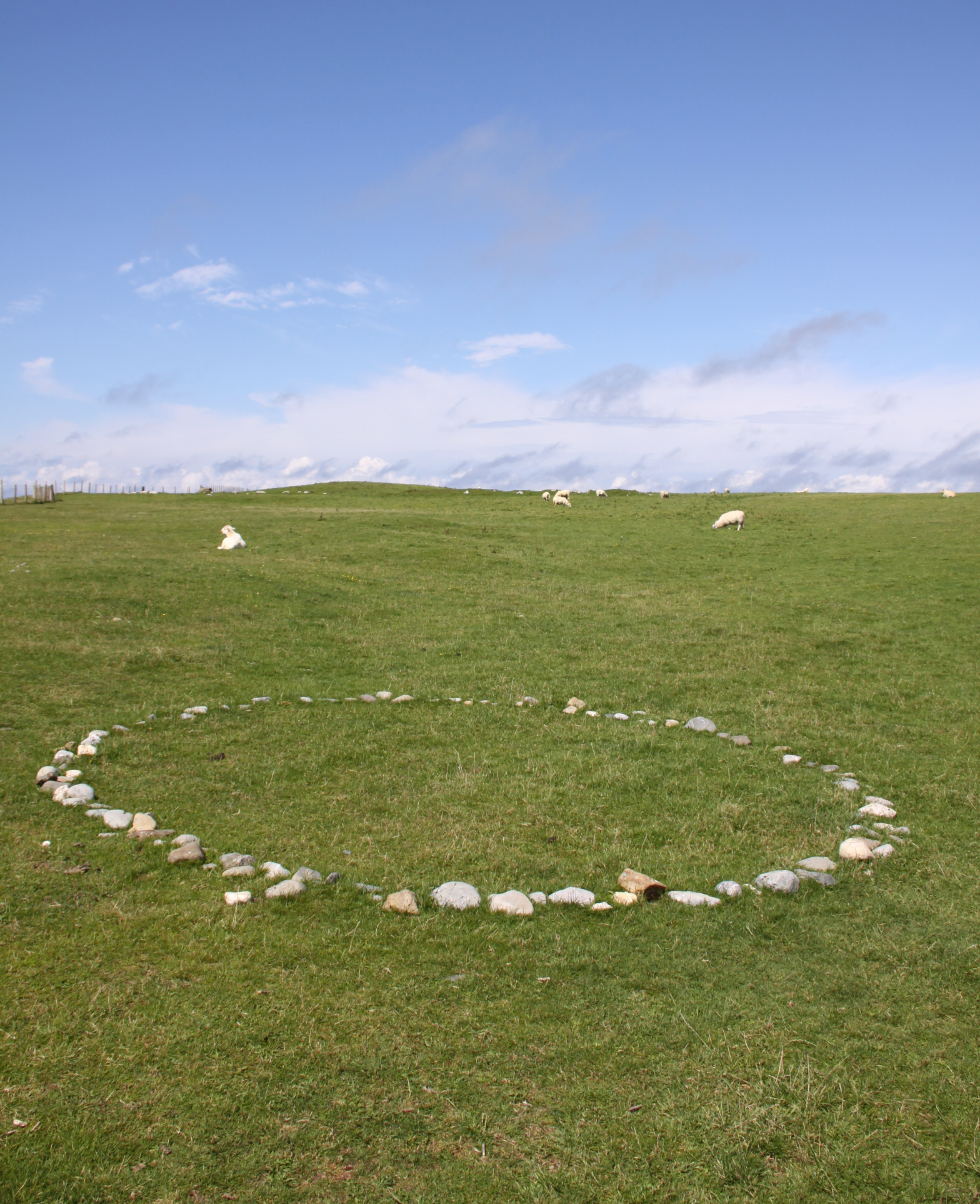
Someone has been having fun making pebble patterns in the sand and fields. Like most abstract compositions, it gives a curious sensation of something clearly created in the present taking on the character of something completely timeless.

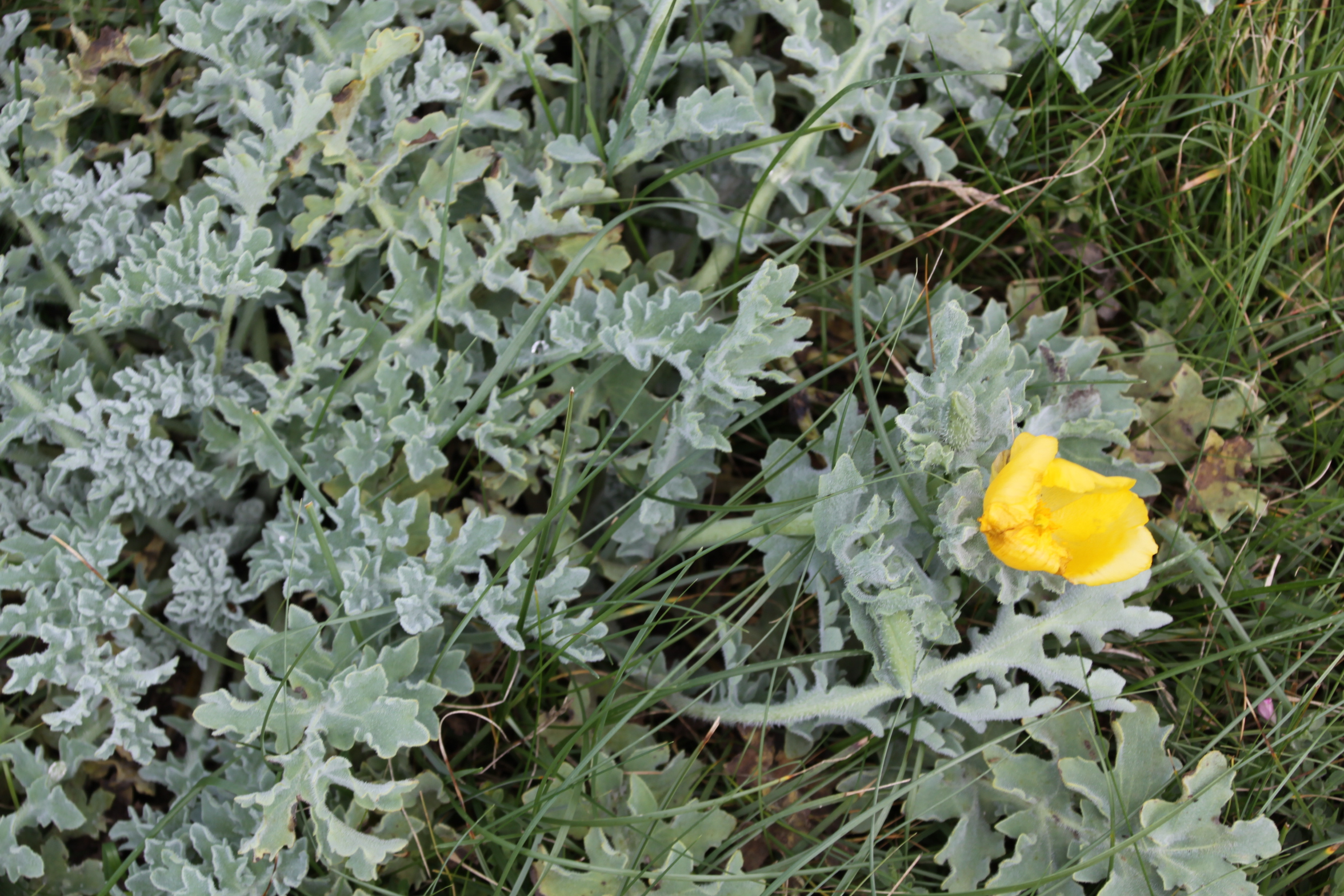
Yellow Horned-Poppy (Glaucium flavum)

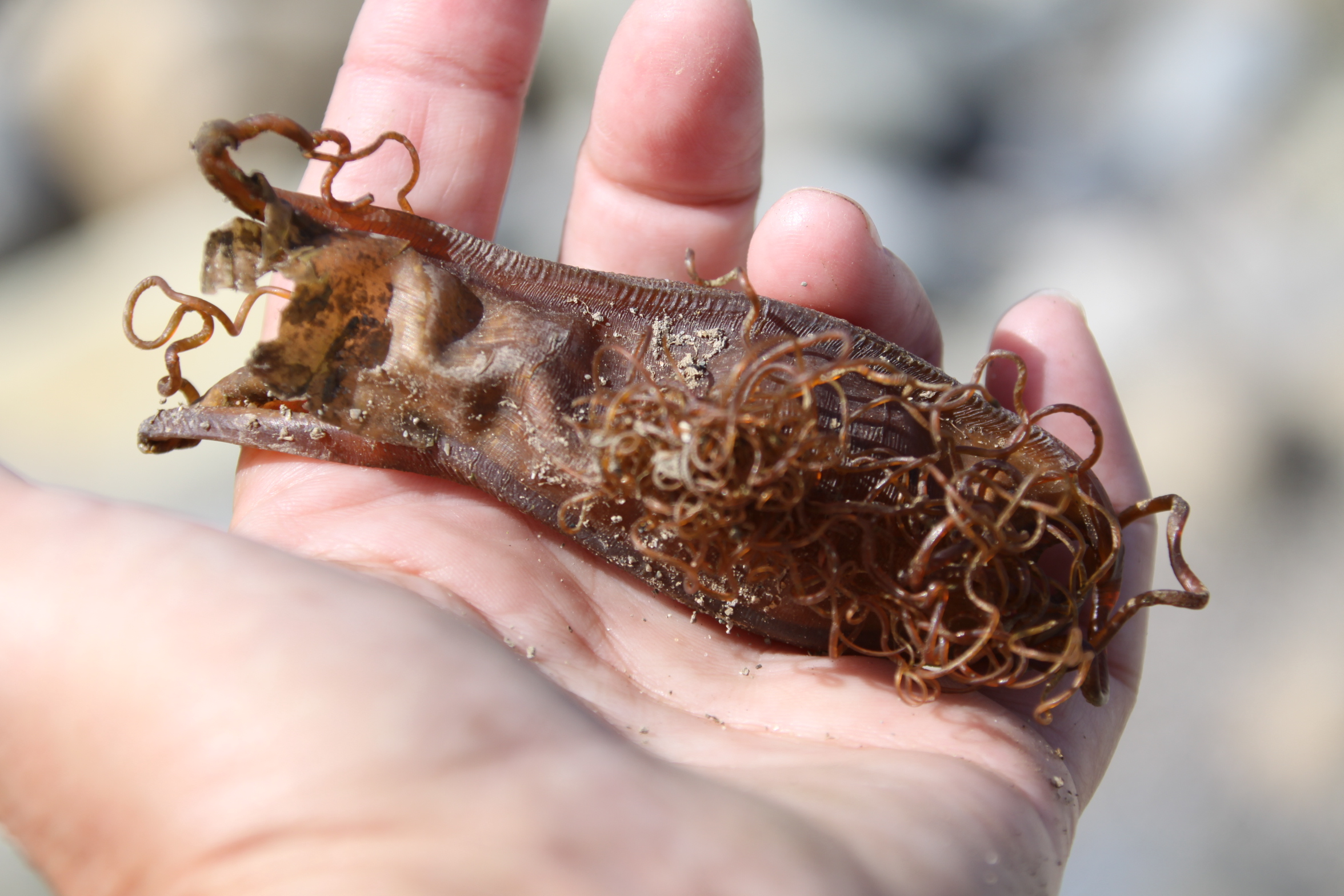
Small-spotted catshark eggcase (Scyliorhinus canicula), one of the smallest of all the mermaid’s purses.  There were two of them, one right at the top of the beach and the other in the field behind the beach.  They are so lightweight when empty that they travel on the wind.  For details on the subject of eggcases and the Shark Trust, see my earlier post.  The photos of the two eggcases have been uploaded to the Shark Trust Great Eggcase Hunt page.

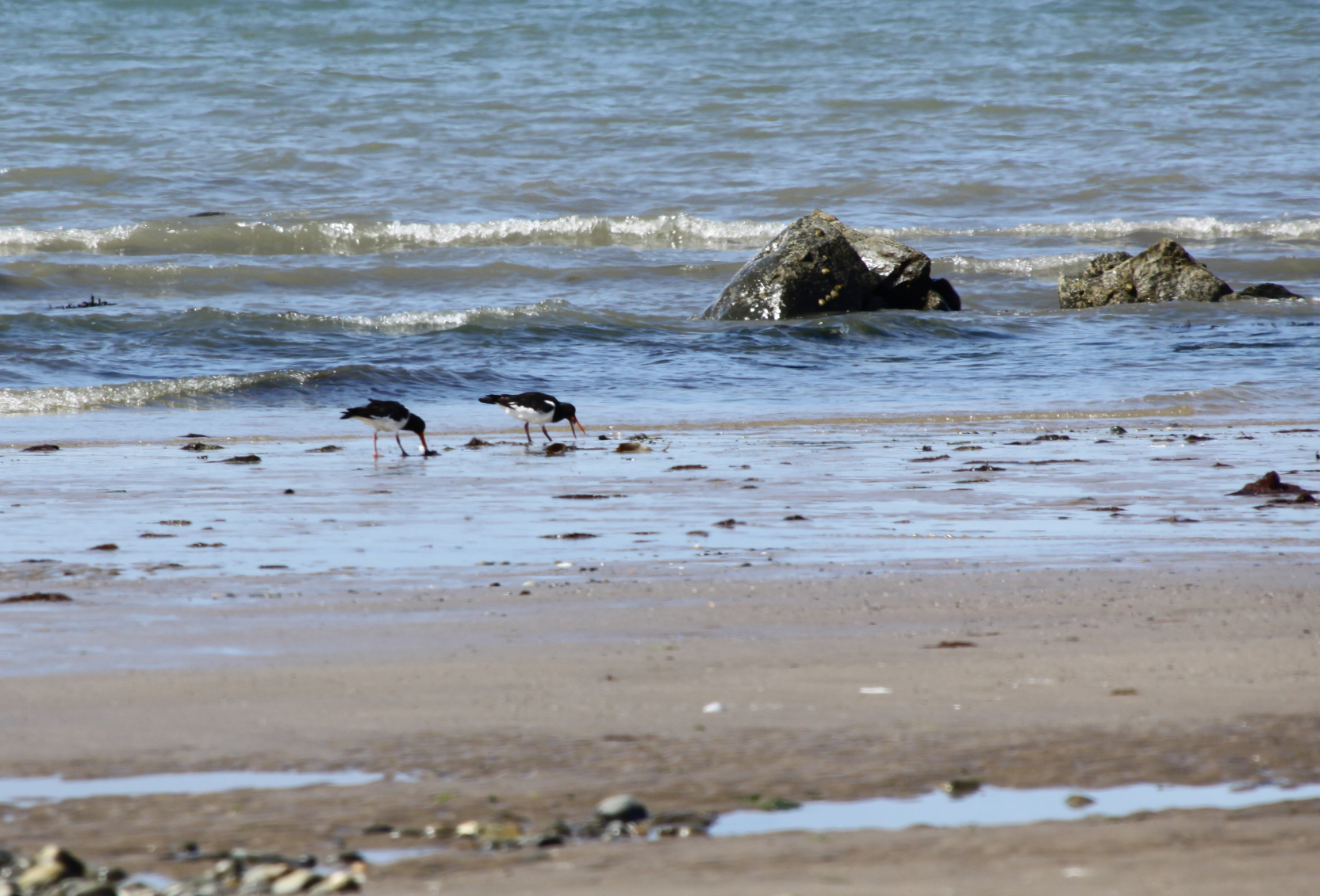
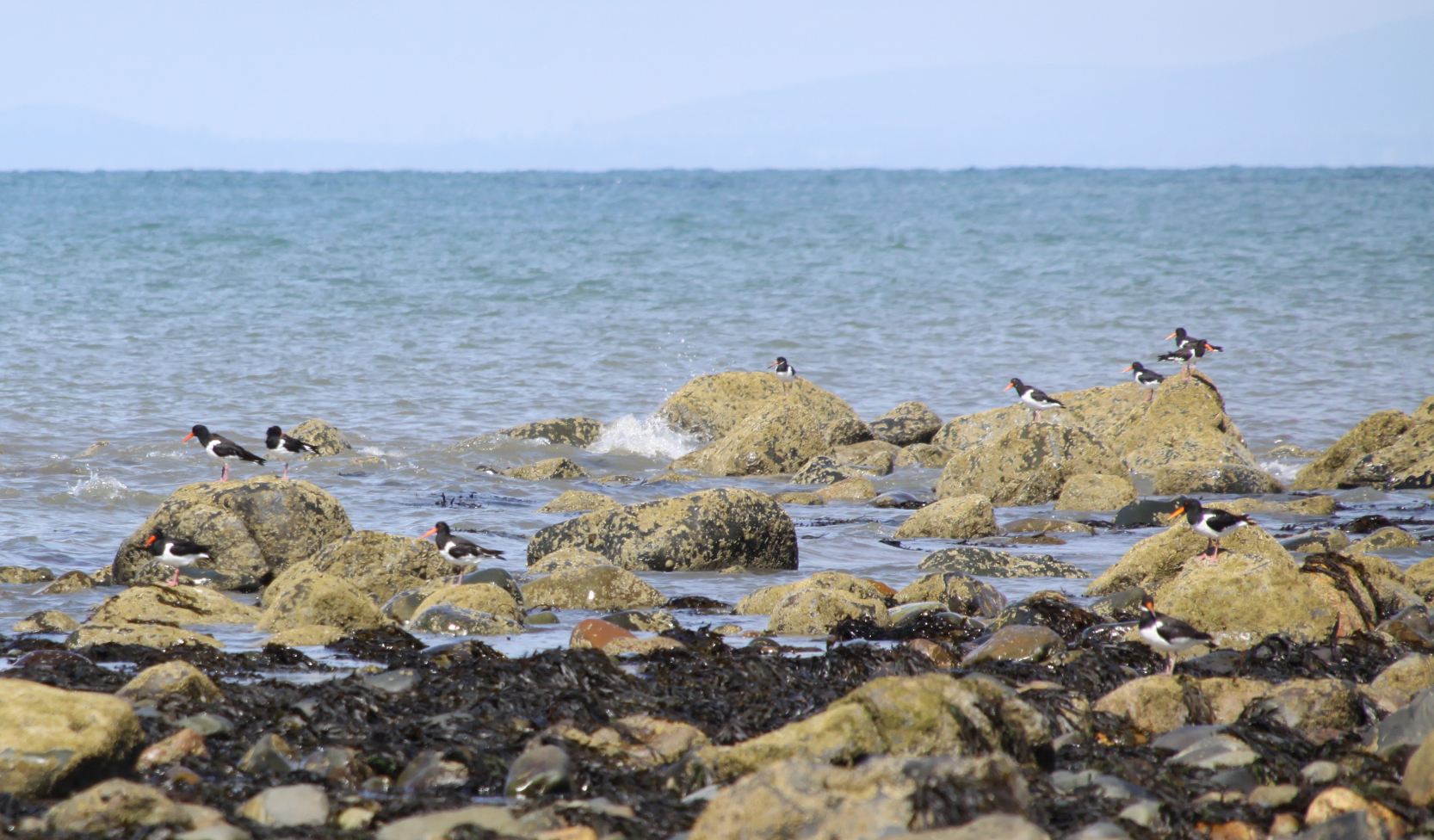
I walked out onto a spur of sand to watch the oystercatchers, getting as near as I dared.  Unlike the video that I posted the other day, when what they were mainly concerned with was preening, today they were actually hunting for food and treating shells to merciless beak treatment.  Trying to get a little closer I scared them into flight, and they congregated a little distance off on a few rocks, looking very striking.

Oystercatchers at work

I’ve pulled a muscle in my shoulder, so the following video is not quite as steady as it might have been, but don’t miss out on the oystercatchers.  They are sublime.  The fast-moving water coming out of the Dysynni and churning into the sea is also truly impressive.  The Dysynni originates in Tal y Llyn lake, makes an abrupt turn northwest at Abergynolwyn and then resumes a parallel course to the Tal y Llyn valley in the neighbouring valley.  It passes the Ynysymaengwyn estate, finding its way through extensive reed beds, and emerges into the Broadwater, making its way around the low sandbanks before being funneled into the narrow channel into the sea.

Tonfanau Army Camp from 1938 to the present day

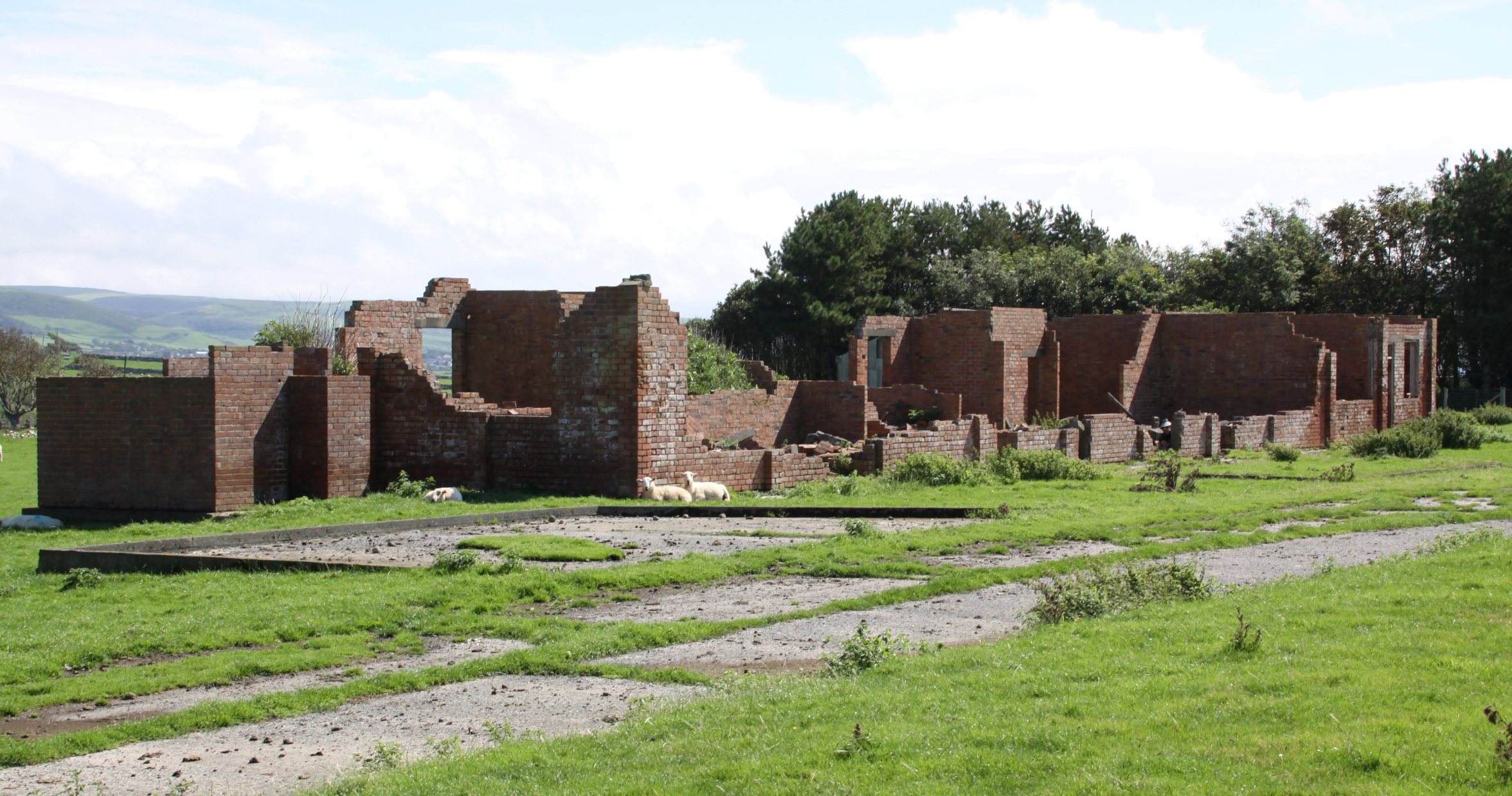
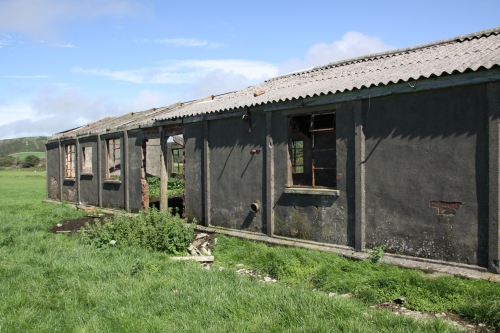
Some of the few surviving remains of Tonfanau Army Camp today, behind Tonfanau station, complete with grazing sheep, the sea just out of sight in the background

Introduction

Tonfanau in the past and recent present. Source of upper image: AAJLR.org, ref tonp_067. Source of lower image: Coflein.

The first time I heard the name Tonfanau was when I was researching the Ynysmaengwyn Estate.  In the late 1870s John Corbett, who had purchased the estate, also invested in Tonfanau granite quarry to aid with his construction projects in Tywyn.  Recently I have also been doing research into the hillforts on the hill behind Tonfanau.  In both cases my searches came up with very little about either subject, but an awful lot of information about an army camp that I had known existed but knew nothing about. I became interested in the story of the camp.

The Tonfanau camp (pronounced ton-van-ow – the ow to rhyme with cow)  was established in the 1930s as an anti-aircraft artillery training centre, but it underwent many changes in role over time, before being nearly entirely demolished in the late 1980s or 1990s. One of the most arresting aspects of the subject is the remarkable number of accounts and photographs available online by those who were stationed at Tonfanau.  The camp is not merely a few ruins of the past, it is something that lives on in people’s memories, giving lie to the very few abandoned and desolate fragments that remain.

The impressive extent of Tonfanau camp shown on an Ordnance Survey map, circa 1960s. Source: AAJLR website, ref tonp_068

This is a short summary of why the camp was established, what it was used for at different times, how far it extended over the surrounding area, what it consisted of, and what remains today.  Do have a look at the comments that follow this post, because over the years, many voices have been added, telling of their own memories or of how family members remembered their experiences at Tonfanau.  These, rather more than my account written in 2020, bring the story to life.

I have made considerable use of the resources that I have found on the web, all of which are credited below in “Sources” with my sincere thanks.  Particular thanks must go to the Tonfanau page on the AAJLR website and its many contributing volunteers for assembling such a magnificent collection of photos, many of which are reproduced here with permission.

In terms of visiting, if you are aiming to incorporate the remains of the camp into a walk, the easiest and most attractive way is to drive down Sandilands Road, turning right just before the level crossing.  Follow the road to the Tonfanau footbridge, and it is about a 15 minute walk from there.  In summer it is a particularly nice walk as the verges from the Dysynni footbridge to the station are filled with a profusion of wildflowers.  Otherwise it is a matter of driving to Tonfanau station down bendy single track lanes and parking up there.  You can cross the railway to go down to the emplacements on the beach, or walk up the road opposite the station to see some of the other remaining structures.  Otherwise it’s a matter of wandering around the publicly accessible parts of fields to see more.

Tonfanau camp.  Source: AAJLR.org

The remains of Tonfanau camp are interesting, but be warned that they are really very ugly, a thorough blot on the landscape.  This sort of swiftly-built camp, of which there were several dotted around the country, must have been just as alien in their own ways as Roman camps imposed on an Iron Age landcsape, just as uncompromising and just as much as an imposition, but eventually becoming a fact of life.  Unlike the Roman armies of occupation, these invaders of the landscape were British, and the camps were there to serve the nation, giving their sudden arrival, even if unwanted and unwelcome, a positive reason for being.

Anti-Aircraft Training 1938s – 1957

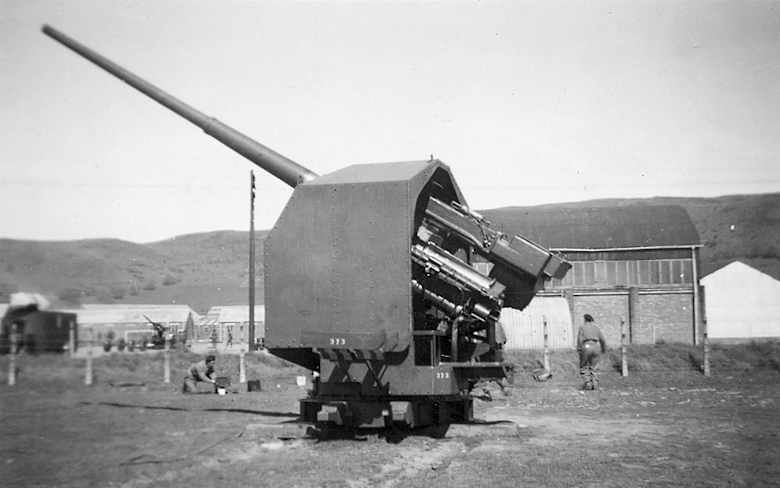
Heavy ackack anti-aircraft gun at Tonfanau, ref tonp_274. Source: John Mills, AAJLR.org

Throughout its existence the camp consisted of a series of fairly basic buildings, including brick-built huts, wooden huts, hangars and so-called Nissen huts.  Nissen huts, like bailey bridges (of which more below) were assembled from pre-fabricated parts to enable very rapid construction.  Corrugate iron sheets were used to form half-cylinders that created lightweight buildings, useful in a variety of situations.  They looked like gigantic pigsties, half-tubes of corrugated iron blocked at either end, one end containing a door for access.

The camp was built beyond the immediate reach of the nearby villages, on a wide coastal plain beneath Tonfanau hill, spanning both sides of the railway line.  The Tonfanau railway station was added on the existing Cambrian Railway line, which itself linked into the national rail network, to serve the camp .  By train, the camp was a few minutes from Tywyn.  By road, it was a matter of negotiating some bendy B-roads and passing through Bryncrug before reaching Tywyn, some 30 minutes or so later.  The decision to put the site beyond the immediate vicinity of residential areas was probably connected directly to the noise that the camp would produce as an anti-aircraft gun range.  Either that, or this was the biggest flat-ish area available in the vicinity for the construction of this sort of camp.  Either way, the camp was neither a part of the village, nor completely isolated from it.  At some point a bailey bridge was established at the crossing over the River Dysynni where the railway also crosses, substantially reducing the time taken to get into Tywyn.  When an RAF camp was built at Sandilands in Tywyn in September 1940, partly to build on an existing relationship that the RAF already had with the Tonfanau camp, communication and visits between the two camps probably became quite frequent.

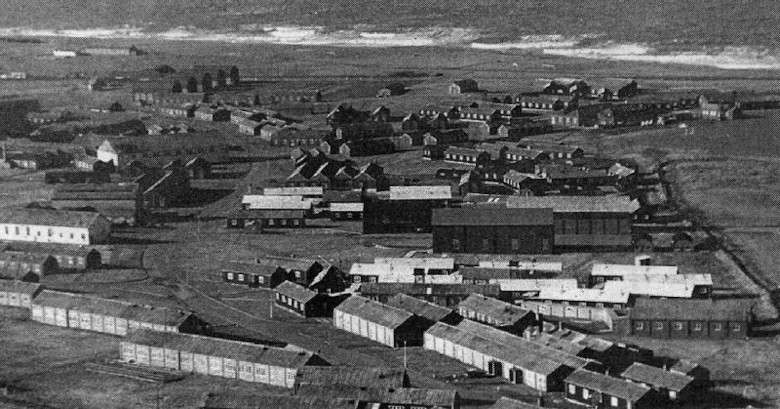
Anti-aircraft emplacements at Tonfanau camp from the air. Ref. tonp_067. Source: AAJLR.org

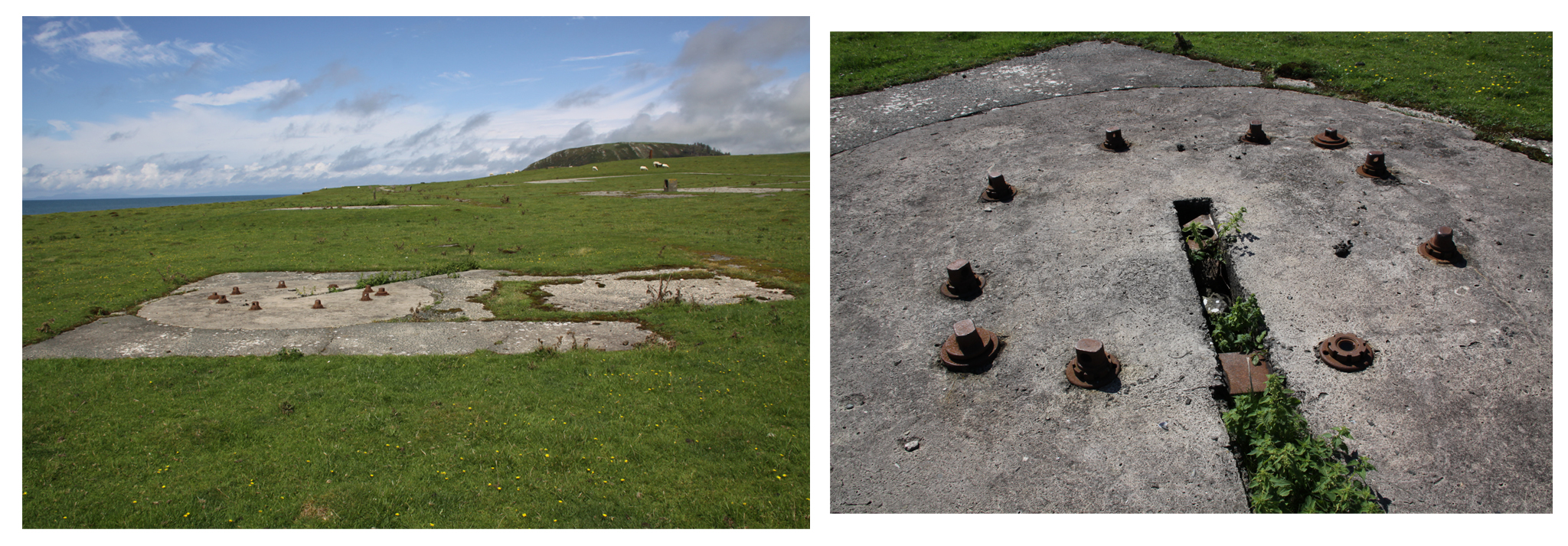
As an artillery training camp, Tonfanau had various sites to enable training on different types of weapon.  The big anti-aircraft (AA) guns were mounted on permanent emplacements just behind the beach, as shown on the above photograph.  The foundations of these can still be seen above the line of the beach, some of which are shown on the photographs at the end of this post.  These pointed out to sea for target practice.  The targets were initially supplied by RAF Tywyn’s, which had a camp in the Sandilands part of town and later became known as Morfa Camp, which is how it is usually known today.  Disposable gliders were towed using Hawker Henley planes near to the position of the anti-aircraft emplacements, and these gliders were used as targets.  All I can say is hats off to the pilots who took on that unenviable task!  Eventually these were replaced with an unmanned remote-controlled version of the Tiger Moth known as the Queen Bee, which must have been a lot safer all round.

Anti-aircraft guns in action, ref tonp_028. Source: AAJLR.org

A  first hand account of the Anti-Aircraft training is provided by Stanley Briggs, who found himself at Tonfanau in 1949 after initial training at Oswestry before shipping out to Egypt:

“After our initial training we were taken by train to Tonfanau on the West coast of Wales between Aberystwyth and Barmouth. This is the Cardigan Bay coastline area, the nearest town is Towyn. Only the beach, a railway line and a road separated us from the sea. We had the sea on one side and the Cader Idris mountain, inland, behind us.

That bay is massive and ideal for target practice for our 3.7 guns, but I have to say that I didn’t fancy the RAF pilots jobs of towing a sleeve behind their plane while National Servicemen were firing at them for practice with live rounds.

The Cader Idris was ideal for physical fitness too, which our physical fitness training instructor (PTI) put to good use, we were all eighteen years old and I have to say that personally I really enjoyed every minute of that part of it.

QF 3.7 inch anti-aircraft gun.  Source: Wikipedia

The same discipline training continued at Tonfanau. It was here that we were confronted with the 3.7 gun, the Sergent in charge gave us all a good knowledge of how to maintain, dismantle and fire it. We all had to learn each others position on the gun in case one of the members of the team was killed in action (that was a sobering thought!)

The gun had a large barrel and was transported on a trailer consisting of four legs and wheels, towed by an AEC Matador lorry. Each leg had to be raised for the travelling position and lowered for the firing position. Other positions for the team of gunners were Traverse Operator, Elevation Operator, Tannoy Operator, and Ammunition Operator who had to lift a round up and put it in the breach and finally, the Sergeant who had the responsibility of firing. The first time I lifted a round of ammunition, my knees buckled as they were very heavy for a nine stone weakling, which I was at the time.”

There seems to have been a second level of artillery training at the site during this period, which took place after the heavy anti-aircraft guns had left, as described by Frank Yates who, at the age of 21, served with the Royal Artillery, Light Anti-Aircraft Battery and was attending the Officer Cadet course.

Aerial view of the remains of a small-bore firing range. Source: Coflein

“The camp was large, with brick and concrete hutments and purpose built dining halls, garages and the like, with the Garrison Theatre dominating the landscape. The camp had been Heavy AA before we moved in, but there were now two separate factions, the bulk of the Heavies had returned to their base Artillery depot at Oswestry, leaving a nucleus to run the firing camp. On the firing apron, between the sea and the railway, was an ex Naval 3” Gun, a weapon which fulfilled a dual role in the Navy. It had the reputation of producing the loudest ‘bang’ of any British gun and they once fired it for our benefit. It certainly lived up to its reputation! Before leaving the “Heavies” may I mention that they did not fire at a towed drogue, the tow plane would not have survived. There was talk of them using a radio controlled, unmanned target, a project easily arranged nowadays, but too unreliable in those days. . . .

After various demonstrations, witnessed from a head down position in the trench, the sticky bomb was shown. This was an anti tank weapon, although it would need a very brave or a very lucky man to get near enough to use it! It was a glass ball, like a small goldfish bowl, full of TNT and covered in stockinette which was impregnated with very powerful glue. The thing was provided with a handle, containing the fuse and firing mechanism. The bomb was smashed down onto the tank, deforming into a dome shape, a ‘shaped charge.’ The handle is released, the bomber runs away and the charge explodes in 4 seconds.”

Frank Yates goes on to describe what the camp was like to live in whilst he was there, and what sort of other training took place at the camp.  It’s a very engaging read, so do have a look at his entry on the BBC WW2 website.

Bailey bridge over the Dysynni. Photograph by Edwin Lines 1990, ref. tonp_278. Source: AAJLR.org

I am assuming that the bailey bridge that used to cross the Dysynni dates to this period.  It was still in situ in 1990 when former camp resident Edwin Lines took this photo.  Bailey bridges were portable, pre-fabricated, truss bridges. The concept was developed between 1940 and 1941 by Sir Donald Bailey, a civil servant in the British War Office, for the military.  It was a portable, pre-fabricated, truss bridge that was was made up of prefabricated panels and easily assembled parts.  These could be carried by trucks and assembled by men without special equipment, using simple devices, such as ropes and pulleys, in a matter of hours.  Once a bridge has done its job it can be disassembled, moved and rebuilt elsewhere.  Bailey bridges proved their worth in the Second World War.  The Tonfanau bridge ran parallel to the railway bridge, where today the railway bridge and the 2013 Tonfanau footbridge cross the Dysynni.   As they were originally designed to be sufficiently robust to carry tanks, I assume that this one could carry light vehicles as well as pedestrians, which would have substantially improved access to the bright lights of Tywyn!

All Arms Junior Leaders’ Regiment 1959 – 1966

Entrance sign to the All Arms Junior Leader Regiment camp at Tonfanau.  Source: 28 Days

The All Arms Junior Leaders’ Regiment (AAJLR) was established at Tonfanau in May 1959 and was disbanded in August 1966.  Its purpose was to train boys aged between 15 and 17½ as future senior non-commissioned officers.  Boys were sourced from various points within the British army.

My thanks to Ken Hart’s excellent AAJLR.org website as the source of the information on this page, which talks about the activities that they boys were engaged in on a term by term basis:

Entrance to Tonfanau Camp in about 1964, complete with postbox. By Brenda Keens, ref tonp_265. Source: AAJLR.org

“The year was split into 3 terms with a fresh intake of boys each term. The first term of each boys service was completely dedicated to turning these 15 and 16 year olds into disciplined soldiers.  From the second term the prime emphasis was on education as all senior NCO’s were required to obtain the Army Certificate of Education [Class 1].  Alternate days were spent on Military Training which included Drill, Weapons Training, Driver Training, Map Reading and casually strolling over the gently rolling Brecon Beacons in wonderful Welsh weather fully equipped in thin denims, a poncho and carrying a webbing back pack.  The boys final term included specialist training according to the arm or corps he intended to serve in as a senior soldier.  Mixed in with all this there was sport, adventure training, outward bound courses and inter company competitions including the Rhyl cup.

Every boy also took part in the ‘Duke of Edinburgh’s Award scheme’ and to this end most evenings were spent doing a large number of hobbies. The rest of the time was spent cleaning the barracks or doing your personal kit whilst huddled round a coal burning pot-bellied stove in a futile attempt to keep warm.”

There’s a whole page on the AAJLR website dedicated memories of Lance Corporal Fagg who, in charge of the Guardhouse, was the terror of most of the boys at the site.  These short accounts bring daily existence at the camp to vivid life.  One contributor to the site, John Sabini, wrote the following, which is a nice introduction to an awe-inspiring individual.  Other accounts are often a lot more earthy!

The idea of over-wintering in one of those flimsy huts makes my All Arms Junior Leaders Regiment plaque (Photograph by Peter Woolridge, ref. cphoto_153.) Source: AAJLR.org

L/Cpl Fagg re-joined 3 RGJ sometime around 1967 in Iserlon Germany. Due to a quirk of fate I was allocated to a room with him (thankfully for only a couple of nights) when I moved from a Rifle Company to the Battalion Signals Platoon.
Did you know his first name was Hermes (a bit like being a boy named Sue) which could explain his bad attitude to his fellow human beings! He was a cookhouse NCO orderly in charge of tea urns and spud bashing. His nickname in the battalion was ‘Dog-End’. He disappeared mid way through our tour in Germany and I am not sure where he went; this was my last sighting of L/Cpl Hermes (Dog-End) Fagg, 3rd Green Jackets, The Rifle Brigade.
As he is probably now in the great guard room in the sky, I am sure he would appreciate that he is immortalised (!) on the AAJLR website and that he made such a lasting impression on all those who had the misfortune to cross his path.

The idea of over-wintering in one of those flimsy huts makes my blood run cold!

PYTHON site 1968

In 1968 the camp was one of the designated sites for the PYTHON project, a plan for continuity of government in Wales in the event of nuclear war.  There’s not much information on the web on the subject of PYTHON, and what is here comes from a Wikipedia article, the main source of which was the book The Secret State: Preparing For The Worst 1945 – 2010 by Peter Hennessy (Penguin 2014).  The idea was to disperse government officials to various locations instead of centralizing them in one place.   Sites were chosen on the basis of existing accommodation, independence from the national power and water grids, nuclear fallout protection and distance from likely targets.  Tonfanau Army Camp was temporarily designated as the PYTHON location for Wales.  Each PYTHON group would be supported by dispersed sections of the United Kingdom Supply Agency and the National Air Transport Agency.  Aberystwyth University replaced Tonfanau as the preferred location soon afterwards, which is probably just as well as I don’t see government ministers surviving a mid-Wales winter in those huts, never mind a nuclear war!

Uganda-Asia refugee camp 1972 – 1973

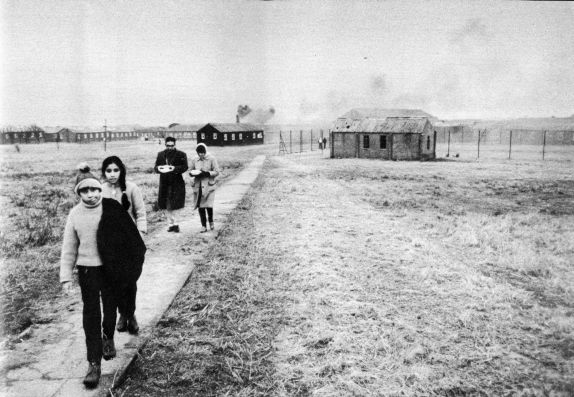
Photograph of Ugandan Asian family at Tonfanau by Jim Arnould, Nova (April 1973). Source: Oxford University Press blog

The camp was re-opened very briefly to house Uganda-Asian refugees.  Uganda had been a British colony, and while India was still also a British colony, the British government had encouraged Indian professionals to travel to Uganda to seek prosperity by helping with railway construction and the overall improvement of the economy.   The offer was taken up with enthusiasm, with thousands of Indian families settling in Uganda and making good livings.  Their successes were at first welcomed and then regarded with suspicion by Ugandan communities.  In 1962, Uganda was granted independence and in 1971, military leader Idi Amin staged a coup and came into power.  Only a year later, on August 5th 1972, Amin inaugurated a policy of economic reform, an “economic war” in his own words, that included the expropriation of properties owned by Asians and Europeans.  He gave Ugandan Asians 90 days noticed to leave the country, calling them “economic bloodsuckers,” claiming that they were draining the wealth of the nation at the expense of native Ugandans.  Their departure was hastened at gunpoint, giving them little doubt about their fate should they stay.

Of 80,000 Ugandan-Asian exiles, nearly 29,000 with UK passports came to Britain.  The official Ugandan Resettlement Board (URB) had the thankless task of providing them with temporary accommodation until permanent resettlement could be arranged, and took the decision to place them in refugee camps.  Tonfanau was one of sixteen refugee camps chosen for the task.

The entrance to the Cafe at the Tonfanau refugee camp, when the camp was in ruins. The bright, lively scene is very much at odds with the drab surroundings, and gives a sense of how hard it must have been to relocate to such a bleak place. Source: 28 Days website.

Tonfanau camp had been closed for nearly four years when it was suddenly dragged back into service to house over 3000 of these refugees for a period of six months, and must have been in somewhat poor condition. It was, in fact, only chosen as a last resort when other locations had been rejected.   Captain Freddy Fuller was put in charge of the camp, probably very well qualified as he had spent 25 years running an Outward Bound school.  Volunteers from the surrounding community formed a welcome group to provide the newcomers with essentials, including clothes and toys for the children, and each volunteer was instructed to assign themselves to individual families to assist them.  However, there was very little furniture and most of the exiles had to sit on the floor. It must have been a freezing, bleak and worrying winter in those bare huts, and Jordanna Bailkin’s book Unsettled repeats James Hamilton-Paterson’s poignant report on the camp, seeing “miserable people in their gorgeous saris” huddling in Tywyn’s two fish and chip shops for warmth.  Bailkin describes how donations of clothes resulted in some peculiar and probably difficult encounters:  “Adding to the bizarre atmosphere, most of the clothes donated to Tonfanau through the WRVS [Women’s Royal Voluntary Service] were from the 1960s.  Chandrika Joshi, whose family stayed at Tonfanau for five or six months when she was 14 years old, found herself dressed in a brown rubber minidress: “Such outfits went largely unnoticed in camp, where everyone was similarly attired, but more ‘out of place’ when she went to a school a few weeks later” (again quoted from Jordanna Bailkin’s book Unsettled – see Sources at end).

Fortunately, by the spring of 1973, all had been re-homed, hopefully in much better conditions, elsewhere in the UK.

Demolition of the site
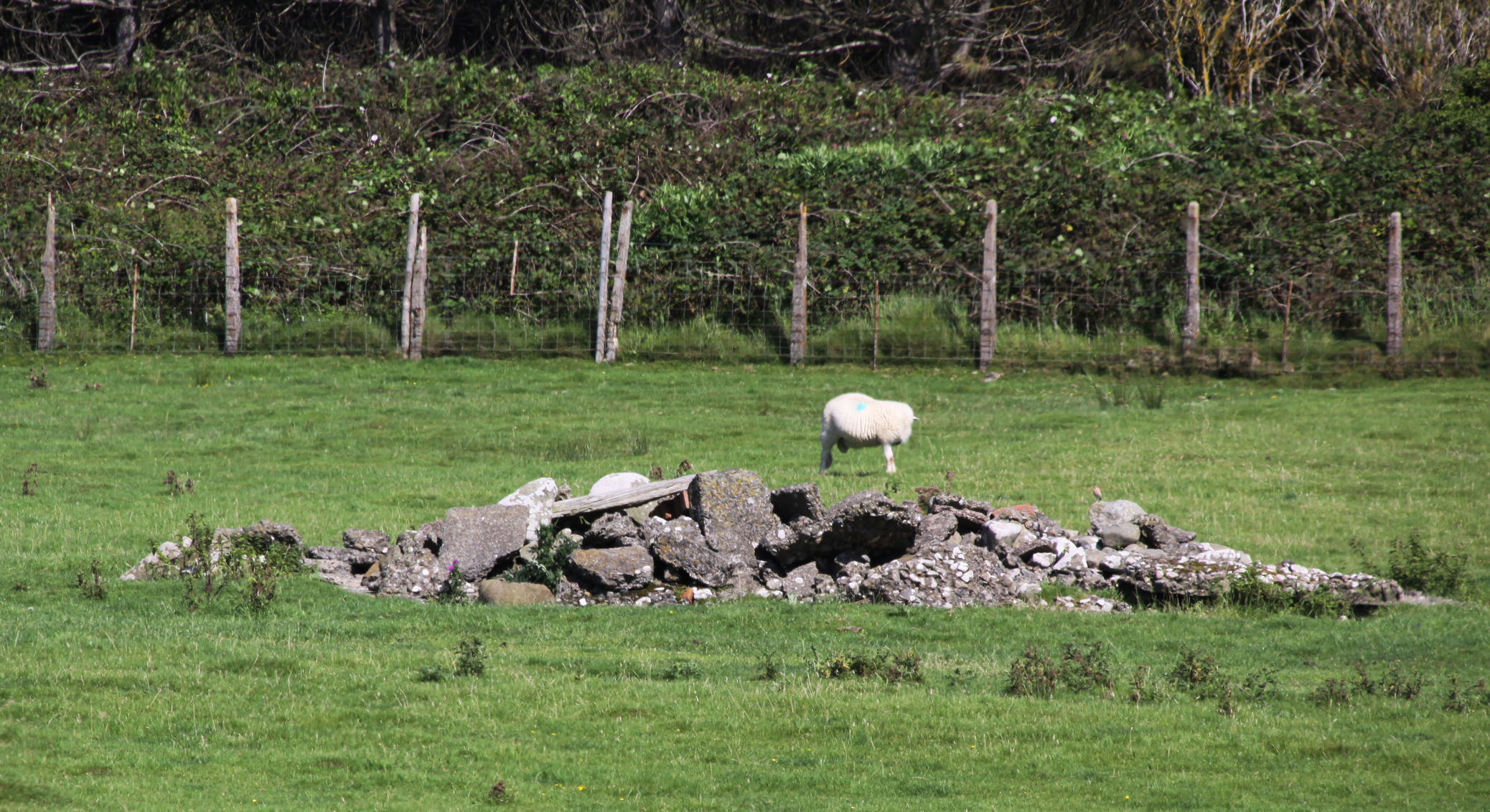
I have been unable to find when the site was finally demolished, or why some buildings were left in tact.  It was probably done between the late 1980s and early 90s.  Apart from a bare handful of surviving buildings that survived the demolition, it was a pretty thorough job.  What does survive gives a very good idea of both how ephemeral these buildings were intended to be, but also how enduring they proved to be before they were intentionally removed.

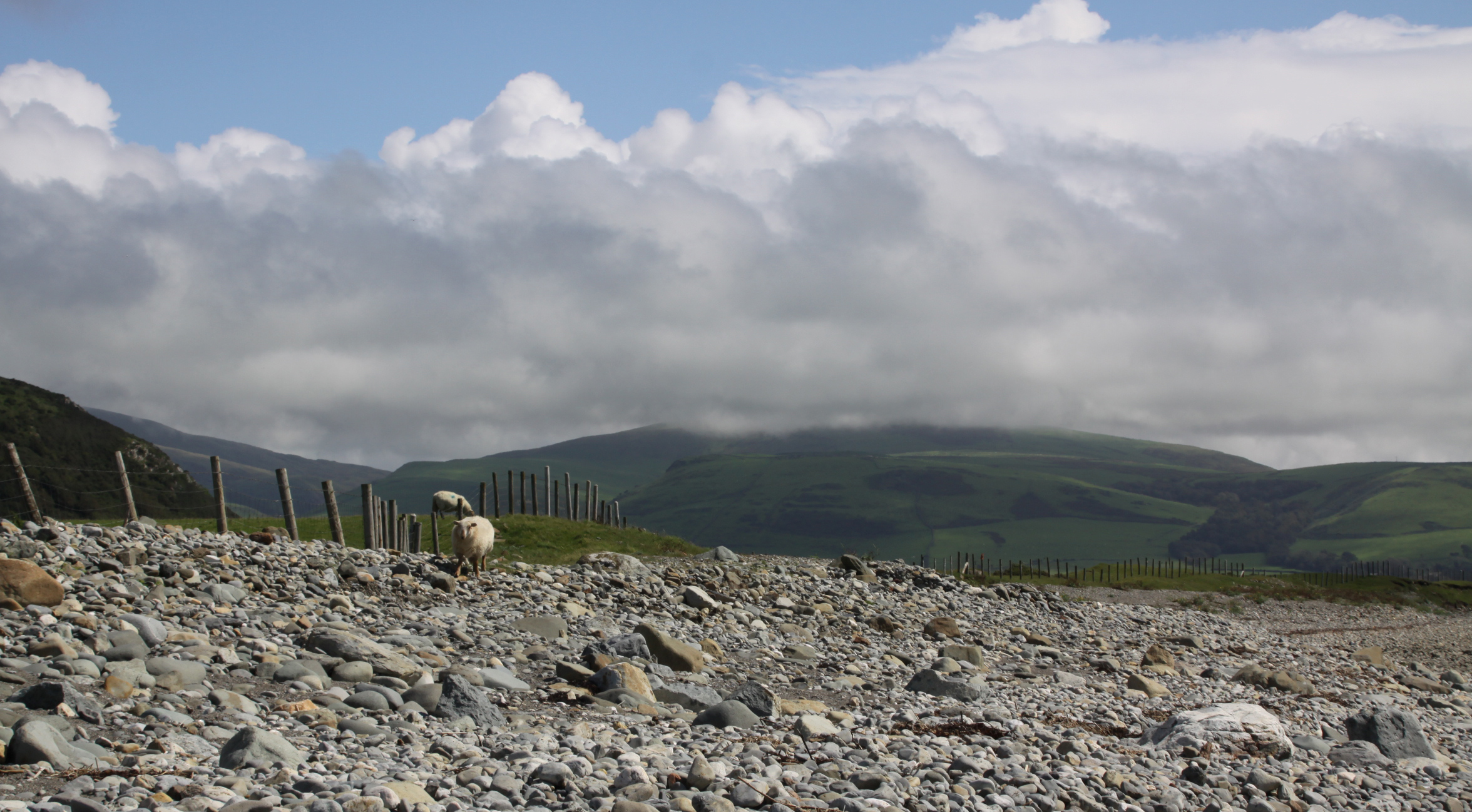
Part of the site is used, at the time of writing, by Tonfanau Road Racing for motorcycle racing on a 1-mile track during the summer, run by Crewe and South Cheshire Motor Club.  A 2010 proposal to use the land for a new prison never came to fruition.  Most of the land has been returned to farm use and sheep now roam freely over most of it.

Below are a couple more of my photographs of what’s left of the site today.  For many more from all periods, see the substantial collection contributed by many volunteers on the All Arms Junior Leaders Regiment website.
Sources:

Books and papers

Jordanna Bailkin 2018.  Unsettled: Refugee Camps and the Making of Multicultural Britain. Oxford University Press

Becky Taylor 2018.  Good Citizens? Ugandan Asians, Volunteers and ‘Race’ Relations in 1970s Britain. History Workshop Journal, Volume 85, Spring 2018, p.120–141
https://academic.oup.com/hwj/article/doi/10.1093/hwj/dbx055/4818096

Roy Sloan 1991.  Wings of War over Gywnedd.  Aviation in Gwynedd during the World War II. Gwasg Carreg Gwalch


Websites

28 Days Later Urban Exploration
https://www.28dayslater.co.uk/threads/tonfanau-military-camp-tonfanau-nr-tywyn-february-2015.94390/

40th Anniversary for Ugandan Asian Refugees in Wales
https://www.itv.com/news/wales/2012-07-31/40th-anniversary-for-ugandan-asian-refugees-in-wales/

Ken Hart’s All Arms Junior Leaders Regiment (AAJLR) website
About: http://www.aajlr.org/about/about_main.html
Tonfanau camp: http://www.aajlr.org/tonfanau/tonfanau_main.html

Memories of Frank Yates, Royal Artillery, Light Anti Aircraft Battery. Chapter 17, BBC World War 2 People’s War. Article ID A7375845
https://www.bbc.co.uk/history/ww2peopleswar/stories/45/a7375845.shtml

Stanley Briggs: Then and Now
http://www.stanleybriggs.com/art_nat_service1.html

Tonfanau Road Racing
https://www.tonfanauroadracing.co.uk/

Wikipedia article about PYTHON
https://en.wikipedia.org/wiki/PYTHON#Locations