For an explanation of the Twiddly Bits series, see Aberdovey Twiddly Bits #1


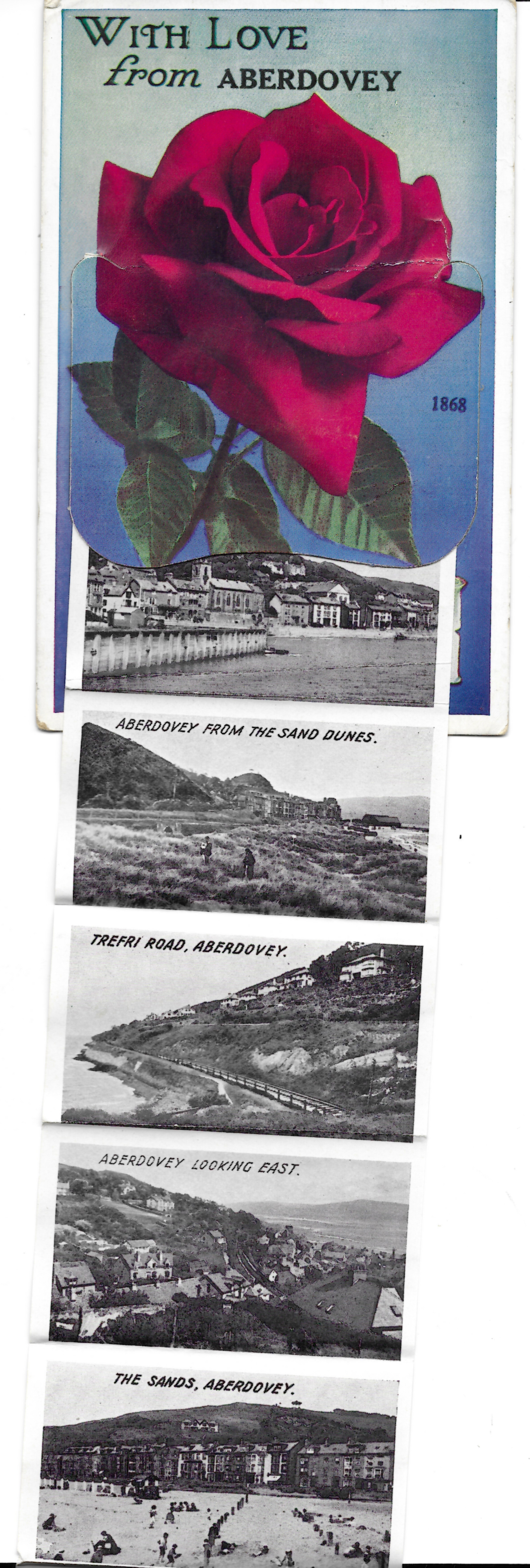
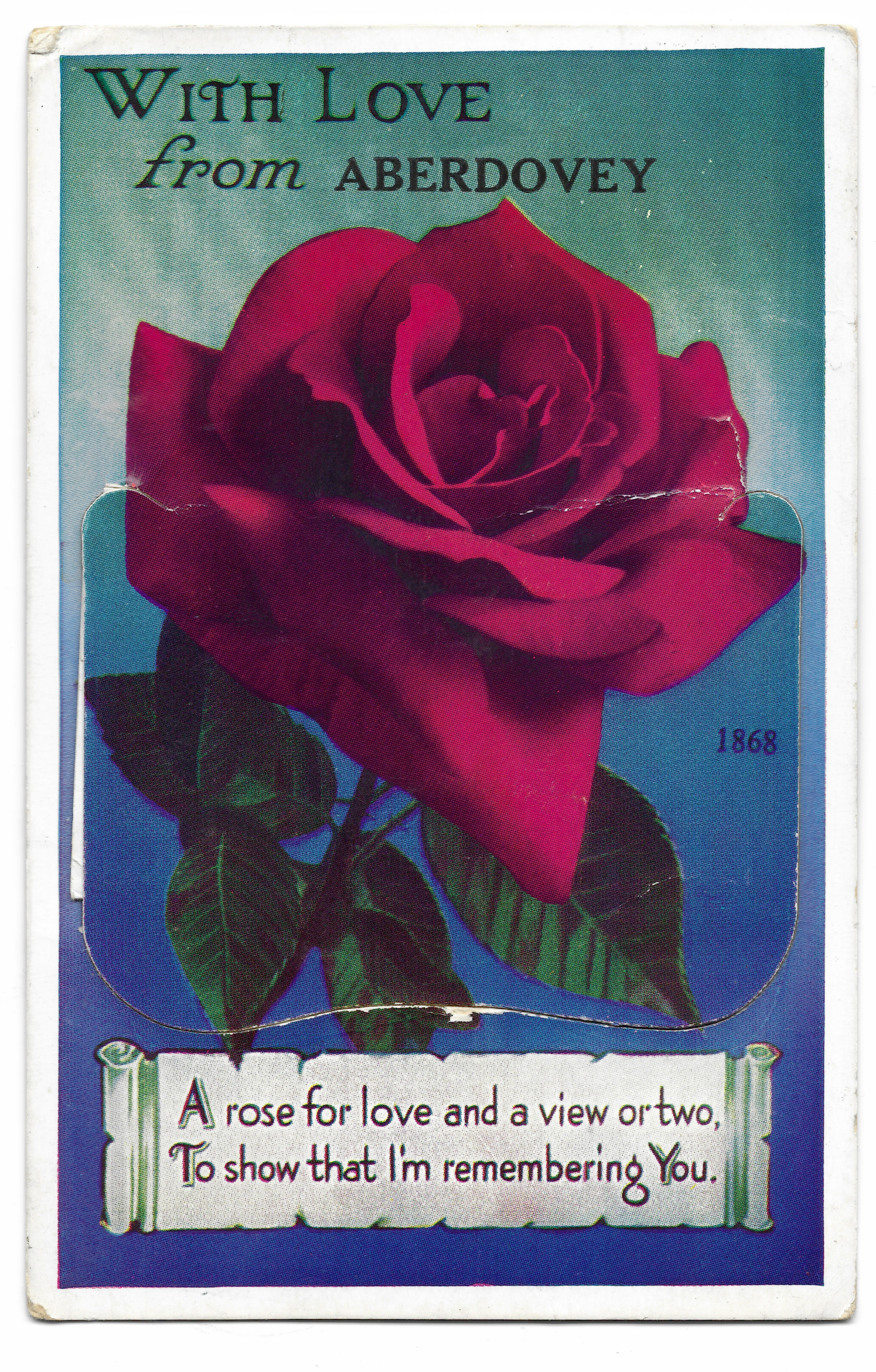 This lusciously coloured postcard, which I have bought right at the end of my Vintage Postcard phase, is an unexpected treasure. When eBay presented it to me as a possibility following previous Aberdovey-themed postcard purchases, I thought it was such fun, but I hadn’t realized that it contained a secret surprise – a fold-out section consisting of twelve miniature black and white photographs on a paper strip, hidden underneath the flap at the base of the rose.
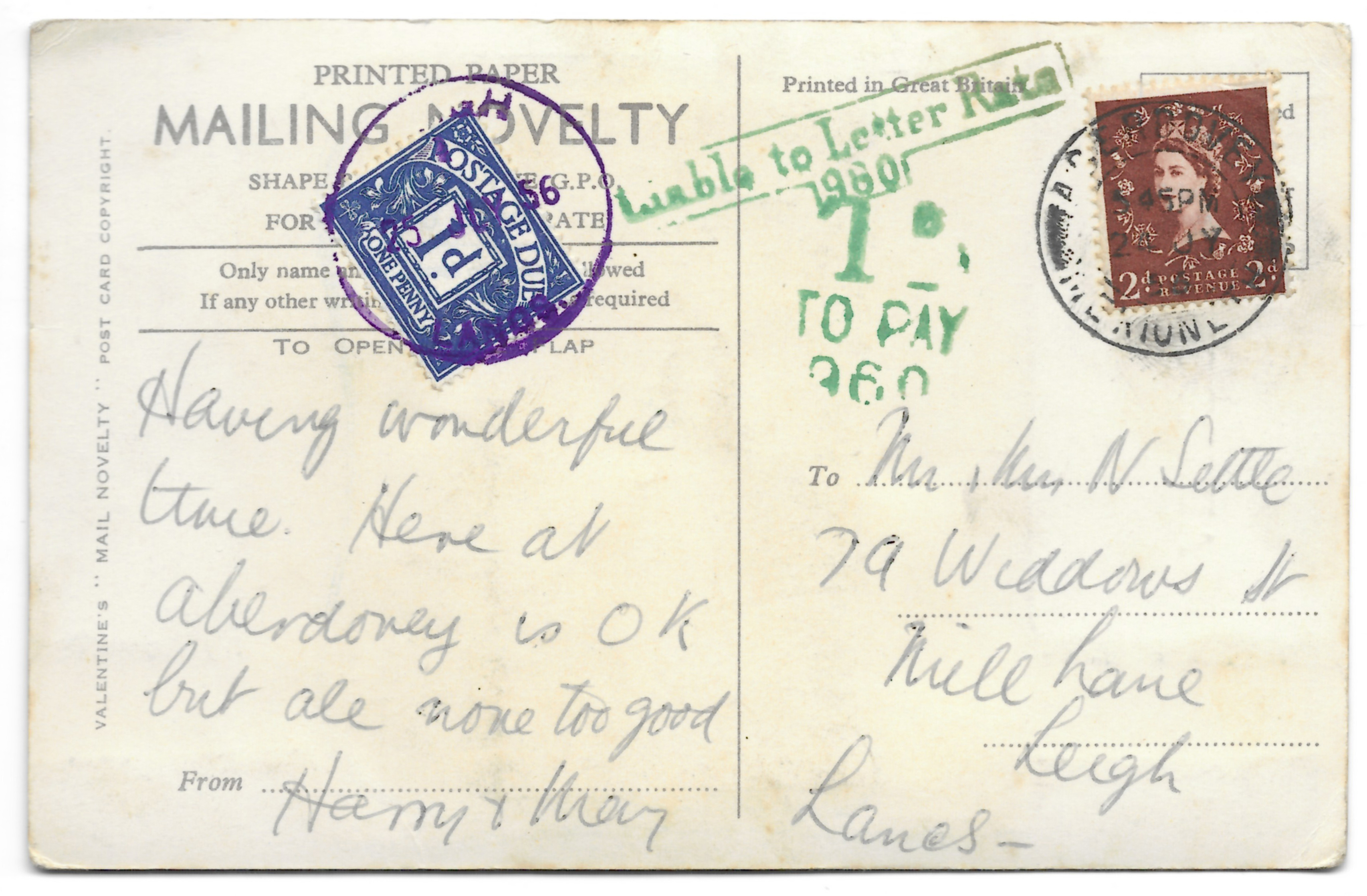
The card was posted in July 1956. Apparently the stamp fixed to the card was not sufficient, and a “postage due” stamp and mark have been added. The message is remarkably prosaic, given the romantic theme of the card.
It was produced by James Valentine and Sons, in their “Mail Novelty” range.
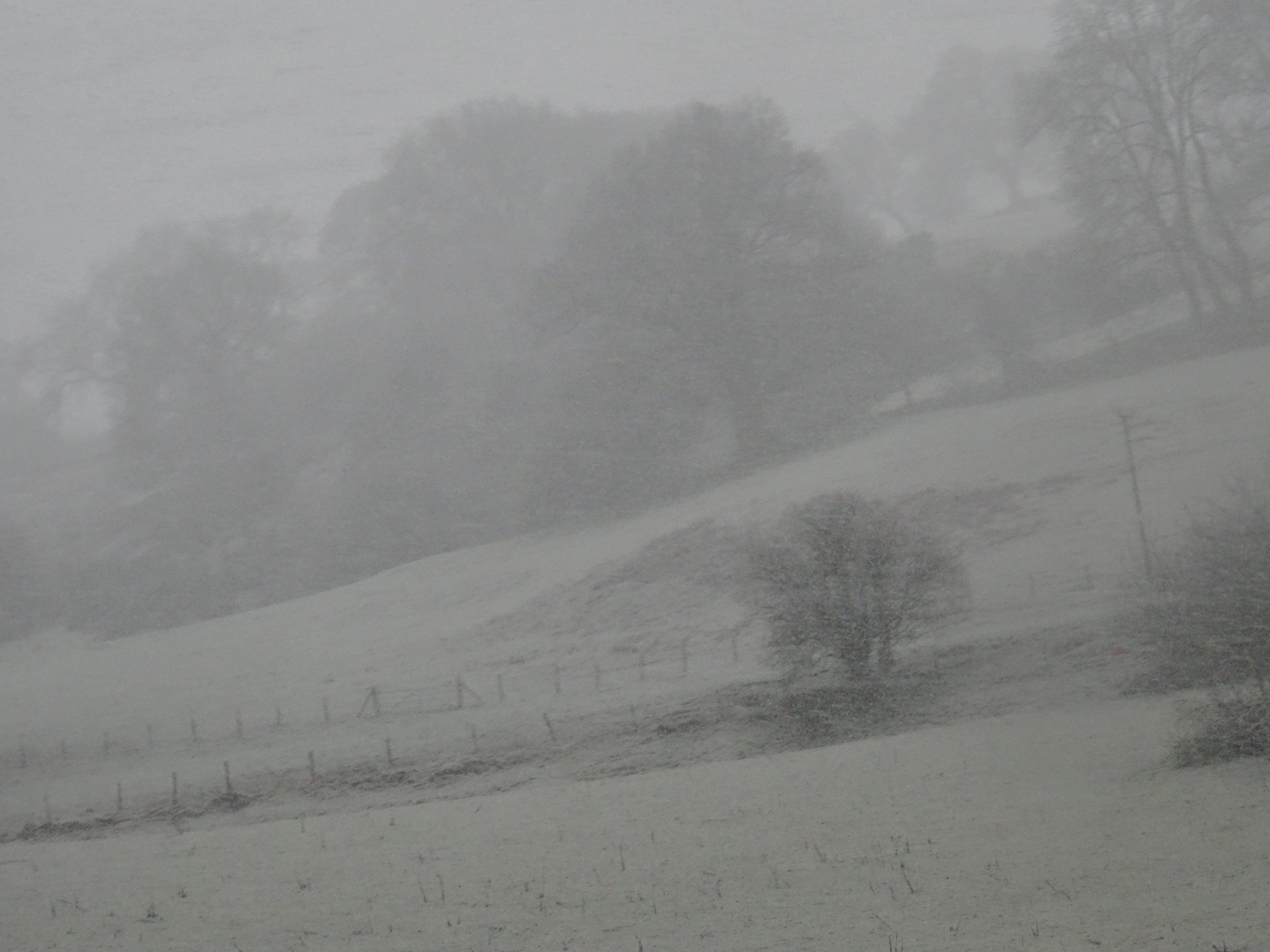
I checked the weather forecast yesterday, and it said absolutely nothing, zero, zip, nada, about snow. But on drawing into Bala, a slightly blustery day turned into a minor blizzard and it didn’t let up until I was passing Wrexham. I do the round trip from Aberdovey to Chester and back again quite frequently, and the weather is rarely as predicted, but often radically interesting in a rather challenging way!




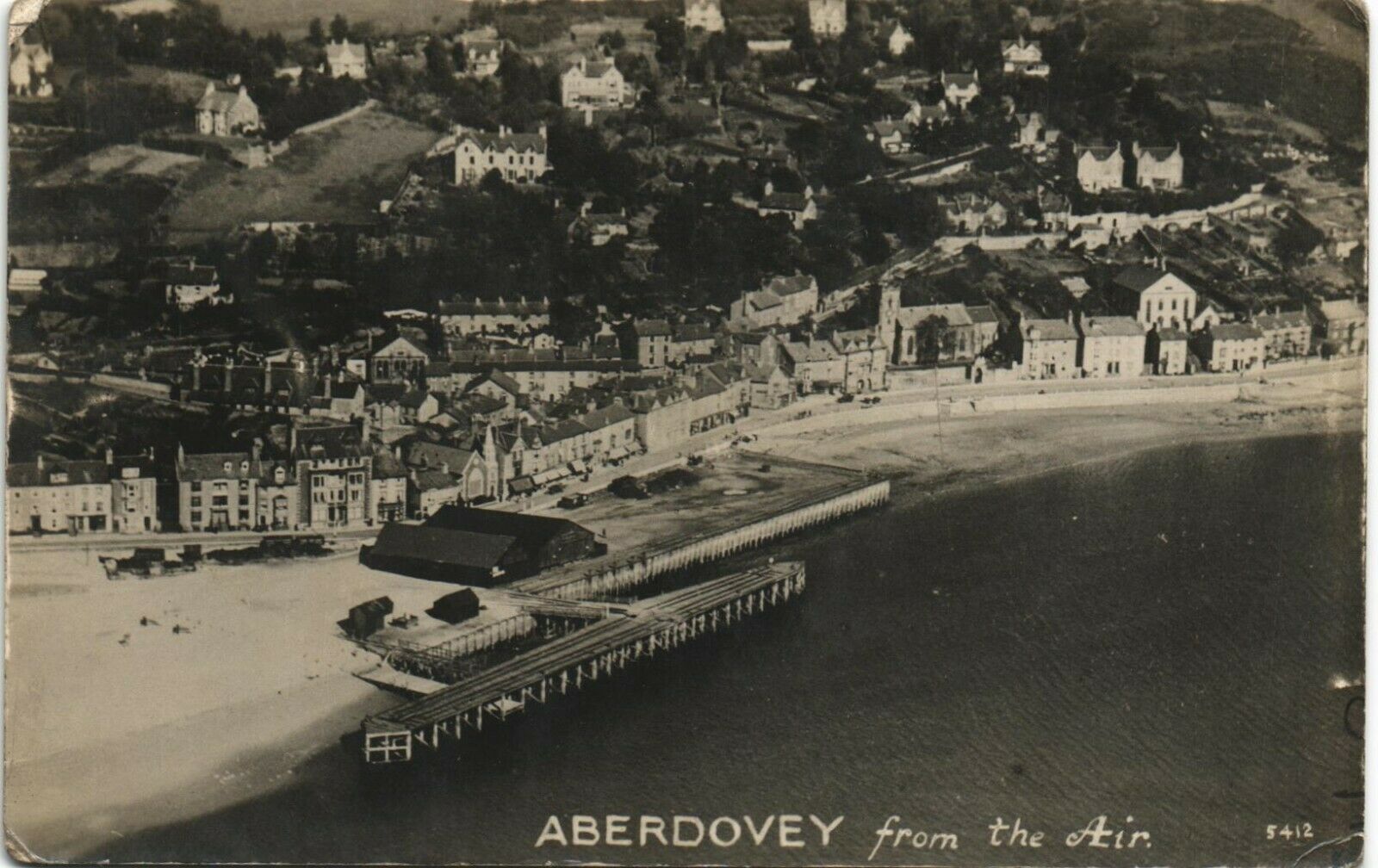
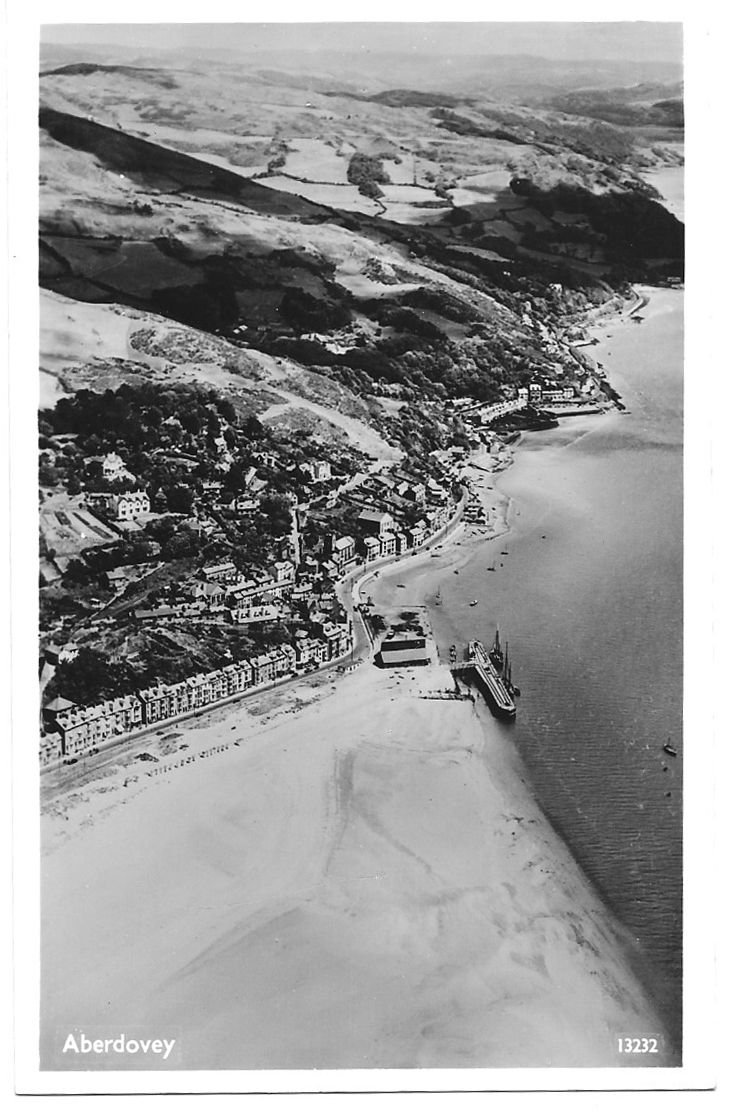 These postcard images speak for themselves. Both were unsent. Lovely Sierd Jan Tuinstra, who is an absolute fount of knowledge about Aberdovey, has provided the following information, with my sincere thanks:
As to their date, they were both taken on the same day during the same flight. Probably sometime in the 1920’s . They pop up on eBay every now and then, and I have a slightly different copy of the top card a few years back, which was posted in 1928. There is a third view from the same flight.
Commercial air photography didn’t exist prior to 1919. But after the war, ex RAF reconnaissance officers started the air photographing business using their hard won knowledge and experience.
I instantly noticed the railway wagons in the three postcards. Two of them can be readily recognized as Great Western wagons, thereby dating the view to after 1923. In every one of the postcards their position and that of the other wagons is exactly the same, meaning that all three views must have been taken on the same day.
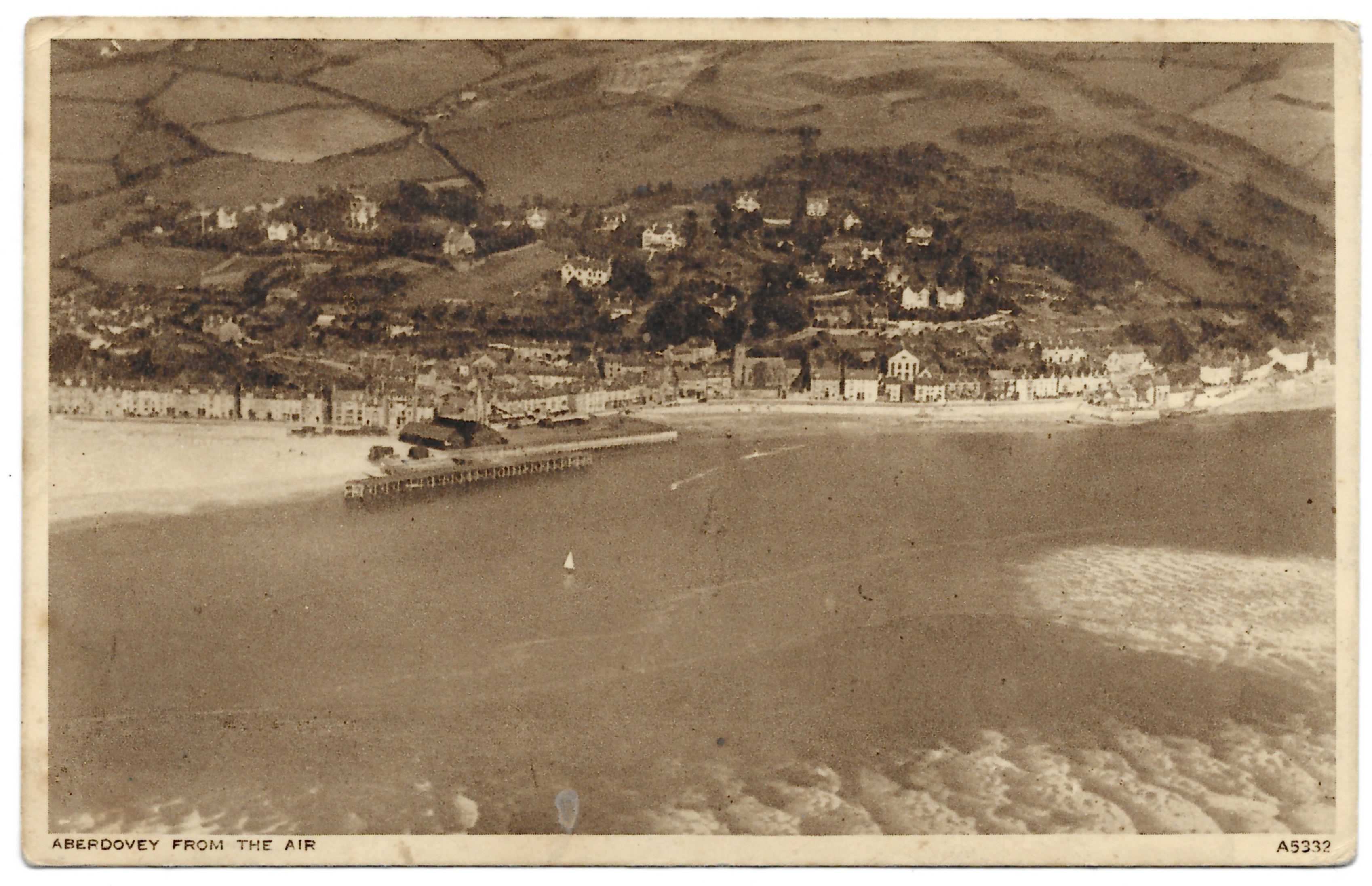
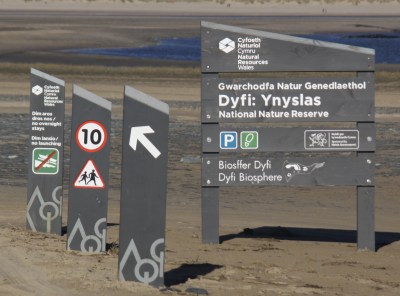 On a lovely day, quite unprecedented for February, I decided to go a bit further afield than my usual strolls on Aberdovey beach and go to Ynyslas. I had been meaning to go for a long time.
Ynyslas carries with it the novelty of parking on the beach. There is a nominal fee when the visitor centre is open (from Easter to the end of September), but it is free in the winter months when the visitor centre is closed. The drive to Ynyslas from Aberdovey takes about 40 minutes via Machynlleth, and of course you are driving in a loop around the Dyfi estuary because Ynyslas is immediately opposite Aberdovey. There used to be a passenger ferry between the two, which had been operated for centuries, but eventually became redundant when the railway was built and the roads improved to handle the growing number of cars.
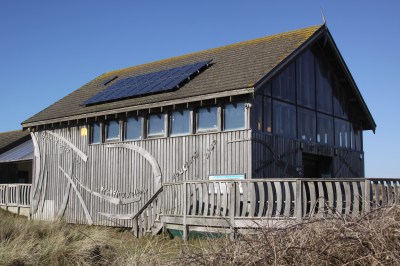
Visitor Centre, Ynyslas
Ynyslas is a nature reserve, properly entitled the Dyfi National Nature Reserve and Visitor Centre and as well as the sand dunes and the beach, includes the Cors Fochno raised peat bog, which is of international importance. I have only been to Ynyslas once before, and then only very briefly when it was an exploratory mission tacked on to a visit to the terrific mill at Furnace (covered on a previous post). The visitor centre was open then, and had stacks of books on tables for visitors to consult, information boards, and a good collection of relevant books, greetings cards and small toys to buy, as well as a coffee and tea machine. Considerate to out of season visitors there is a big board outside, by the entrance, showing the layout of the nature reserve, with the paths clearly marked.
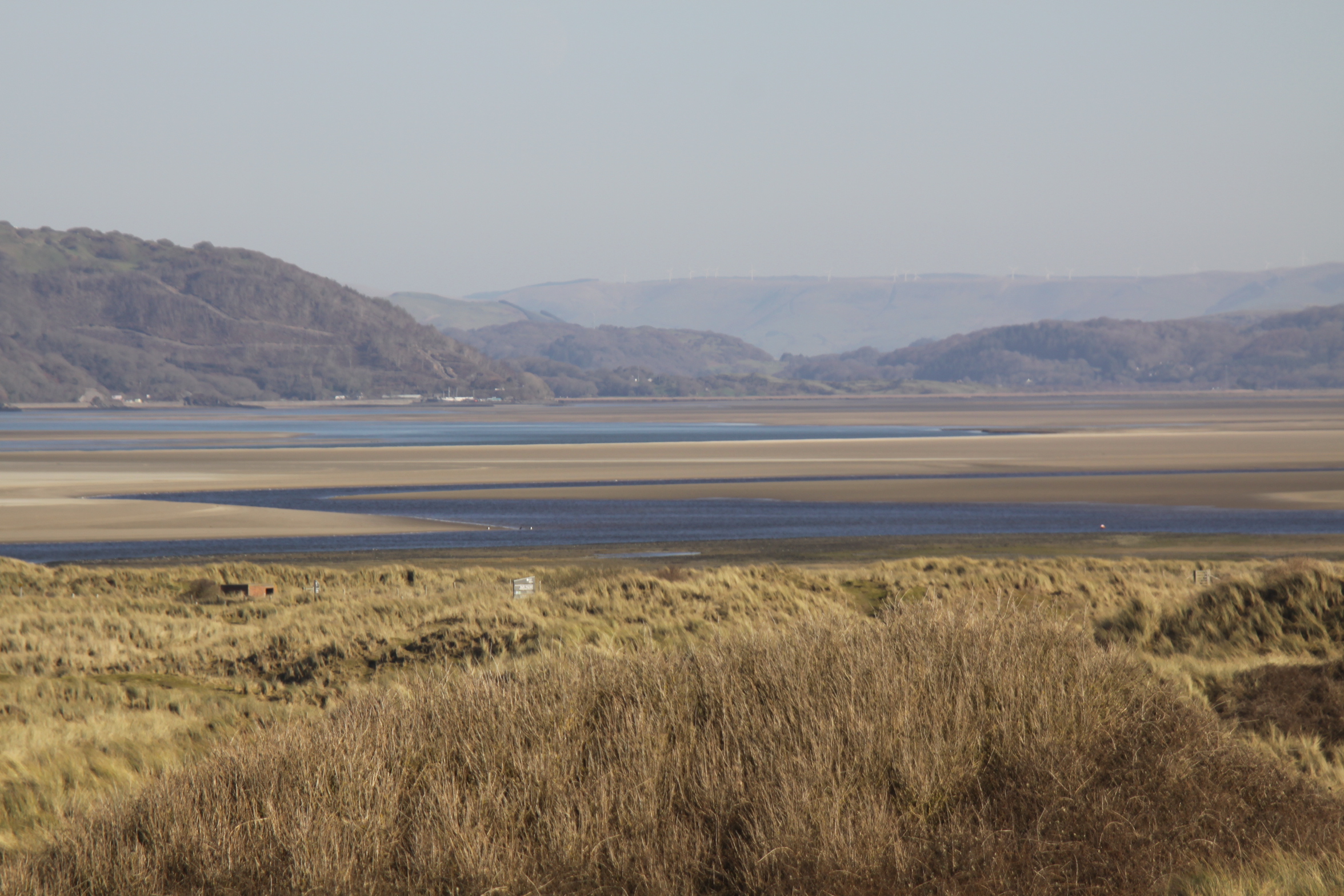

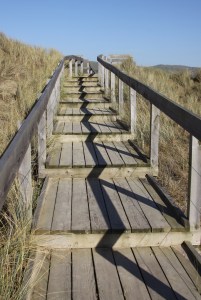 Out of season Ynyslas is virtually empty of bodies, just a few dog walkers in the dunes and rather more on the beach. I decided to do the circular walk that leads through the dunes, out on to a stretch of beach, and then back along the mouth of the estuary to the car. The dunes are of particular interest because they demonstrate all the stages of dune formation and growth, and there are multiple types including both fixed and mobile dunes. There was not a lot to see other than marran grass at this time of year, but come the spring there will be all sorts of flowering plants and insects to see including wild orchids, mosses, liverworts, fungi, insects and spiders.
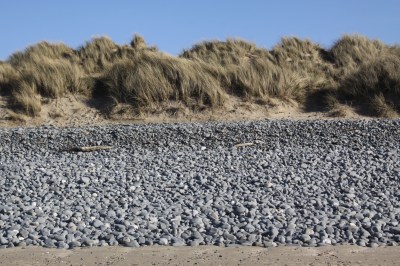
Fringe of pebbles between the dunes and the beach at Ynyslas
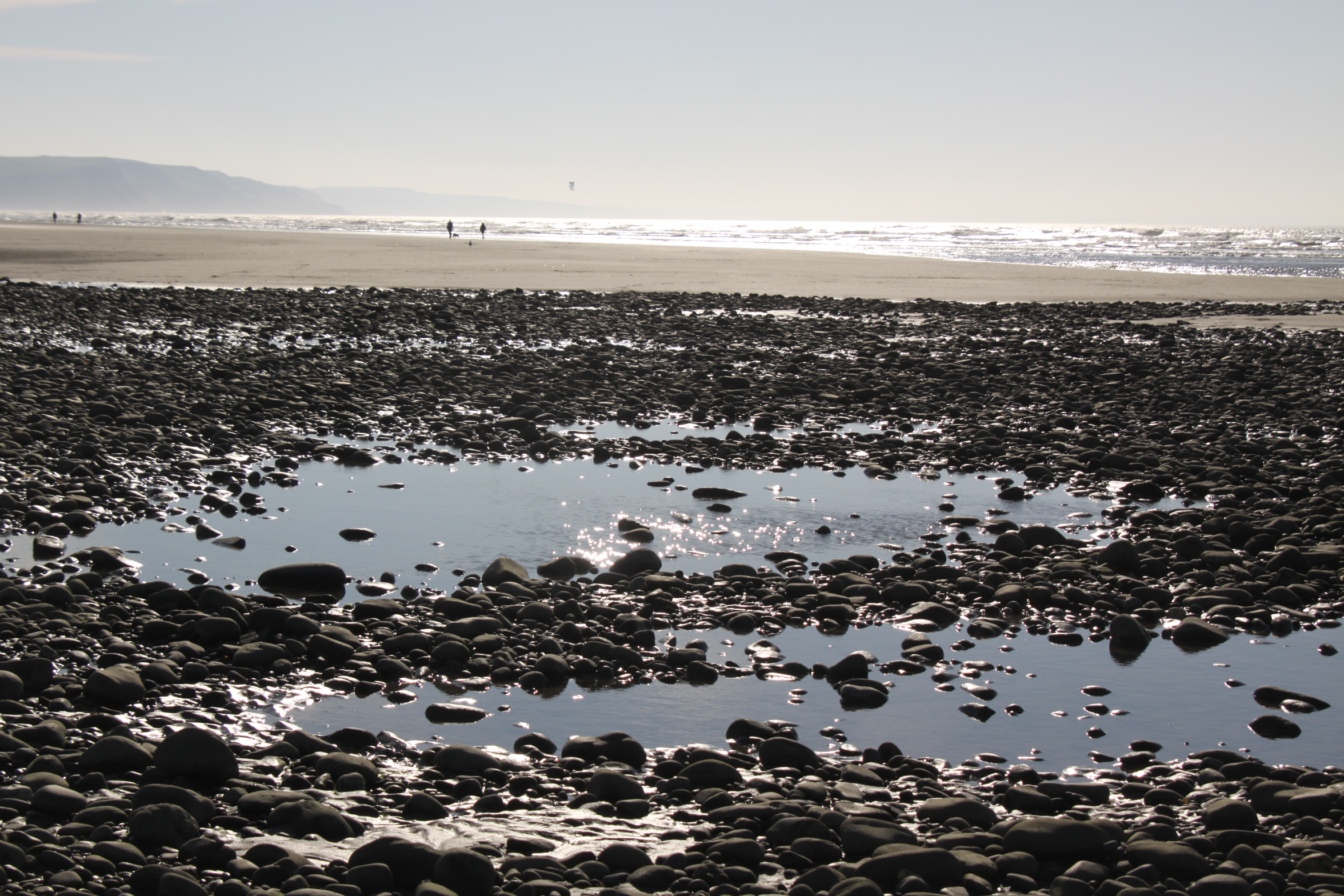
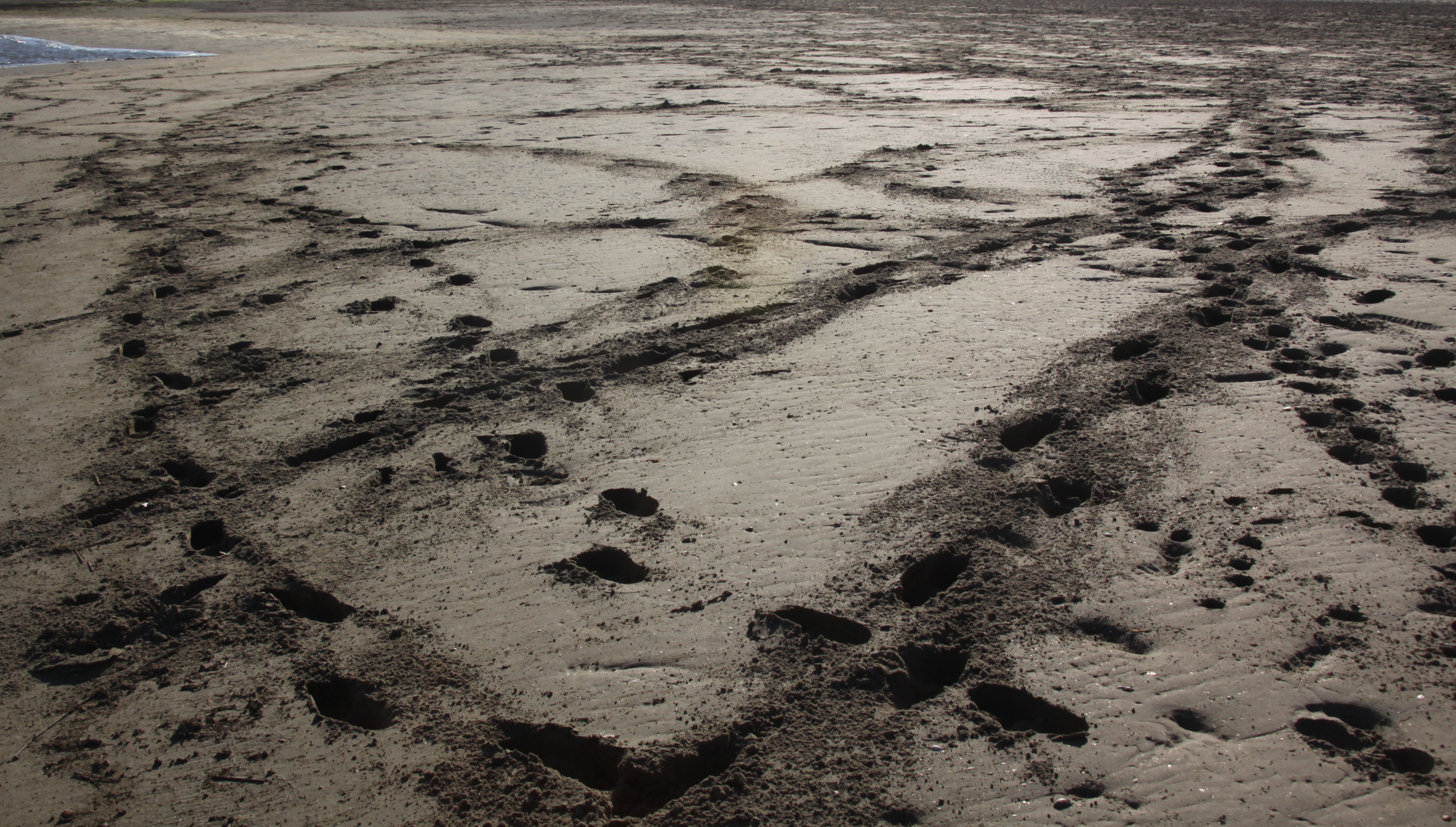
Where the path tips you out on the beach there is a big ribbon of huge rounded grey pebbles that lies between you and the vast, eternal vistas of sand. You need to be a bit careful as they shift constantly underfoot. Once safely installed on the beach there is tons to see, and it is quite different from the stretch between Tywyn and Aberdovey. For one thing, there is a sense that you can see forever down the beach along Cardigan Bay. It is a very wide, open stretch of beach, with the waves chasing each other up the sand in long white-topped lines for as far as the eye can see.

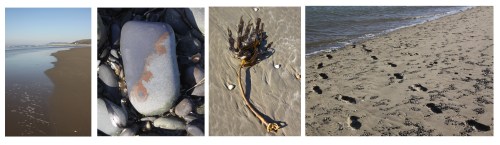
Ynyslas beach (click to enlarge)
 Before the beach reaches the estuary, the sand is largely uninterrupted by the mass of small cockle, razor clam and tellin shells that scrunch underfoot on the stretches on the north side of the estuary. Instead, there are occasional shells of a completely different character, and even the usual species like cockles are generally much larger. Gigantic Icelandic cyprine and common otter shells are dotted around, big common whelks are a frequent sight and the pod razor clams reach their maximum lengths along this section of beach. Of the smaller species the limpets were a pleasant surprise, as were needle whelks and acorn barnacles. Some of the shells contained keelworm tubes (spirobranchus). In the sand itself there were dozen upon dozen of sandhopper burrows. I was surprised at how many articulated bivalves I found, both halves still connected, including well preserved cockles
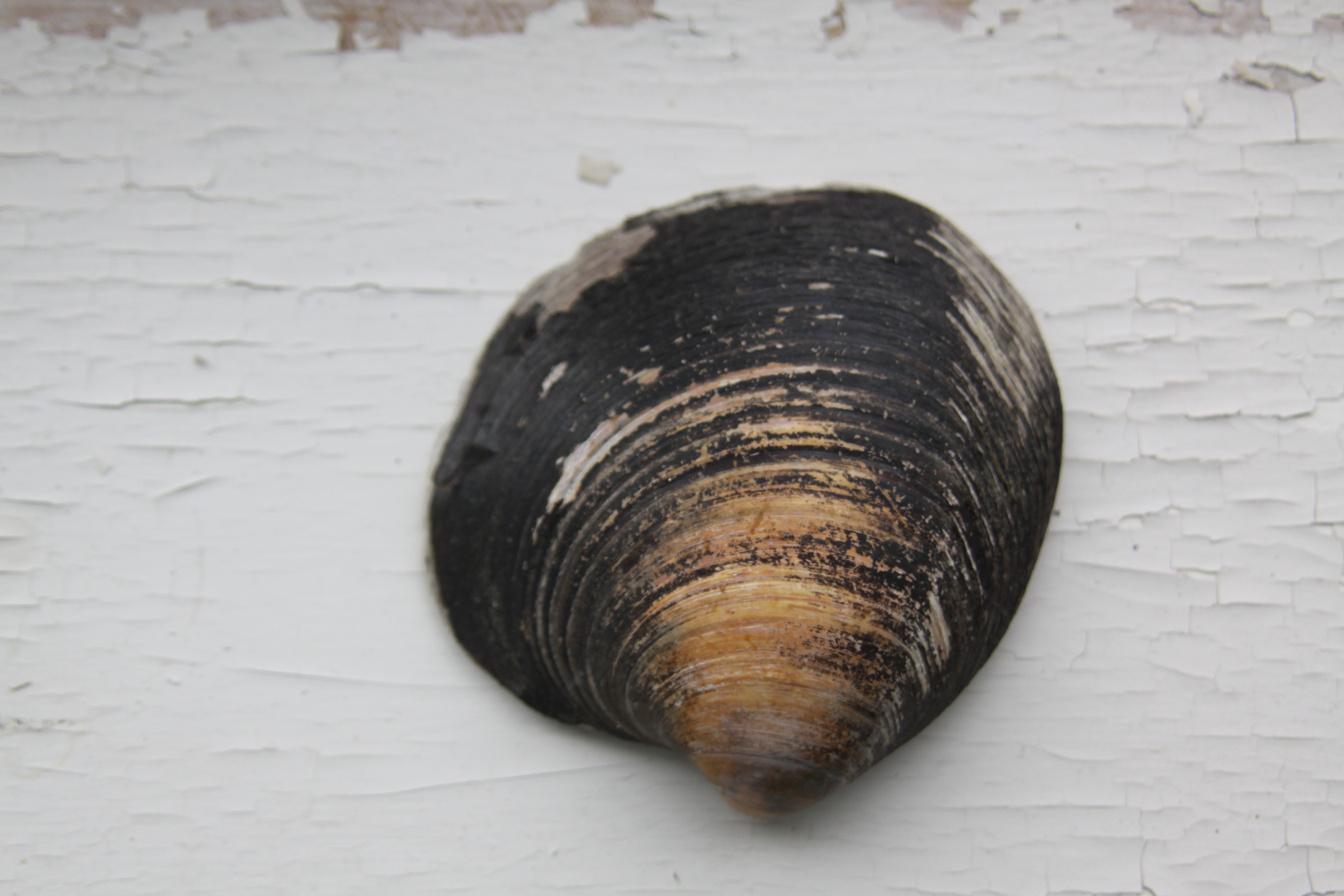 The Icelandic cyprine (Artica islandica, also known as the ocean quahog) is particularly fascinating. It has a dark brown periostratacum (outer skin of a shell) and lives so long that it is amongst the longest living of any animal – up to 500 years. Amazing to think that an Icelandic cyprine shell could have contained a creature that was alive when Shakespeare was writing. The oldest known, its age determined by counting growth rings, was 507, and was nicknamed Hafrún (c. 1499–2006) . This example is 10cm (4 inches) from top to bottom.
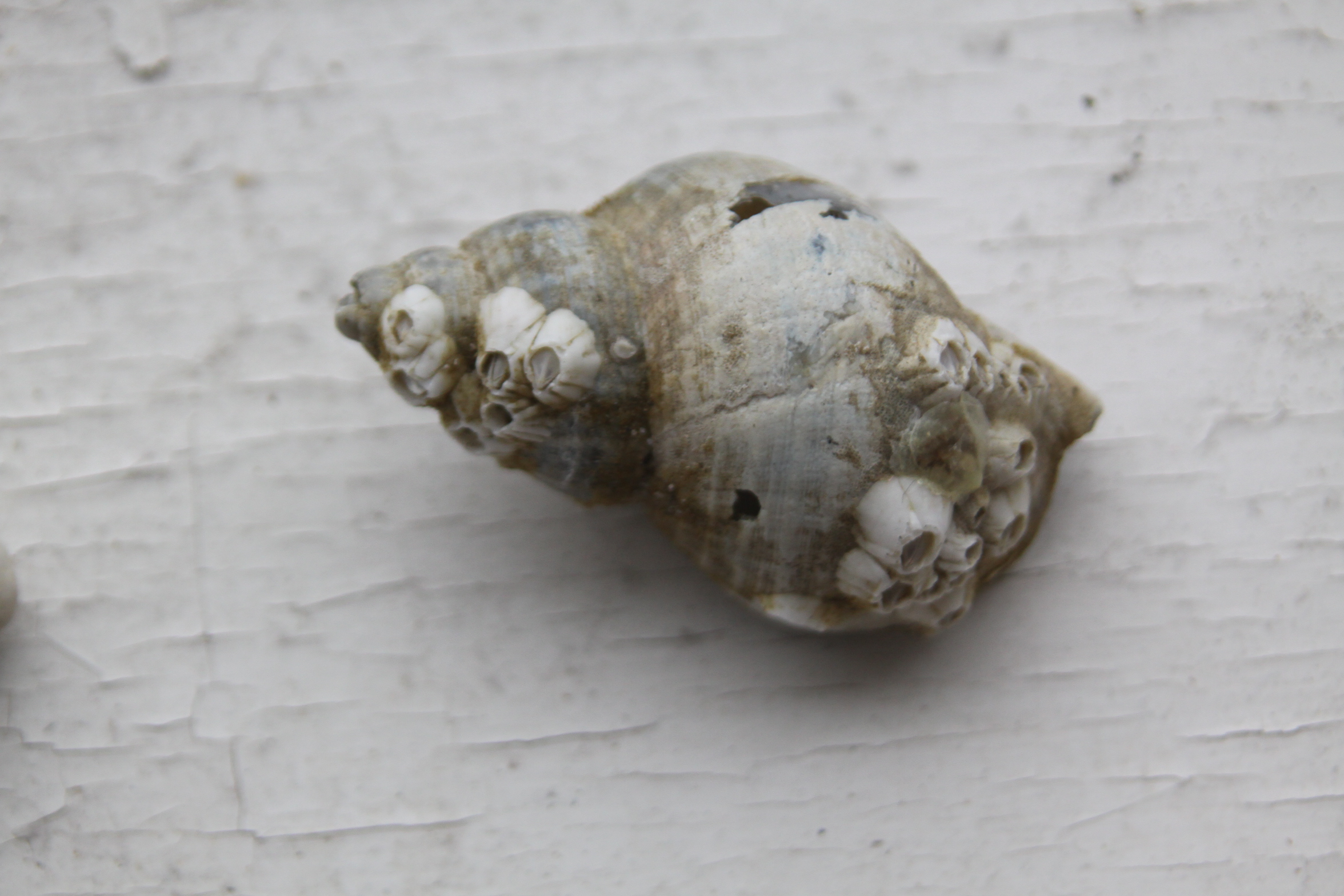 Dog whelks (Nucella lapillus), which are lovely to look at and beautifully constructed along a spiral axis, are actually somewhat stomach-churning in their feeding habits. Like all gastropods, whelks have a toothed tongue called a radula. They use it to drill through the shells of other gastropod, and produce a chemical to help with the process. Once the shell has been pierced, they inject other chemicals into the shell cavity to paralyze and liquefy their prey before extracting it through the hold in the shell. You can spot the holes in shells on the strandline.
One of the whelks had keelworm (Spirobranchus) tubes. These calcareous tubes are made by the keel worm with an open and closed end. The open end allows it to put out tentacles with which it feeds on organic detritus, whilst safely armoured in its shell. Like keelworm tubes, barnacle shells are also found on shells of other organisms. There were several examples of acorn barnacles at Ynyslas, like the dog whelk in the above photograph, all in clusters because barnacles form colonies.
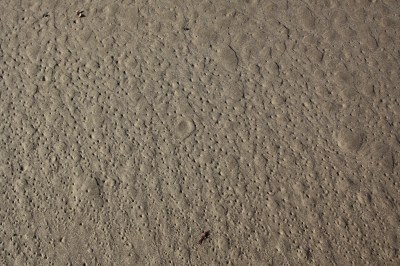
Sandhopper burrows (click to enlarge)
Sandhoppers (Talitrus salafor) are interesting too. At around 20mm in length, they look rather like fleas, with their backs arched. They live in burrows at depths up to 30cm and emerge at night to feed on the strandlines. Although they live on the strandline they are terrestrial and cannot survive in the water so when the tide comes in they dive into their burrows, backfilling with sand to plug the passage and protect themselves. They are targeted by some species of wading birds.
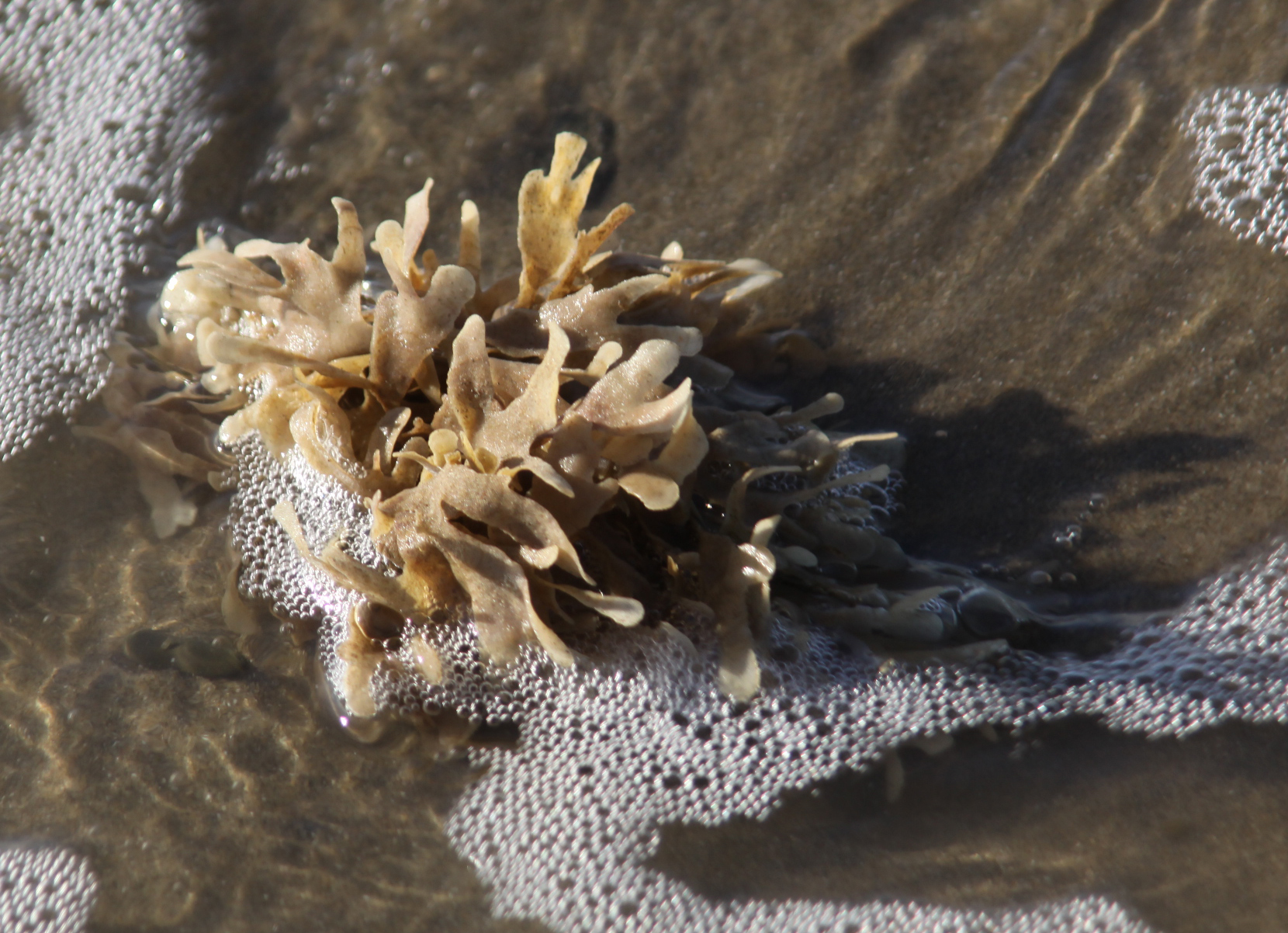
 I found two nursehound eggcases, which I dutifully reported to the Shark Trust. One of them was partially covered with what look like tiny shells, as well as some keelworm tubes. I thought at first that the shells might the blue-rayed limpet (Patella pellucidum) but quite apart from the fact that they are the wrong shape, I cannot see any of the radiating blue lines that ought to be present if this identification were correct. Perhaps they are very early on in the growth cycle.
The limpets are common in some areas, but I have never seen one at Aberdovey. There were plenty on the beach at Ynyslas. Like dog whelks they have a toothed radula, but they infinitely more friendly to other species. They feed on algal spores left behind when the tide recedes, and in clearing patches of seaweed they create opportunities for other species to colonize rocks, increasing biodiversity along the seashore.


Ducks
As I returned towards the car I thought I could hear oyster catchers, but all I could see were ducks. If you are a refugee from an urban environment, like me, you might associate ducks with the coarse quacking of mallards, but these sounded more like oyster catchers, with a a high-pitched peeping noise as you can hear in the video. They were feeding in the marsh grasses in the muddy zone at the edge of the estuary waters.
The views from Ynyslas towards Aberdovey, as you round the corner from the open sea into the estuary, are breathtaking, particularly on a gloriously sunny day. Beyond the town you can see down the Dyfi, a long peaceful arc of water flanked by low hills.


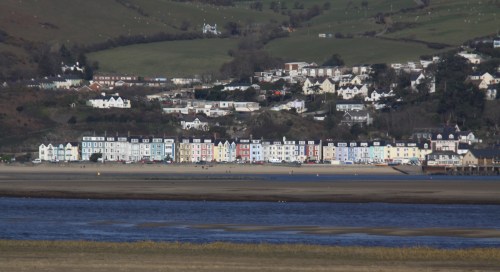
Aberdovey from Ynyslas
The BBC website has a good suggested walk beginning at Ynyslas, which goes further than I did and can take up to three hours. The Natural Resources Wales website gives more information about what to see at Ynyslas, and it offers a number of suggested walks of different durations. I plan to return to do the Cors Fochno walk, and to do another dune walk when there will be plants in flower.
I drove past the golf course into Borth for a quick stroll along the seafront, overlooking the pebble beach and rolling waves. Now a seaside town, it used to be the main source of sailors for the local shipping trade in the 19th Century.
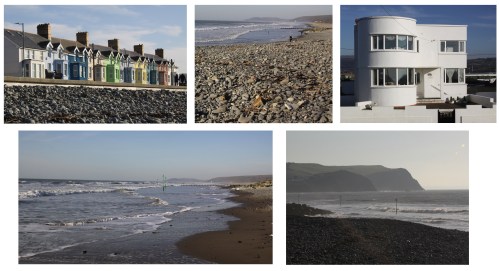
Borth
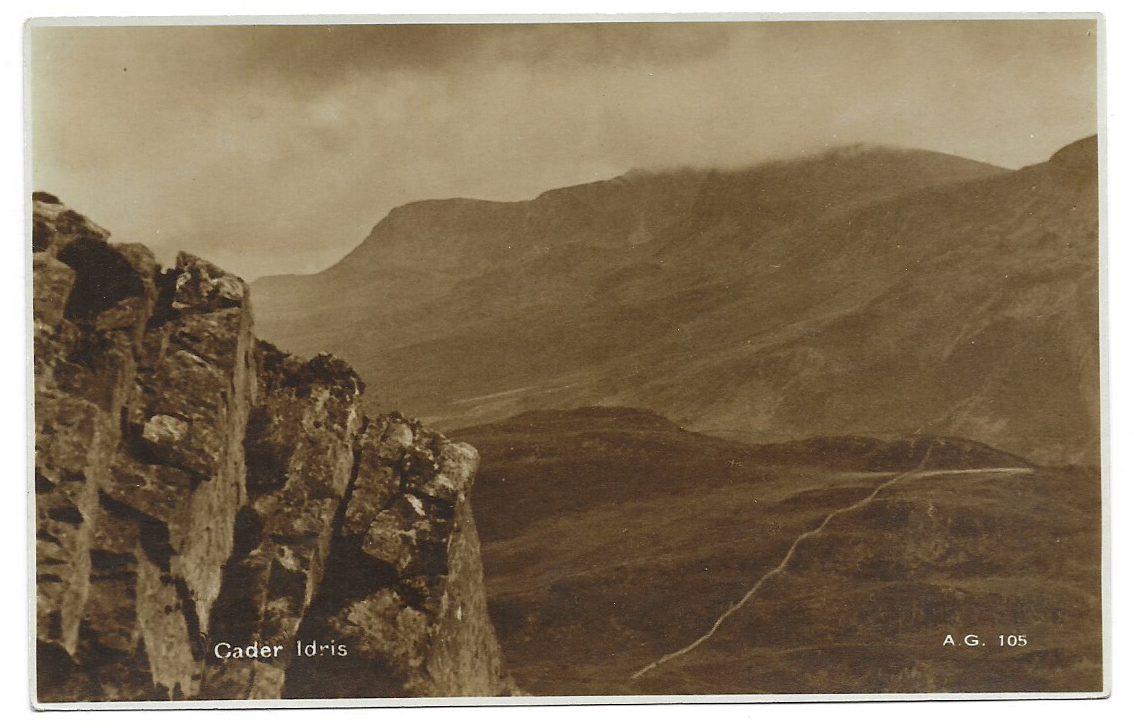 Cadair Idris, the Chair of Idris, the local giant, is a dominant feature of the area. I’ve walked to the summit a number of times on the Minffordd Path, but that was many years ago and I’ve no idea where those photographs are now. When spring arrives it will certainly be time to do it again. The first photograph (Valentine’s AG105), which is unused, superbly captures the solid mass of Cadair Idris, its massive presence. The sharp outcrop in the foreground is both a great piece of photographic composition and a reminder of the enormous geological forces that lifted up the Welsh hill ranges. Below it, a well-used track carves a route well into the distance.
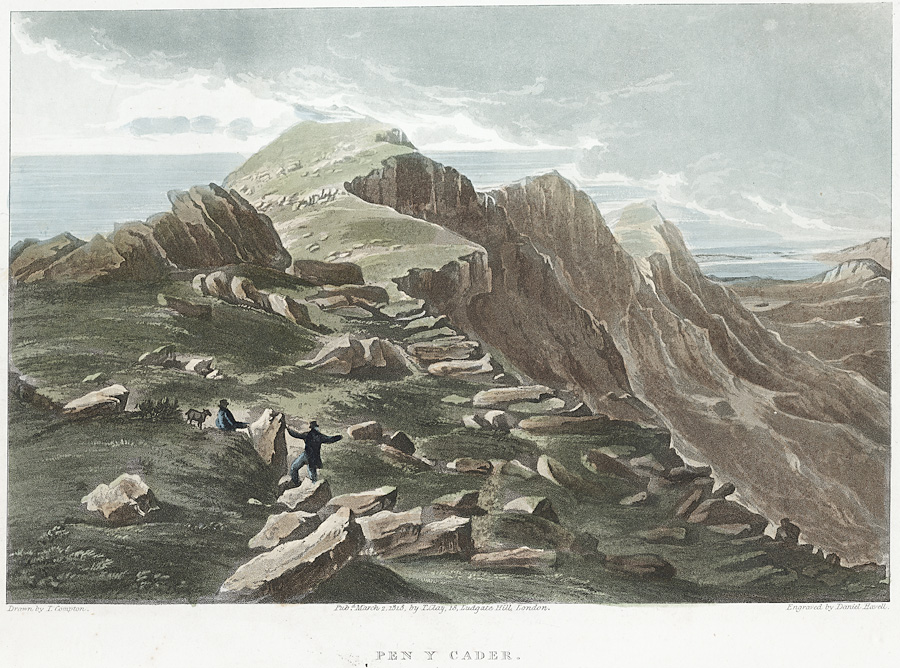
Painting of Pen y Gader, the summit of Cadair Idris, by Thomas Compton 1812-1818 (lithographer Daniel Havell). Source: Wikipedia, via the National Library of Wales
Cadair Idris was a popular destination from at least the late 1700s, when tourists were first attracted to Llyn Cau, the glacial cwym lake. Llyn Cau has attracted tourists ever since, and it became a popular destination throughout the 19th Century. Richard Wilson painted Llyn Cau in the late 1700s, and early 19th Century artists continued to produce various interpretations of Cadair Idris, including Edward Pugh (1816), John Skinner Prout (1830), Samuel Jackson (1833) and Sidney Richard Percy (1874). A painting by Compton is shown here on the left, and some other examples can be seen on the Campaign for National Parks website. A few brave souls reached the summit, like Thomas Compton who painted it in the early 19th Century. At 2927 feet the summit and highest point of of Cadair Idris is called Pen Y Caer.
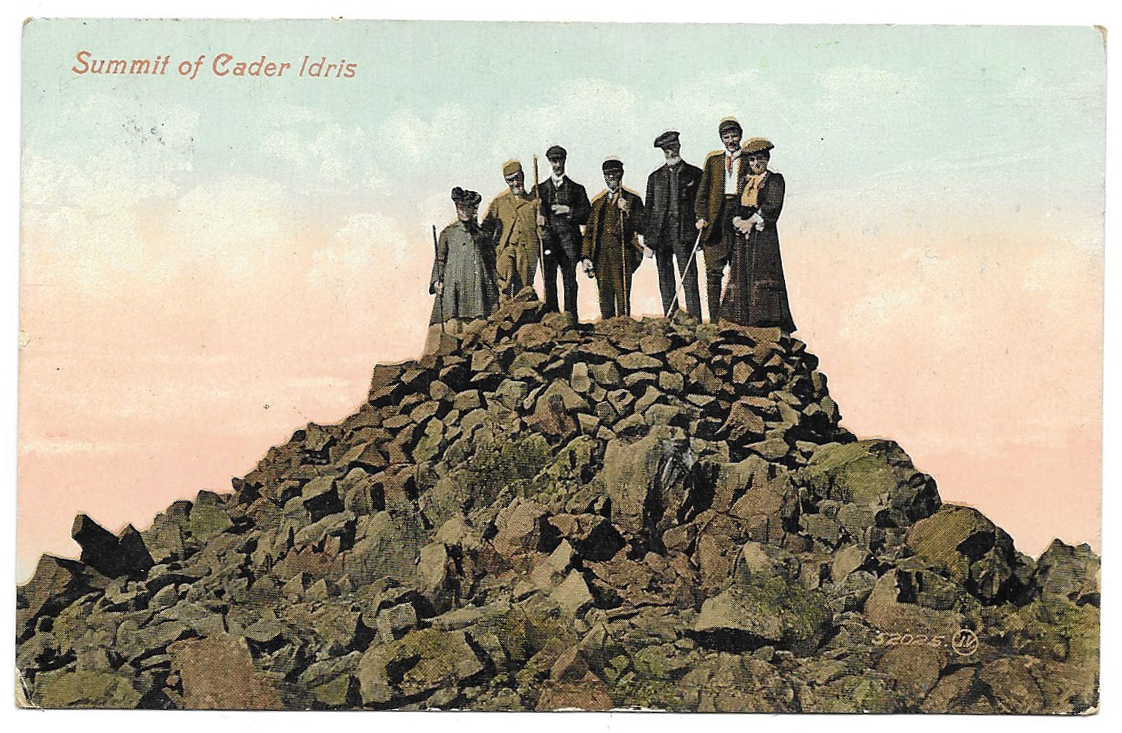 What is remarkable about the summit postcard to the right is that the women reached the summit in those long skirts! What a nightmare, even if they took one of the easier routes. All were sensibly armed with sticks, but their footwear is hidden from sight. They look as though they are heading out for a shoot. That photograph (Valentine’s 32025), was postmarked1918. The message on the back, sent to Derby, says that the writer hopes to climb it one night! The mind boggles, quite frankly.
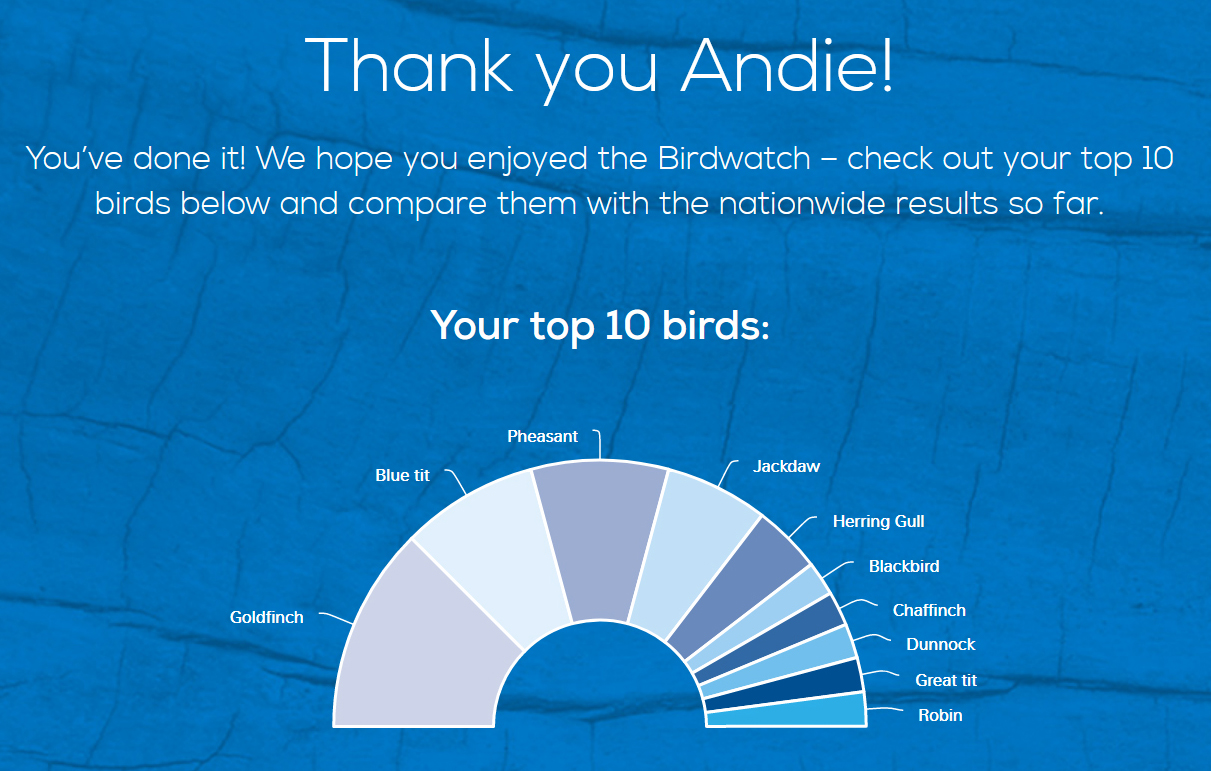
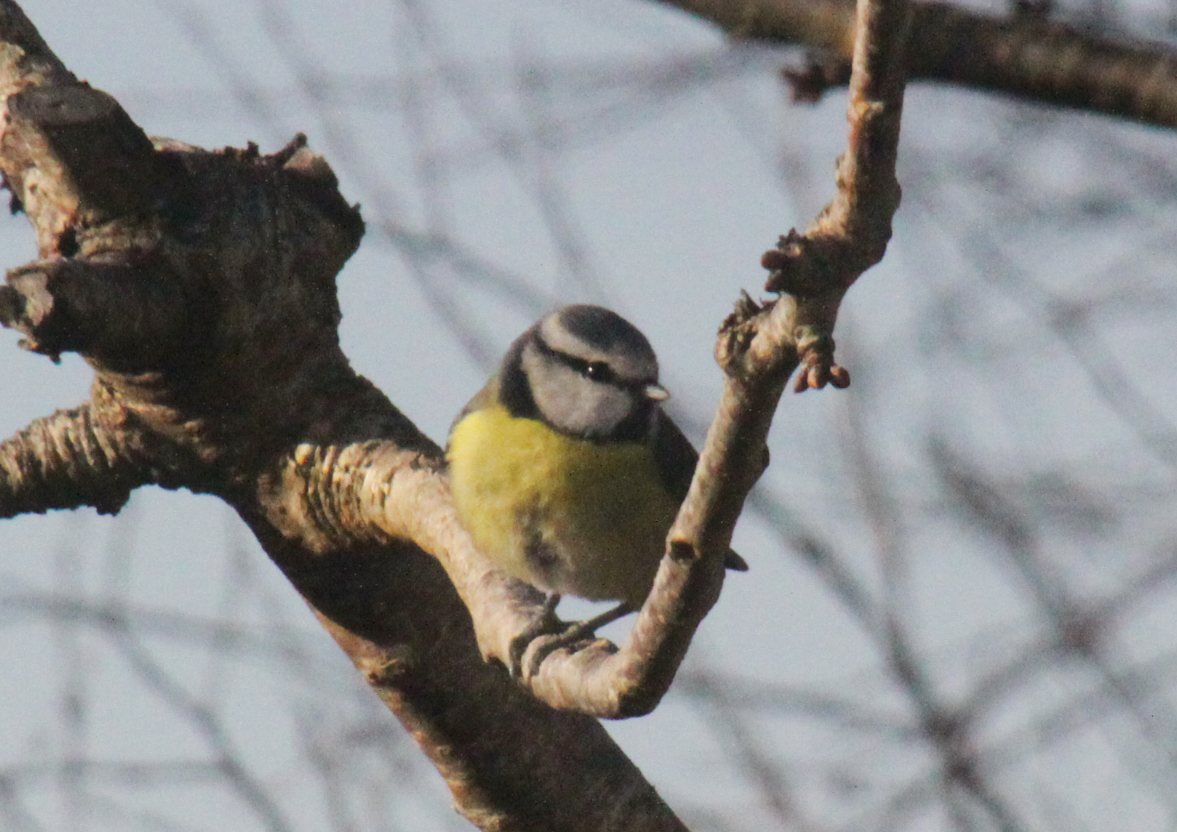
An hour in the garden between 1100 and 1200 for the Big Garden Birdwatch 2020 this morning produced the following bird count. I do lure birds in with peanuts, mealworm and nyjer seeds, so the deck is stacked in my favour. Not putting in an appearance during that hour were other visitors that I see most days including magpies, collared doves, great tits, wood pigeons and rarer visitors like coal tits (which were regular visitors last year but are few and far between this year), greenfinches and house sparrows. There were six goldfinches on the feeder during the hour, but looking out of the window there are now nine of them all fighting for a position on a feeder that can handle a maximum of six. The pheasants are tame and queue up outside the kitchen door to be fed peanuts.

 Aberdovey Londoner
