Author Archives: Andie

Vintage postcards #14 – Penhelig from a boat or Ynyslas

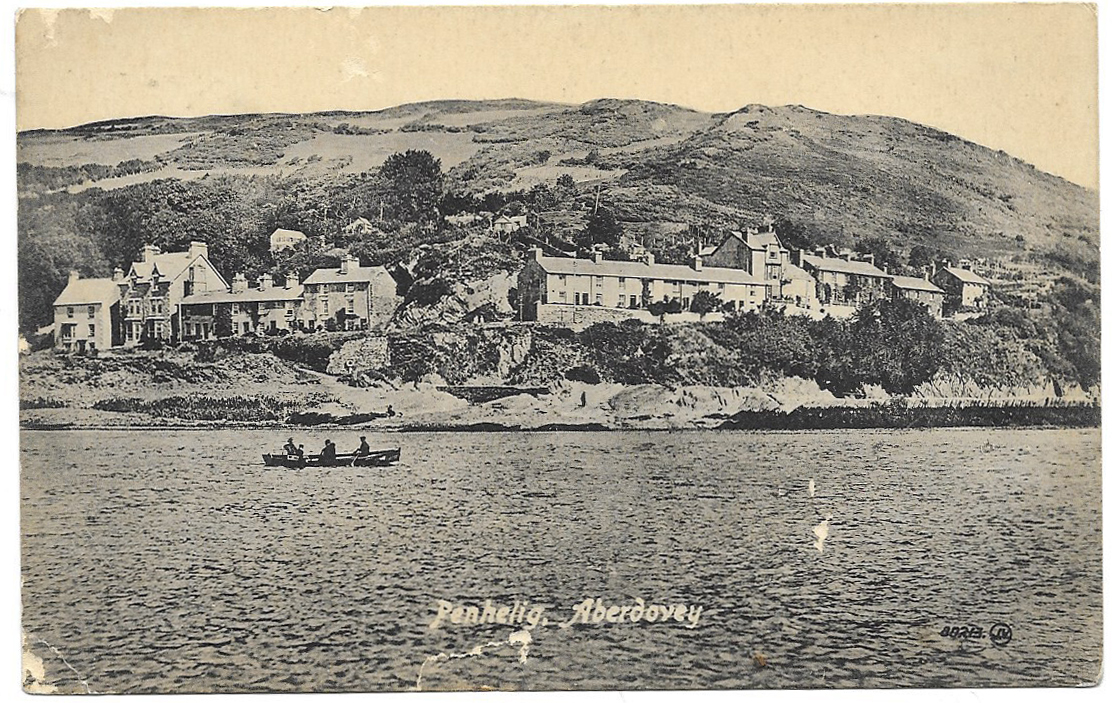
Penhelig, possibly 1923

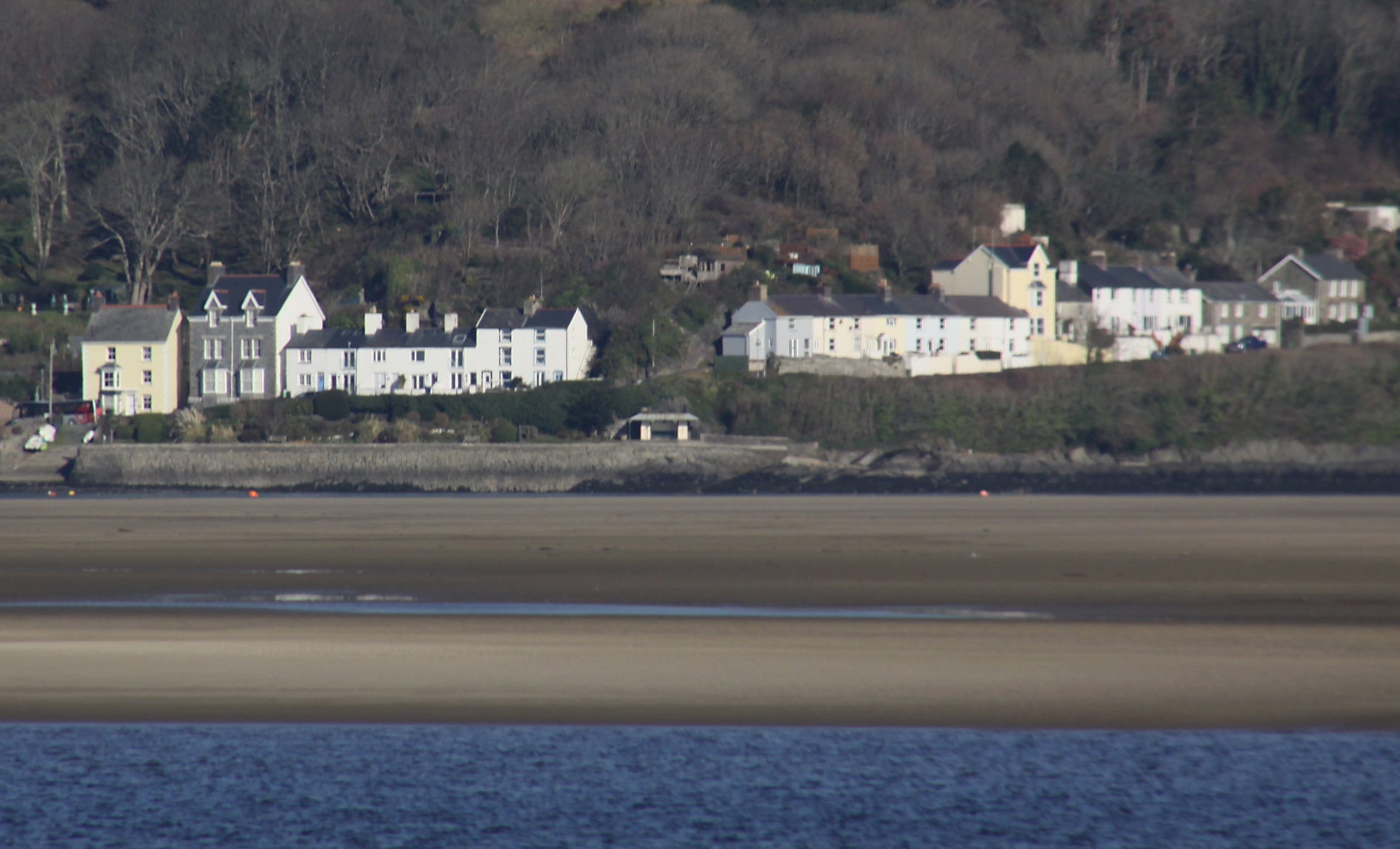
Penhelig seen from Ynyslas in February 2019

It is almost peculiar how little has changed between these two dates, 1923 and 2019.  Immediately in front of the houses on the left the memorial park has been developed, a small shelter has been added, and there is now a sea wall in front of it, and the trees behind the houses seem to have grown and spread, but little else has changed.  The postcard was unsent.  It is another produced by “Gwilym Williams, Aberdovey” about whom I have been unable to find anything, but there is an additional piece of information on the picture side of the card – a series number:  88213 JV.  The initials JV usually stand for James Valentine, so perhaps Gwilym Williams occasionally worked as a local agent of Valentine’s.  According to the Valentine’s postcard dating page, this number falls in a series that date to 1923.

Videos: Pheasant preening after breakfast; Pen Y Bryn in rain and sun

The first video shows a male pheasant preening in a burst of sunshine – a post-peanut mellow moment.  Two male pheasants arrived today, some time after the females had arrived, eaten, sat for a while with their feathers puffed up, and left.  It had finally stopped raining and at mid-day the garden was bathed briefly in a thin silvery sunshine, which lasted for about an hour and a half before the rain resumed.  The familiar harsh loud squawk announced their arrival so I threw down some peanuts and went down into the village, leaving them to it.  When I returned they were pottering around in the garden, and one of them was enjoying an industrious preen, the bright feathers given a thorough going over.

The second video shows two views of Pen Y Bryn from my garden, one clip from yesterday in the pouring rain and the second in the today’s brief reprieve when the sun came out before the rain returned.  Both are shades of grey, but the main difference between the two scenes is the sound.  In the first clip, even in the downpour Pen Y Bryn looks atmospheric but the sound of the rain is unrelenting.  In the second, with light glinting off the water, peace and quiet has been restored.

I should perhaps apologize for the completely gratuitous scrolling text.  I’ve been messing around with new video editing software, as my previous prog was at all not user-friendly and it had the antisocial habit of freezing solid.  Many of the features in the new application are very gimmicky, with shades of PowerPoint, but the ability to add text in various different forms is useful.  This is the fourth piece of video editing software that I have tried, so I am seriously hoping that this one will be a keeper.


Video: A busy day on the peanut feeder in torrential rain

The peanut feeder was busy today with a couple of great tits, a coal tit and a riot of blue tits, all in the pouring rain. And it really did rain!   At half four hail, lightning and thunder added to the fun and games.  I’ve watched the tits and the pheasants, and they all seem to dispose very fastidiously of the brown outer layer to get to the peanut inside.   In spite of taking video through the window, which was dripping with water, the videos came out surprisingly well.

Vintage postcards #13 – Aberdovey shopping centre

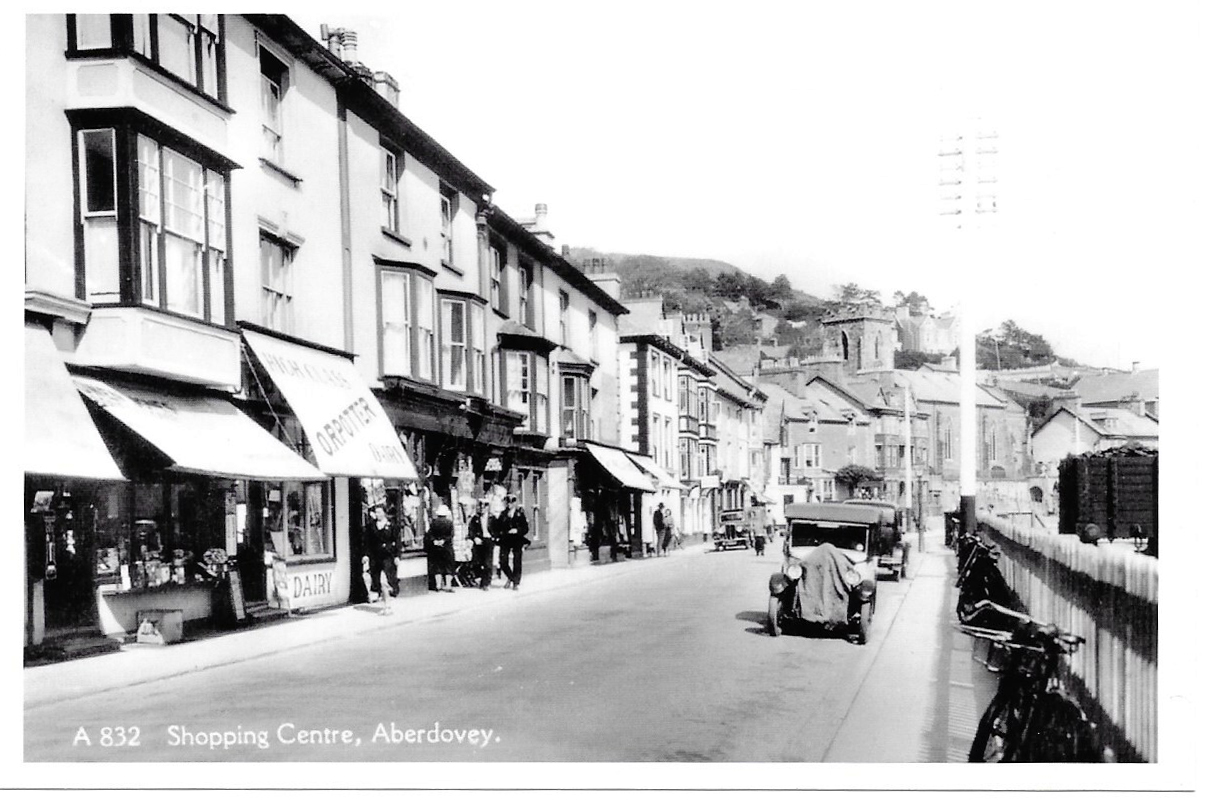
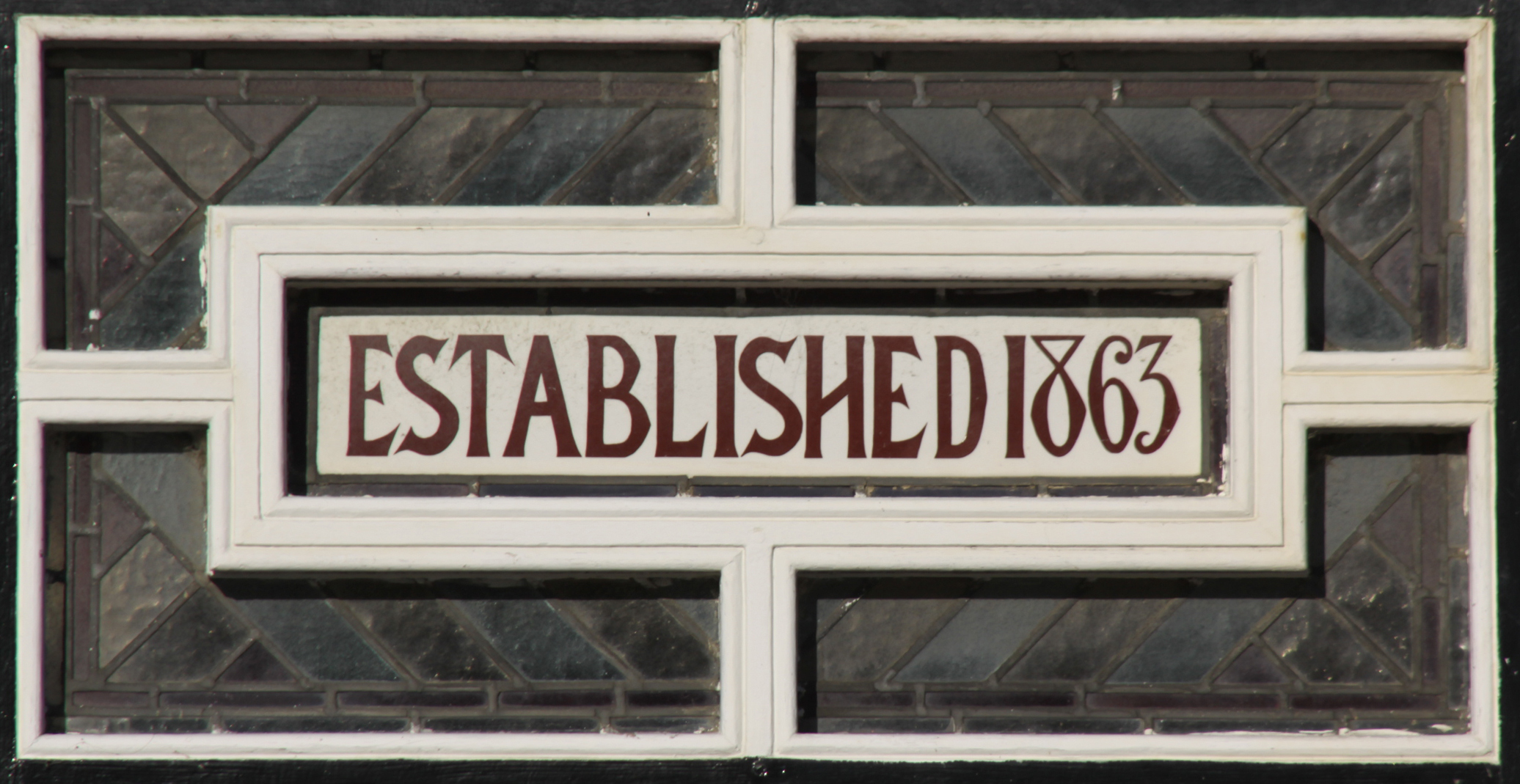
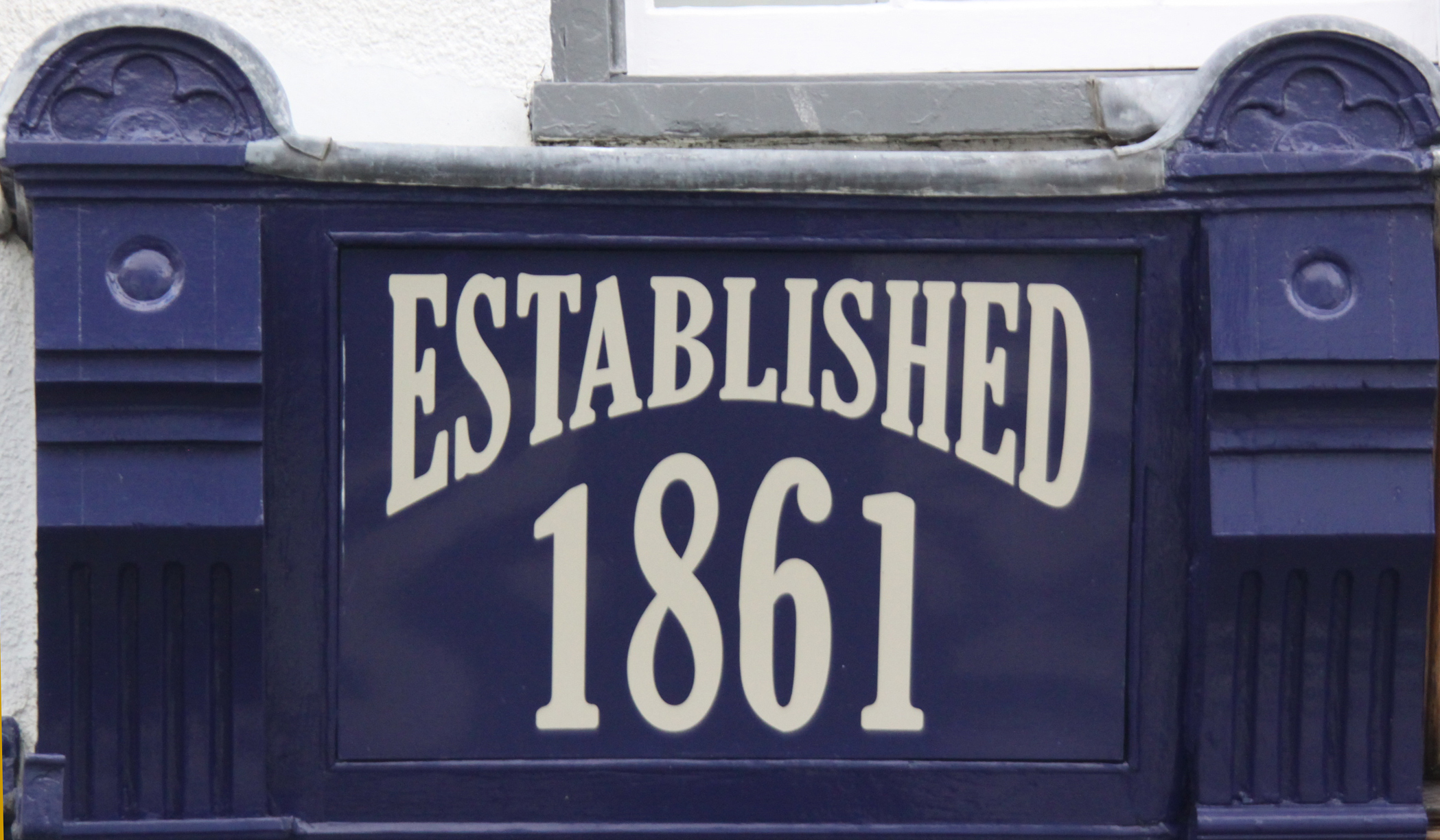
The idea of Aberdovey as a shopping centre is a somewhat staggering notion, given the modern sense of the term, which usually involves ugly custom-built malls and airfield-sized car parks, but it must have been a very busy high street, an important source of all sorts of goods in a period when people shopped close to home.  Although today most of the frontages along the promenade are businesses that rely on supplying the tourist industry, shops like the butcher and pharmacy both have dates over their doors today (1861 and1863 respectively, see photographs below) demonstrating that village stores were very important as Aberdovey continued to grow.  In this picture there is a dairy too, which today is an excellent ice cream shop.  The cars have real charm but the bicycles lined up against the wharf fence tell the real story about how most people got around.  Over the fence is one of the rail trucks that ran on tracks along the wharf and jetty for loading and unloading ships.

This turns out to be a photograph of a postcard, rather than the original postcard itself, so the reverse side is completely blank. A shame, as a huge part of the story is missing.

Video: Pheasants in the garden

The pheasants vanished from my garden for the summer, but have been slowly returning for the last month.  At first there was just one, but now there are up to five – four females and an occasional male.  Pheasants are quite mind-numbingly stupid, but of the five that panic and run away every time I open the door to throw down food for them, there’s one that knows that the unlocking of the door is a good sound.  She bounces up a couple of steps in confident anticipation of a shower of peanuts.  When they haven’t been fed (or when they come back later in the day in hope of more goodies) and she sees movement in the kitchen, she comes all the way up the steps and loiters by the door, sometimes just staring at me in a rather unnerving way.  I’m a complete pushover and it works every time, and between the pheasants and the blue tits, my sack of peanuts is emptying rapidly.  Here she is yesterday, looking for an evening peanut shower after the morning one had been demolished and they had gone elsewhere to forage or be fed.


Video: Chaos on the goldfinch feeder

I recall that this time last year most of the birds vanished from the garden in October and November, for the reasons explained in an earlier post, returning in force in December.  This year more of them remained in the garden over that period, but it is noticeable how busy it is at the moment.  The goldfinch feeder is particularly in demand and all day today the feathers were flying as they jockeyed for position and chased each other off, some of which is captured on the video below.  A very beautiful display of bright colour on a dull day.  There were nine of them at one stage.


Vintage Postcards #12: The Tennis Courts


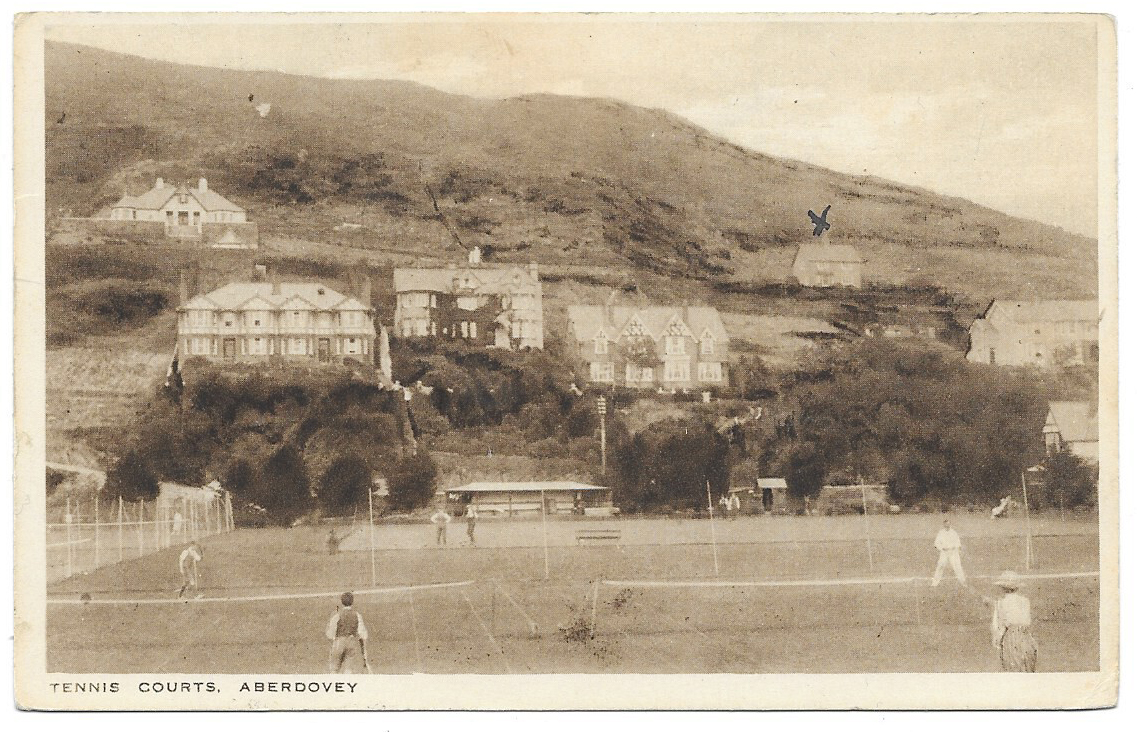
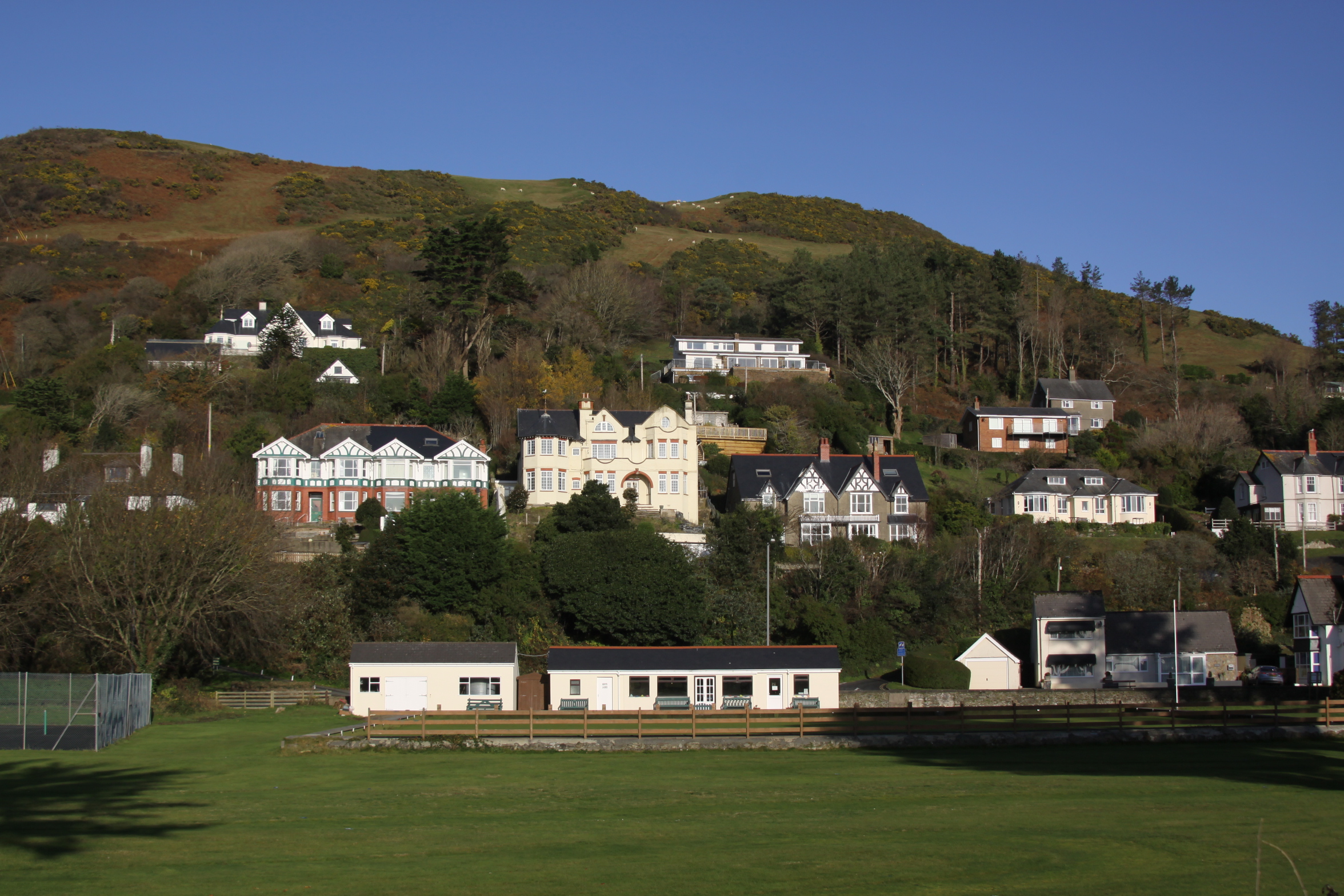
The tennis courts were located in front of the approach to Aberdovey railway station.  Now, it’s a bowling green, with a small section fenced off to the left that still has a tennis court.  The little tennis pavilion has now been replaced by two slightly larger structures.  It is possible that the blue X marks the house where the visitors were staying.  My excellent uncle occasionally does the same thing in the postcards he sends.  The houses in the postcard and my photographs below shows how foliage can change aspects of a scene.  The house at top left now has a tree in front of its central gable, and the one immediately above the tennis pavilion previously had Virginia creeper or similar clinging to the walls, which has now been stripped off.  There are a couple of new buildings in the picture below, but on the whole that stretch of Aberdovey retains most of its character.

The same view in November 2019

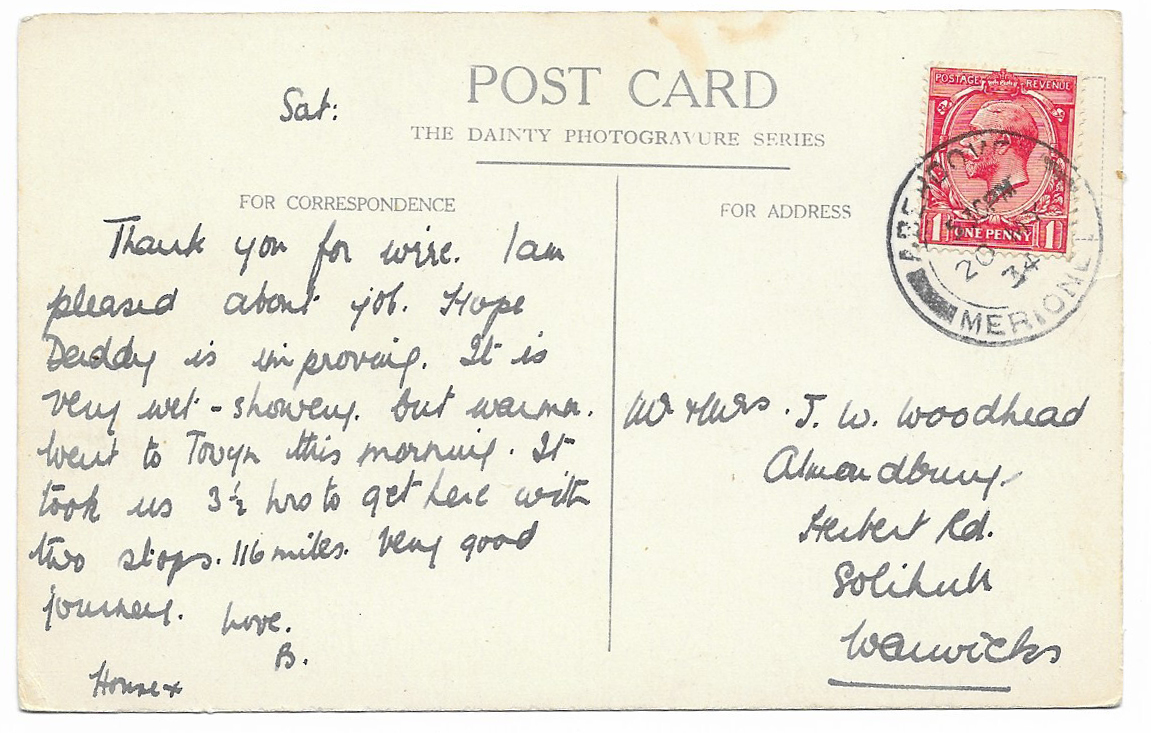
The bowling club was established in 1921.  The postcard was sent to Solihull in 1934, with an Aberdovey Merioneth postmark.  The stamp is a George V 1d red that was issued between January 1st 1912 and 1934.  I’ve seen an identical postcard with the postmark dated 1926, so this postcard had obviously been in circulation for some time.

Vintage Postcards #11: Along the promenade towards the old jetty

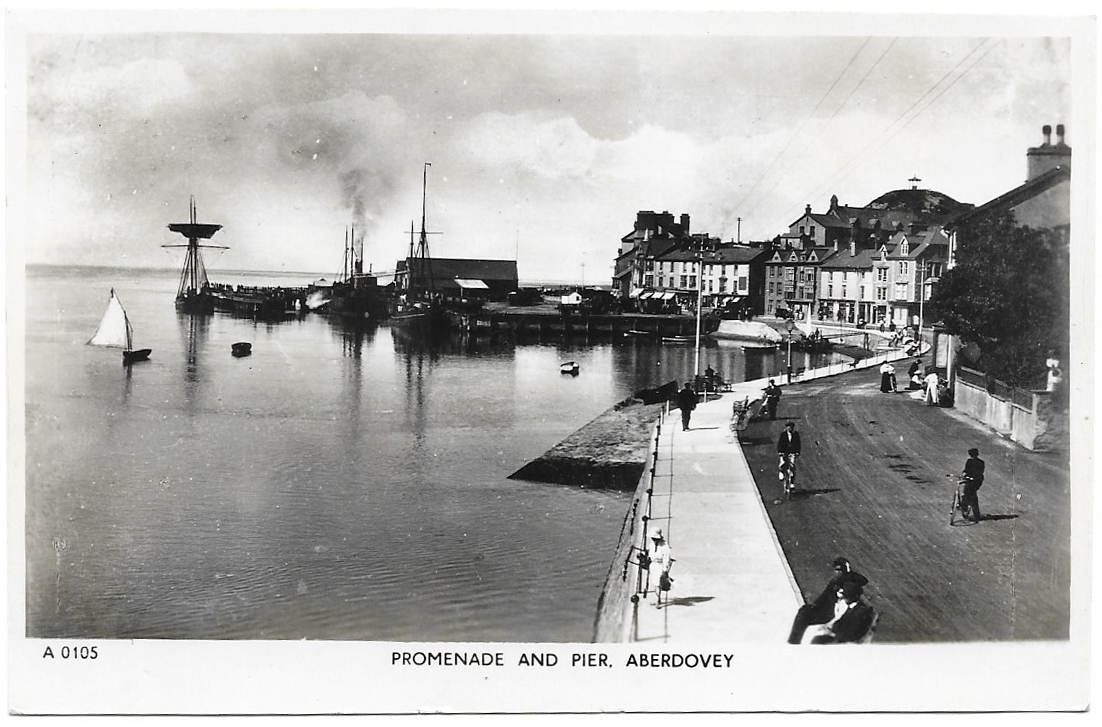
A quiet day in Aberdovey.  The history of the wharf and Jetty are described in Hugh M. Lewis’s booklet A Riverside Story, and in C.C. Green’s excellent The Coast Lines of the Cambrian Railways, volume 2 (1996).  Today’s jetty dates to 1970, but Aberdovey’s original pier and jetty were built with double railway tracks and turnable and completed in 1885 at the same time as the new wharf and storage buildings, enabling the unloading and loading of steamers directly from and into railway trucks.  Slate was the primary export, whilst coal, limestone, livestock (cattle, pigs and horses), wheat and potatoes were major imports.  During the First World War the wharf was used as a coal dump and the jetty went out of use.  Both continued to deteriorate after the war.  Beginning in 1962 British Rail entered negotiations to surrender the wharf and jetty to the Crown Estate Commissioners and Tywyn Urban District Council, together with a sum to enable the Council to carry out repairs, but there were numerous delays.  In 1965 Mr James Griffiths, the Secretary of State for Wales, intervened and the Council at last acquired the property and began to initiate a number of improvement schemes.  The first work was completed in 1968 and included a new sewage station, underground holding tanks, a sea outfall and public toilets.  The wharf was resurrected with new steel pilings and a wall with concrete coping with ladders and bollards.  A new slipway was added at the western end of the wharf area.  The jetty was found to have been attacked by Teredo worm, the bane of sea-going ships for centuries, and was riddled with holes, meaning that the existing jetty could not be repaired and had to be replaced with a shorter and narrower structure.  Funding was a difficulty, but the Outward Bound Sea School, for whom the jetty was of considerable value, provided 47% of the total cost.  The balance was paid by British Rail Board and the Aberdovey Advertising and Improvements Committee. At the same time the buildings that they used on the wharf were renovated.   The big seafront car park replaced the old rail track that led in to the wharf and on to the jetty, and was completed in 1970.  In 1971 the information centre for the Snowdonia National Park was built on the wharf, paid for by a grant from the National Parks Commission and a new clubhouse was built for the Dovey Sailing Club , which also opened in 1971.

Thanks to Sierd Jan Tuistra for the information that the photograph, as opposed to the postcard, probably dates to before 1923.  He points out that the low wagon on the wharf has the livery of the Cambrian Railways: CAM [logo] RYS and that Cambrian Railways was acquired by the Great Western Railway in 1923, after which all rolling stock was quickly painted over in GWR livery.

The promenade looks brand new in this photograph, but I have been unable to find out when it was actually created.  The road is empty except for three men with bicycles and a couple of pedestrians.  The road was metalled sometime during or after 1895, when the Council Surveyor purchased a cargo of broken limestone for metalling the streets.   Up against the jetty are sailing boats together with a steamer with smoke issuing from its funnel, giving the peaceful village scene a slightly industrial air.  Beneath the Pen Y Bryn shelter, erected in 1897, a large building looms over the houses of Seaview Terrace, just visible at far right of my recent photograph.  This was a school, the subject of vintage postcard #24, now converted to residential use.

The above photograph shows the view from a similar viewpoint on November 29th 2019.  The most obvious difference is the presence of parked vehicles, and lots of them.  On the day I took the photo there were fishing vessels in the bay, but of a very different order from the ones in the postcard:
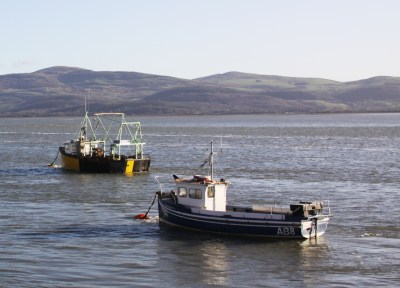
Fishing boats in the bay at Aberdovey

The postcard, numbered A0105 was produced by E.T.W. Dennis and Sons Ltd of Scarborough and is unused.  The printing and publishing company was established in 1870 and began to mass-produce postcards in 1894.  Sadly, the company’s pre-war records were destroyed in a bombing raid in 1941.  From 1955 all postcards beginning with the letter A and the number 01 had Aberdovey as their subject matter, but many of the images used predate this time, and this particular photograph certainly predates the 1950s. The firm closed in 2000.

Vintage Postcard #10: Aberdovey from the Island

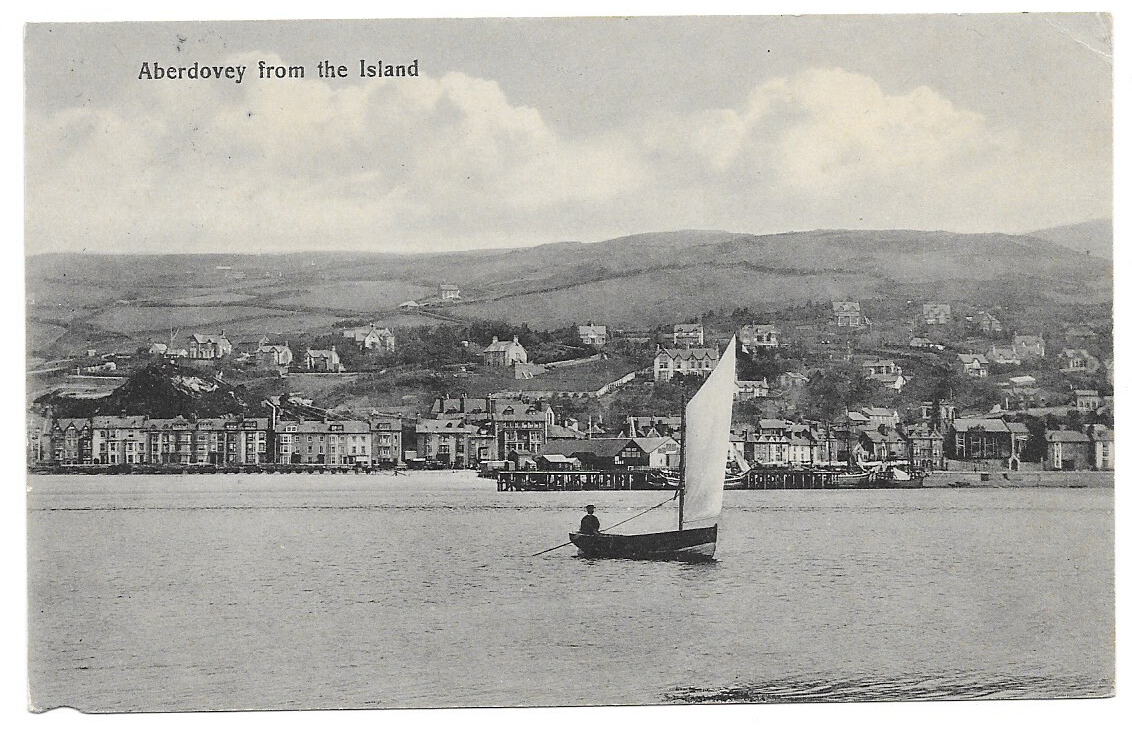
Although the postcard is entitled Aberdovey from the Island, I assume that this was taken from Ynyslas rather than a sandbank, because the tide is pretty high. Ynys means island, so perhaps that is the source of the postcard’s title.  It’s another gorgeous photograph. That single sail Aberdovey to Ynyslas ferry boat is a think of real beauty, and the placement of fractionally off-centre is sheer genius.

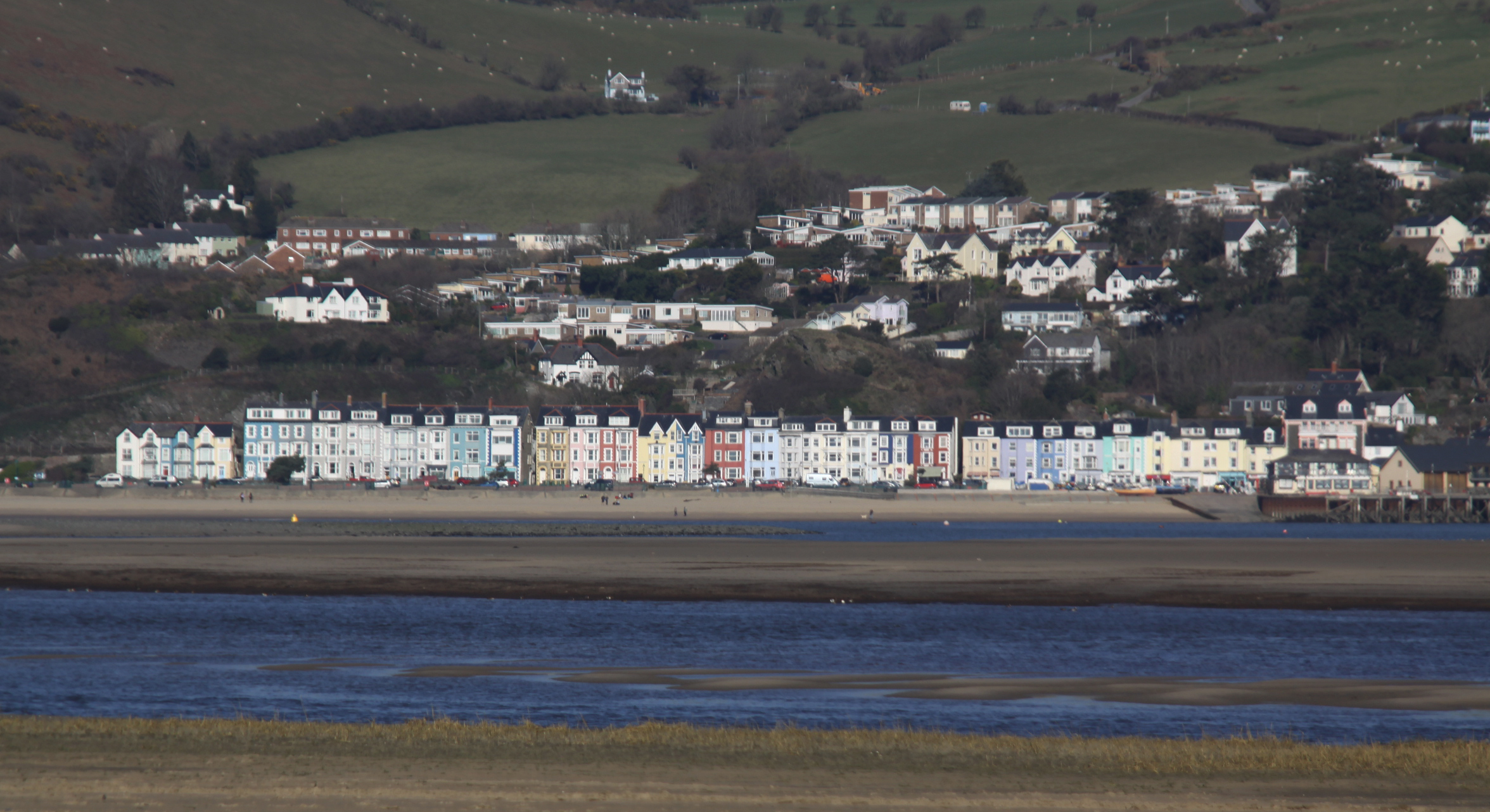
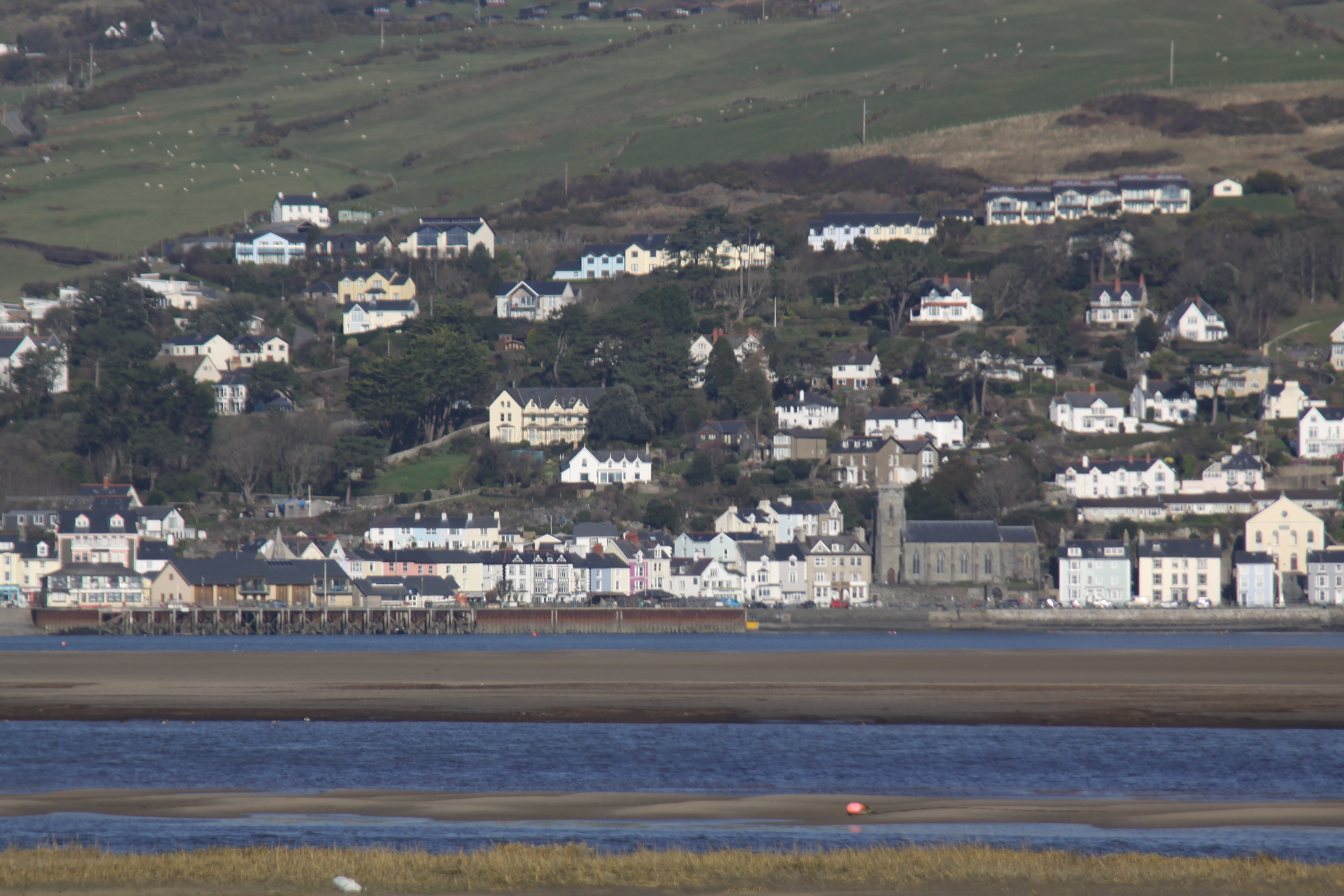
The following two were taken in February 2019 from the beach at Ynyslas.  Although today there are some more buildings visible on the hill, it is actually surprising how few new additions have been built.  The 1960s developments at the top of Copper Hill Street were a commercial decision and were probably good for Aberdovey’s future, as was the car park on the sea front, but it is notable that development has, for the most part, been kept under control.


Aberdovey from Ynyslas

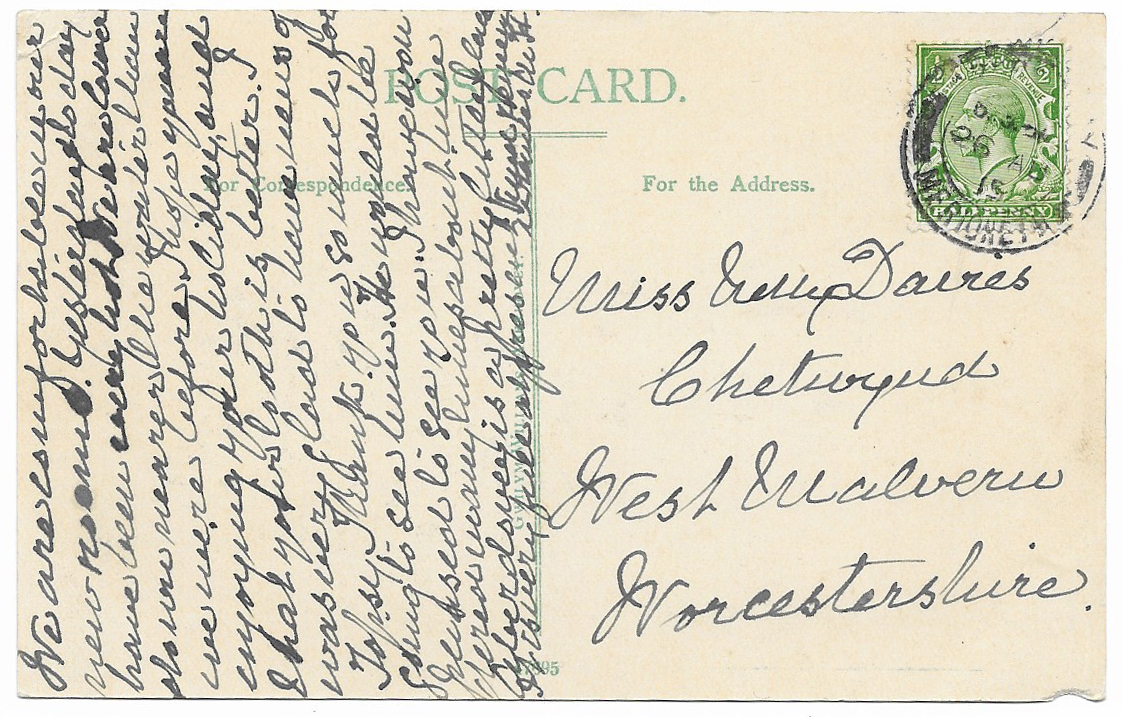
The postmark is dated 26th August 1915, and was sent from Aberdovey.  The stamp shows George V (who reigned 1911 – 1936) and is known as a “½d Green,” first issued on 1st January 1912.  A frustration is that the postcard manufacturer is Gwilym Williams, and I have been unable to find out anything about him.  Do let me know if you have any information.

Another frustration is that the handwriting is, for me, almost completely undecipherable.  In the address, the first line appears to be Chetwynd but the town/village took me ages to work out (it’s West Malvern) and the message eludes me completely.  I suppose that as I (and presumably others) have become more dependent upon email and word processors, deciphering handwriting is much less of an everyday task.

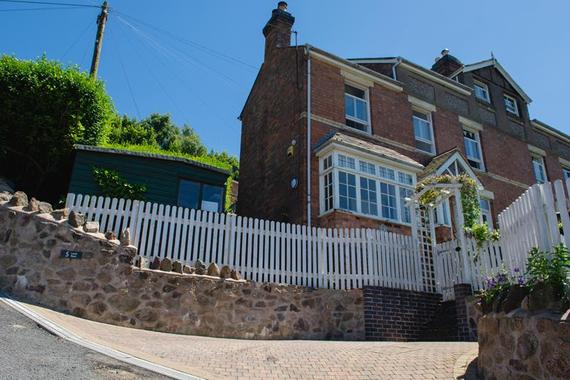
This appears to be the house to which the postcard was sent:

Vintage Postcards #9: A busy Sea View Terrace

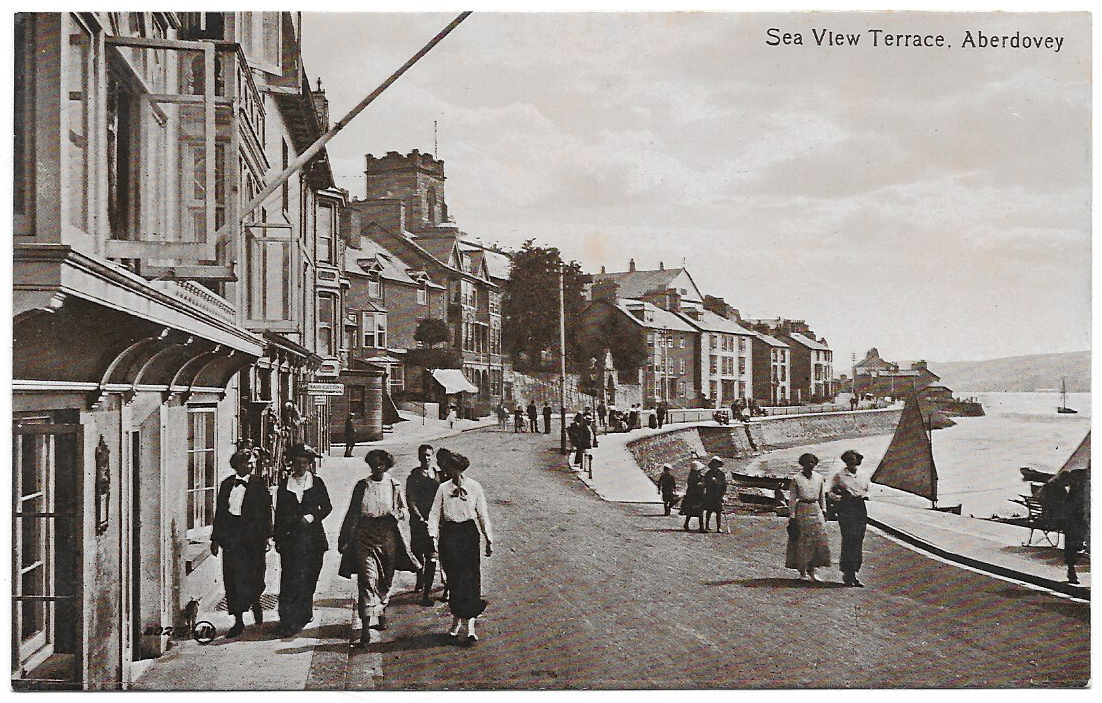
Sea View Terrace

An exceptionally engaging view of Aberdovey.  It has much more of an intimate and lively feel to it than most vintage postcards, which are usually unnaturally empty of any signs of life. It is surprising how few vintage postcards show busy scenes with lots of people, apart from later beach scenes.  I always wonder how the photographers managed to persuade people to stay out of camera shot.  The Marie Celeste approach to postcard photography. This example, with women and children in the foreground, is particularly novel.

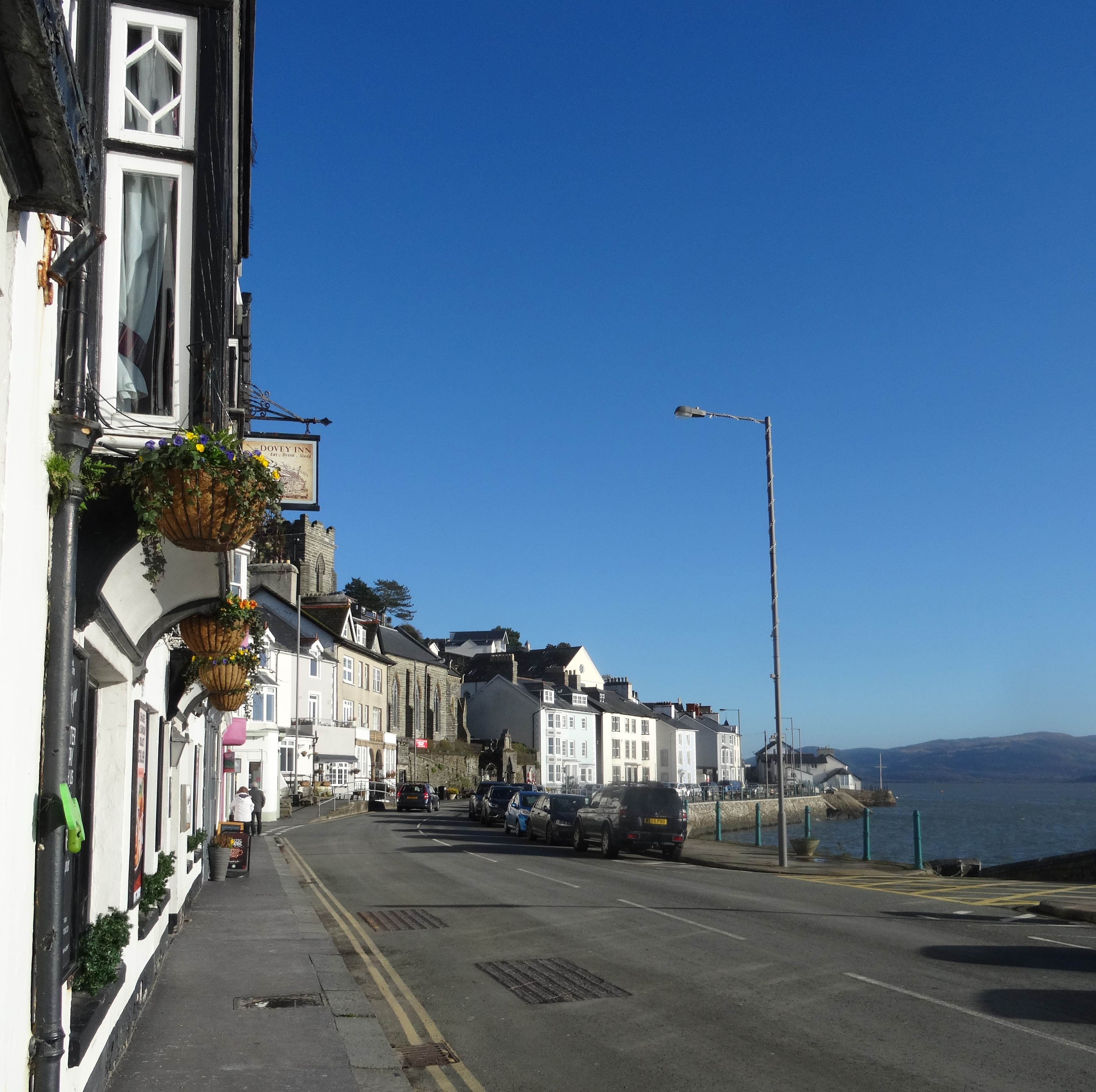
The building on the far left is the Dovey Inn, which was first built in 1729 by Athelstan Owen, of the Ynysymanegwyn estate in Tywyn (about which I have posted here), and will have been there throughout the lives of all these women.  What I particularly like about this photograph is not only the impression of very focused activity, but the sense that these are confident women who are heading firmly towards, or from, a particular location.   Given the smartly dressed children in the background and the men in the distance, I initially wondered if they were not heading away from church attendance.  Still, if that were the case it seems odd that they were not in family units.  Another postcard mystery!

View from the Dyfi Inn along Sea View Terrace, November 2019

The postcard was unused, so I don’t have a date, but in his book Picturesque Dyfi Valley, Gwyn Briwnant Jones shows the same photograph and it is post-marked 1921. I’m not an expert on early 20th Century fashion but that date is consistent with these outfits, a style popular in the pre-First World War years, probably in the 1910s. Skirts are long, but above the ankle, and hats are favoured.

The back of the card credits the postcard producer simply as “Gwilym Williams, Aberdovey.”  If anyone knows something about him, please let me know because he is responsible for quite a few Aberdovey postcards and I have been unable to discover anything at all about him.