Category Archives: Aberdovey

Vintage postcards #17: A special train on the Cambrian Coast Line

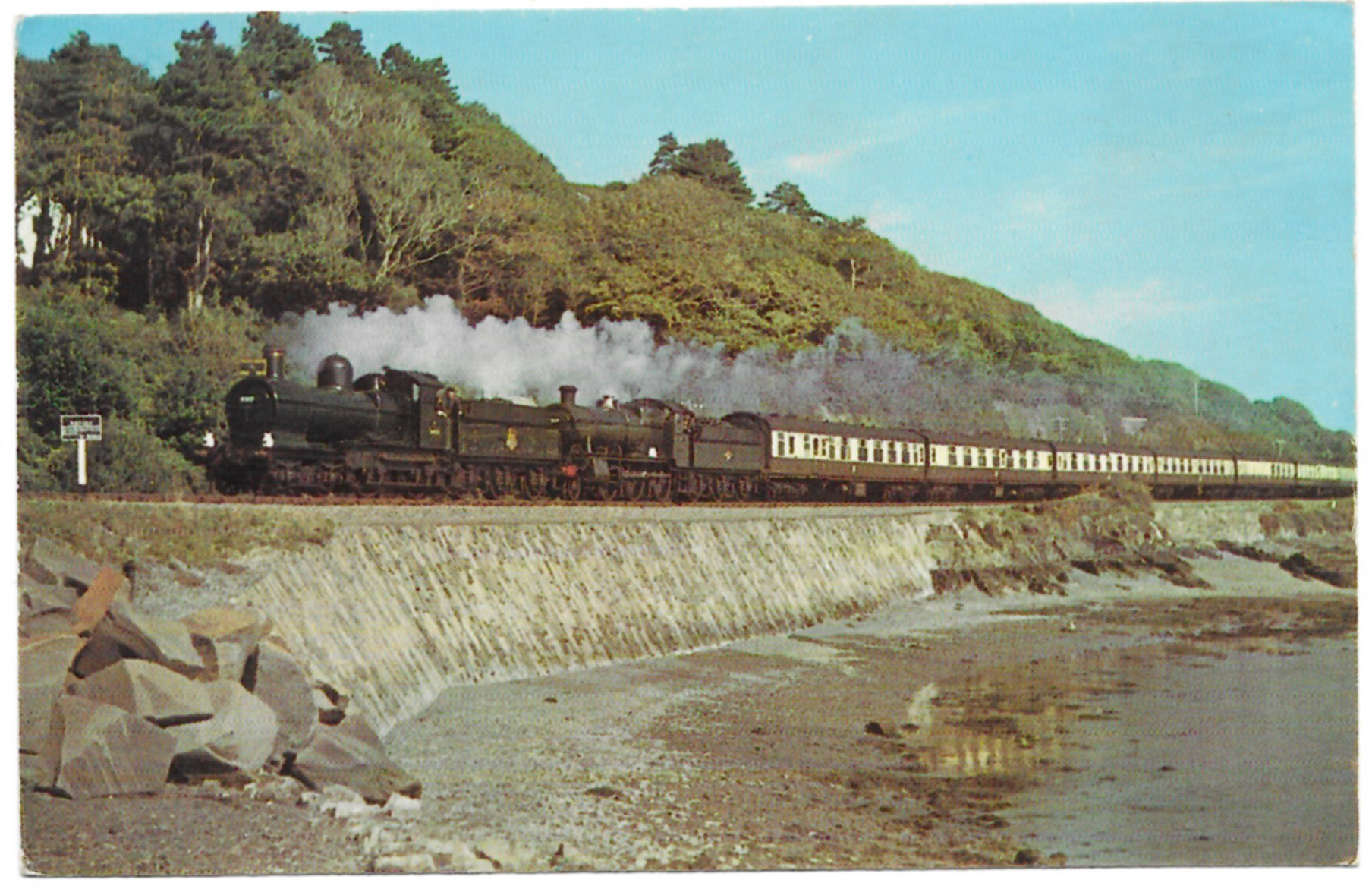
This must have been a wonderful sight – a steam-hauled special train on the way into Aberdovey along the side of the estuary on the Cambrian Coast Line.  The reverse of the postcard says that it was sold in aid of the Talyllyn Railway in Tywyn.  The Aberdovey stretch of the railway was established in 1864, connecting via Machynlleth to the south in 1867 (the subject of an earlier post) and the last steam engine run along the route was in 2017, marking the 150th anniversary of the Grade 2 listed Pont Y Bermo (Barmouth Bridge), that carries the line over the Mawwdach estuary.

I naively thought that it would be easy to find a date for what I thought must be an unusual event, but my assumption was wrong.   Thanks, therefore, to Sierd Jan Tuistra, via RMWeb member Martin McCowgill, who provided the information that this is one of the annual AGM weekend specials from Paddington to Towyn, 24th September 1960.  It was a double-headed special, with two engines pulling the carriages from Shrewsbury to Towyn, each pulling a coal truck before the passenger carriages. The engine at the front is 9017, otherwise known as the Dukedog class, which was the nickname for the Great Western Railway Earl Class.  Behind it is engine 7330 in the Mogul (GWR 4300) class.

Steam was not an uncommon sight on the Cambrian coast, a lot of regular services were steam hauled until 1966. Double headed train were less common, but quite a number of Cambrian Coast express summer Saturday specials were double headed because of the number of passengers & carriages.

Apparently there also used to be occasional summer steam trips on a Sunday from Aberystwyth to Pwllheli, so although this was a fabulous sight, it was not actually as rare as one might have expected.  Halliday, the photographer, specialized in vintage train photographs in the 1950s, mainly black and white.
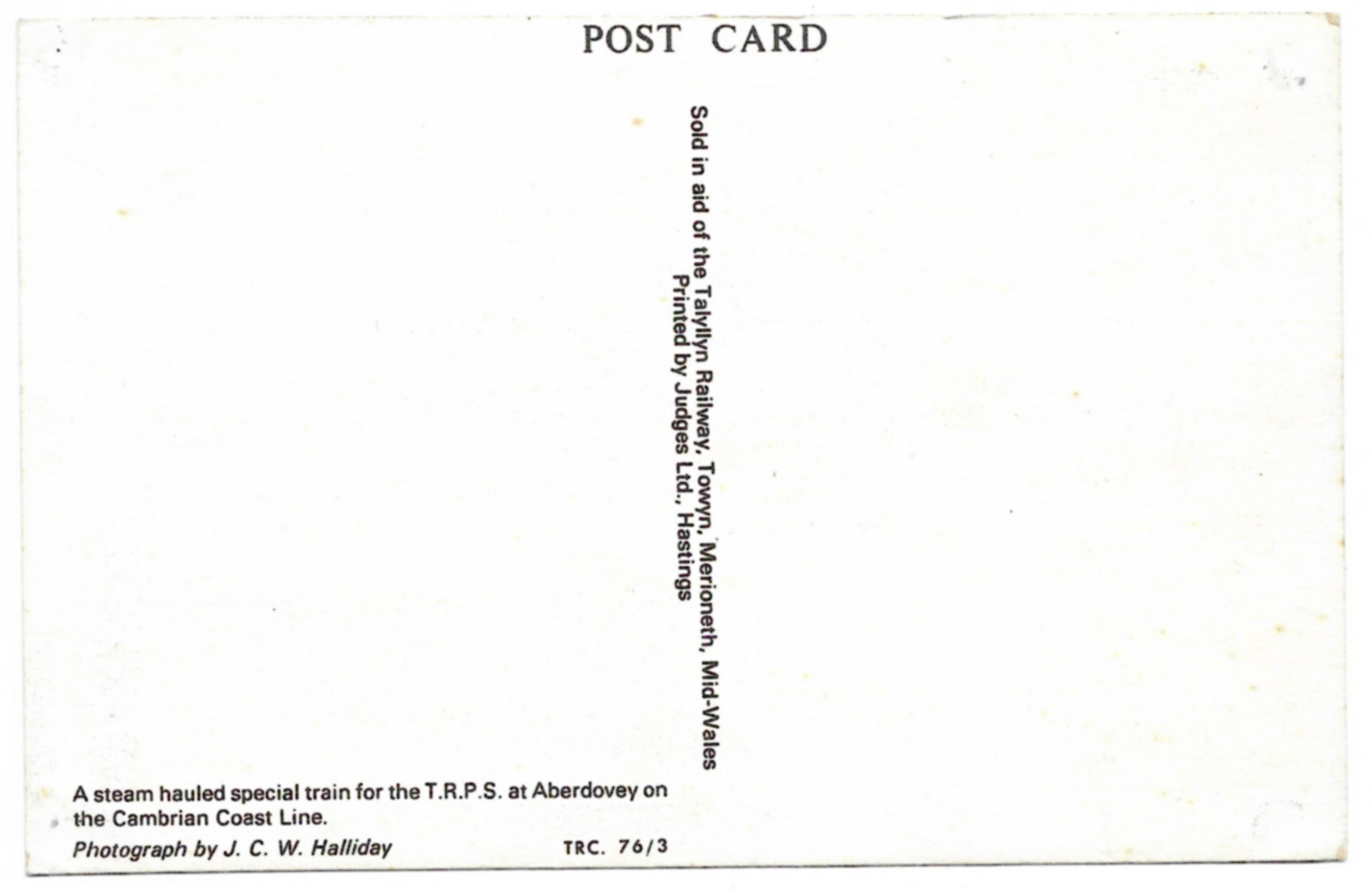
Produced by Judges, about whom more on an earlier post.
Video: The Dyfi Estuary at Aberdovey

This was a very windy late afternoon in mid December 2019, and I have been messing around in my software to figure out how to eliminate the intense sound distortion that ruins the sound tracks of many of my videos.  It is clear that I need a dead cat mic (charming name!) but it is impressive how well the software can compensate once the damage is done, leaving the gentle sounds of water on the seashore and the bright birdsong in tact.


Vintage Postcards #16 – View over the jetty towards Penhelig

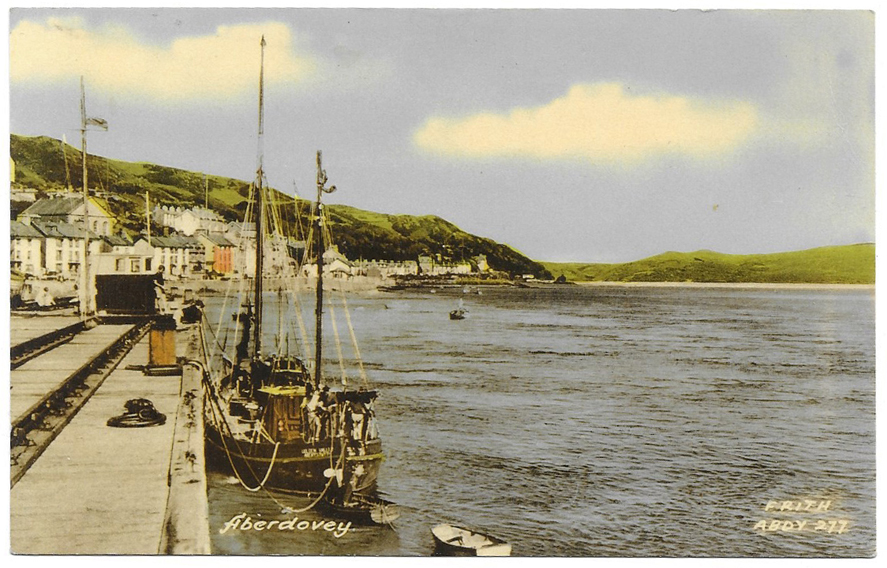
I couldn’t find out much about this tinted postcard because it is not listed in the Frith database.  However, it is the old 1885 jetty (the new one was installed in 1970) and retains the railway tracks that were used to move cargo to and from ships (there is more about the jetty and wharf in a previous post).  The colours aim to be realistic, but do not disguise that this was originally a black and white photograph.  The card is unused and I haven’t found a date for this postcard yet.

Thanks to Sierd Jan Tuinstra for the information that the ship moored up to the jetty is the 45ft Outward Bound boat Golden Valley (LH37), ordered by George Jarron of Port SetonShe was built by James Martin and Son, a Granton shipyard, launched in 1949 and registered in Aberystwyth.  Granton, at the mouth of the Firth of Forth, on the south bank at the far north of Edinburgh, was a major fishing base, and had two principal boat builders during the 1940s, of which James Martin and Son was one.  The company, originally specializing in joinery, until asked by the Admiralty to built a Motor Fishing Vessel for use during the Second World War.  Subsequently they built eleven wooden Motor Fishing Vessels (M.F.V.s) for the Admiralty between 1941 and 1945, designed initially for harbour and coastal work but ultimately intended to be converted to fishing boats after the war.  After the war, during which large numbers of fishing vessels had ben lost, the company continued to build fishing boats for the herring industry.  Golden Valley was one of the last vessels to be built by the company.  It was originally fitted with a 120 h.p. Crossley engine, but triplex chain breakages caused a series of gearbox problems. This was sorted when another vessel, Mizpah, was provided with a new engine and its old tooth and pinion gearbox was fitted to Golden Valley. (Information about Golden Valley sourced from the Granton Built Fishing Boat website). From accounts on the Alumni section of the Outward Bound website, Golden Valley seems to have been acquired by Outward Bound in the early 1950s.

There is information about the Frith Series postcards and the fascinating history of the company on my post about a previous vintage postcard at https://aberdoveylondoner.com/2019/12/01/vintage-postcards-9-dysynni-valley-and-bird-rock/.

Vintage Postcards #15: Five Points, Smugglers Cove, Frongoch


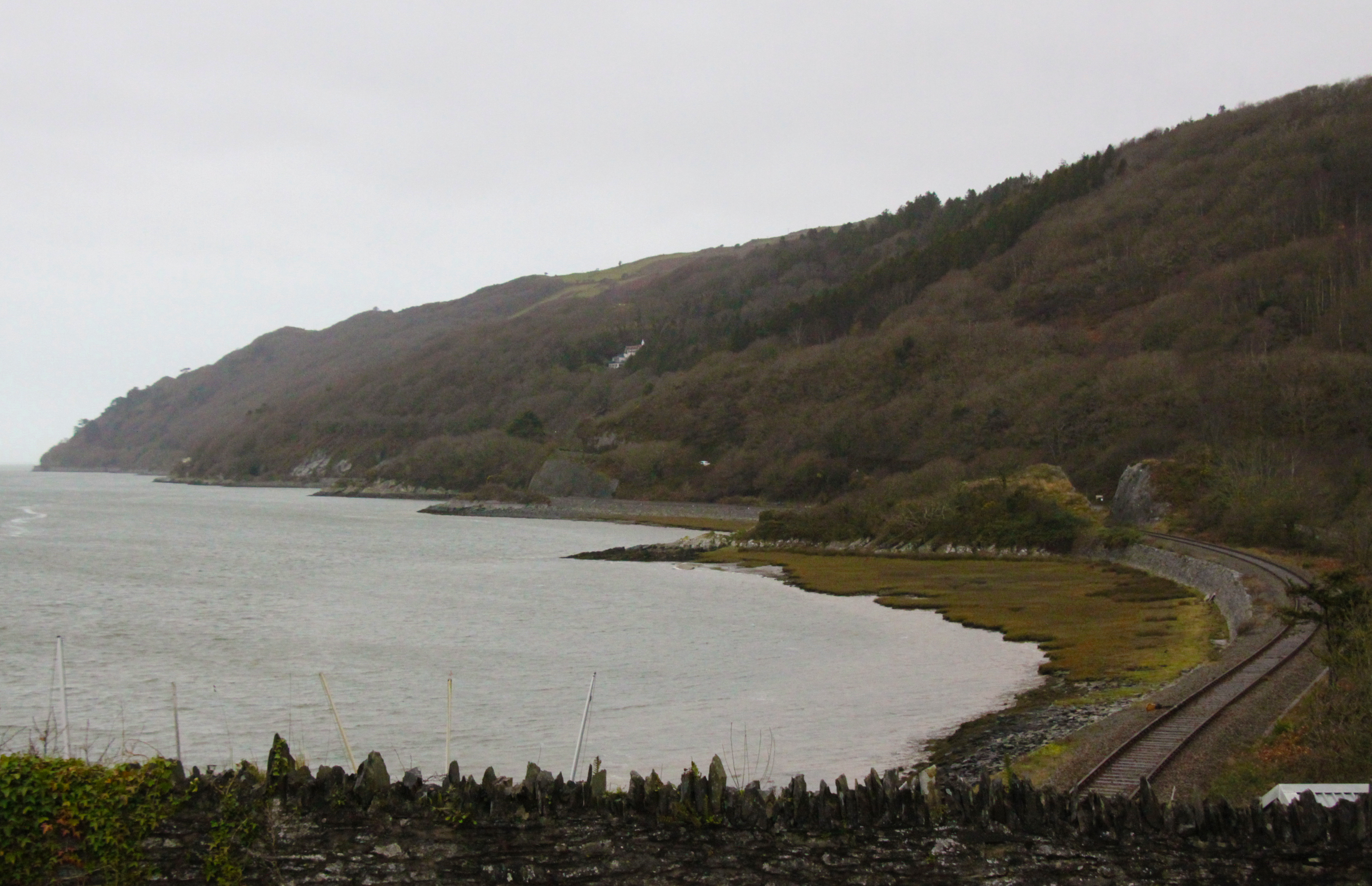
Five points in December 2019 on a very murky, rainy day, resulting in a soggy photographer and a damp camera. I’ll try for a better photo on a sunnier day!

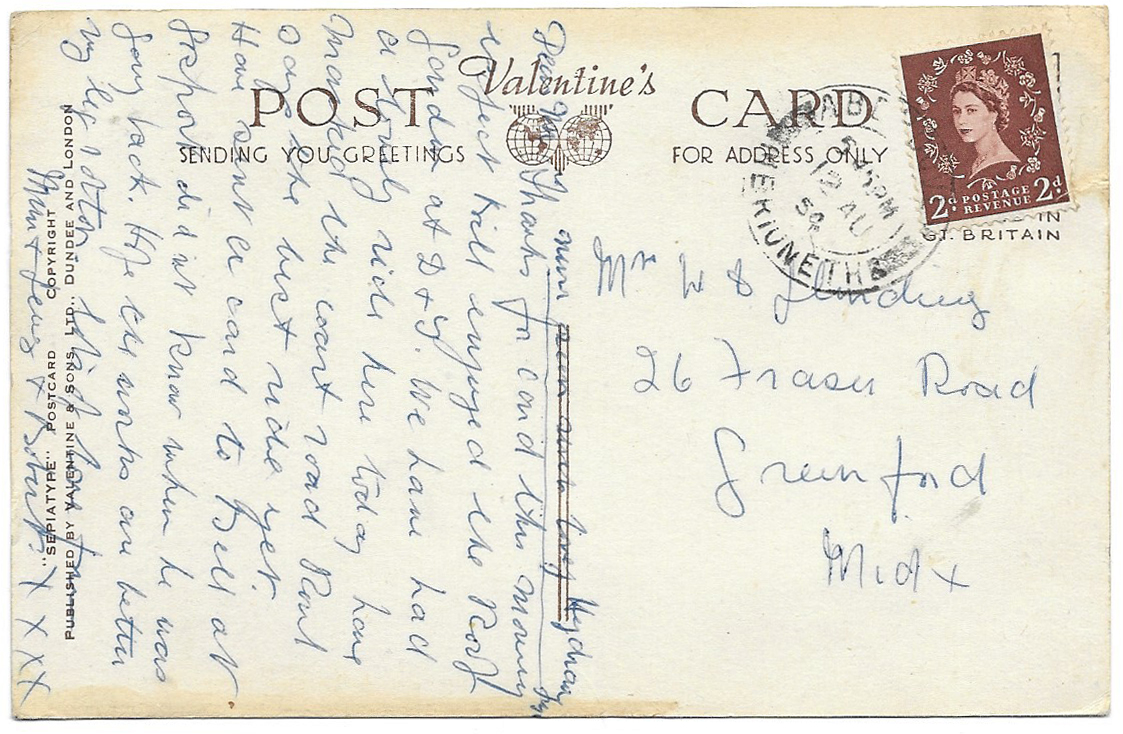
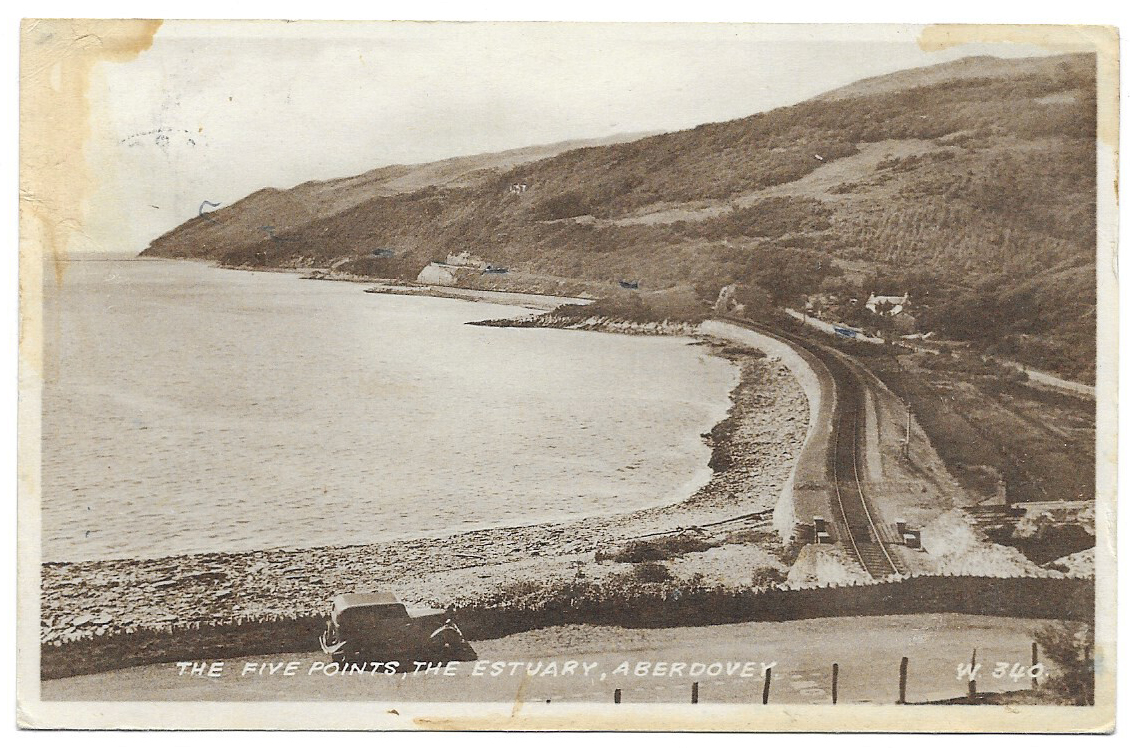
This postcard shows the River Dyfi at Frongoch where it widens into the estuary, with the five small promontories known as Five Points.  The viewpoint is on the road from Machynlleth to Aberdovey just above the Frongoch boatyard, and just around a particularly nasty bend. In the postcard, there’s a lovely vehicle in the foreground, and the railway is ever-present.  The wall between the road and the modern boatyard at Smuggler’s Cove below doesn’t seem to have changed much since the postcard photograph was taken, but the foreshore in the first cove has expanded out into the estuary.  Dated 5th August 1950, the card was sent to an address in Greenford in Middlesex, and has an Aberdovey-Merioneth postmark.

Published by Valentine and Sons of Dundee in their “sepiatype” series, it is numbered W340.  The Jisc archives hub has this to say about Valentine’s:

The company Valentine & Sons was established in 1851 by Mr James Valentine (1814-1879), the son of Mr John Valentine, engineer of wood blocks for linen printing, Dundee. The firm began as early exponents of photography, became pioneers in the postcard industry and later developed the production of greetings cards, novelties, calendars and illustrated children’s books.

James Valentine began in business aged 17 as an engraver. He began to practice Daguerrotype photography, first as an amateur, as an aid to engraving. He was soon proficient and began to take views and portraits in c.1850. He went to Paris to train under M. Bulow, one of the most skilful photographers in that city. On his return to Dundee he set up a studio in the High Street. He received a commission from the Queen to photograph a set of 40 views of Highland scenery and in 1868 was appointed as the Royal Photographer.

James Valentine’s sons were both early to develop skills in photography and by 1879 they were in great demand, having grown into one of the largest establishments in the country. In 1897 the government allowed correspondence to be written on the reverse of a postcard. This coincided with Valentine’s success in collotype printing, a lithographic technique which mechanically reproduced images for printing as postcards. By the end of the century, Valentines had established the perfect method for cheap reproduction of postcards. They were also able to use their immense collection of topographical negatives to issue series after series of scenes from throughout Britain.

By the early 1900s they also had a growing trade in Christmas cards and children’s books and had begun to publish fancy cards. In 1908 they became the official postcard publishers for the international Franco-British exhibition at the White City, and began to publish exhibition cards which are noted for their high quality of design. By the time of the First World War they had become a world-wide name with office branches in Canada, South Africa, Australia, America and Norway. In the 1920s they expanded their trade in Christmas cards and calendars and then in greetings cards which forms the basis of their business today. In 1963 the company became a subsidiary of John Waddington Ltd.

It was during the 1950s that the postcard business began to go into decline, and Valentine’s focused on the more profitable greeting card side of their enterprise.

Vintage postcards #14 – Penhelig from a boat or Ynyslas

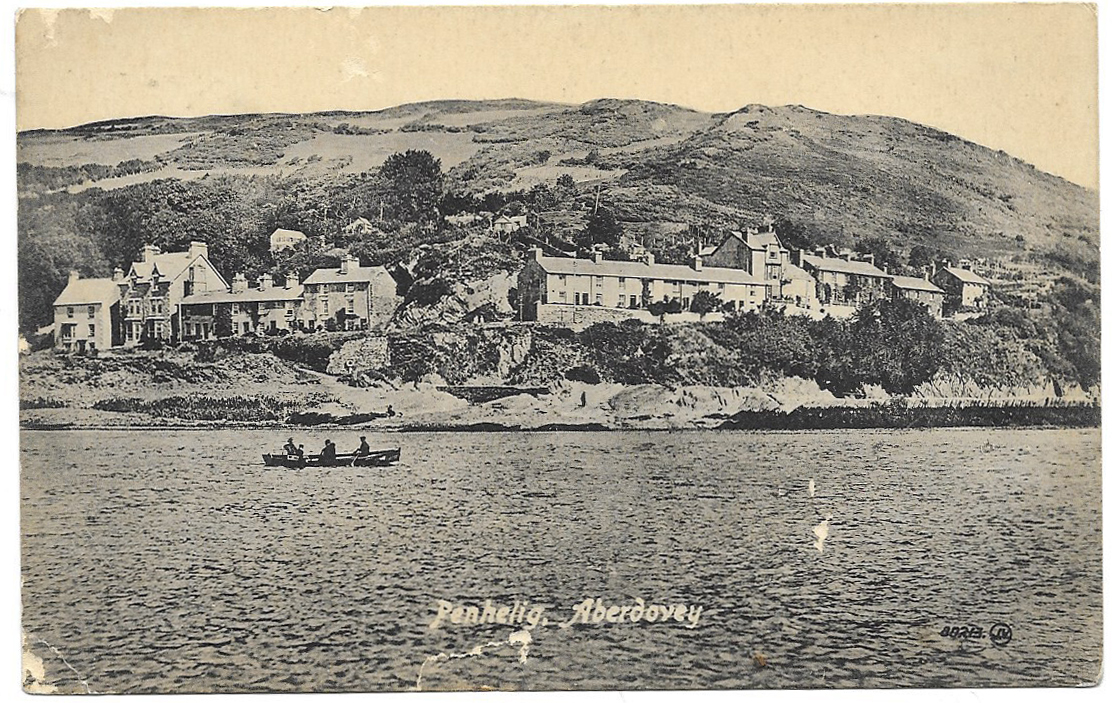
Penhelig, possibly 1923

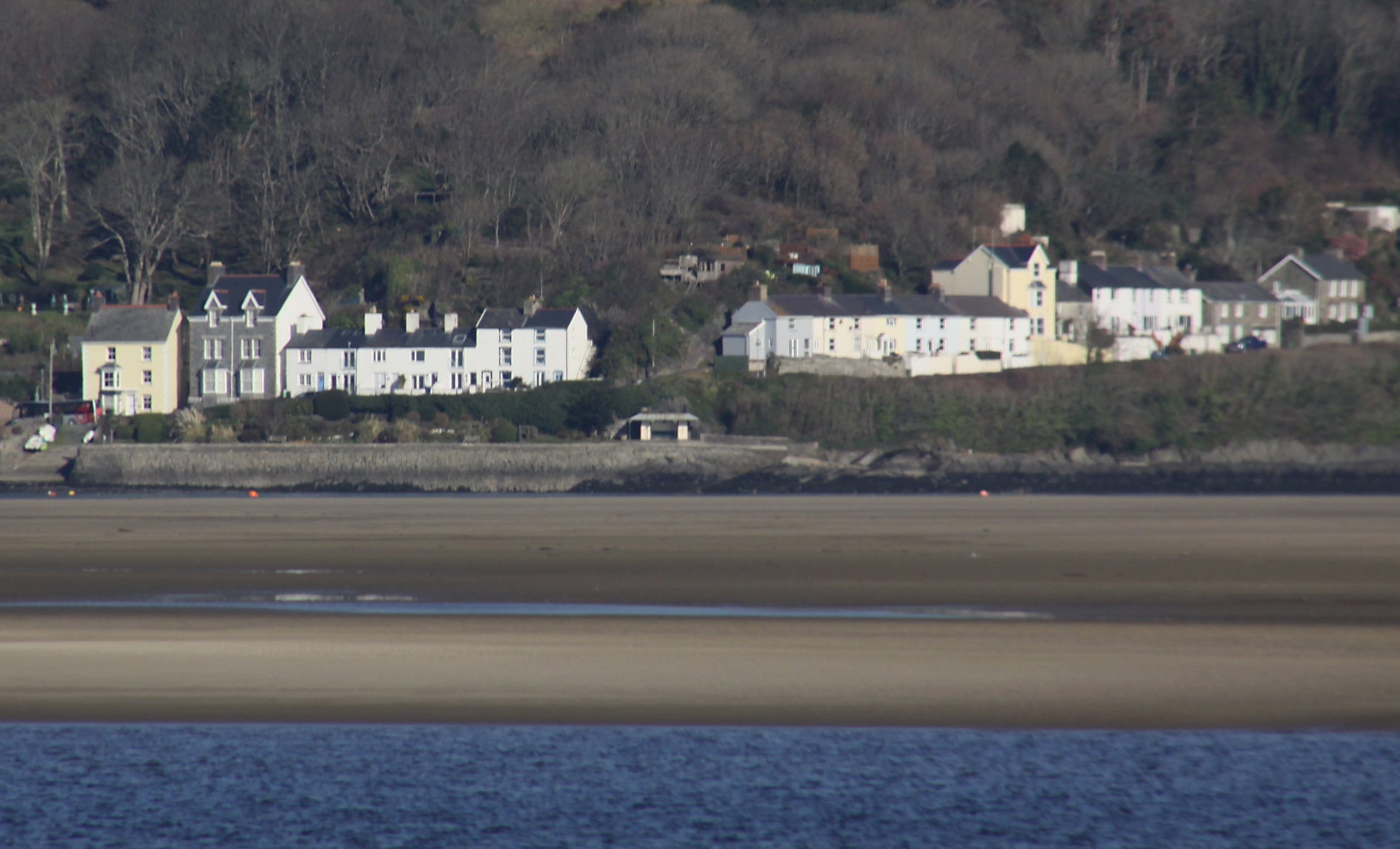
Penhelig seen from Ynyslas in February 2019

It is almost peculiar how little has changed between these two dates, 1923 and 2019.  Immediately in front of the houses on the left the memorial park has been developed, a small shelter has been added, and there is now a sea wall in front of it, and the trees behind the houses seem to have grown and spread, but little else has changed.  The postcard was unsent.  It is another produced by “Gwilym Williams, Aberdovey” about whom I have been unable to find anything, but there is an additional piece of information on the picture side of the card – a series number:  88213 JV.  The initials JV usually stand for James Valentine, so perhaps Gwilym Williams occasionally worked as a local agent of Valentine’s.  According to the Valentine’s postcard dating page, this number falls in a series that date to 1923.

Videos: Pheasant preening after breakfast; Pen Y Bryn in rain and sun

The first video shows a male pheasant preening in a burst of sunshine – a post-peanut mellow moment.  Two male pheasants arrived today, some time after the females had arrived, eaten, sat for a while with their feathers puffed up, and left.  It had finally stopped raining and at mid-day the garden was bathed briefly in a thin silvery sunshine, which lasted for about an hour and a half before the rain resumed.  The familiar harsh loud squawk announced their arrival so I threw down some peanuts and went down into the village, leaving them to it.  When I returned they were pottering around in the garden, and one of them was enjoying an industrious preen, the bright feathers given a thorough going over.

The second video shows two views of Pen Y Bryn from my garden, one clip from yesterday in the pouring rain and the second in the today’s brief reprieve when the sun came out before the rain returned.  Both are shades of grey, but the main difference between the two scenes is the sound.  In the first clip, even in the downpour Pen Y Bryn looks atmospheric but the sound of the rain is unrelenting.  In the second, with light glinting off the water, peace and quiet has been restored.

I should perhaps apologize for the completely gratuitous scrolling text.  I’ve been messing around with new video editing software, as my previous prog was at all not user-friendly and it had the antisocial habit of freezing solid.  Many of the features in the new application are very gimmicky, with shades of PowerPoint, but the ability to add text in various different forms is useful.  This is the fourth piece of video editing software that I have tried, so I am seriously hoping that this one will be a keeper.


Video: A busy day on the peanut feeder in torrential rain

The peanut feeder was busy today with a couple of great tits, a coal tit and a riot of blue tits, all in the pouring rain. And it really did rain!   At half four hail, lightning and thunder added to the fun and games.  I’ve watched the tits and the pheasants, and they all seem to dispose very fastidiously of the brown outer layer to get to the peanut inside.   In spite of taking video through the window, which was dripping with water, the videos came out surprisingly well.

Vintage postcards #13 – Aberdovey shopping centre

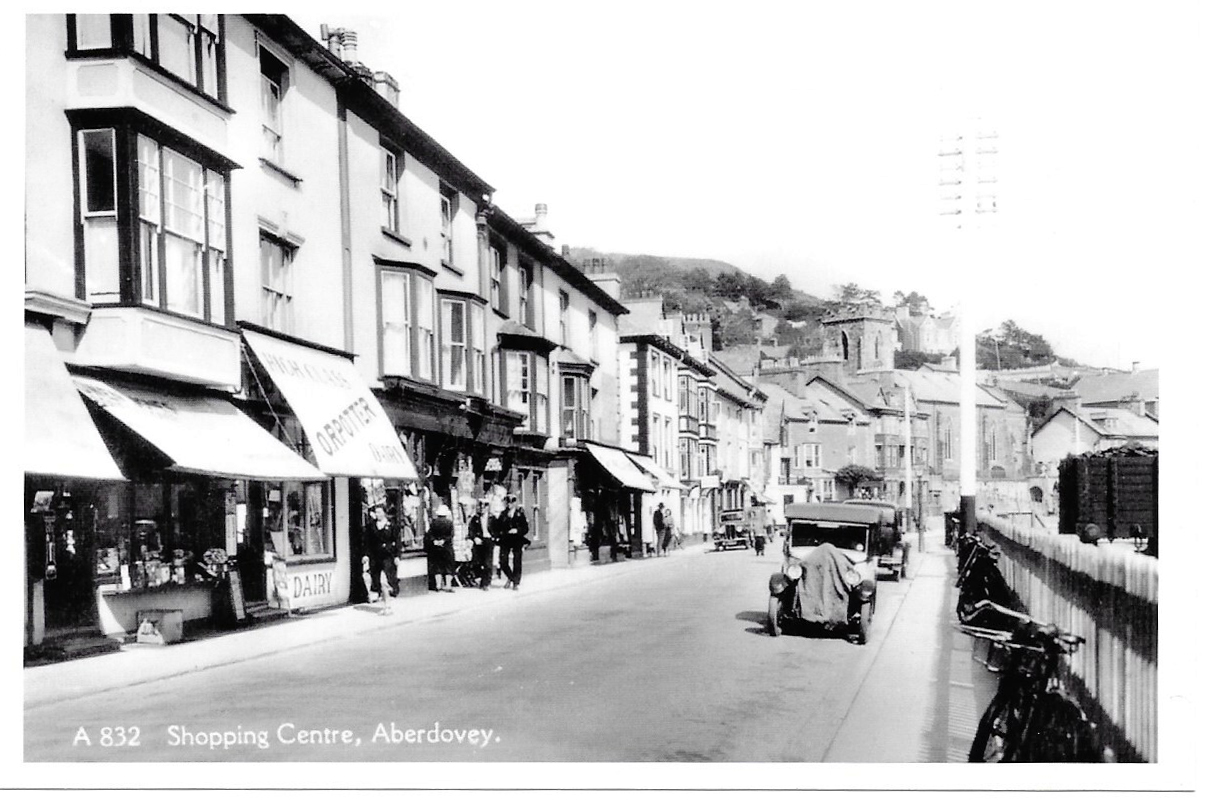
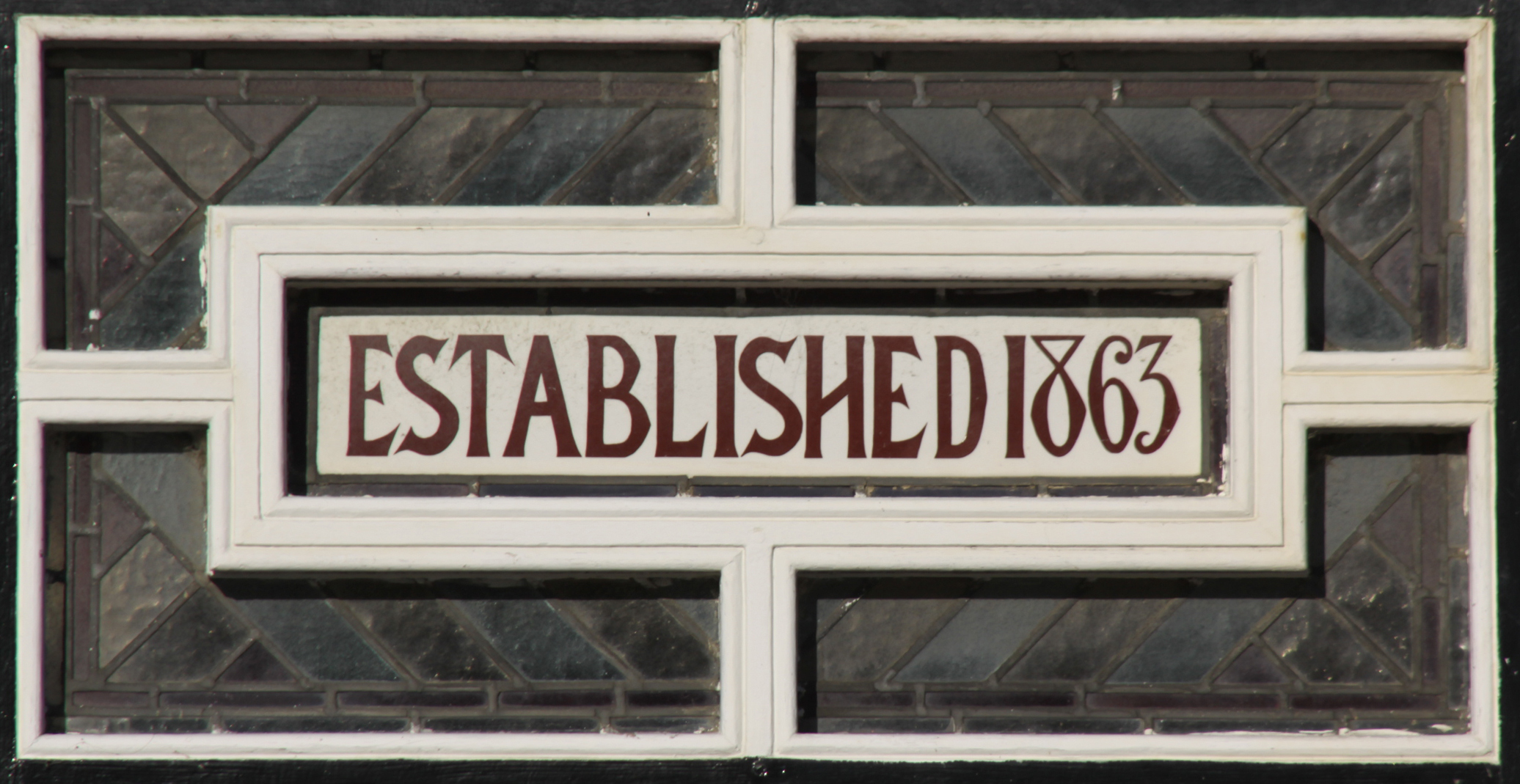
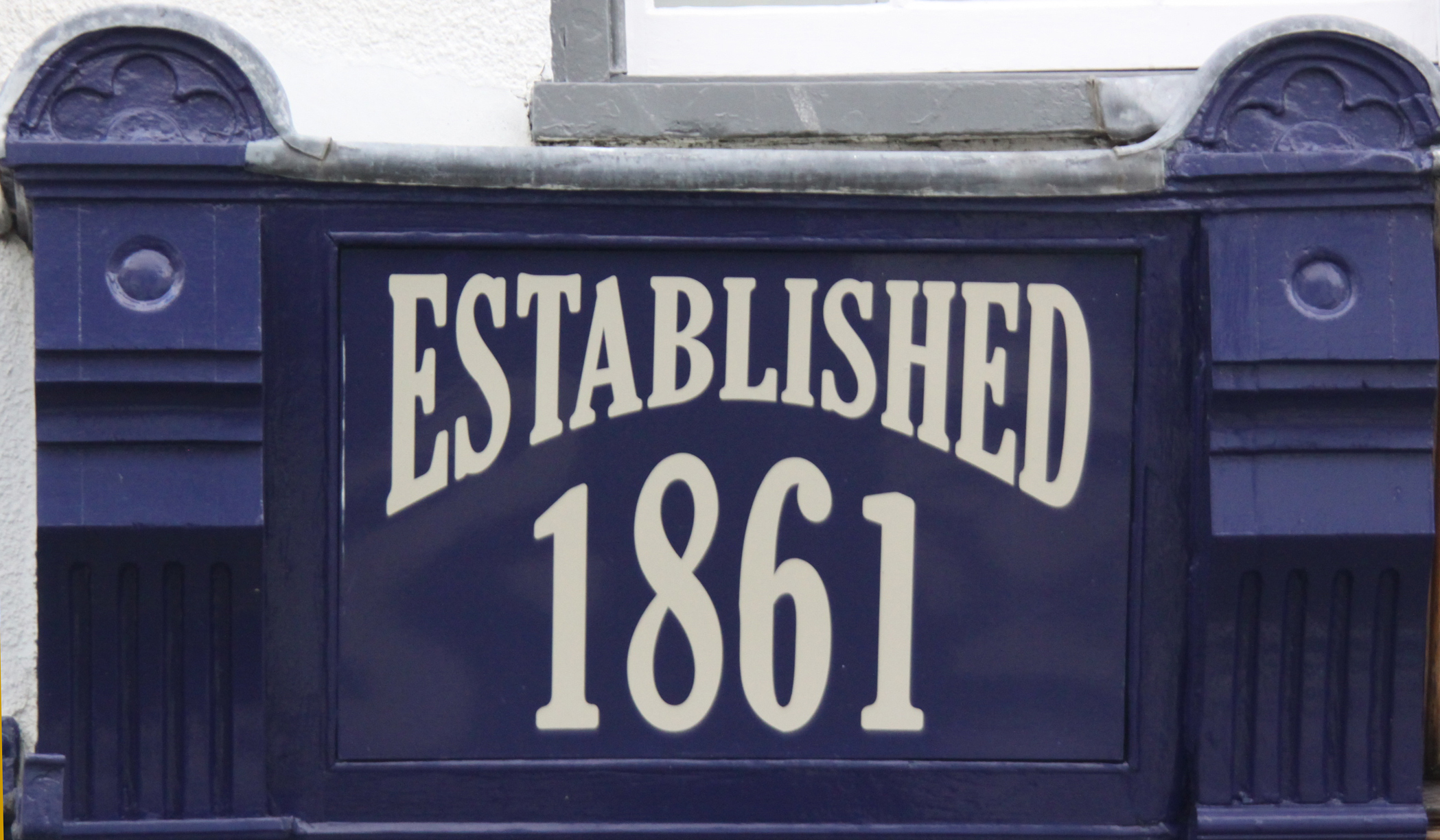
The idea of Aberdovey as a shopping centre is a somewhat staggering notion, given the modern sense of the term, which usually involves ugly custom-built malls and airfield-sized car parks, but it must have been a very busy high street, an important source of all sorts of goods in a period when people shopped close to home.  Although today most of the frontages along the promenade are businesses that rely on supplying the tourist industry, shops like the butcher and pharmacy both have dates over their doors today (1861 and1863 respectively, see photographs below) demonstrating that village stores were very important as Aberdovey continued to grow.  In this picture there is a dairy too, which today is an excellent ice cream shop.  The cars have real charm but the bicycles lined up against the wharf fence tell the real story about how most people got around.  Over the fence is one of the rail trucks that ran on tracks along the wharf and jetty for loading and unloading ships.

This turns out to be a photograph of a postcard, rather than the original postcard itself, so the reverse side is completely blank. A shame, as a huge part of the story is missing.

Video: Pheasants in the garden

The pheasants vanished from my garden for the summer, but have been slowly returning for the last month.  At first there was just one, but now there are up to five – four females and an occasional male.  Pheasants are quite mind-numbingly stupid, but of the five that panic and run away every time I open the door to throw down food for them, there’s one that knows that the unlocking of the door is a good sound.  She bounces up a couple of steps in confident anticipation of a shower of peanuts.  When they haven’t been fed (or when they come back later in the day in hope of more goodies) and she sees movement in the kitchen, she comes all the way up the steps and loiters by the door, sometimes just staring at me in a rather unnerving way.  I’m a complete pushover and it works every time, and between the pheasants and the blue tits, my sack of peanuts is emptying rapidly.  Here she is yesterday, looking for an evening peanut shower after the morning one had been demolished and they had gone elsewhere to forage or be fed.


Video: Chaos on the goldfinch feeder

I recall that this time last year most of the birds vanished from the garden in October and November, for the reasons explained in an earlier post, returning in force in December.  This year more of them remained in the garden over that period, but it is noticeable how busy it is at the moment.  The goldfinch feeder is particularly in demand and all day today the feathers were flying as they jockeyed for position and chased each other off, some of which is captured on the video below.  A very beautiful display of bright colour on a dull day.  There were nine of them at one stage.