Category Archives: Walks

A sunny Monday walk, avoiding the village

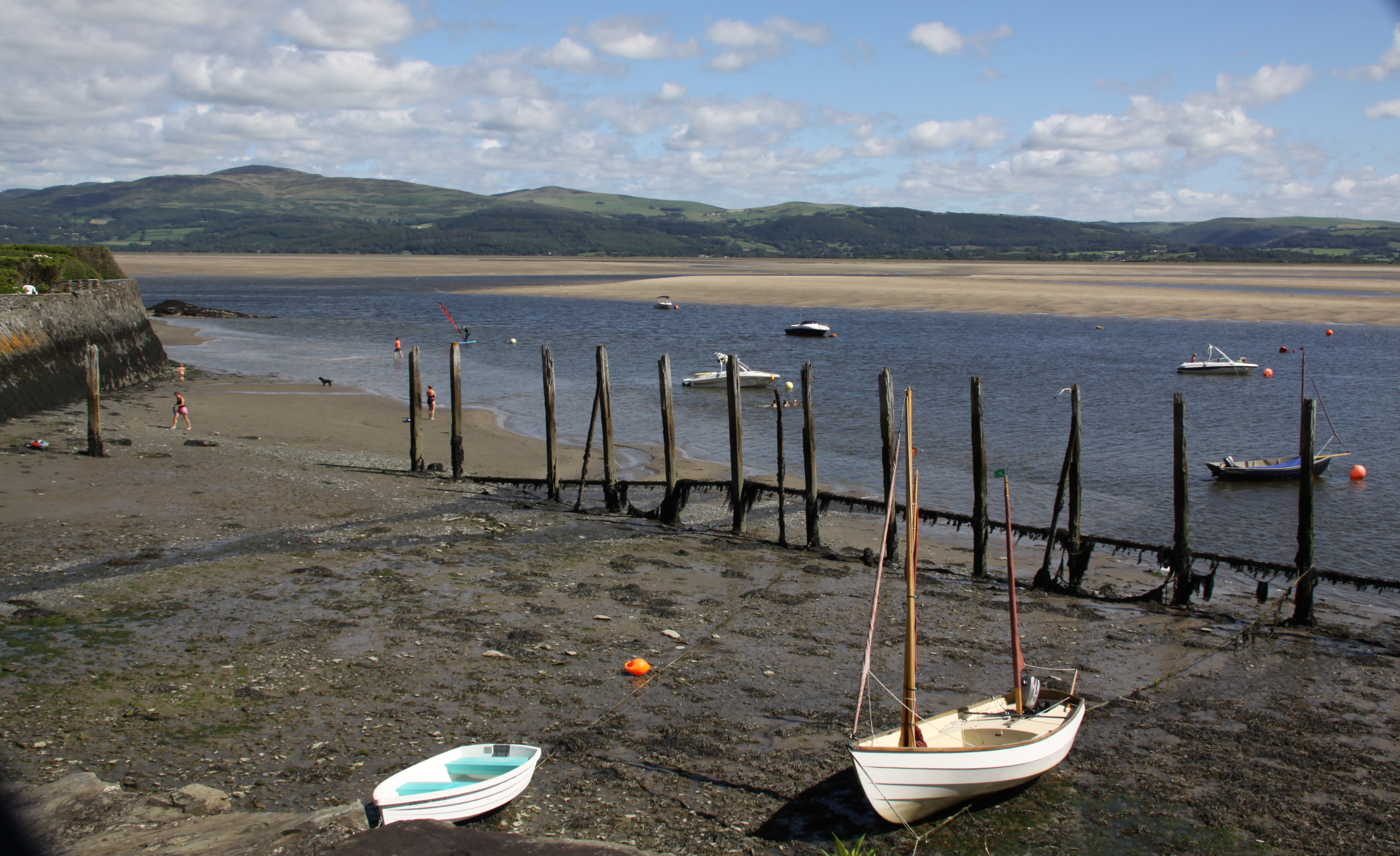
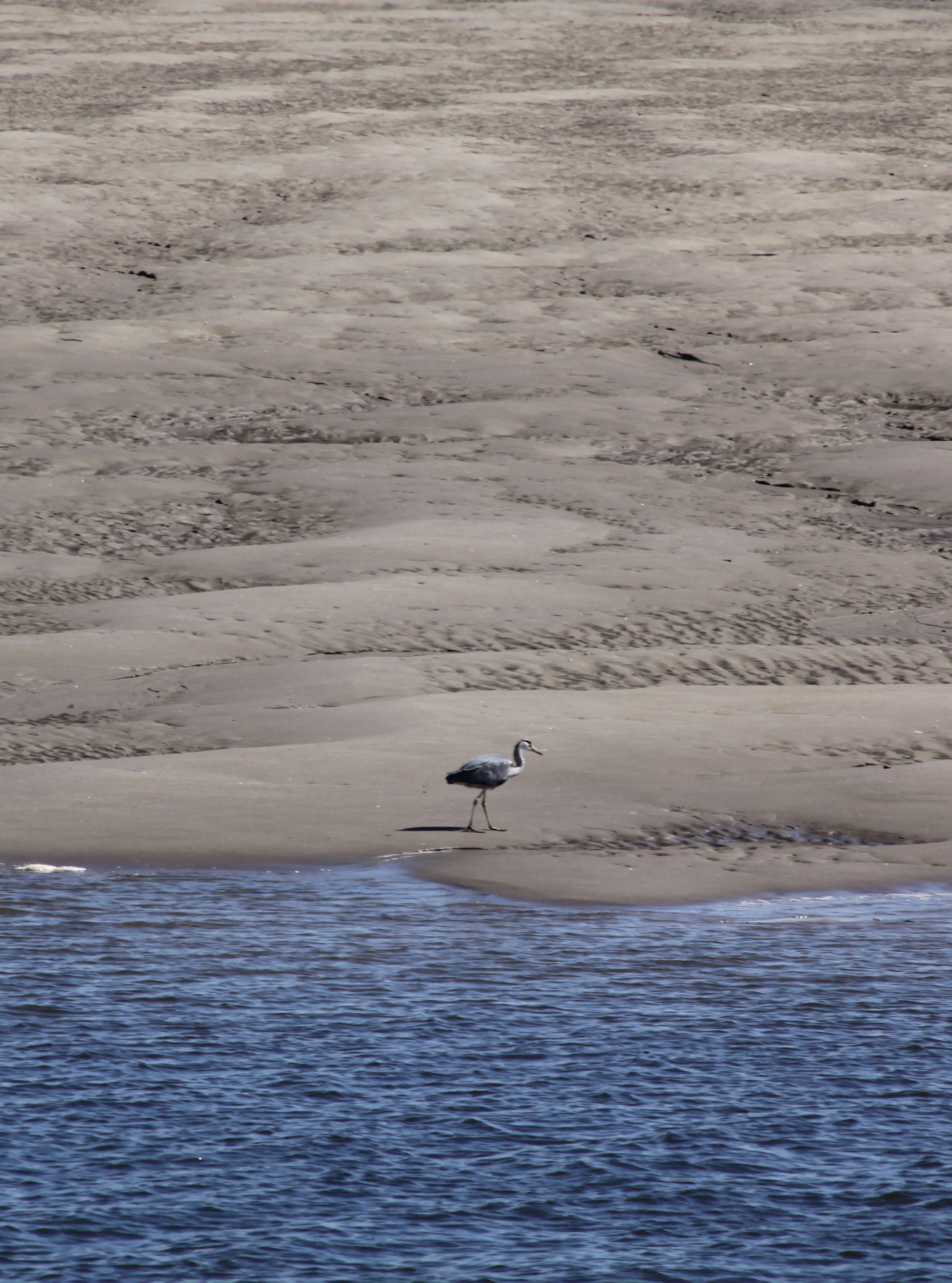
I was quite mad to drive into Tywyn at 10 to 4 on Friday, just as the tourist season was belatedly kicking off, and paid the price in the form of a short queue to get into the Co-Op (the first time I’ve had to queue) and the joys of dodging some truly execrable driving and parking in Aberdovey itself.   So on Monday afternoon, although its great that the visitors have returned, it was something of a relief to take the footpath from the top of Church Street down into Penhelig, avoiding the vehicular chaos in Aberdovey itself.  We walked through the Memorial Park and part way along the estuary, which was as stunning as usual, with lovely views, and people fishing and kayaking.   There was a heron on a sandbank, the first I have seen in the estuary, although a few years ago I saw one in a similar situation in Port Meirion so I suppose that they are happy in brackish waters when there are sufficient fish to tempt them.


We went up the first flight of steps to the road, and it was then a matter of walking down the road as far as the footpath that runs up past the Outward Bound centre.  This is not for the faint-hearted.  With the bridge from Picnic Island still closed, and now firmly boarded up to prevent access, it’s a hair-raising walk along the road, facing into the traffic piling in from the direction of Machynlleth.  Absolutely not to be attempted with children or dogs in tow.   The bright new Aberdovey welcome signs are up, the first time I had noticed one, although I suppose there must be one on the way in to Aberdovey from the Tywyn direction too.

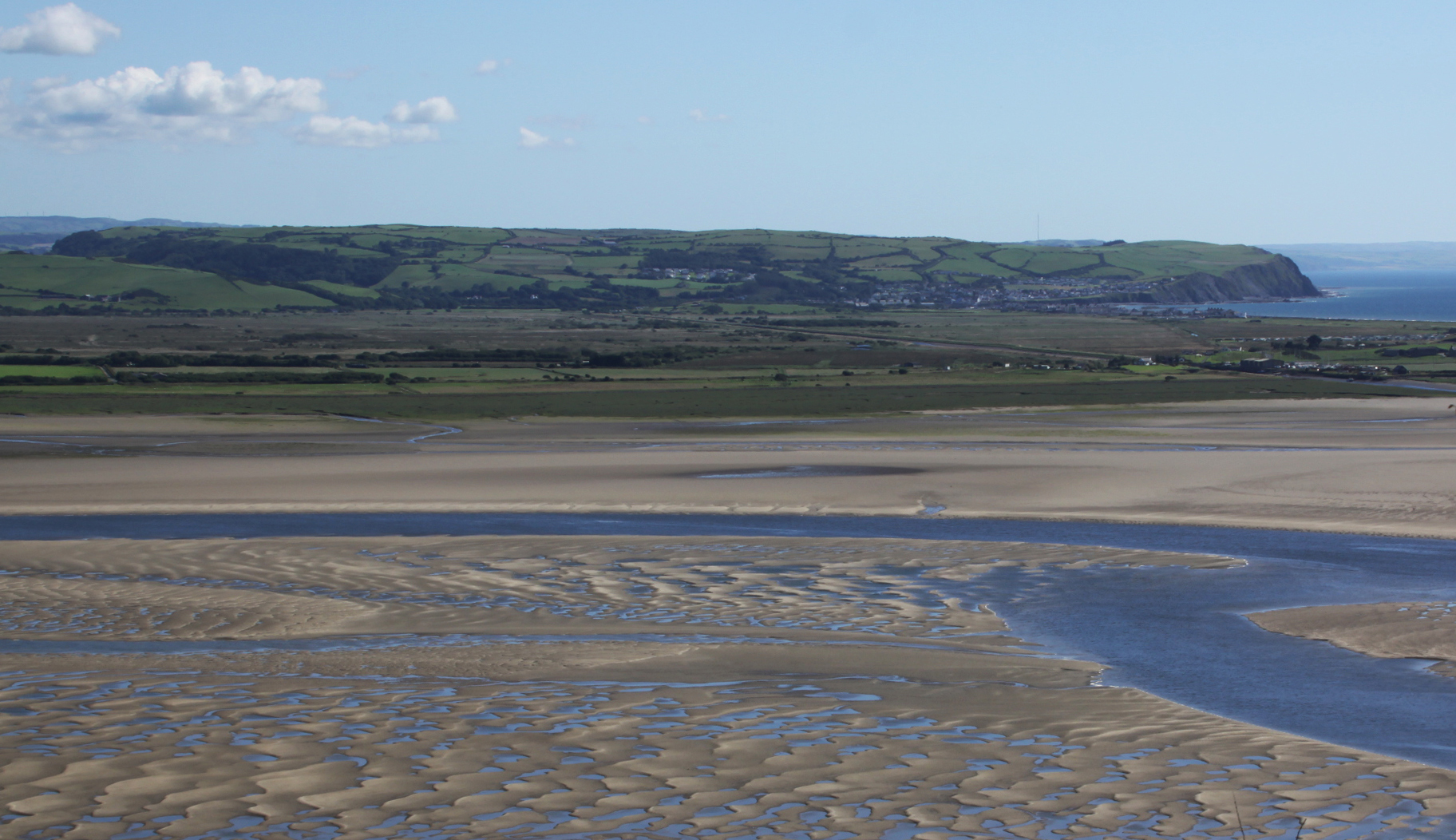
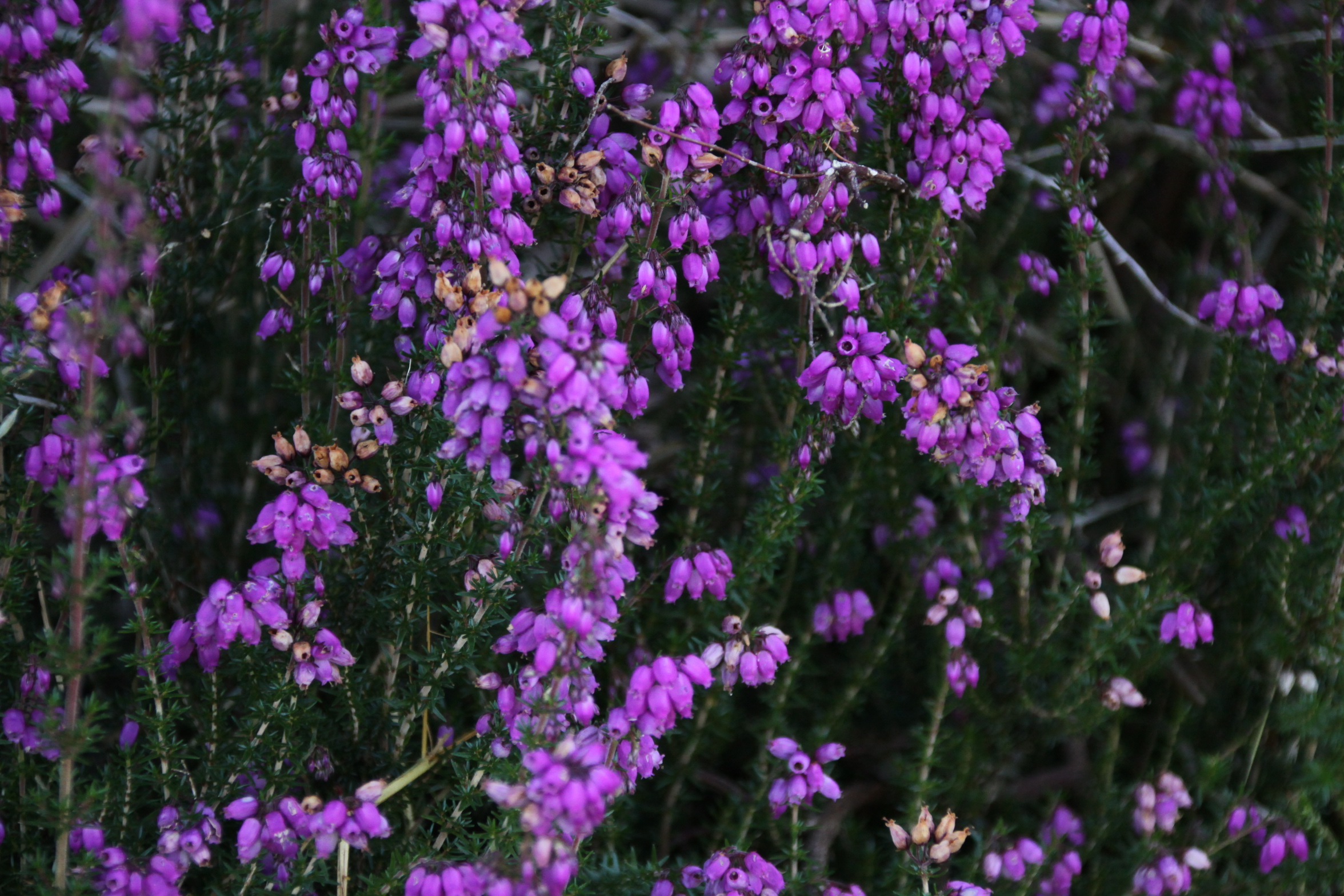
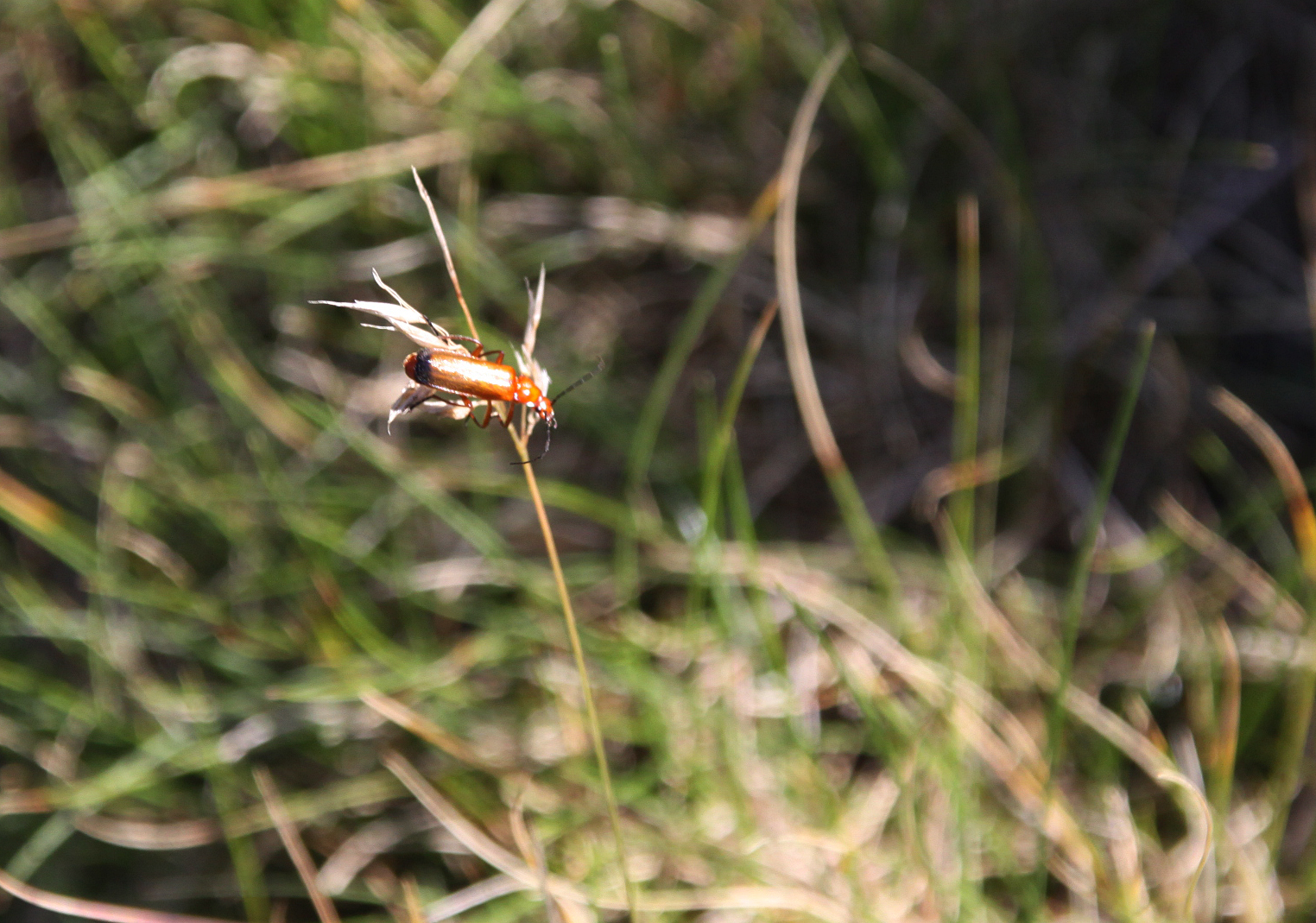
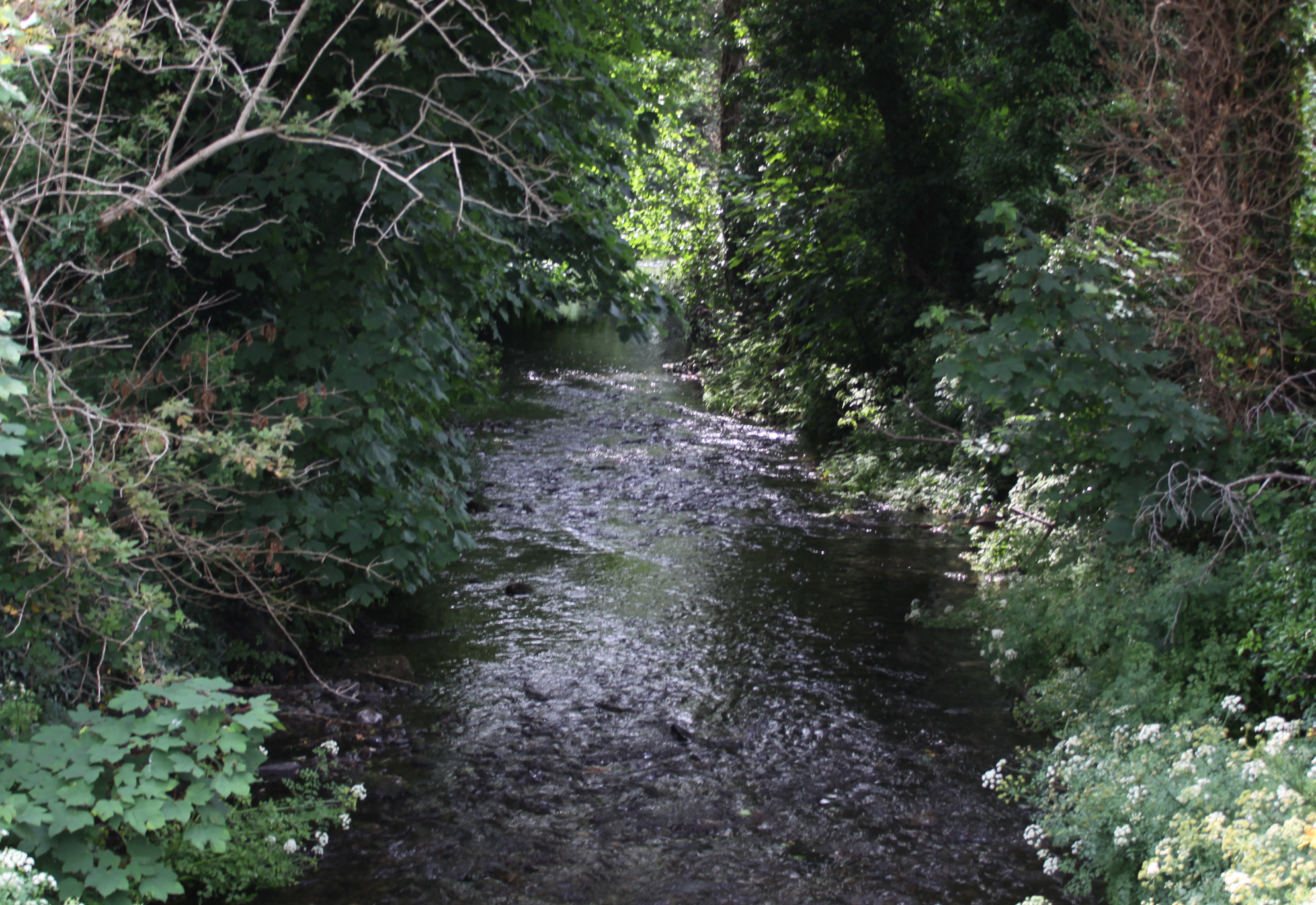
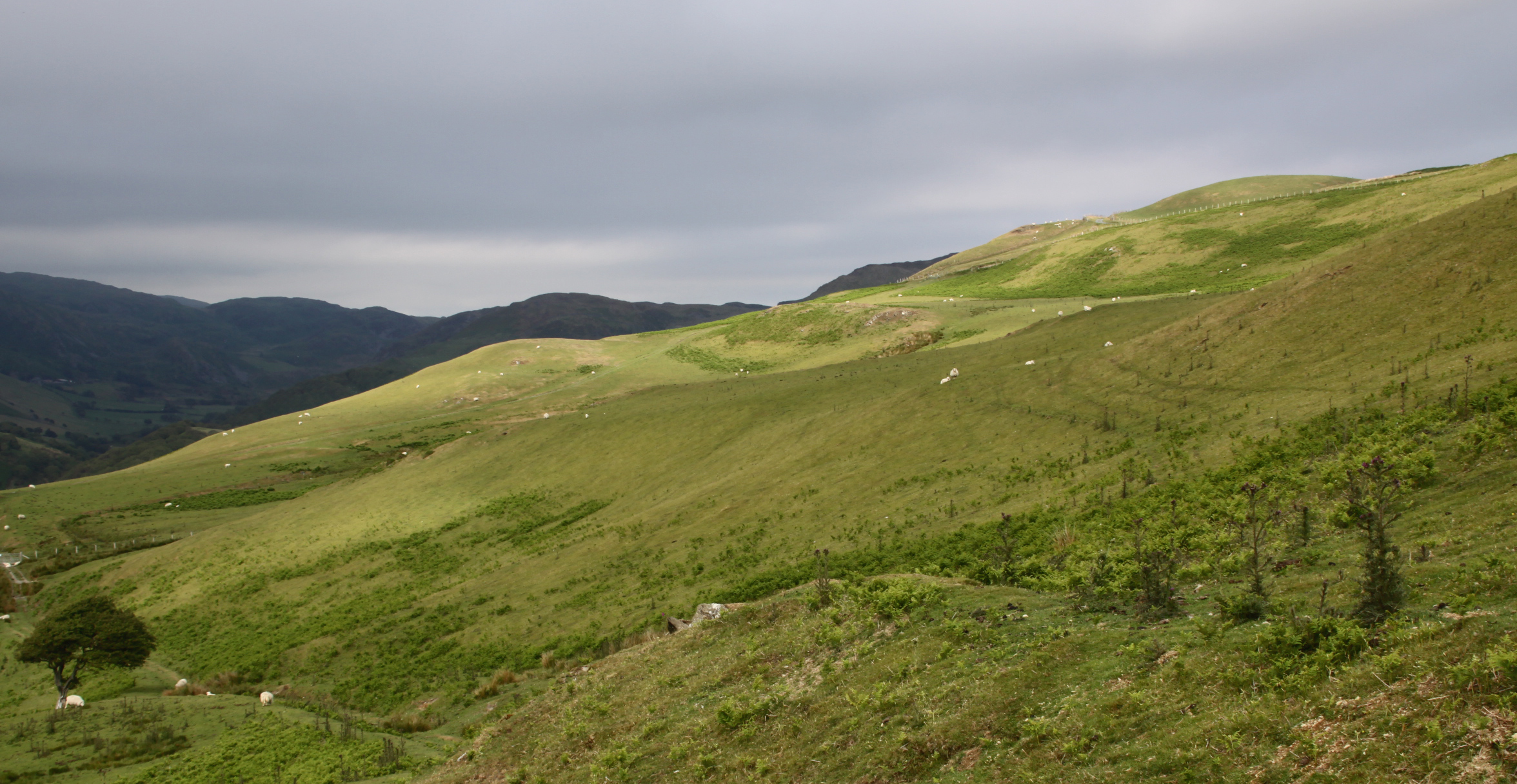
The rest of the walk is very rewarding once the road is left behind, walking first along a bubbling stream for a short way, and then up through a wood behind the Outward Bound centre before emerging into the sun on the side of the hill overlooking the estuary.  The hills above the estuary are far more lush than the exposed slopes along the coast, with longer grass, and a lot more shrubs and trees, and the views over the estuary are spectacular.  Afon Leri has always been a remarkable landmark crossing Cors Fochno to the east of Ynys Las, but I hadn’t noticed a smaller, parallel canalized section of stream further upriver, Afon Clettwr, with a small bridge carrying the railway. There weren’t a lot of wild flowers to comment on, but there was a thistle absolutely swarming with bright orange Rhagonycha fulva beetles, some lovely bright heather, and bright red berries on Mountain Ash.

We circled back over the hill to Aberdovey, emerging behind the highest reaches of the village, where there was a lovely patch of lavatera in bloom.

A colourful patch of Lavatera overlooking the estuary

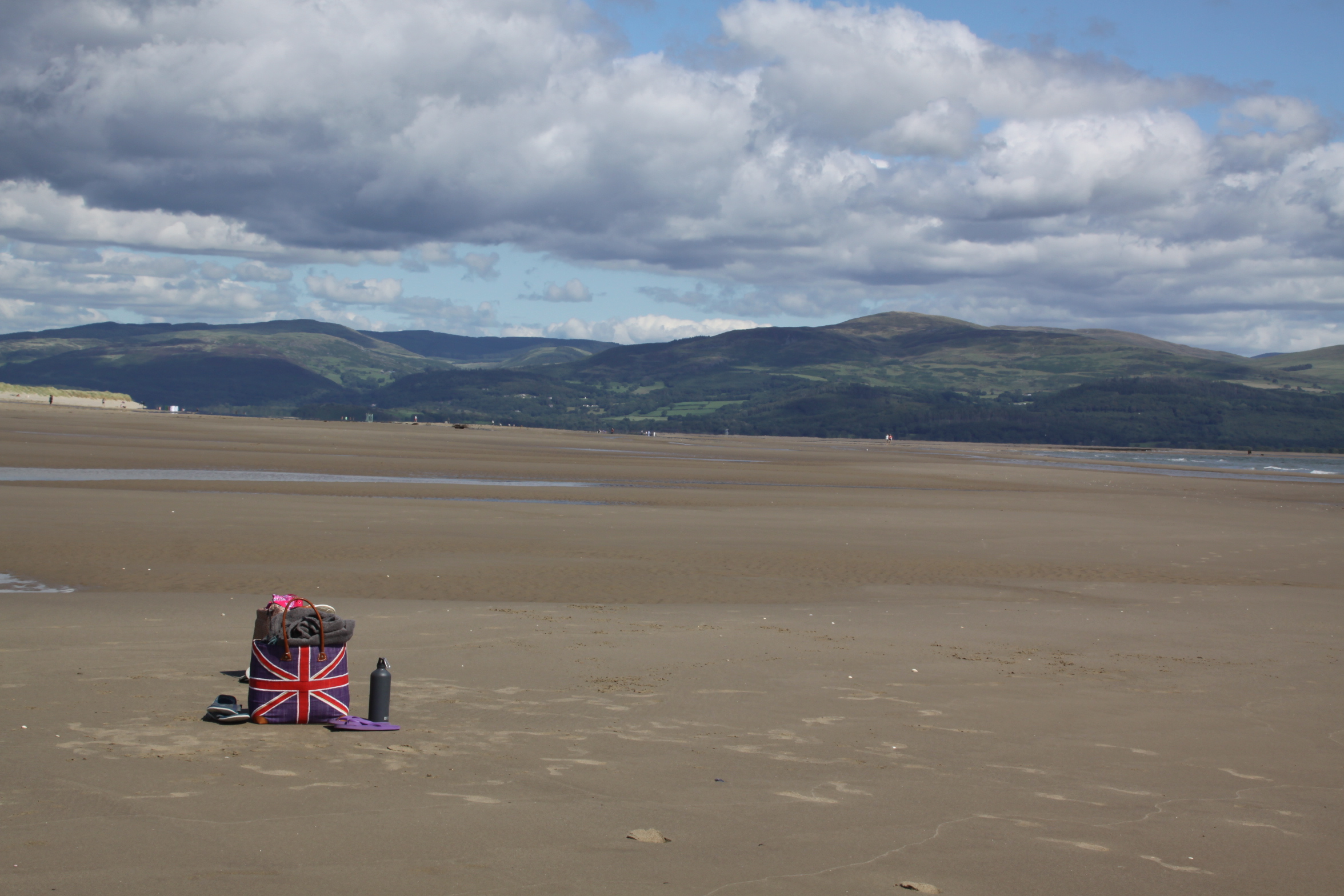
A busy beach, but the hills are still empty as lockdown relaxes still further

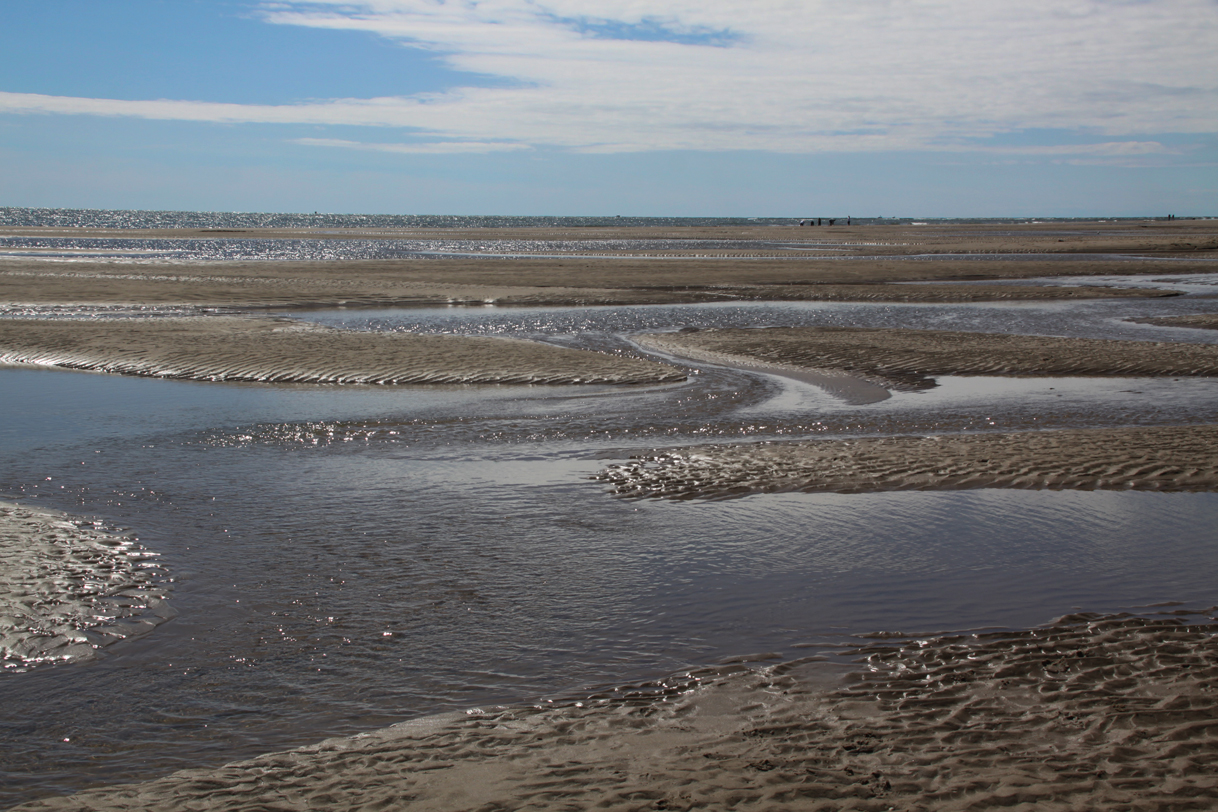
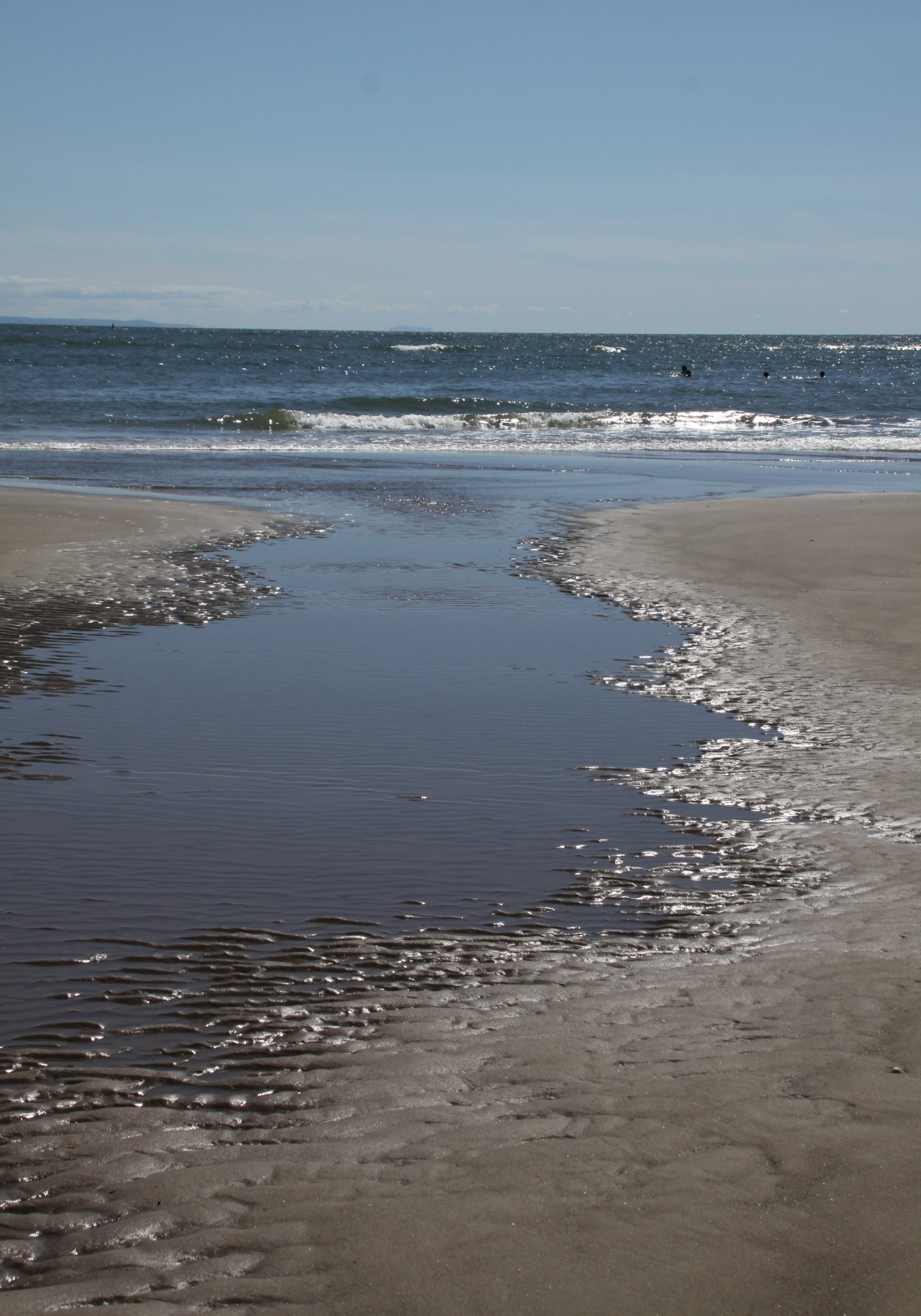
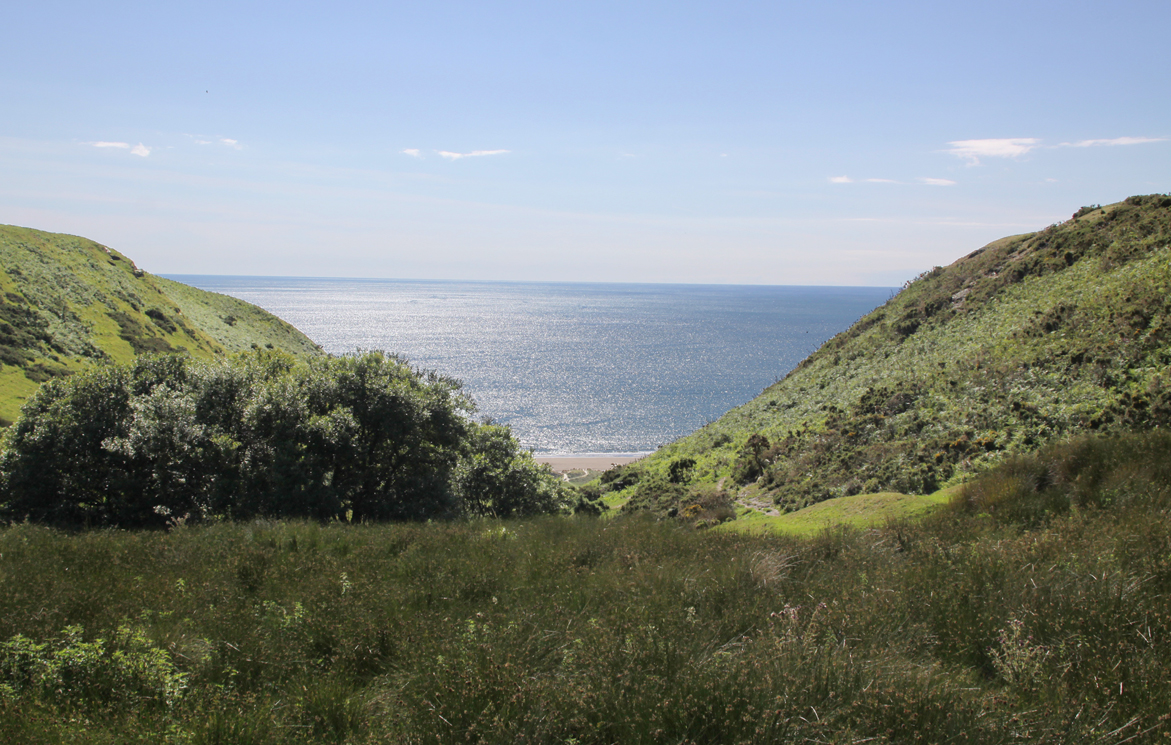
Another lovely walk on Saturday, along the beach, paddling in the sea, turning up into the hills past the cemetery, and along lovely footpaths until we emerged just above Aberdovey.  I was particularly tired after a restless night, so it was super just to drift along enjoying the sights and sounds.  There was an intensity to the light that reflected off the water, the dominating colour silver rather than blue, and anything in front of it was silhouetted.  How the weather changed on Monday!

This is the first time I’ve seen the beach with more than a couple of people on it.  It was something of a visual shock, although it is great that people are able to enjoy themselves.  A lot of second home owners are back too.  The ice cream shops were a bit chaotic, with very little distance between people in the queues, but I expect that that will be sorted soon.  Further along the beach, several people were swimming, which was a bit brave as the water was frankly very chilly.

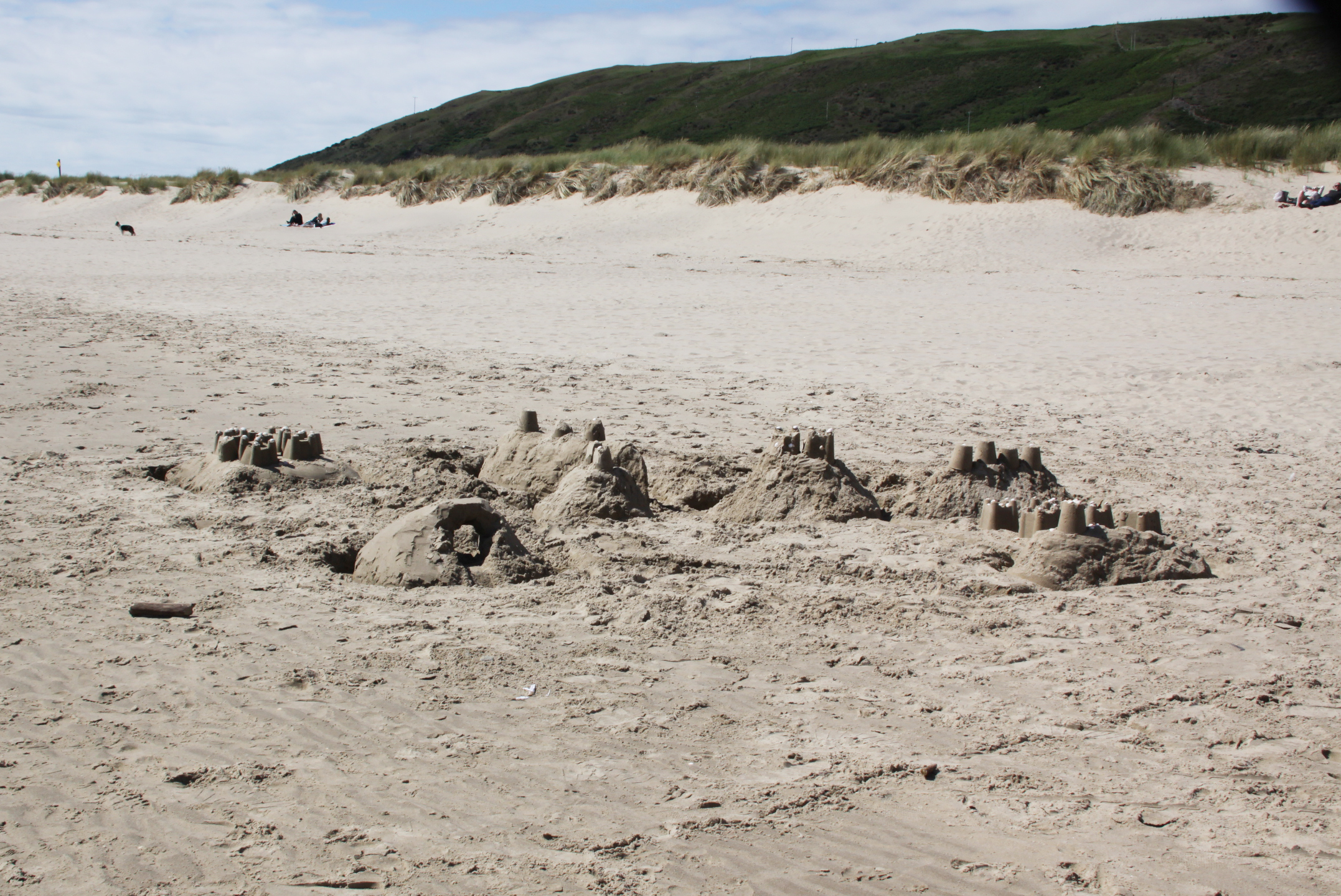
Not just a sand castle, but an entire neighbourhood of sand castles.


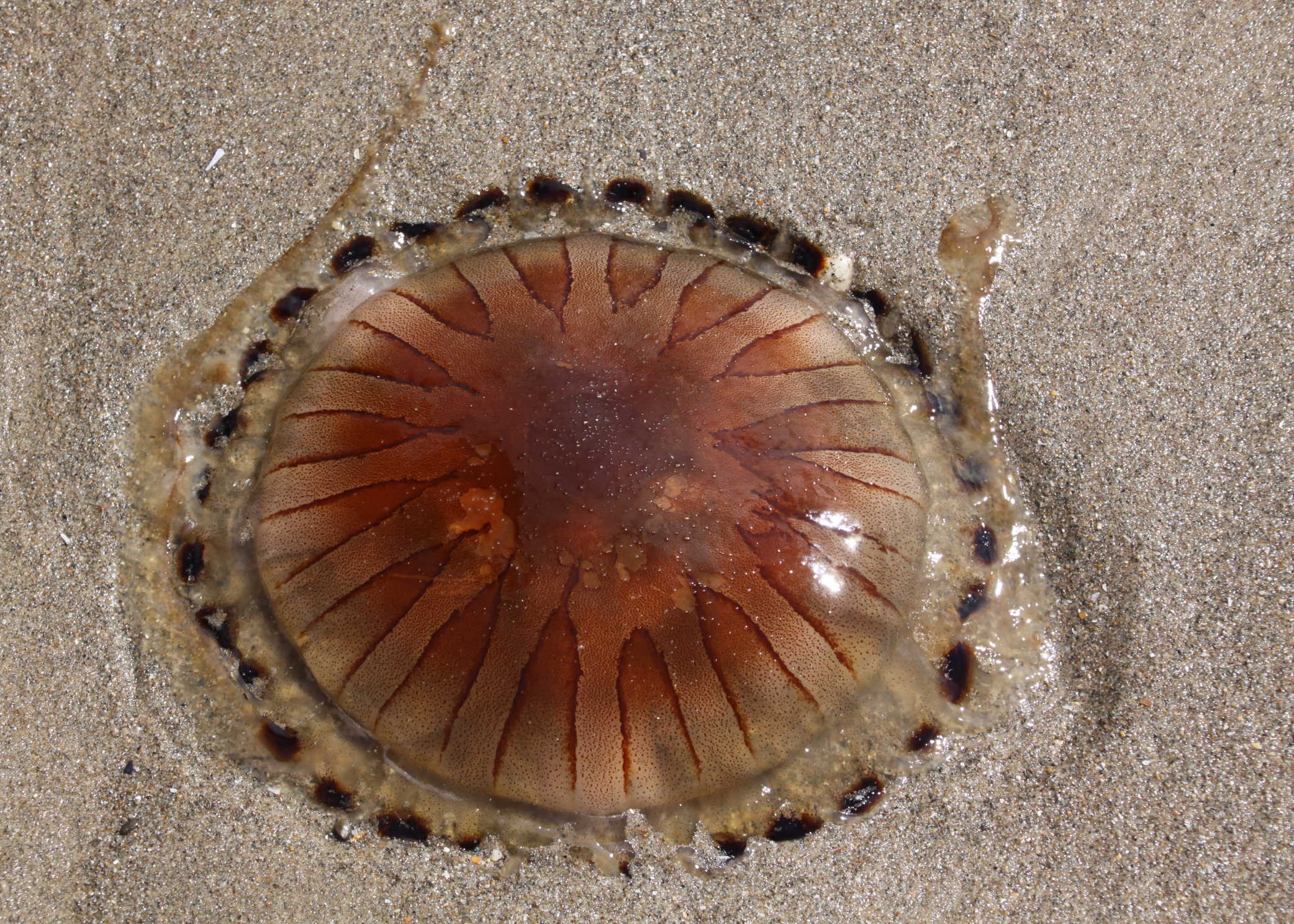
Normally the jellyfish that wash up on the beach are Barrel jellyfish (Rhizostoma pulma) but today there were none.  Instead, there were several Compass jellyfish (Chrysaora hysoscella), common in the south and west during the summer, where they feed on small fish and crustaceans.  The name derives from the dark brown markings that radiate from the centre.  These jellyfish are venomous, with stinging cells all along their tentacles.


The beetle Rhagonycha fulva, common all over the UK from May to August.

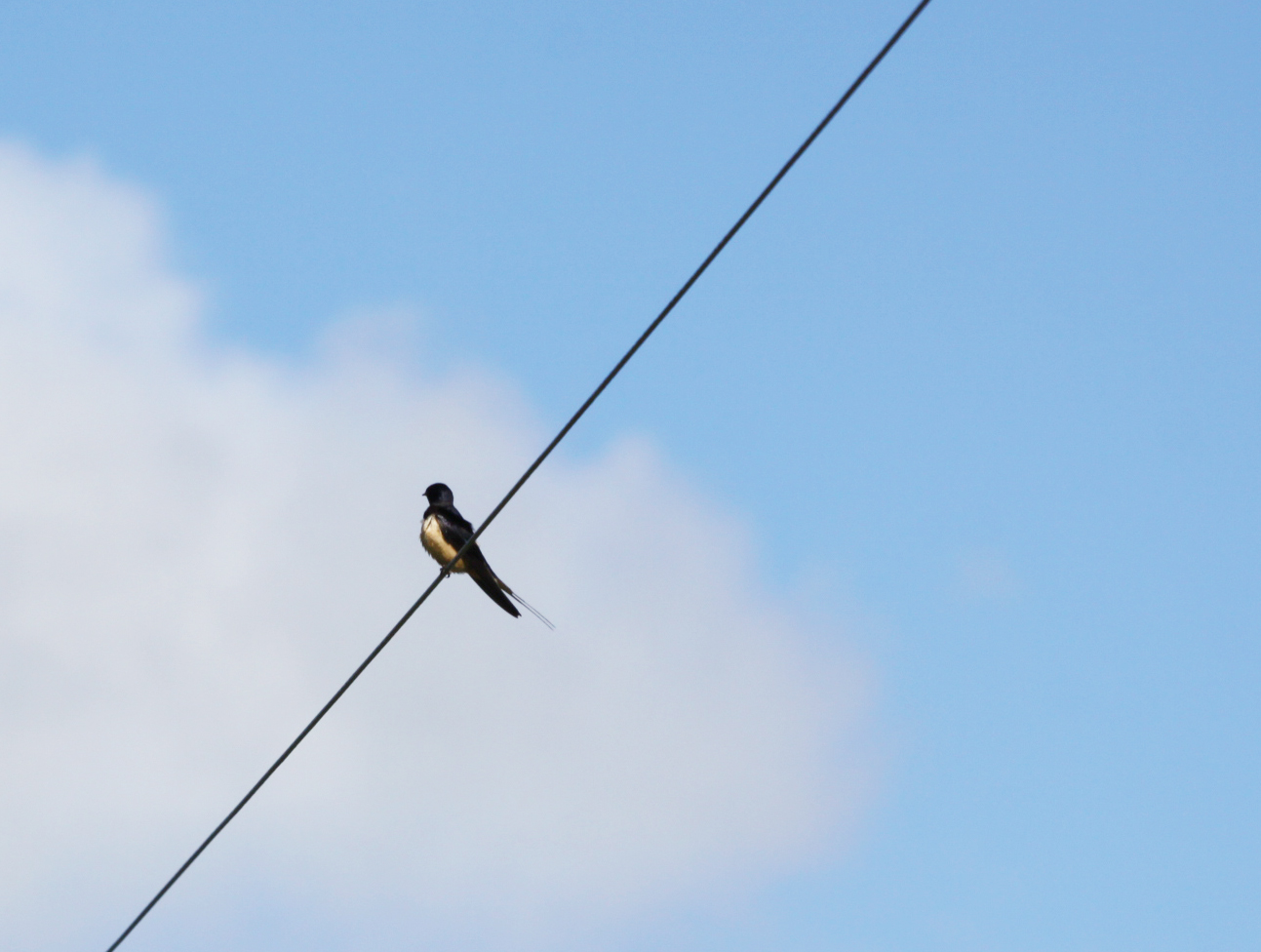
Swallow (Hirundo rustica).  A terrible photograph, shooting into the sun.  I was convinced that this was a swift, because the forked tails didn’t look long enough, but the swift doesn’t have the big white breast. They are migrating birds, spending winter in southern Africa and returning to the north to breed.

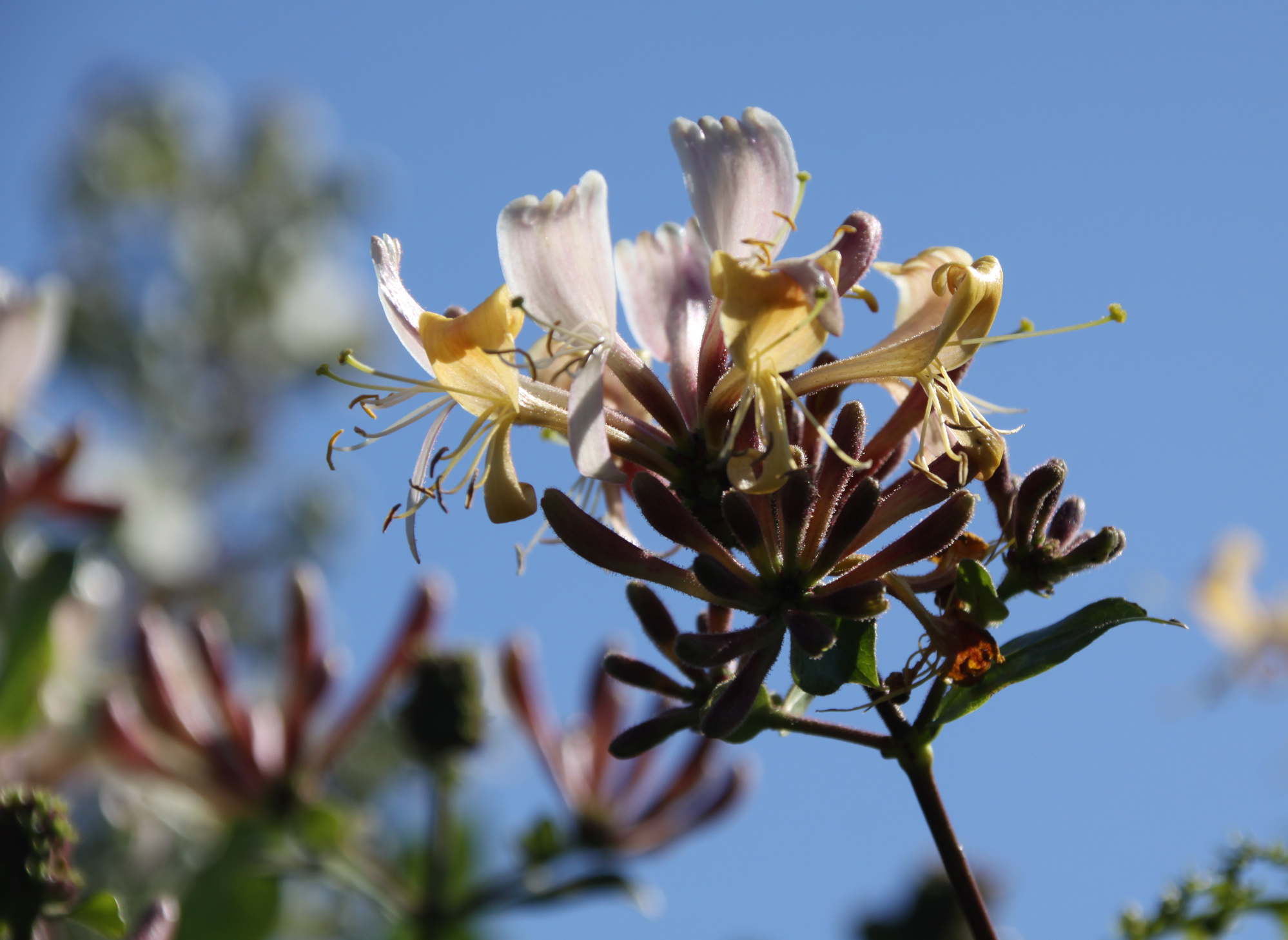
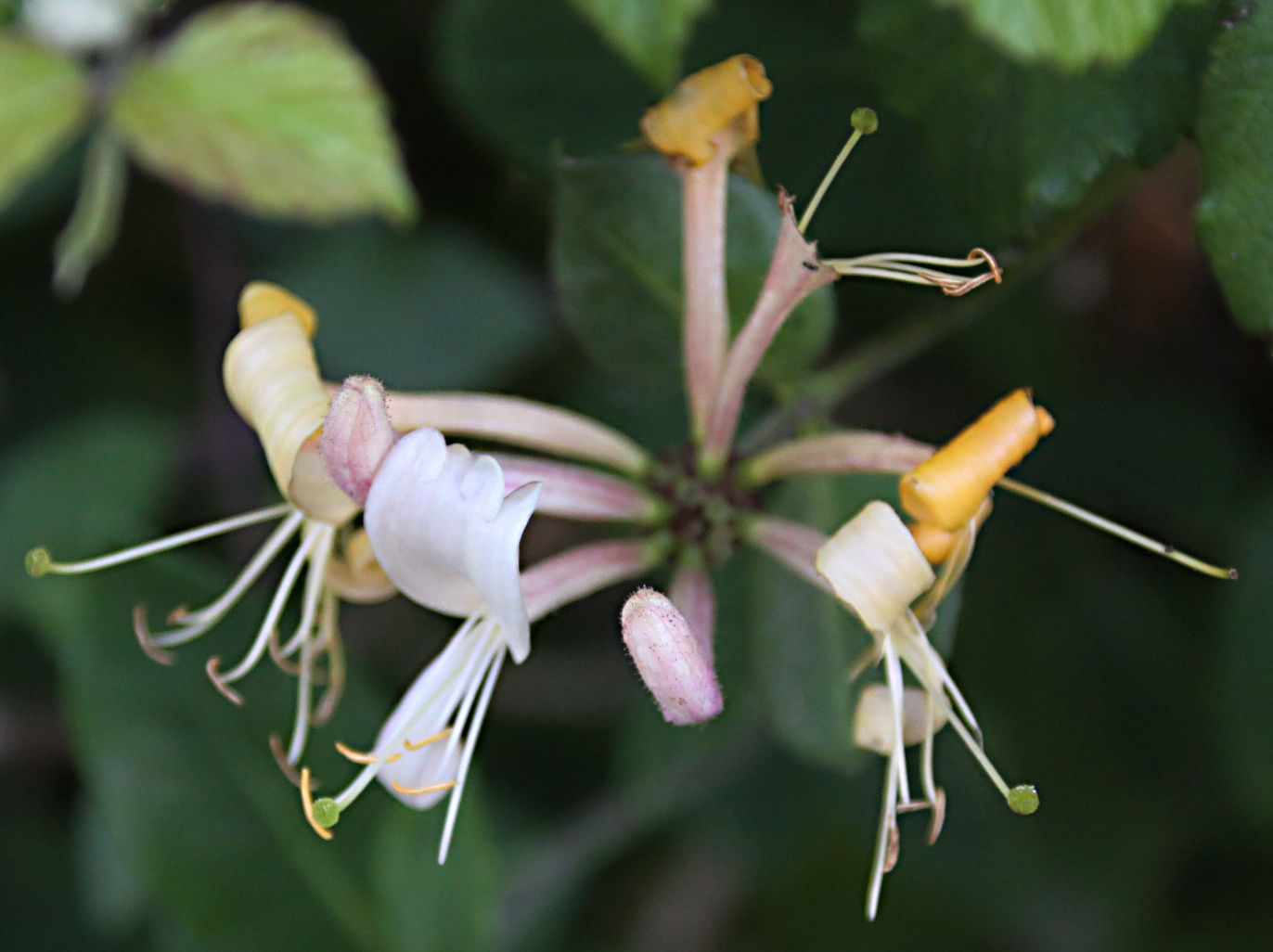
Honeysuckle (Lonicera periclymenum) produces a beautiful perfume, particularly in the evenings to attract pollinating moths.  It climbs up and over hedges and shrubs and flowers from June to October, with petals that ivory coloured until pollinated by bees or moths, when they turn yellow.  The produce red berries following the flowering, during the autumn.

Another first for the year:  the beach at Ynyslas is covered in cars.


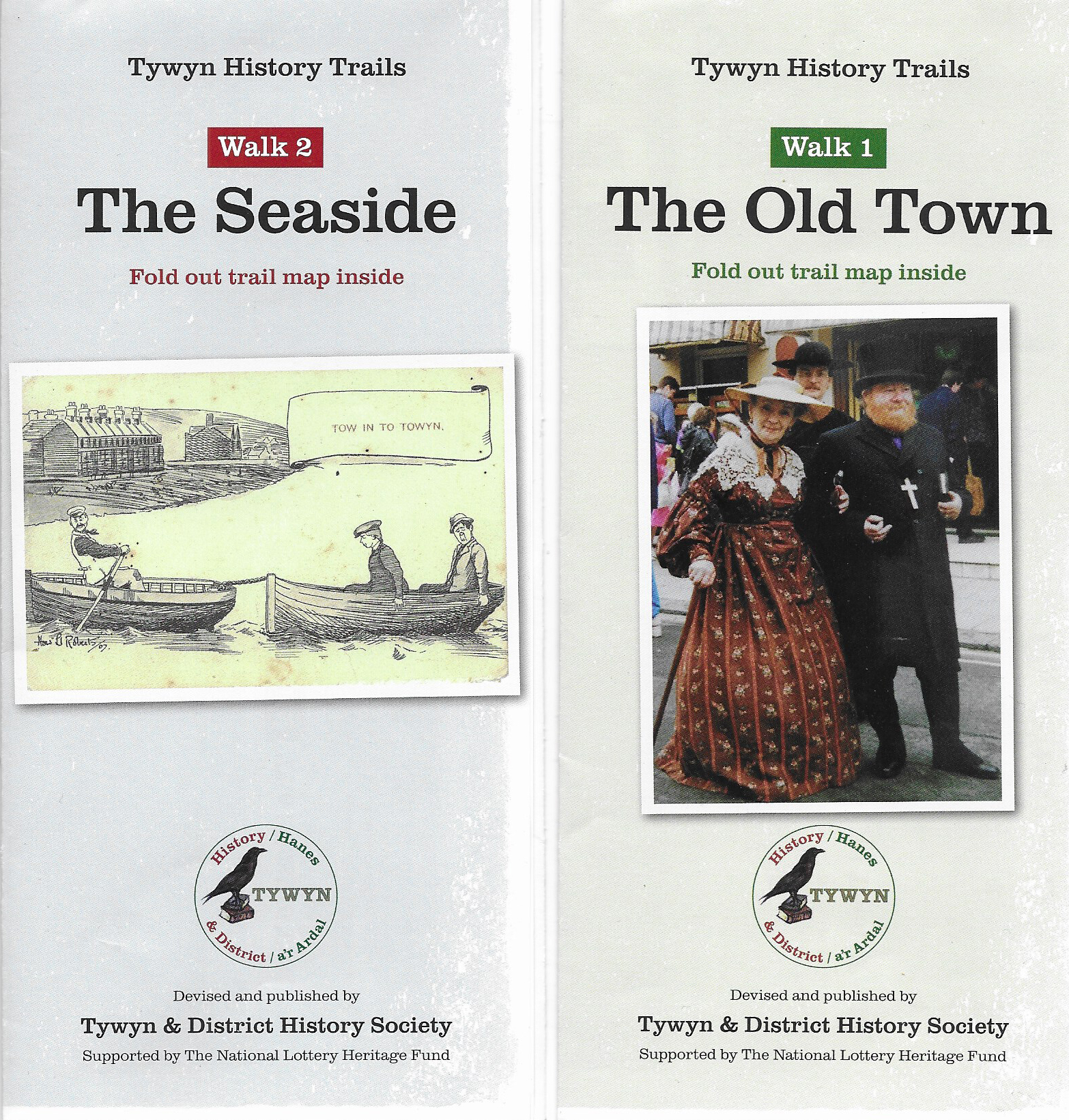
Tywyn History Trail leaflets 1 and 2

I was in the Tywyn Co-Op last week and spotted these two leaflets in the leaflet holder by the tills.  Do pick one up if you’re there.  Each of them consists of a fold-out map of Tywyn – Walk 1 is The Old Town and Walk 2 is The Seaside.  The map is numbered, and brief details are given about each of the numbers, so that you can do a self-guided tour.  Introductory paragraphs also give a short overview of the origins of Tywyn and its development.  In something this size (A3, printed on both sides) not a huge amount of detail can be included, but it’s a great starting point for getting to know Tywyn a bit better, and a good jumping off point for future research.  Devised and published by Tywyn and District History Society, their production was partially supported financially by the National Lottery Heritage Fund.

The image below is a scan of part of Walk 1, to give a flavour of the leaflets

Early July dune flowers, more foraging

July already.  How on earth did that happen?  A sunny day today, and a welcome change from the recent wet weather.  The day before yesterday it wasn’t actually raining in the afternoon, although it had all morning, and the feeling of going stir-crazy after all the rain was immense, so it was a relief to go and see what else had come into flower in the sand dunes, which seem to be changing all the time.


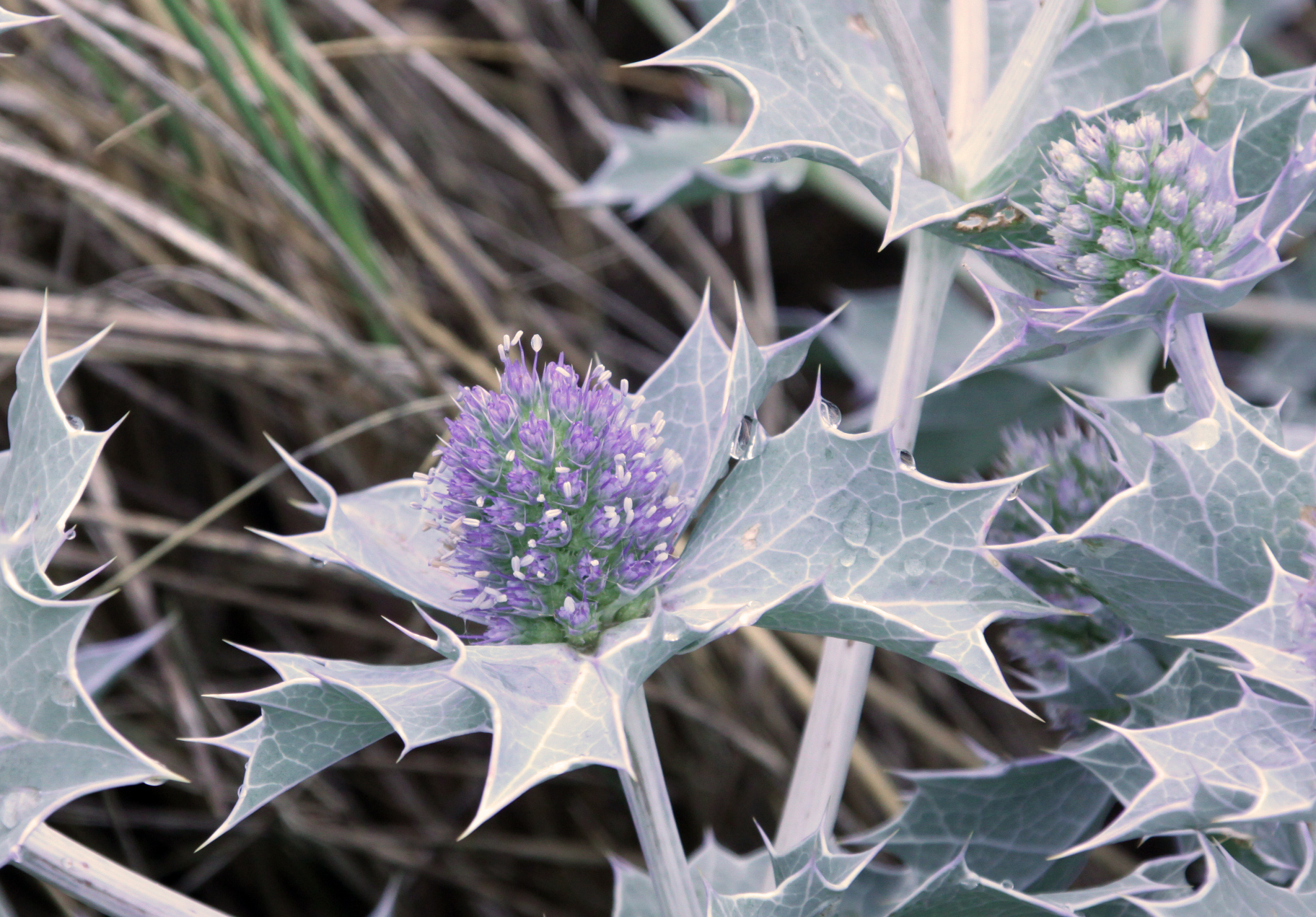
The sea holly is just coming in to flower, one of my favourites (Eryngium marititinum).  There seems to be less of it in the dunes than in previous years, but that may just be an impression.  The leaves are a lovely silvery-blue colour and the flowers are a stunning powdery cornflower blue, forming little domes.  It loves full sun and dry coastal and rocky habitats.  Surprisingly, given its appearance, it is  a member of the carrot family.

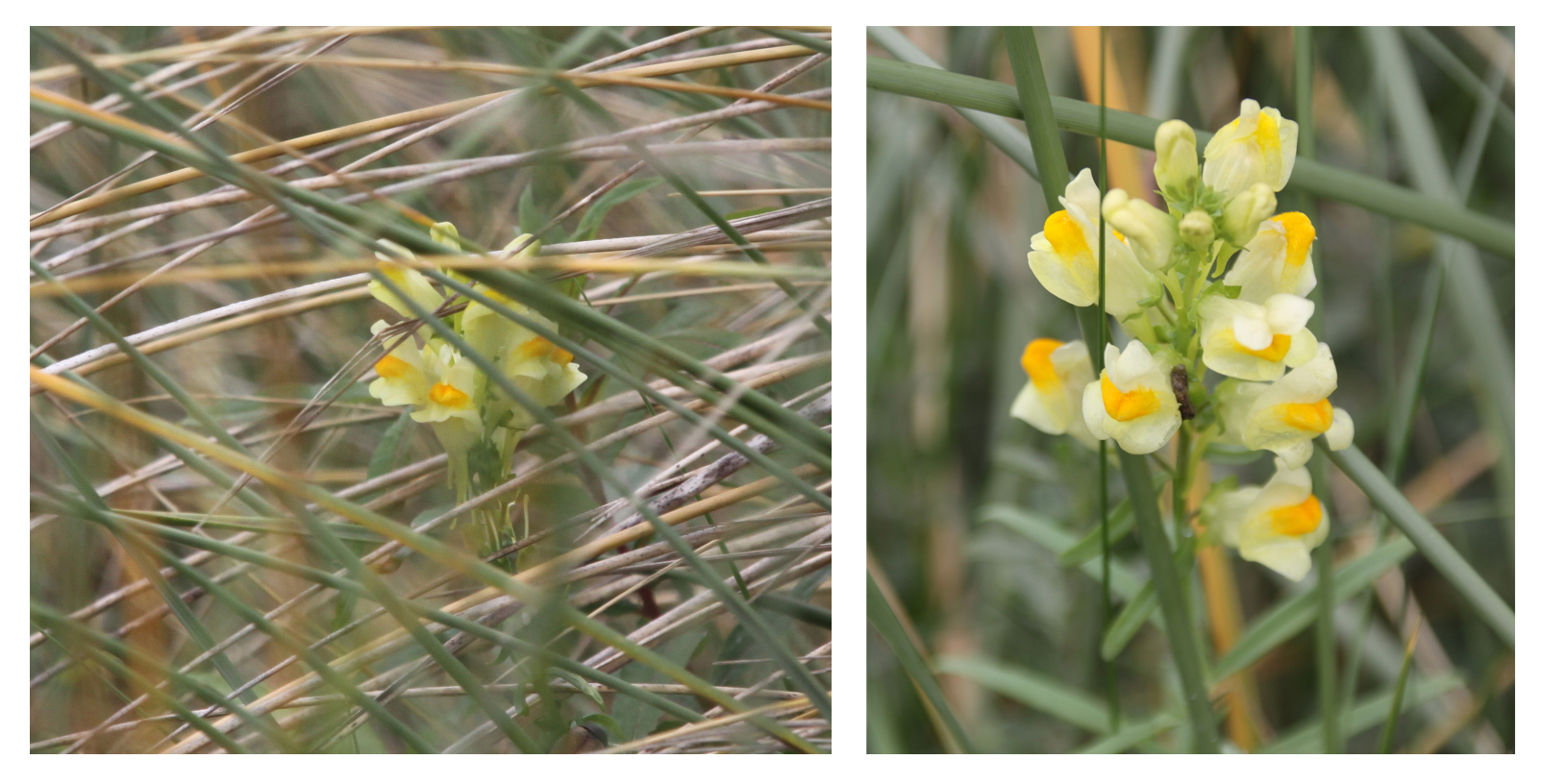
Common/yellow toadflax (Linaria vulgaris) looks so exotic, like an orchid, but is relatively commonplace.  It is a perennial that flowers between July and October.  Narrow leaves grow spirally up the stems.  The flower is two-lipped and only large long-tongued bees can push the two closed lips apart to reach the nectar.  Colloquial names include squeeze-jaw and bunny-mouth.  It likes open fields and sandy soils.


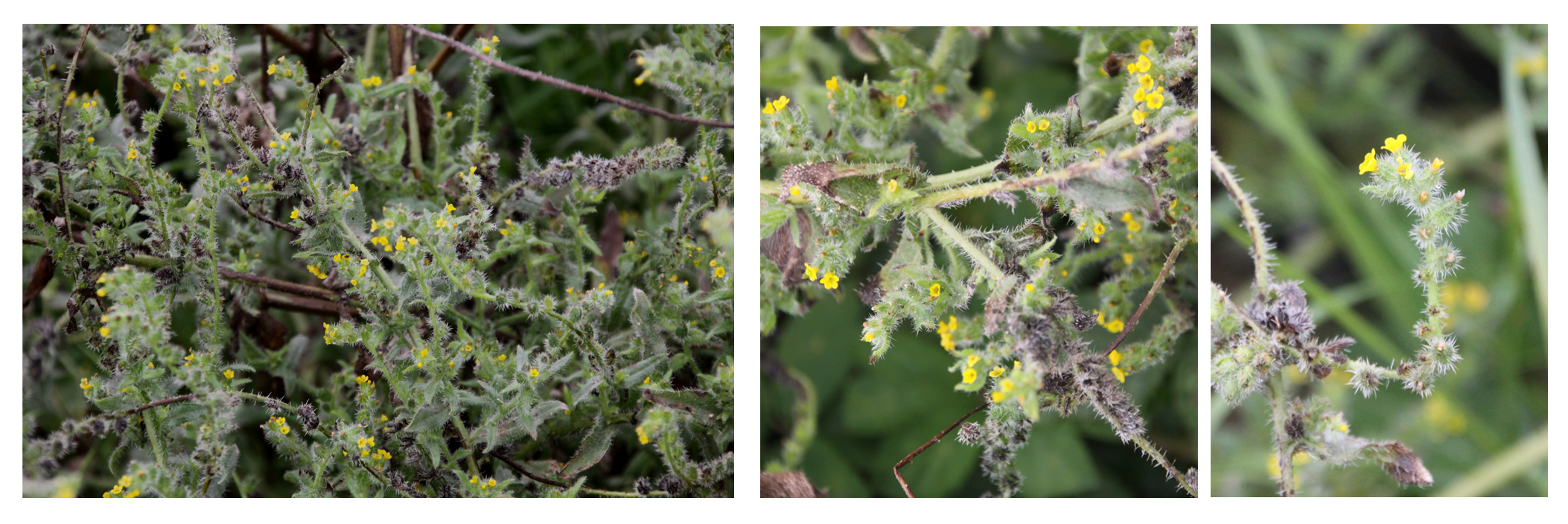
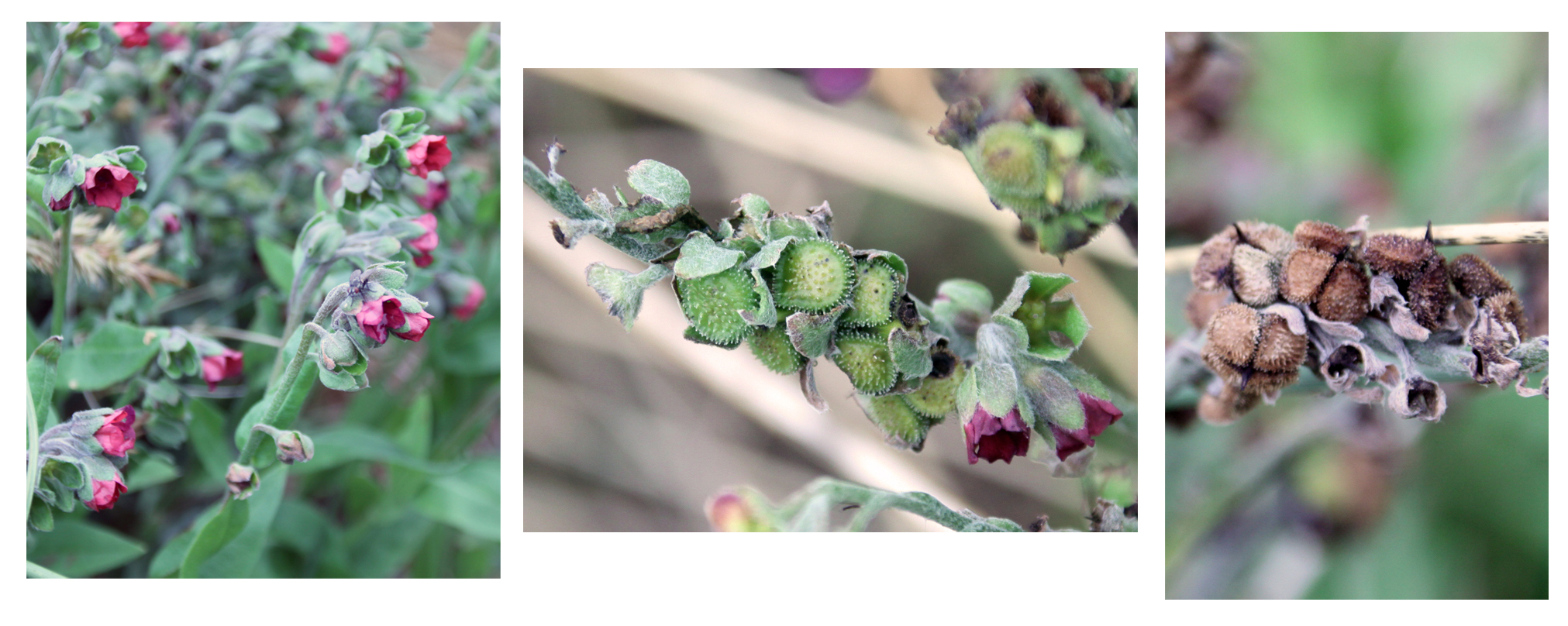
Hound’s-tongue (Cynoglossum officinale) is new to me.  It has many small dark crimson flowers, each with five petals, on hairy stems.  After flowering, the fruit is a spiked nutlet that starts green and goes through deep purple to brown.  They hook on to the fur of a passing animal.  The ones in the dunes were courteous enough to have both flowers and nutlets on show.

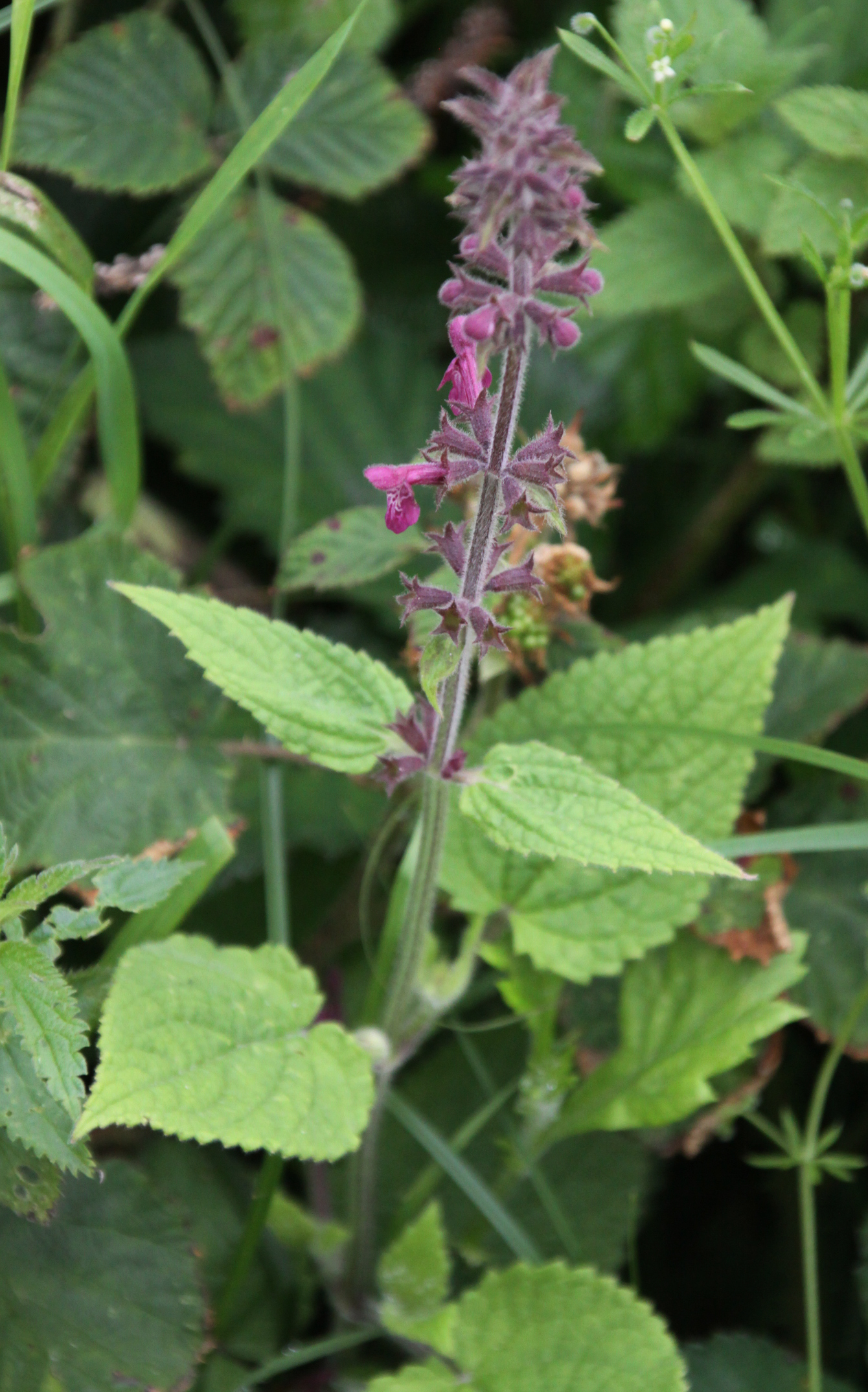
Hedge woundwort (Stachys sylvatica) grows on the wasteland and the edge of cultivated land and footpaths, with a preference for semi shade.  The toothed leaves look rather like nettles.  They grow up to 1m tall.   It was renowned from the 16th Century for its healing properties, and it has proved to be mildly antiseptic.  White markings on the lower lip of the two-lip flower guides bees to nectar.

Rosebay willowherb (Chamerion angustifolium) is a spreading perennial up to 1.5m tall.  It colonized bomb sites during the Second World War and became known as “fireweed.”  It spreads both by rhizomes and by seed, so where it is found, it is usually widespread, and the the rhizomes mean that a whole patch may actually be a single plant.  Delicate Four-petalled pink flowers with white stamens that climb the stem go over first at the bast and continue to be in bud at the top, meaning that they may stay in flower from June to September.  Its leaves used to be used as in infusion to substitute for tea.

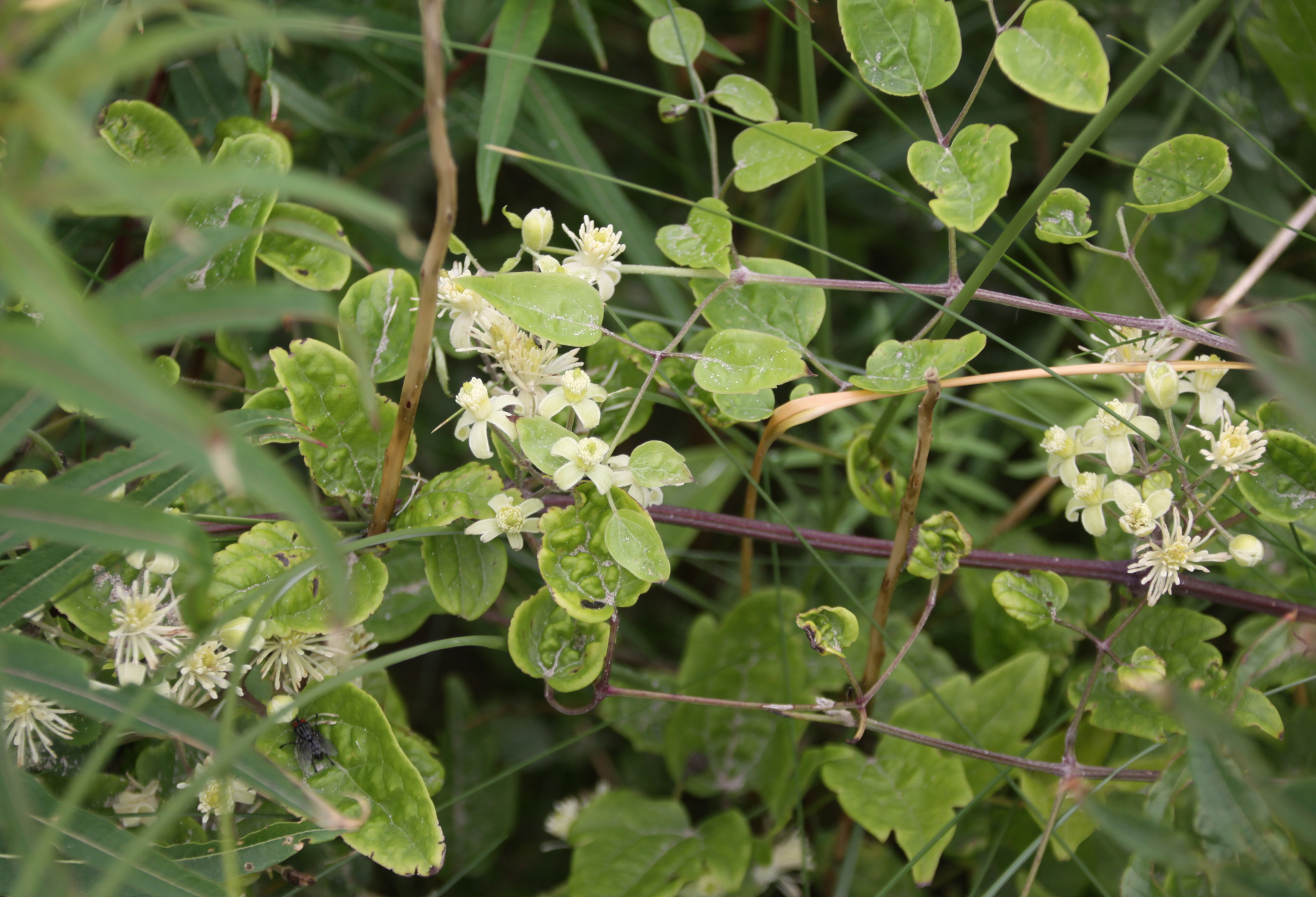
Before flowering, old man’s beard, or traveller’s joy (Clematis vitalba) looks just like clematis and is probably the next most widespread plant in the dunes after marram grass, hugging the lower lying areas.  It spreads over everything, and provides a natural protective home for the wild pyramidal orchid (Anacamptis pyramidalis) that grows in the dunes.  The name old man’s beard refers to the hairy, air-born seed heads that appear in autumn and extend into winter.  The flower begins as a tiny, spherical white bud and bursts into lovely, starry white flowers with four white sepals and a burst of stamens.

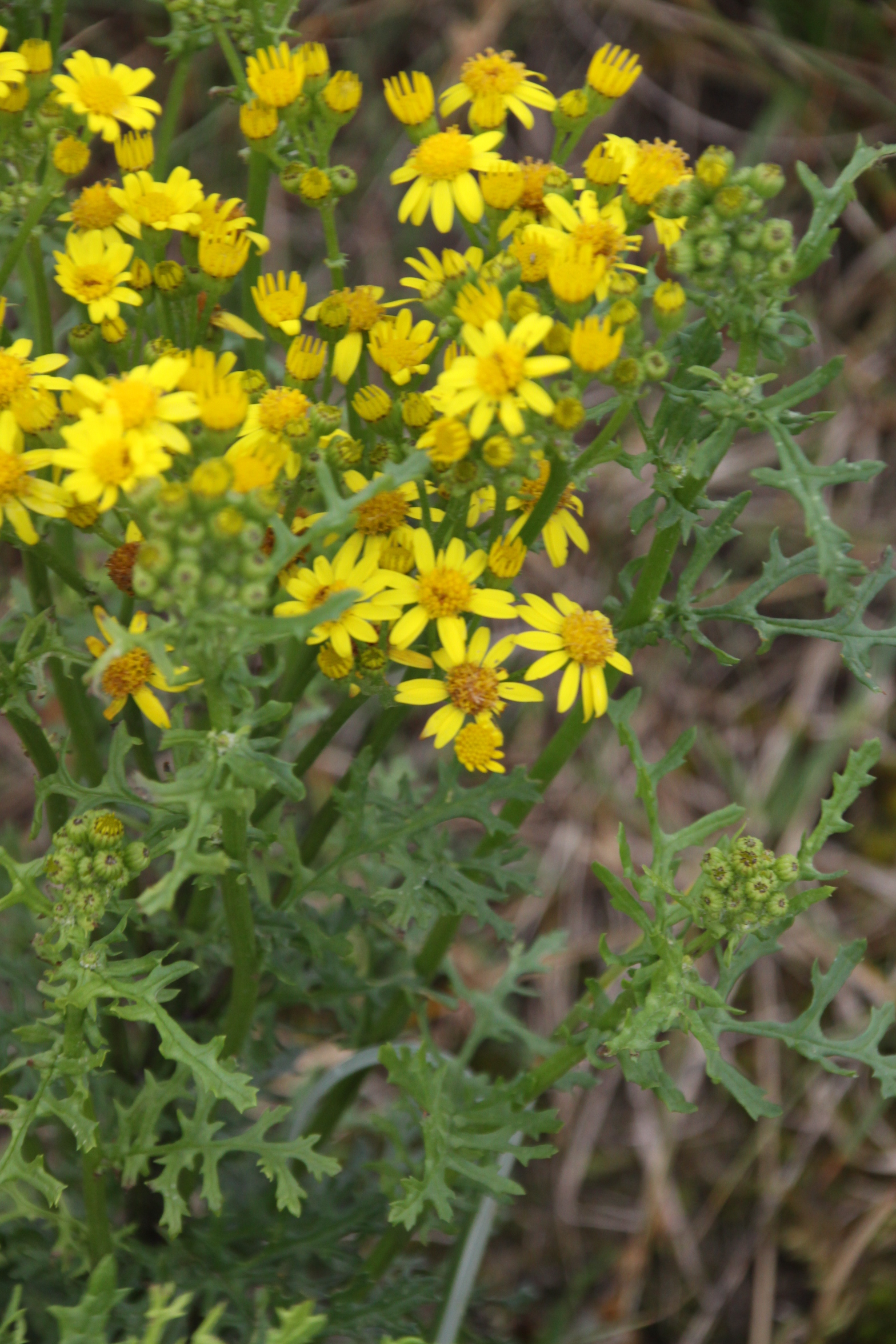
Common ragwort (Senecio jacobaea) is common in the area,  in the hills, fields, wasteland, and in the dunes.  It is poisonous to birds, horses and cattle, particularly when dry, but for some reason sheep seem to be immune.  It may be either biennial or perennial.  Although it can be mistaken for goldenrod (Solidago virgaurea) from the flower alone, the leaves are very different.  Where goldenrod has long, thin leaves, common ragwort’s leaves are untidy, dissected and multiple-lobed.  Senecio is almost the only specie that can be used for food by the day-flying red and black cinnabar moth’s (Tyria jacobaea) caterpillar, striped bright orange and black, absorbing the plant’s poison as a defense against birds.  In spite of the fact that they can be seen between May and August, there were none on view that day.

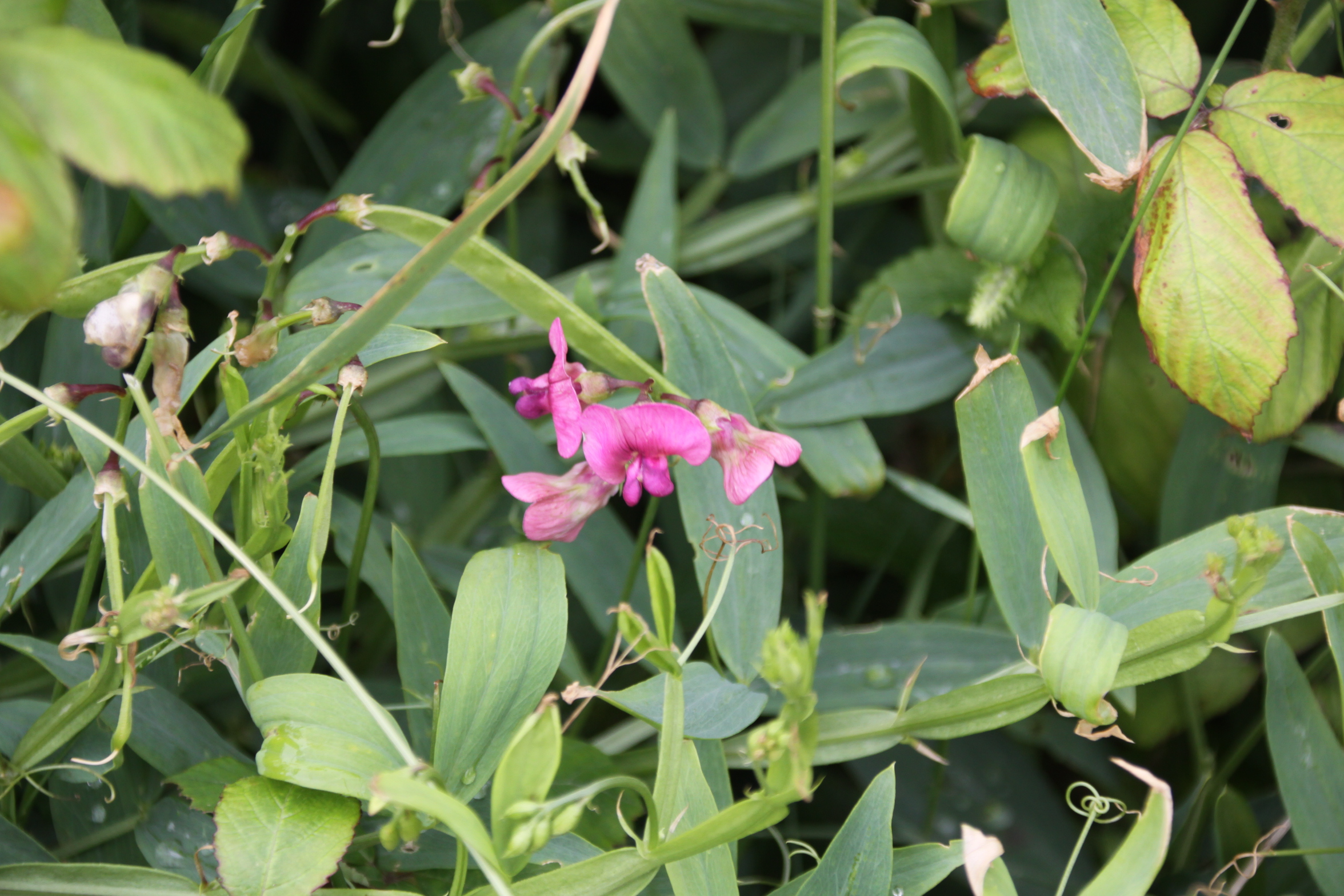
Broad-leaved everlasting pea (Lathyrus latifolius) is a French perennial that has colonized many other countries.  A vigorous scrambling plant that uses tendrils to colonize hedges and shurbs.  It was brought from France to Britain as a garden plant and has gone native.  The flowers are larger than most of the other pea family of flowers, up to 3cm across, with shades of dark pink and purple.

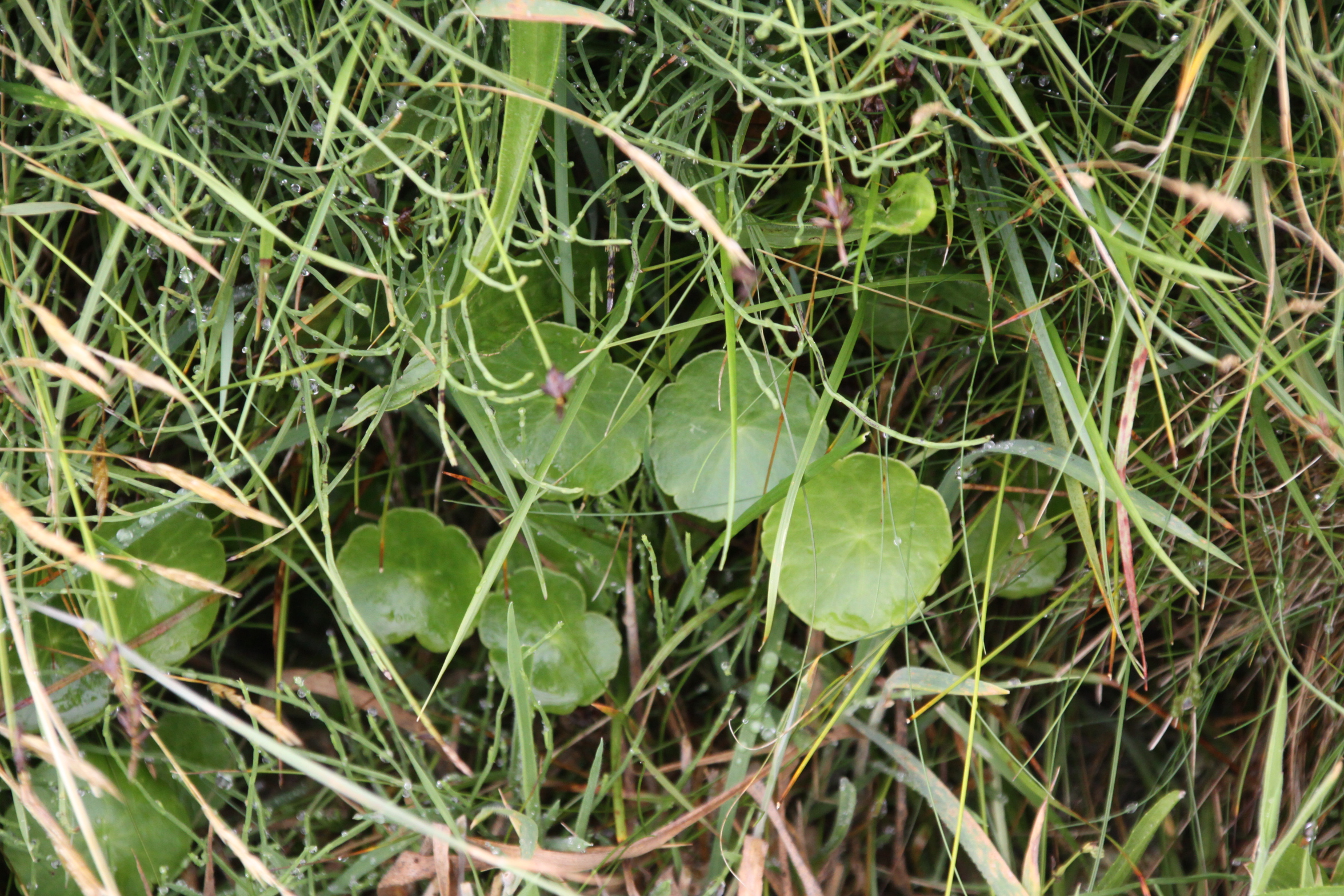
Marsh pennywort (Hydrocotyle vulgaris) is very similar to the more widespread wall pennywort (Umbilicus rupestris), but grows in marshy areas, whilst wall pennywort grows, as the names suggests, out of walls (and is widespread in Aberdovey).  This particular marsh pennywort was growing out of the side of one of the drainage streams on the golf course.  It is less waxy and succulent than wall pennywort, as it doesn’t need to store as much water.  Both are edible as leaves in salads and as garnishes with much the same flavour.  The flavour can be variable, so although it tastes a bit like cucumber, it can be bitter, and a leaf should be tasted before picking more.

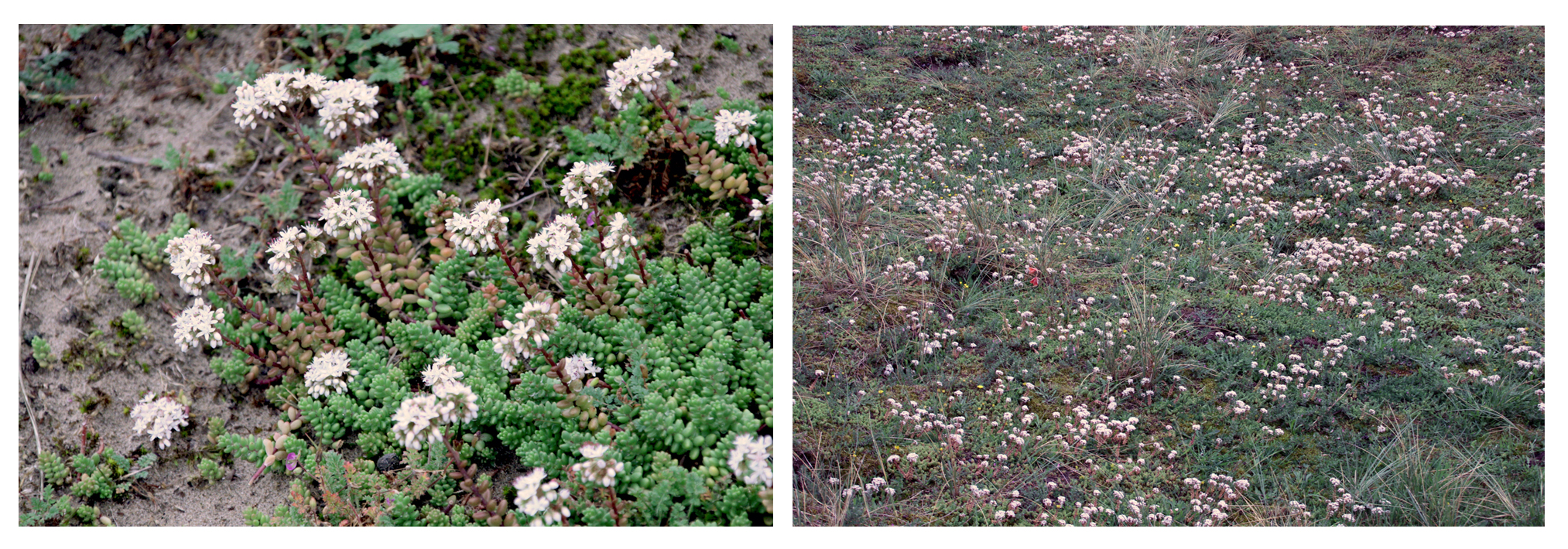
White stonecrop (Sedum album) has now spread over huge areas of the lower parts of the sand dunes, particularly near the road where the sand is mixed with soil, its succulent leaves forming mats, and its white star-like flowers clustering at the top of the short, slender stems.  Drought tolerant, thanks to the succulent leaves that store water.  Like Sea rocket (Cakile maritima) it has apparently benefited from the lack of people around, colonizing areas that would otherwise be used for reaching the caravan park, the golf course and the beach.

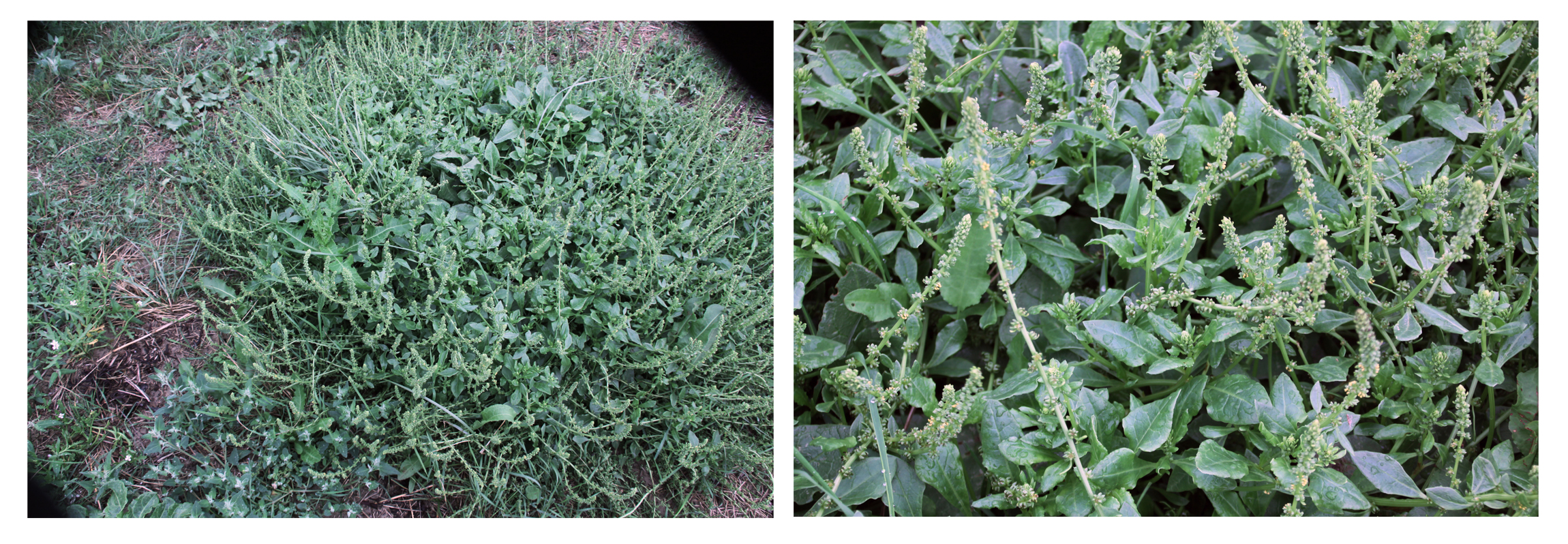
The perennial sea beet (Beta vulgaris subsp. maritima) and the orache are side by side at the edge of the dunes, both huge clumps, both common at the edges of sand dunes. Sea beet has a tall, spiky clumps of flowers straggling across the top of the plant.  Sea beet is both drought and saline tolerant.  It is the wild version of a version that was cultivated in the Middle East for its roots and leaves.  Sea beet is easily confused with fat hen (Chenopodium album) and both are members of the Chenopodiaceae, but the leaves have very different edges.  Sea beet leaves have a smooth, untoothed margin, whereas fat hen leaves look more like orache, with a toothed margin.  Sea beet is a popular foraging ingredient, with smaller, younger leaves used in salads and bigger leaves spinach in a tiny amount of water for a few minutes, like spinach.  Squeeze out the water, return to the pan with some butter, and you have a much tangier version of spinach.  On my to-do list.


Artemisia absinthium or wormwood seems to come in a variety of forms, many with a lot more foliage than this, but there are a lot of photographs of it online looking just like this.  Small fdsfsfas of tiny yellow flowers tit on a network of silvery stems with silvery leaves.  I haven’t put it to the test, because I didn’t know what it was when I took the photograph, but it is the primary flavouring of absinthe, much beloved of Toulouse-Lautrec and his contemporaries.

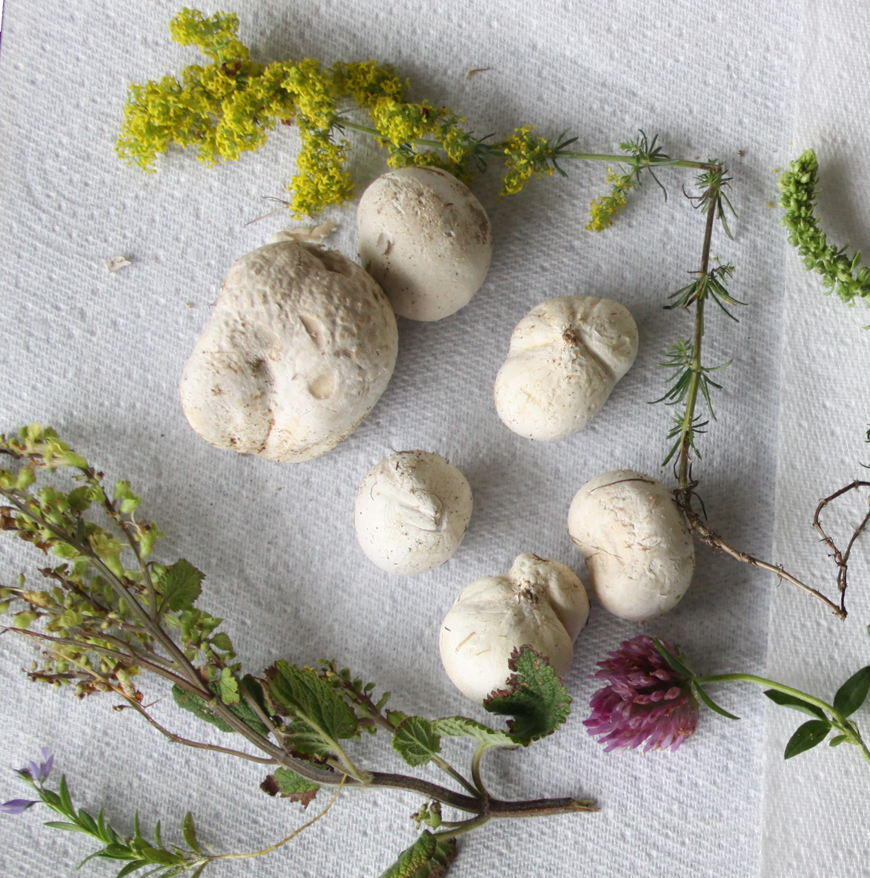
The last triumph of the day was the discovery of some field mushrooms and some baby puffballs.  I had the puffballs tossed in butter and added at the last minute to a slow cooker stew with French smoked sausages, onion, garlic, dried ceps, savoy cabbage and peeled baby new potatoes.  The puffballs were mushroomy but delicate, a real treat.

Wild flowers in the sand dunes, a week on

As occasionally happens, I wrote this and then forgot to hit the Publish button, mainly because I meant to do more work on trying to find what the hawkweed-like plant actually is.  These photos were take on on the 20th June, just one week on from a previous visit.  If it ever stops raining, which seems doubtful right now, I’ll go and see what’s there now that we’re into early July.  Hopefully the sea holly will be in flower soon.

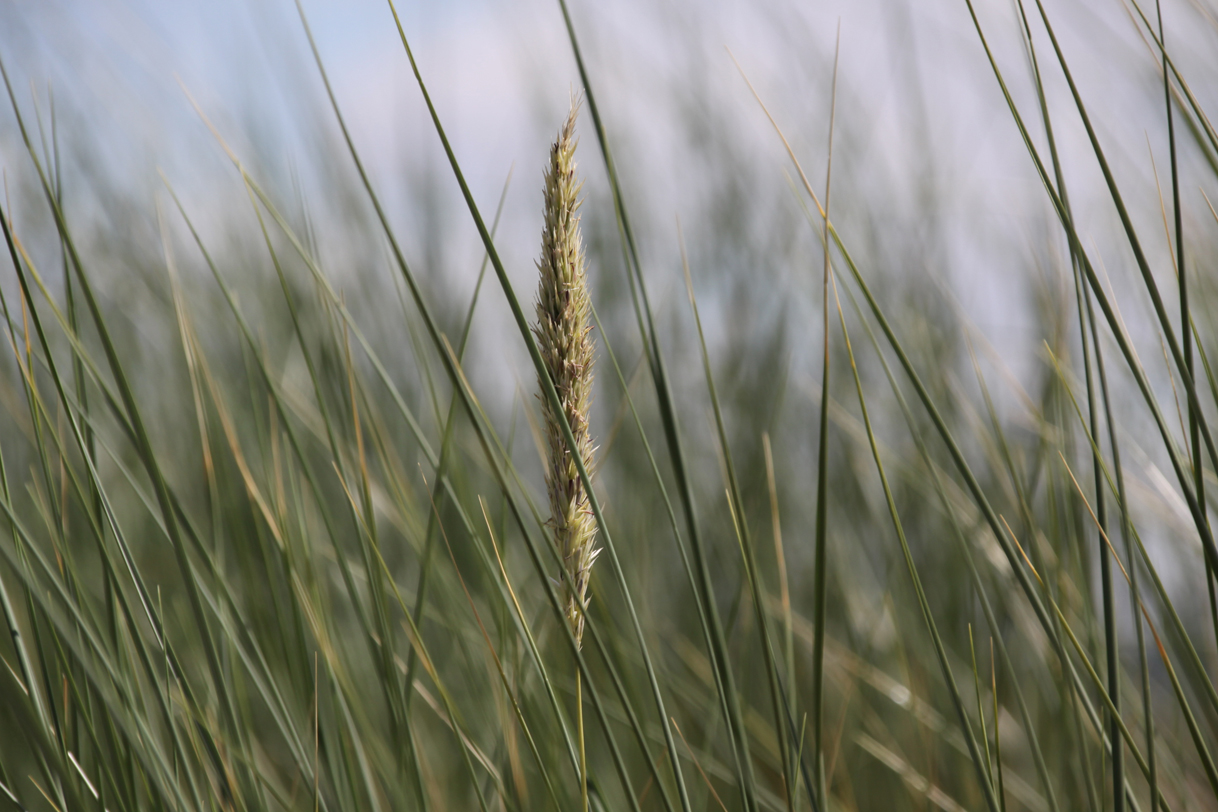
Marram grass (Ammophila arenaria) is a perennial grass, reaching up to 120cm tall, each leaf touch and rolled, sharply pointed.  Ammos means sand, philos, loving in Greek; arena is latin for sand.  It is one of the most important sand-stabilizing species, forming large clumps with matted rhizome roots that help to prevent sand dune drift. They attract the Shore Wainscot moth (Mythimna litoralis), whose larvae feed exclusively on Marram, and the L-album Wainscot (Mythimna l-album) whose larvae feed mainly on Marram. The leaves were once valuable in local craft activities, woven into mats, used to make barn roofs, and to produce fishing nets.

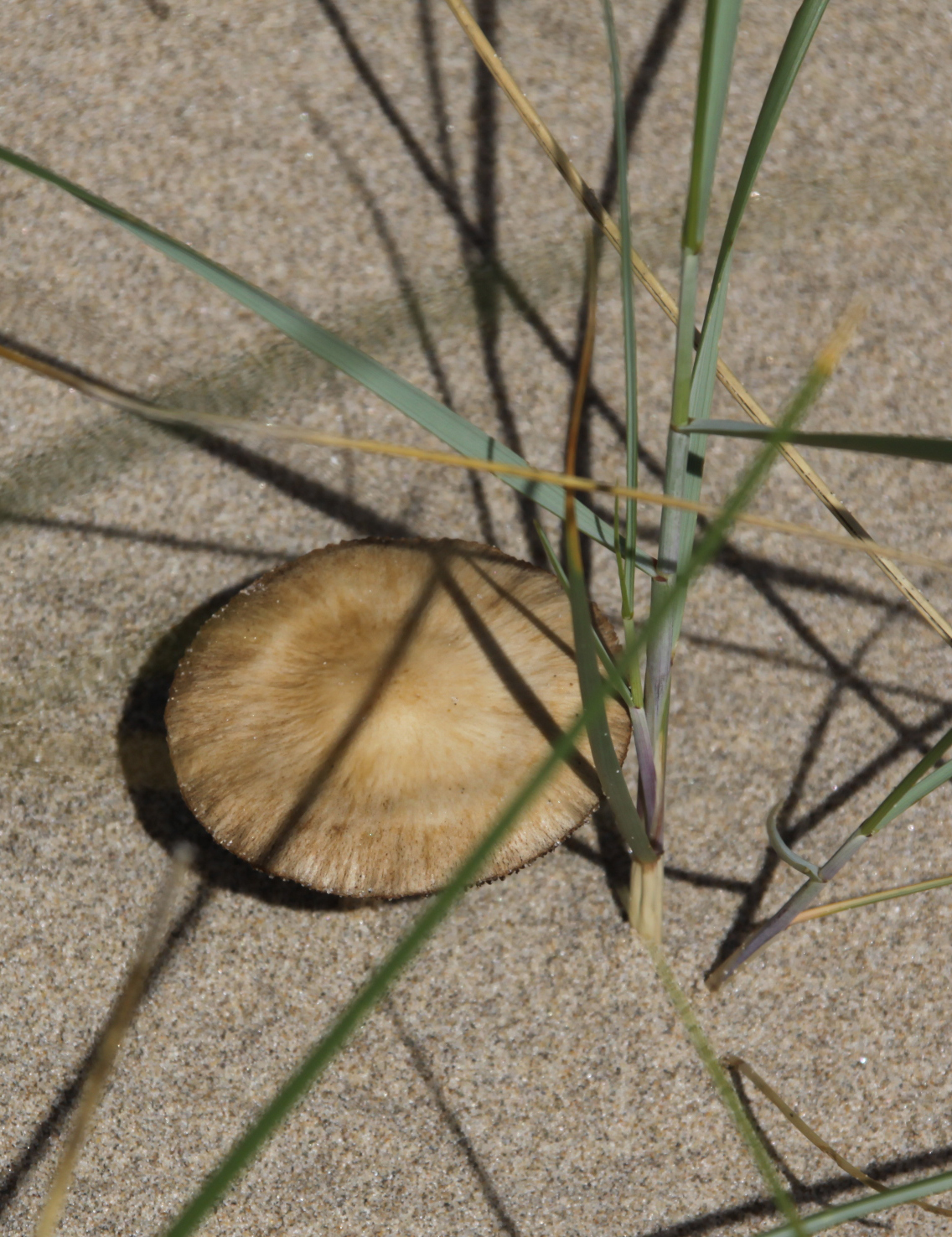
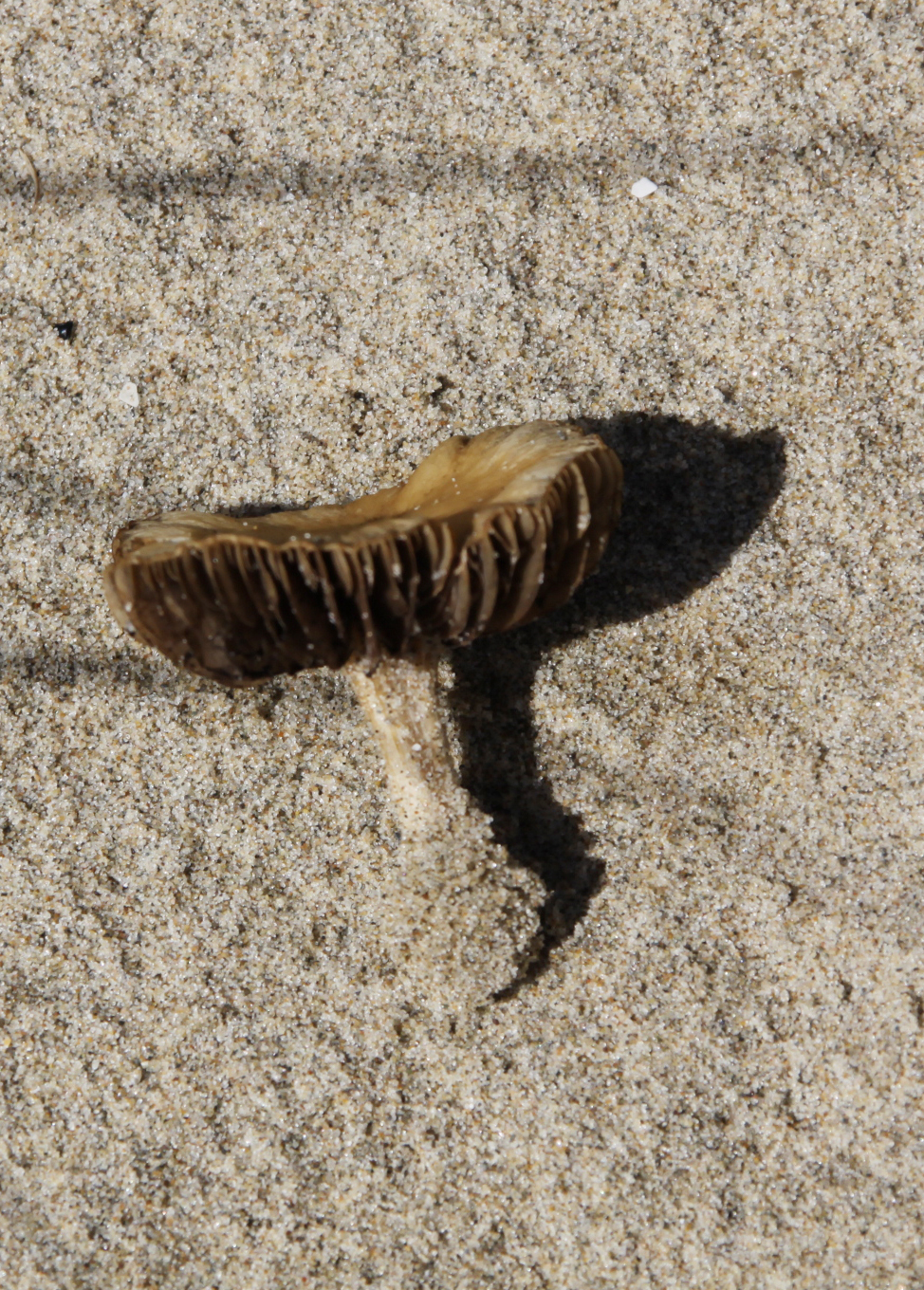
Dune Brittlestem.  Psathyrella ammophila.  I often see these toadstools in the sand dunes, and these were two of a dispersed cluster of seven that I spotted, plus some very tiny ones. They have very dark brown gills. They grow at the base of marram grass, but in the absence of any other type of plant life.  Over time the cap begins to turn upwards, as shown here.  Apparently not poisonous, but has a very unpleasant flavour.

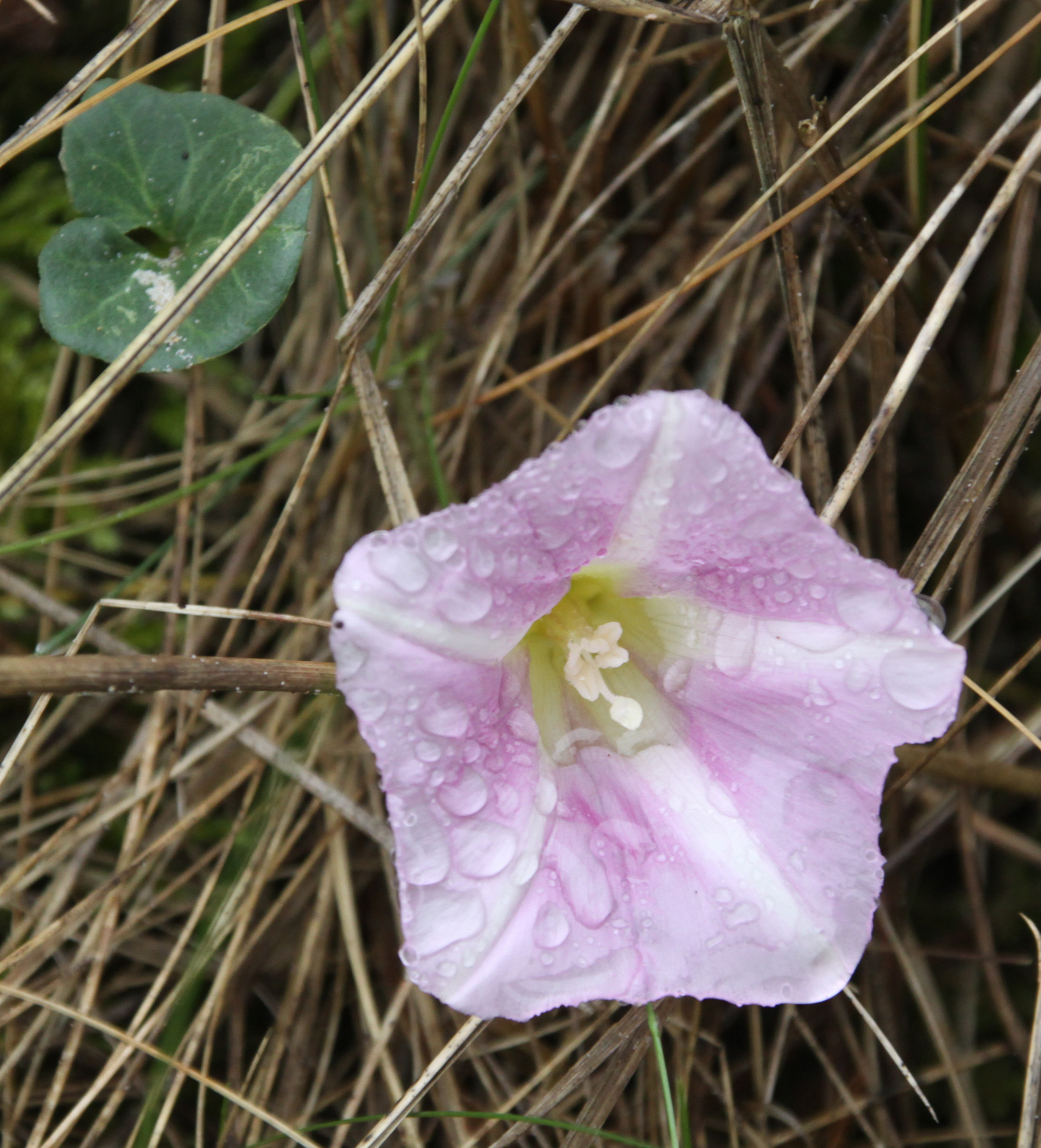
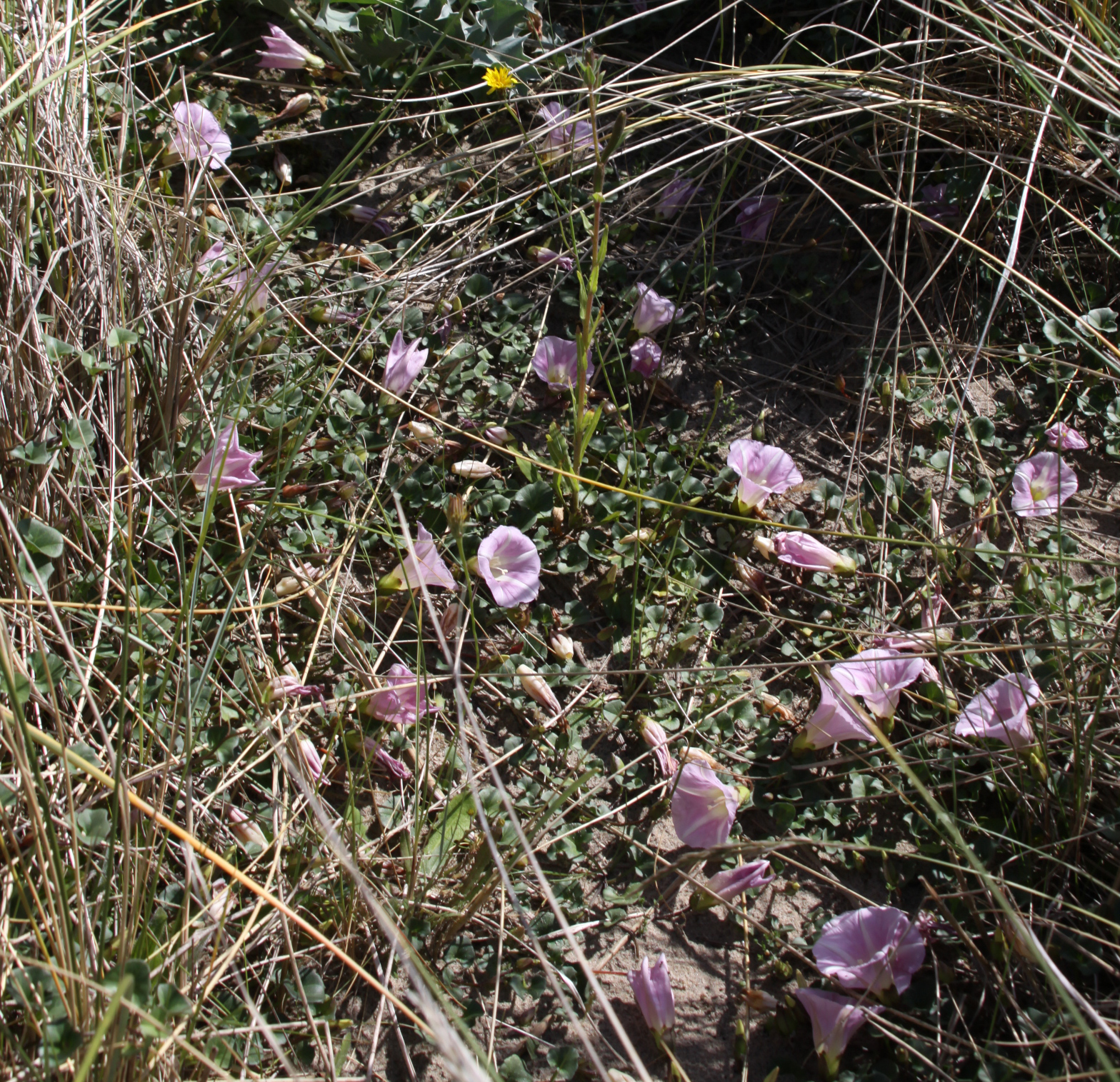
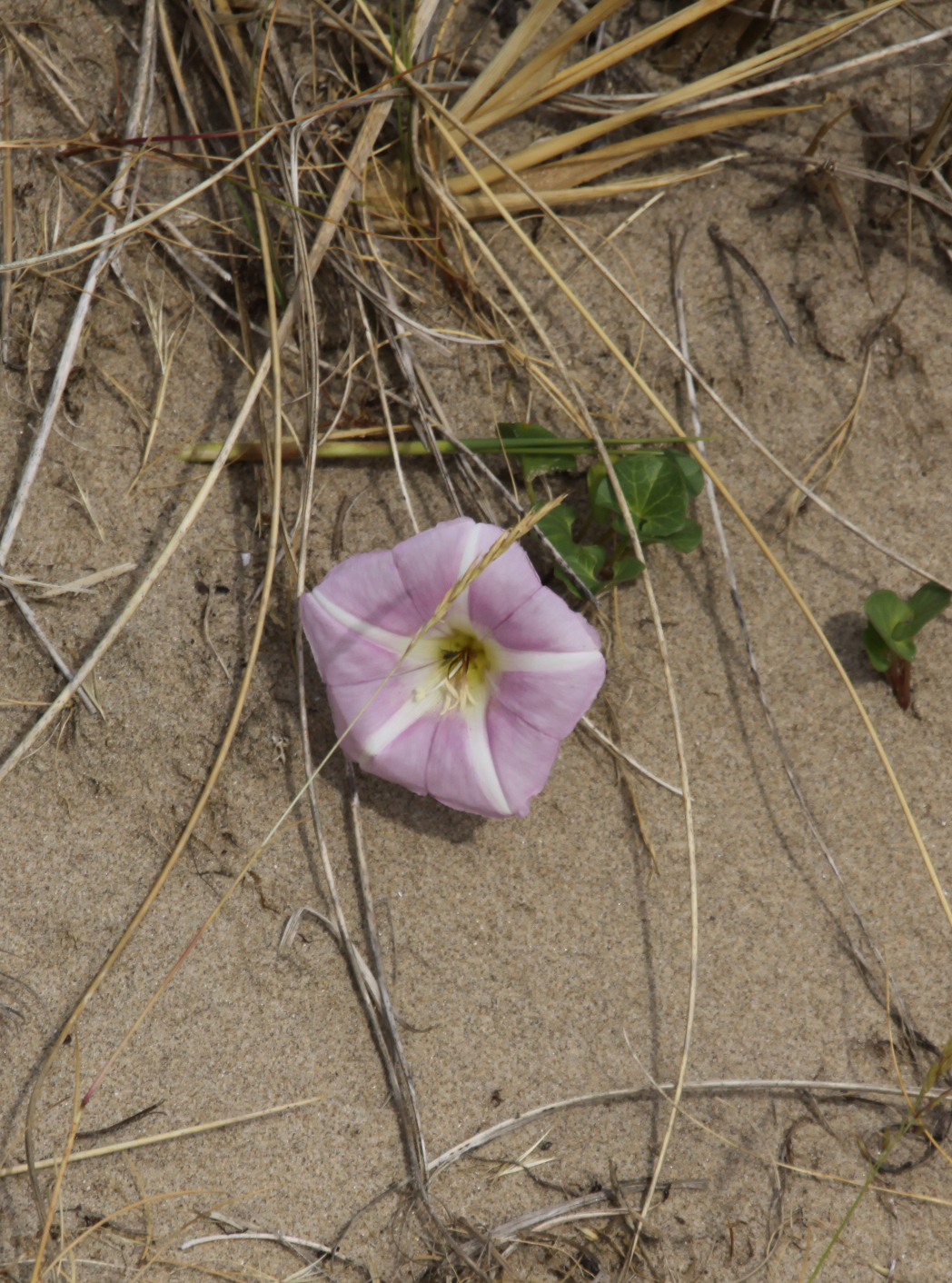
Sea bindweed (Clystegia soldanella) is a member of the convuvulus family.  The lovely pink and white striped flowers look like field bindweed, but are much bigger, and the kidney-shaped, slightly fleshy and waxy leaves quite different.   They spread from a rhizome that not only helps to fix them in the sand, but helps them to gather water, and helps to fix stabilize sand dune.  This was part of a fairly vast network very near the top of a very exposed sand dune, on the sheltered side.

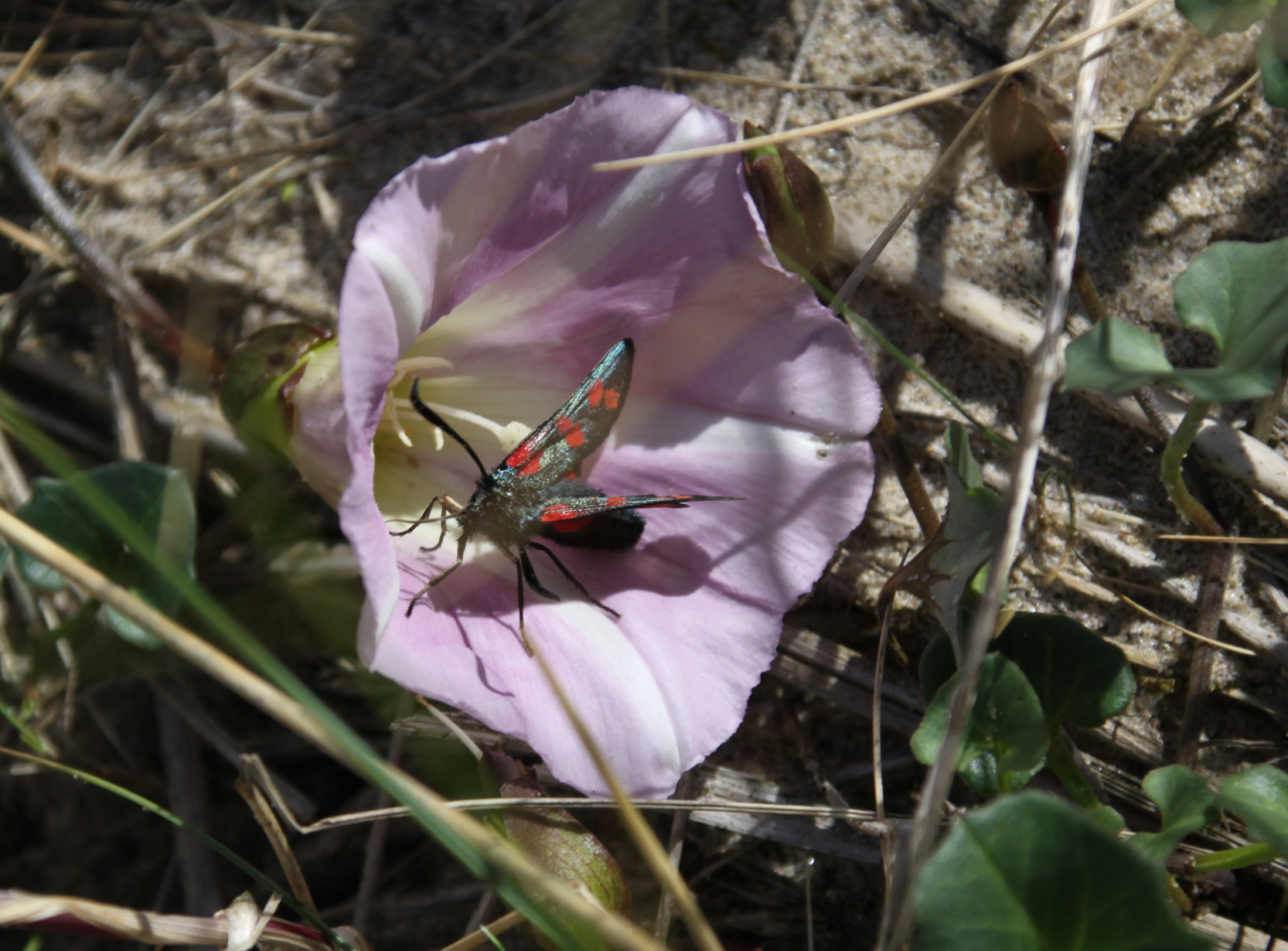
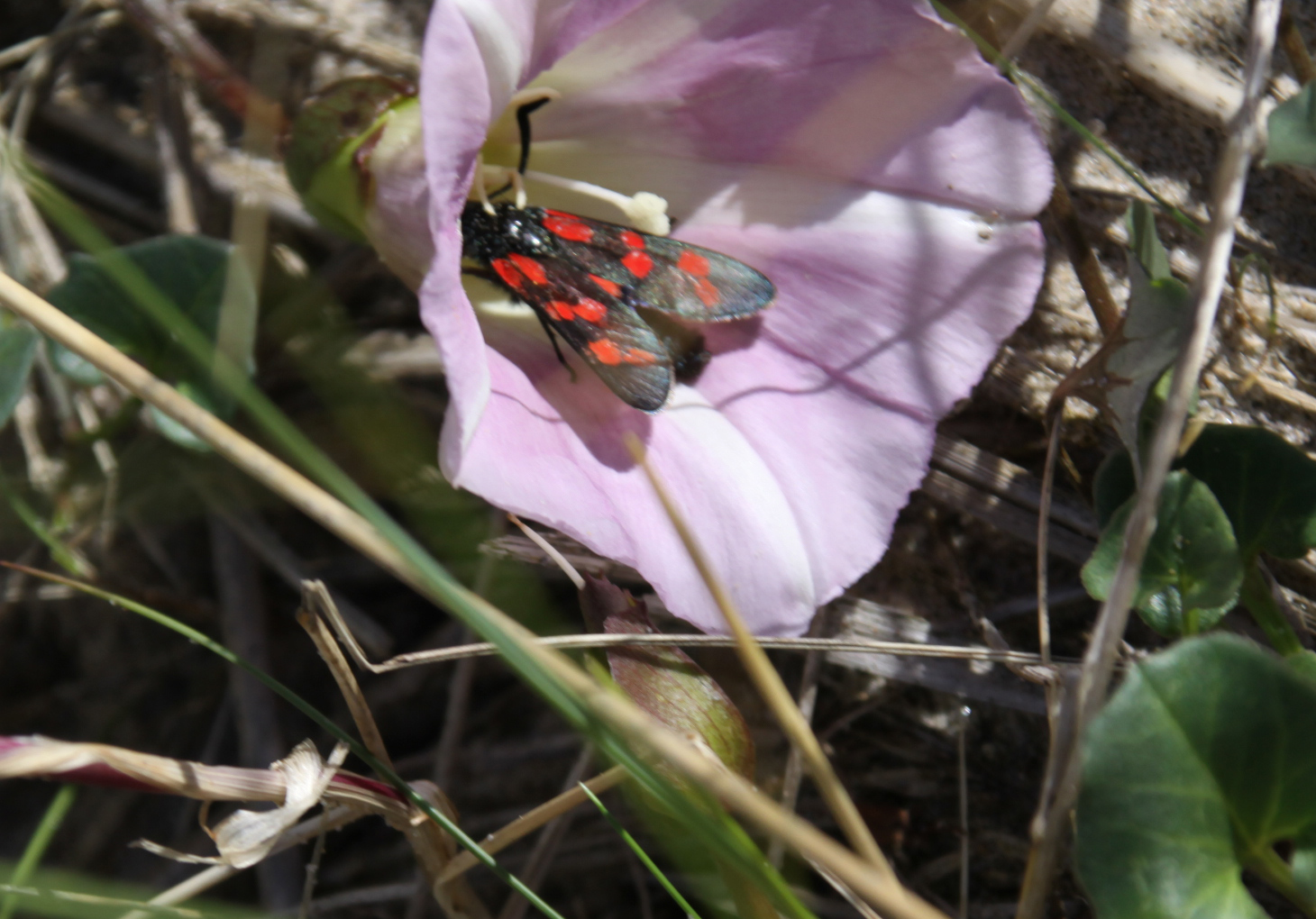
Six-spot Burnet (Zygaena filipendulae).  Lovely blue-back wings and bright red spots make this very easy to see when it is moving around in a flower.  There are two types of Five-Spot Burnet as well (Zygaena trifoli and lonicerae).  The rear wings, hidden hear under the forewings, are red with a black fringe.  They particularly like bird’s foot trefoil but can be found between June to August in most grassy areas and sand dunes, although I don’t recall seeing one in the dunes before.

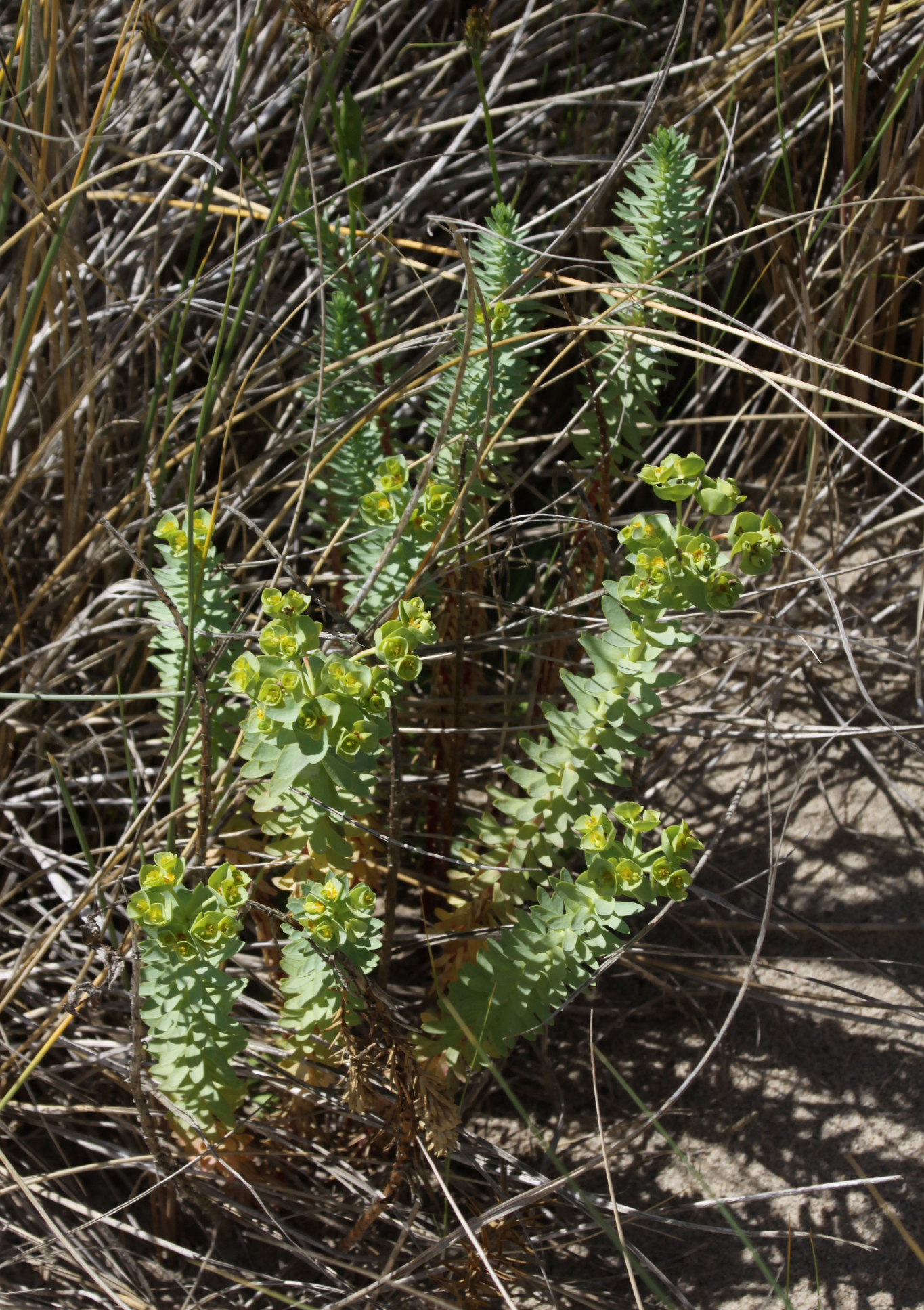
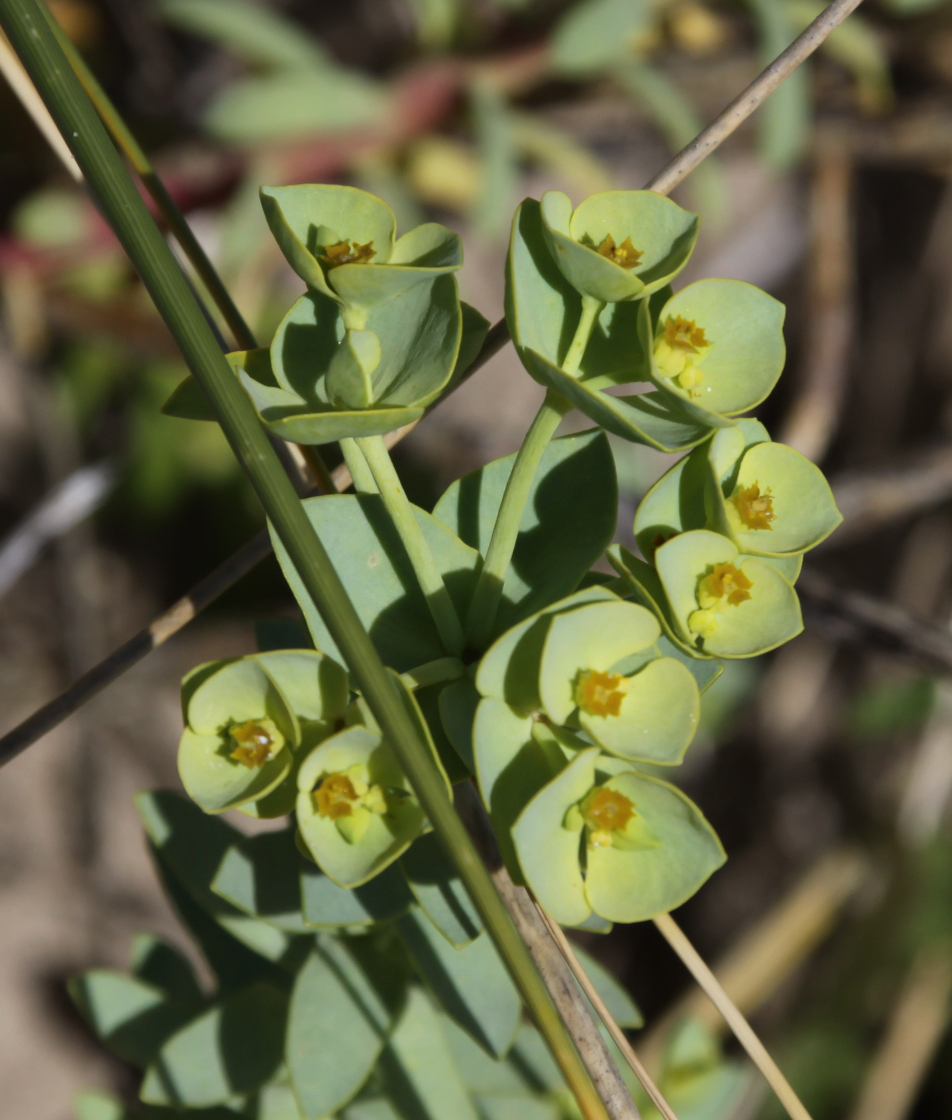
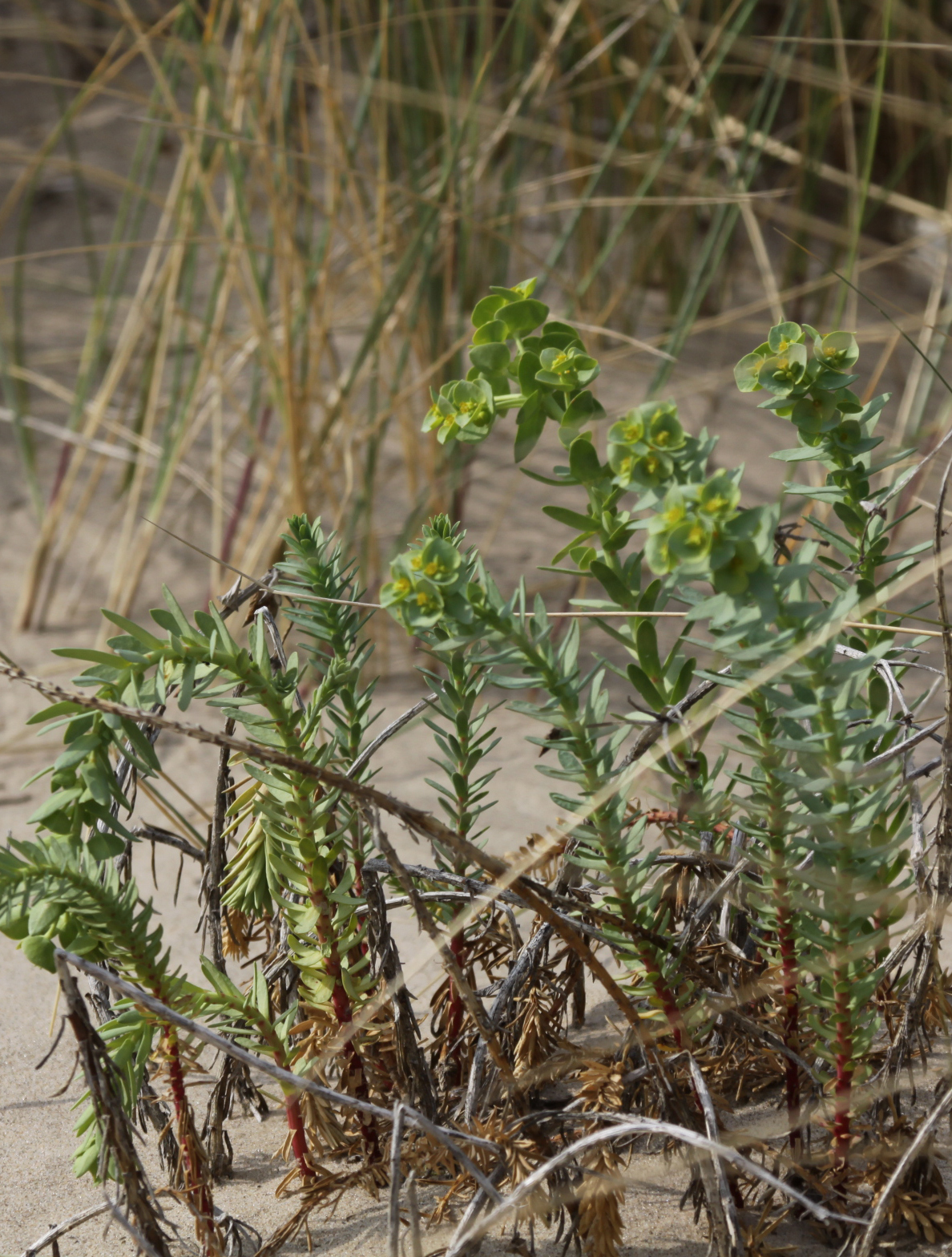
Sea spurge (Euphorbia paralias).  An upright perennial that inhabits sand dunes and rocks.  The tiny yellow flower is protected by large greenish bracts.  It has slightly succulent evergreen leaves that march up the stem and which, like all succulents, minimize water loss.  It’s poisonous.

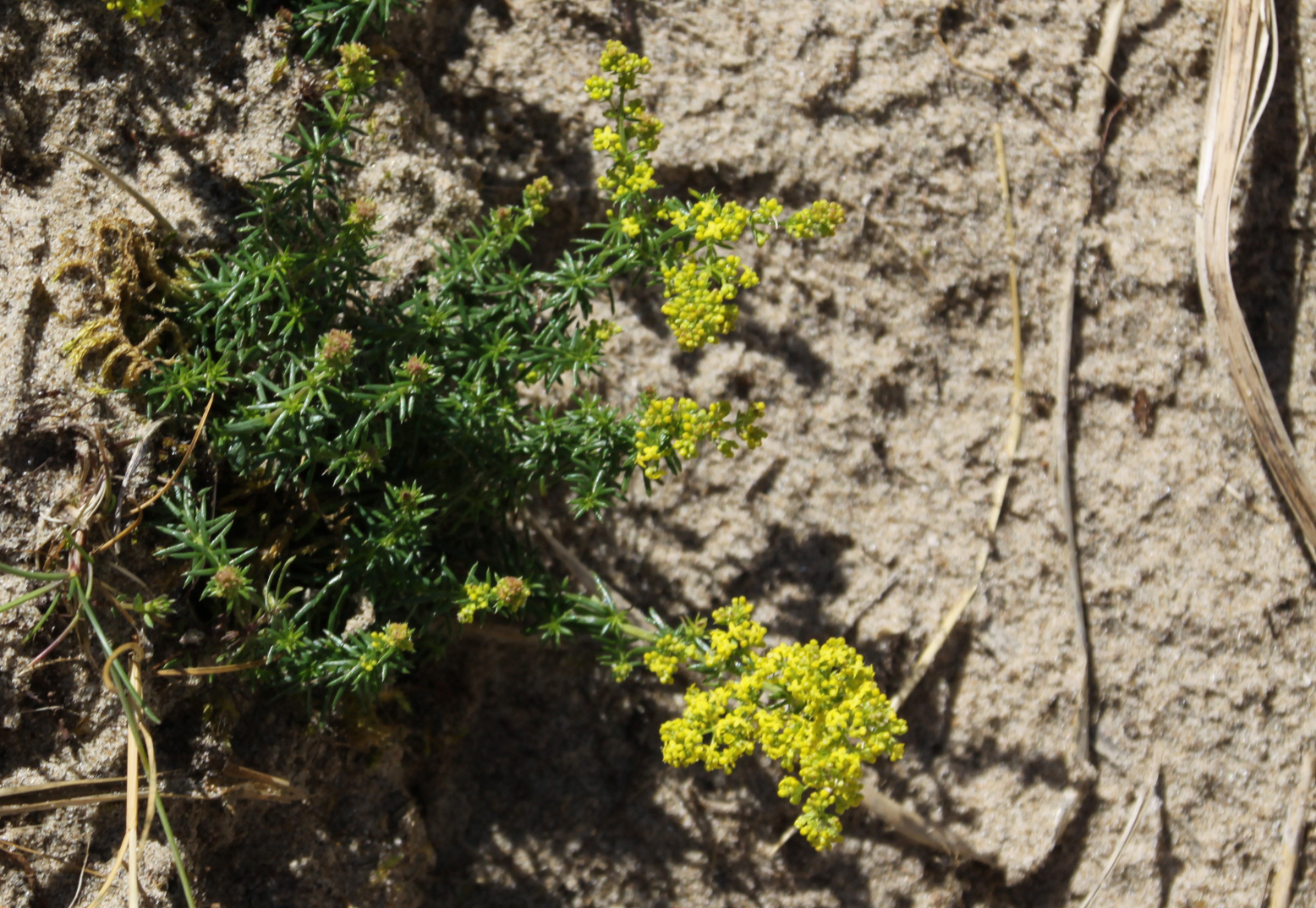
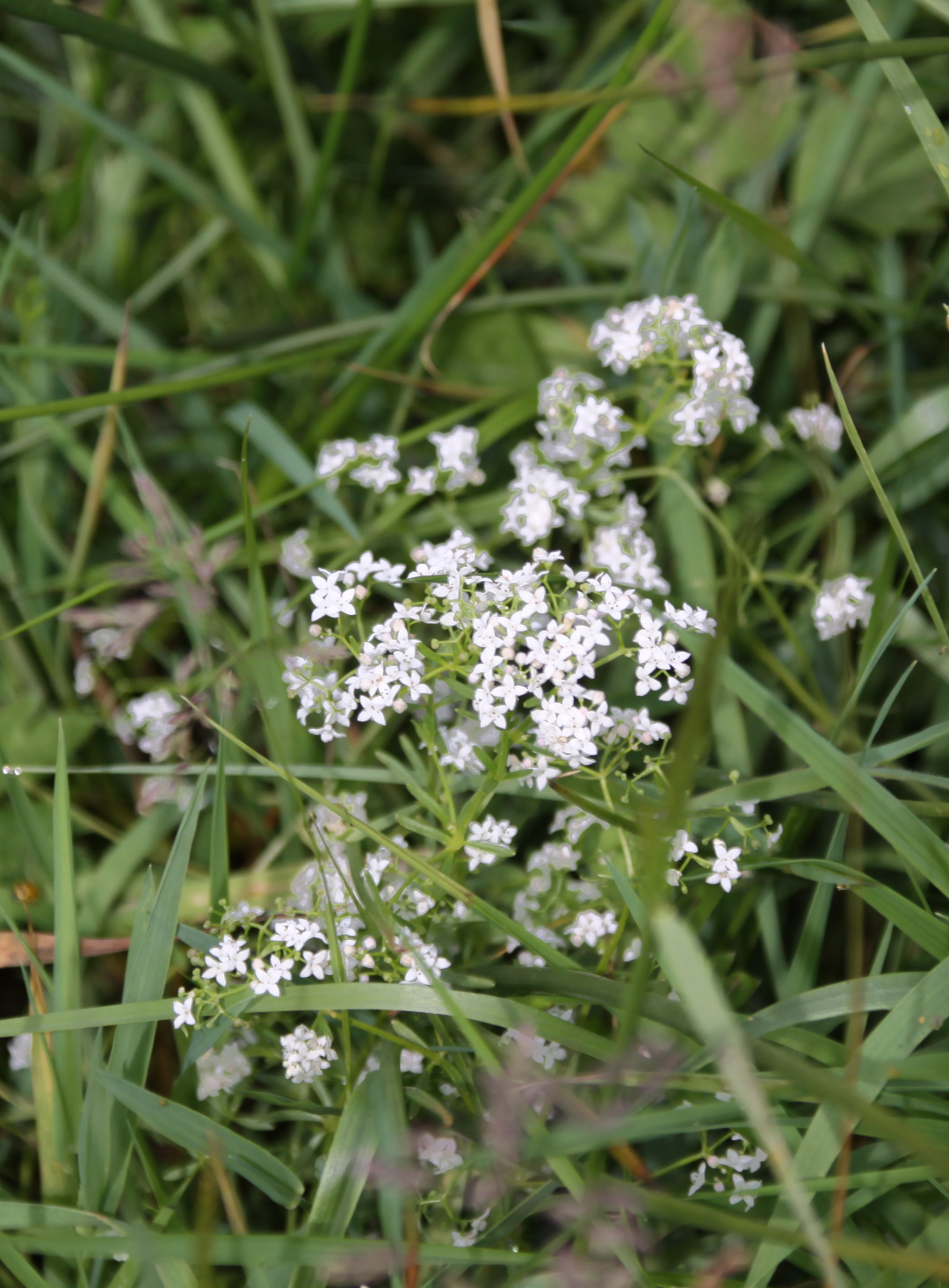
Lady’s Bedstraw (Galium verum).  Well adapted to grassland, scrubland and sand dunes, it spread along the ground, its flowers sometimes slightly upright.  The leaves are distinctive, growing in whorls around the slender stems.  The flowers form in small branches of clusters.  Apparently it gets its name because it was used to stuff mattresses.  In Germany it is called Mary’s bedstraw because the Virgin Mary was supposed to have given birth on a mattress of bedstraw.  They have a slight aroma of honey, but when dry they small of hay.  It was used in cheese making in the past, as it contains an astringent that curdles milk.

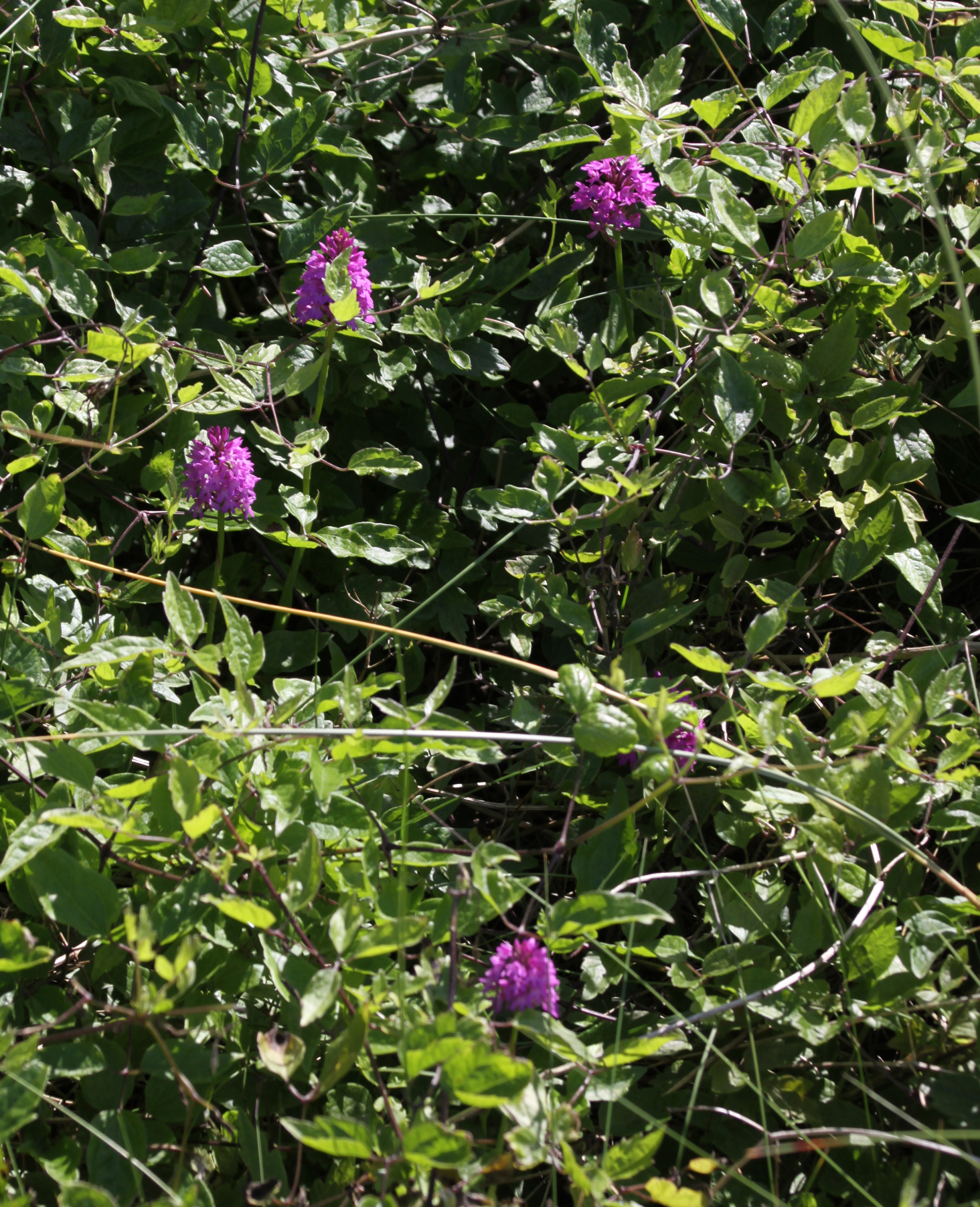
The pyramidal orchids that were dotted around earlier in June, had spread widely through the lusher parts of foliage at the base of sand dunes, and were easily spotted.

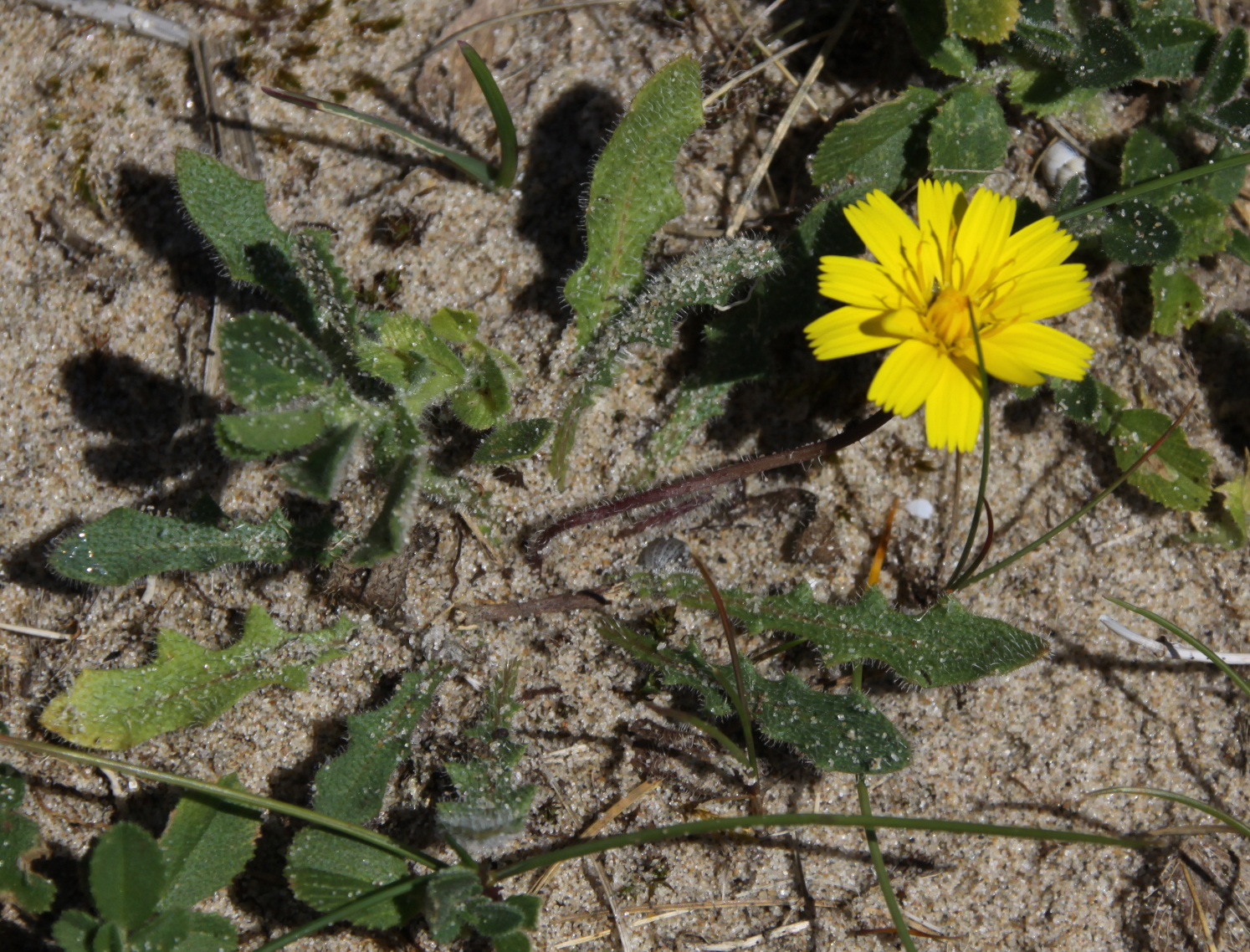
Hawkbit, Hawkweed? They are all so similar that it’s impossible to tell, even with photographs of the underside as well.

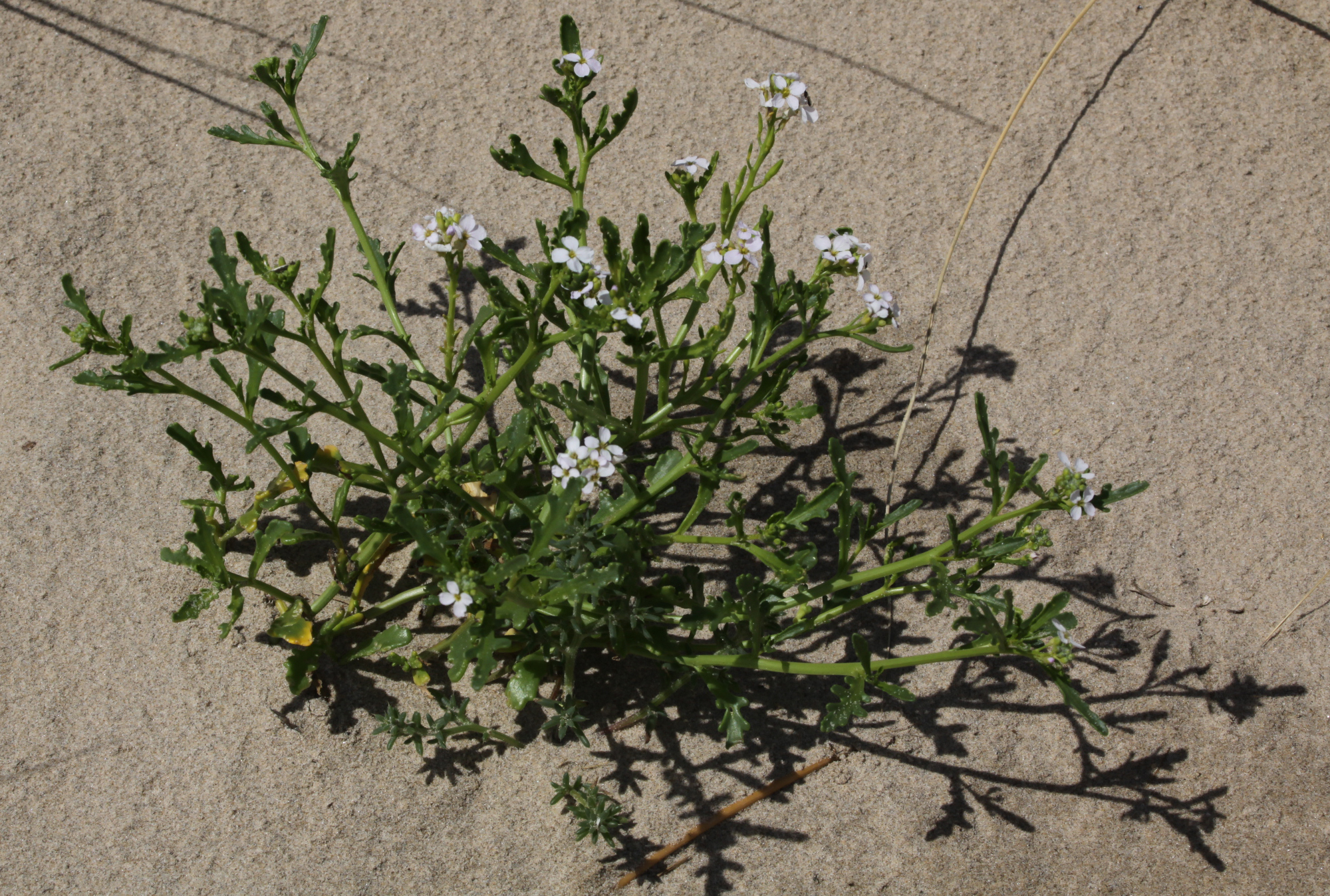
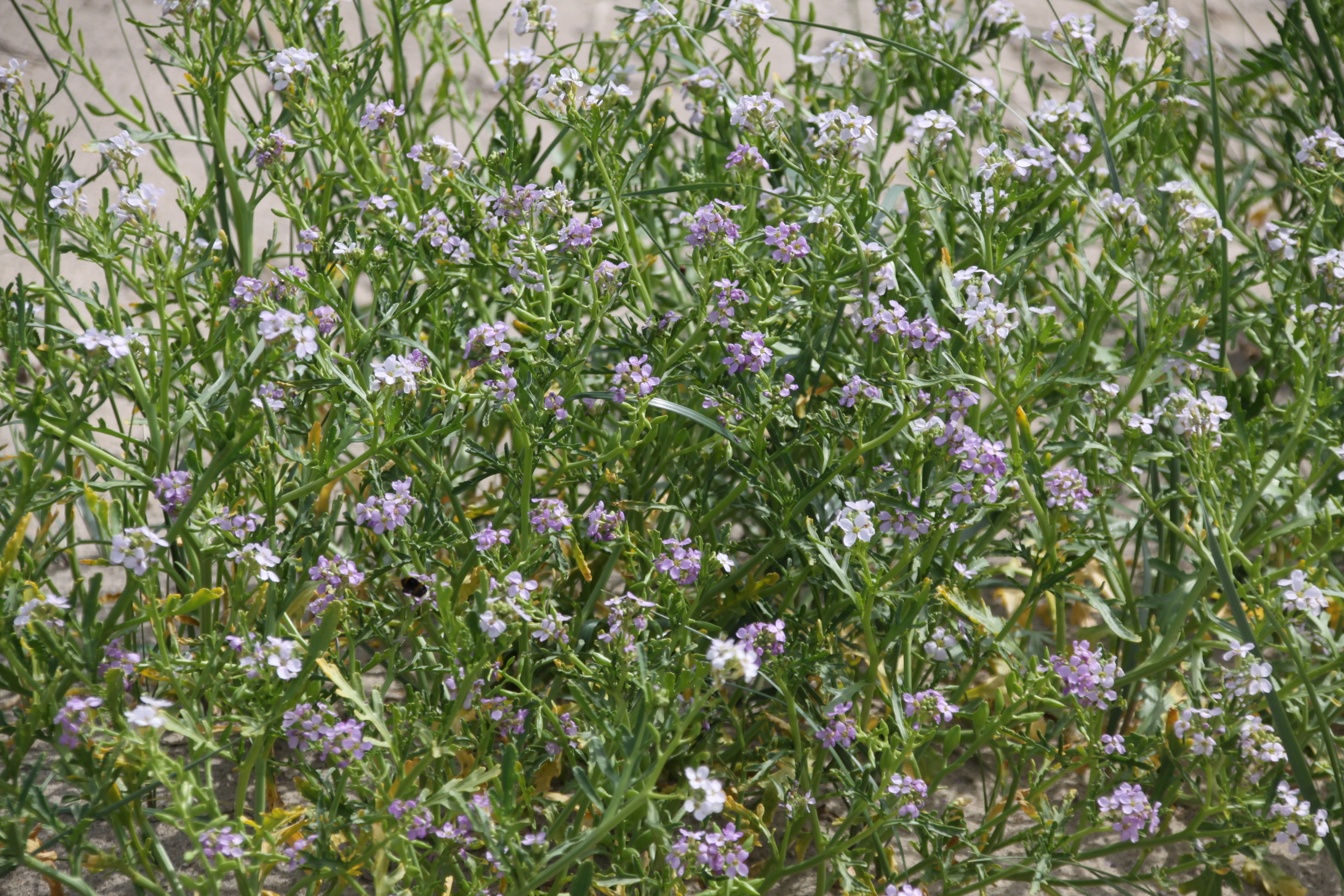
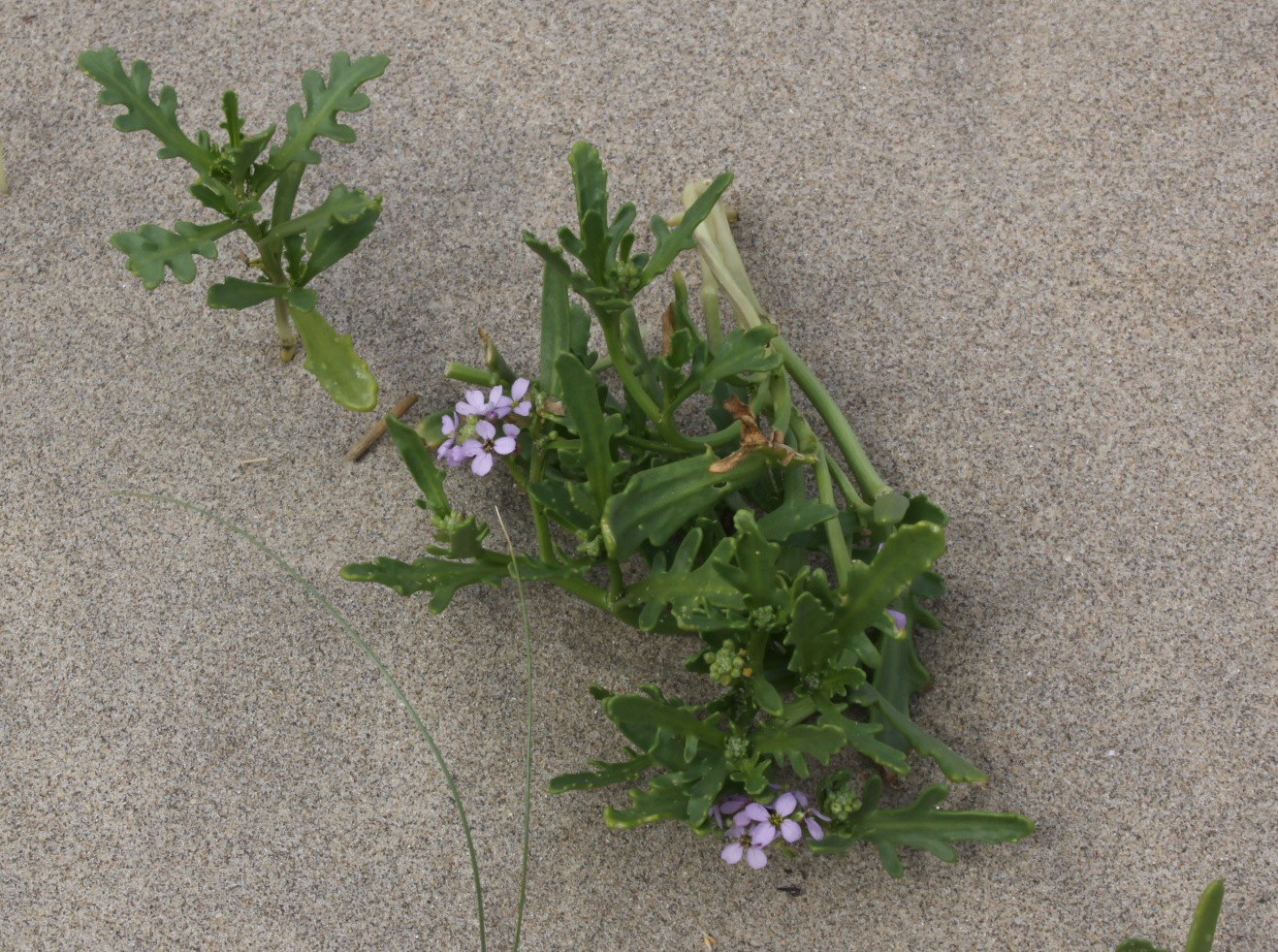
Sea rocket (Cakile maritima).  An annual member of the Brassicaceae or Cruciferae Mustard) family, which is happy in very barren areas, and can grow in unprotected sand, colonizing large areas if left undisturbed.  They combine succulent leaves that retain water with long taproots which search for water deep beneath the surface.  Flowers can be lilac, pink or white.  It does not object to being buried in sand for extensive periods, and its seeds can float unharmed on the sea.  The leaves, stems and flowers are edible and are rich in vitamin C but have a very bitter taste, so if using the leaves in salad, they are best used young.

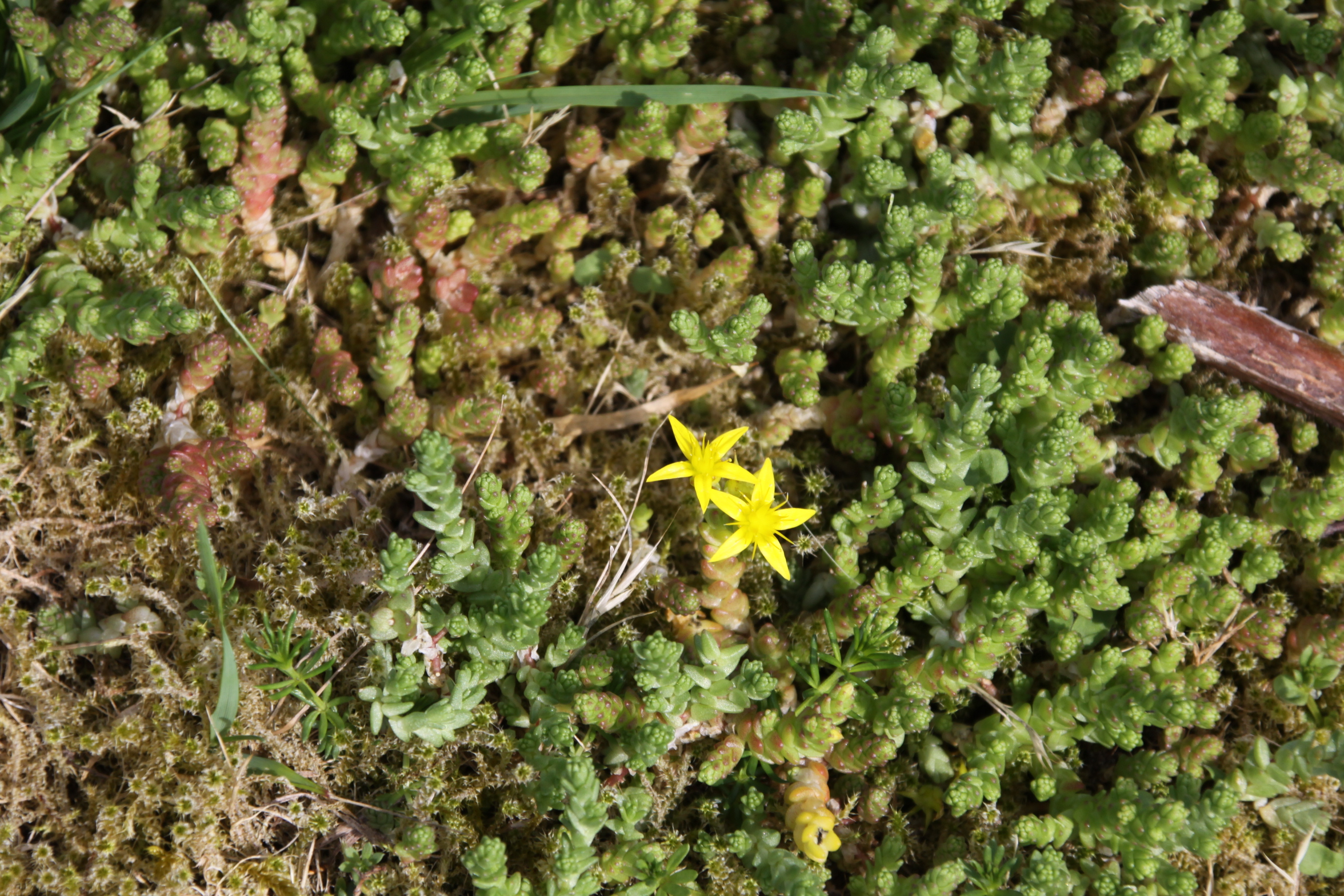
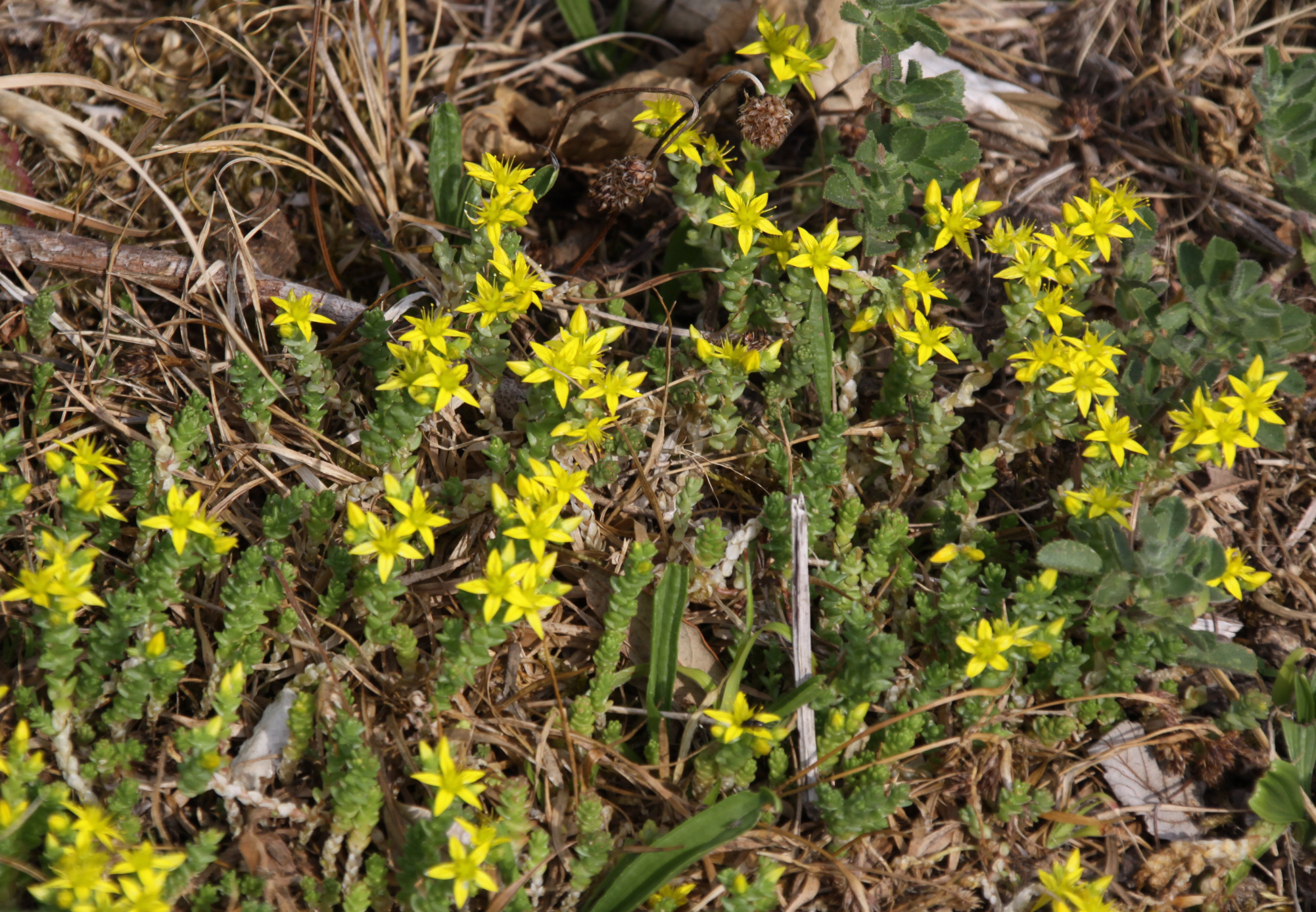
Biting stonecrop (Sedum acre).  An evergreen perennial that forms mats with strong stems and short, thick and waxy succulent leaves that retain water.  It is drought tolerant, and is perfectly happy in inhospitable sand dunes and rock cracks.  Not poisonous, but not edible.

I always like to walk up Balkan Hill on the way back home, because the verges are an excellent mix of escapee garden plants and true wild flowers.

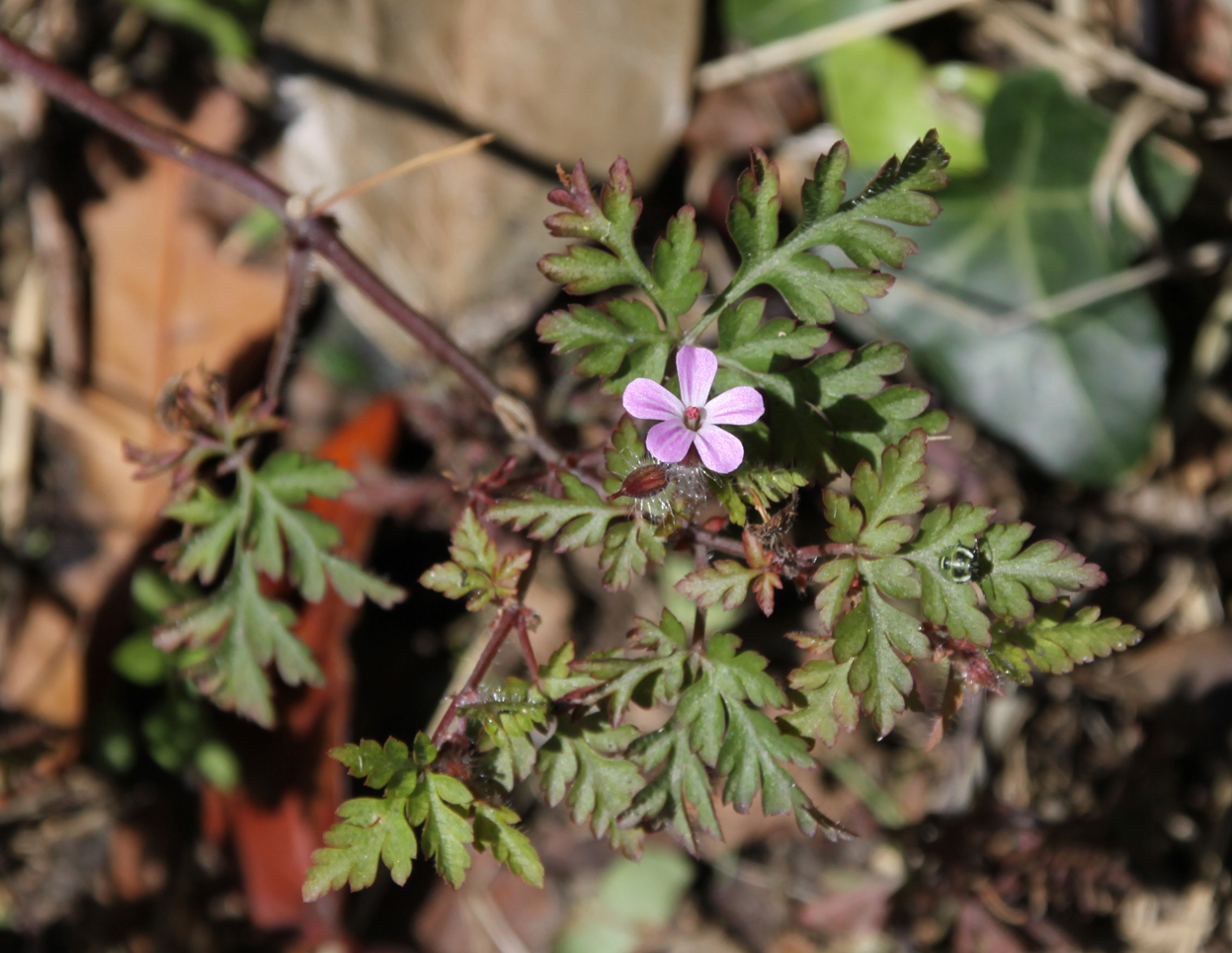
Gardeners will be very familiar with Herb Robert (Geranium robertianum), which has a small, pretty flower and red-tinged leaves, but is ruthlessly invasive.  Fortunately it pulls out very easily with the root attached, but it spreads like crazy.  The leaves are slightly scented.  The name geranium derives from the Greek word Geranos, “crane,” referring to the long, beak-like carpels.

Dove’s Foot Crane’s-bill (Geranium molle).  An annual member of the geranium family, with explosive seed pods that spreads widely on wasteland, verges and sand dunes.

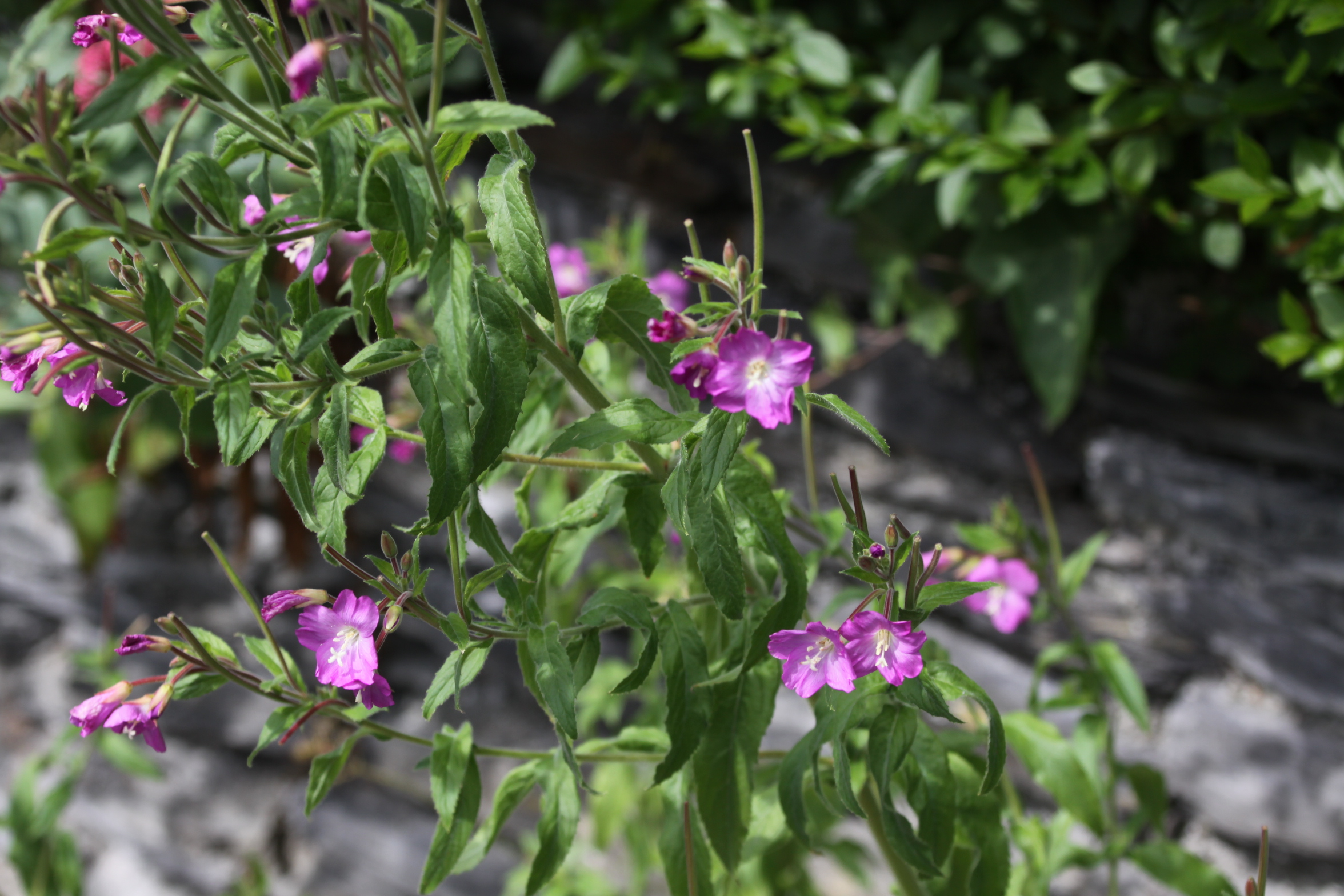
Great willowherb (Epilobium hirsutum).  A common garden weed, as it spreads both by seed and rhizomes, giving it a great advantage.  It likes the damp, and in this case sits  where water runs down the side of the road into a drain.  the “hirsutum” in its botanical name refers to the tiny hairs on the stems.

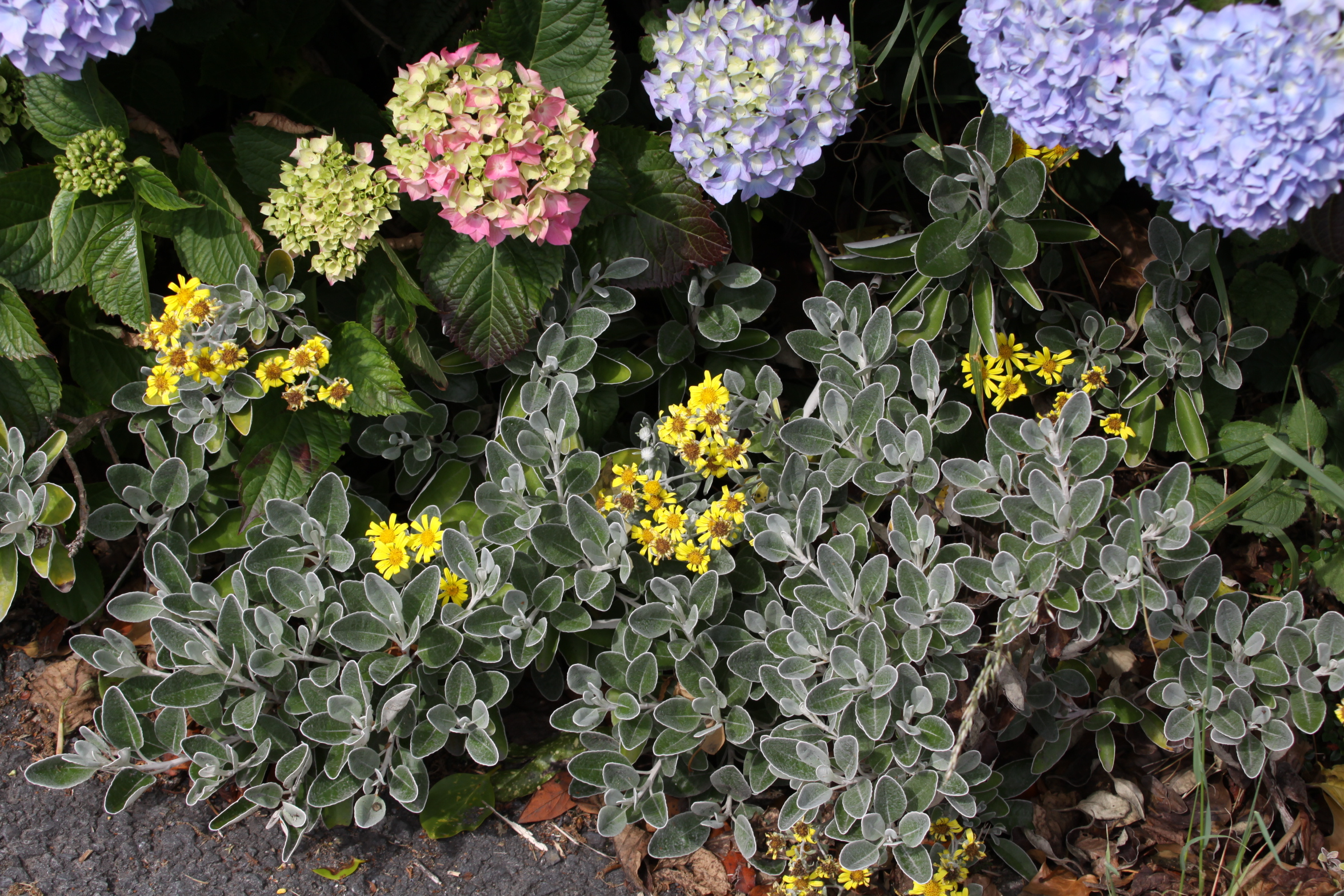
A typical mixture of feral garden flowers growing along the edge of the road on Balkan Hill, with hydrangeas in a hedge growing outwards over a patch of evergreen Brachyglottis/Senecio, an import from New Zealand, attractive to gardeners because of its lovely silvery green- grey leaves.


Exploring the origins of Tal y Llyn lake (Lake Mwyngil)

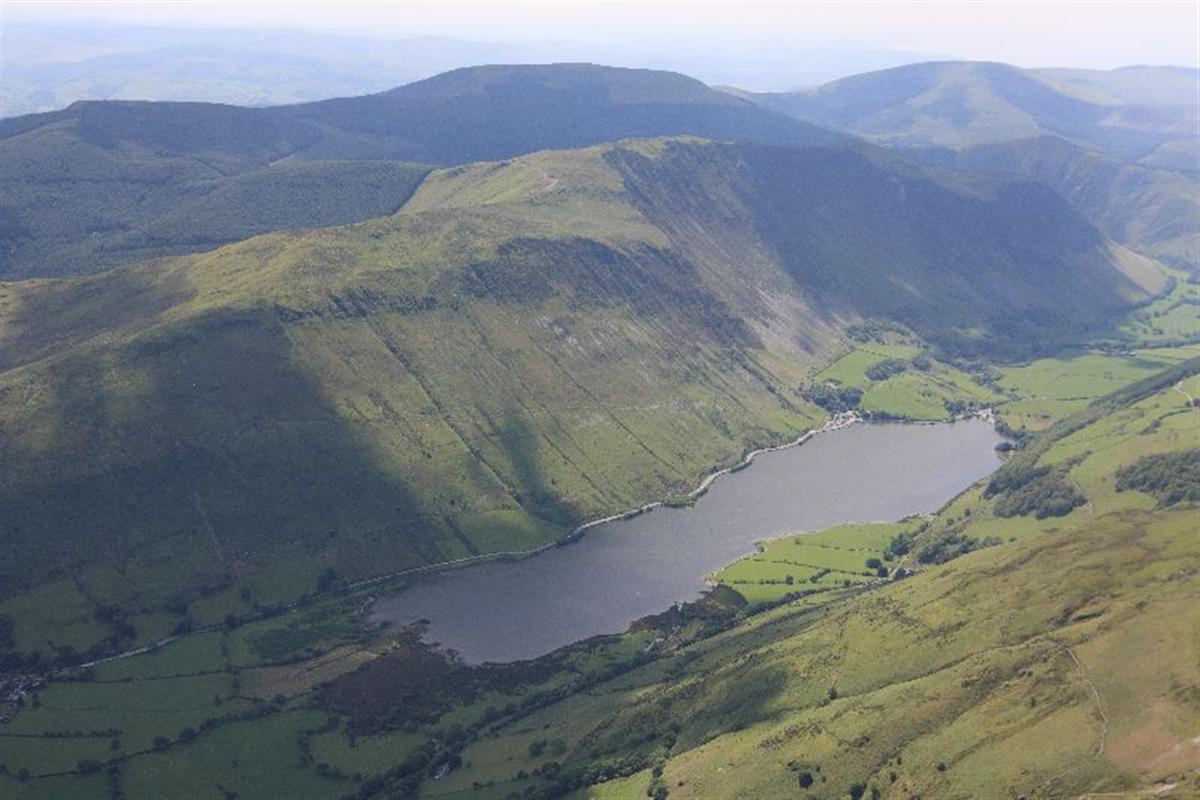
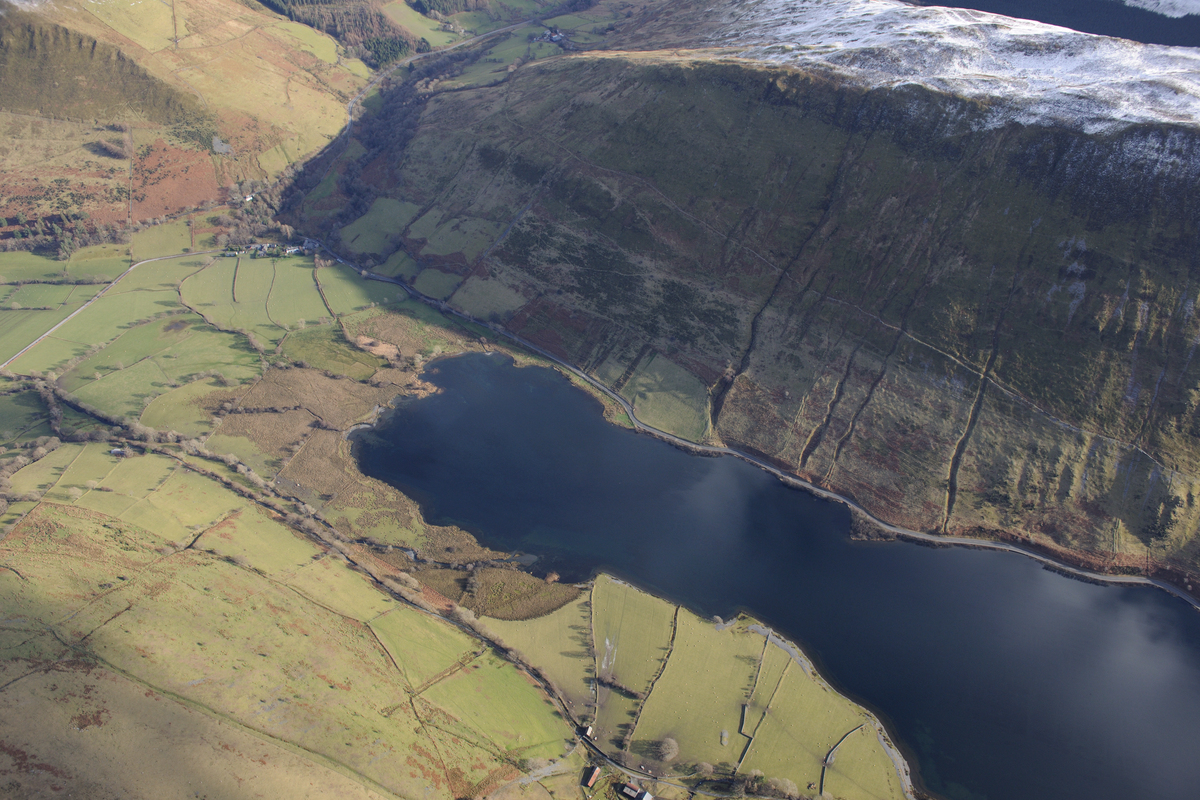
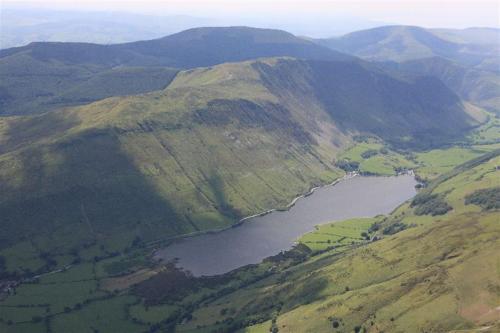
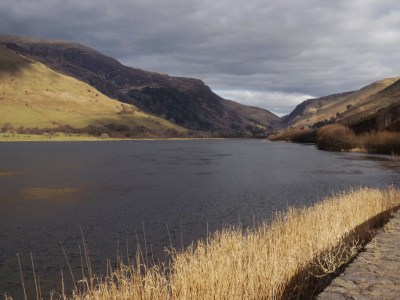
Tal y Llyn from the northeast. Source: Coflein, catalogue number C868164

Introduction
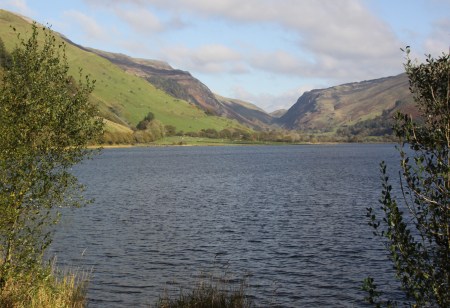
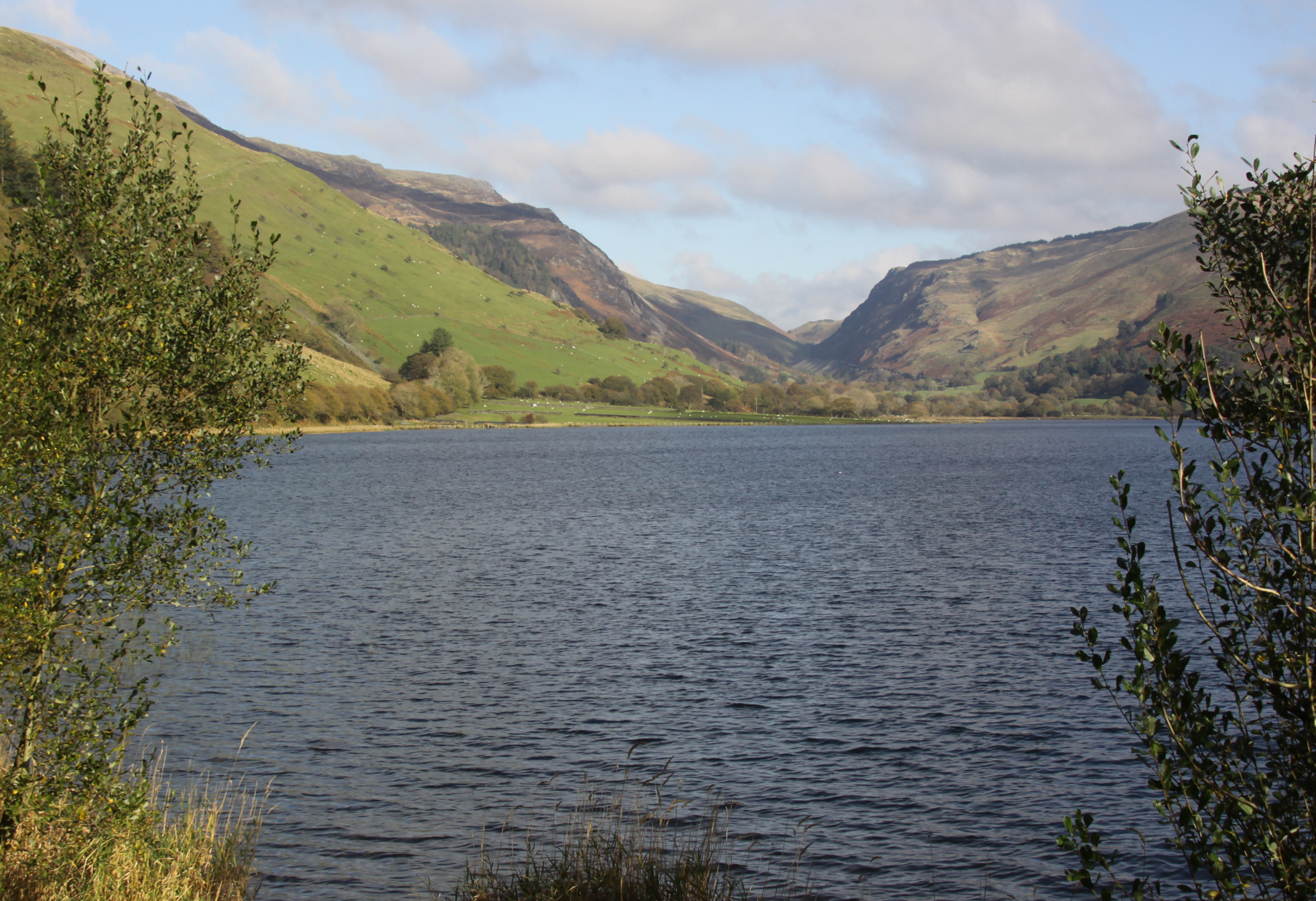
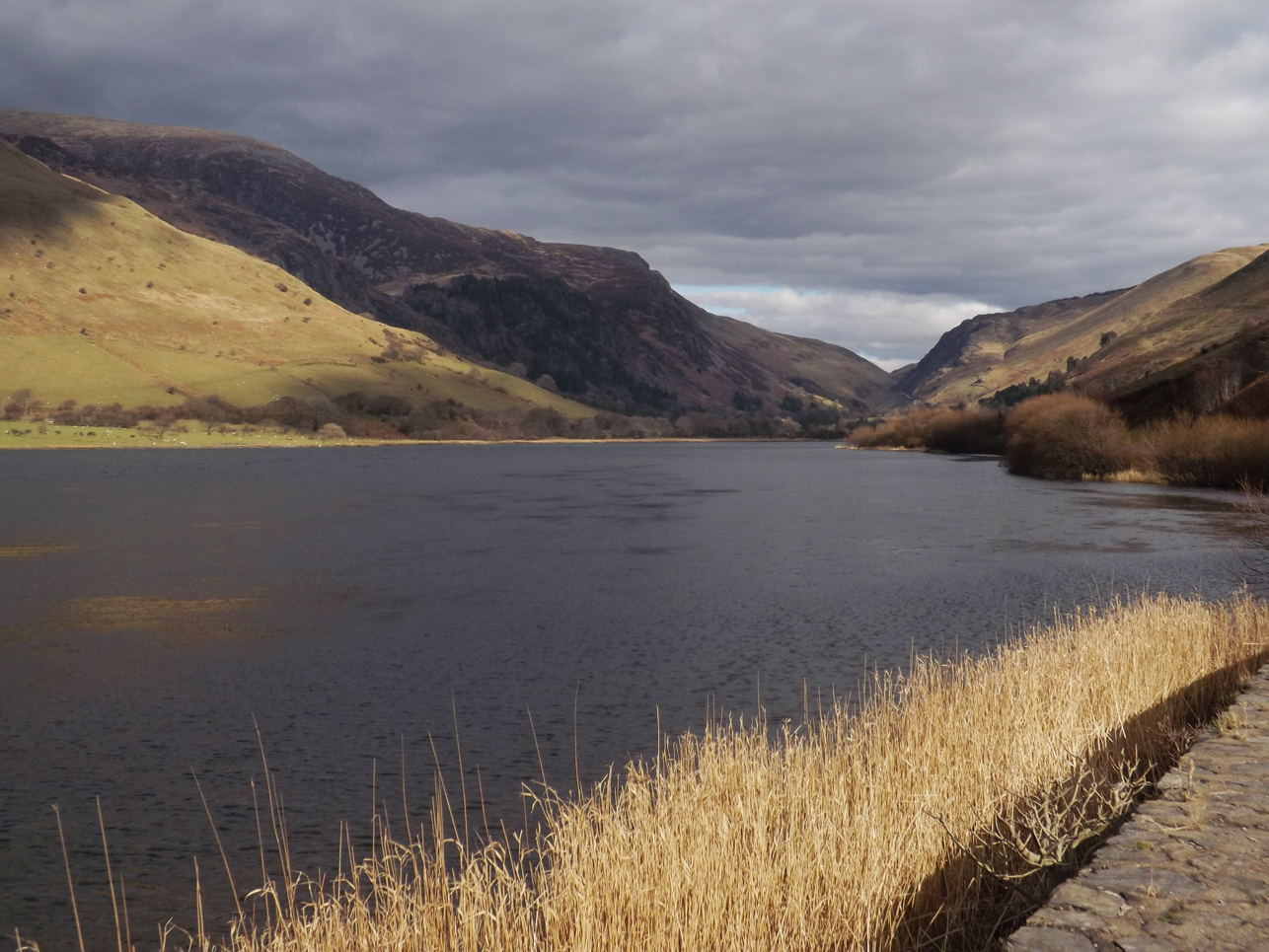
This post explores why the Tal y Llyn lake and valley look the way they do.  This involves investigating its pre-glacial, glacial and post-glacial history to understand how major geological and geomorphological events and subsequent alluvial processes have modified the landscape until it has arrived at what we see today.

When I started writing this, I was going to wrap up this account with details about the human historic heritage of the valley, but there was far too much information to amalgamate into a single post.  There turned out to be more to say about the geology and geomorphology than I initially realized.  Then, the history of the relatively few buildings surrounding the lake proved to be far more difficult to track than I had anticipated. Finally, the Tal y Llyn slate quarries, in the hills to the east of the lake, also deserve a post of their own.  I have therefore separated the story of Tal y Llyn into three parts, and the second and third parts will come at a later date, yet to be written.
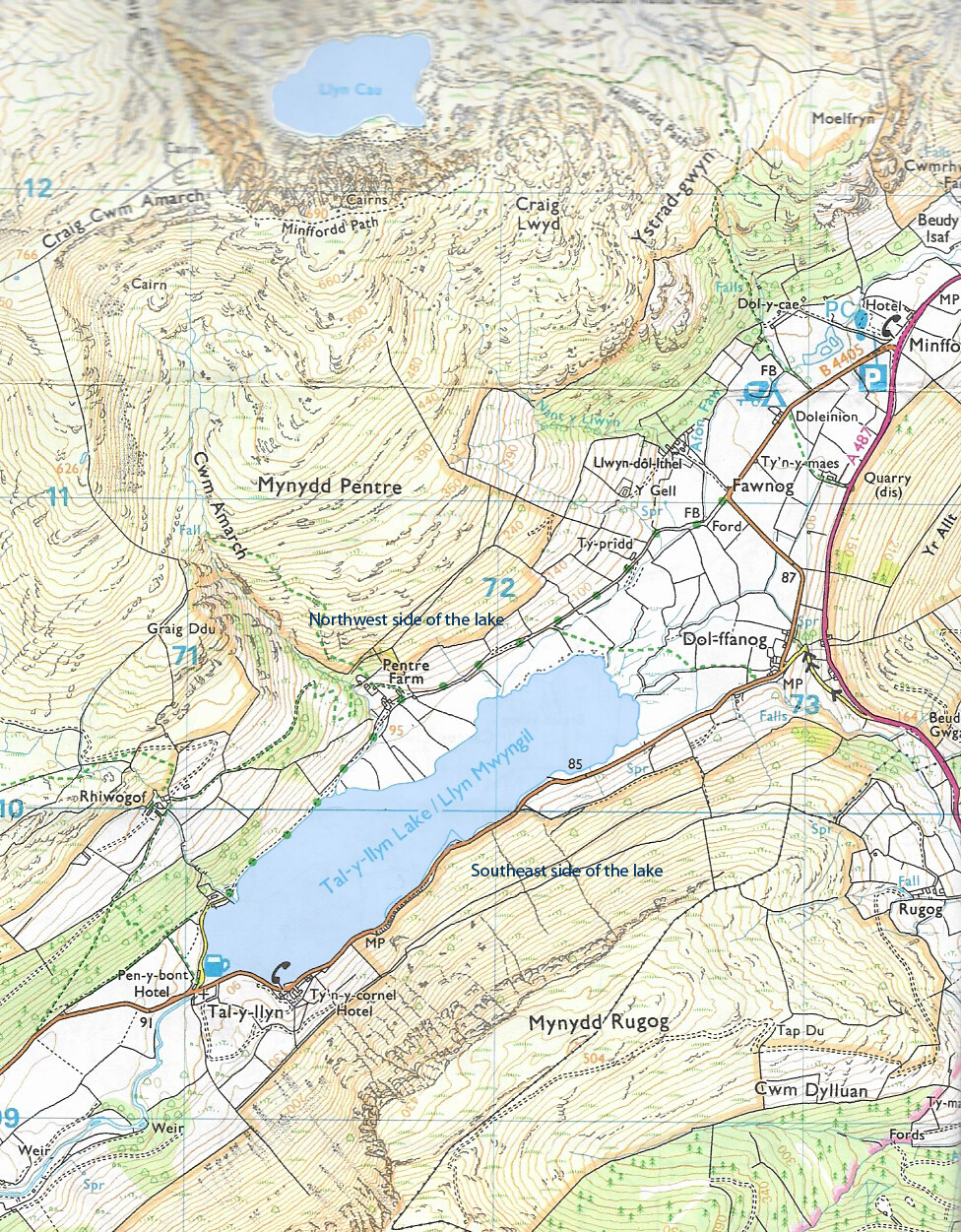
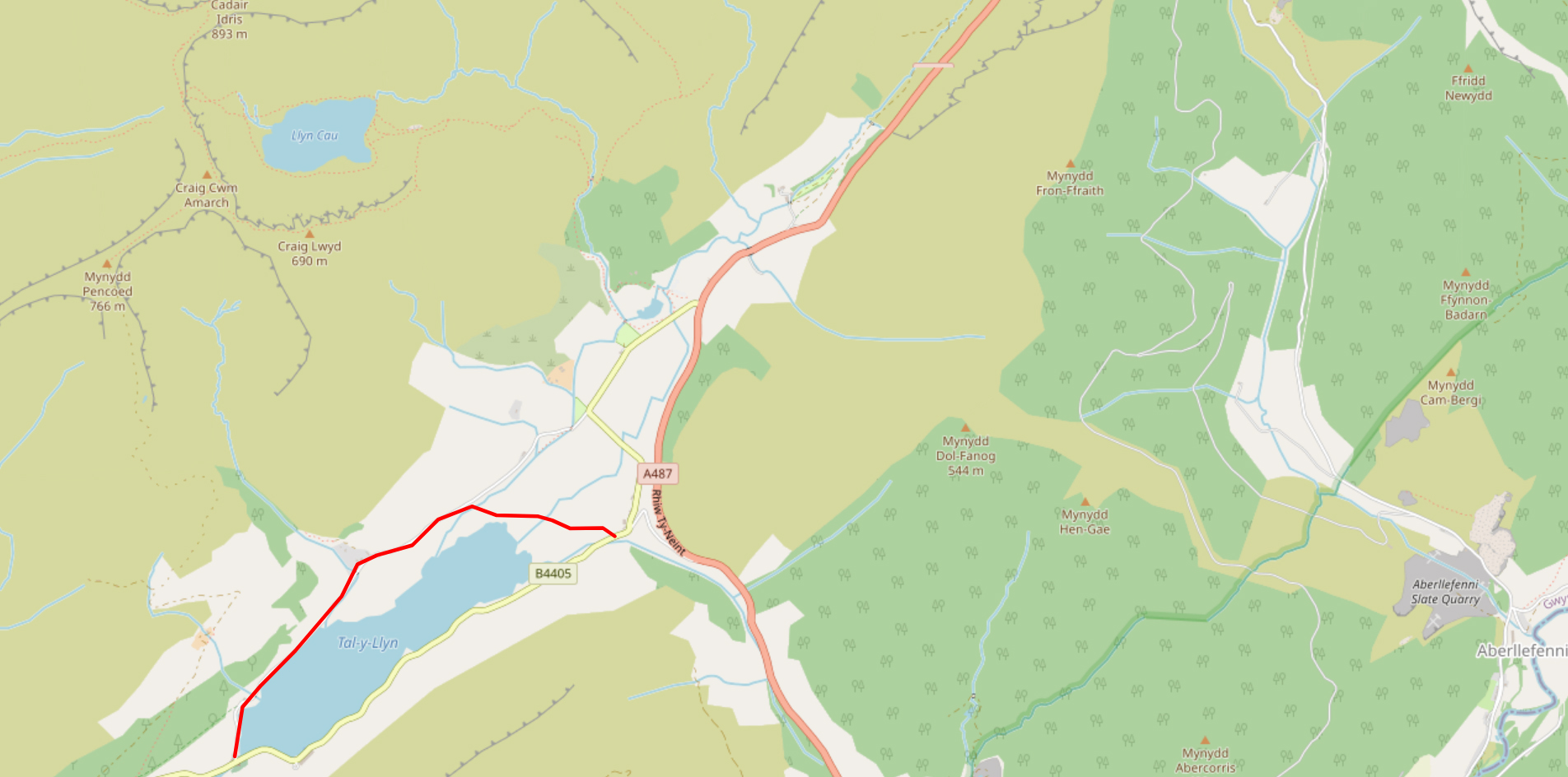
The OL23 Ordnance Survey map, part of which is shown below, shows the lake’s name as “Tal-y-Llyn Lake / Llyn Mwyngil.”  Tal y Llyn means “end of the lake,” which is the name of the cluster of buildings at the southwestern end of the lake.  I expect that eventually naming the lake after the buildings was much the same as the situation with the village of Bala, where the lake is often referred to as Lake Bala, when its real name is actually Llyn Tegid.  I have no idea what Mwyngil means.  My excellent book of Welsh Place-names is silent on the subject, my Welsh-English dictionary is no help, and Google Translate translates it, somewhat bewilderingly, as “Morelil.”   I’ve gone with the name Tal y Llyn, just because it is how it is most commonly referred to today.
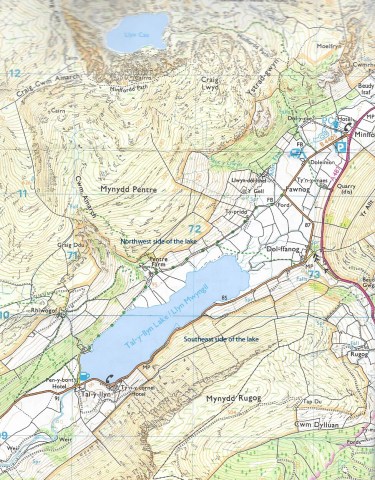
Tal y LLyn shown on the Ordnance Survey OS23 Explorer map (annotated). Click to enlarge and see more detail.

The current form of the valley in which the Tal y Llyn lake sits is primarily the outcome of two great  events, millions of years apart.  The first is the creation of a major geological fault.  The second is the geomorphological action of the last glaciation, the Devensian (c.90,000 – 10,000 years ago).  Between them they created the ideal conditions for a ribbon lake.  A third impact on the appearance of the valley is alluvial processes that occur when rivers and streams enter the valley, dropping sediment as they enter the lake.

The Bala Fault (Bala Lineament and Tal y Llyn fault)
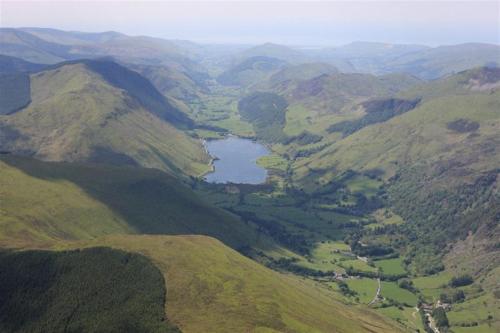
Photograph showing the line of the Tal y Llyn fault. Source: Coflein, catalogue C867365
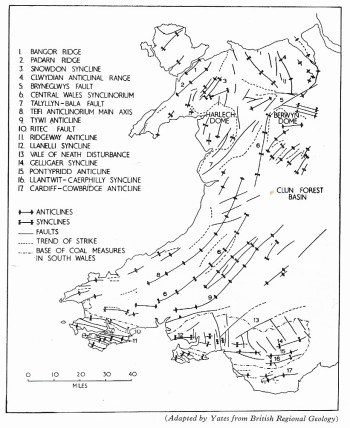
 

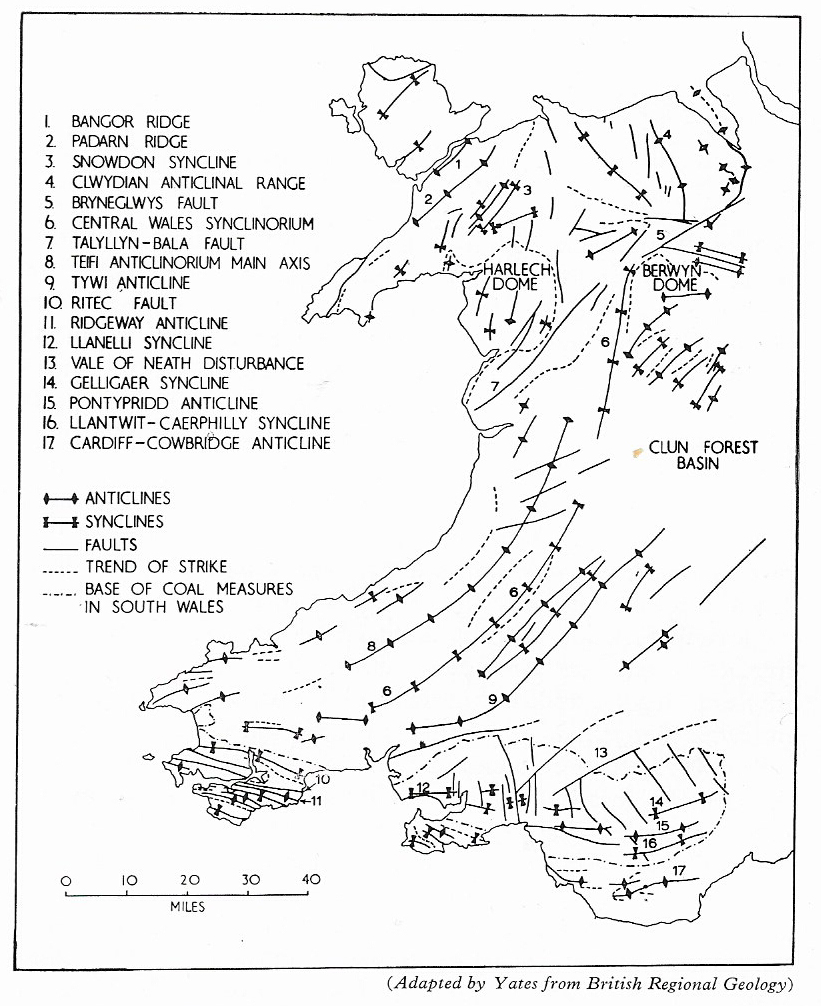
Map of main structural elements of Wales, showing the Bala Fault (no.7). Source: Howe and Thomas 1963, p.xiv

What is often referred to as the Bala Fault extends from Cardigan Bay into the Upper Dee lowland and into the Vale of Clwyd at the Cheshire borders, as the map on the right shows.

Musson says that the Bala Fault is better described as a lineament (a linear feature), consisting of three sub-parallel faults trending northeast to southwest, and consisting of the Bryn Eglwys, Bala and Tal y Llyn Faults, all probably tectonically active for much of Lower Palaeozoic era (the Cambrian, Ordovician and Silurian periods, c.541 – 419.2 million years ago).

These faults are tear or transform faults and occur when two pieces of the earth’s crust are moving horizontally relative to each other.  The resulting faults formed a lineament, a natural line for water to follow.  Over time, water courses carved out a series of valleys along the Bala lineament.

Tear/Transform Fault. Source: Howe and Thomas 1963, p.3

Howe and Thomas (1963, p.4) say that strata on the southern side of the fault have moved horizontally towards the east for a distance of about two miles.  This is particularly visible at Llanwychllyn, at the foot of Lake Bala.  The Bala lineament is easily traceable on an Ordnance Survey map.  The faults of the lineament separate the Snowdonia-Arennigs-Rhinog group of mountains from the Cadair Idris-Aran-Berwyn group.

The only coherent account I have managed to find of the fault, in spite of looking through various books and papers, is the following from Wikipedia.  There is, however, no indication as to where the author of the piece acquired the information, so although it sounds plausible, it is unverified at the moment.  I will update the post if I find more information:

The fault is thought to have initially formed during the opening of the Iapetus Ocean in late Precambrian times (>541 million years ago) when Laurentia (North America) and Baltica (Europe) separated. As the Iapetus Ocean began to open tension cracks opened in a NE-SW direction parallel to the continental margins. These eventually became the Bala Valley, the Menai Straits and the valley at Church Stretton along the line of the A49. Between the Menai fault and the Stretton fault the land sank, forming the Welsh Basin with the Bala fault possibly forming an underwater escarpment. . . . . The scale of geological movements in the deep past can be seen near Llanuwchllyn where the two sides of the fault would have to be slid back for a distance of two miles to get the geology on either side to line up.

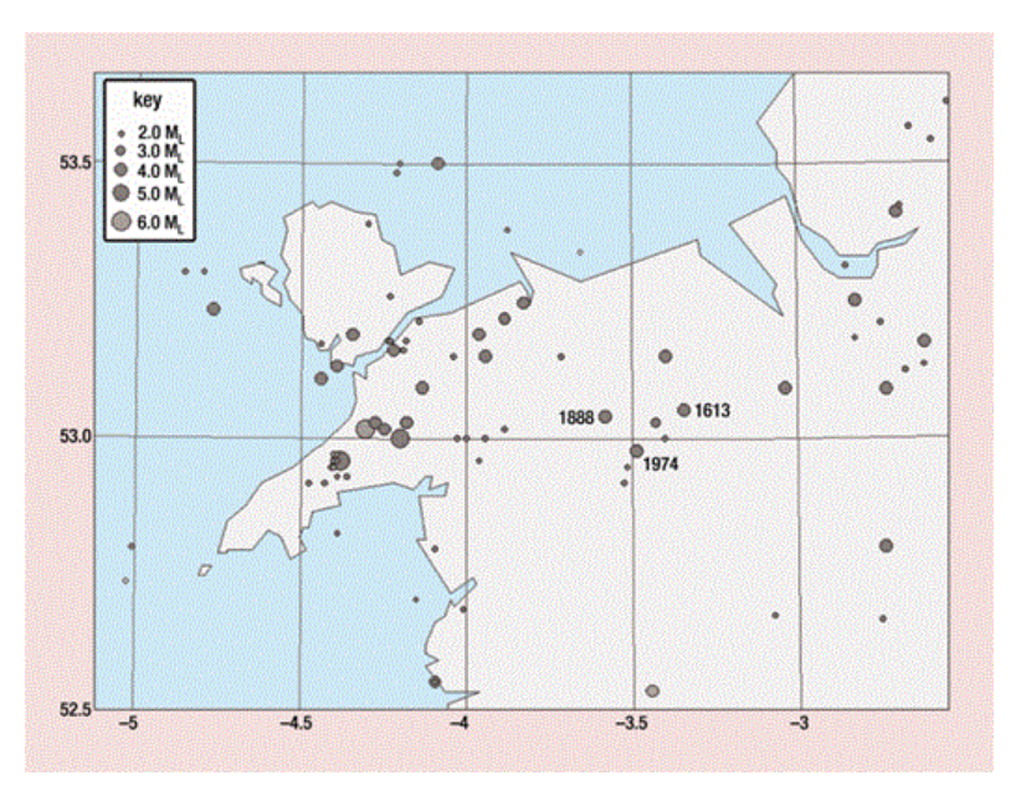
Seismicity of North Wales. Source: Musson 2006, p.5.11

In January 1974 there was a report of a minor earthquake, magnitude 3.5, along the fault at Bala, followed by a more unusual phenomenon known as “earthquake lights.”  The earthquake was not particularly unusual.  A number of seismic events have been recorded in north Wales since the 1600s.  Although the Bala fault was originally suspected as the source of the earthquake, Musson (2006, p.5.15) concludes that “there are numerous north–south and east–west lineaments in and around the plausible epicentral area (as identified by the two instrumental locations and the macroseismic epicentre) and any of these could be the host feature for the Bala earthquake. . . . Consequently there is no evidence at present that the
Bala Lineament is active in any neotectonic sense, and it is unlikely that it would be in present stress conditions.”

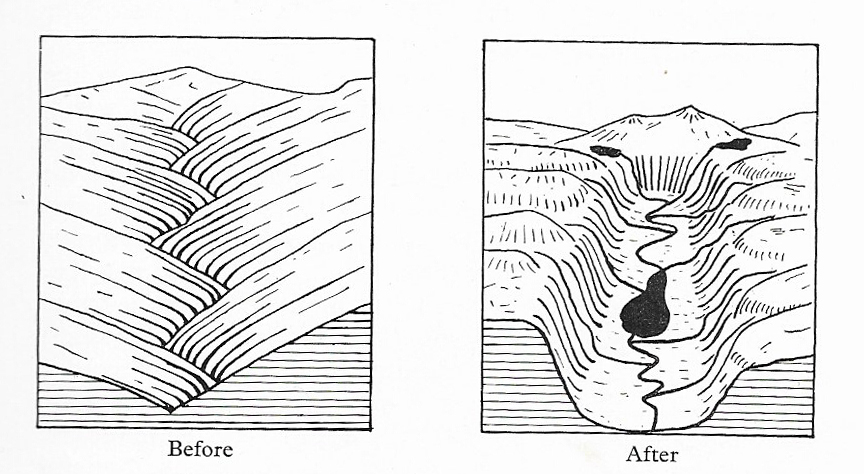
The river valley along the Tal y Llyn Fault that preceded the last Ice Age supported a river, but not a lake. Before the last glaciation, the Tal y Llyn valley consisted of interlocking spurs, the river wending its way between them along the line of the fault.

The Glacial Valley

The valley’s appearance is very different today from its days as a pre-glacial river valley, and that’s thanks to the last major cold phase, the Loch Lomond Stadial or Readvance (c.11,000-10,000 years ago) during the last, Devensian glaciation (c.90,000 – 10,000 years ago).  Episodes of glaciation are characterized by warmer (interstadial) and colder (stadial) phases, with later episodes frequently wiping out most traces of earlier ones.
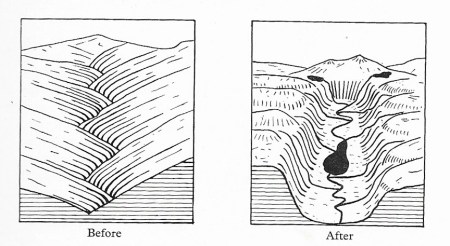
River valley before and after glaciation. Source: Howe and Thomas 1963 p.77

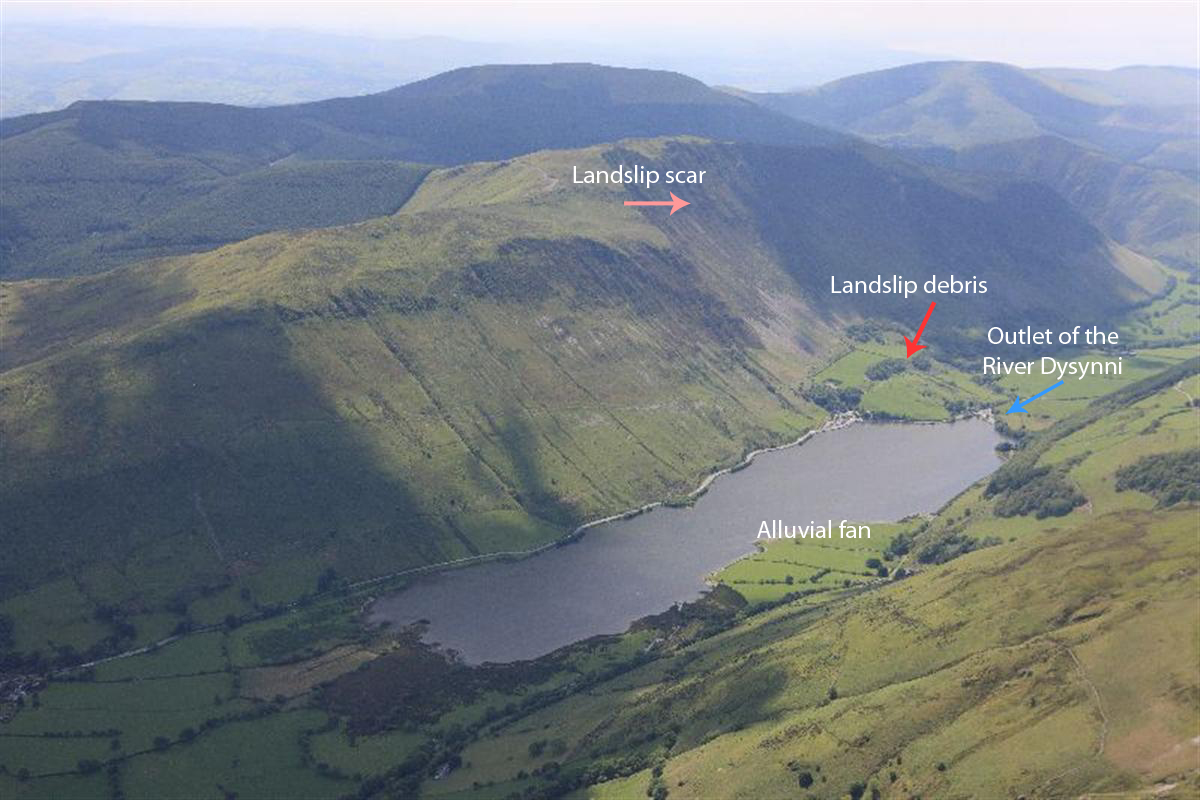
In the case of Tal y Llyn, the late Devensian glacier travelled down the line of the fault, the line of least resistance, and carved out a broadly u-shaped, or more accurately parabolic profile, smoothing valley sides where previously there were interlocking spurs.  At the same time it scoured the base of the valley.  The erosional impact of the ice on the profile of the valley is particularly stark on southeastern side of the lake, where Mynydd Rugug, Graig Goch and Mynydd Cedris drop steeply towards the lake, the slopes carved dauntingly into a single, flattened profile scarred with steeply dropping streams.  This is clearly visible in the photograph below, where the landslip is marked.  On the other side of the valley the erosion was less drastic, although still severe, and some truncated spurs are still just visible.  At the same time, the abrasive and scouring effect of the glacier, as it carved its way through the valley, lowered the level of the valley floor.  Throughout the Devensian, during the summer months water will have escaped the glacier in the form of meltwater, draining down the valley, finding its way across the earlier floodplain.
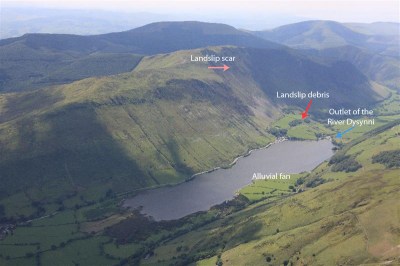
Photograph of Tal y Llyn, annotated to show the landslip scar and some of the debris that blocked the glacial trough, allowing the ribbon lake to form. Source: Coflein, catalogue number C868164

Unlike similar-looking ribbon lakes much like many of the Lake District lakes (e.g. Windemere) and Scottish lochs (e.g. Loch Lomond, which also sits on the line of a geological fault), Tal y Llyn does not sit in a conventional glacial trough in a rock basin, but was formed due to its southwest end being blocked.  A post-glacial land slippage deposited huge blocks of material from the southeastern hillside at the foot of the lake into the valley bottom.  There it formed a barrier where the lake now ends at the Pen y Bont hotel, described by Shakesby as “neither of bedrock nor of moraine, but of a huge mass of fractured and disarranged blocks” (1990, p.64).  This was discovered by Watson in the early 1960s, and described by him as follows:

In the part of the bar north-west of the river, the surface is moundy, but smoother and in clean pasture except for gorse patches on the mound summits. There is almost everywhere a complete turf cover but immediately underneath, on each mound top, are closely packed angular mudstone fragments similar to the debris found immediately overlying rock. That the smooth fields could lie on rock is proved by the road-side exposures north-west of the church. Occasional scars on tracks show rock or angular rock debris while three shallow pits dug to a depth of 18 inches showed the same rock debris on the slope bounding the bar to the south-west. On the slope behind Maes-y-pandy Farm, rock with varying cleavage direction is exposed.

As Shakesby’s comment above suggests, until Watson’s 1962 paper in the Transactions and Papers of the Institute of British Geographers, this blockage was incorrectly thought to have been either bedrock or a terminal moraine (debris pushed by the leading edge of the glacier, and dumped when the glacier stops moving forwards), or both.  The landslip left an enormous scar above the scree and rockfall, above the foot of the lake, which according to Shakesby was caused by the retreat of the glacier, “leaving the valley sides, over-steepened by glacial erosion, in an unsupported condition prone to collapse.”  The Tal y Llyn lake formed behind this landslip barrier.

There is extensive periglacial activity at the head of the lake, where extensive broken rocks rest on bedrock, accompanied by extensive scree.  Periglaciation is the process whereby areas under ice are subjected to successive phases of warming, thawing melting and re-freezing, which causes cracks in the rock.  Eventually the cracks cause rocks to break away and drop towards the valley bottom.

Hanging valleys, fast streams and alluvial build-up

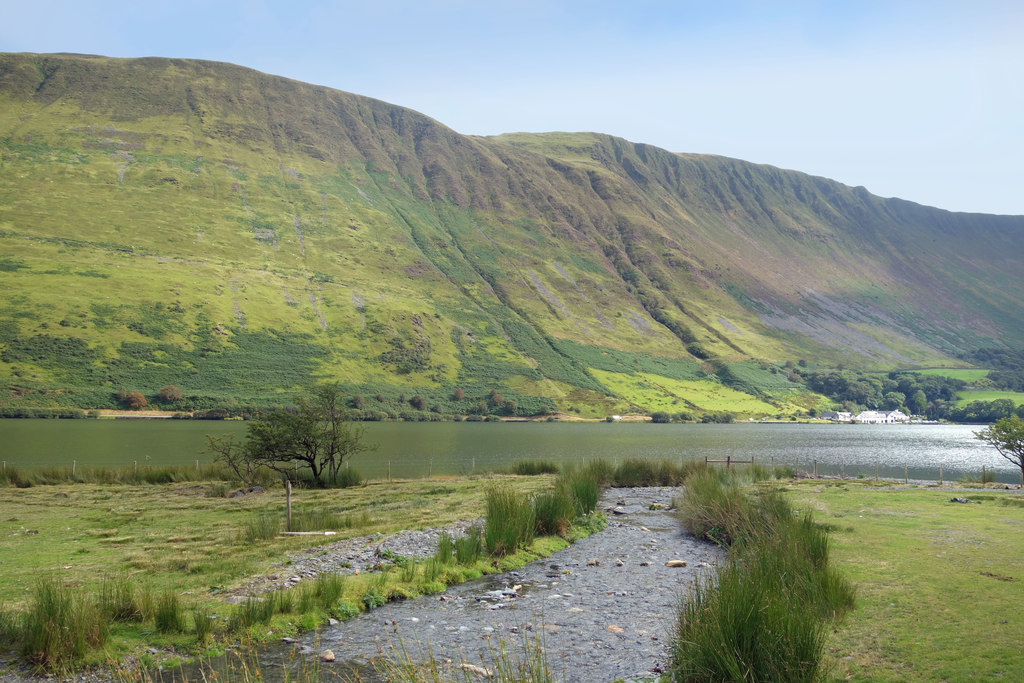
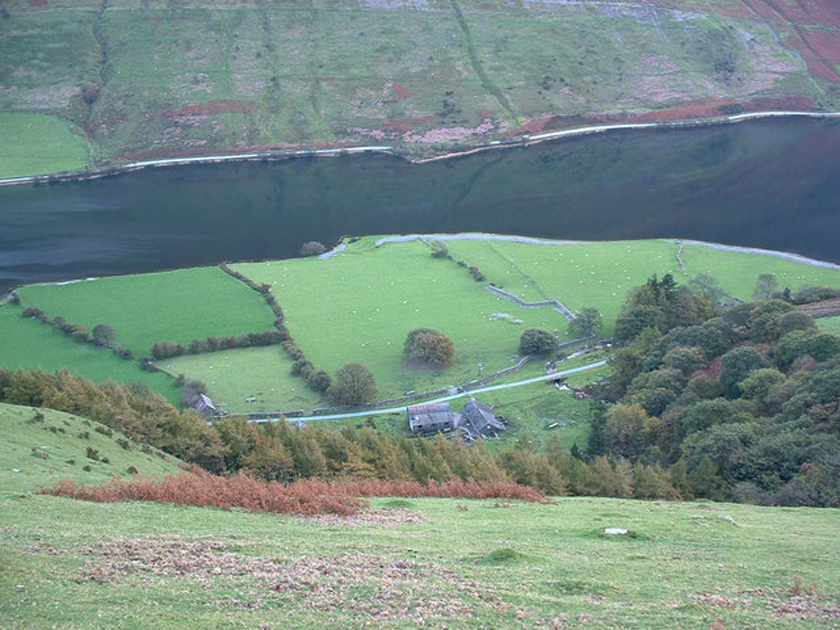
Stream entering Tal y Llyn at Pentre Farm, crossing the alluvial fan. Source: Geograph, Des Blenkinsopp

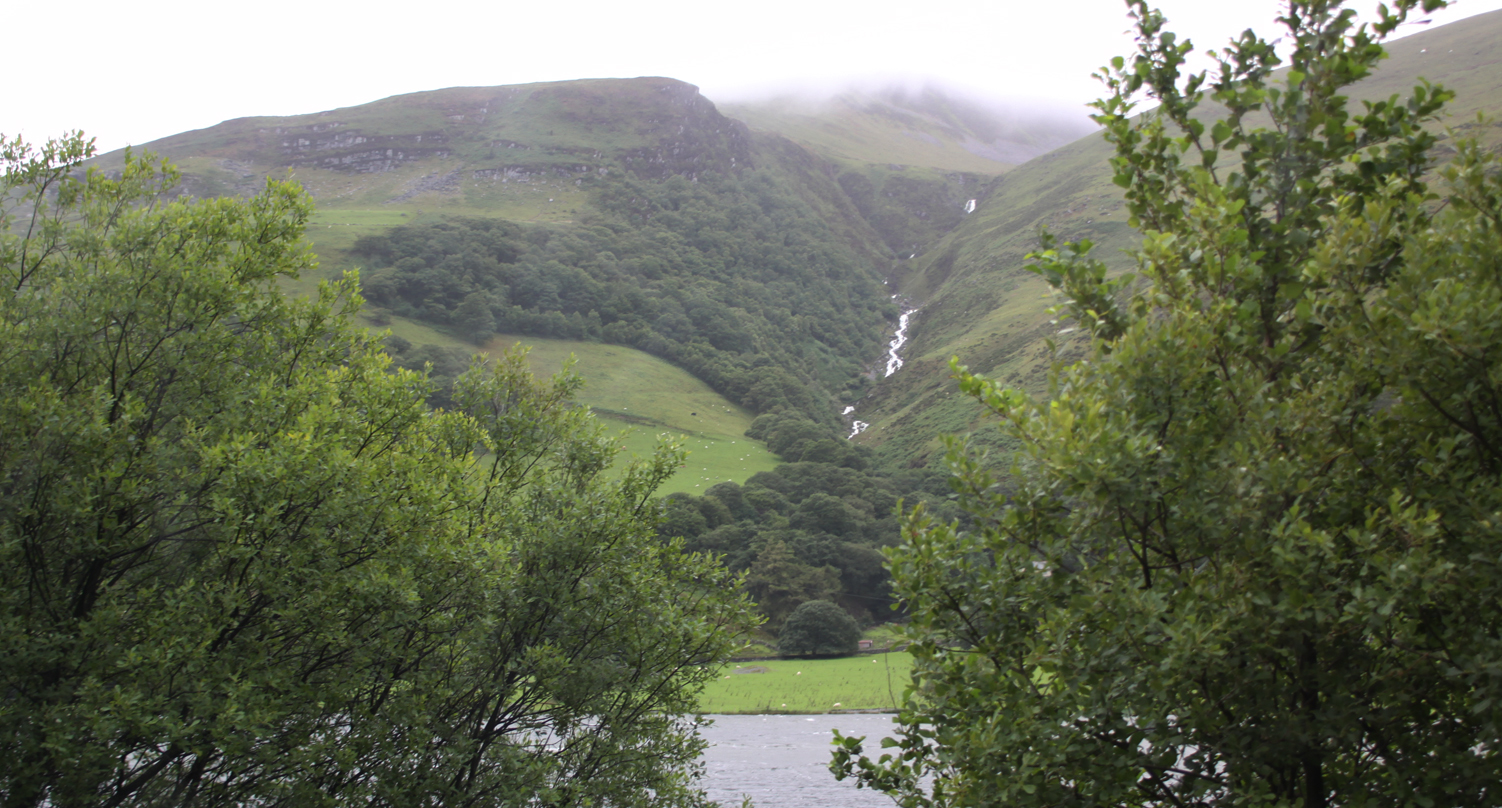
Tal y Llyn is a form of ribbon lake 220 acres in surface area, with an average depth of 8ft (c2.5m) and maximum depth of 12ft (c.3.6m).  The head of the lake is fed by a number of smalls steams fed by the flanking slopes.  The main streams that feed the lake are Nant Yr Allt-ioen, which travels along the valley below the A487 where it runs through the Tal y Llyn pass; the Nant Cadair stream that runs out of Llyn Cau on Cadair Idris, dropping steeply to the valley floor; the stream and waterfall that flows down Cwm Amarch, above Pentre Farm on the northeast side of the lake; and Nant Cildydd, and another small stream from the east.  There are two stream emerging from a freshwater springs, almost opposite each other at the far northeast and northwest of the lake.
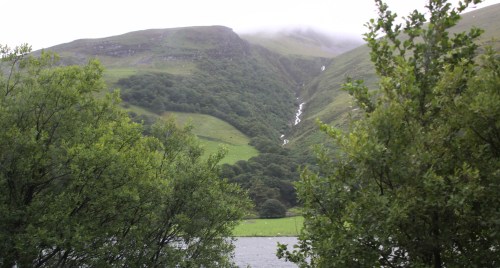
A stream plummeting down Cwm Amarch, above Pentre Farm, on the northeast side of the lake on a very rainy day in late June 2020
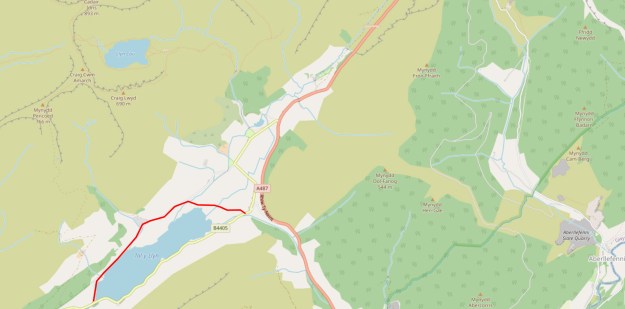
The main streams feeding into Tal y Llyn, showing a footpath that crosses all of the major streams. Source: GPS-routes.co.uk
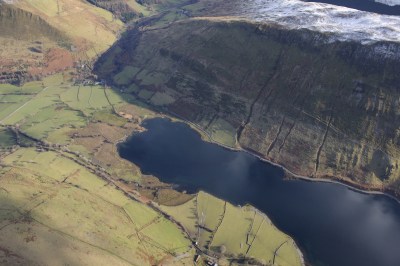
Tal y Llyn northwest end of the lake, showing how the build up of sediment has been converted into fields, and showing a patch of brown where boggy marsh meets the lake.  Source:  Coflein, catalogue C650435

These streams pass through a large flat area of green fields used for grazing, that becomes brownish boggy marsh where it meets the lake, shown very clearly in the photograph to the right.  This flat zone is the result of a build-up of alluvium dropped by steep and hanging streams, and is still expanding into the lake.  The alluvial flats are created by the sudden slowing of the water as it hits the valley floor, a common feature with hanging valleys, where water drops sharply down a hillside.  As soon as water stops falling and hits the flat valley surface, it slows down and instead of carrying material downstream, it drops it.  The heaviest particles are dropped first, with lighter components dropped further downstream, and slowly these built up to form an alluvial plain.  Where streams drop particularly steeply towards a river or lake, this effect is exaggerated.

Alluvial delta in front of Pentre Farm. Source: Geograph by Bill Rowley.

In the case of Tal y Llyn, the valley was carved out by a glacier, lowering the level of the floor beneath the level of the tributary streams, leaving “hanging valleys,” steep, narrow v-shaped stream beds that drop sharply towards the the erosional valley floor.  The streams flow with great speed down these hanging valleys towards the floor below, and slow abruptly when they hit the flat base of the glacial valley, dropping much of their load.  This build-up of river sediment extends along the north-west side, under Cadair Idris, towards the middle of the lake where it develops into a broadly fan-shaped delta in front of Pentre Farm.  This build up of sediment has considerably constricted the width at the top half of the lake and has reduced its length.  It is easy to see, in the above photographs, that this process is ongoing and unstoppable.  Eventually the lake will fill completely with alluvial deposits.
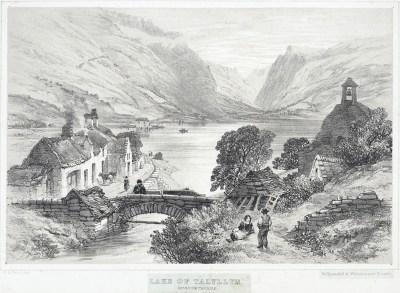
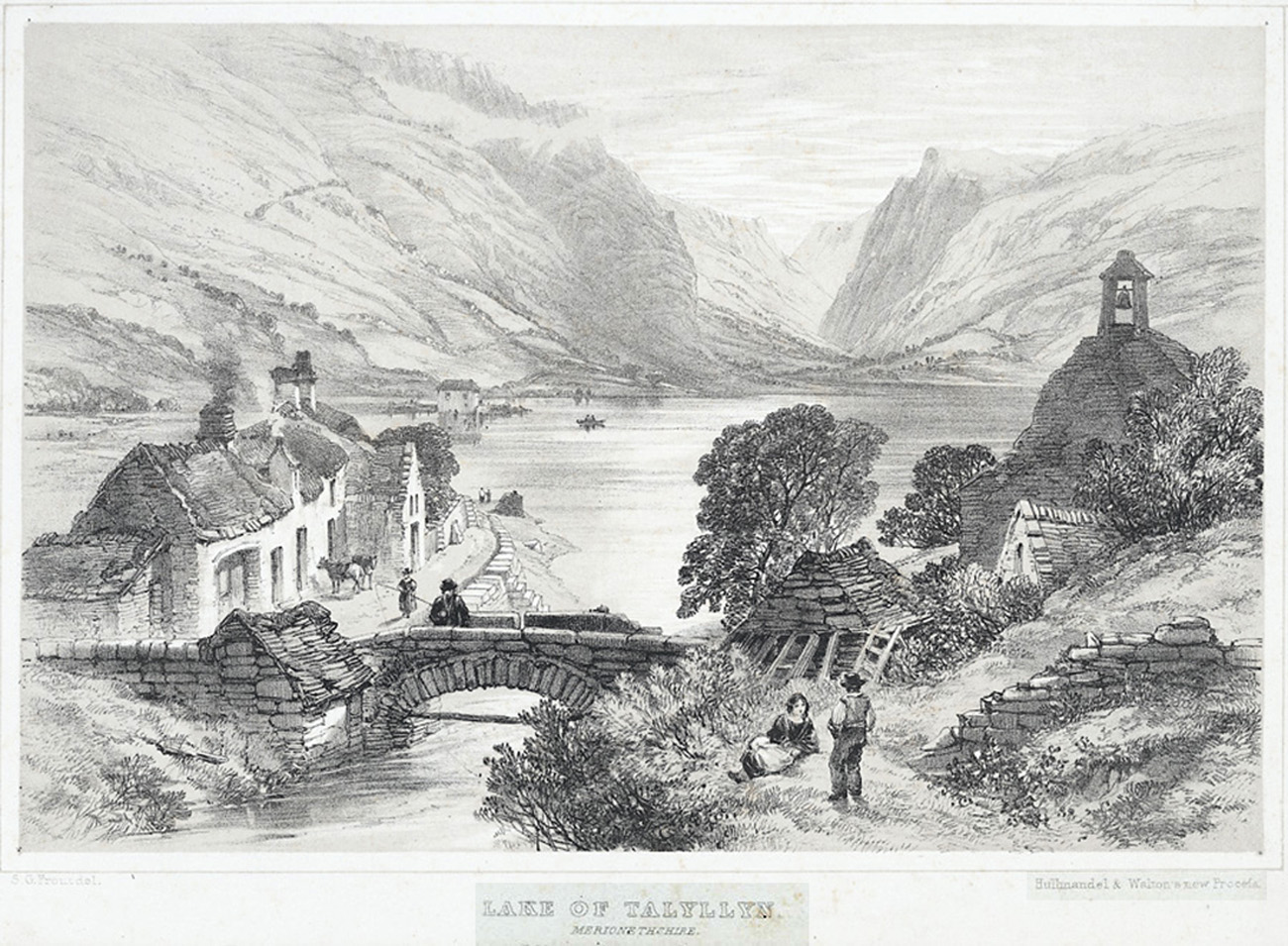
Lithograph of the lake by Samuel Prout, 1783-1852. Source: Wikipedia

The foot of the lake opens out into the Afon/River Dysynni at the Pen y Bont hotel, through the landslip.  It is crossed by the B4405 between the Pen y Bont hotel and St Mary’s church.  The bridge is a very different affair from the one shown in this picture dating to the first half of the 19th Century.  The river wends its way through its floodplain, along the fault line, as far as Abergynolwyn, where it joined by the Nant Gwernol and turns away from the fault line,  instead heading to the northeast before again changing direction with a turn into the Dysynni valley (Dyffryn Dysynni), where it is joined by Afon Cadair before resuming its southwestern course parallel to the fault line.
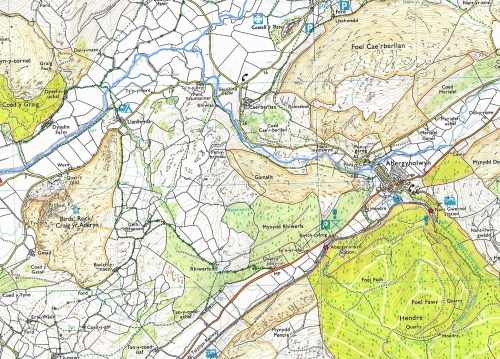
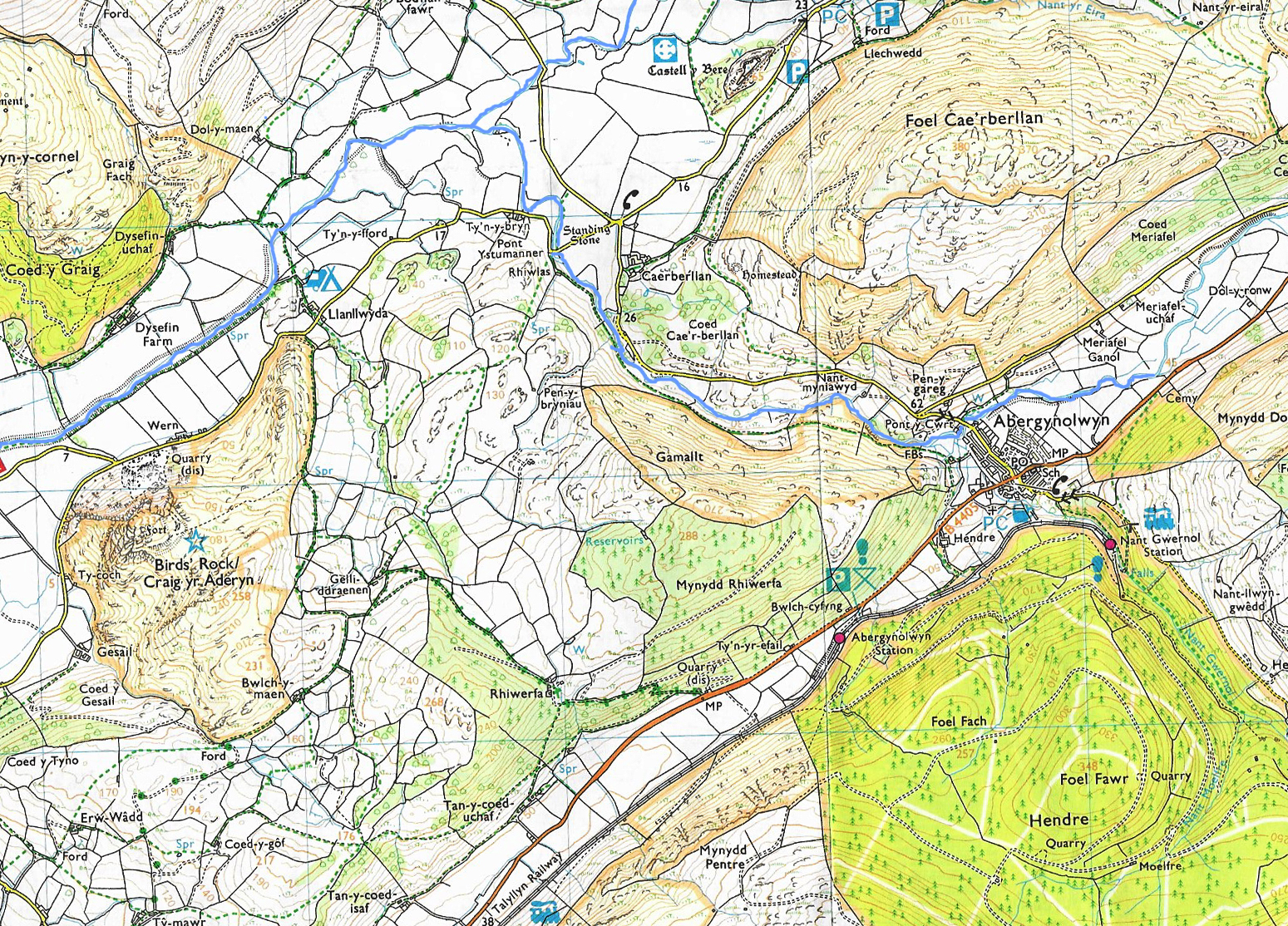
Ordnance Survey Explorer Map OS23 showing the path of the river Dysynni as it changes course, having flowed out of Tal y Llyn to the northeast. I’ve loosely sketched the path of the course change in a deeper blue so that it can be seen more clearly.
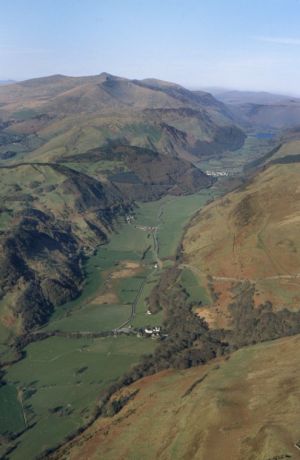
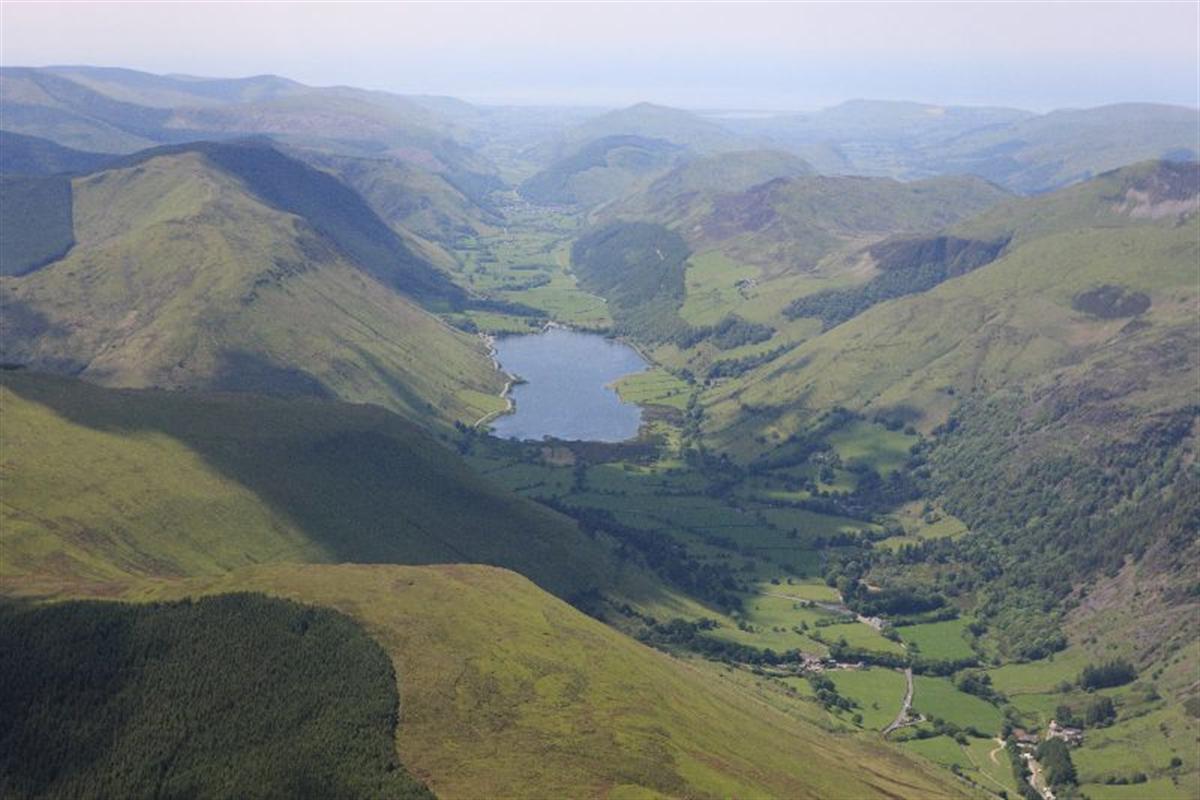
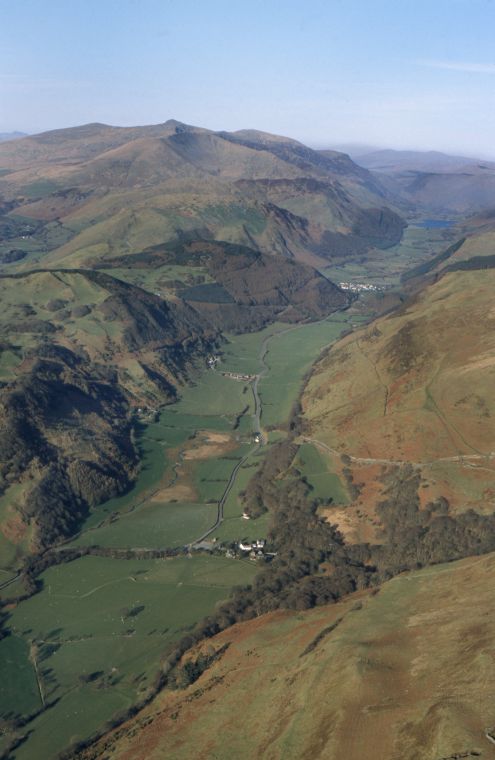
Dramatic, informative and very beautiful aerial view towards Tal Y Llyn in the background at the northwest with Abergynolwyn clearly visible as a white strip of buildings to the south of the lake, with part of the village hidden behind the large tree-covered spur (Mynydd Rhiwerfa) that intrudes into the valley.  The river turns westwards before the spur at Abergynolwyn. The B4405 continues down the former river valley, following the line of the fault.  The tiny cluster of white buildings in the foreground is Dolgoch. Nant Dolgoch flows into the Afon Fathew, which in turn flows into the Dysinni near Bryncrug, not far from the river’s mouth. Source: Coflein, catalogue number C821258

The Dysynni is another, and far more complicated story and will be covered on a future post.

Sources:

Howe, G.M. and Thomas, P. 1963.  Welsh Landforms and Scenery.  Macmillan

Etienne, J.L., Hambrey, M.J., Gasser, N.F. and Jansson, K.N. 2005.  West Wales.  In Lewis, C.A and Richards, A.E. The glaciations of Wales and adjacent areas.  Logaston Press

Harris, C. Periglacial landforms.  In (ed.) Stephens, N. Natural Landscapes of Britain from the Air. Cambridge University Press

Musson R.M.W. 2006. The enigmatic Bala earthquake of 1974. Astronomy & Geophysics, Volume 47, Issue 5, October 2006, p.5.11–5.1
https://academic.oup.com/astrogeo/article/47/5/5.11/231627

Shakesby, R. 1990.  Landforms of glacial and fluvioglacial deposition.  In (ed.) Stephens, N. Natural Landscapes of Britain from the Air. Cambridge University Press

Watson, E. 1962.  The Glacial Morphology of the Tal-y-llyn Valley, Merionethshire. Transactions and Papers (Institute of British Geographers) No. 30 (1962), published by Wiley on behalf of The Royal Geographical Society (with the Institute of British Geographers), p. 15-31.

Websites:

Coflein website


A short walk along Afon Fathew and a stretch of the Afon Dysynni

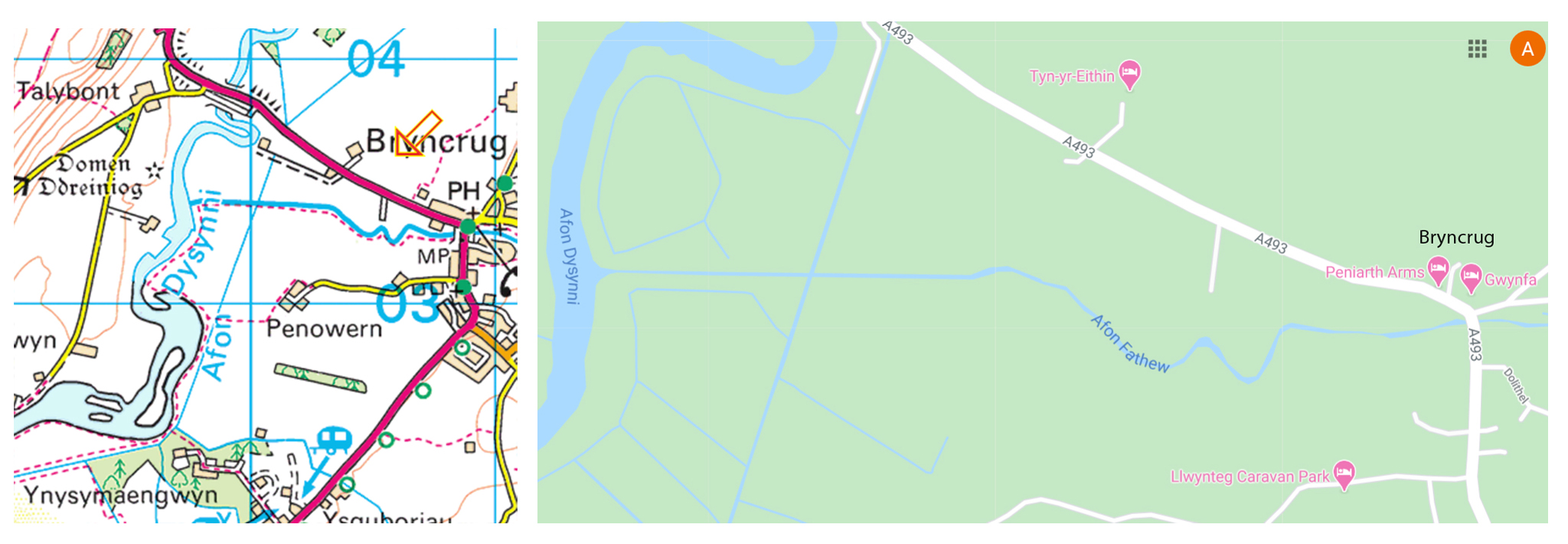
Left: Map showing the footpath leading west from Bryncrug. The path turns left where it meets the Dysynni and wends its way past the Ynysmaengwyn estate. Source – Streetmap.co.uk. Right: Map showing the Afon Fathew from Bryncrug to the Dysynni. Source – Google Maps

A footpath runs along Afon Fathew (translating as River Matthew) from Bryncrug and then bears left where the Fathew meets the Dysynni.  This footpath used to form part of the Wales Coast Path, bringing walkers away from the coast, where they were blocked by the River Dysynni.  The path took them inland, crossing the river where the road crosses at Bryncrug before looping back to reach the coast again.  In 2013 the Tonfanau bridge was built across the Dysynni at the point where the railway also crosses the river at the mouth of the river, so this footpath has much fewer visitors than it used to.  The Fathew, a tributary of the Dysynni, is itself fed by streams from the hills on either side of the stretch of valley in which Dolgoch sits, including Nant Dolgoch, that flows over the Dolgoch Falls.

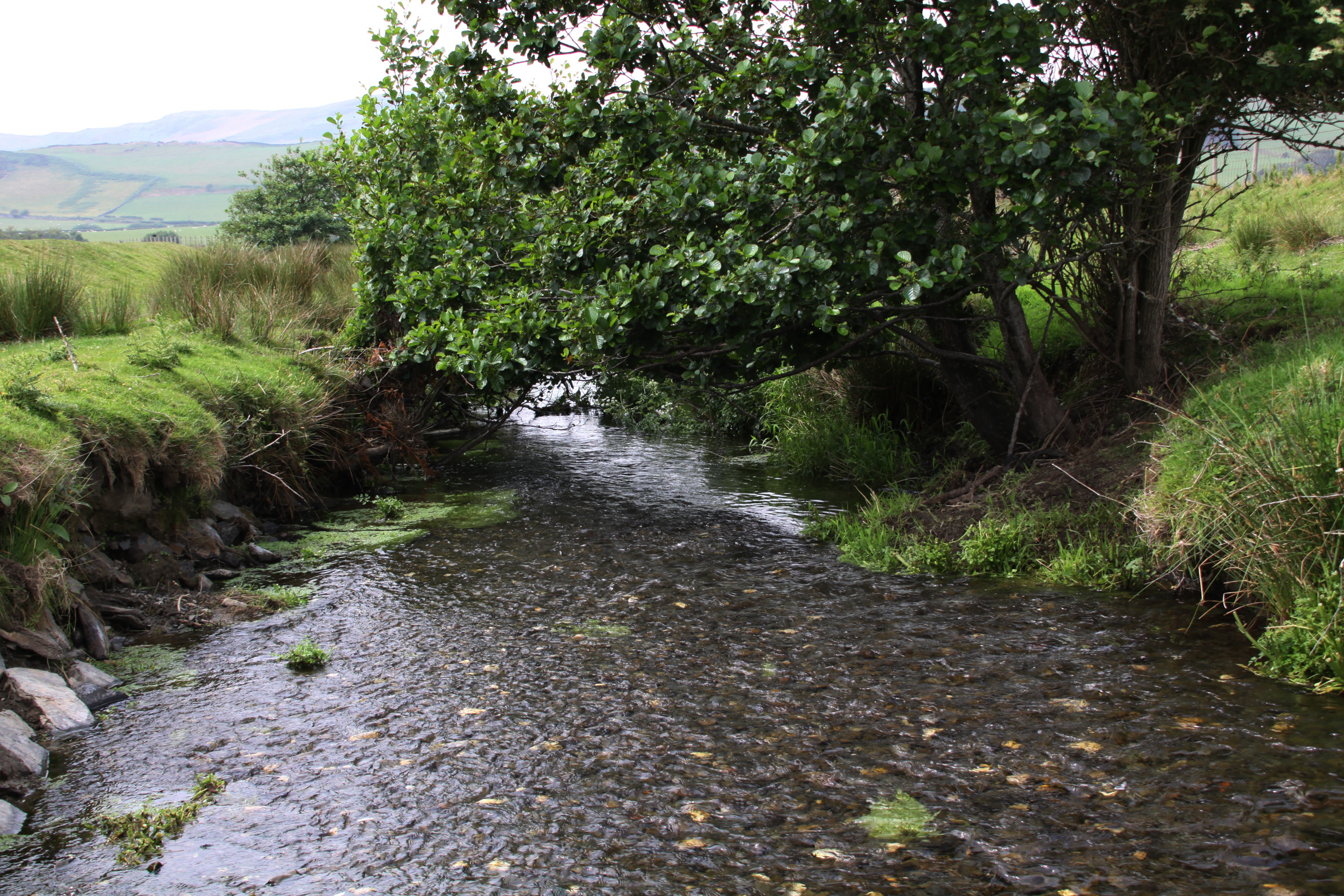
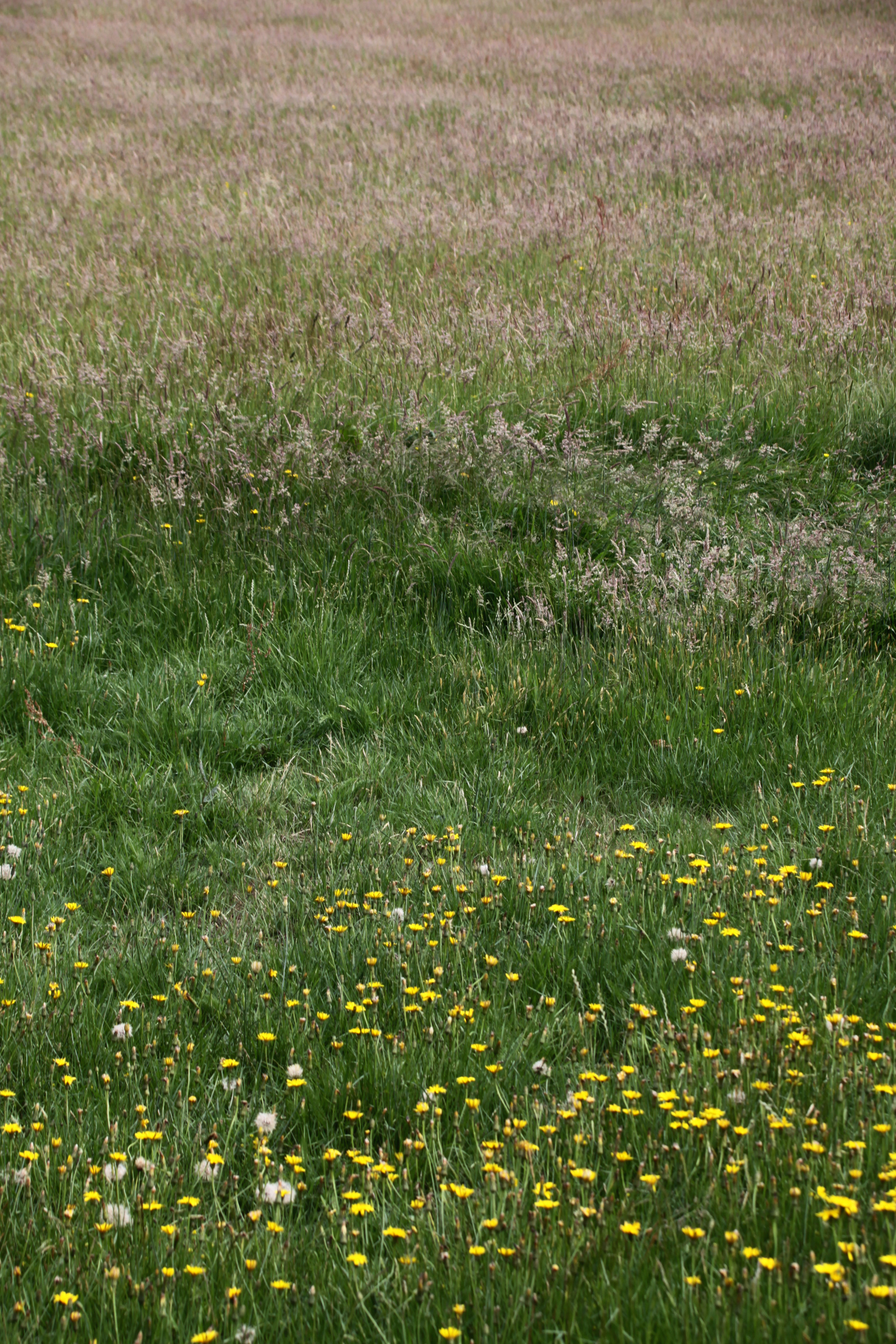
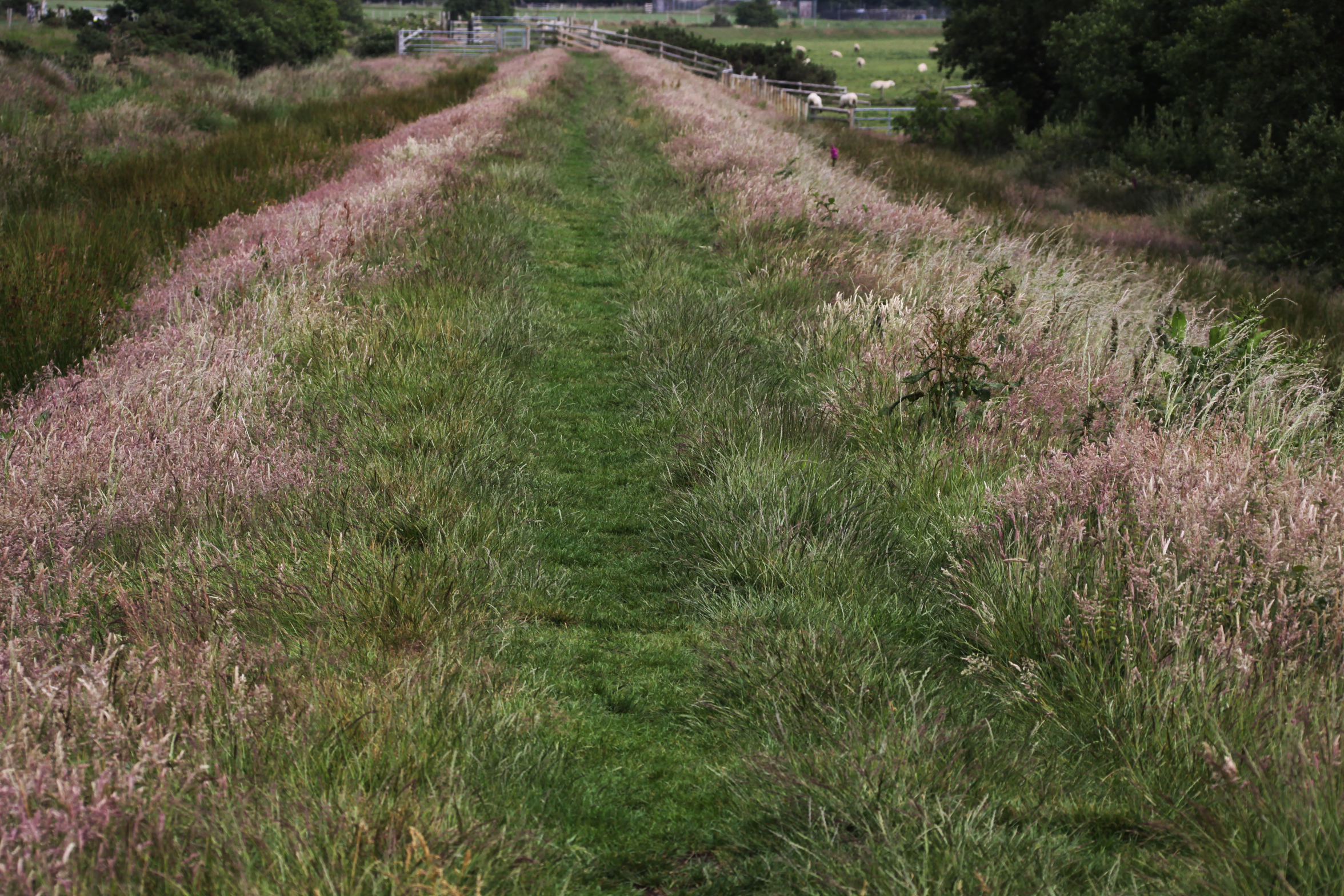
It was a warm day with a gentle breeze, but the sky was an incredibly light, almost invisible blue, and it was very hazy.  The scenery and surrounding environment are completely different from anything that I have walked recently.  The hills behind us looked pale, with pastel shades instead of the usually high-contrast bright colours.  It was an extraordinarily peaceful walk along a raised levee.  To our left, on the outward leg , were either empty fields filled with mauve grass and buttercups, or green fields full of sheep.  On our right was a margin of grasses and wildflowers between us and the the tiny, shallow river.  The Afon Fathew itself was idyllic, flowing lightly over a pattern of golden-brown stones, with shoals of tiny fish, the sound delightful.  Two herons were in a distant field, and both took off, looking wonderful, but aerodynamically improbable.

In the above photograph, one of the first pleasures was a field of Rough hawkbit in the foreground  (Leontodon hispidus) and feathery mauve Yorkshire Fog grass in the background Holcus lanatus).  Rough hawkbit spreads just like dandelions (Taraxacum officinale), with its seeds carried on the air in even the lightest breeze on a hairy pappus (Latin, meaning “old man”), some of which can be seen in the above photograph.  The “hispidus” in the name, meaning bristly, refers  to the protective bract that covers the buds before the flowers open.

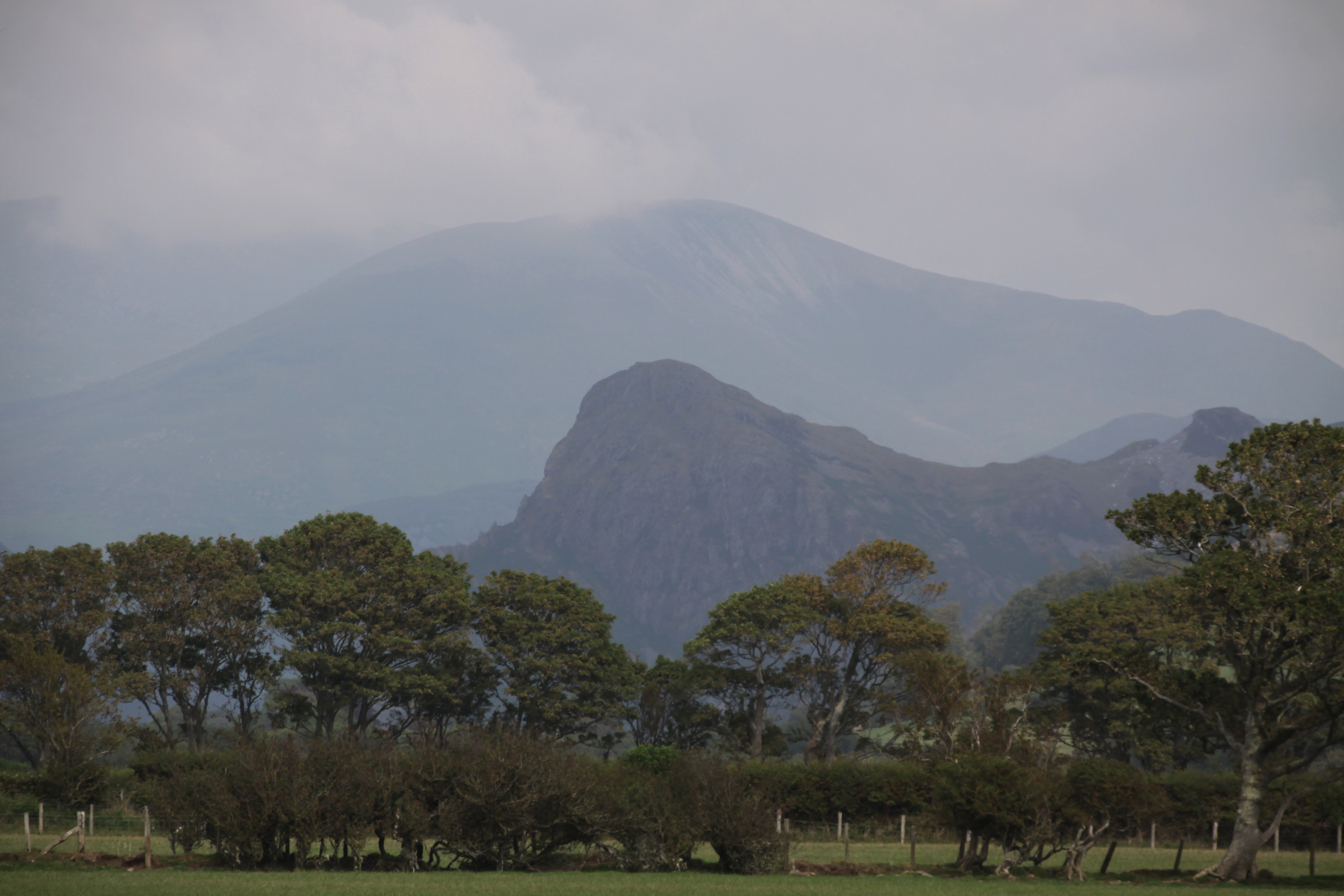
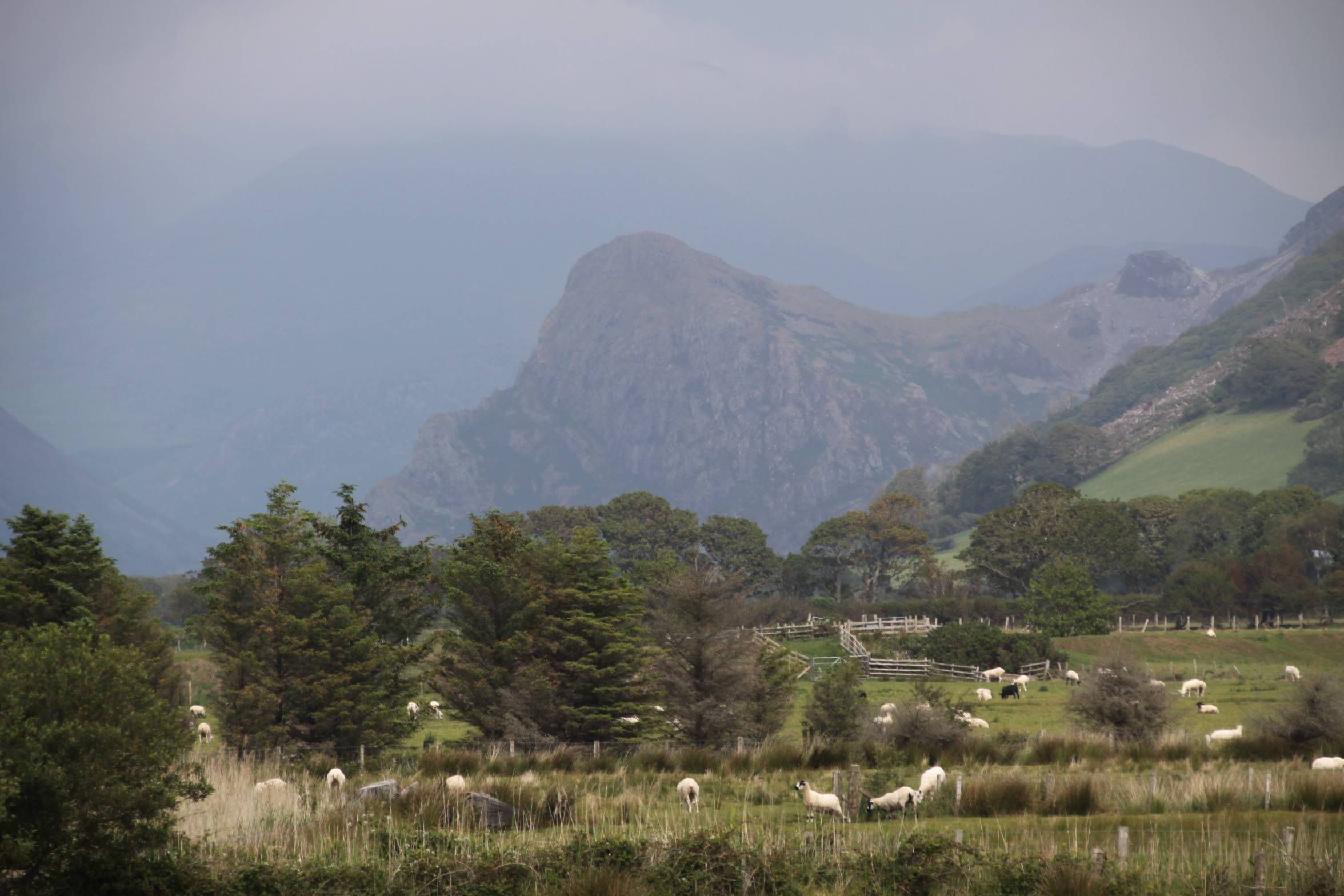
Turning back to see the view behind, Craig yr Aderyn (Bird rock) looms into sight, the site of a two-phase Iron Age hillfort.

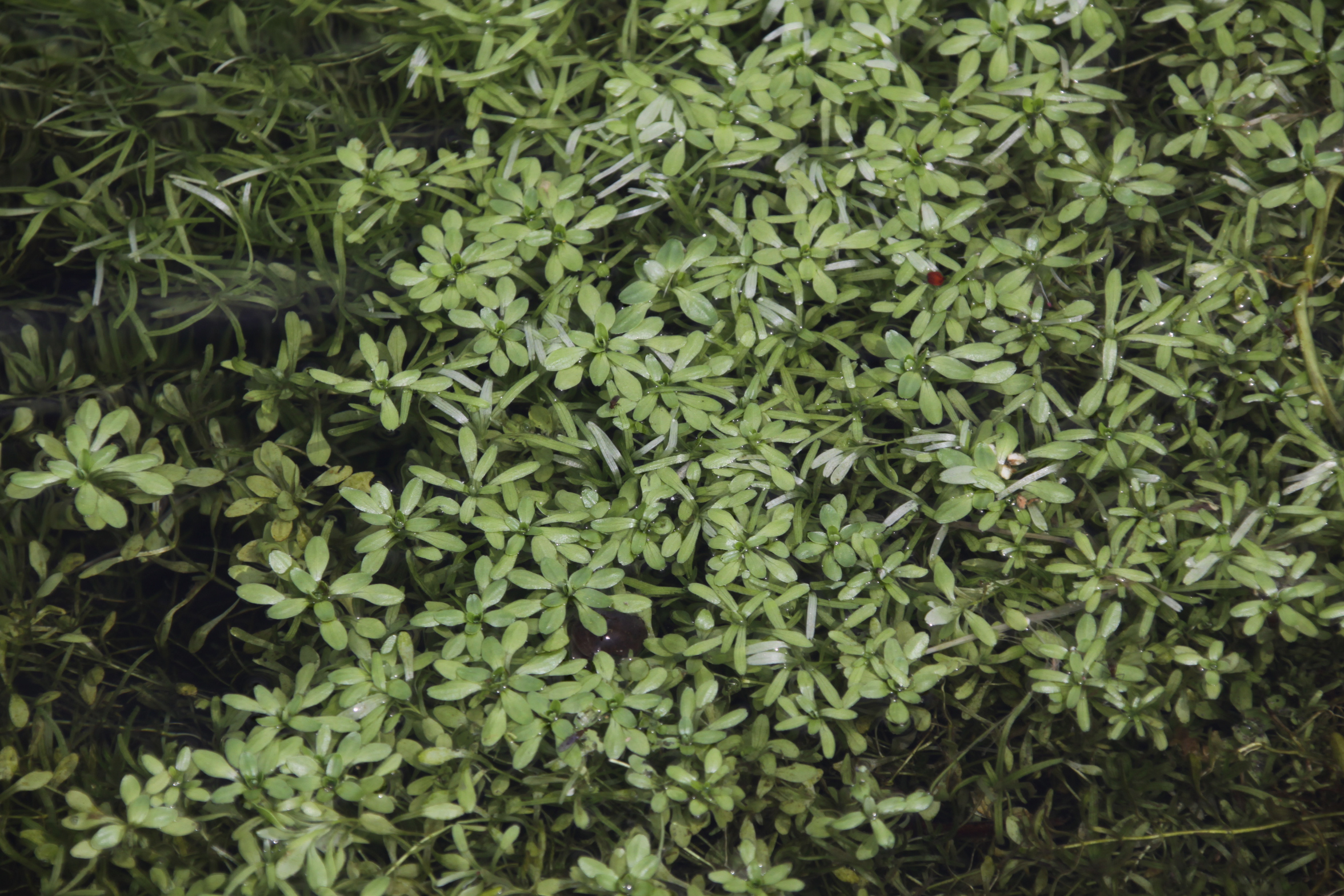
Water starwort (Callitriche stagnalis) often form clumps,with their roots embedded into the mud.  It is good for rivers, streams and ponds because it is a good oxygenator and provides shelter from the heat for fish, fish eggs, frog spawn, tadpoles, frogs and other aquatic species. Its Latin name is derived from the Greek  carlos and trichos, which translate as “beautiful hair,” referring to its hairy stems.

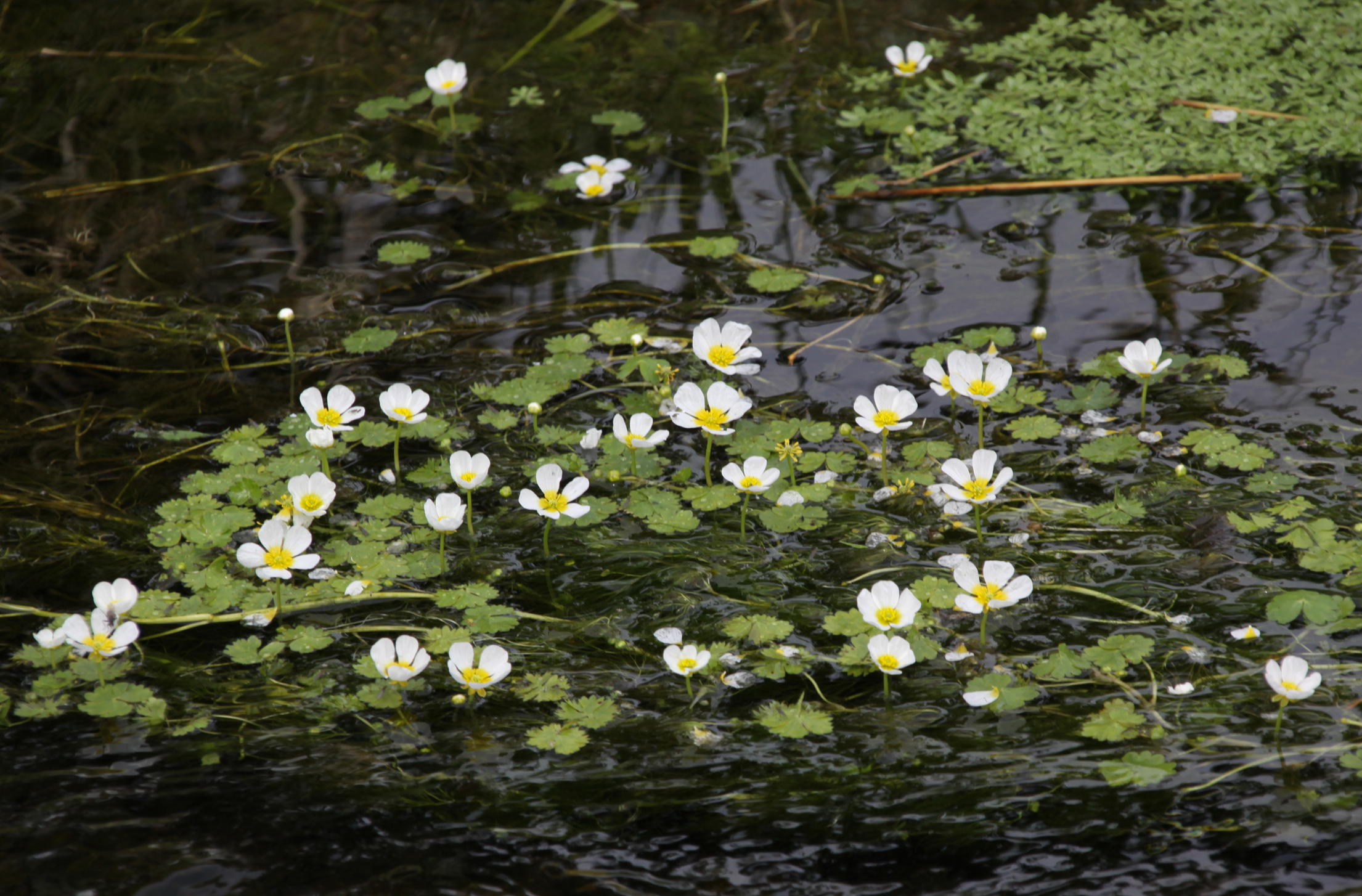
The fabulous Water crowfoot, Ranunculus aquatilis – a short-lived perennial, a good pollinator and an excellent oxygenator. Produces two types of leaves – submerged foliage with very fine feathery leaves and then, in late spring during flowering, floating three-lobed leaves.  Like the Water starwort it provides shelter for aquatic species.

Levee with central track flanked by Yorkshire Fog grass

Hedge bedstraw (Galium mollugo). One of several bedstraws, it favours open grassland, meadows, hedge-banks and is mainly pollinated by flies.  Flowers June to September.

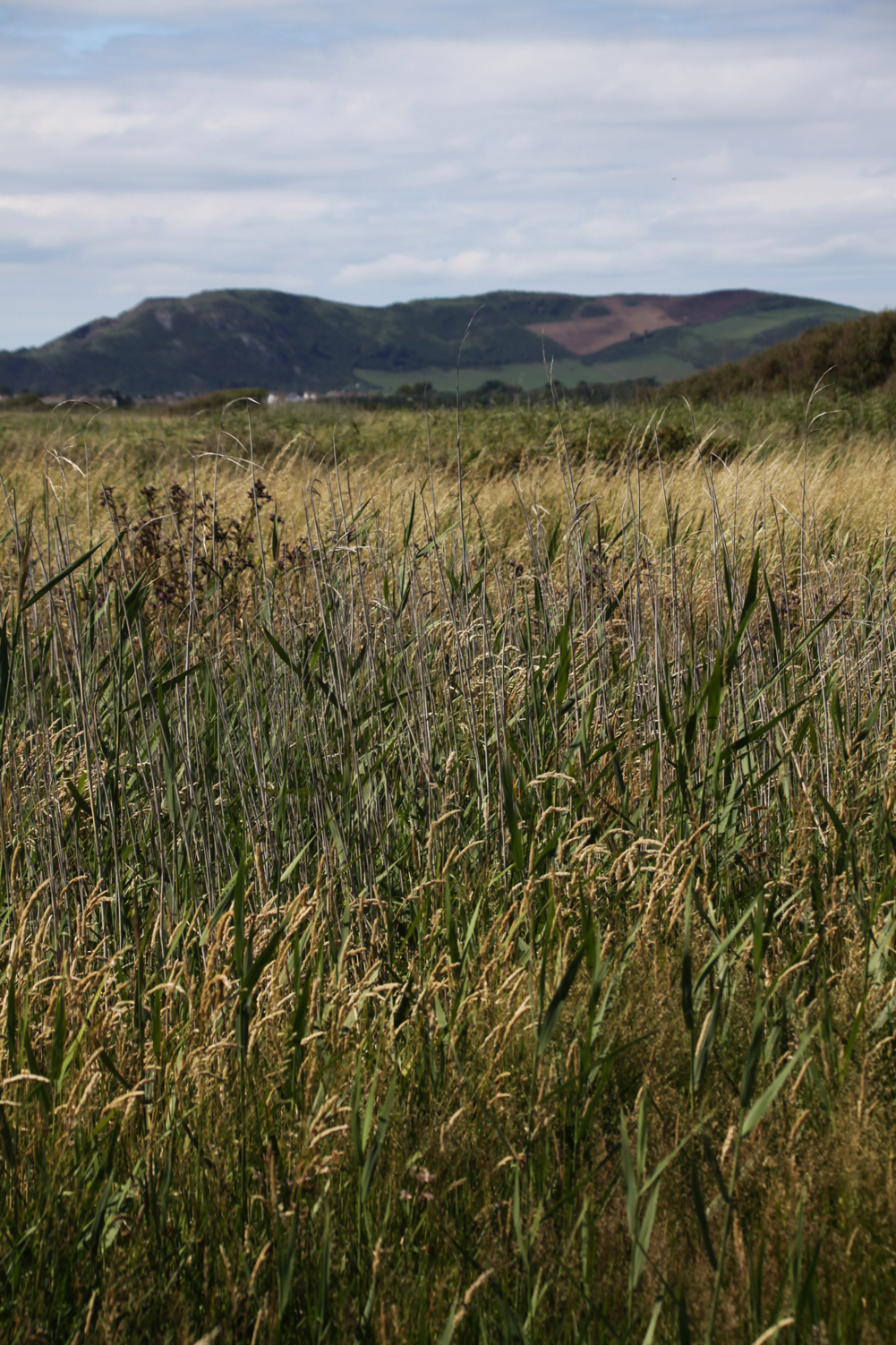
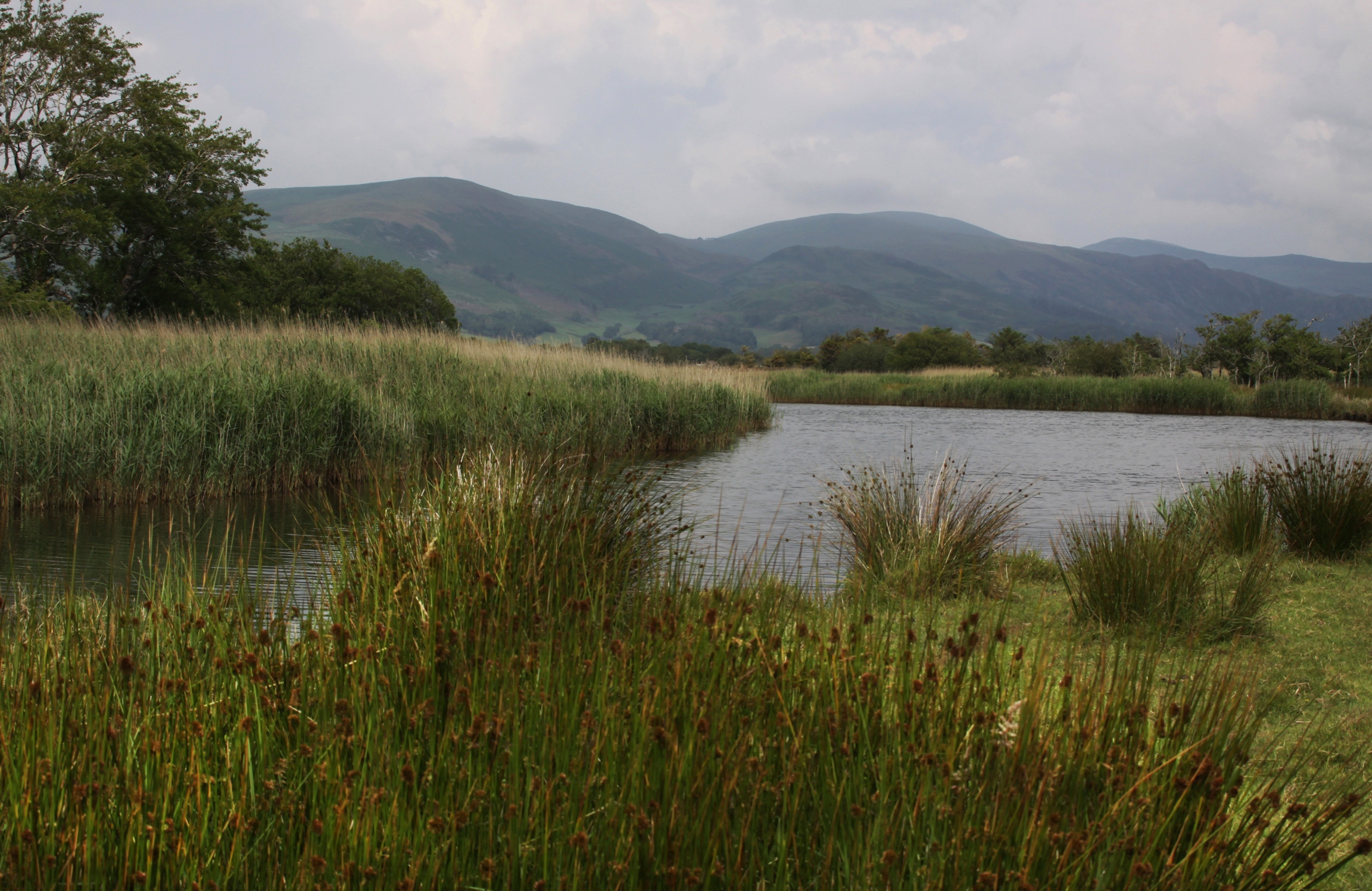
The path takes an abrupt left where the Fathew flows into the Dysynni, a much wider river flanked by marshy areas, some full of short spiky Spiny rush reeds and sheep tracks, others filled with the tall, gently rustling Common reed.  Little snatches of bird song from the marshes hinted at a healthy population of nesting pairs amongst the reeds, including reed bunting.  The floodplain of the Dysynni gives a sense of great openness and space, with excellent views over the sheep towards Bird Rock.  The Dysynni is home to salmon and trout, and there have been sitings of otters, but no otters were out to play that day.


Spiny rush (Juncus acutus) is found in freshwater flats and marshes but is also saline tolerant and will grow in brackish and salt marsh environments.  It is pollinated on the wind, and spreads quickly.

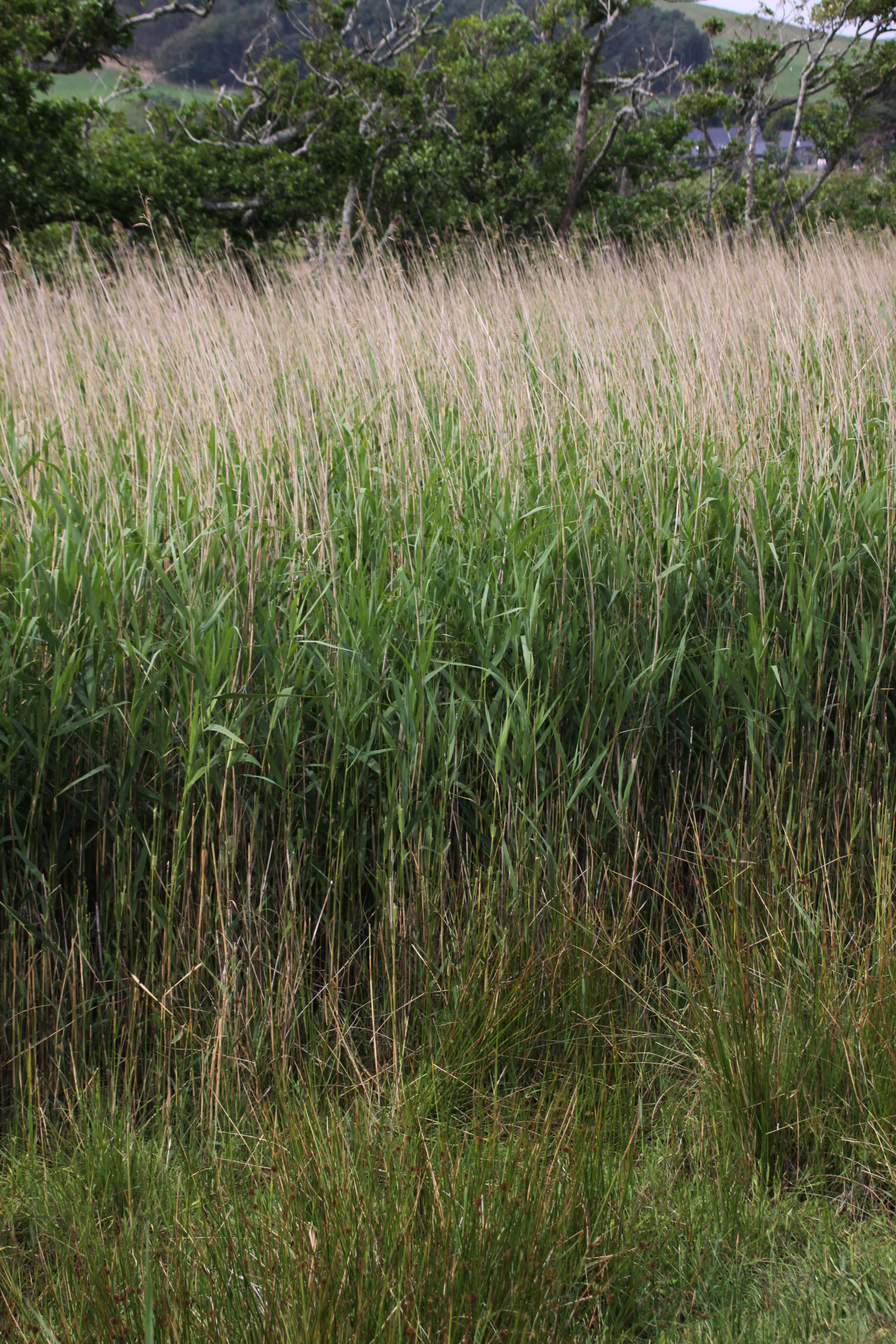
Common reed – Phragmites communis

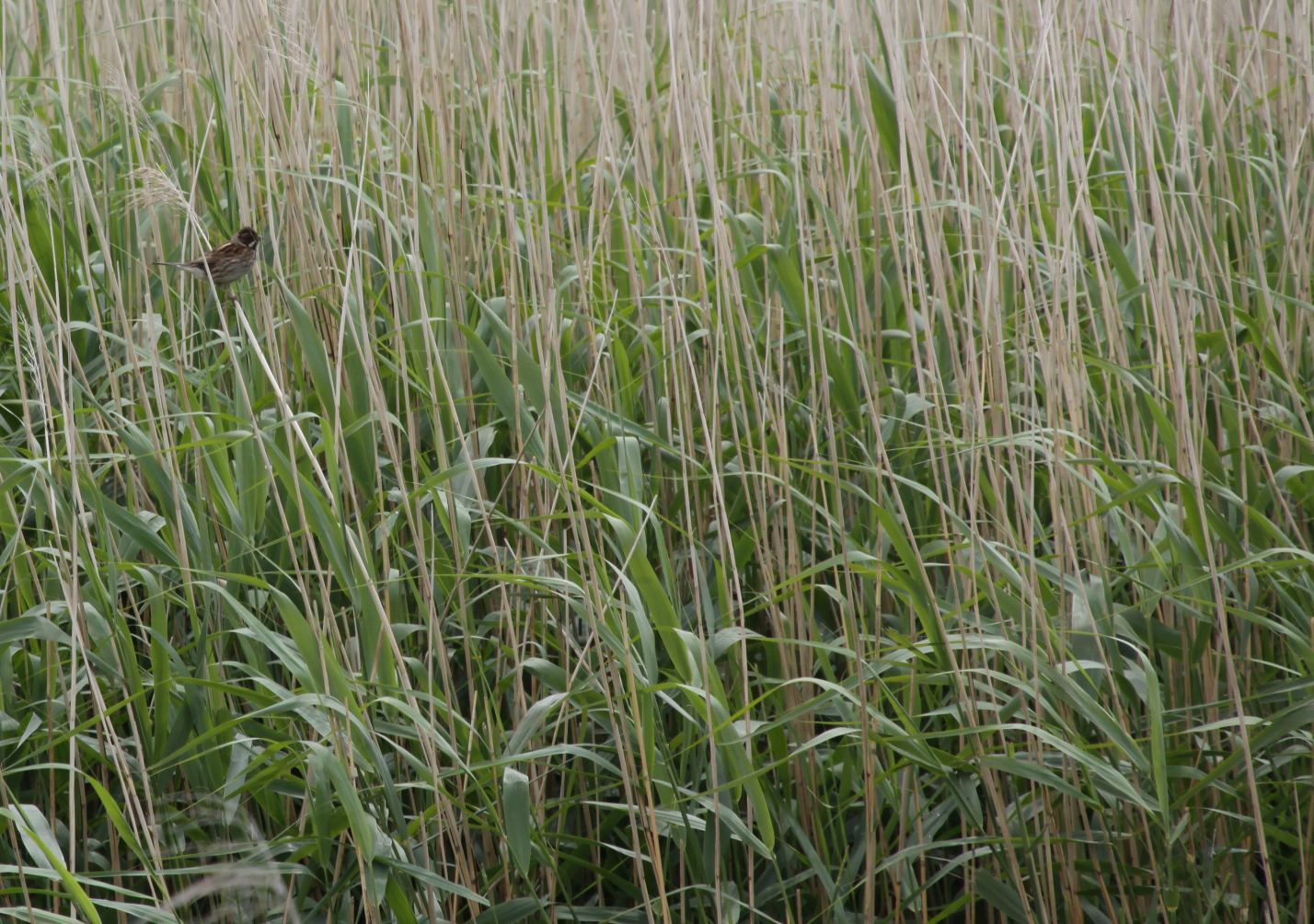
Male reed bunting (Emberiza schoeniclus).  Reed buntings prefer tall reeds and high grasses where their nests, near to the ground, are hidden, but they are increasingly found in farmland too.  Their song is described by one of my books as “cheep-cheep-cheep-chizzup” but and it can be heard rather more usefully here on the excellent British-Birdsongs website.  Reed buntings eat insects when breeding, but switch to seeds for the rest of the year.

Almost certainly female reed bunting (Emberiza schoeniclus).  This was a long way from me, and I took a photo on the off-chance that I would be able to identify the bird once I had enlarged it in Photoshop, which sometimes works well enough to enable  broad markings to be made out.

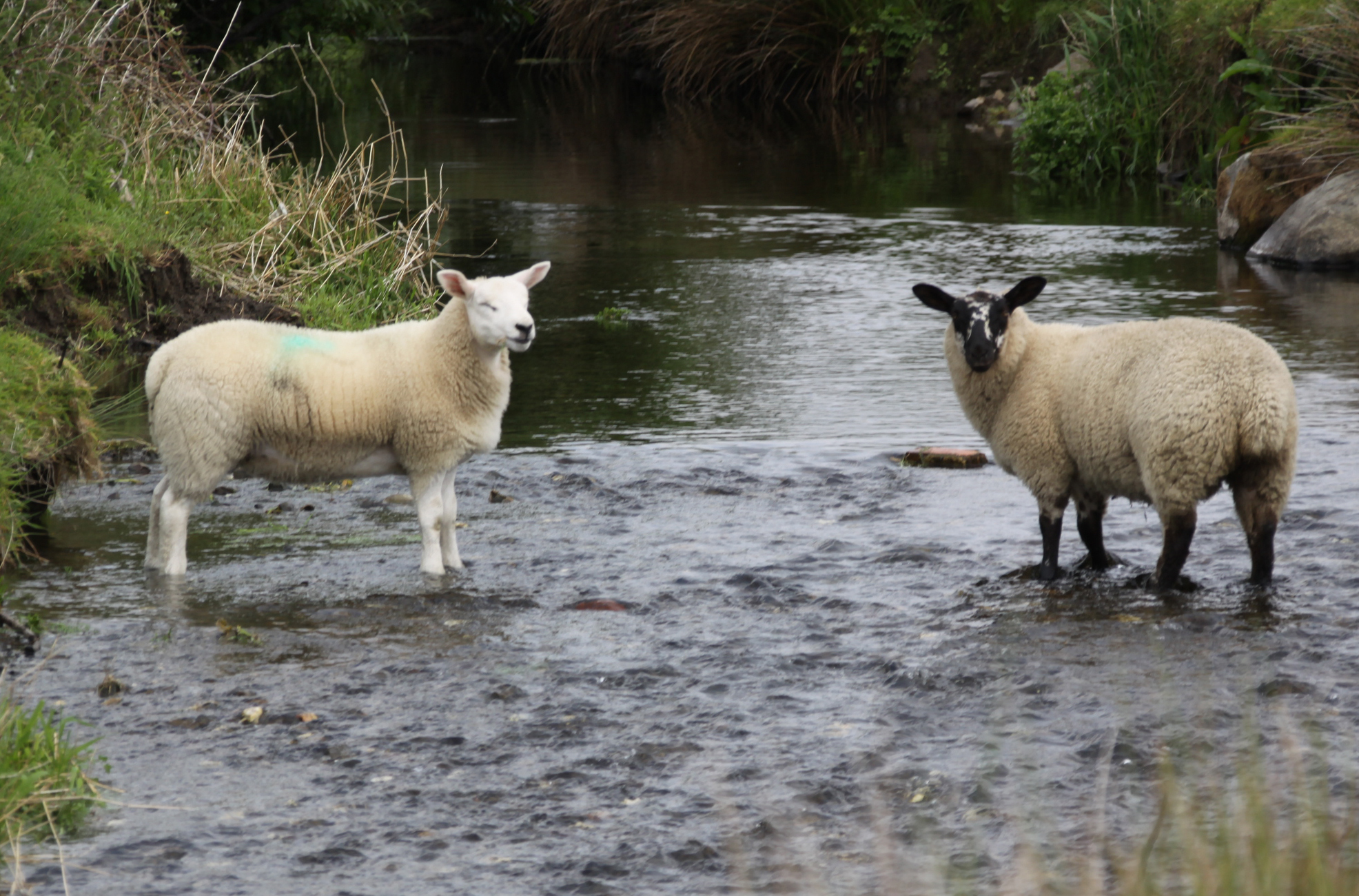
I had intended to walk as far as the woods of Ynysymaengwyn, but three enormous splodges of warm water landed on my head as I was approaching, so although I had waterproofs in my rucksack I decided to turn back, and had the benefit of different views on the return journey.  Sheep were scattered along the levee.  Sometimes they moved off, and sometimes I did.  They were far more curious and confident than hillside sheep, perhaps more used to people, perhaps less nervous because they had no lambs.  Some were standing in the river.  When I came to one gate, there was a young male bull, jet black, looking at me over the top of it, a lovely animal.  I opened the gate slowly and carefully and he stood back, but I still had to push gently past him.

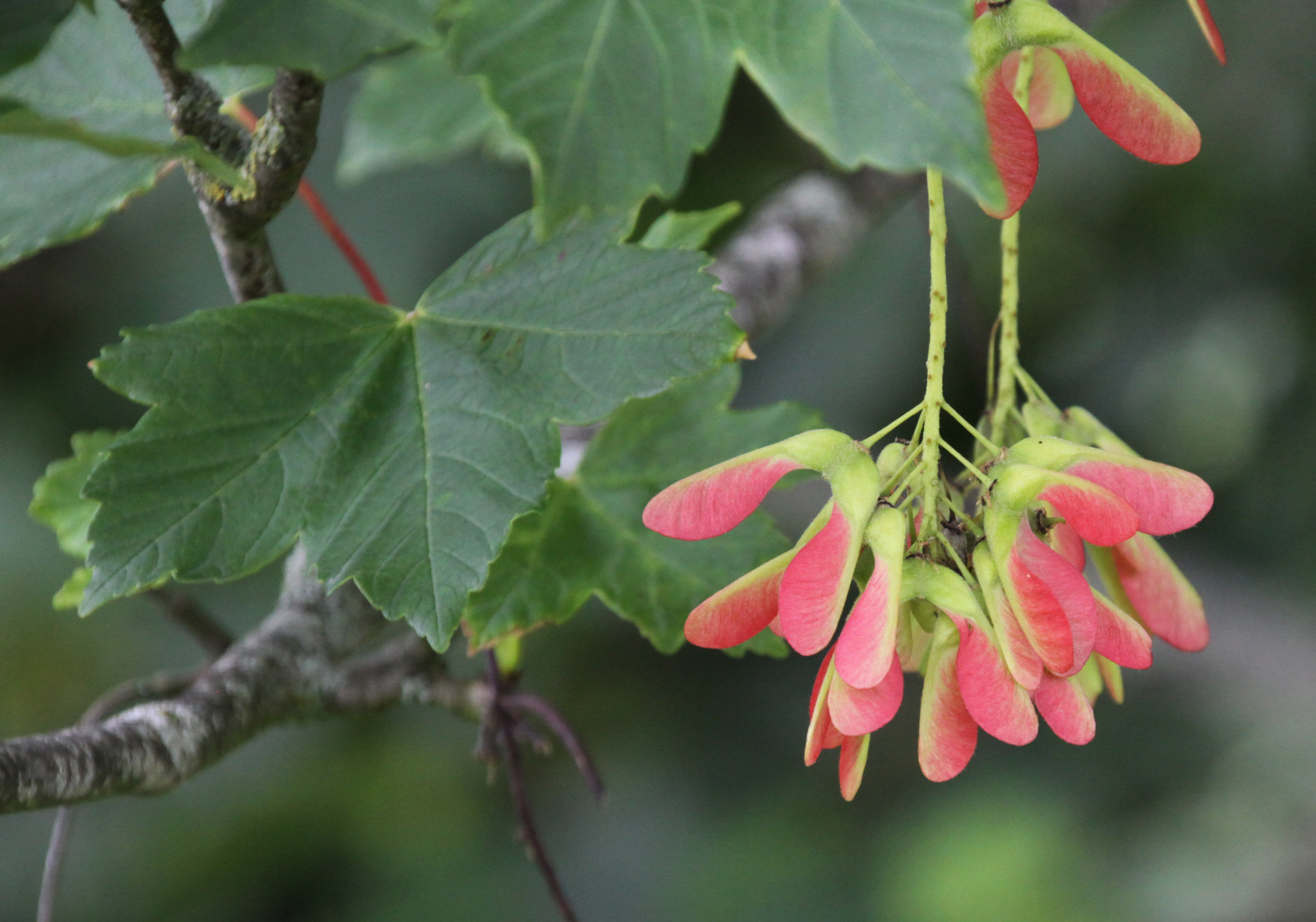
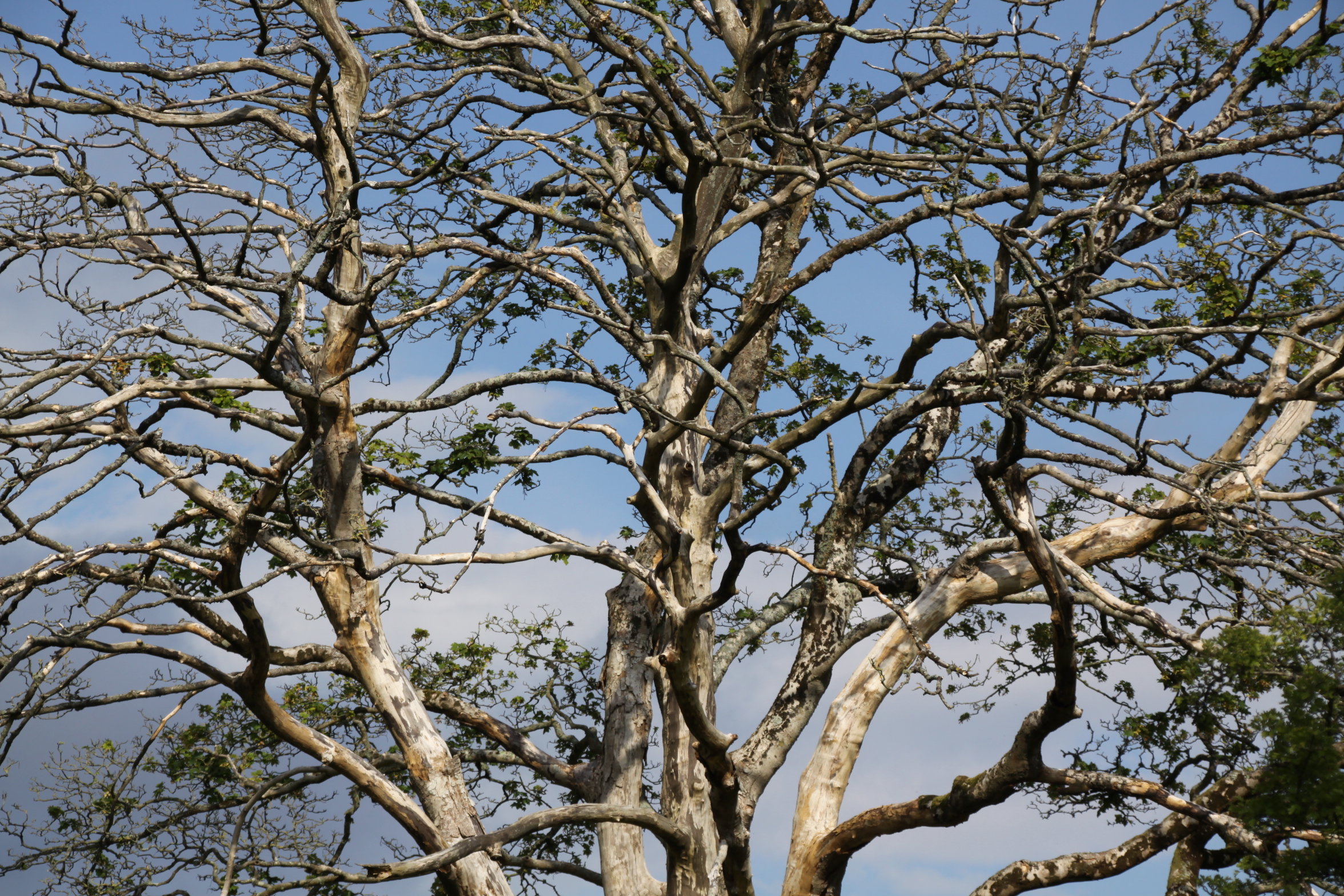
(Acer circinatum) leaves and samaras (the latter, its fruits, often known colloquially as helicopters or whirligigs).  Vine maple (Acer circinatum) looks very like the standard sycamore (Acer pseudoplatanus), but it doesn’t grow as big, its leaves are attached to branches by reddish stems and its fruits are red and green.  In Wales, sycamore trees were traditionally used in the making of ‘love spoons.’

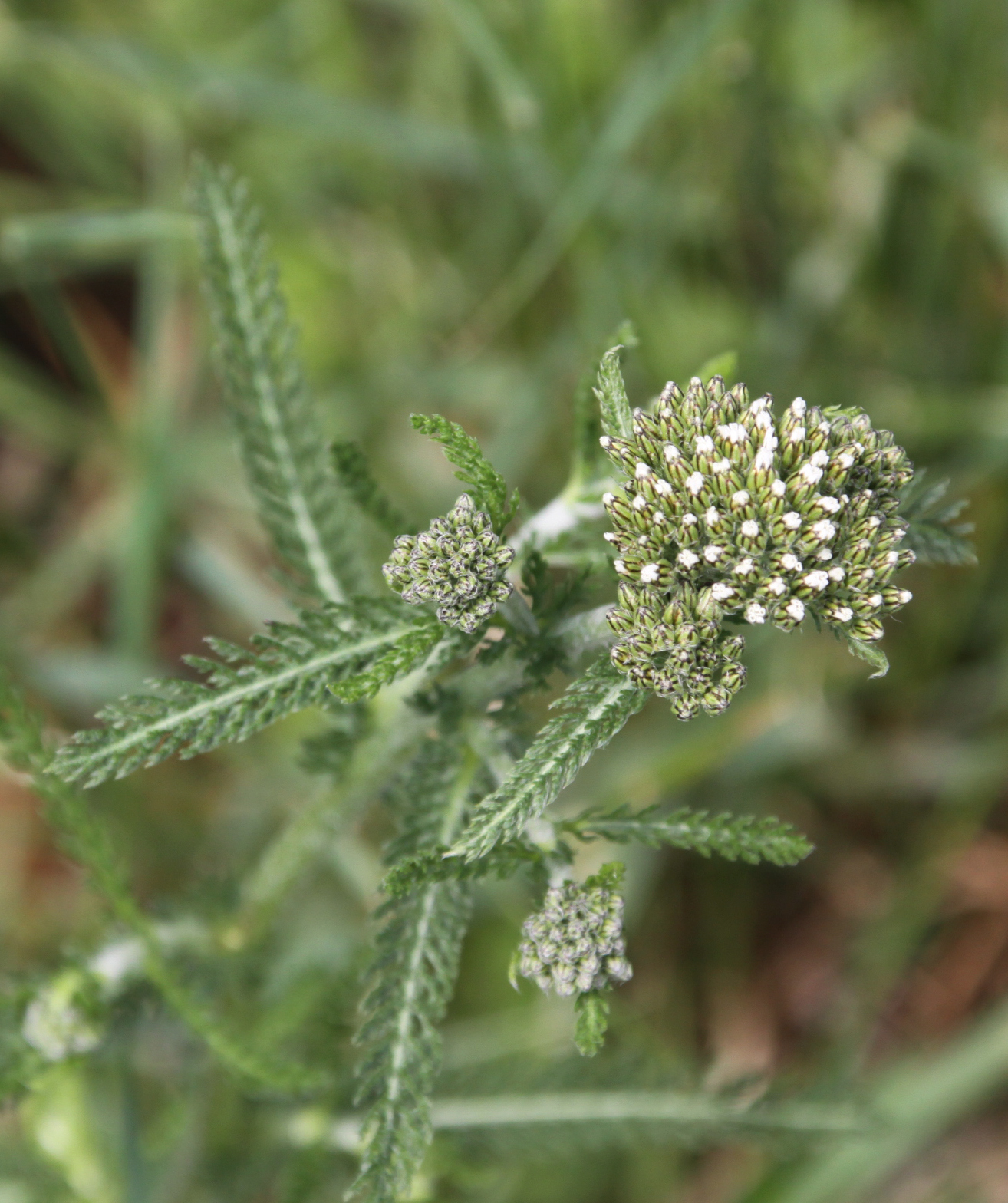
Yarrow (Achillea millefolium), just about to bloom.  It has attractive feathery foliage (millefolium means “a thousand leaves”), spreads by underground stems, and is patch-forming. It is disease resistant, which can benefit neighbouring plants, and its small leaves prevent excessive moisture loss.  It was named for Achilles, who used it to heal the wounds of his soldiers, and it retains its reputation as a good cure for cuts and bruises.  It has a long history as a remedy for colds and fevers (as a tea) and for toothache (when the leaves are chewed).  Its leaves and flowers are used in salads in small quantities, it can be boiled as a vegetable and served with butter, and it can be thrown into soups and stews.  It has a slightly bitter taste.  Flowers July to October.

Elder (Sambucus nigra).  They are versatile plants, their flowers providing pollen for insects, the leaves popular with moth caterpillars, and the fruits eaten by a wide variety of mammals.  For human consumption they must be cooked, as all parts of the plant are poisonous when raw, but is popular for making tea, wine, cordial and preserves.  It has a distinctive scent and was thought to keep the Devil away.  It was also hung around dairies to keep flies away.  It is sometimes known as the Judas Tree, because Judas Iscariot is said to have hanged himself from an elder.

Red campion (Silene dioica).  A favourite of so many people, its bright pink face is instantly cheering, and there was a lot of it along the Afon Fathew section of the footpath.  Plants are either male or female, so two plants are needed for reproduction.  Flowers May-July/August.

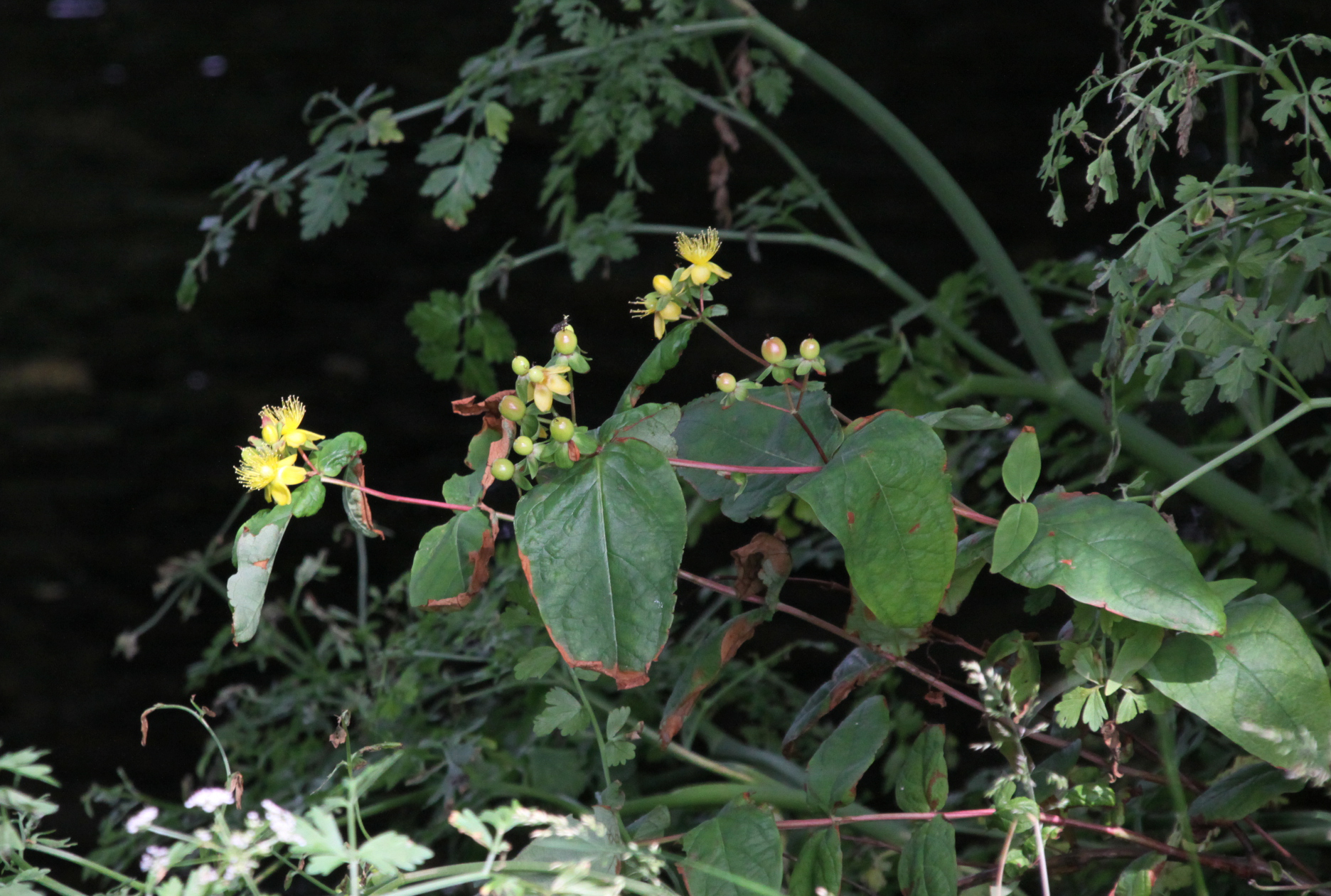
Tutsan / Shrubby St Johns Wort (Hypericum androsaemum).  The name Tutsan is derived from the French toute-sain, “all health,” reflecting its use in herbal medicines, primarily the application of bruised leaves to cuts to help healing.  Androsaemum means “sap the colour of blood.” After flowering the plant produces oval red to black berries when flowering has finished.  It likes shady areas, particularly deciduous woodland where this was found just on the way back to the start of the walk. Flowers June to August.

I arrived back at Aberdovey just as the rain started in earnest, and just in time to take my clothes off the outside dryer!

A late afternoon stroll in the hills behind Aberdovey, with wildflowers

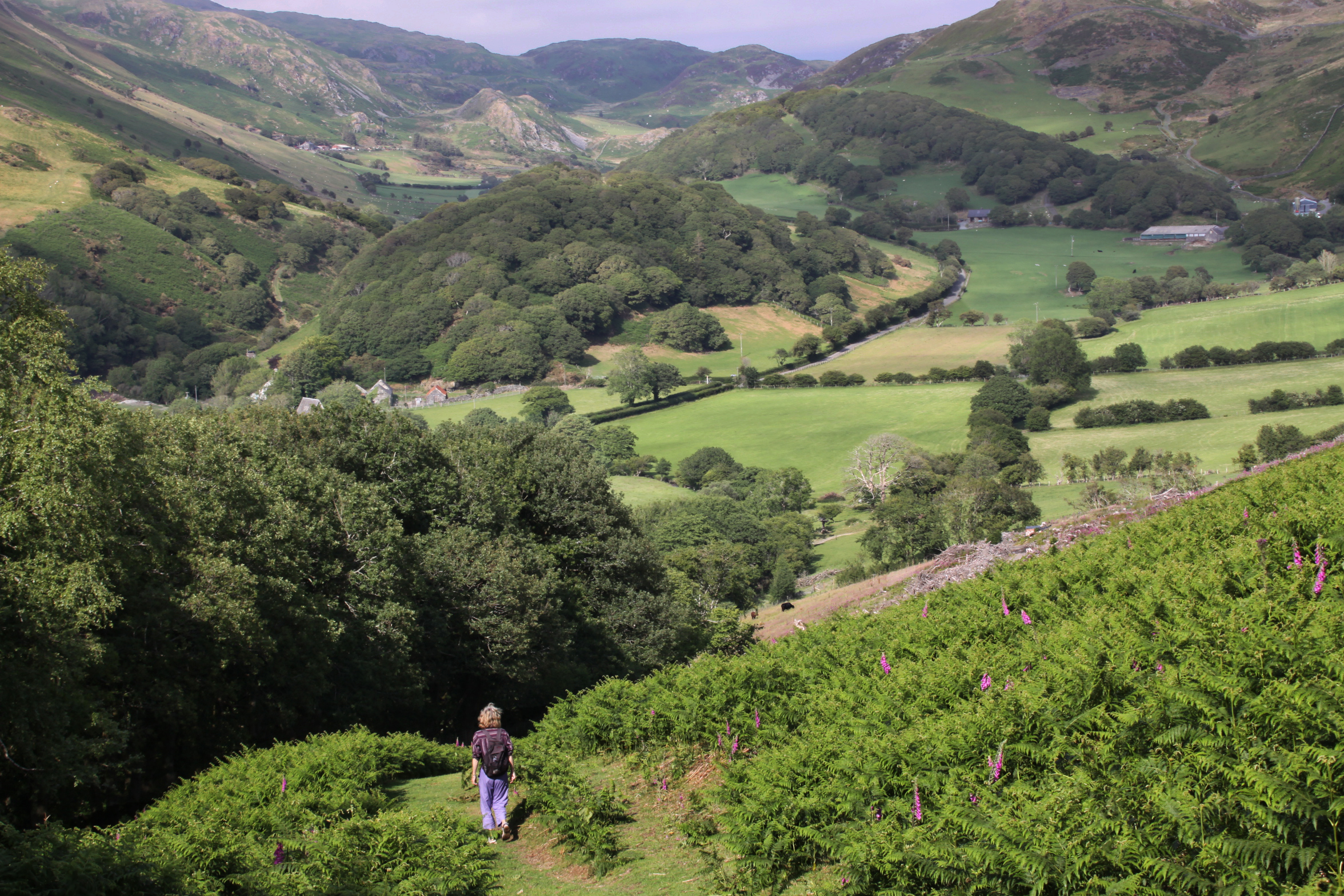
Monday at 4pm was looking dicey.  I started out in a light rain coat, because it was spitting fairly firmly and the sky looked ominous, but thankfully it stopped.  I rolled up my coat and put it in my rucksack, the sun came out, and we had no rain for the rest of the two and a half hour walk.  The combination of sun and cloud in the late afternoon made for some very nice contrasts in the scenery, and the wild flowers were splendid.  The foxgloves, which have been rampant for weeks, have truly come into their own in the hills behind Aberdovey, and were really rather spectacular.  Another terrific walk without another person in sight.  There were a lot of sheep and lambs around, the lambs now fairly stocky.  On the other side of the valley, cattle were grazing on the hillside.  We saw several tiny frogs in a narrow stretch of water where there had been tadpoles earlier in the year, and a couple of rabbits on the return leg of the journey at the top of the hill, and could here the larks singing.  Apart from the glorious views, the main source of interest was the wildflower population.

The foxgloves dotted around in the new green bracken provide lovely splashes of colour at the moment.

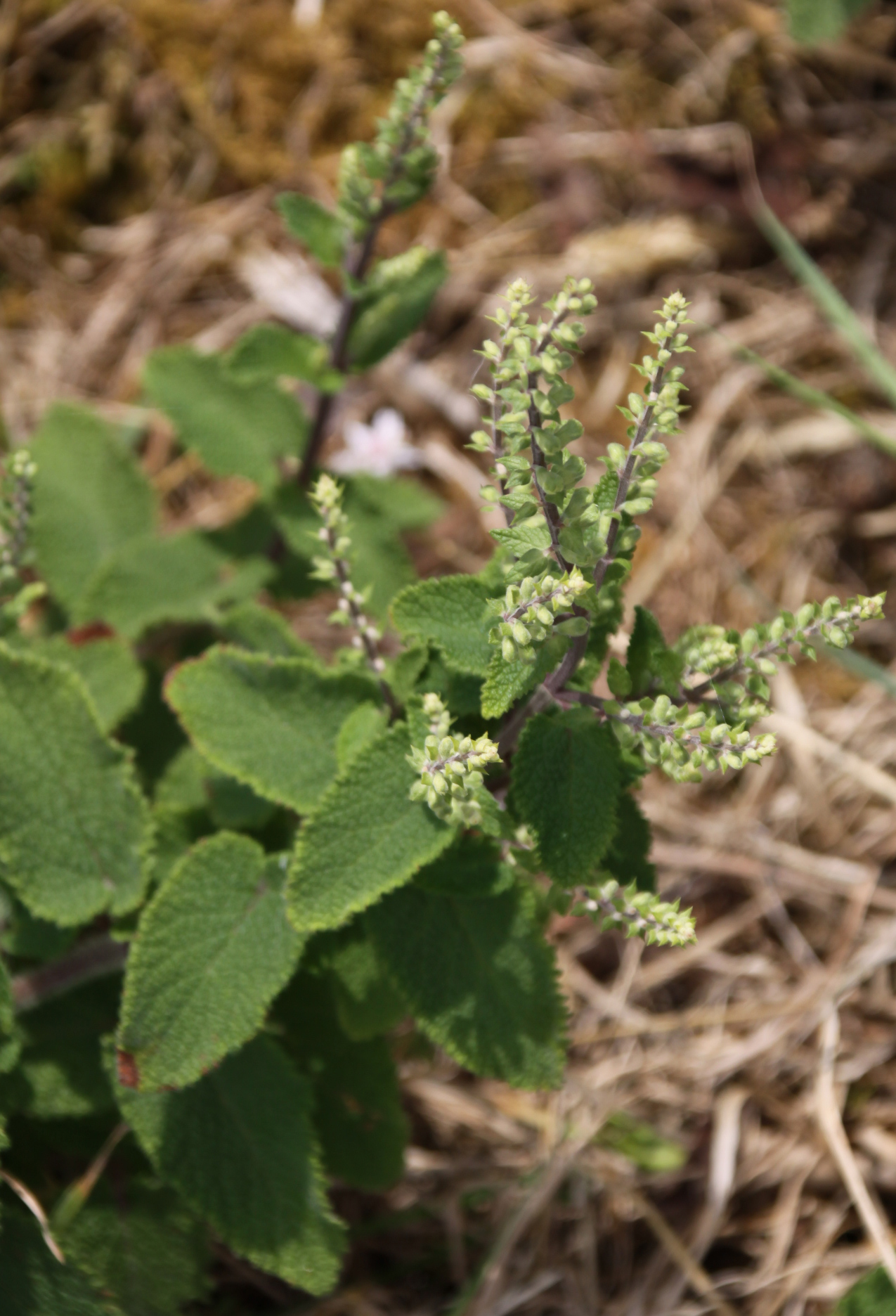
This is not in flower yet, but looks from its leaves and its spikes like wood sage (Teucrium scorodonia).  It should flower between July and September, producing creamy-yellow lipped flowers.  It is a member of the mint family.  It is drought tolerant, and is often found in coastal areas including sand dunes.

English stonecrop (Sedum anglicum)
A succulent acid-loving 5-petalled perennial, flowering from May to August.  Retaining water in its waxy leaves allows it to tolerate dry environments and poor soil and to survive drought conditions.  The leaves may turn red if it is exposed to a great deal of sun, a protective chemical response to sunlight, which can damage green chlorophyll.  To protect itself from wind-scorch, it grows very low to the ground.

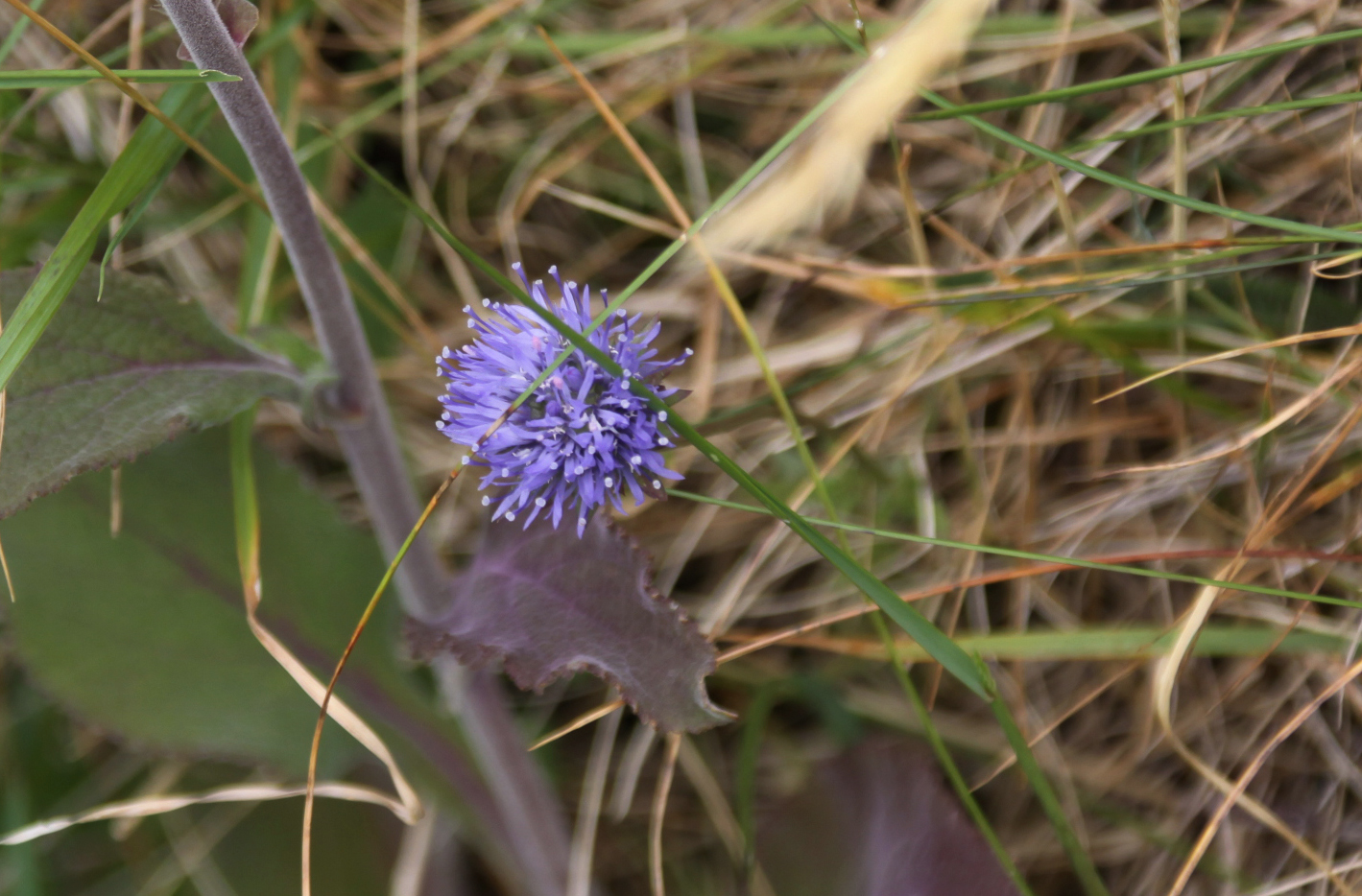
Sheep’s-bit (Jasione montana)
Sometimes called Sheep’s-bit scabious, this is actually a perennial member of the campanula family, even though it has no obvious resemblance to the usual bell-flowered character of campanulaceae and at first glace looks much more like a true scabious.  Unlike scabious, it has small, alternate hairy leaves. and tiny narrow petals.  According to the Wildlife Trusts website, pollinating insects, which see a different light spectrum to humans, find it highly visible under ultraviolet (UV) light, and use the patterns and colours on the petals to guide them to the nectar and pollen.  It usually starts flowering in July, but thanks to the remarkably warm spring, a lot of species are flowering early.  It likes a wide variety of environments, including dry grassland, and is often found in coastal areas.  It is an excellent pollinator.

Rosebay willowherb (Chamerion/Epilobium angustifolium).
Also known as “fireweed” because it colonized burned and scorched sites, and “bombweed” due to its expansion on World war I and II bomb sites.  Heat from this type of site assists with the germination process.  It has rhizomes, so a single large patch can be one plant. Its seeds also establish themselves freely, each fitted with cotton-like ‘parachutes’ that carry them over long distances. The Latin “angustifolium” simply means narrow-leaved.  It is a biennial that flowers from June to September.  Its leaves are edible and have a wide range of uses.  For more on the multiple uses, see the Wikipedia page dedicated to Rosebay willowherb.

Self-heal (Prunella vulgaris)
One of my books says that the dark violet flowers have a hooked upper lip that in the 16th century was supposed to look like a sickle, so according to the doctrine of signatures, it was believed to men wounds from sickles and billhooks.  Although there were one or two isolated examples in verges, this perennial has creeping roots and in open grassland and on heaths usually grows in patches from June to November.  The Latin “vulgaris” means common.  They are pollinated by long-tongued bees.

A tiny frog, about 3cm long, in a very small stream where we had seen tadpoles earlier in the year.  There were several of these little amphibians, and they would have been completely invisible if they hadn’t hopped around, their damp skin catching the light.  It’s a lousy photograph, because I was trying to hold back some grass with one hand and steady the camera and focus it with the other, but you can just about make it out.

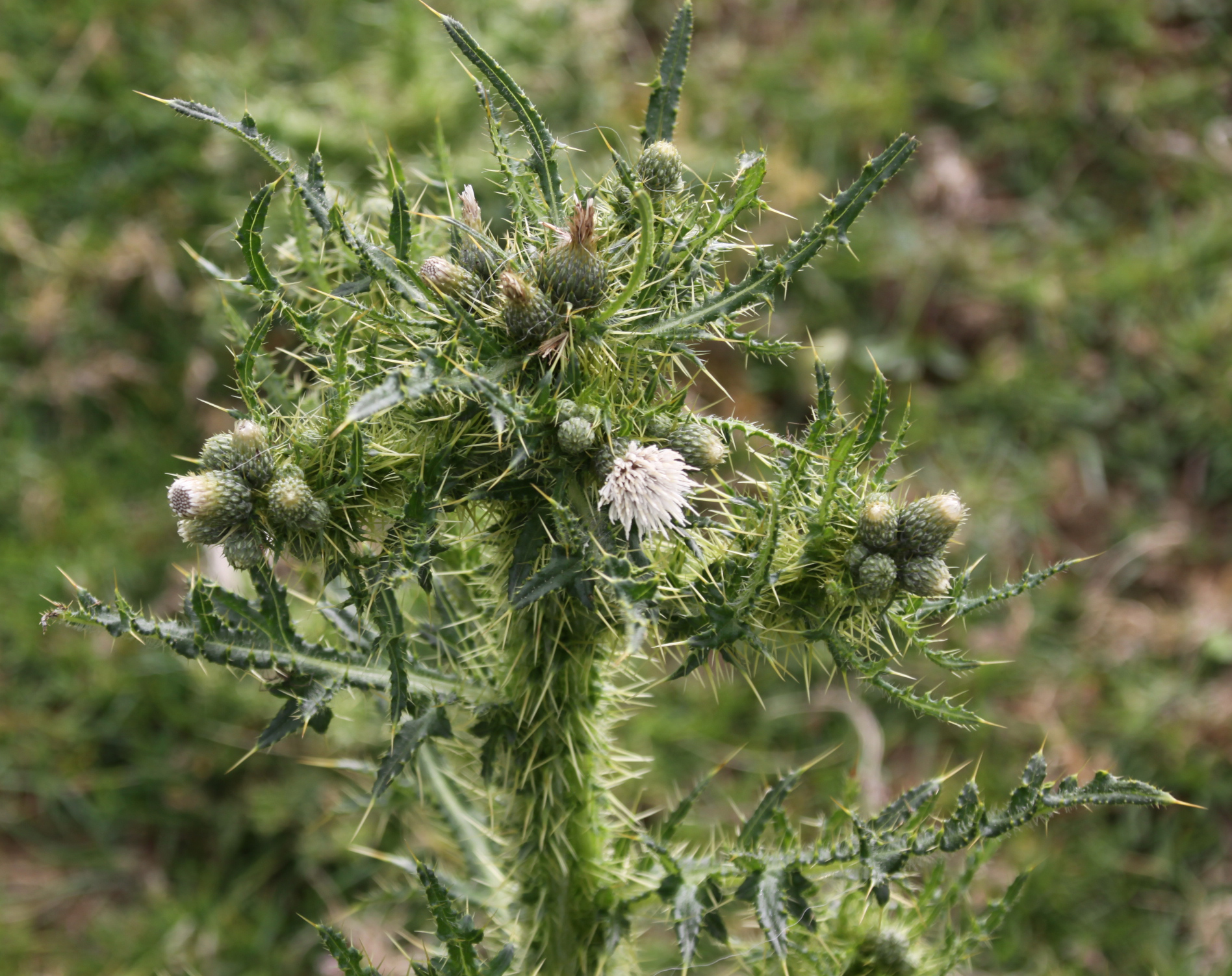
Marsh Thistle (Cirsium palustre)
Like most thistles, this has spiny protection both around its clusters of flowers and along its stem, and even has spiny leaves.  It looks fairly lethal to unprotected hands and judging by its proliferation, it is a good defense against being eaten by sheep, cattle and rabbits.  It was spread all over the hillsides, and it is easy to identify from a distance due to its distinctive form.  As its name indicates (“palustris” means of marshes), it prefers damp conditions and meadows, but seems to be doing well at the moment, even after the recent drought conditions.  It is biennial, pollinated by bees and butterflies, and usually flowers between July and September.

Occasional white examples of the purple marsh thistle were dotted around.

Foxglove (Digitalis purpurea)
Foxgloves are going mad at the moment, in verges, in amongst the bracken or as here, on disturbed ground.  They began flowering in early May, although they don’t usually appear until June, and flower until September.  The foliage is poisonous, which is probably why in Wales it is known as elves’ fingers or gloves, and in Ireland it is called fairy thimbles.

Bittersweet or woody nightshade (Solanum dulcamara)
All parts of the plant are poisonous but in humans usually cause only upset stomachs.  The latin species name “dulcamara” means sweet-bitter, which describes the bitter taste, followed by a sweet after-taste.  In Germany physicians used it as a cure for rheumatism and it was hung around the necks of cattle to ward off evil.   It flowers from June to September and is happy in hedgerows and woods.  After flowering it produces egg-shaped berries that start off green, as above, and slowly become a bright, shiny red.

This is tiny, just a few millimeters across.  I still haven’t tracked it down but will update this page when I do.

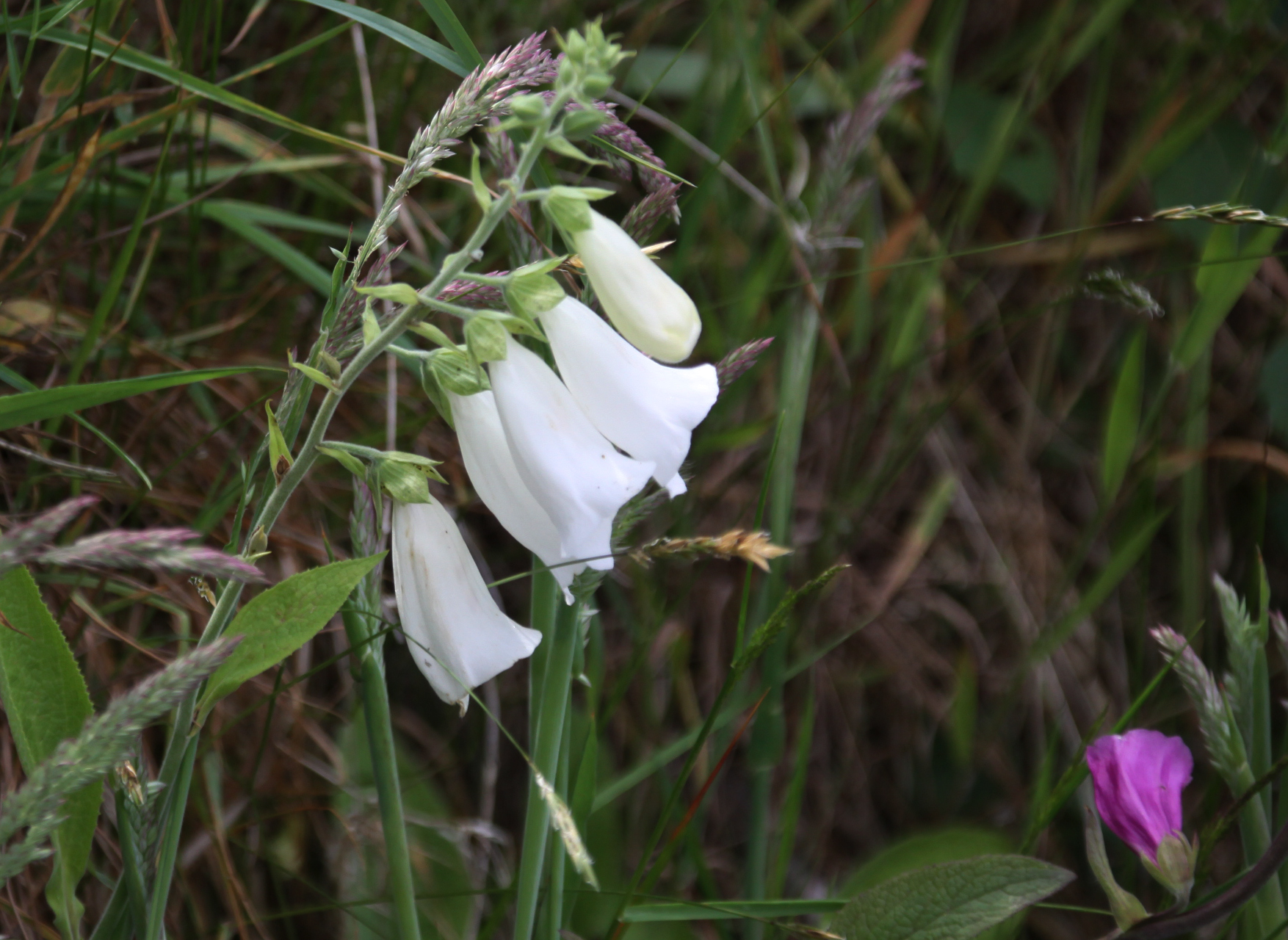
White foxglove (Digitalis)
The hills are covered in the distinctive purple spikes of Digitalis purpurea (“purpurea” means purple) at the moment, so the appearance of a single, pure white foxglove, near the stream in Happy Valley, was something of a novelty.

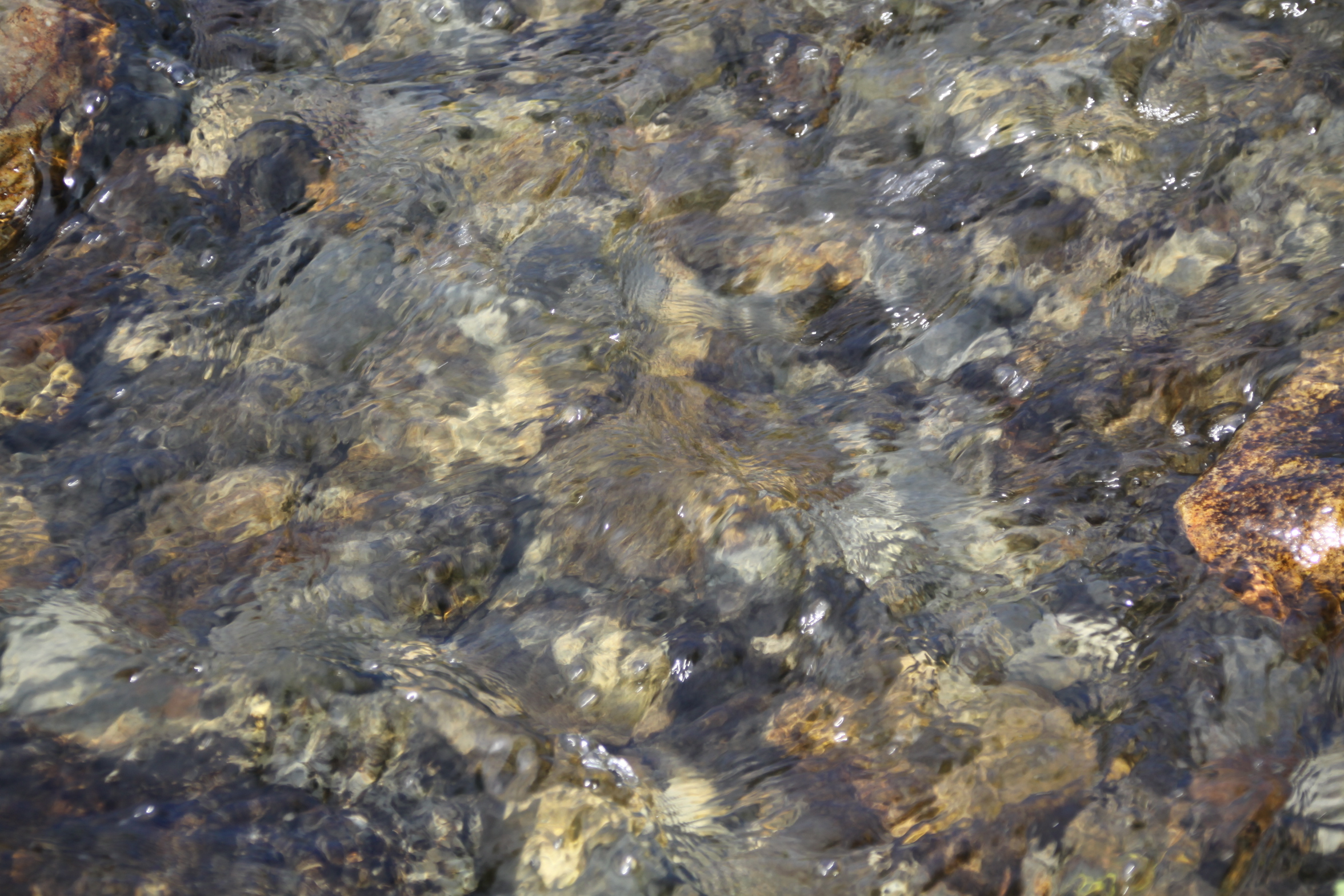
Afon Dyffryn Gwyn in Happy Valley.  Afon means river, but it’s more like a big stream. Dyffryn means valley, and Gwyn can mean white, fair or blessed.  The water is always beautifully clear.  In the shallow stretches by the ford, where the plunging track meets the valley floor, well-camouflaged fish can be spotted maintaining position in line with the flow, as below.  Most of them were about an inch long, but this one was about four inches.

The stream was being visited by cows and their calves, all calling to each other in loud, low, resonating voices.

Honeysuckle (Lonicera periclymenum)
Beautifully-scented, honeysuckle has evolved to attract pollinating moths.  When the flowers go over, clusters of red berries replace them.  They flower from June to October.  This was was growing in a hedge by the side of the road leading up to the Panorama.  Lonicera is named for the German botanist Adam Lontzer (1528 -1586), and periclymenum is the term for honesuckle, derived from Greek.
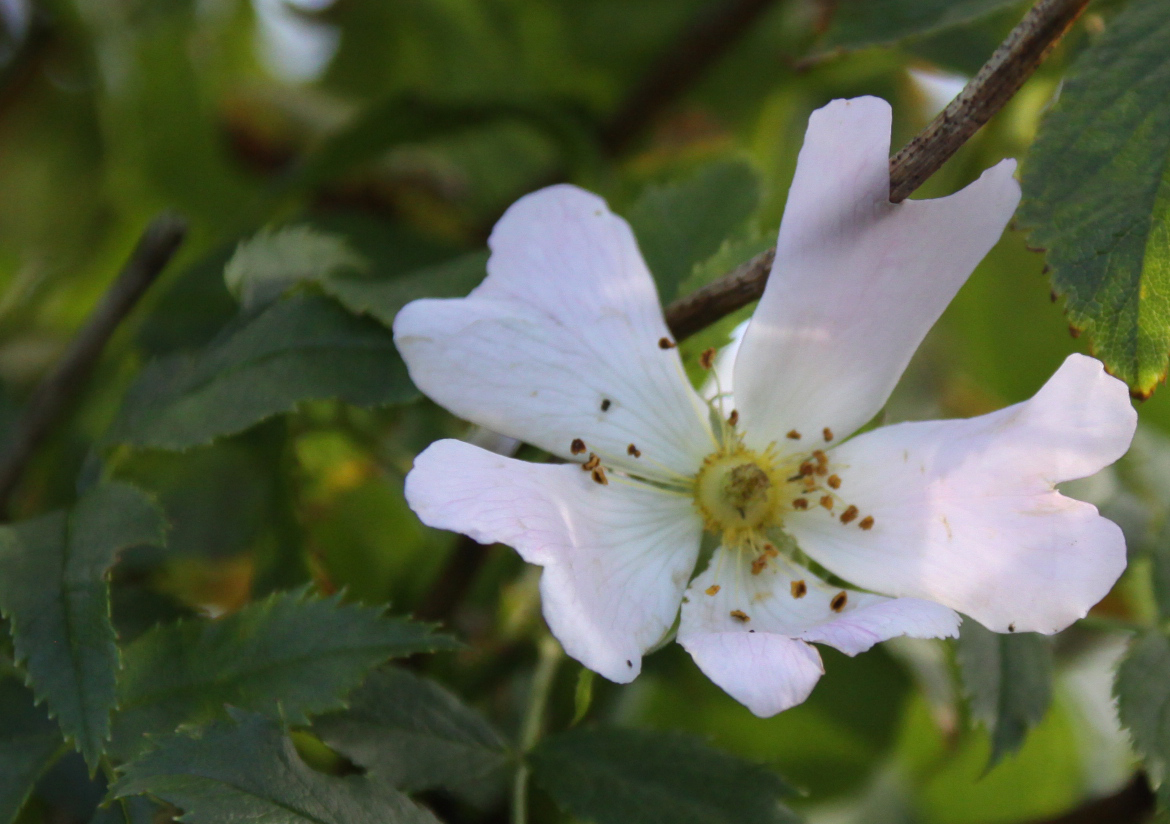
Dog rose (Rosa canina)
Although similar in appearance to the bramble flower, the distinctive heart-shaped petals of the dog rose make it easily distinguishable.  It climbs through hedges and bushes, lending colour to otherwise unremarkable shrubs.  The white petals are often tinged with pale pink, as in this example.  After flowering a red rosehip is produced, and as well as being eaten by animals and birdds can be used to make rose-hip syrup, which has high quantities of vitamin C, and can be used to produce wine and liqueur.  It flowers from June to July.

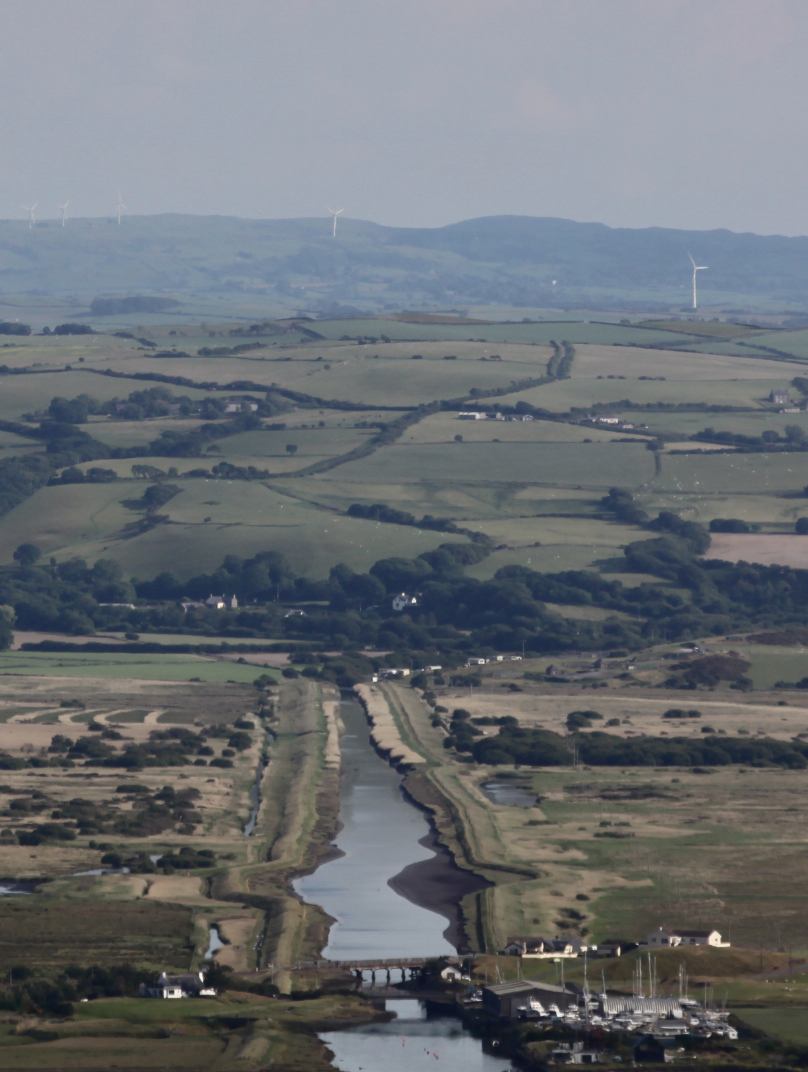
The Afon Leri and the 5000 year old Cors Fochno peatland with the hills of Cerdigion rising behind.  A shame about the disfiguring wind farm on the otherwise undisturbed hillsides, but you can’t have everything!

View from the top of the hill across to the cliffs of Ceredigion, looking very beautiful under the gathering clouds

Wildflower information sources used in this post:

The Wildlife Trusts – Wildflowers
https://www.wildlifetrusts.org/wildlife-explorer/wildflowers

Grey-Wilson, G. Wild 1994. Flowers of Britain and Northwest Europe.  Dorling Kindersley

Fletcher, N. 2004. Pocket Nature Wild Flowers.  Dorling Kindersley

Spencer-Jones, R. and Cuttle, S. 2005.  Wild Flowers of Britain and Ireland.  Kyle Books


Aberdovey beach with the clouds gathering, wild orchids and good company

Pyramidal orchid (Anacamptis pyramidalis)

Thank goodness for my friend Caroline who came round to drop something off yesterday afternoon.  I was not at my best with a stinging eye infection, and when she asked if I wanted to accompany her on a walk I felt so grim that I wasn’t at all sure it was a good idea, but I was so fed up of being stuck in the house that I simply grabbed my sunglasses and bag, and went with both gratitude and relief.  As it happens, the salty breeze did my eyes a power of good, and by the time I returned to the house, things were amazingly improved.

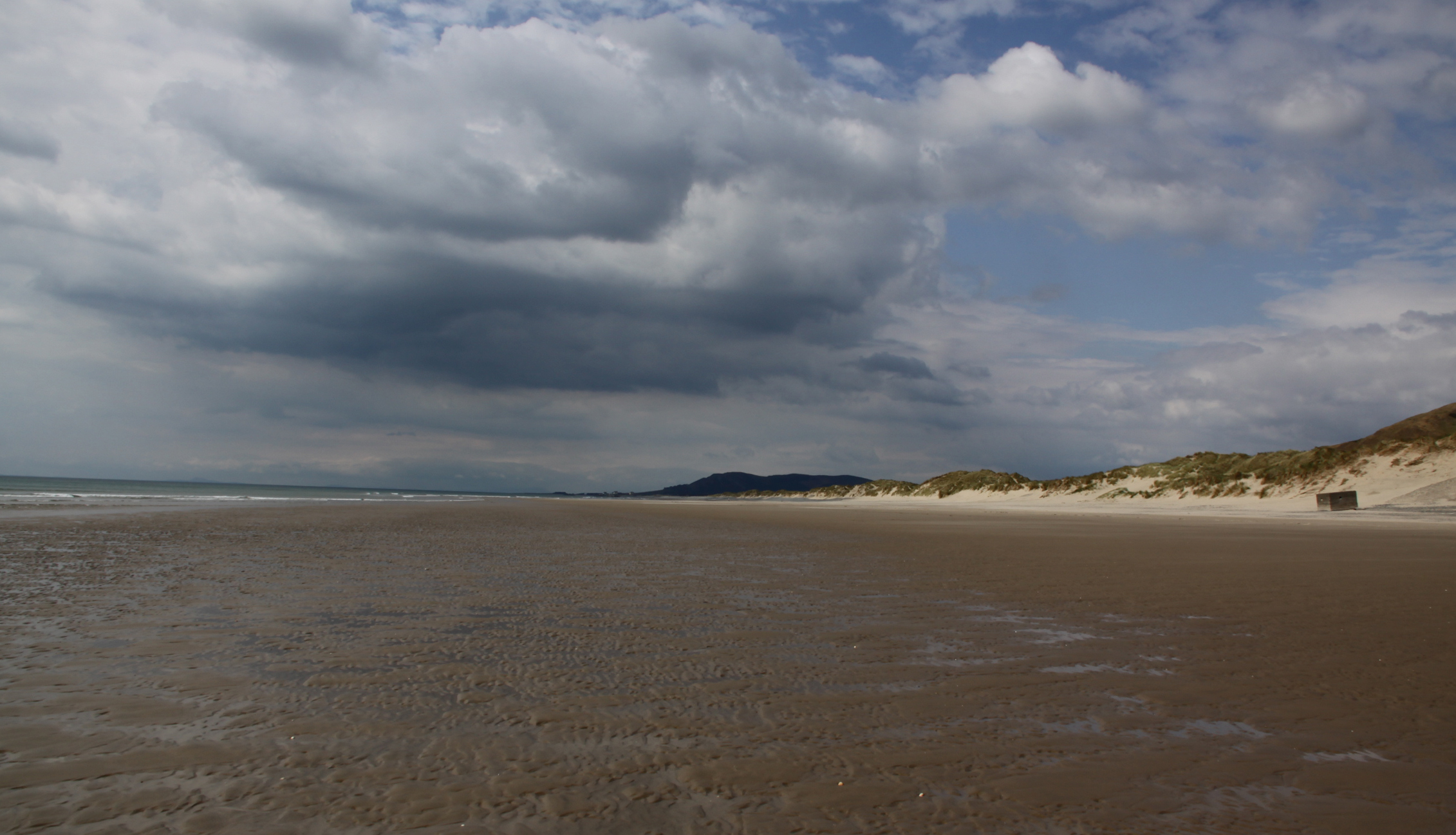
As we walked down the hill, maintaining diligent social-distancing, which we did for the entire walk, the weather looked iffy.  Although there were a few white fluffy clouds and some blue patches, the sky was dominated by deep blue-black monsters that were edging closer all the time.  We were lucky – it didn’t rain, and even though the wind got up it was relatively warm.  We started off with an ice cream each from The Sweet Shop, and then headed to the beach.  The lighting was stunning, with the sun blazing intermittently through gaps in the clouds, and the colours were wonderful.  As we threaded our way back towards Aberdovey through the sand dunes, the wild flowers were stunning.  The highlight was probably the wild orchids, which Caroline knew where to find, but there was so much else to see too.
Sea Bindweed (Calystegia soldanella), with deep green, loosely funnel-shaped leaves that are fleshy and retain water.  A member of the convolvulus family.

Pyramidal orchid (Anacamptis pyramidalis).  I had never seen one before, but apparently it is one of the most common of the wild orchids, and can be found on just about any calcareous soil, including any sand that contains at least 1% CaC03 (calcium
carbonate) by weight.  Insanely pretty.

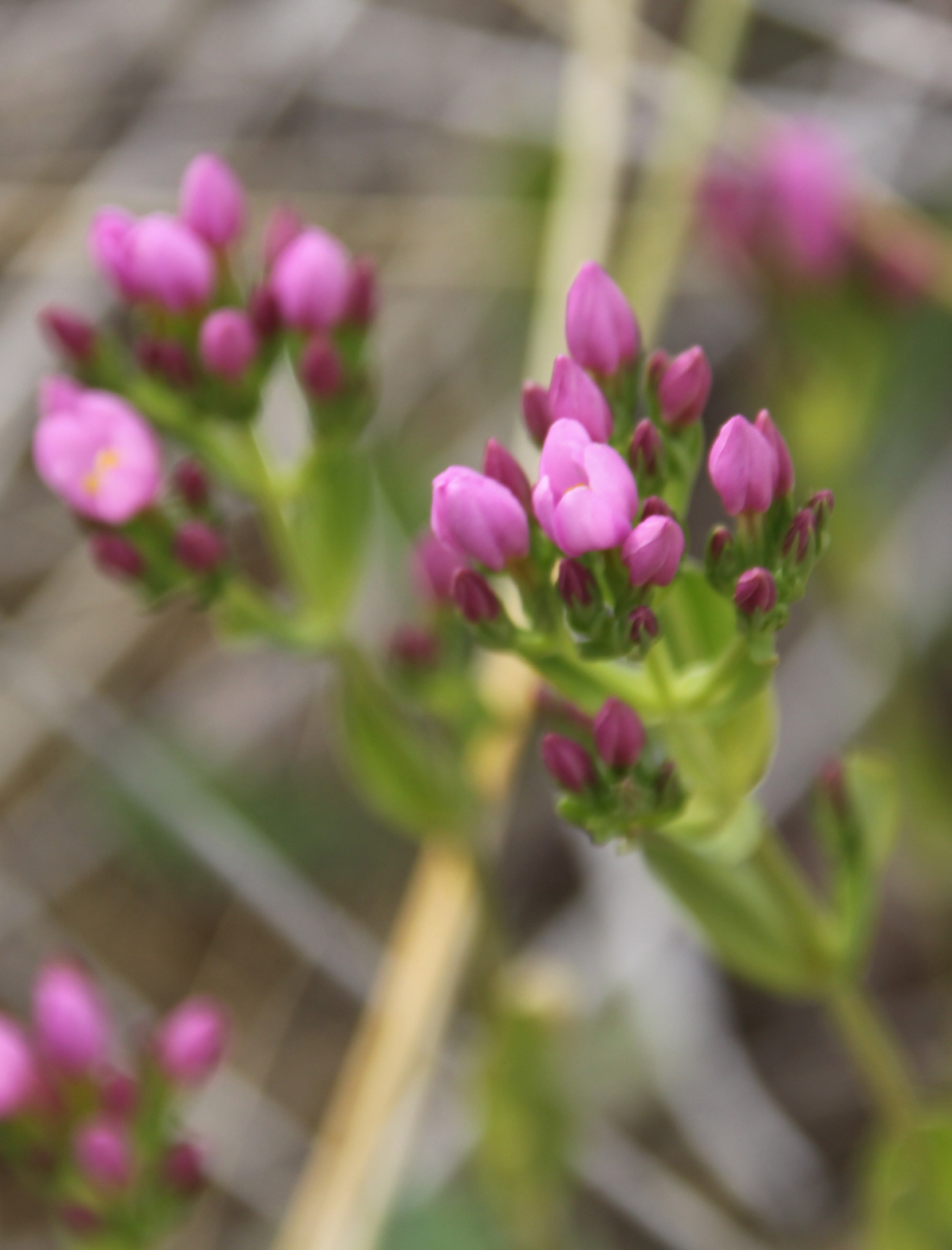
Lesser centaury (Centaurium pulchellum)

Lesser centaury (Centaurium pulchellum)

Female stonechat (Saxicola torquata).  There were a pair of them, a male and female, very vocal and jumping from bush to bush, presumably trying to draw attention away from their nest.

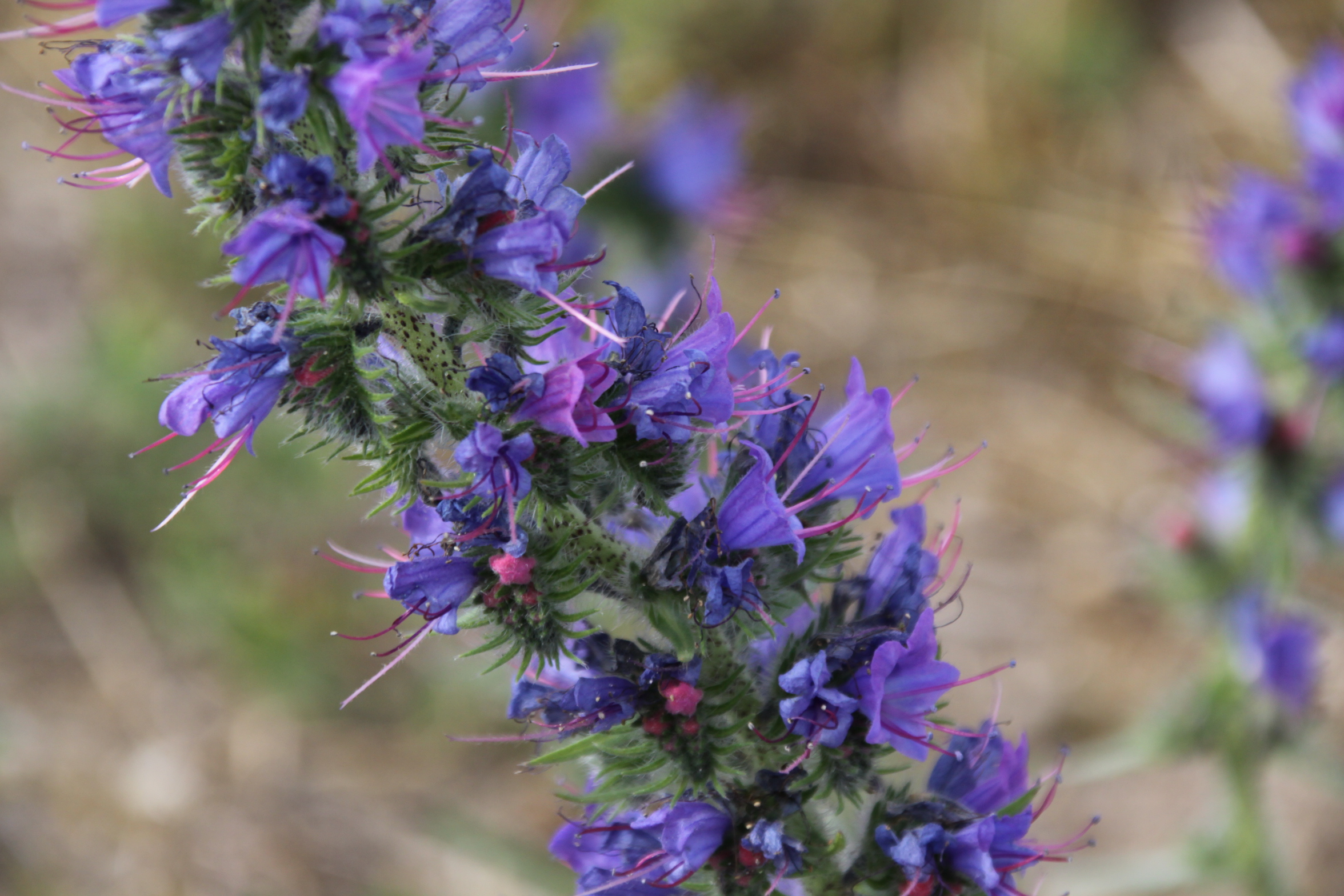
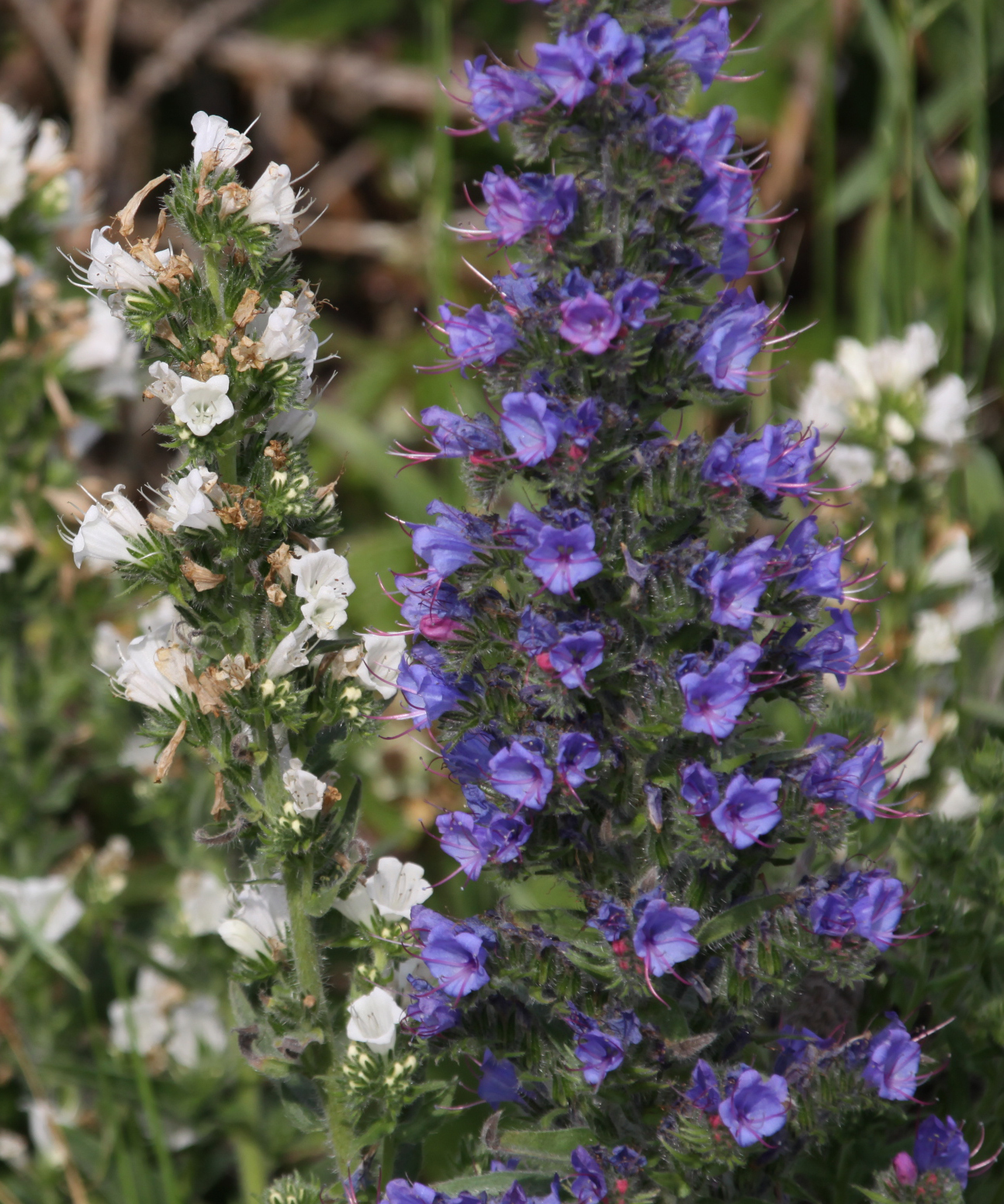
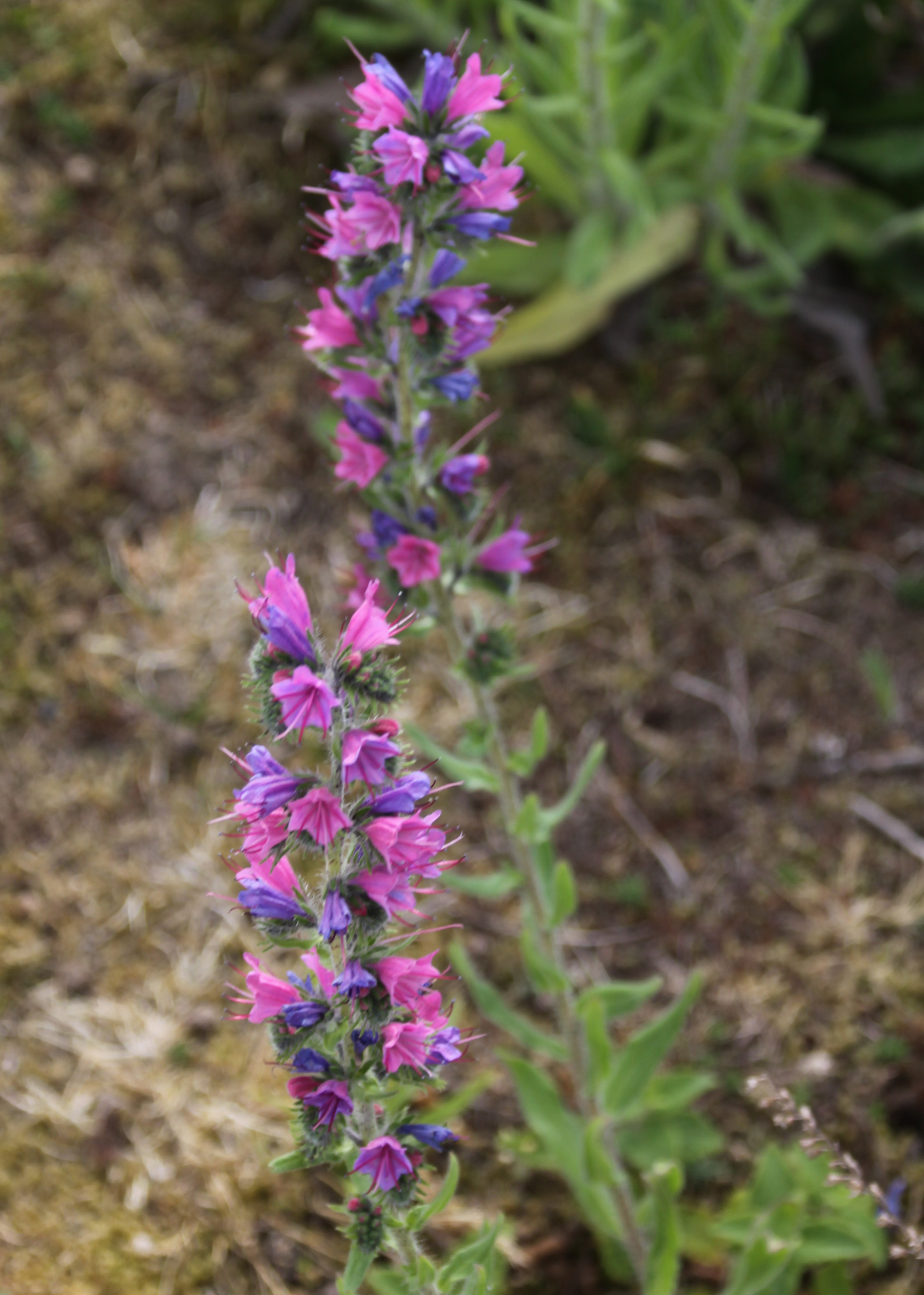
Viper’s-bugloss (Echium vulgare).  The flowers change from pink to violet as they mature. There were lots of them in the more open ground near the car park, which fits in with their preference for dry open spaces, sand and disturbed soil.

Viper’s-bugloss (Echium vulgare)

Viper’s-bugloss (Echium vulgare)

Biting Stonecrop (Sedum acre) are succulents, their leaves retaining moisture.

Viper’s-bugloss (Echium vulgare)

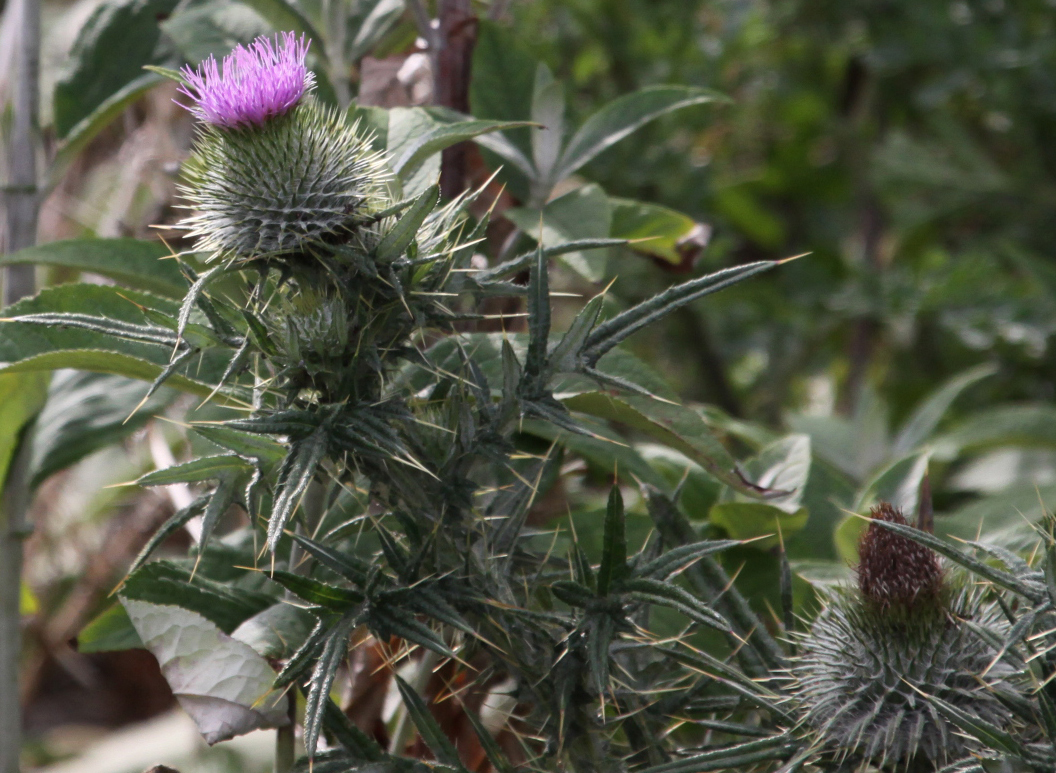
Woolly thistle (Cirsium eriophorum)

Common restharrow (Ononis repens).  The flower looks like a member of the pea (vetch – Fabaceae) family, but the leaves seemed all wrong.   It is in fact a vetch, creeping along the dune floor with small hairy leaves.  According to the Wildlife Trust website, “common restharrow has extremely tough, thick roots that spread in a dense network and, during the days of horse-drawn cultivation, could stop (‘arrest’) a harrow in its tracks.” Apparently, when eaten by cattle it taints dairy products. The roots are reputed to taste like liquorice when chewed.

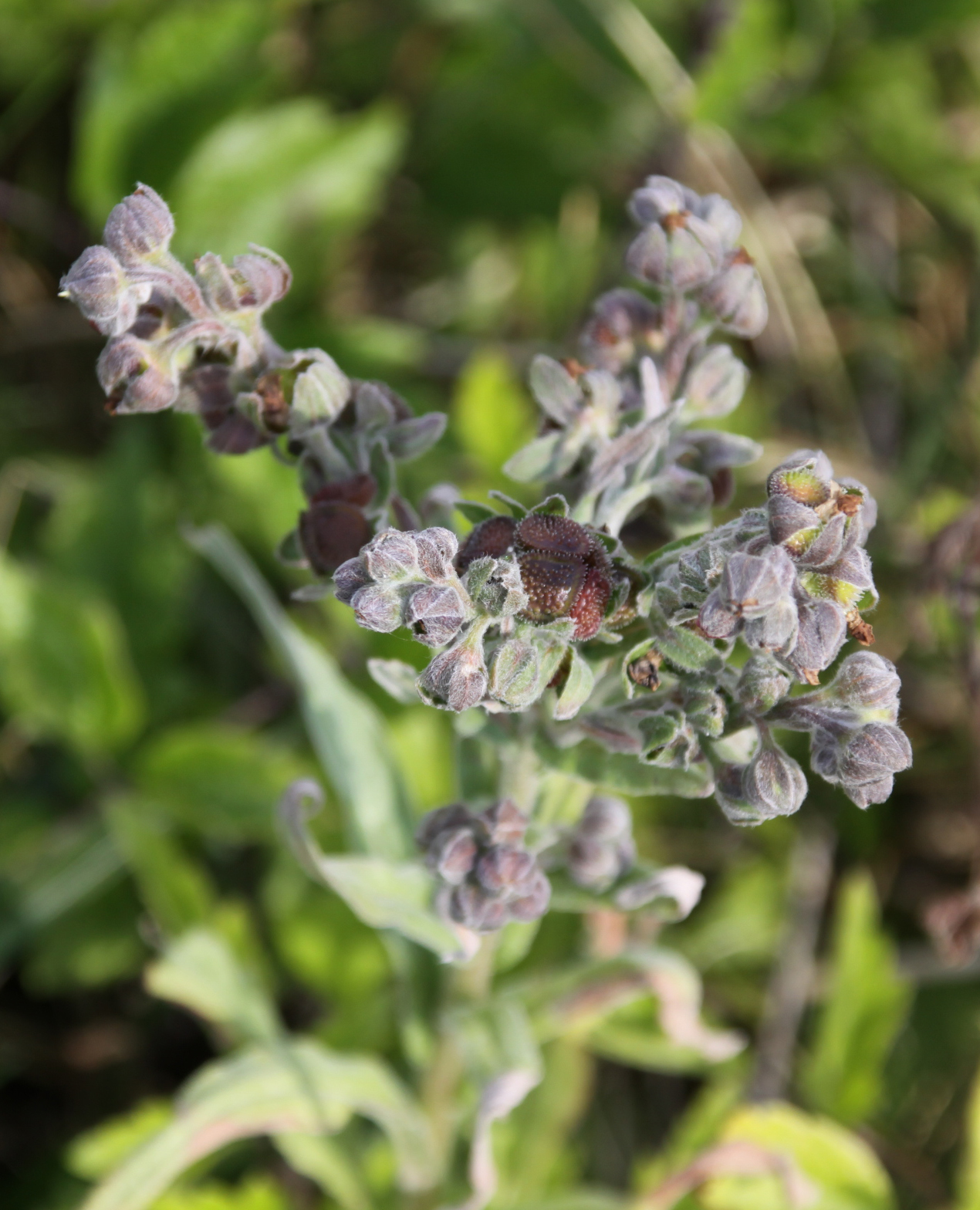
Unidentified at the moment, but when it flowers matters might become clearer.  It may turn out to be Hound’s Tongue (Cynoglossum officinale)

Sea rocket (Cakile maritima), a member of the mustard family.

Sea spurge (Euphorbia paralias).


Video: For absent visitors deprived of the sea at Aberdovey

A little video (four and a bit minutes), to bring back the sounds as well as the sights of the seaside at Aberdovey.  The crystal clear waters of the estuary and the sea peaceful under a clear blue sky on a very peaceful May day.  Whenever I was absent from Aberdovey for long periods, long before I moved here, it was the the sea that I most missed, so I put this together for regular visitors who may be missing it as much as I did.